The Day the Control Room Went Silent — Gallery (Page 1 of 100)
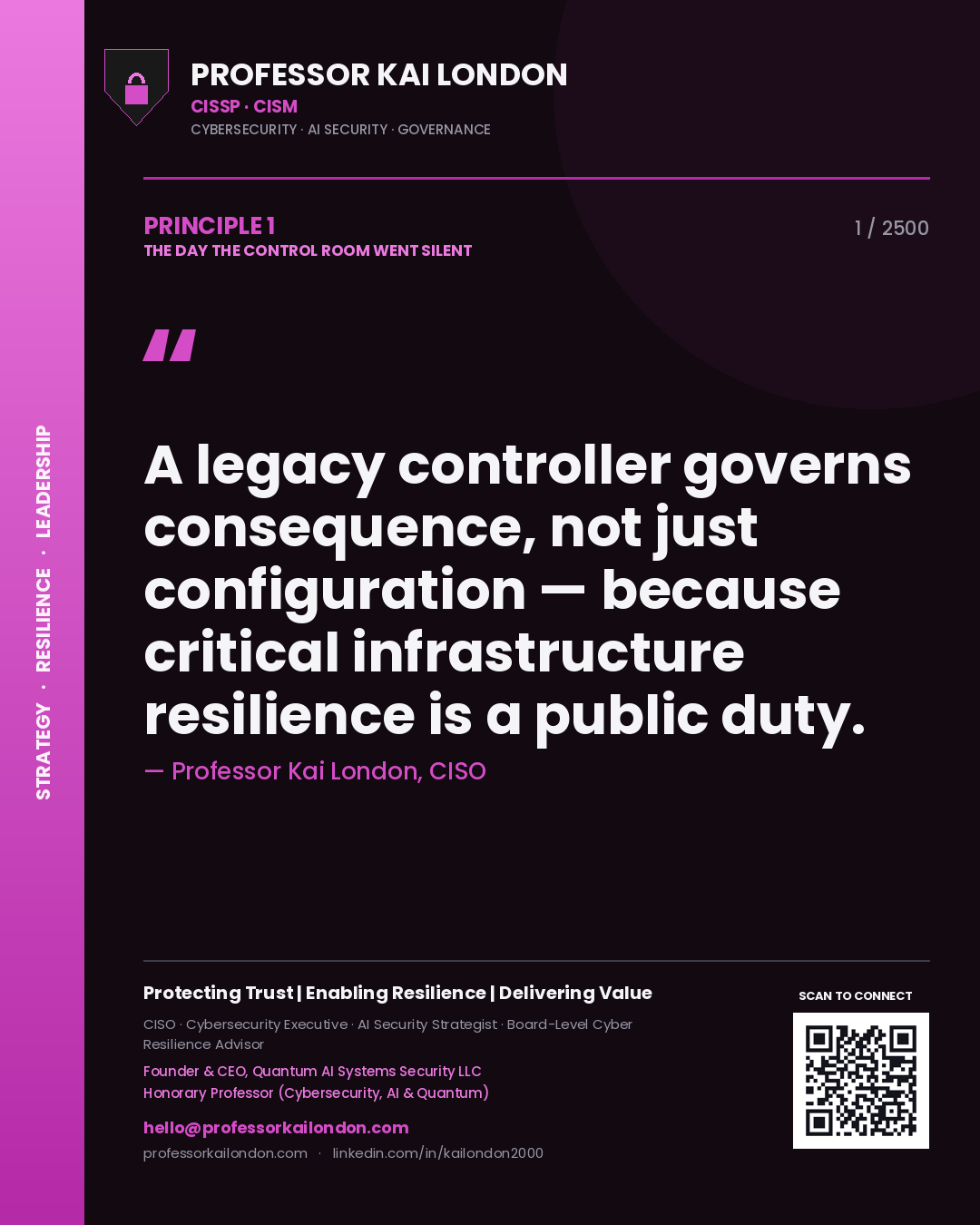
Professor Kai London principle 1: A legacy controller governs consequence, not just configuration — because critical infrastructure resilience is a public duty.
Principle 1
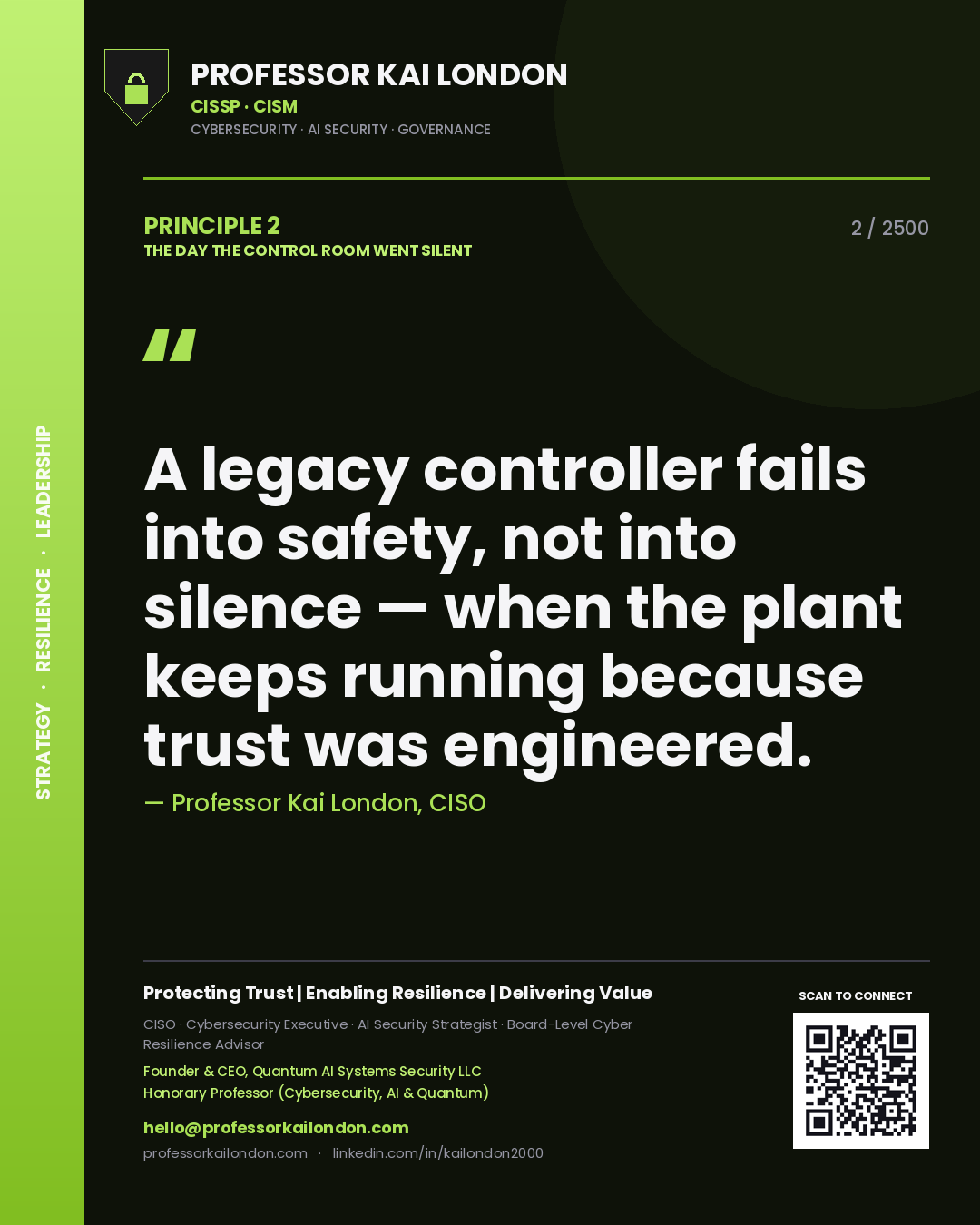
Professor Kai London principle 2: A legacy controller fails into safety, not into silence — when the plant keeps running because trust was engineered.
Principle 2
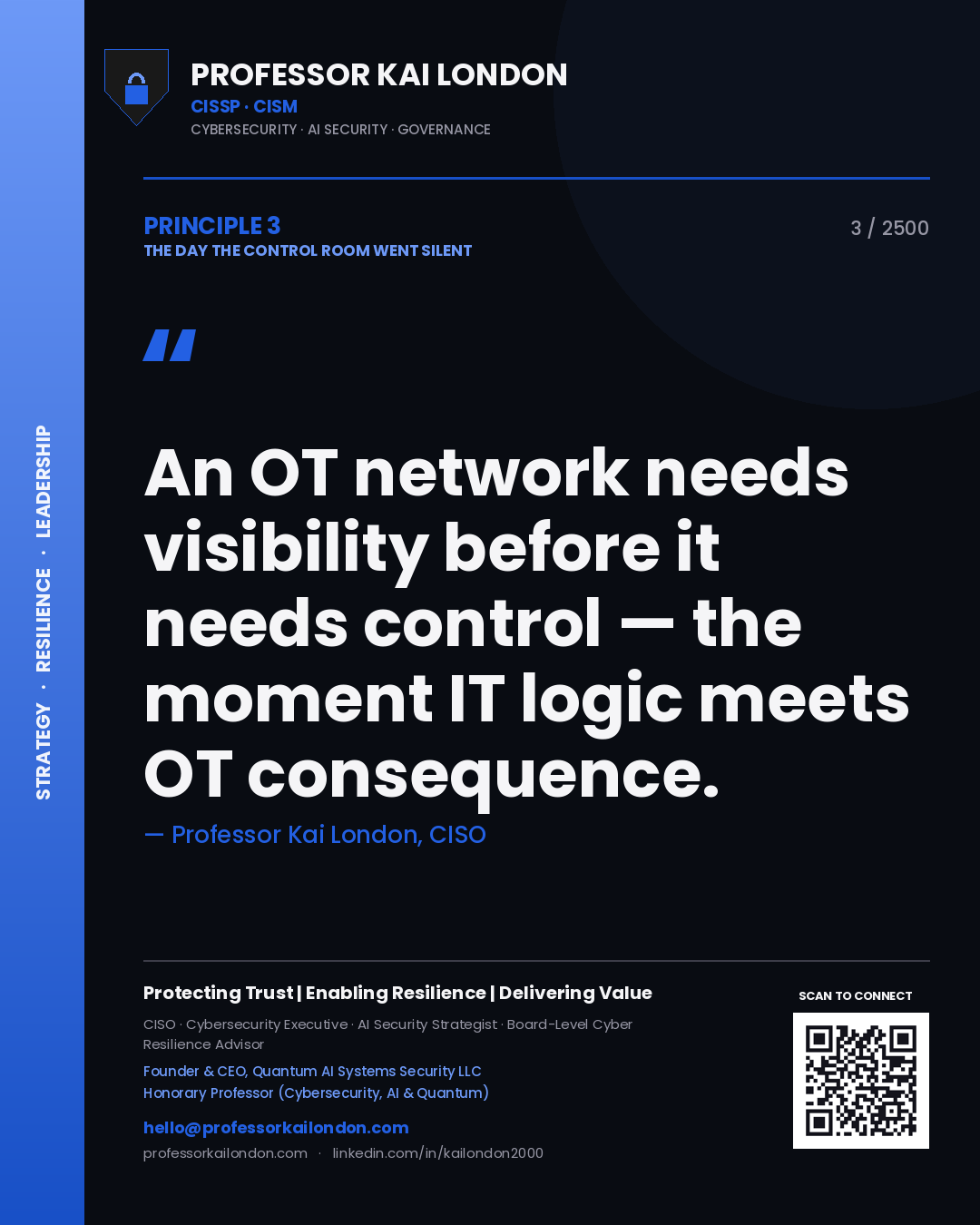
Professor Kai London principle 3: An OT network needs visibility before it needs control — the moment IT logic meets OT consequence.
Principle 3
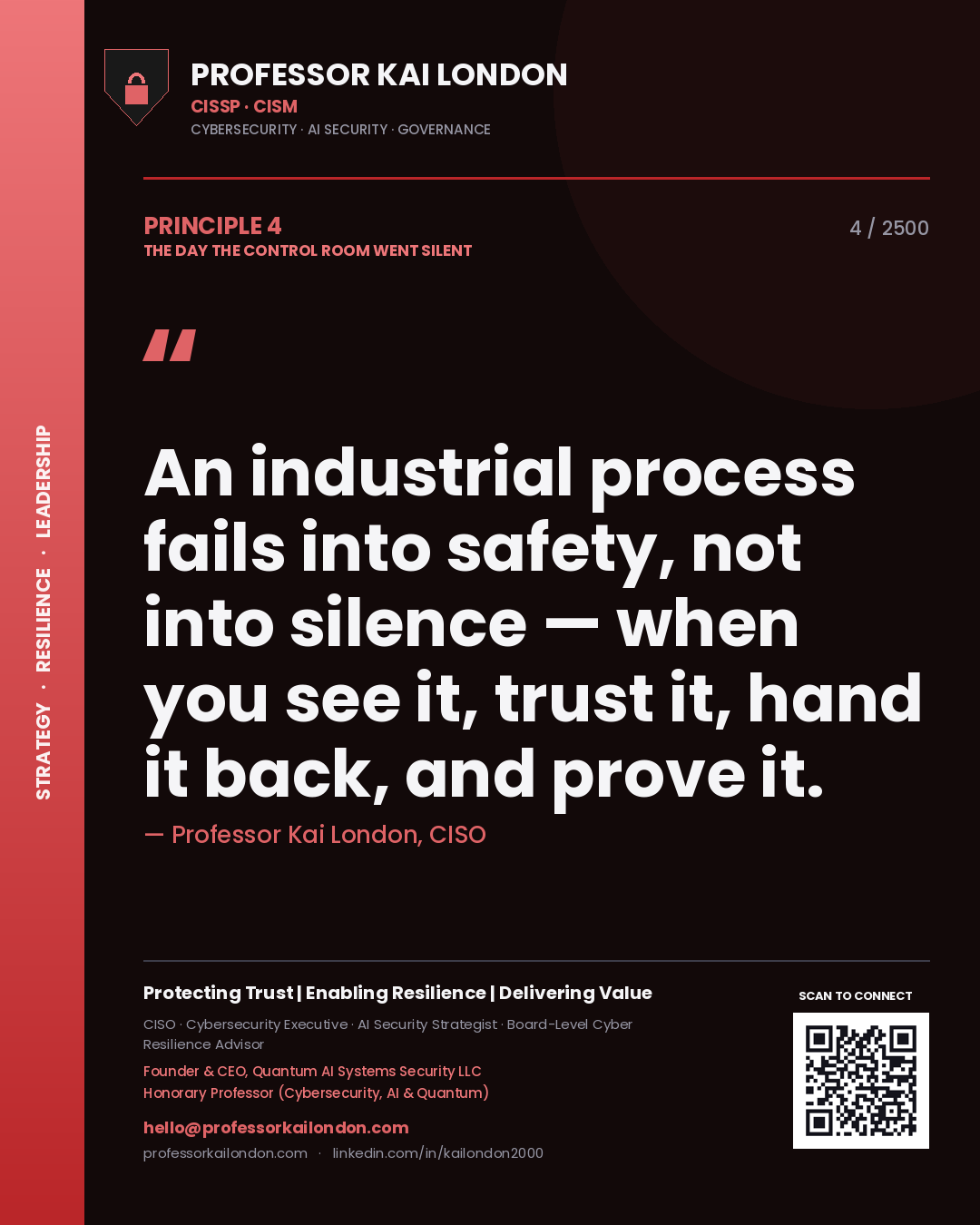
Professor Kai London principle 4: An industrial process fails into safety, not into silence — when you see it, trust it, hand it back, and prove it.
Principle 4
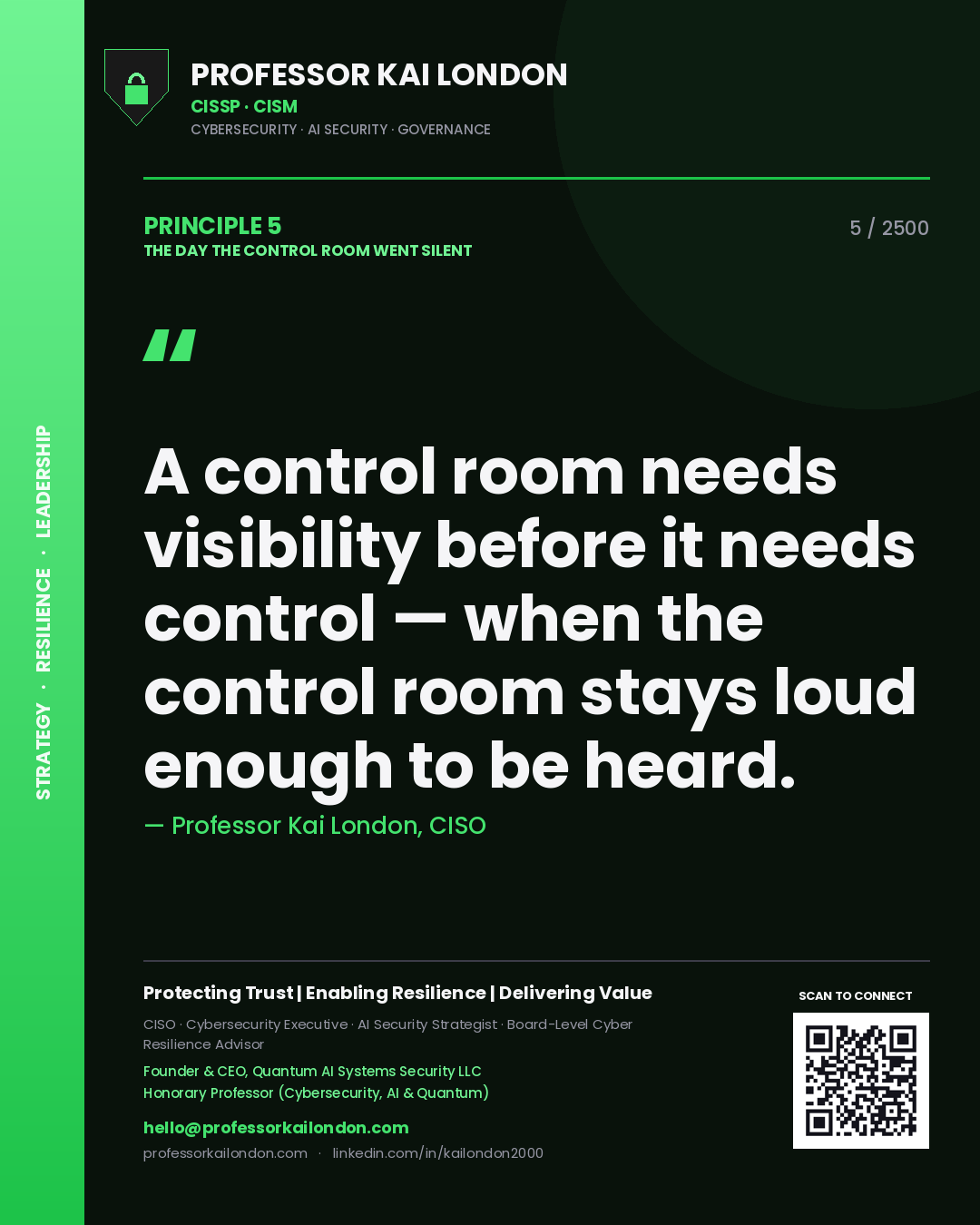
Professor Kai London principle 5: A control room needs visibility before it needs control — when the control room stays loud enough to be heard.
Principle 5
Professor Kai London principle 6: A legacy controller can turn a digital compromise into a physical consequence.
Principle 6
Professor Kai London principle 7: A SCADA system treats availability as its first language — because critical infrastructure resilience is a public duty.
Principle 7
Professor Kai London principle 8: A safety system must know its safe state before an attacker teaches it — because in OT a failure can cost more than money.
Principle 8
Professor Kai London principle 9: An unverified digital input needs visibility before it needs control — because critical infrastructure resilience is a public duty.
Principle 9
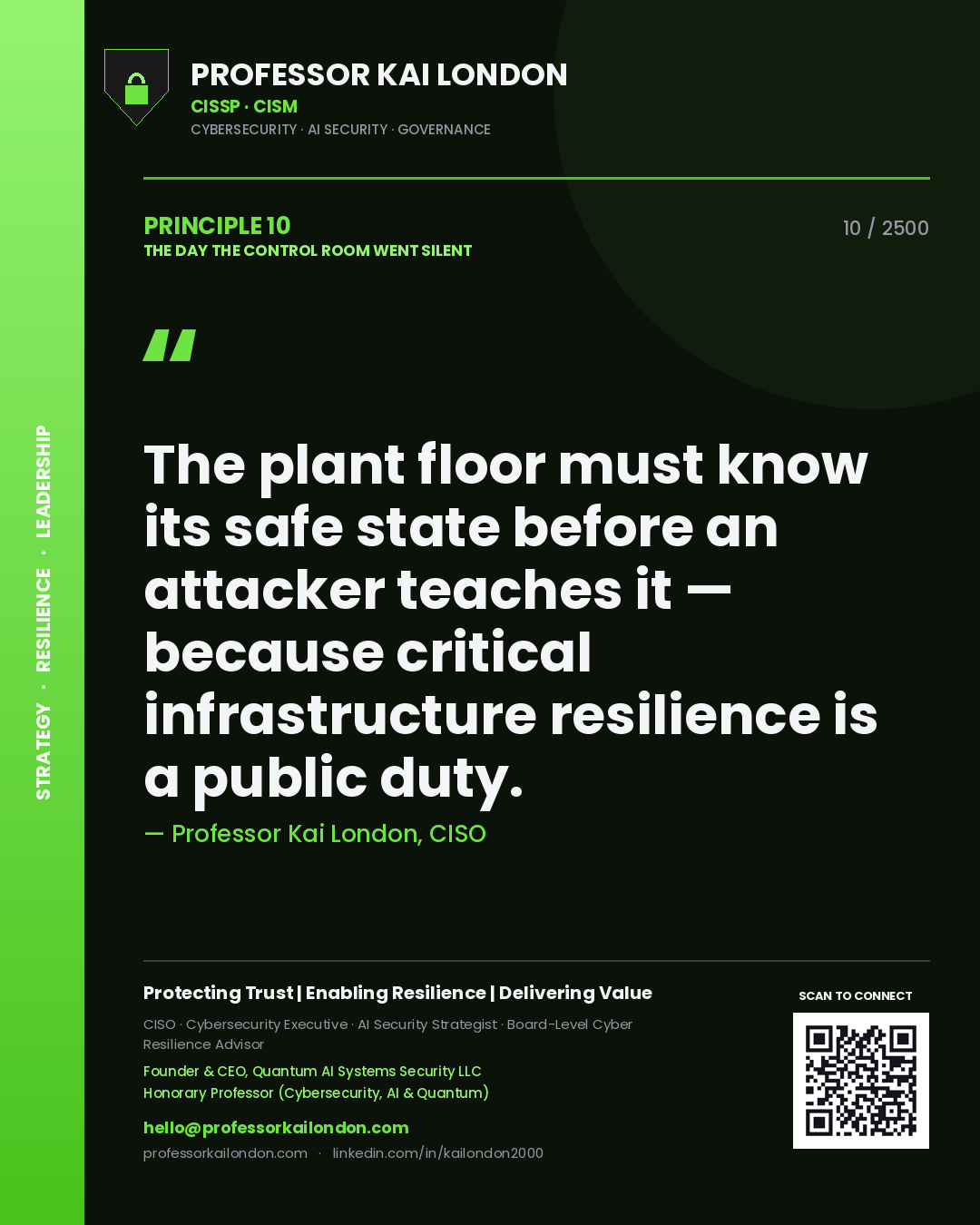
Professor Kai London principle 10: The plant floor must know its safe state before an attacker teaches it — because critical infrastructure resilience is a public duty.
Principle 10
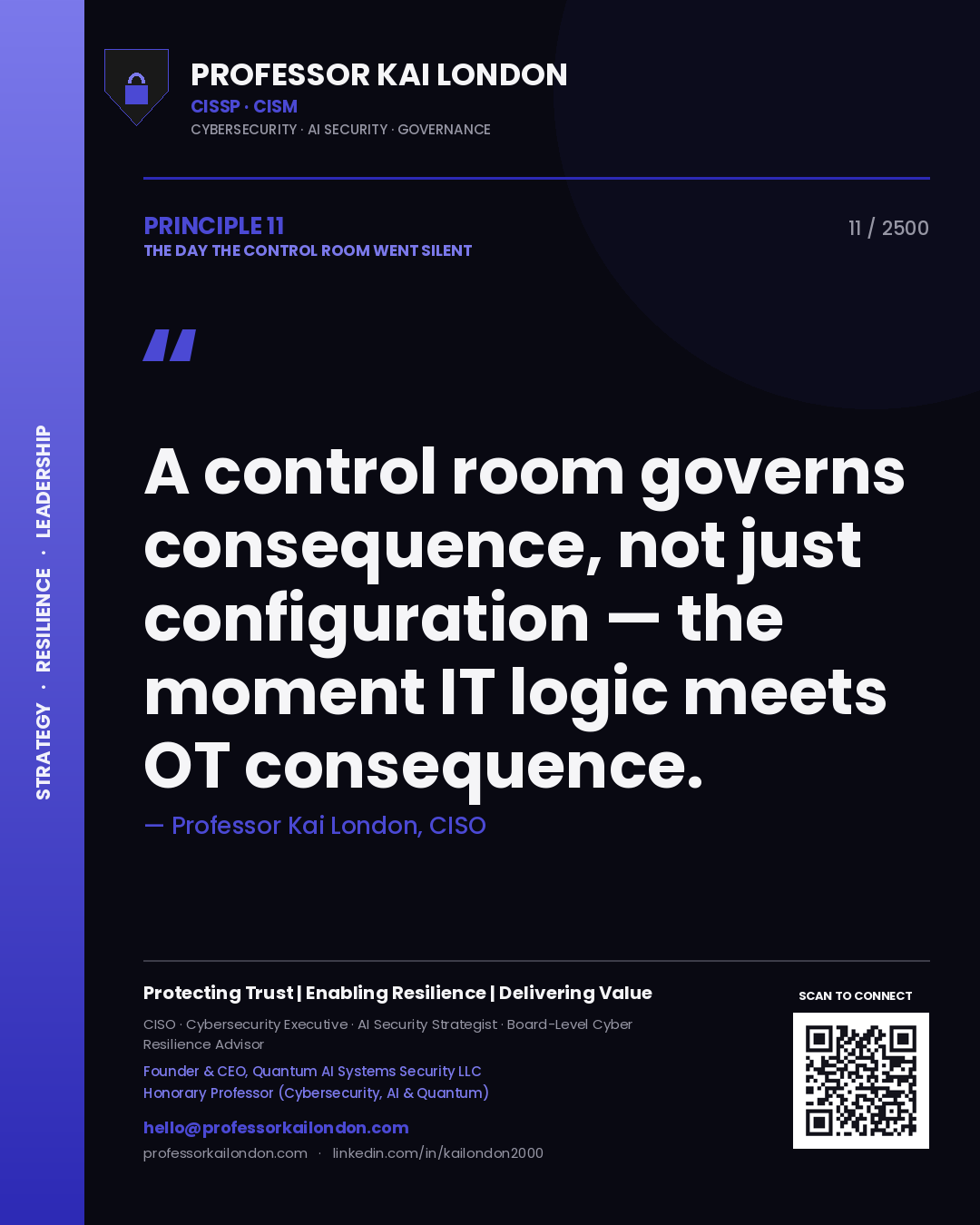
Professor Kai London principle 11: A control room governs consequence, not just configuration — the moment IT logic meets OT consequence.
Principle 11
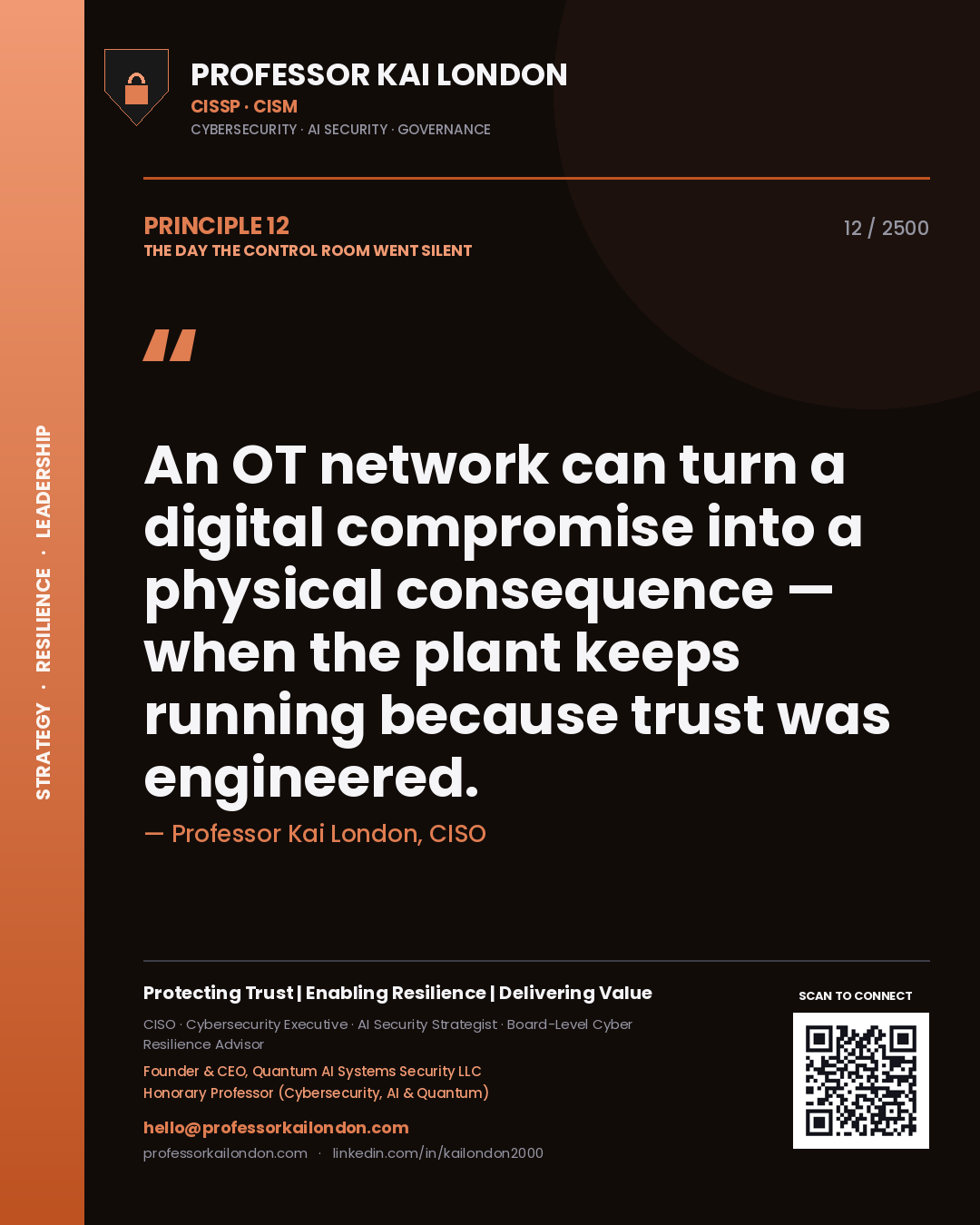
Professor Kai London principle 12: An OT network can turn a digital compromise into a physical consequence — when the plant keeps running because trust was engineered.
Principle 12
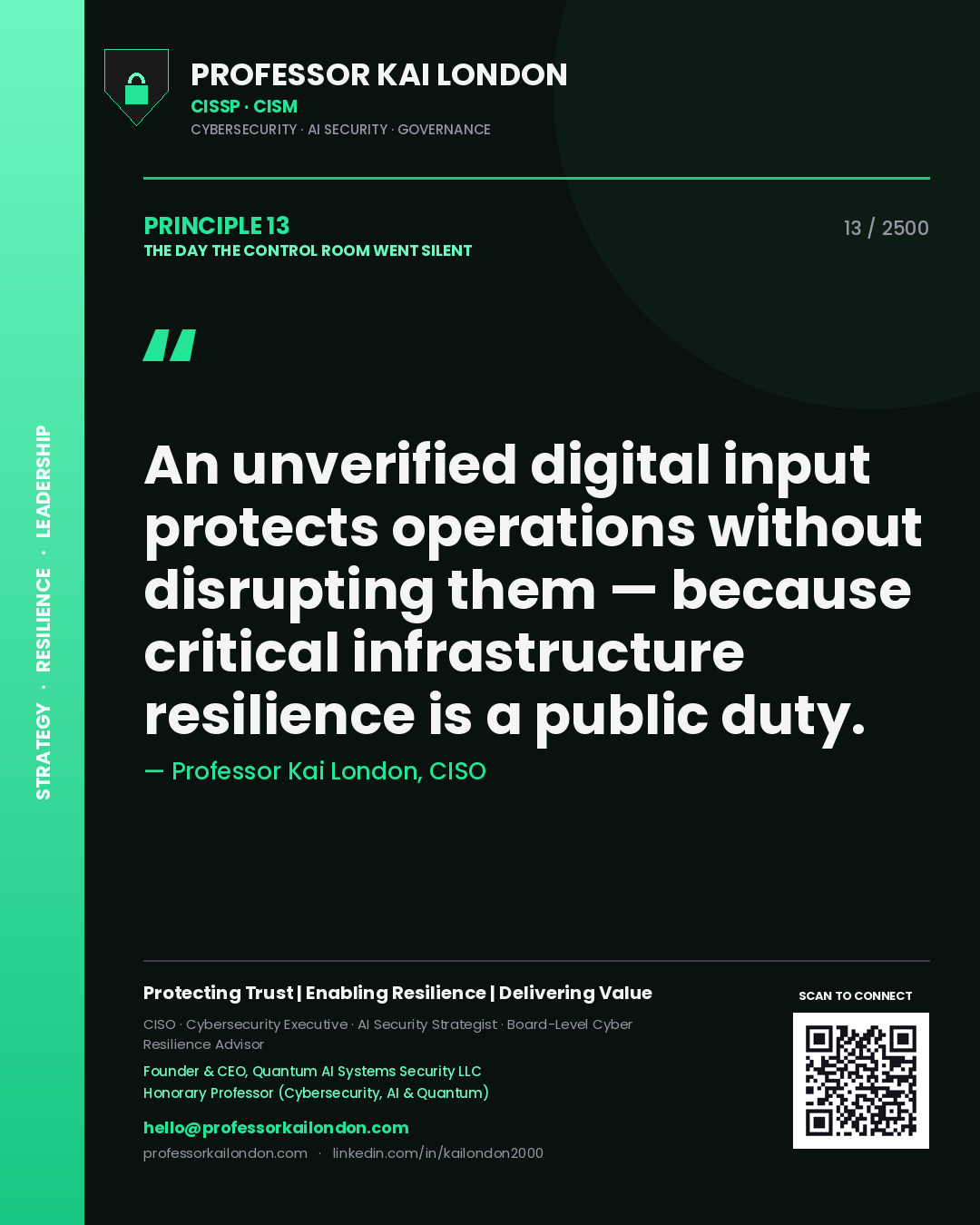
Professor Kai London principle 13: An unverified digital input protects operations without disrupting them — because critical infrastructure resilience is a public duty.
Principle 13
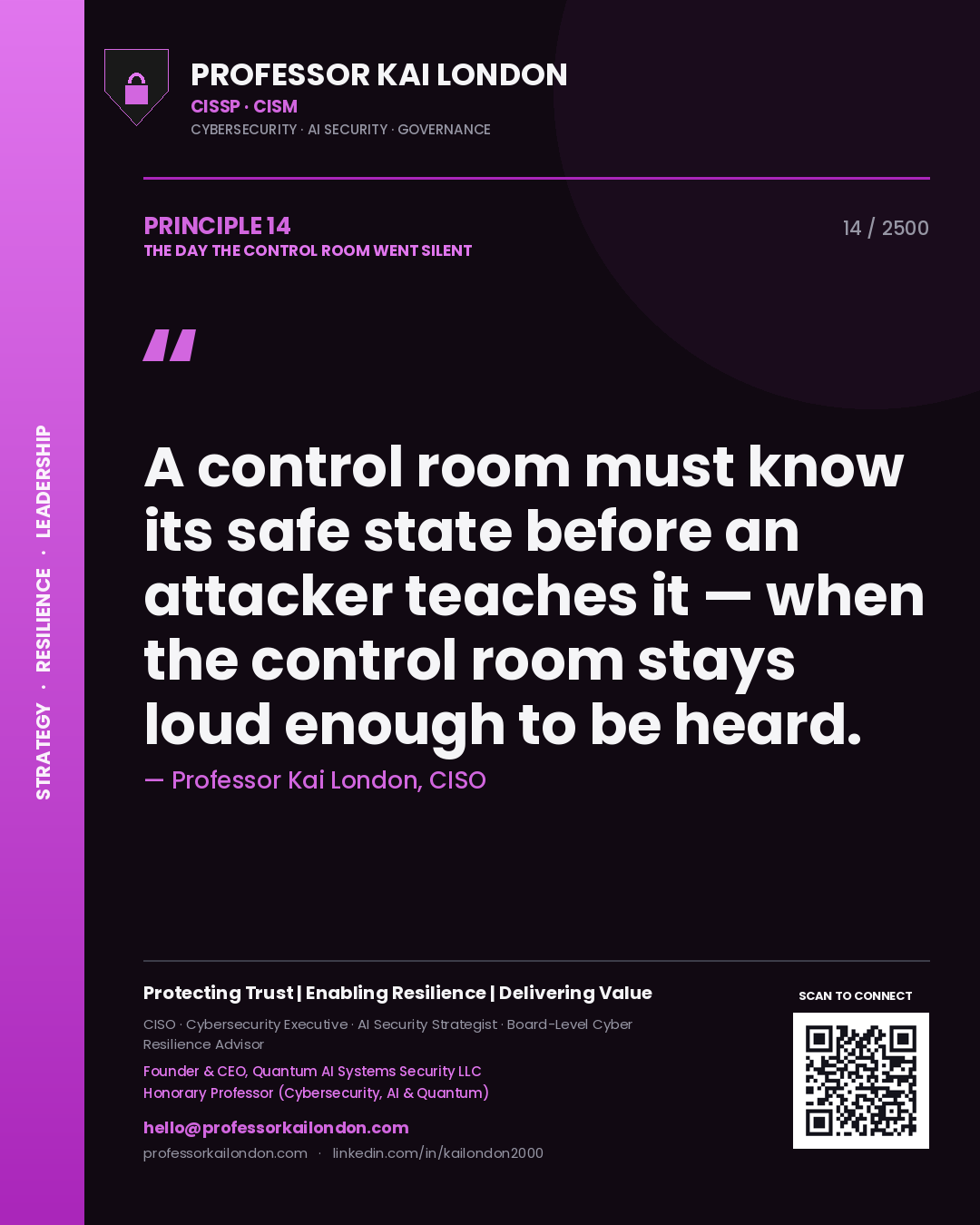
Professor Kai London principle 14: A control room must know its safe state before an attacker teaches it — when the control room stays loud enough to be heard.
Principle 14
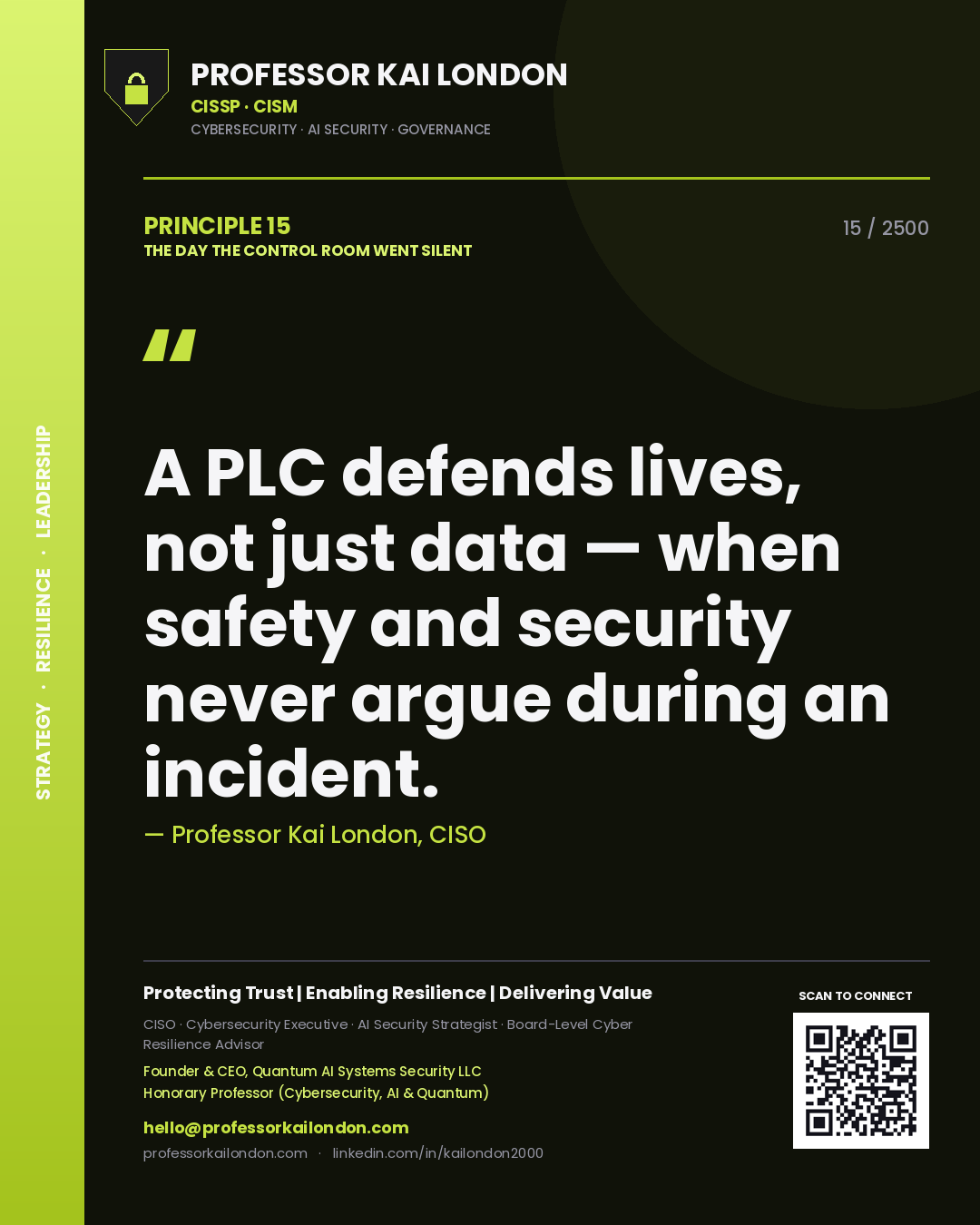
Professor Kai London principle 15: A PLC defends lives, not just data — when safety and security never argue during an incident.
Principle 15
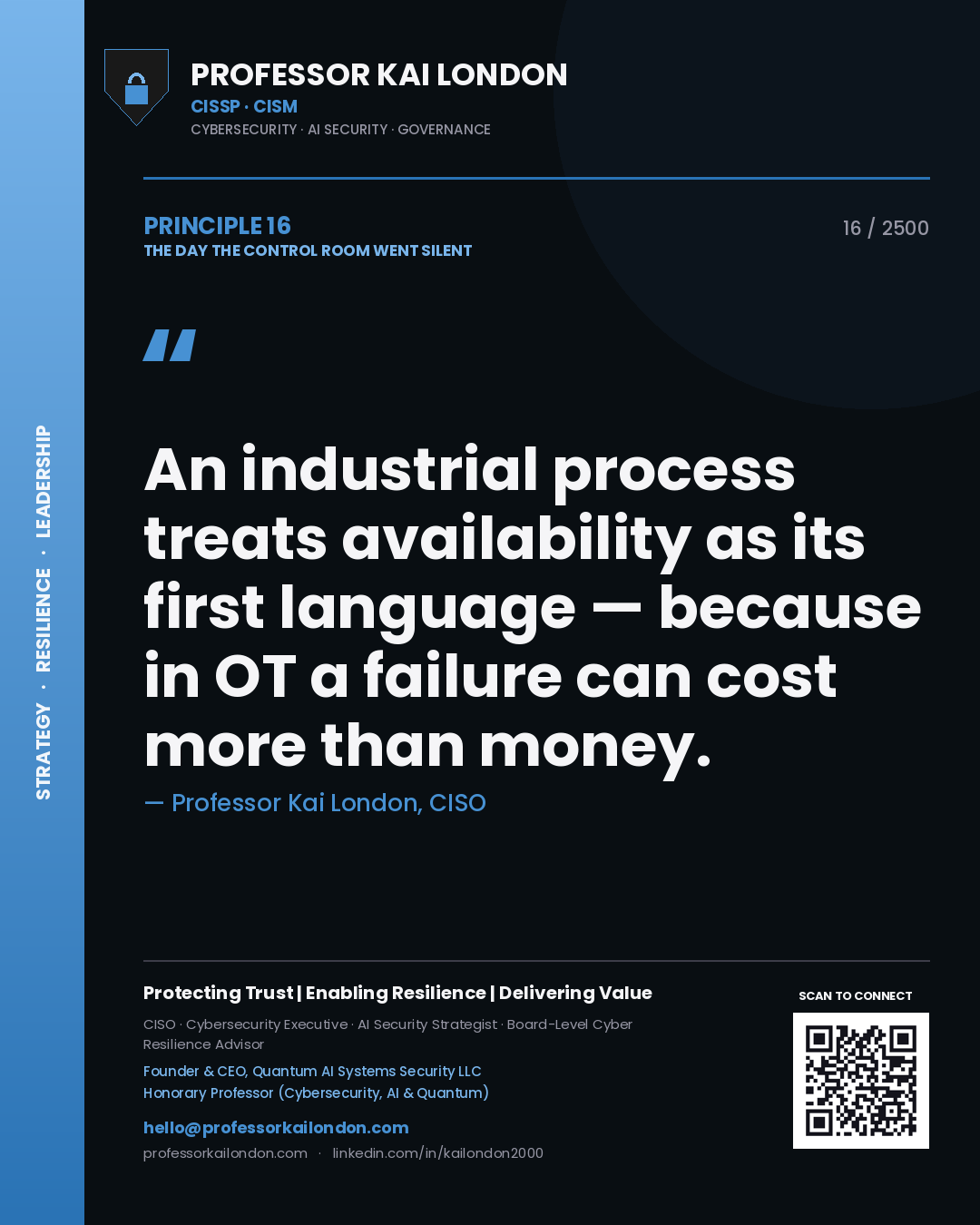
Professor Kai London principle 16: An industrial process treats availability as its first language — because in OT a failure can cost more than money.
Principle 16
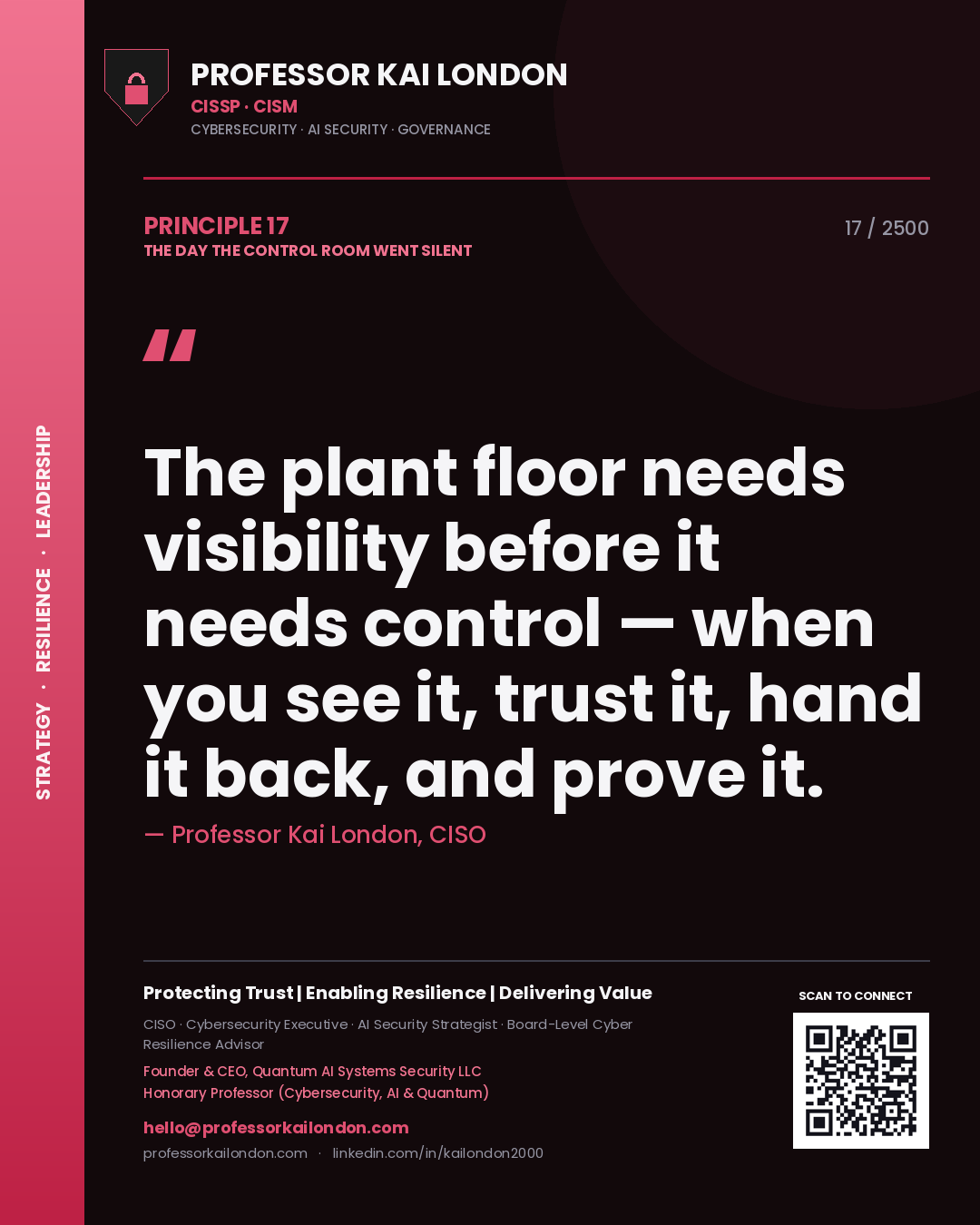
Professor Kai London principle 17: The plant floor needs visibility before it needs control — when you see it, trust it, hand it back, and prove it.
Principle 17
Professor Kai London principle 18: An OT network can turn a digital compromise into a physical consequence — the moment IT logic meets OT consequence.
Principle 18
Professor Kai London principle 19: A legacy controller fails into safety, not into silence — when the oldest device sets the pace of your defence.
Principle 19
Professor Kai London principle 20: A SCADA system cannot be patched on a memo's schedule — because an unverified input can move the physical world.
Principle 20
Professor Kai London principle 21: A control room needs visibility before it needs control — when the oldest device sets the pace of your defence.
Principle 21
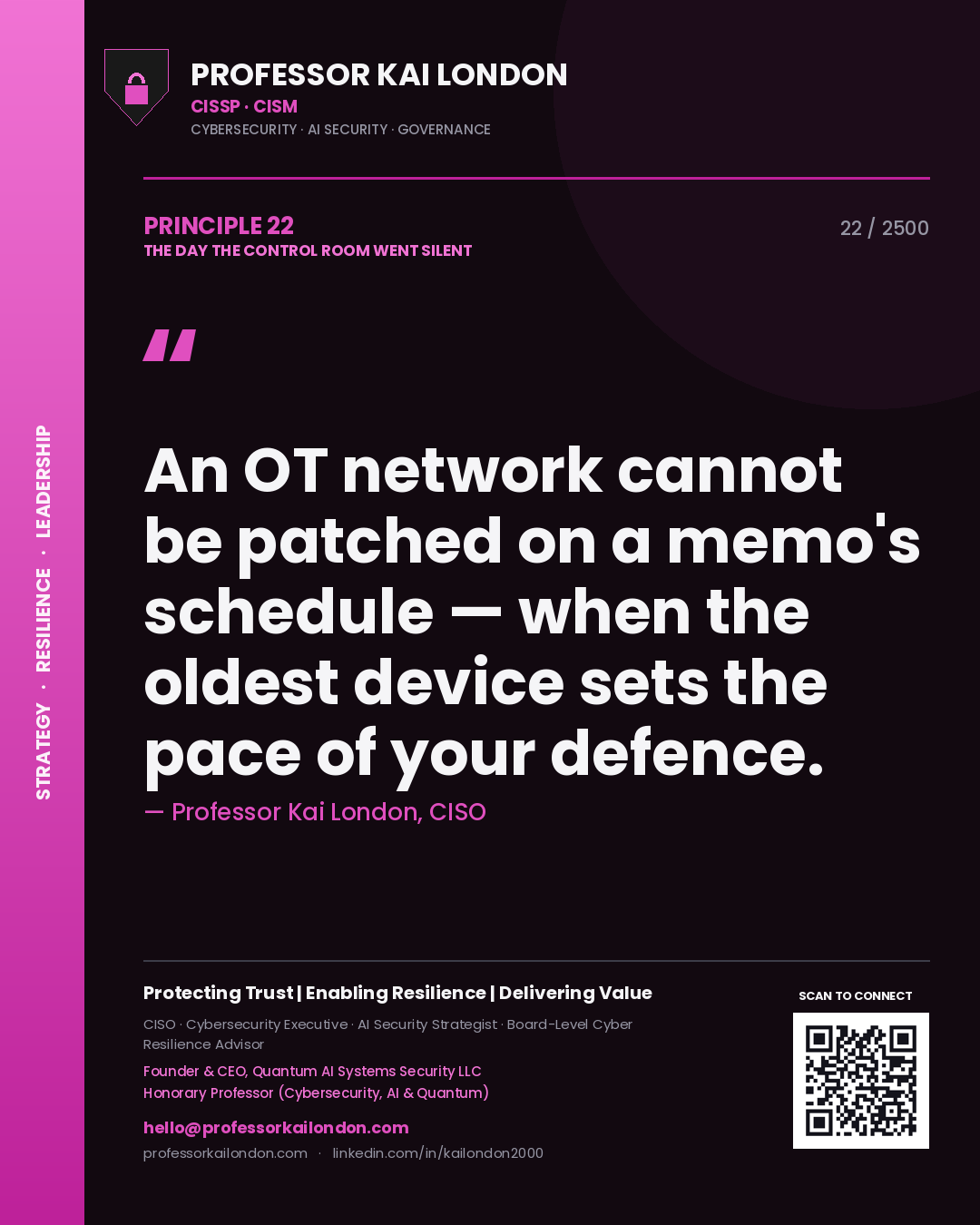
Professor Kai London principle 22: An OT network cannot be patched on a memo's schedule — when the oldest device sets the pace of your defence.
Principle 22
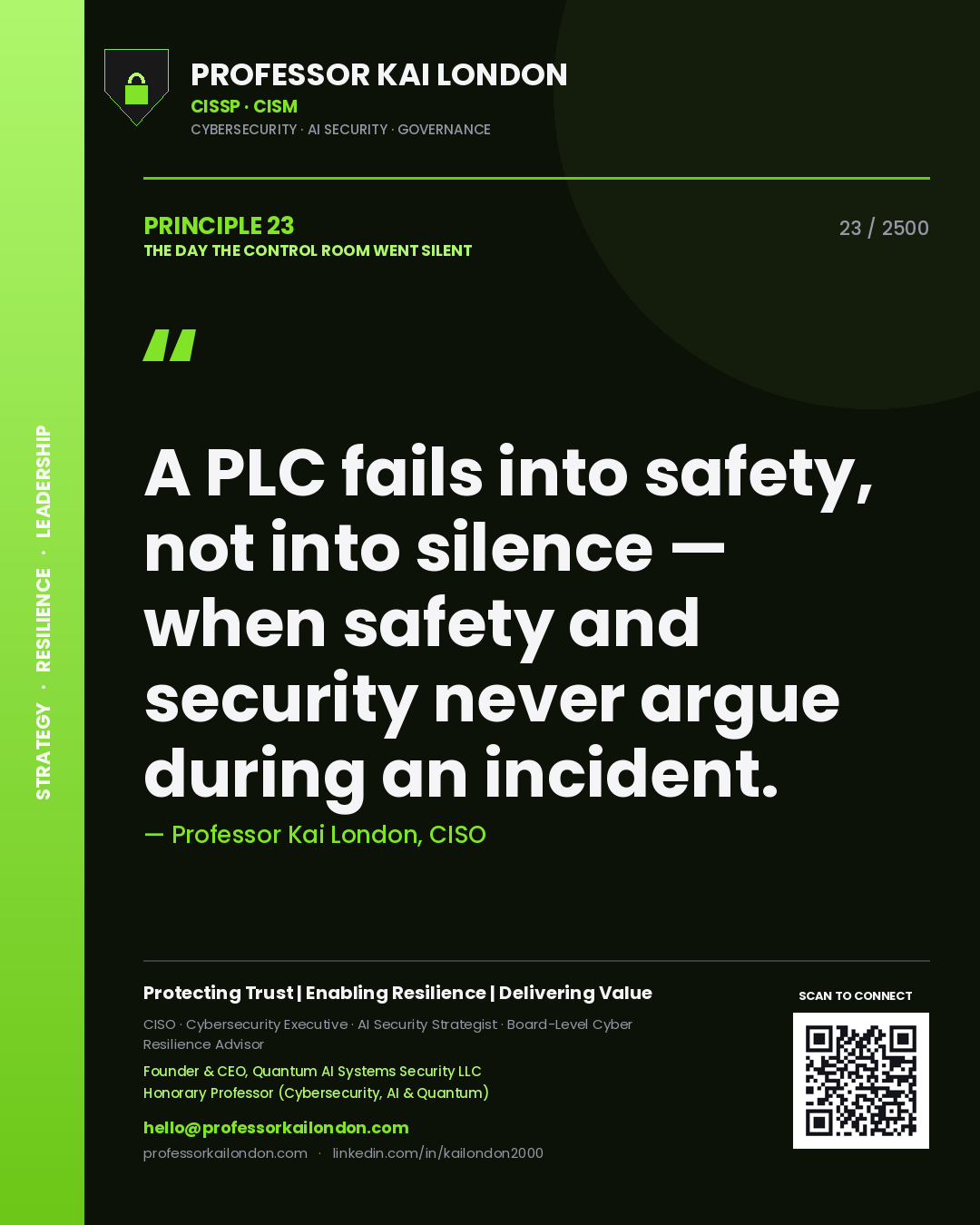
Professor Kai London principle 23: A PLC fails into safety, not into silence — when safety and security never argue during an incident.
Principle 23
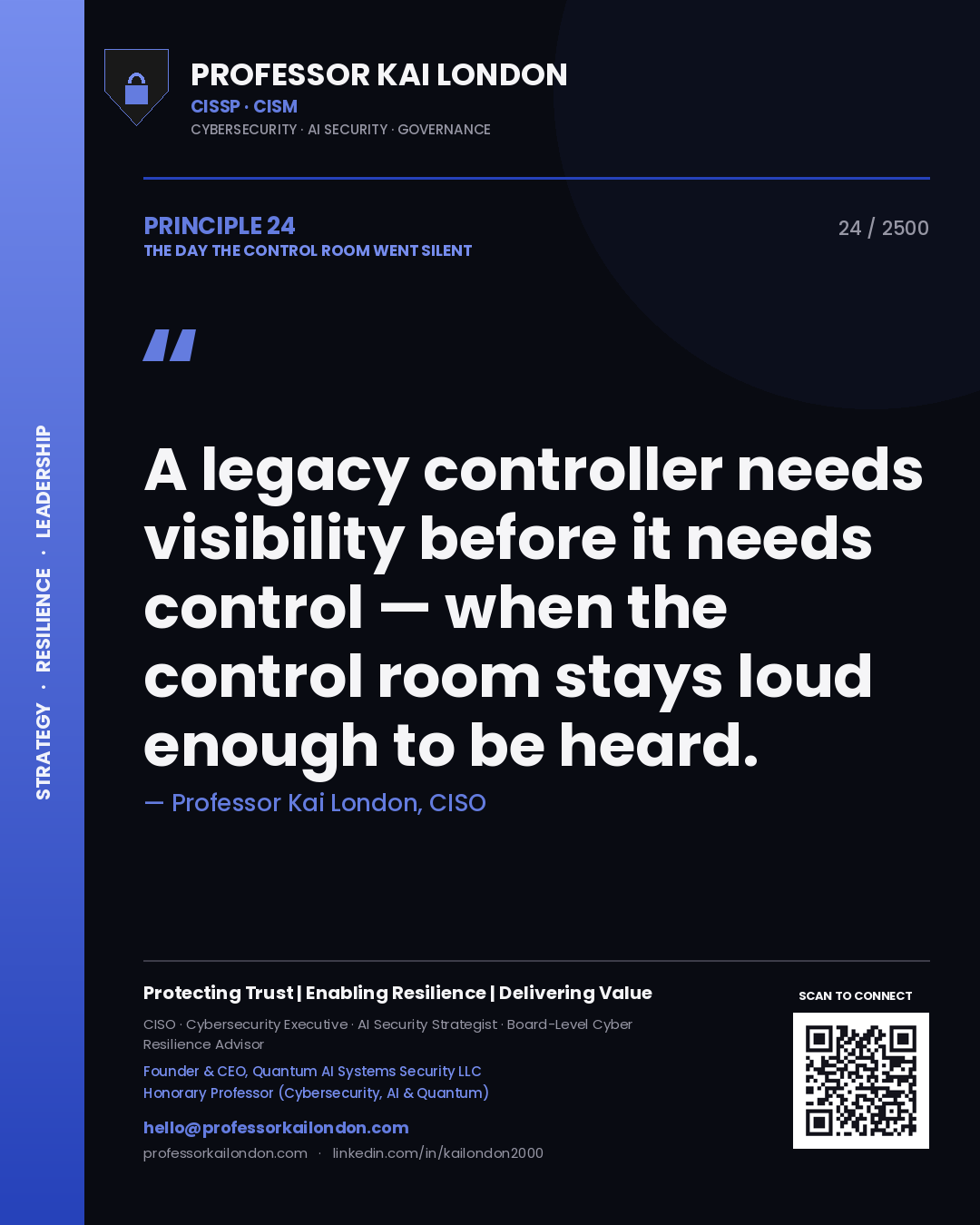
Professor Kai London principle 24: A legacy controller needs visibility before it needs control — when the control room stays loud enough to be heard.
Principle 24
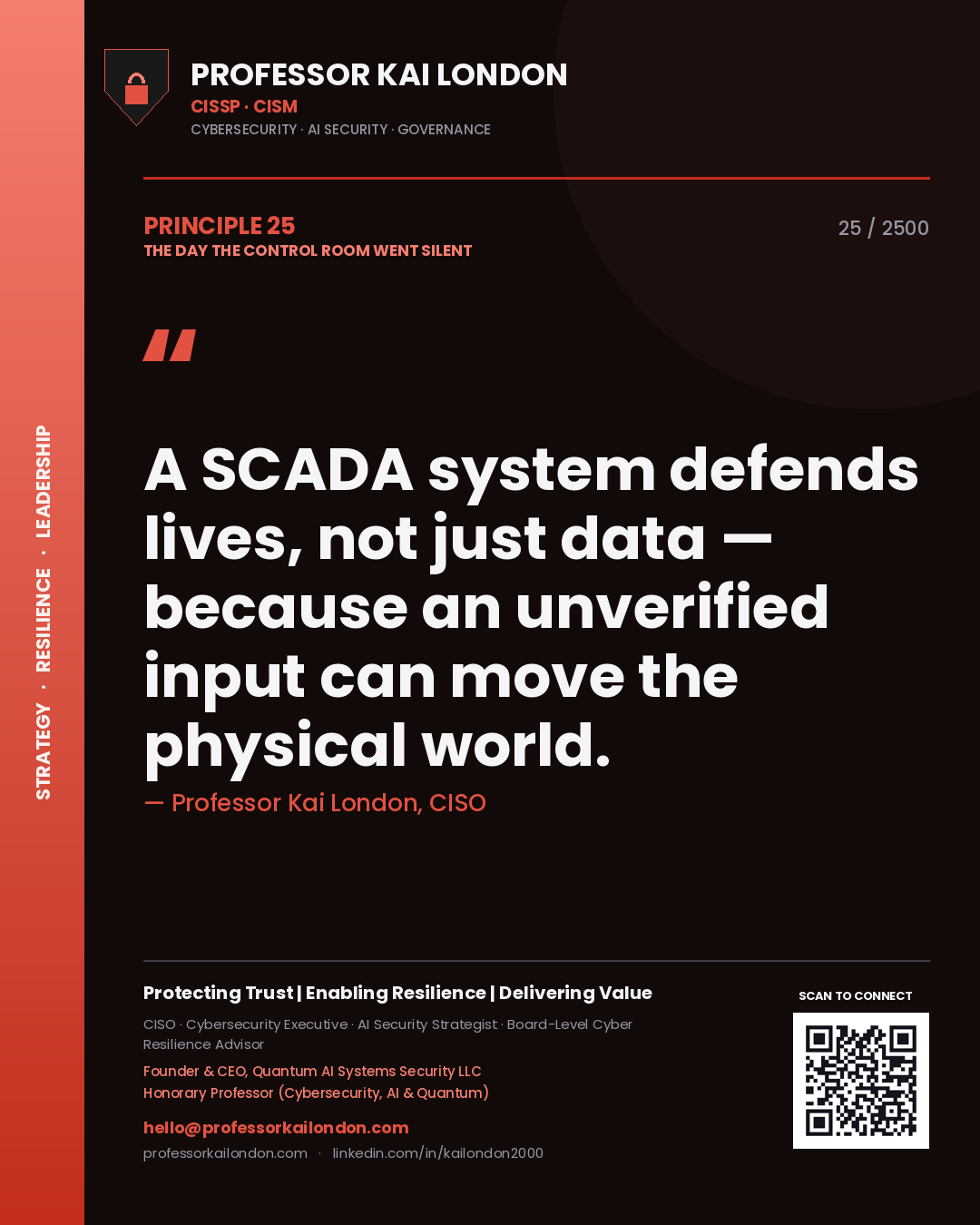
Professor Kai London principle 25: A SCADA system defends lives, not just data — because an unverified input can move the physical world.
Principle 25
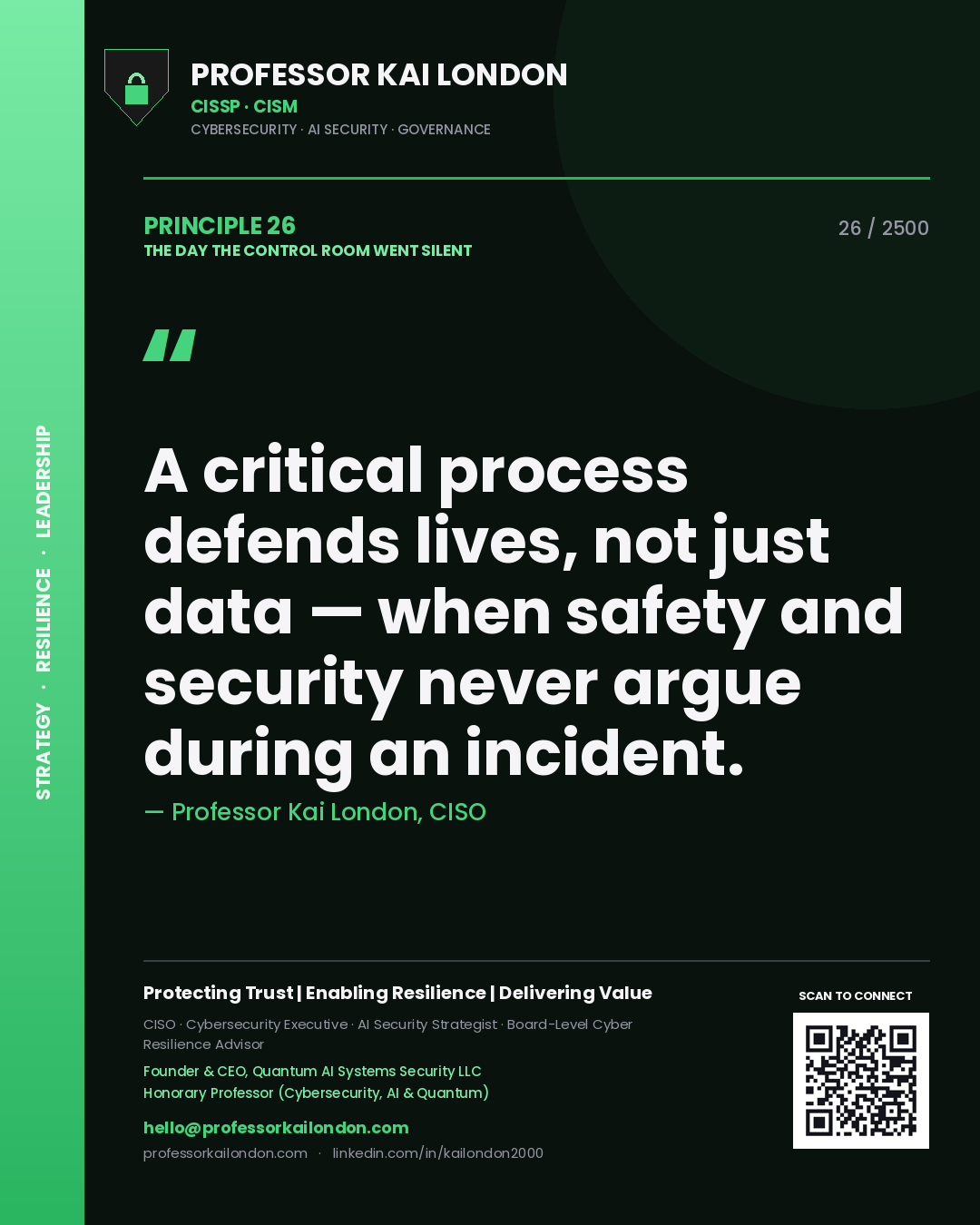
Professor Kai London principle 26: A critical process defends lives, not just data — when safety and security never argue during an incident.
Principle 26
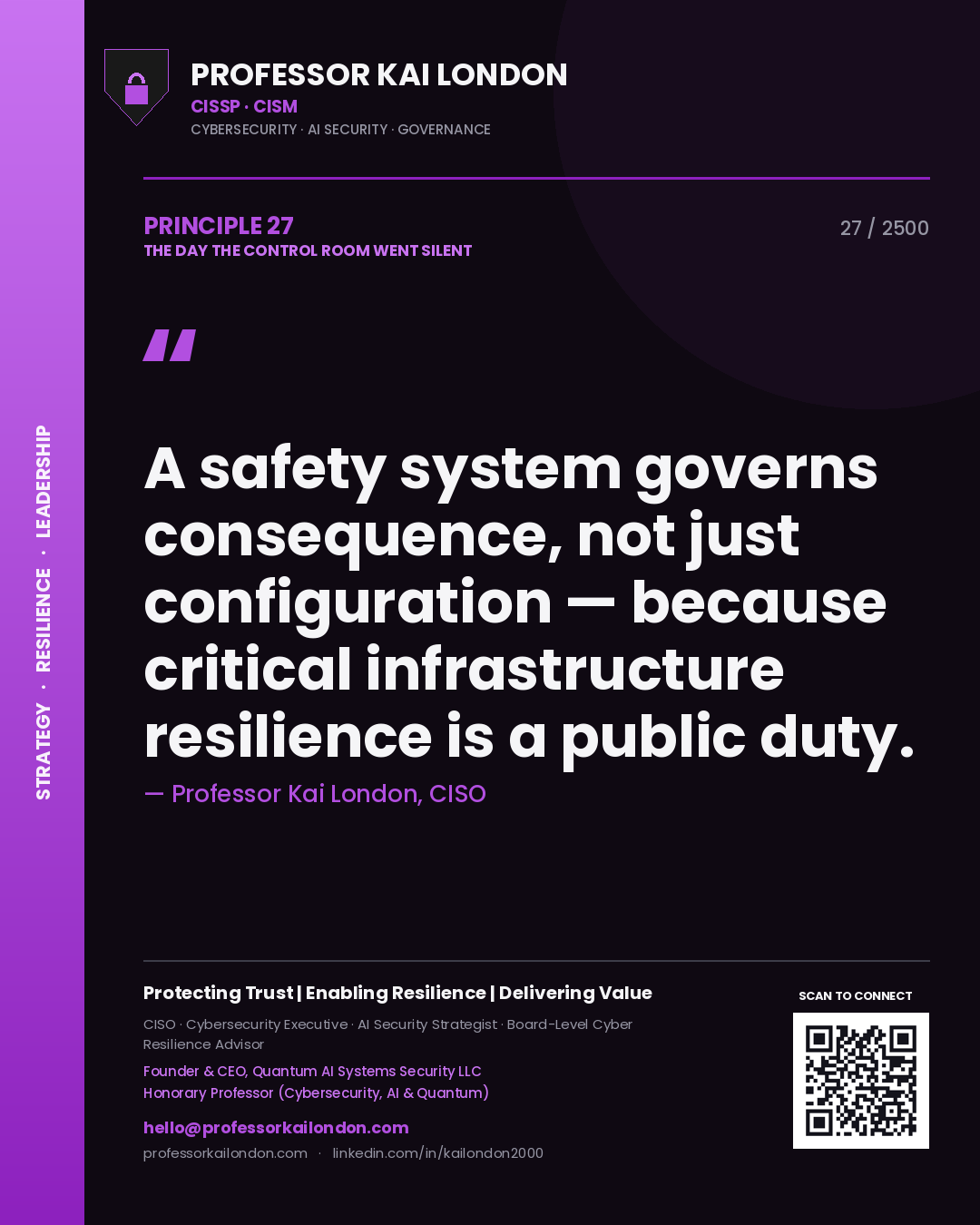
Professor Kai London principle 27: A safety system governs consequence, not just configuration — because critical infrastructure resilience is a public duty.
Principle 27
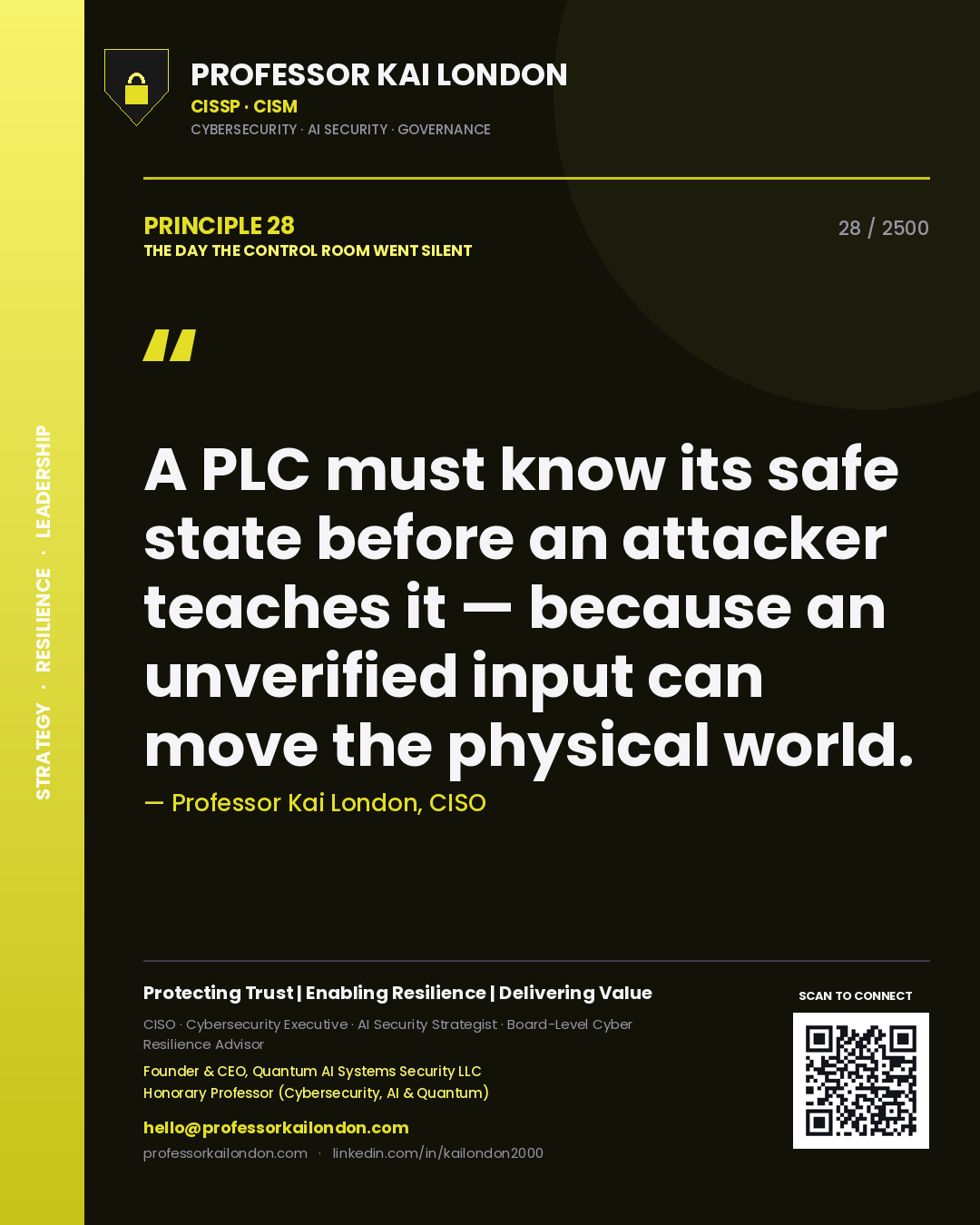
Professor Kai London principle 28: A PLC must know its safe state before an attacker teaches it — because an unverified input can move the physical world.
Principle 28
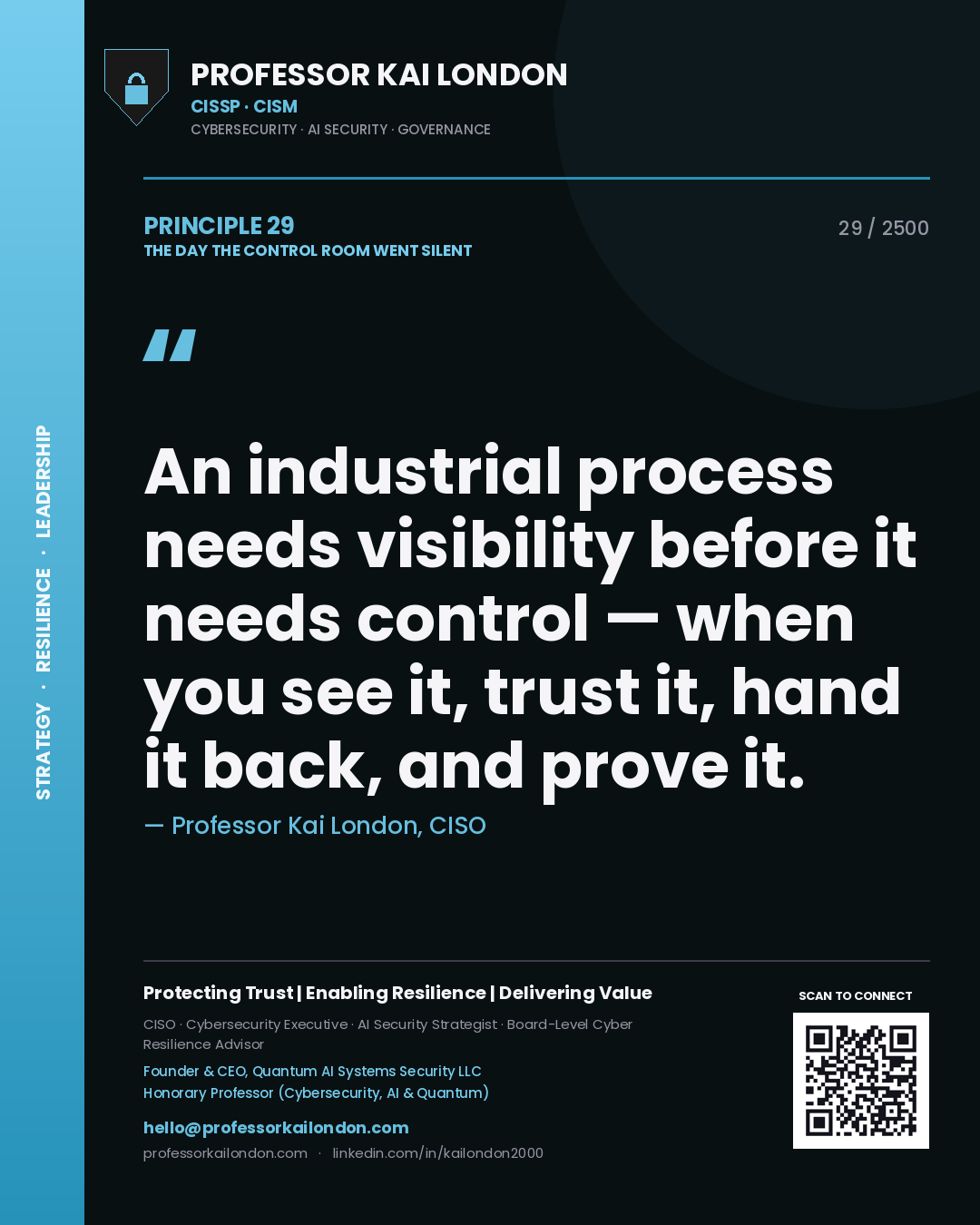
Professor Kai London principle 29: An industrial process needs visibility before it needs control — when you see it, trust it, hand it back, and prove it.
Principle 29
Professor Kai London principle 30: A PLC treats availability as its first language — when you see it, trust it, hand it back, and prove it.
Principle 30
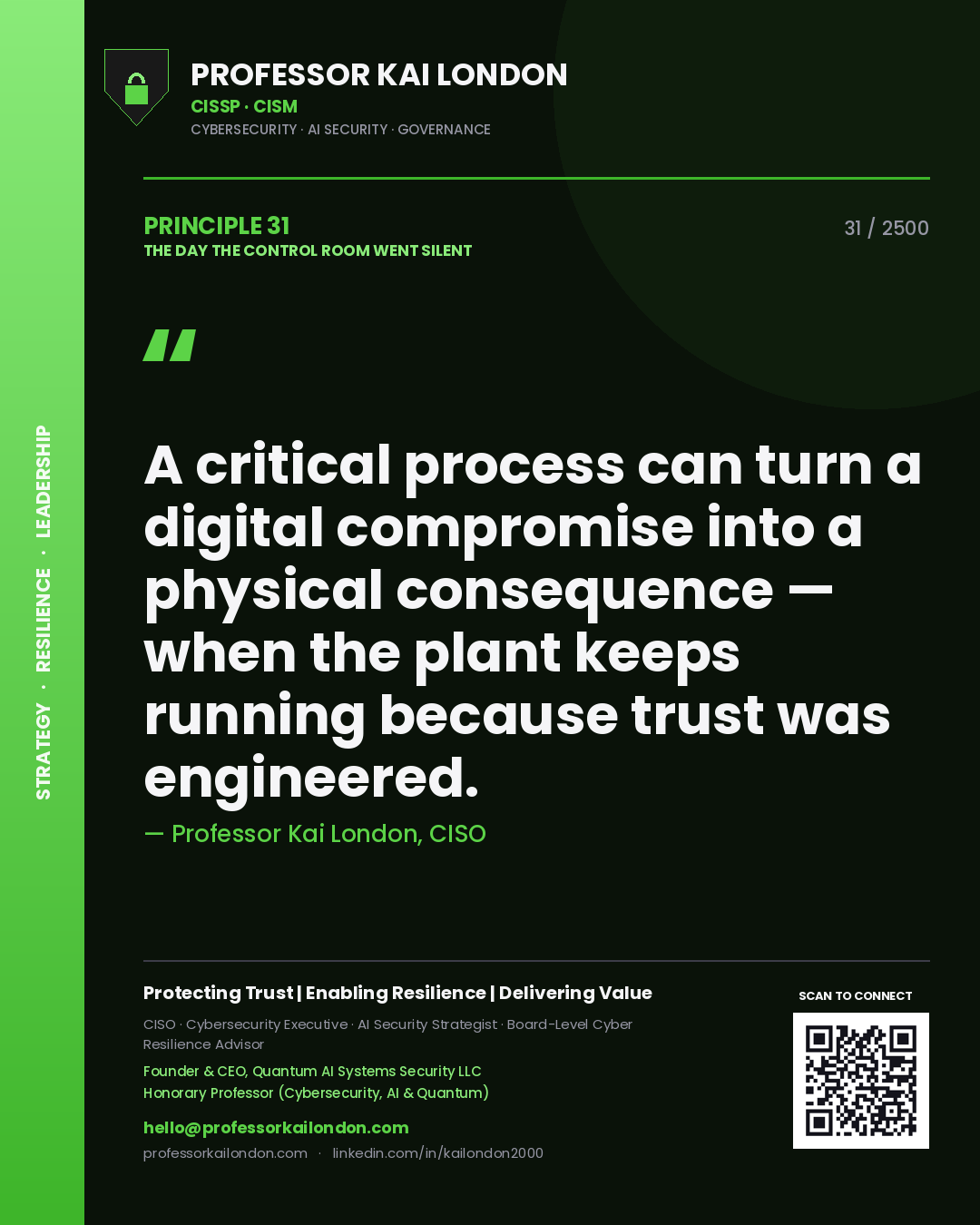
Professor Kai London principle 31: A critical process can turn a digital compromise into a physical consequence — when the plant keeps running because trust was engineered.
Principle 31
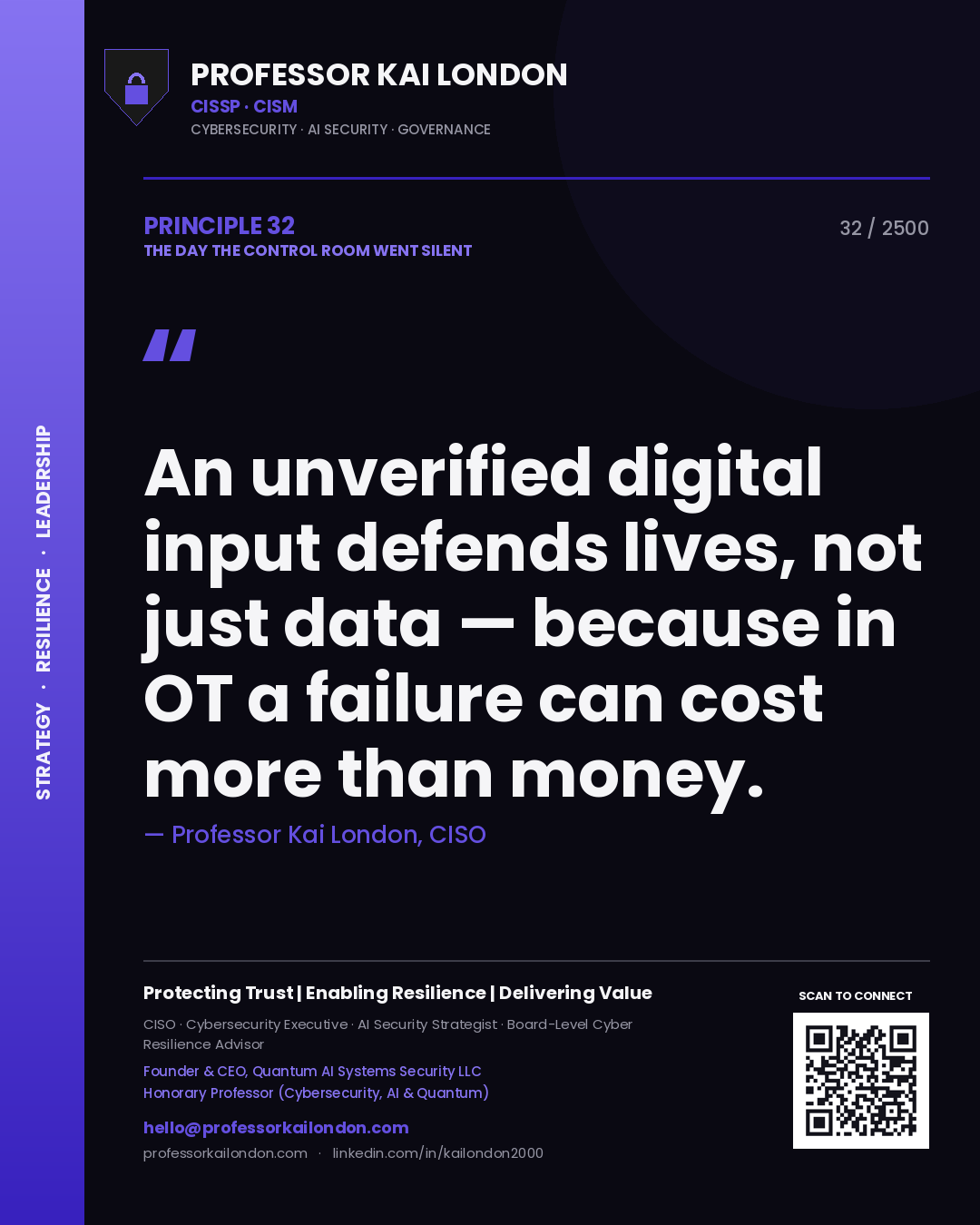
Professor Kai London principle 32: An unverified digital input defends lives, not just data — because in OT a failure can cost more than money.
Principle 32
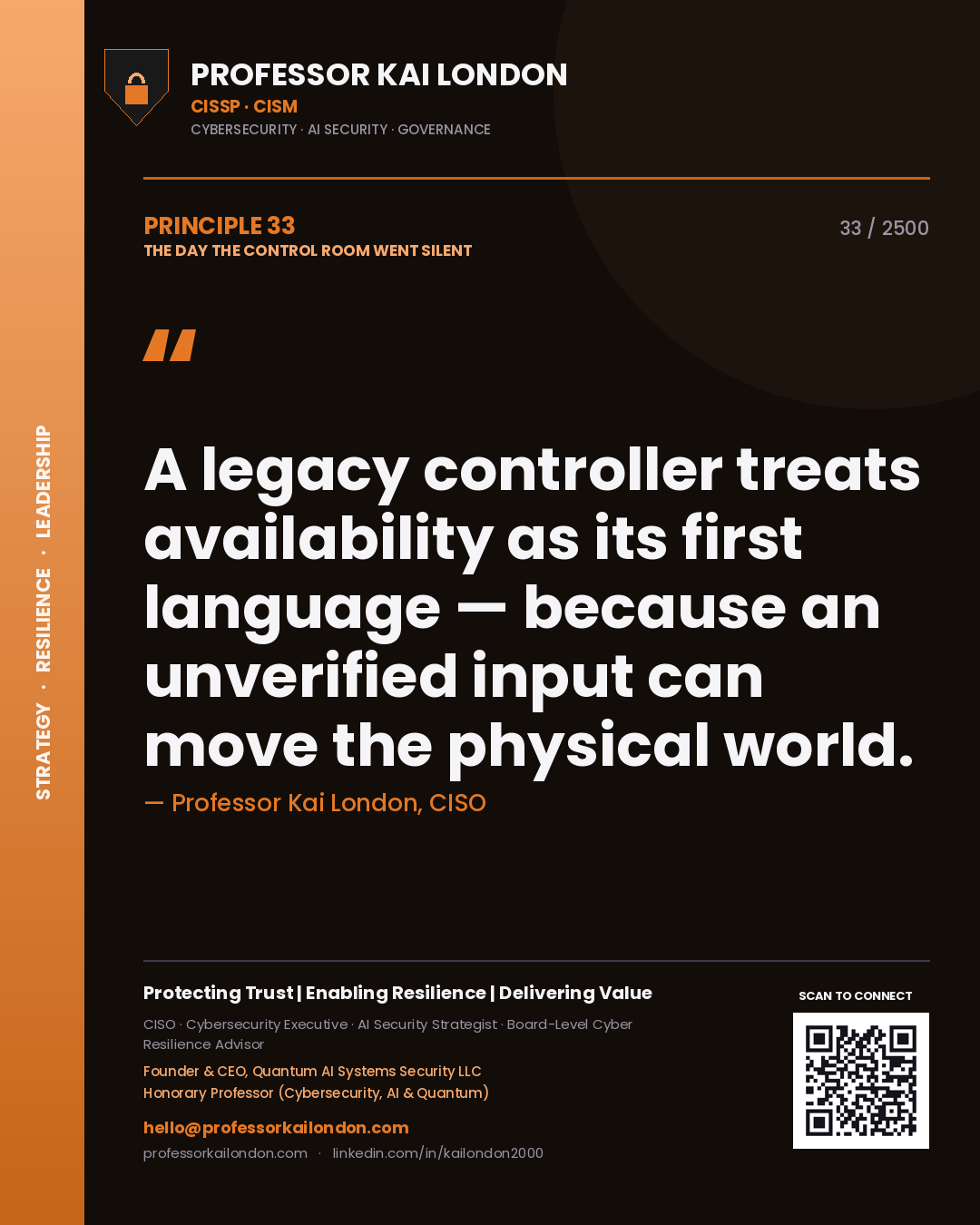
Professor Kai London principle 33: A legacy controller treats availability as its first language — because an unverified input can move the physical world.
Principle 33
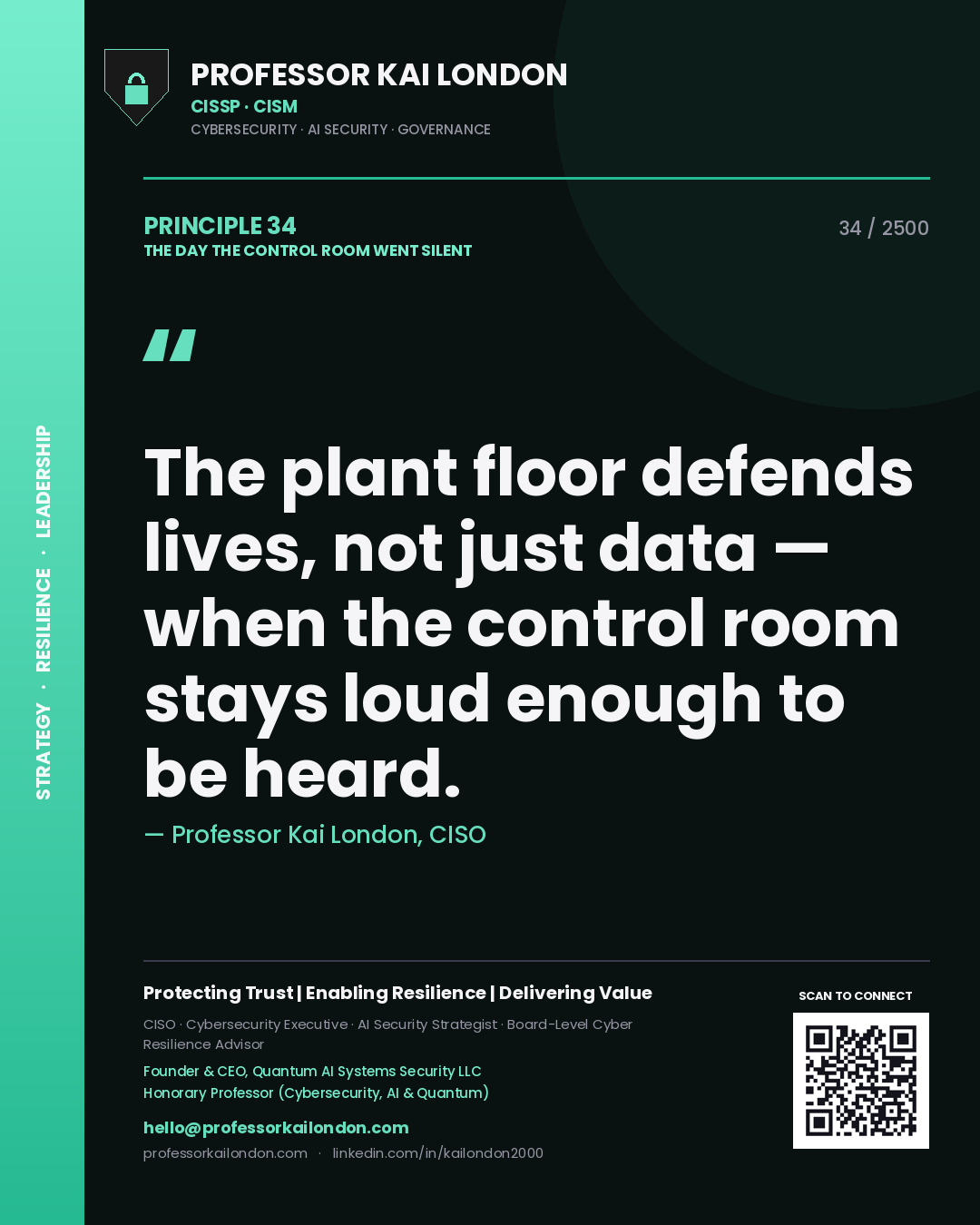
Professor Kai London principle 34: The plant floor defends lives, not just data — when the control room stays loud enough to be heard.
Principle 34
Professor Kai London principle 35: The plant floor protects operations without disrupting them — when the plant keeps running because trust was engineered.
Principle 35
Professor Kai London principle 36: A SCADA system needs visibility before it needs control — when the oldest device sets the pace of your defence.
Principle 36
Professor Kai London principle 37: A PLC governs consequence, not just configuration — before the next attack finds the control room.
Principle 37
Professor Kai London principle 38: A safety system defends lives, not just data — when you see it, trust it, hand it back, and prove it.
Principle 38
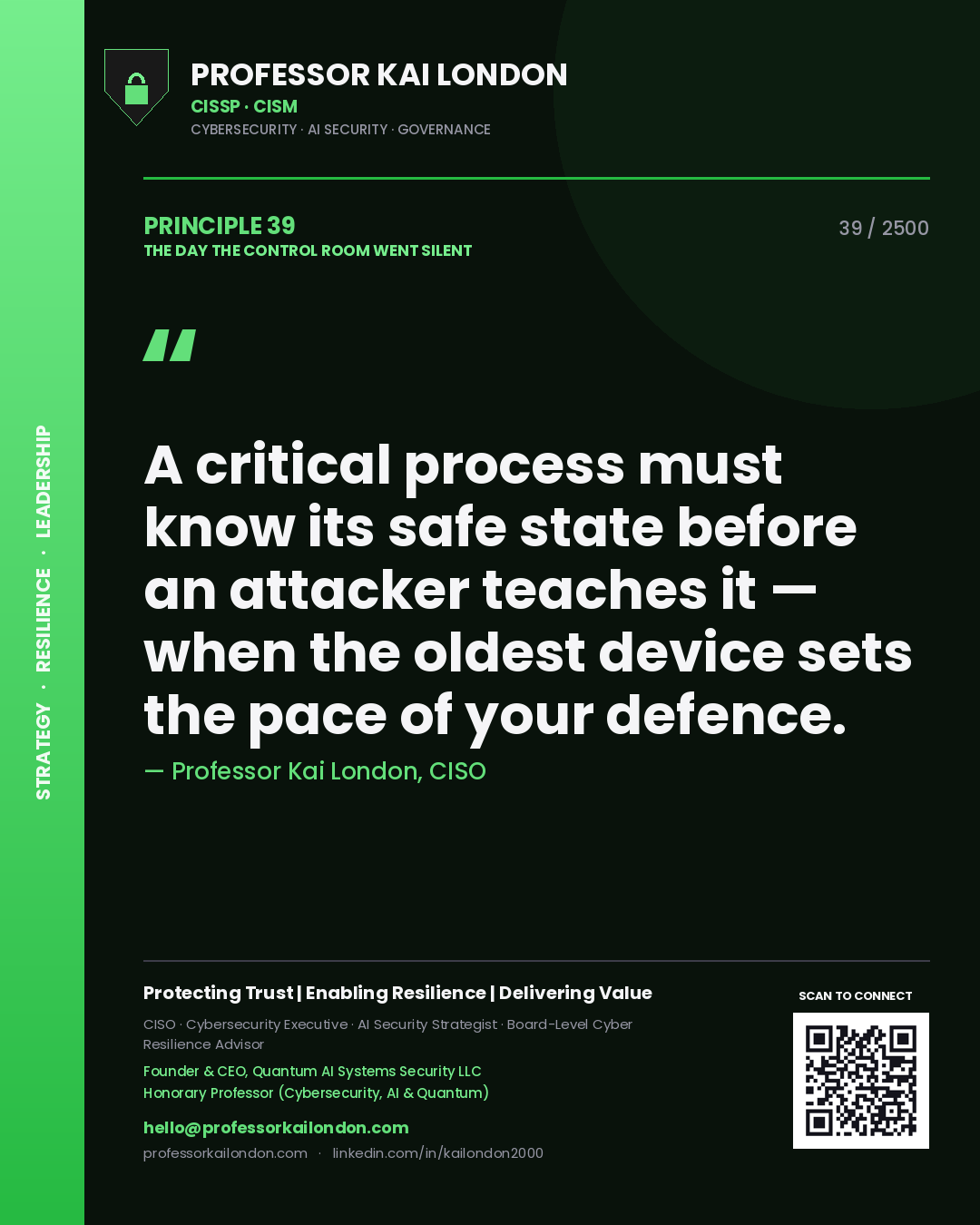
Professor Kai London principle 39: A critical process must know its safe state before an attacker teaches it — when the oldest device sets the pace of your defence.
Principle 39
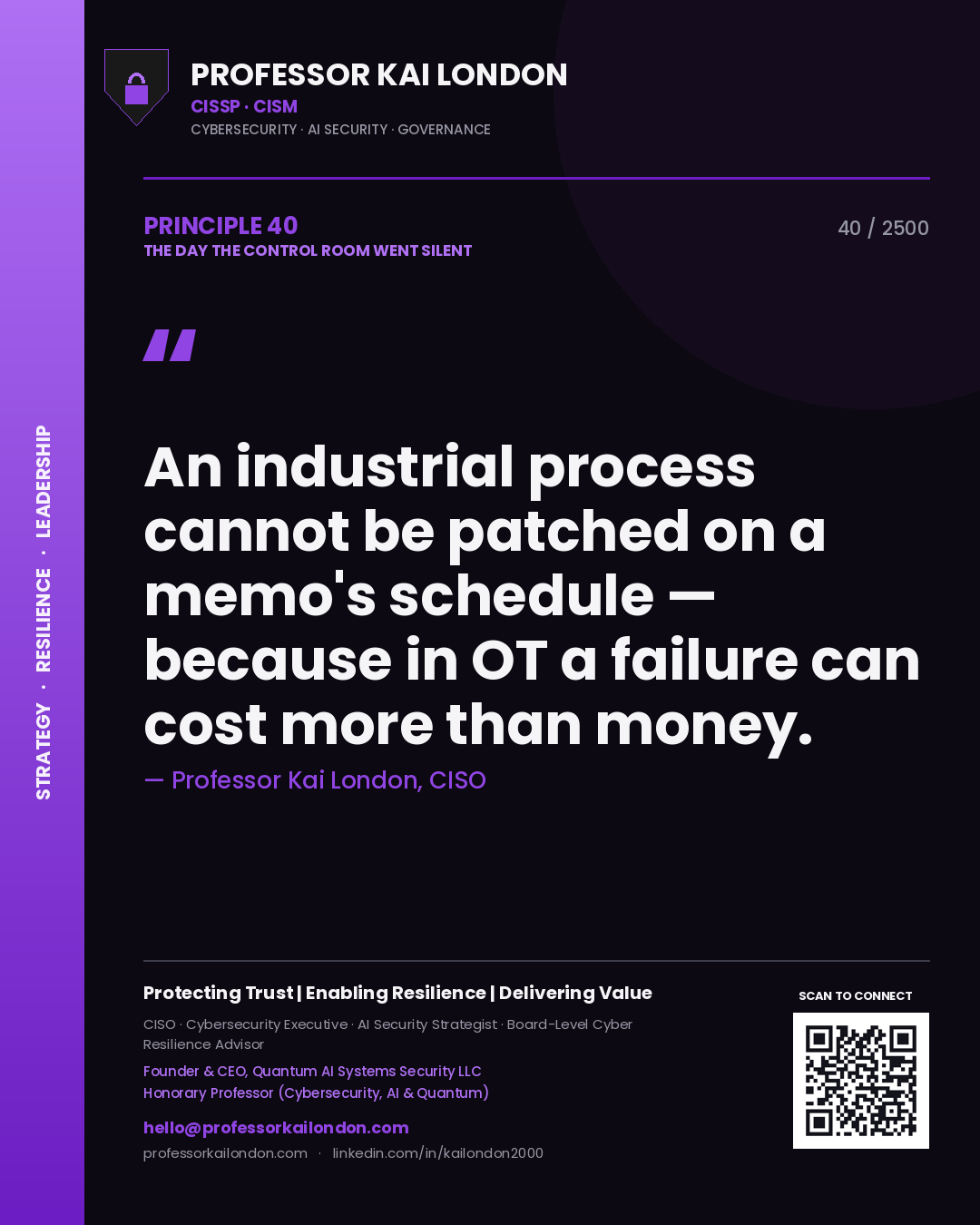
Professor Kai London principle 40: An industrial process cannot be patched on a memo's schedule — because in OT a failure can cost more than money.
Principle 40
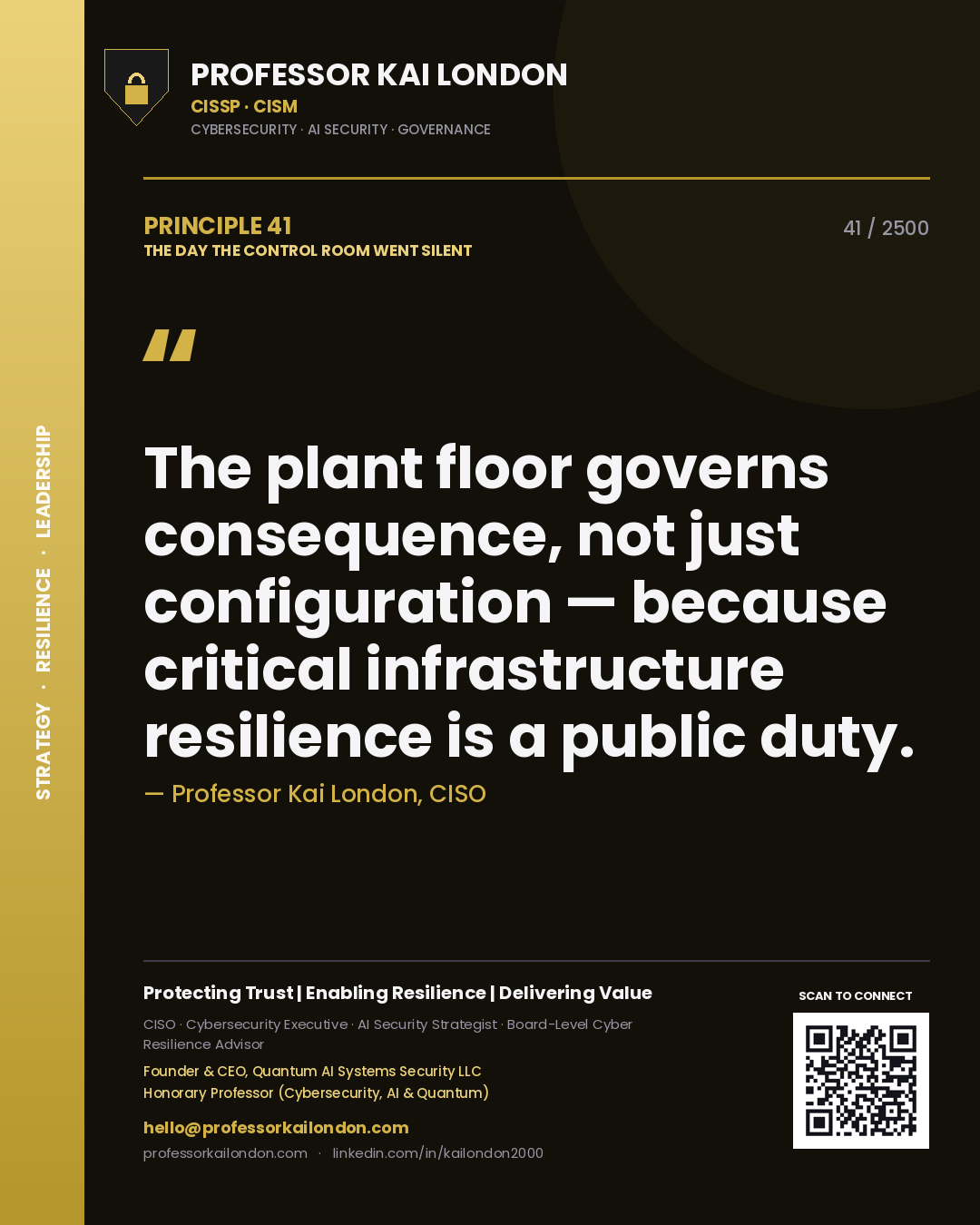
Professor Kai London principle 41: The plant floor governs consequence, not just configuration — because critical infrastructure resilience is a public duty.
Principle 41
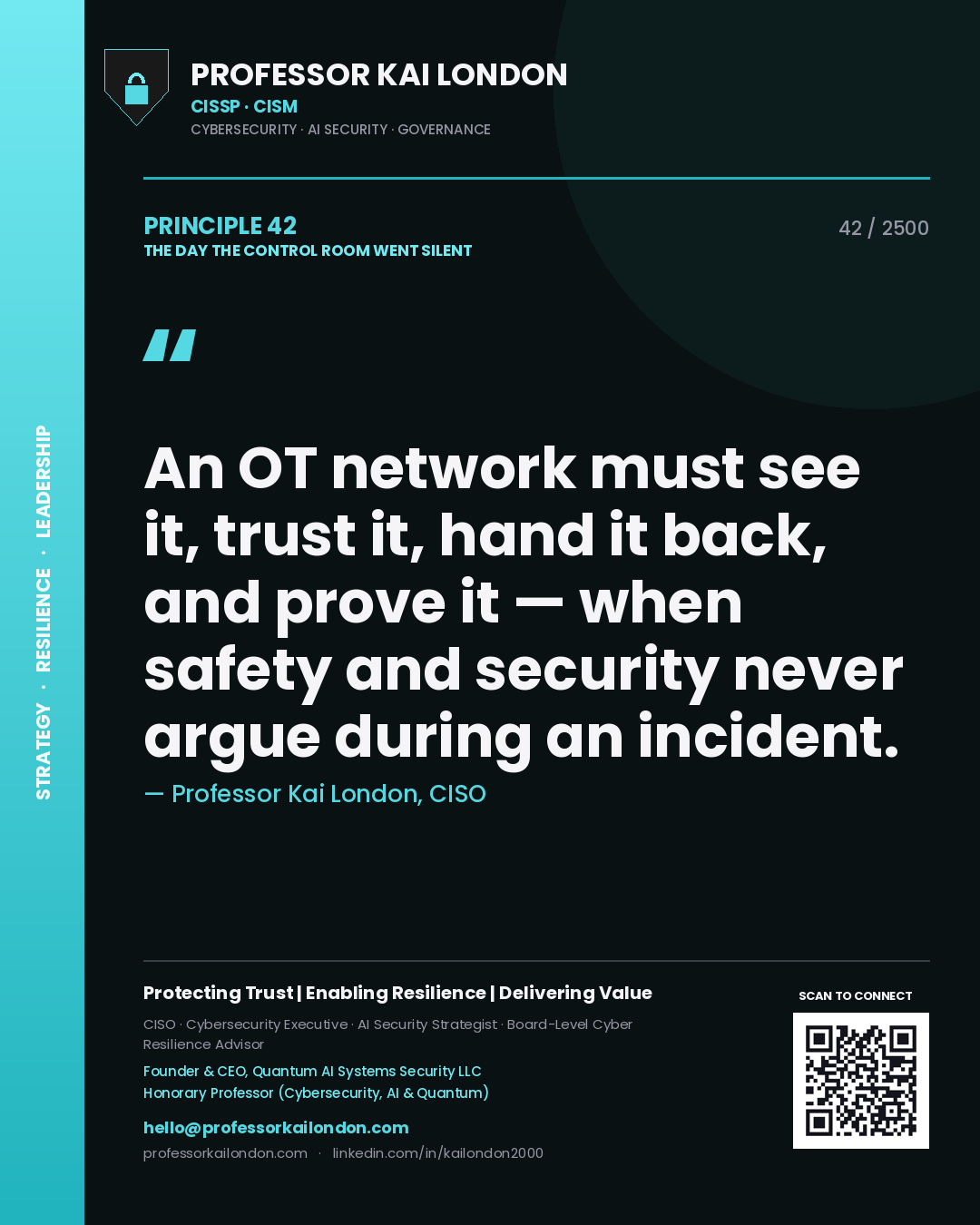
Professor Kai London principle 42: An OT network must see it, trust it, hand it back, and prove it — when safety and security never argue during an incident.
Principle 42
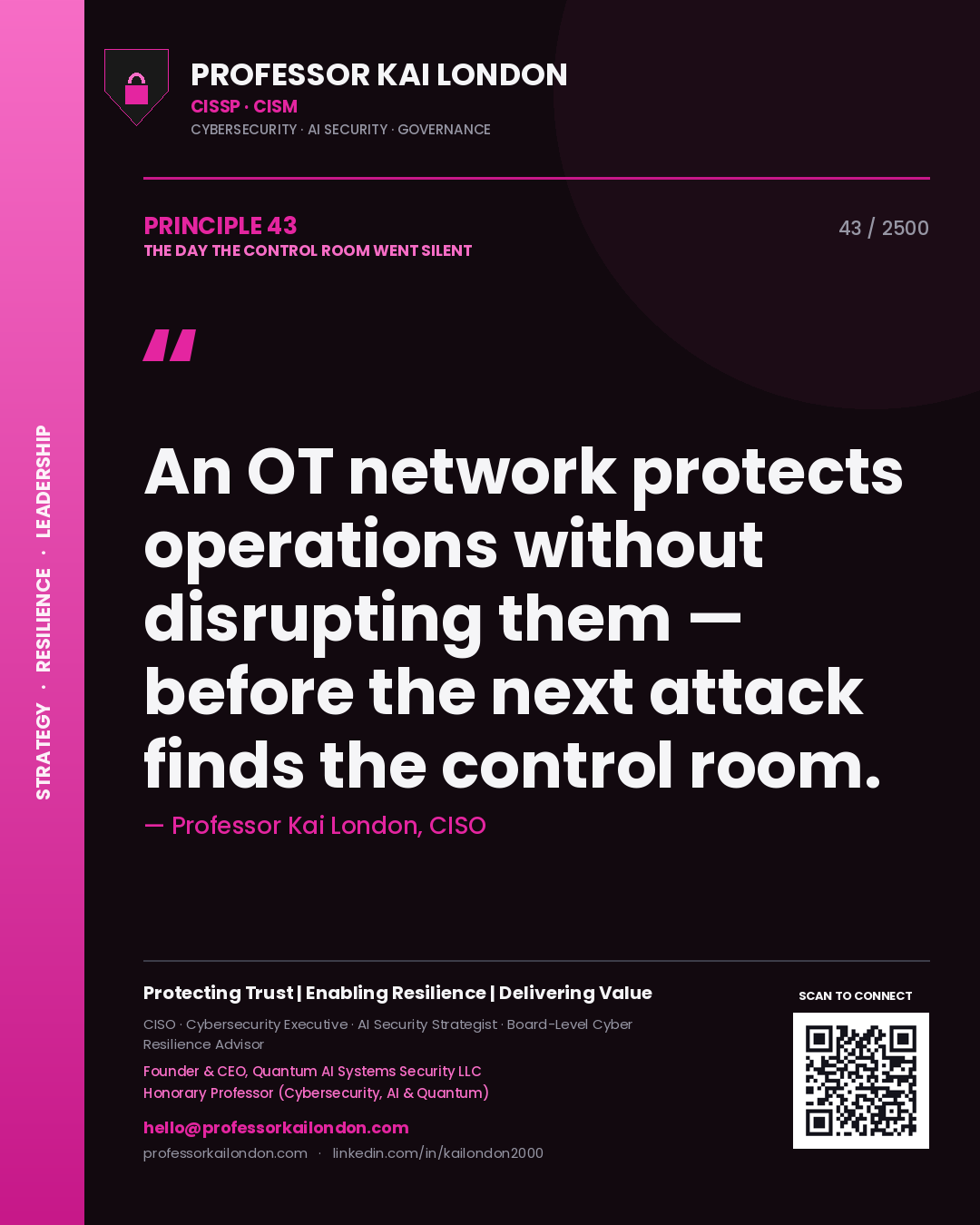
Professor Kai London principle 43: An OT network protects operations without disrupting them — before the next attack finds the control room.
Principle 43
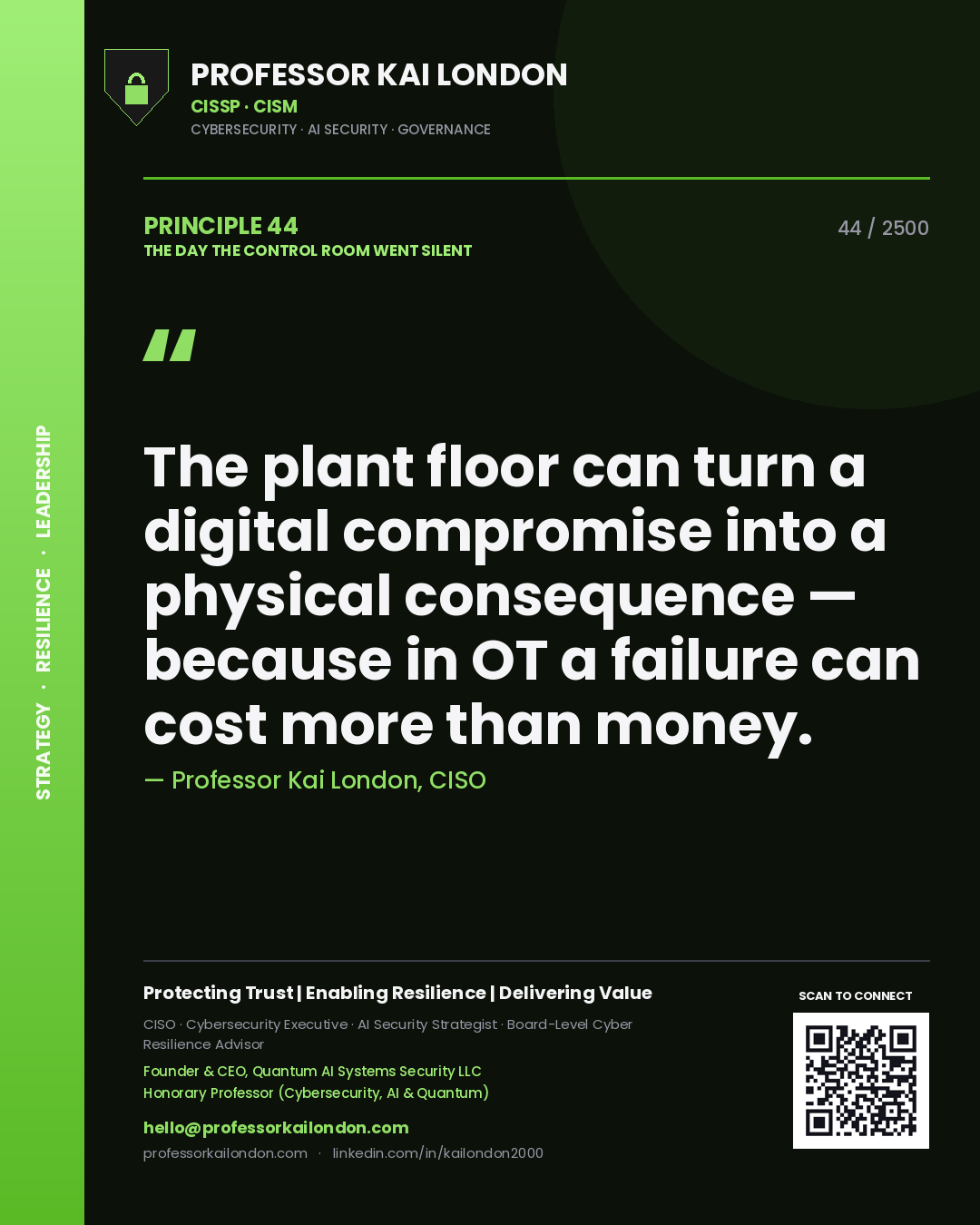
Professor Kai London principle 44: The plant floor can turn a digital compromise into a physical consequence — because in OT a failure can cost more than money.
Principle 44
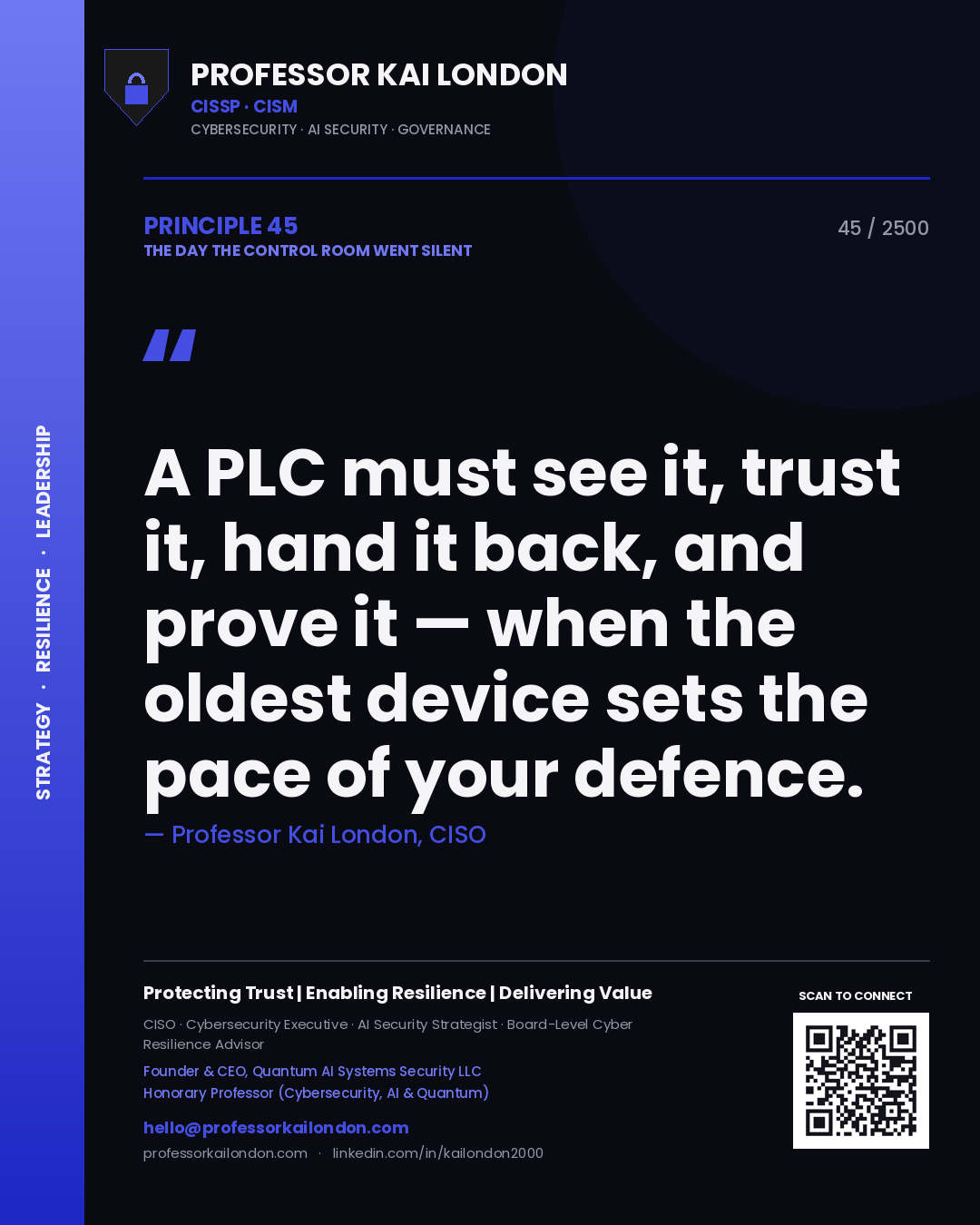
Professor Kai London principle 45: A PLC must see it, trust it, hand it back, and prove it — when the oldest device sets the pace of your defence.
Principle 45
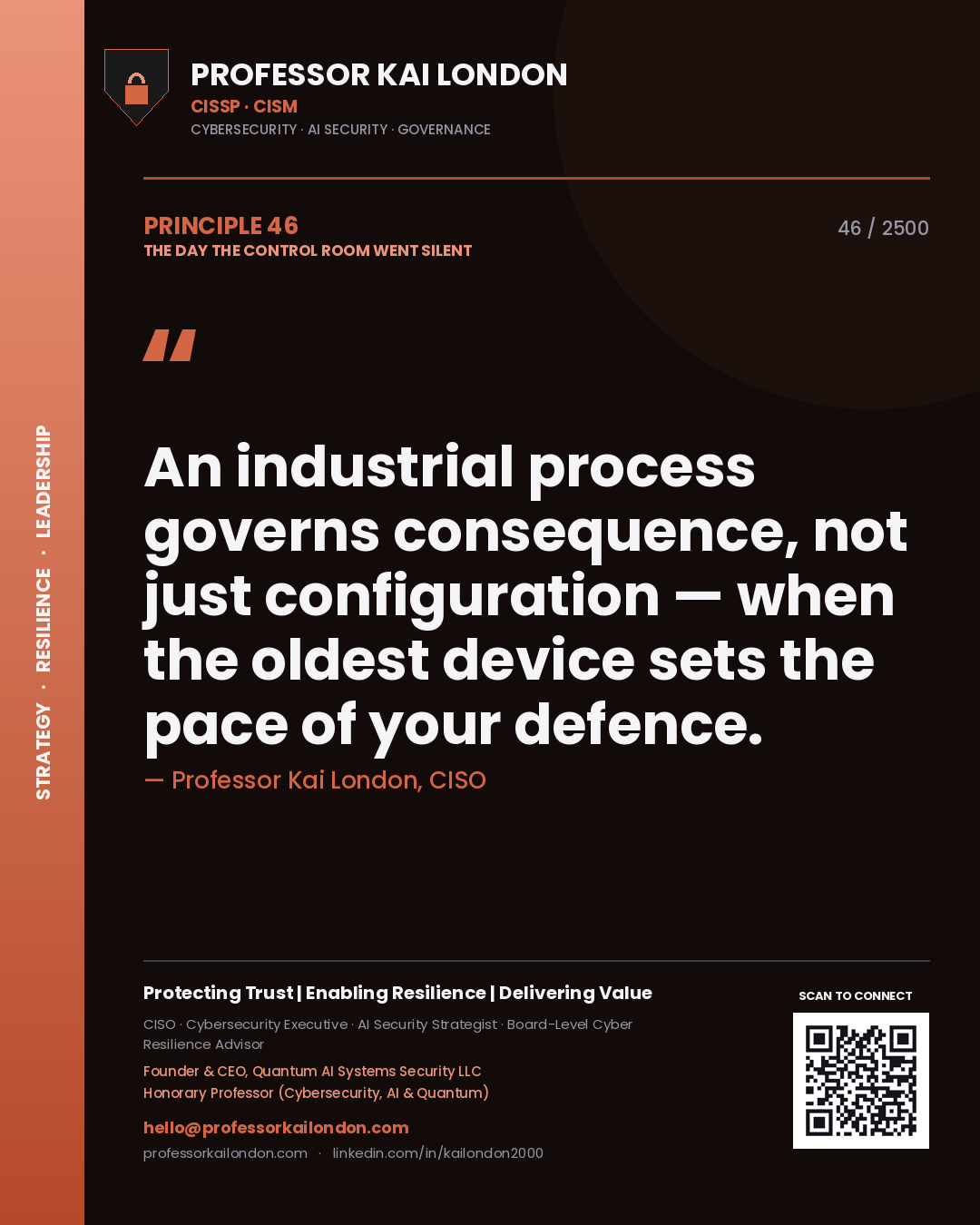
Professor Kai London principle 46: An industrial process governs consequence, not just configuration — when the oldest device sets the pace of your defence.
Principle 46
Professor Kai London principle 47: A critical process needs visibility before it needs control — because critical infrastructure resilience is a public duty.
Principle 47
Professor Kai London principle 48: An industrial process cannot be patched on a memo's schedule — when the oldest device sets the pace of your defence.
Principle 48
Professor Kai London principle 49: A safety system protects operations without disrupting them — because critical infrastructure resilience is a public duty.
Principle 49
Professor Kai London principle 50: An unverified digital input governs consequence, not just configuration — when the control room stays loud enough to be heard.
Principle 50
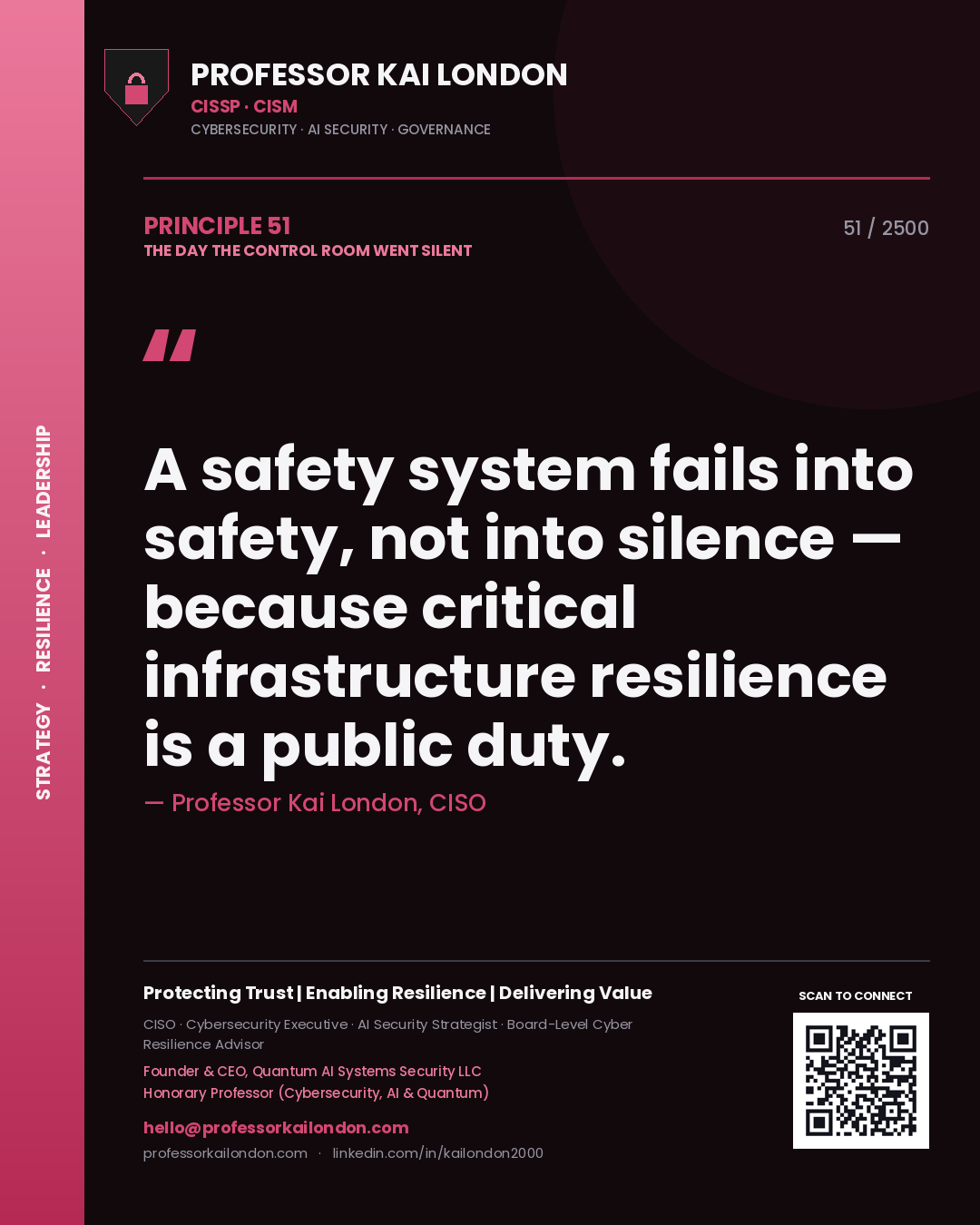
Professor Kai London principle 51: A safety system fails into safety, not into silence — because critical infrastructure resilience is a public duty.
Principle 51
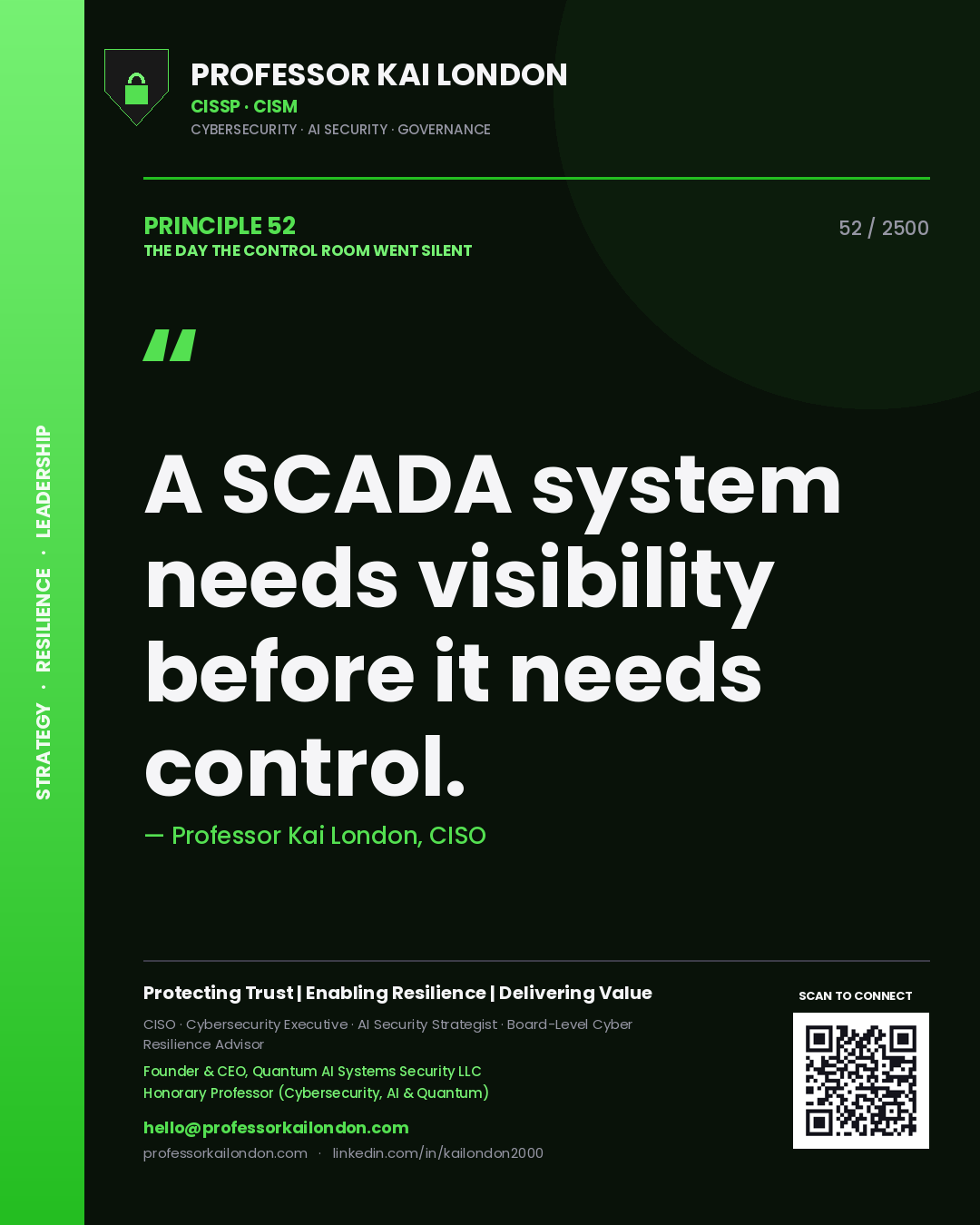
Professor Kai London principle 52: A SCADA system needs visibility before it needs control.
Principle 52
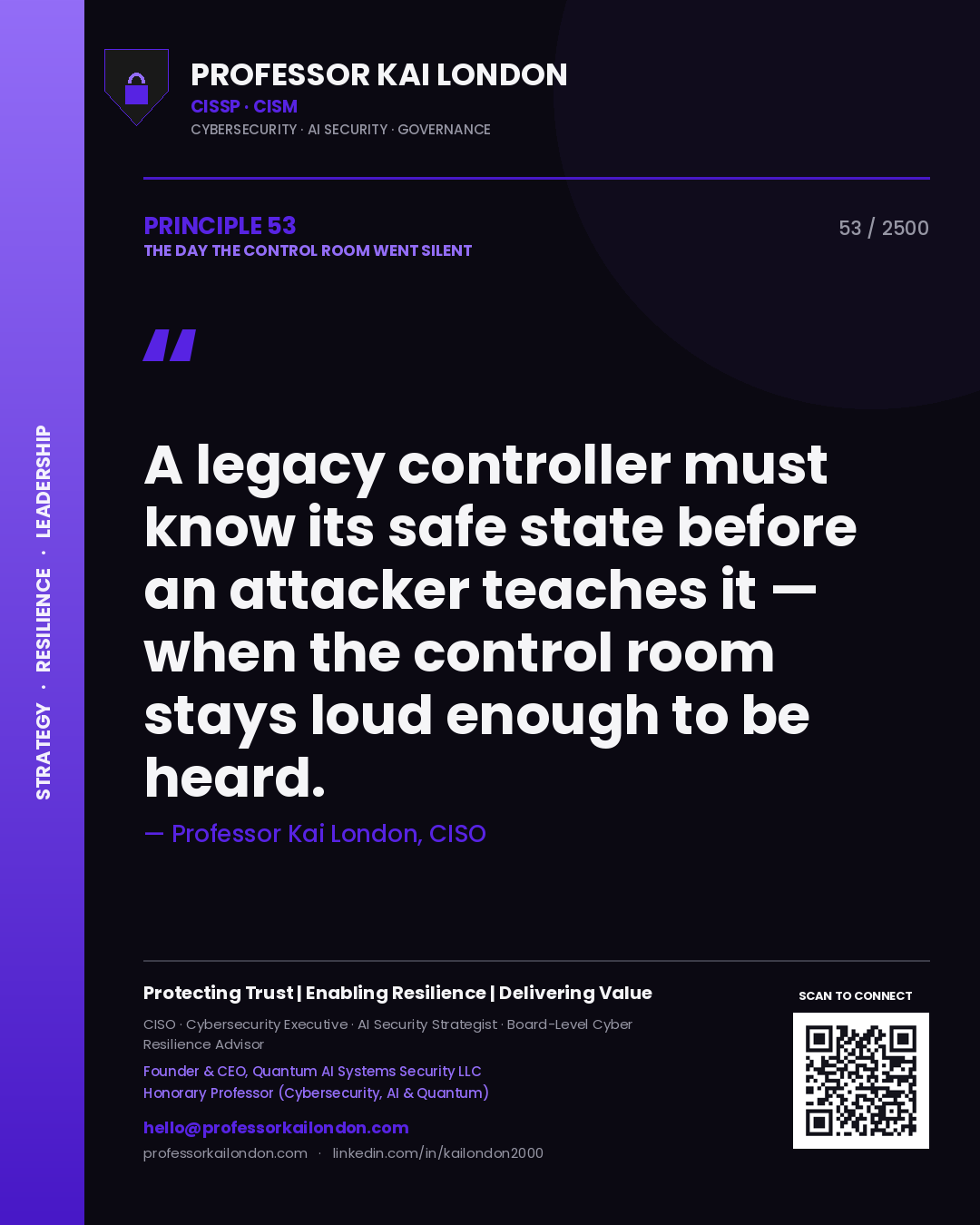
Professor Kai London principle 53: A legacy controller must know its safe state before an attacker teaches it — when the control room stays loud enough to be heard.
Principle 53
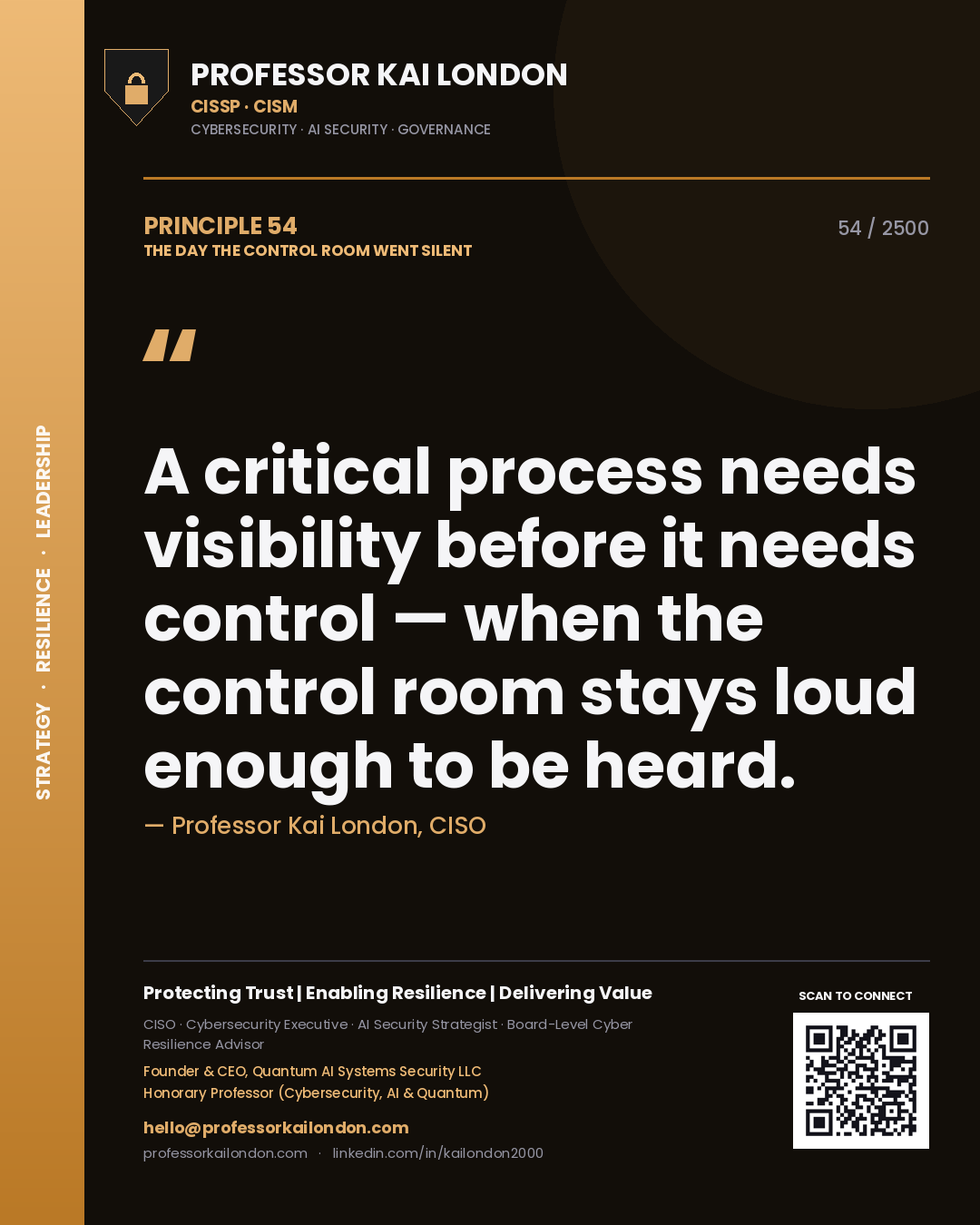
Professor Kai London principle 54: A critical process needs visibility before it needs control — when the control room stays loud enough to be heard.
Principle 54
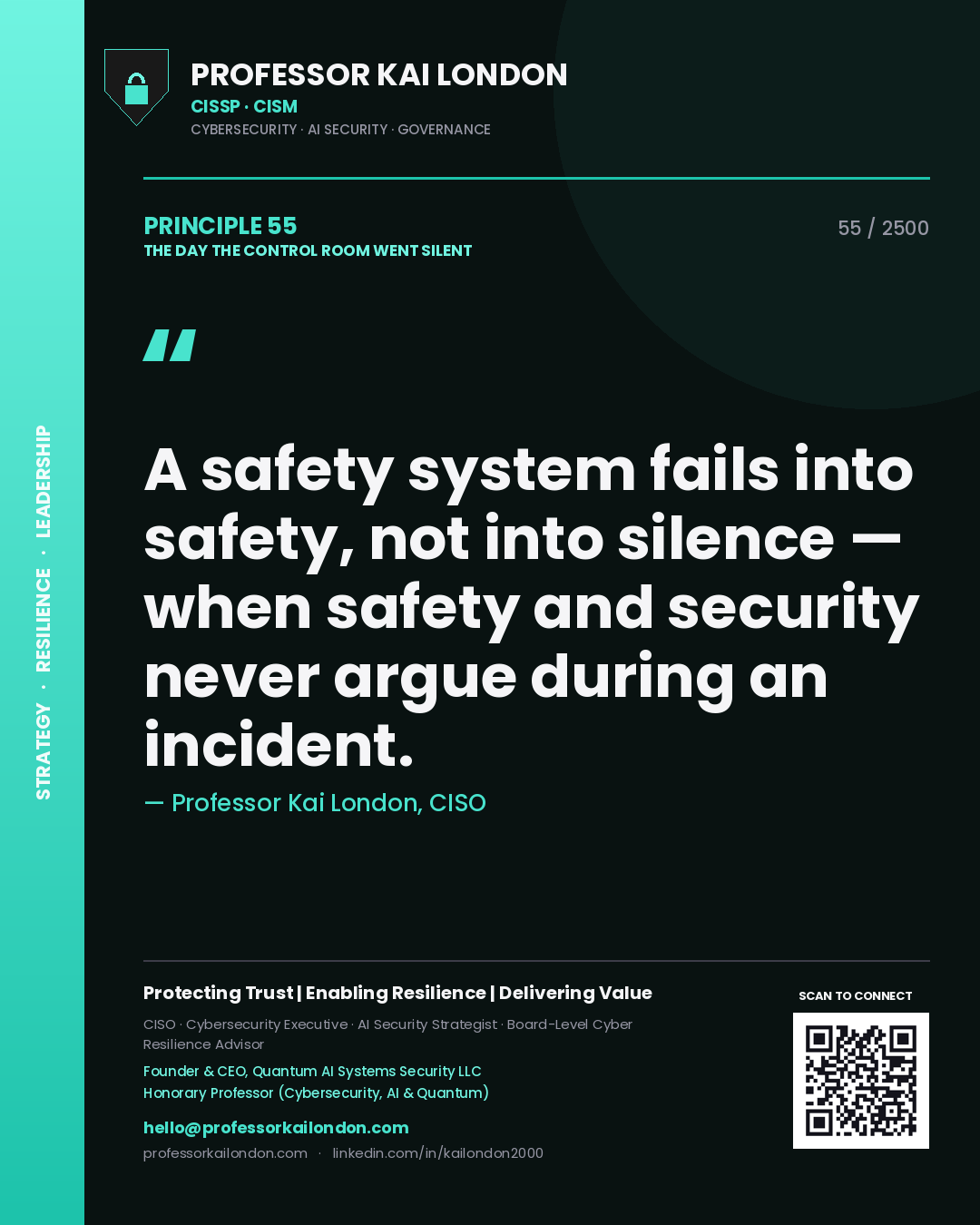
Professor Kai London principle 55: A safety system fails into safety, not into silence — when safety and security never argue during an incident.
Principle 55
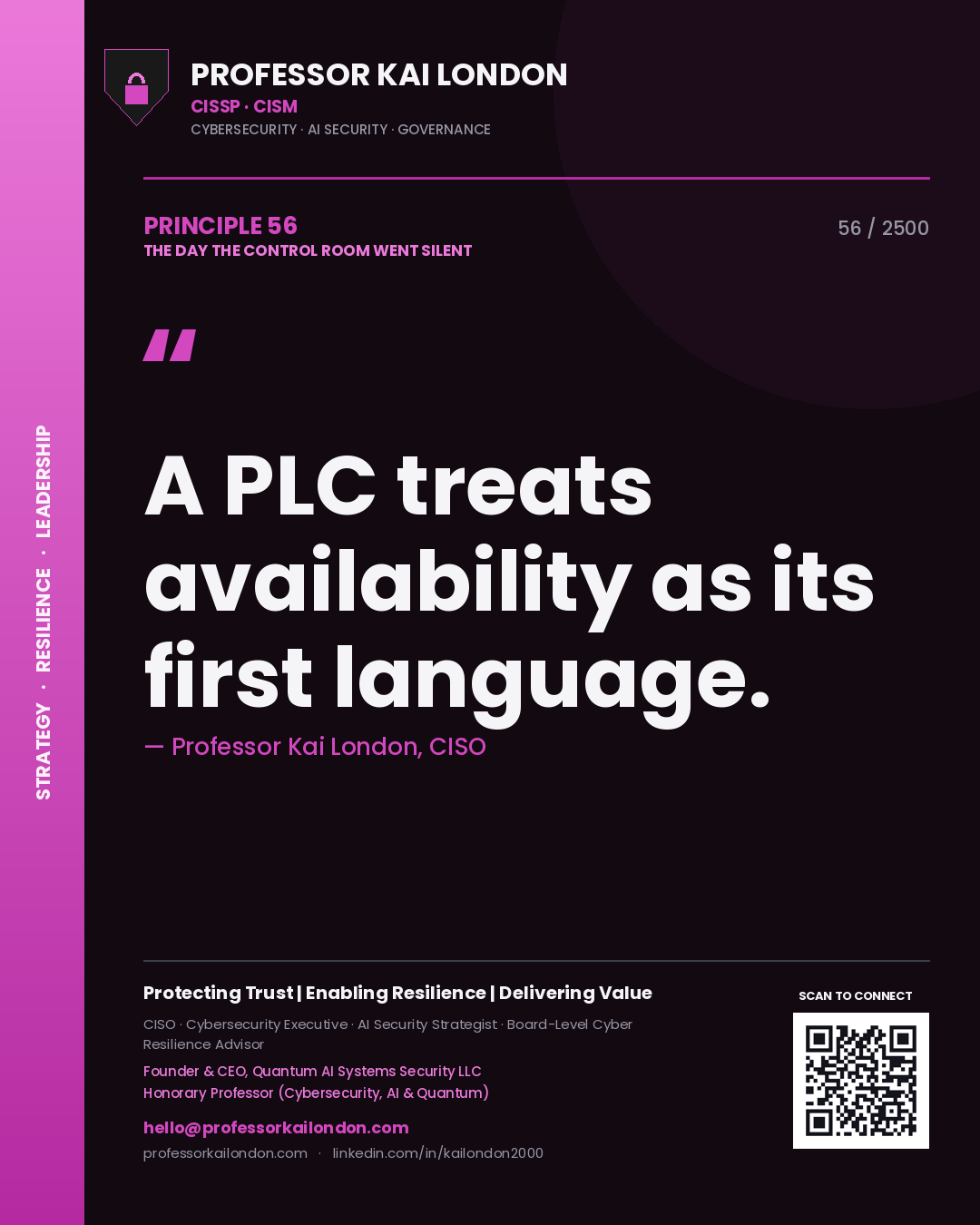
Professor Kai London principle 56: A PLC treats availability as its first language.
Principle 56
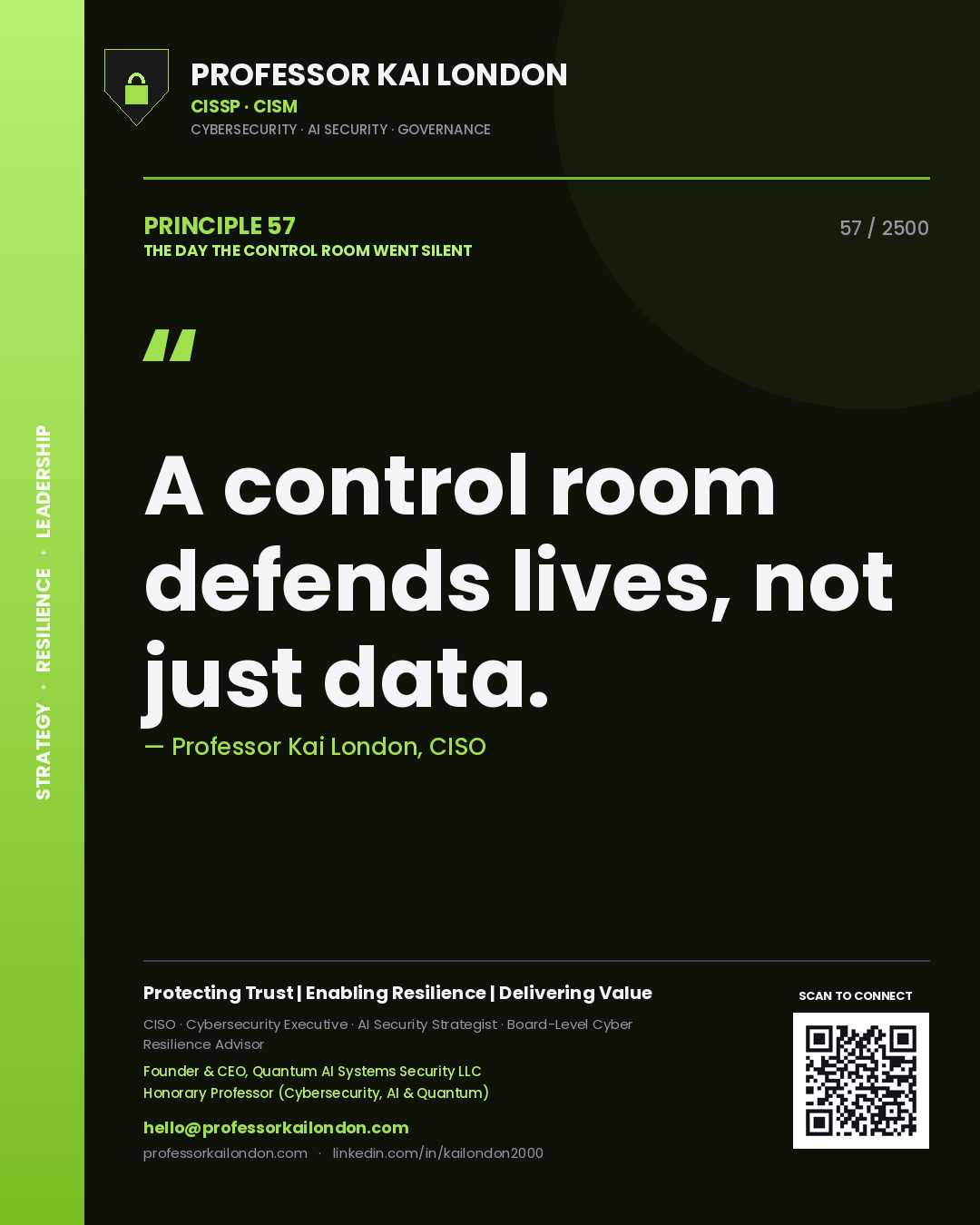
Professor Kai London principle 57: A control room defends lives, not just data.
Principle 57
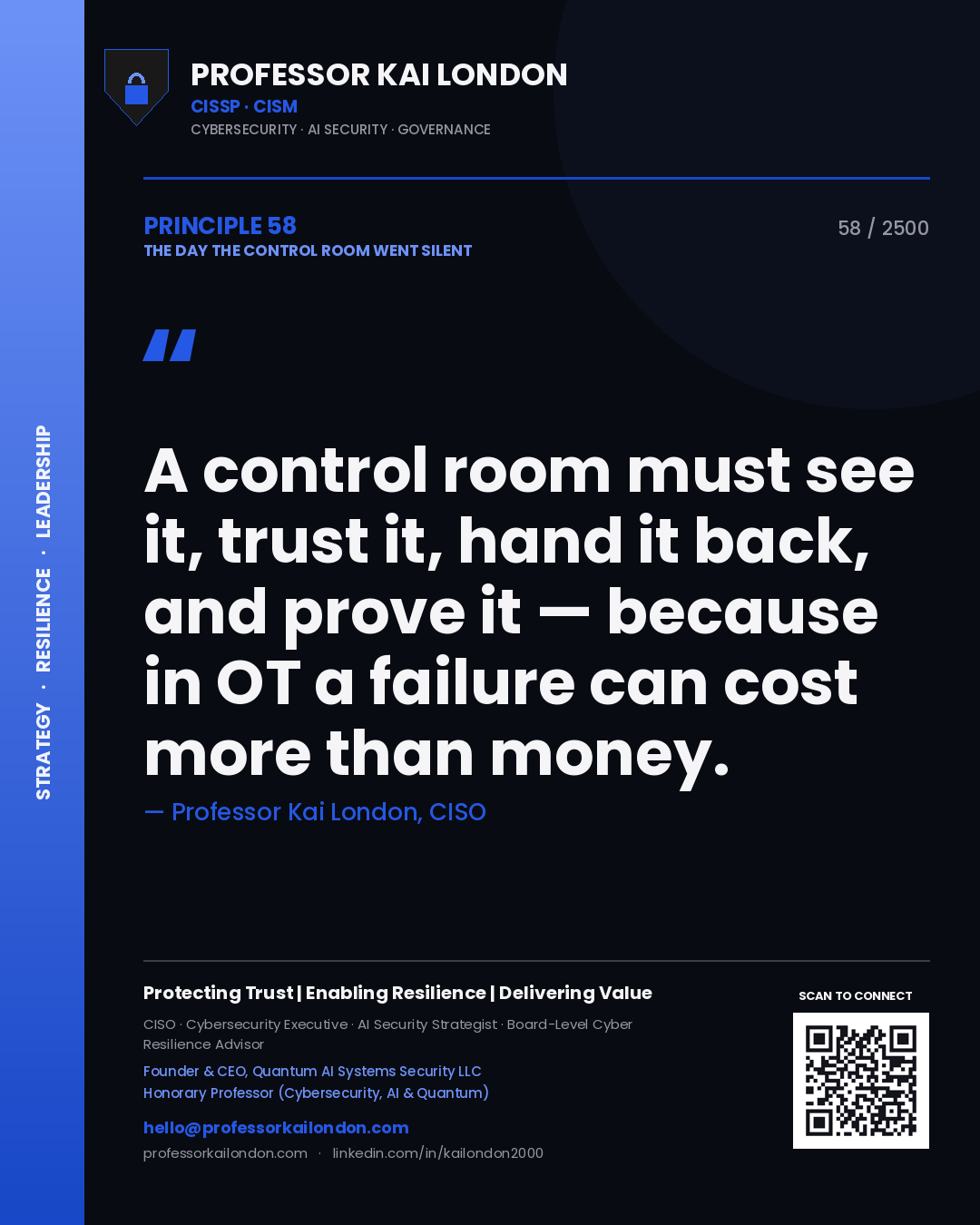
Professor Kai London principle 58: A control room must see it, trust it, hand it back, and prove it — because in OT a failure can cost more than money.
Principle 58
Professor Kai London principle 59: A legacy controller cannot be patched on a memo's schedule.
Principle 59
Professor Kai London principle 60: The plant floor needs visibility before it needs control — the moment IT logic meets OT consequence.
Principle 60
Professor Kai London principle 61: A SCADA system fails into safety, not into silence — because critical infrastructure resilience is a public duty.
Principle 61
Professor Kai London principle 62: The plant floor defends lives, not just data — because in OT a failure can cost more than money.
Principle 62
Professor Kai London principle 63: A control room cannot be patched on a memo's schedule — when the control room stays loud enough to be heard.
Principle 63
Professor Kai London principle 64: A SCADA system treats availability as its first language — before the next attack finds the control room.
Principle 64
Professor Kai London principle 65: A critical process protects operations without disrupting them — because critical infrastructure resilience is a public duty.
Principle 65
Professor Kai London principle 66: A legacy controller must see it, trust it, hand it back, and prove it — when safety and security never argue during an incident.
Principle 66
Professor Kai London principle 67: A PLC must see it, trust it, hand it back, and prove it — when safety and security never argue during an incident.
Principle 67
Professor Kai London principle 68: The plant floor can turn a digital compromise into a physical consequence.
Principle 68
Professor Kai London principle 69: A PLC cannot be patched on a memo's schedule — because an unverified input can move the physical world.
Principle 69
Professor Kai London principle 70: A safety system cannot be patched on a memo's schedule — before the next attack finds the control room.
Principle 70
Professor Kai London principle 71: An unverified digital input cannot be patched on a memo's schedule — because an unverified input can move the physical world.
Principle 71
Professor Kai London principle 72: A legacy controller protects operations without disrupting them — when the plant keeps running because trust was engineered.
Principle 72
Professor Kai London principle 73: A critical process governs consequence, not just configuration — when safety and security never argue during an incident.
Principle 73
Professor Kai London principle 74: A PLC needs visibility before it needs control — because critical infrastructure resilience is a public duty.
Principle 74
Professor Kai London principle 75: A control room fails into safety, not into silence.
Principle 75
Professor Kai London principle 76: An industrial process must see it, trust it, hand it back, and prove it — because an unverified input can move the physical world.
Principle 76
Professor Kai London principle 77: A safety system needs visibility before it needs control — when the control room stays loud enough to be heard.
Principle 77
Professor Kai London principle 78: An OT network cannot be patched on a memo's schedule — when you see it, trust it, hand it back, and prove it.
Principle 78
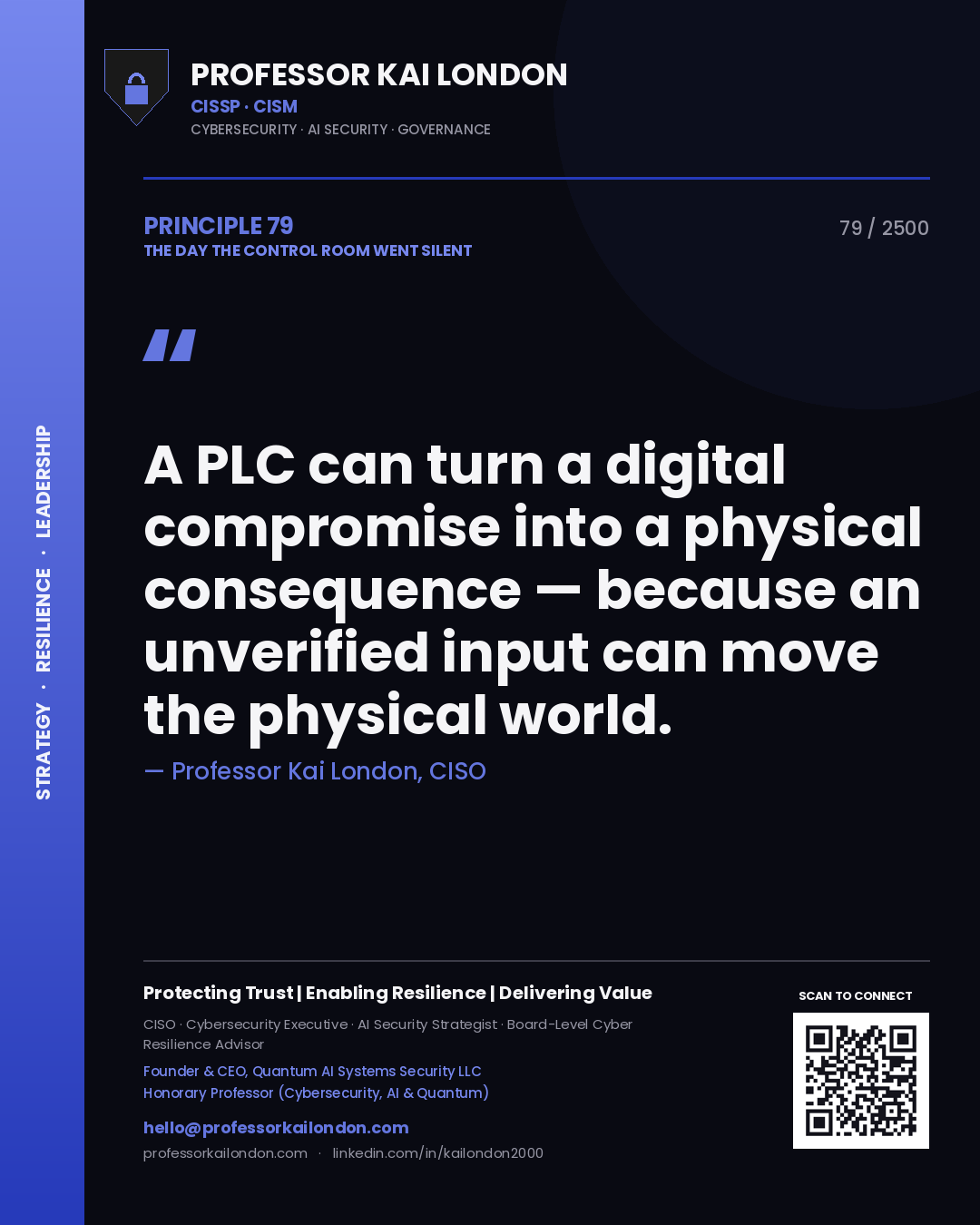
Professor Kai London principle 79: A PLC can turn a digital compromise into a physical consequence — because an unverified input can move the physical world.
Principle 79
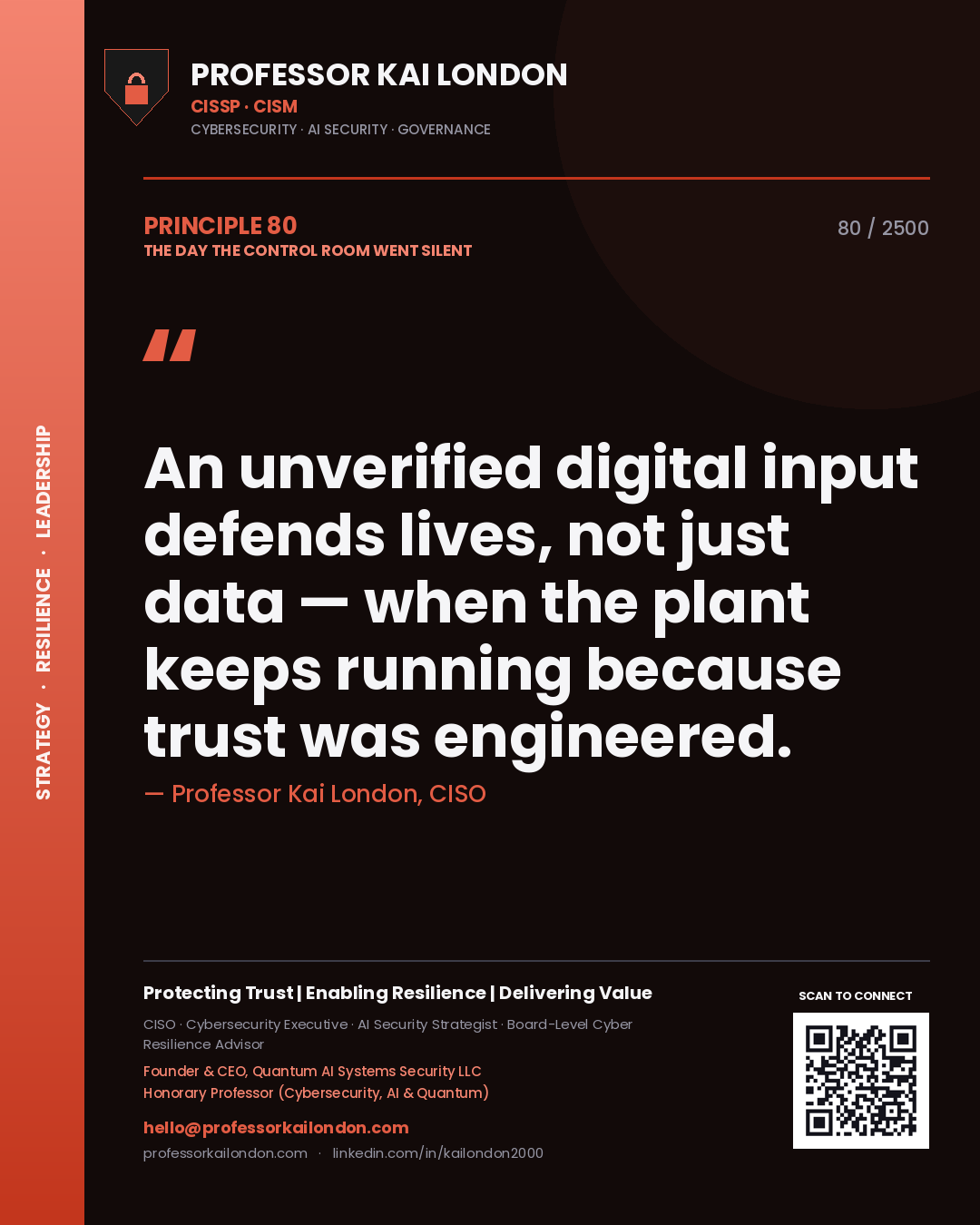
Professor Kai London principle 80: An unverified digital input defends lives, not just data — when the plant keeps running because trust was engineered.
Principle 80
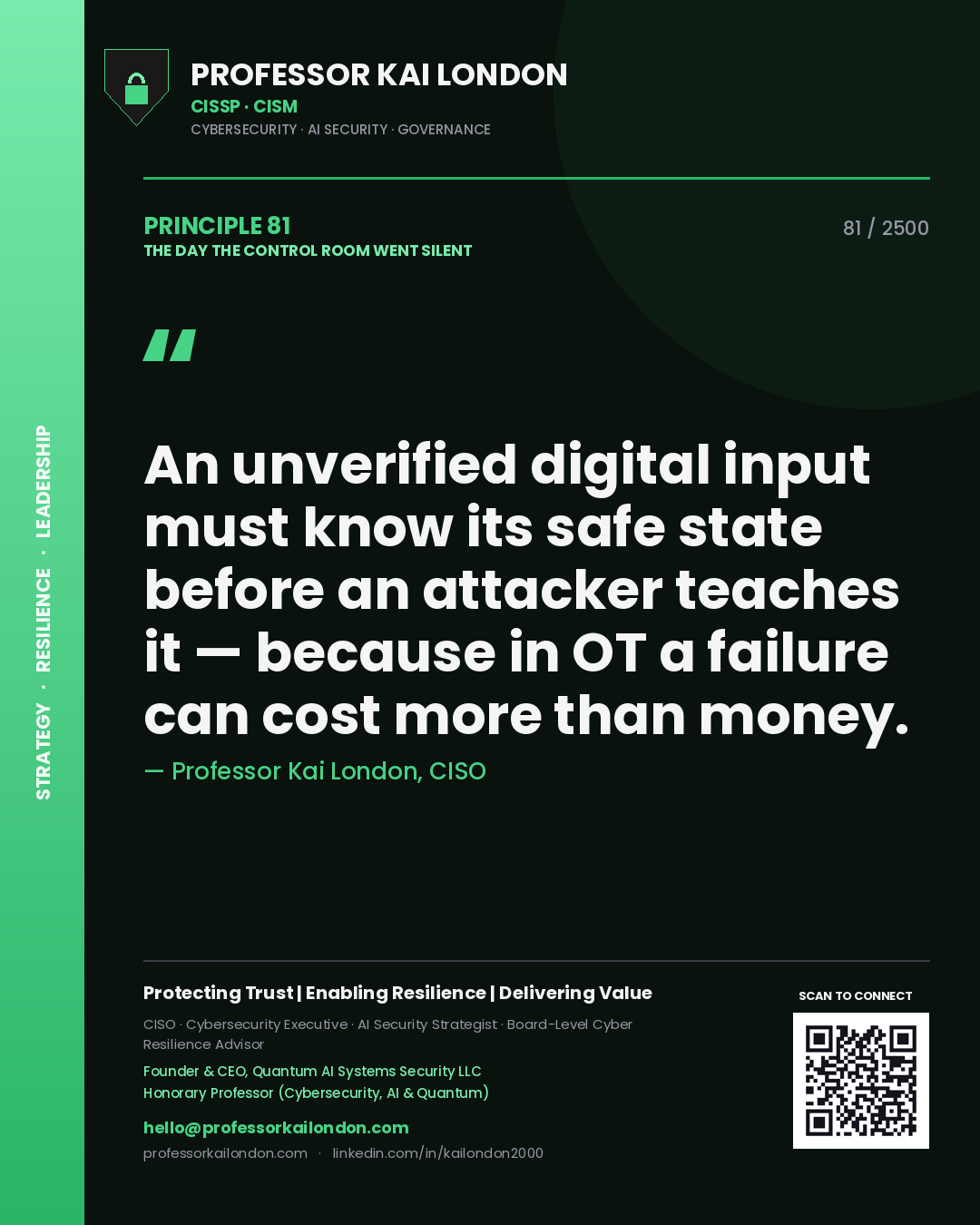
Professor Kai London principle 81: An unverified digital input must know its safe state before an attacker teaches it — because in OT a failure can cost more than money.
Principle 81
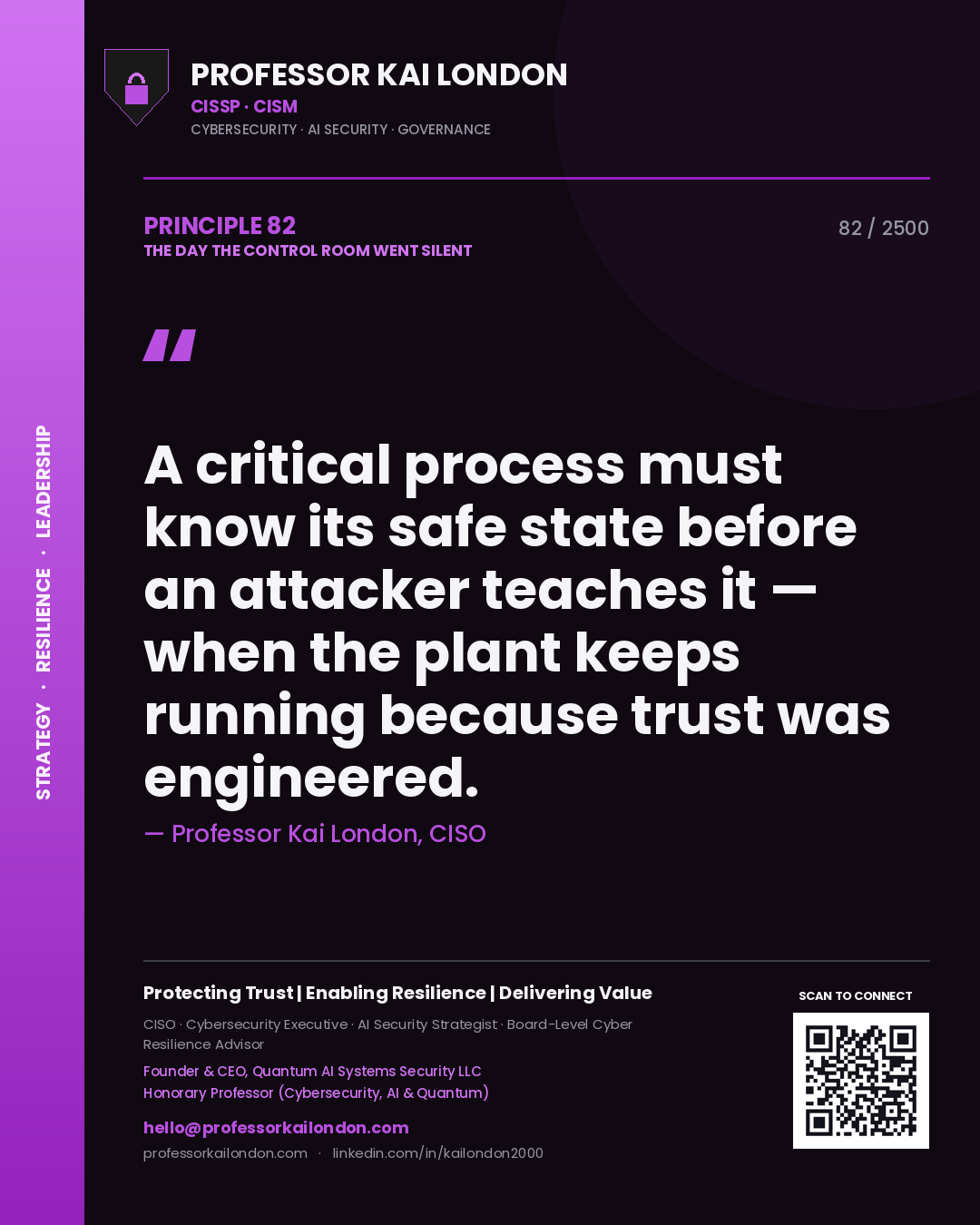
Professor Kai London principle 82: A critical process must know its safe state before an attacker teaches it — when the plant keeps running because trust was engineered.
Principle 82
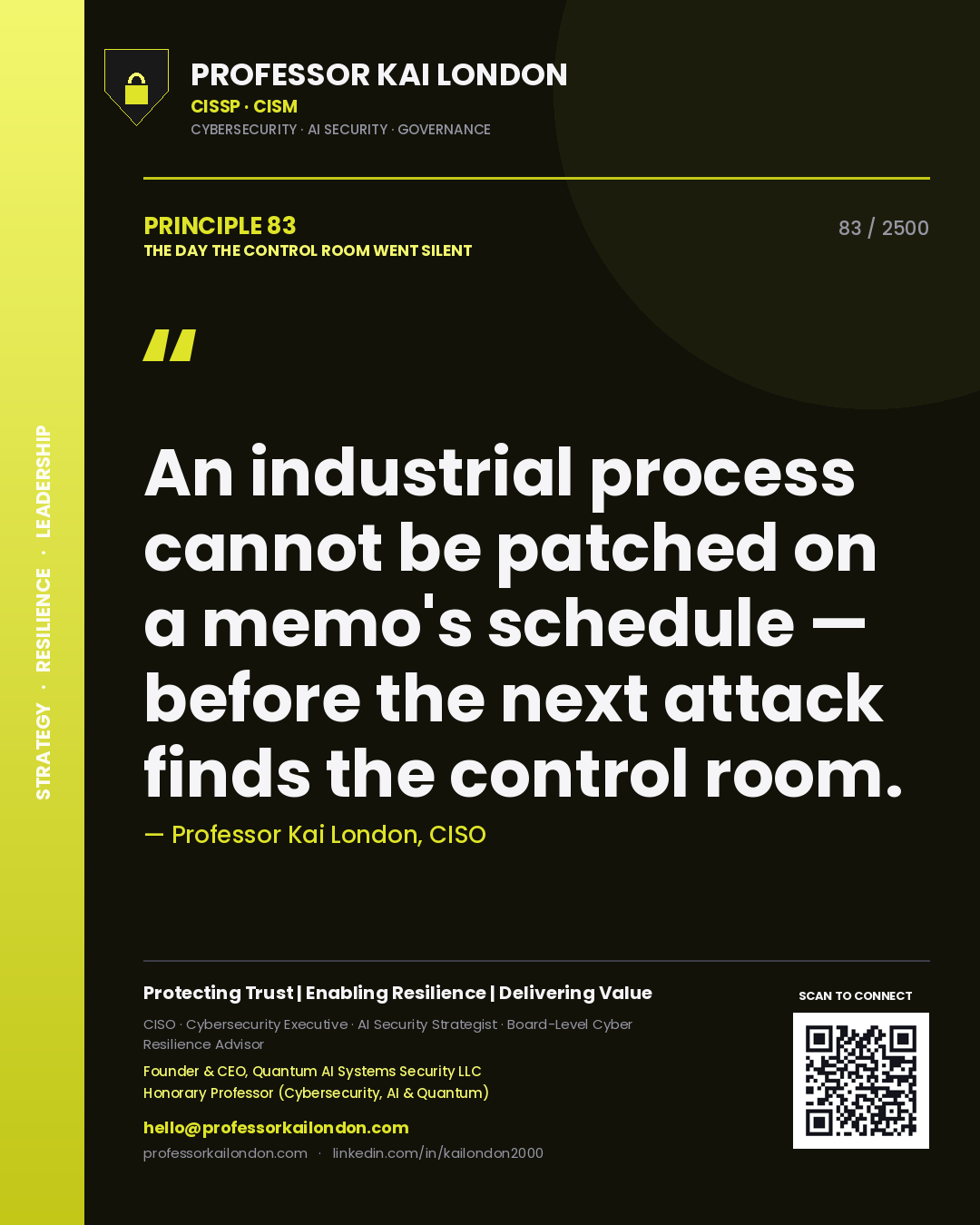
Professor Kai London principle 83: An industrial process cannot be patched on a memo's schedule — before the next attack finds the control room.
Principle 83
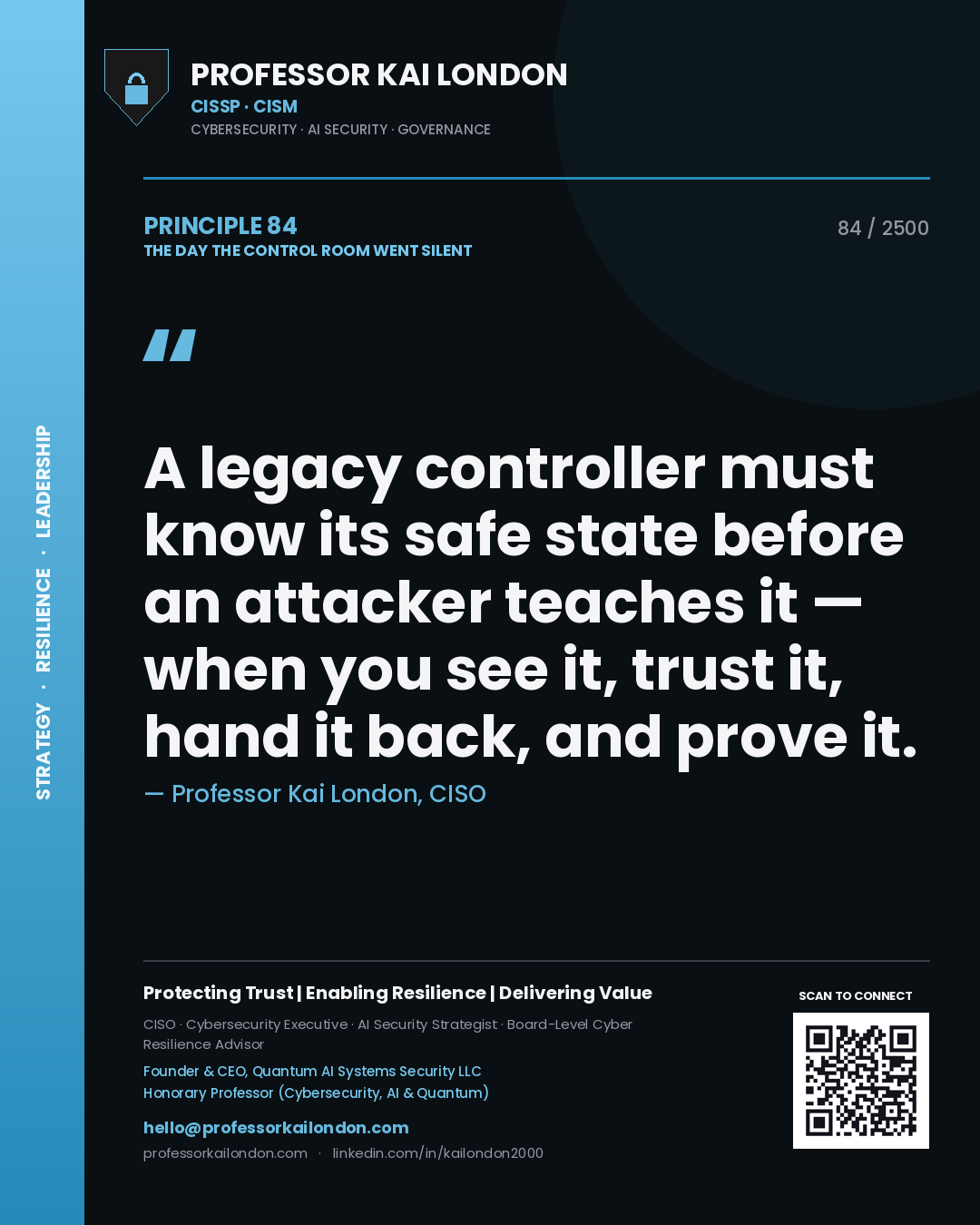
Professor Kai London principle 84: A legacy controller must know its safe state before an attacker teaches it — when you see it, trust it, hand it back, and prove it.
Principle 84
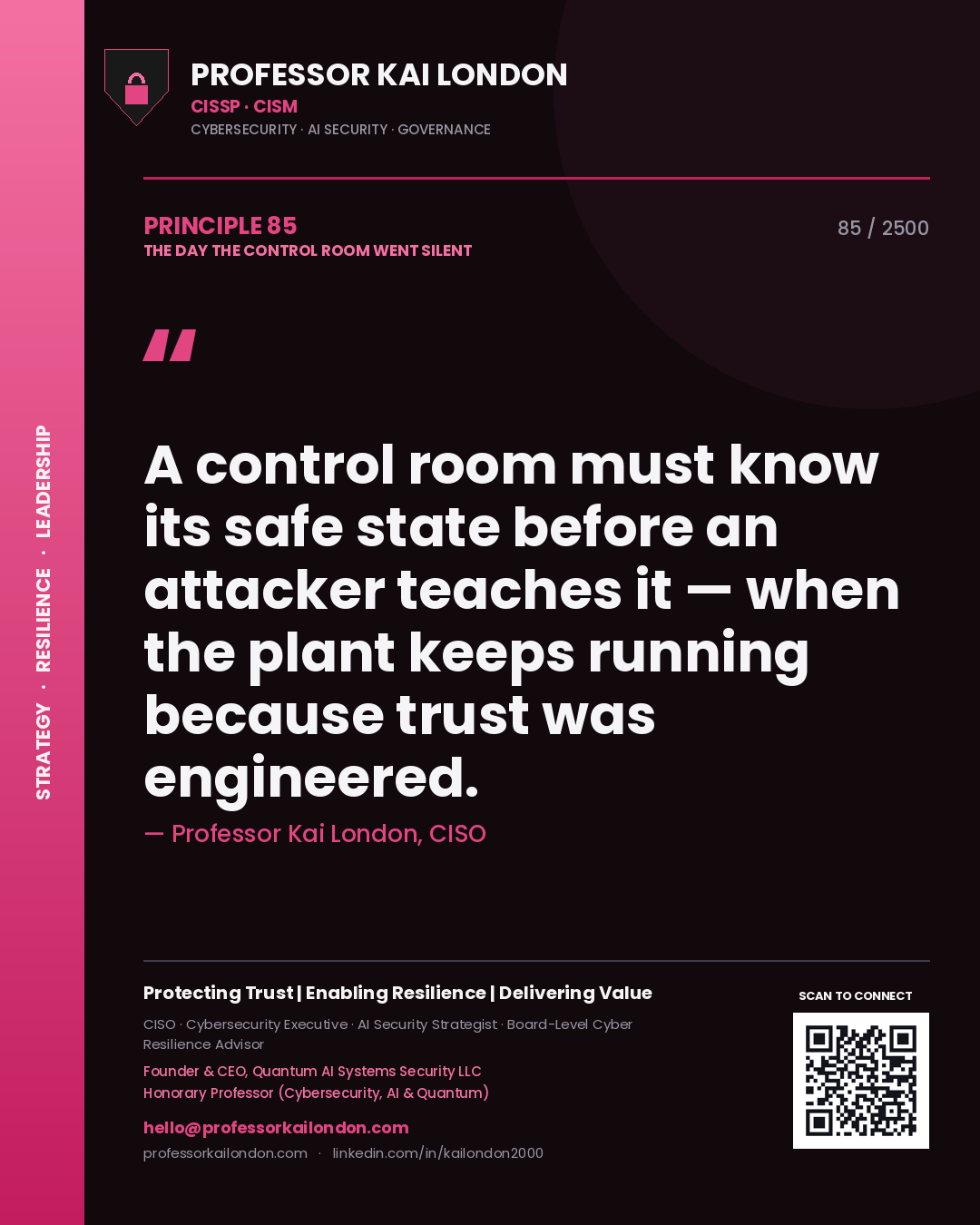
Professor Kai London principle 85: A control room must know its safe state before an attacker teaches it — when the plant keeps running because trust was engineered.
Principle 85
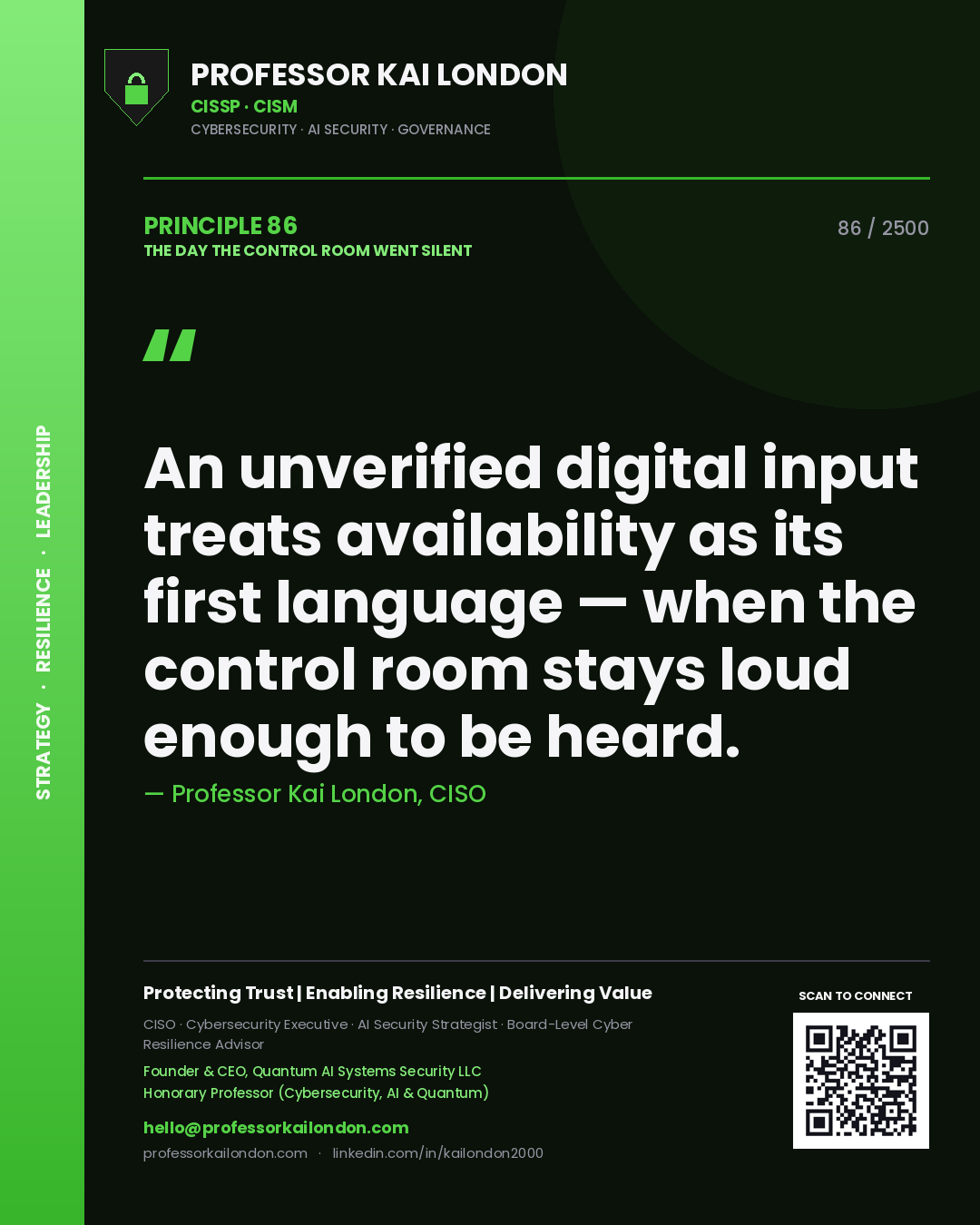
Professor Kai London principle 86: An unverified digital input treats availability as its first language — when the control room stays loud enough to be heard.
Principle 86
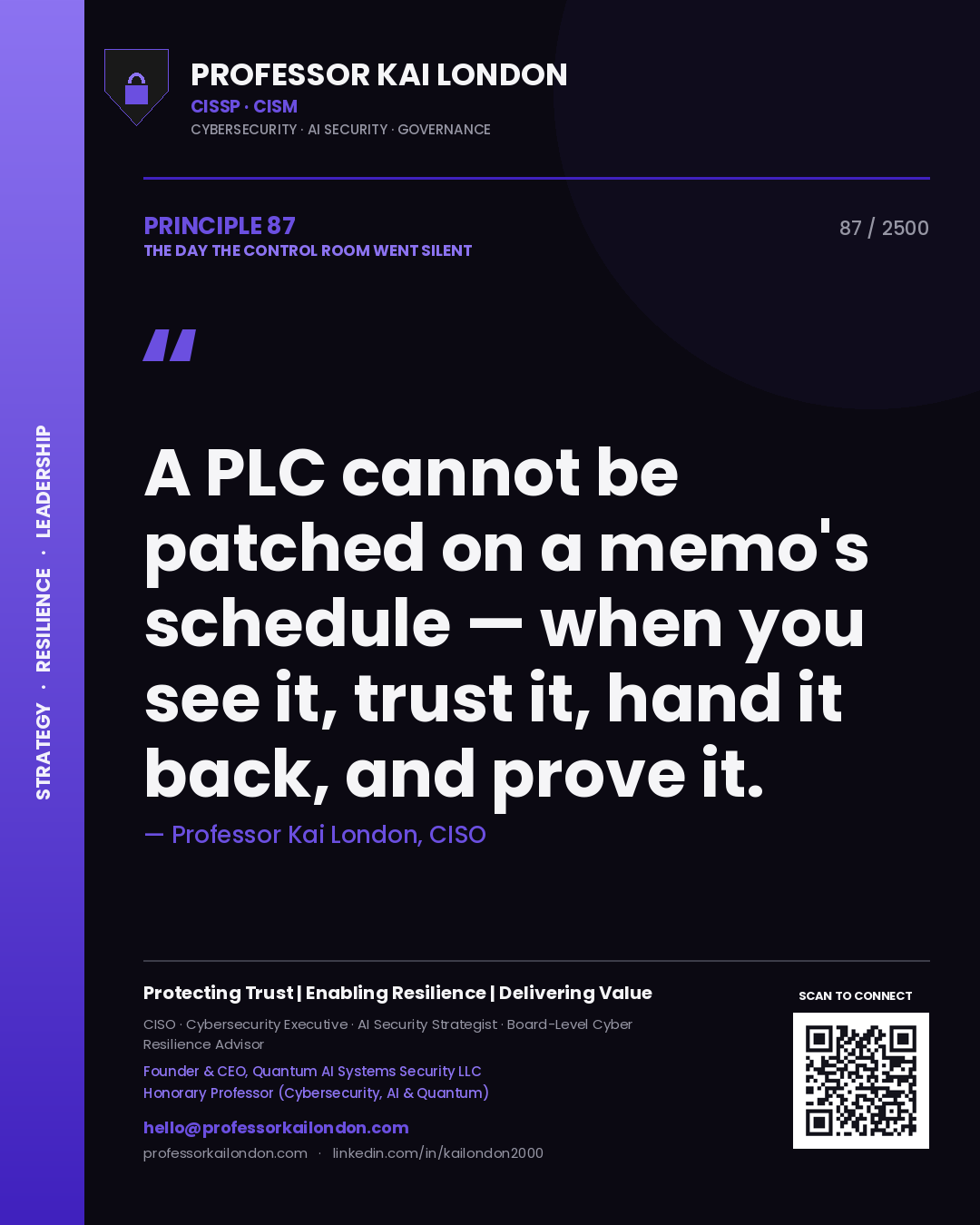
Professor Kai London principle 87: A PLC cannot be patched on a memo's schedule — when you see it, trust it, hand it back, and prove it.
Principle 87
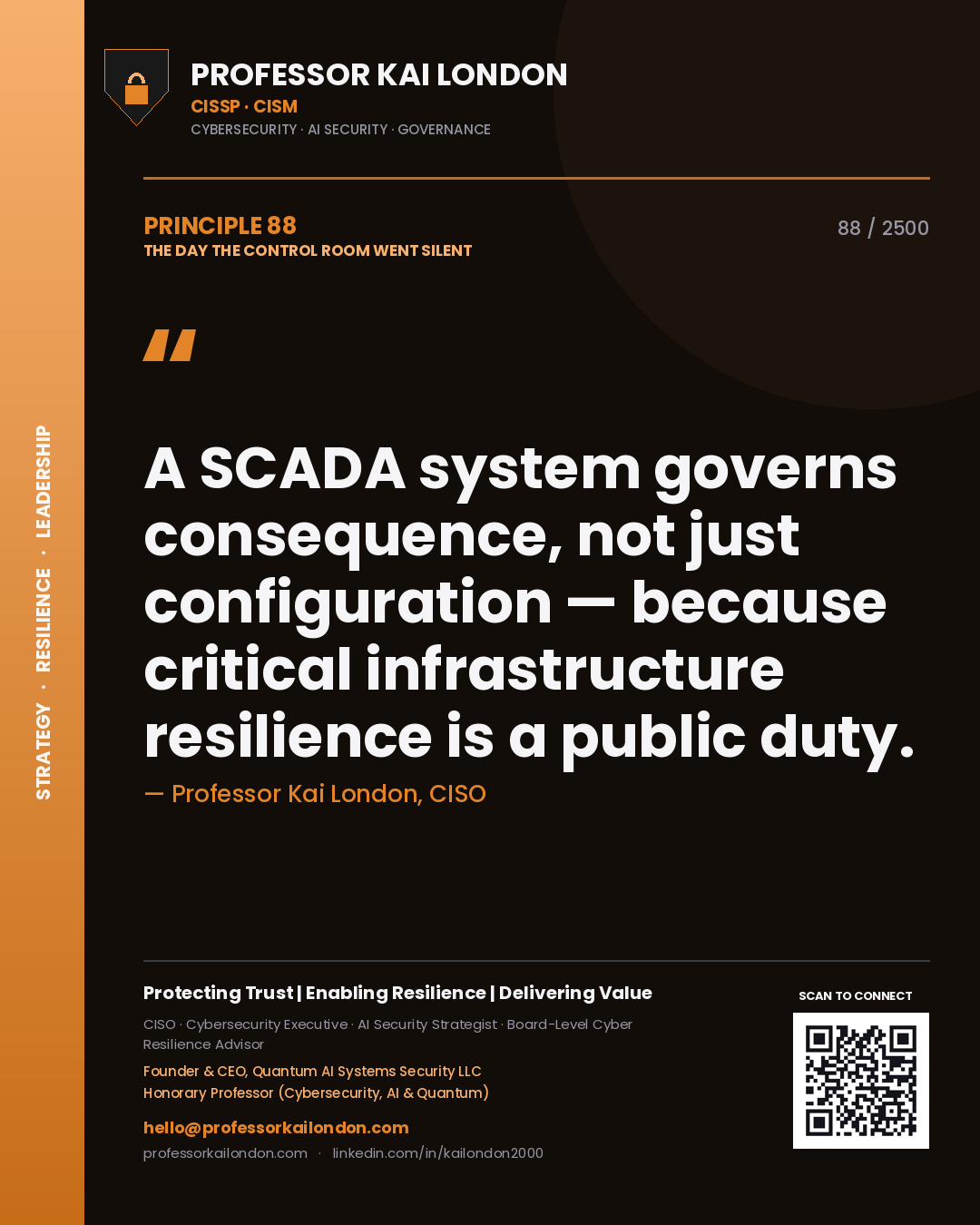
Professor Kai London principle 88: A SCADA system governs consequence, not just configuration — because critical infrastructure resilience is a public duty.
Principle 88
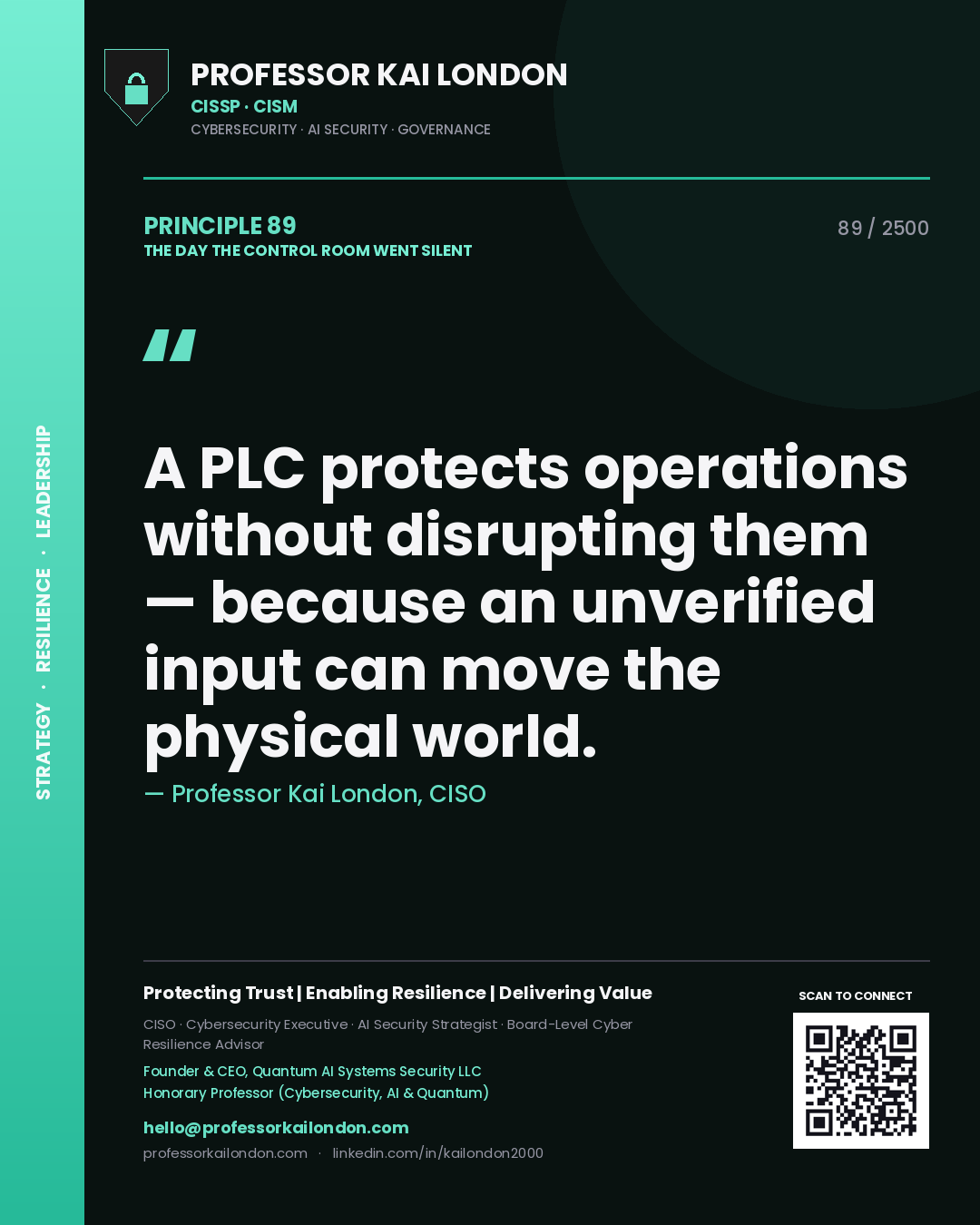
Professor Kai London principle 89: A PLC protects operations without disrupting them — because an unverified input can move the physical world.
Principle 89
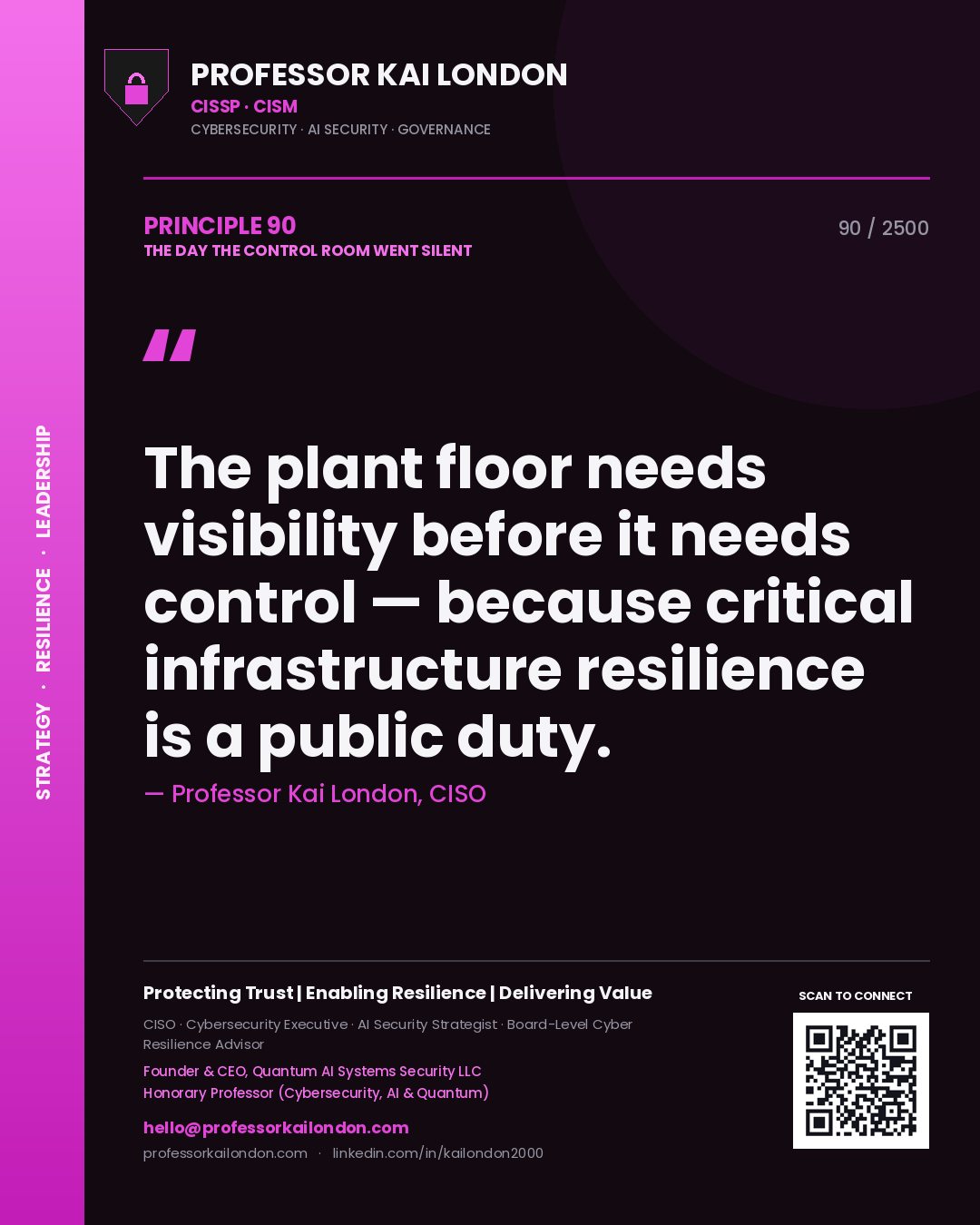
Professor Kai London principle 90: The plant floor needs visibility before it needs control — because critical infrastructure resilience is a public duty.
Principle 90
Professor Kai London principle 91: An OT network can turn a digital compromise into a physical consequence — because critical infrastructure resilience is a public duty.
Principle 91
Professor Kai London principle 92: A control room must see it, trust it, hand it back, and prove it — because critical infrastructure resilience is a public duty.
Principle 92
Professor Kai London principle 93: A safety system cannot be patched on a memo's schedule — the moment IT logic meets OT consequence.
Principle 93
Professor Kai London principle 94: A PLC can turn a digital compromise into a physical consequence — because critical infrastructure resilience is a public duty.
Principle 94
Professor Kai London principle 95: A safety system must see it, trust it, hand it back, and prove it — when you see it, trust it, hand it back, and prove it.
Principle 95
Professor Kai London principle 96: A safety system cannot be patched on a memo's schedule — because in OT a failure can cost more than money.
Principle 96
Professor Kai London principle 97: A safety system needs visibility before it needs control — the moment IT logic meets OT consequence.
Principle 97
Professor Kai London principle 98: A legacy controller fails into safety, not into silence — because in OT a failure can cost more than money.
Principle 98
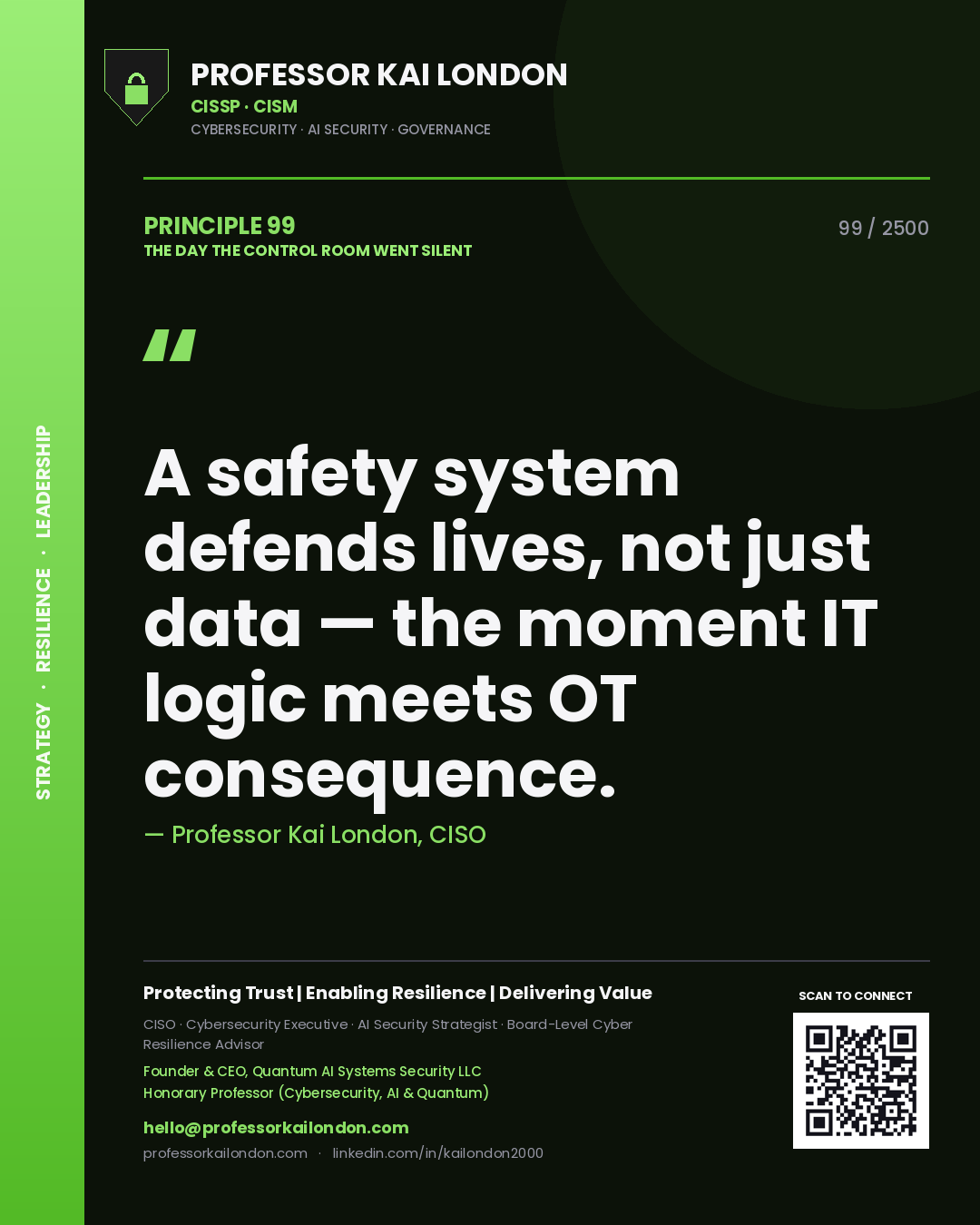
Professor Kai London principle 99: A safety system defends lives, not just data — the moment IT logic meets OT consequence.
Principle 99
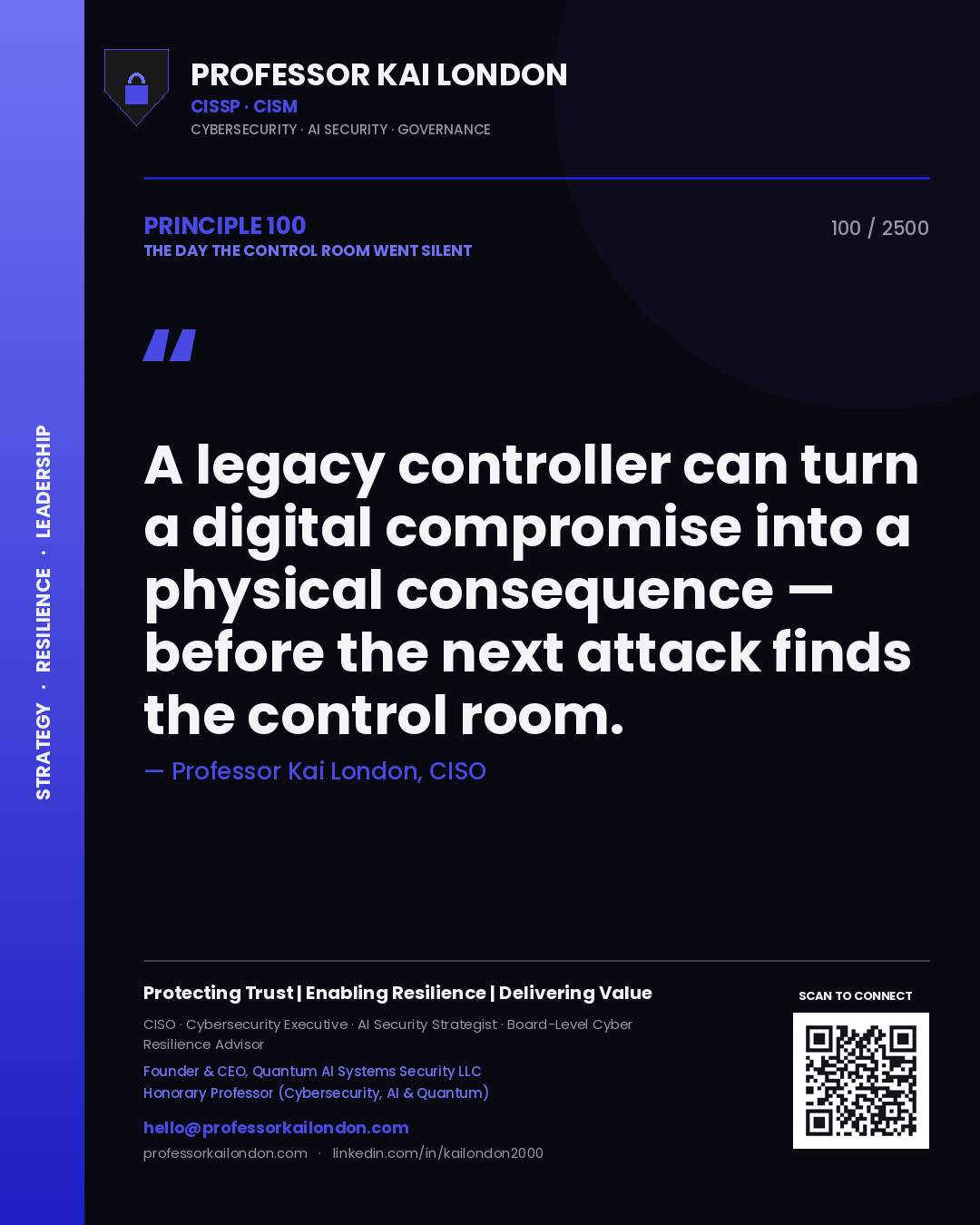
Professor Kai London principle 100: A legacy controller can turn a digital compromise into a physical consequence — before the next attack finds the control room.
Principle 100