Breachproof — Gallery (Page 5 of 100)
Professor Kai London principle 401: A crisis response turns panic into a checklist — the moment the attacker meets a business that refuses to break.
Principle 401
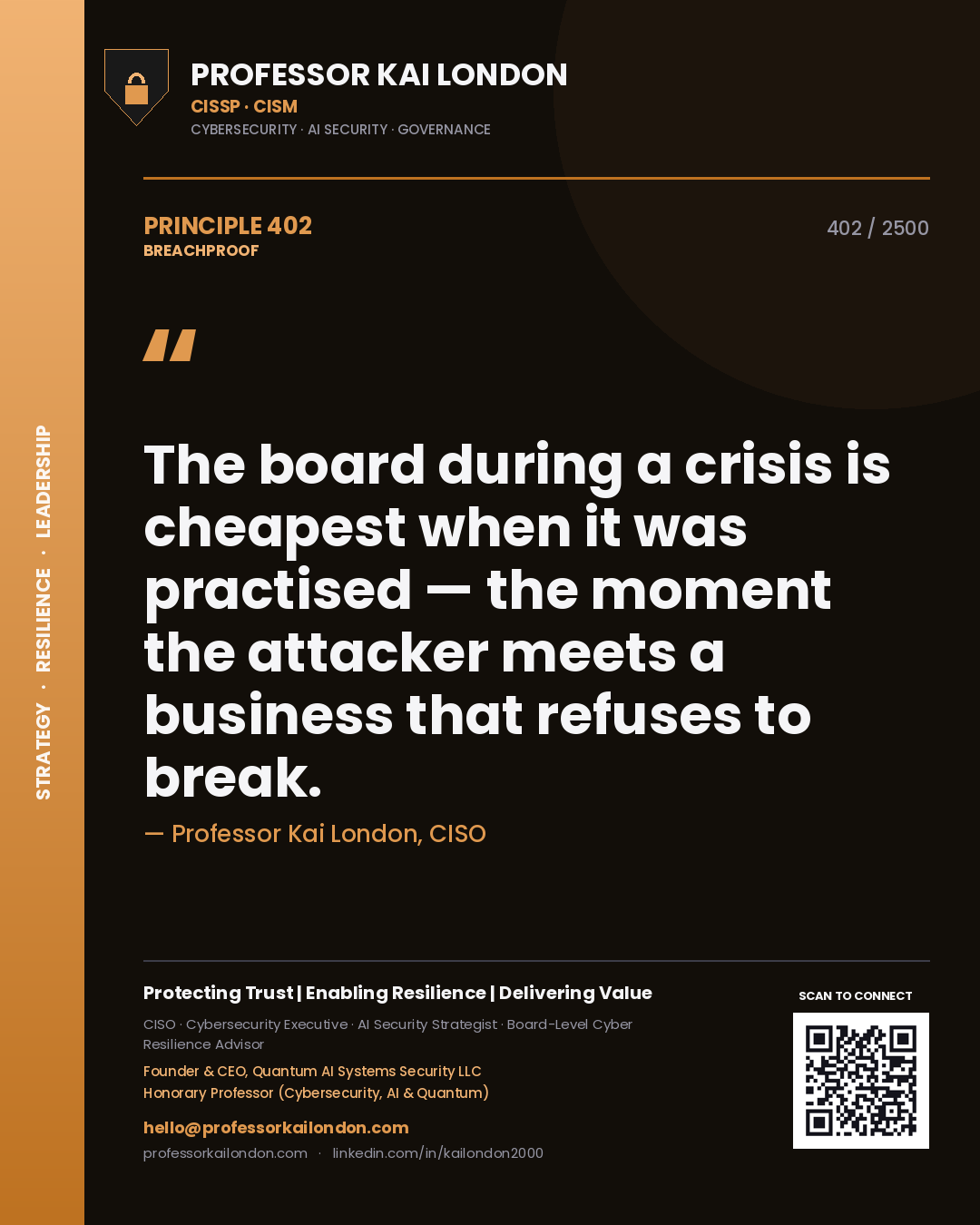
Professor Kai London principle 402: The board during a crisis is cheapest when it was practised — the moment the attacker meets a business that refuses to break.
Principle 402
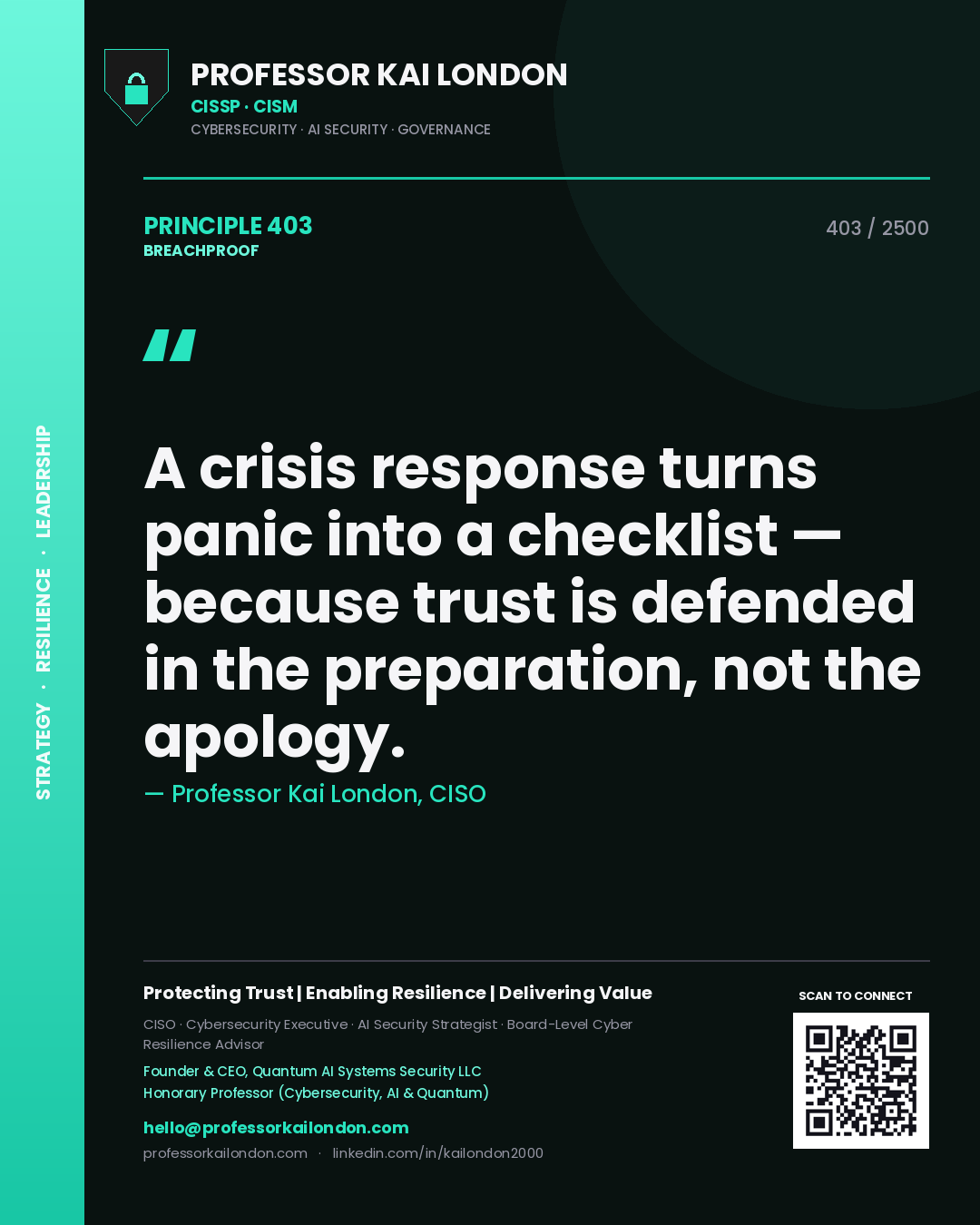
Professor Kai London principle 403: A crisis response turns panic into a checklist — because trust is defended in the preparation, not the apology.
Principle 403
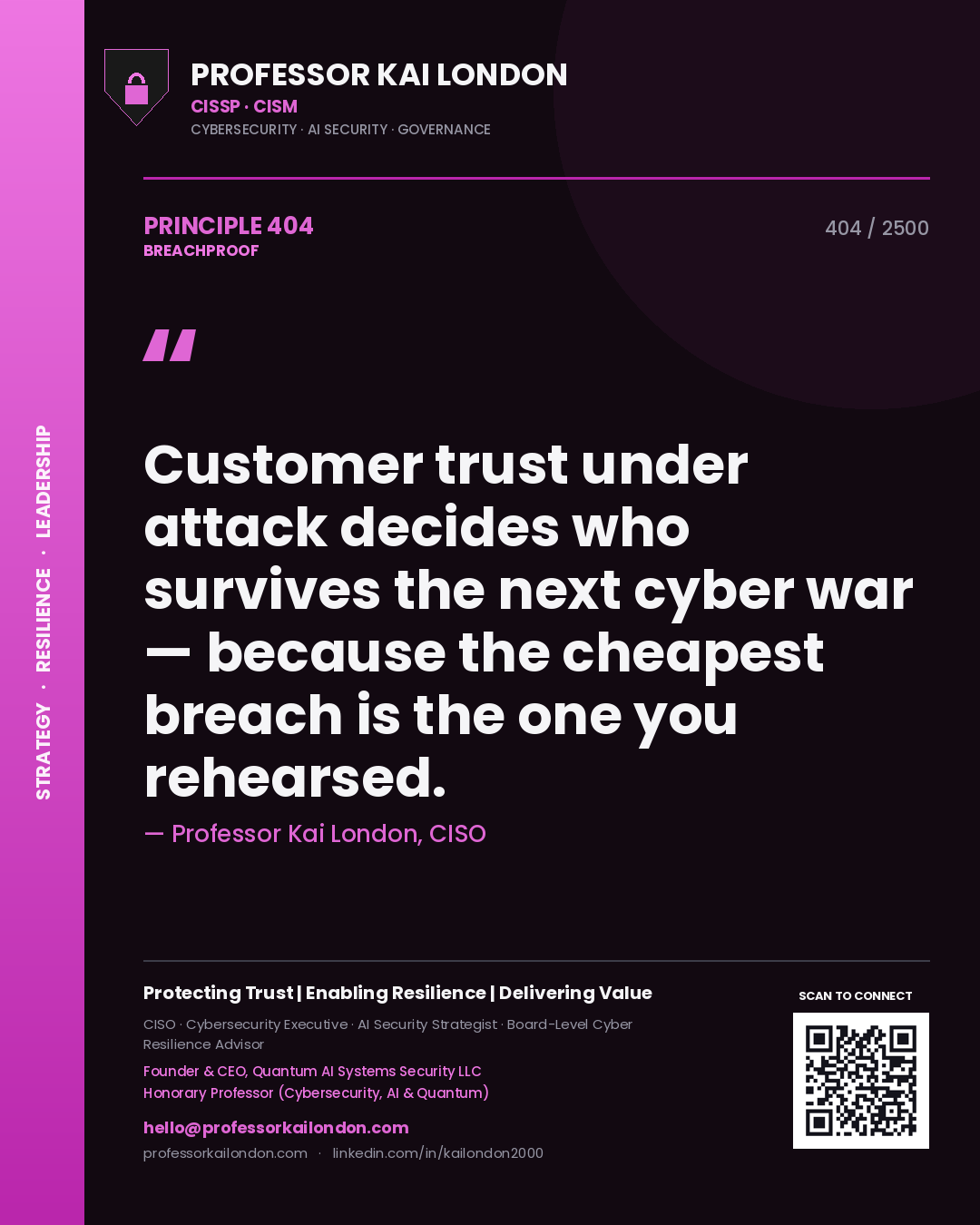
Professor Kai London principle 404: Customer trust under attack decides who survives the next cyber war — because the cheapest breach is the one you rehearsed.
Principle 404
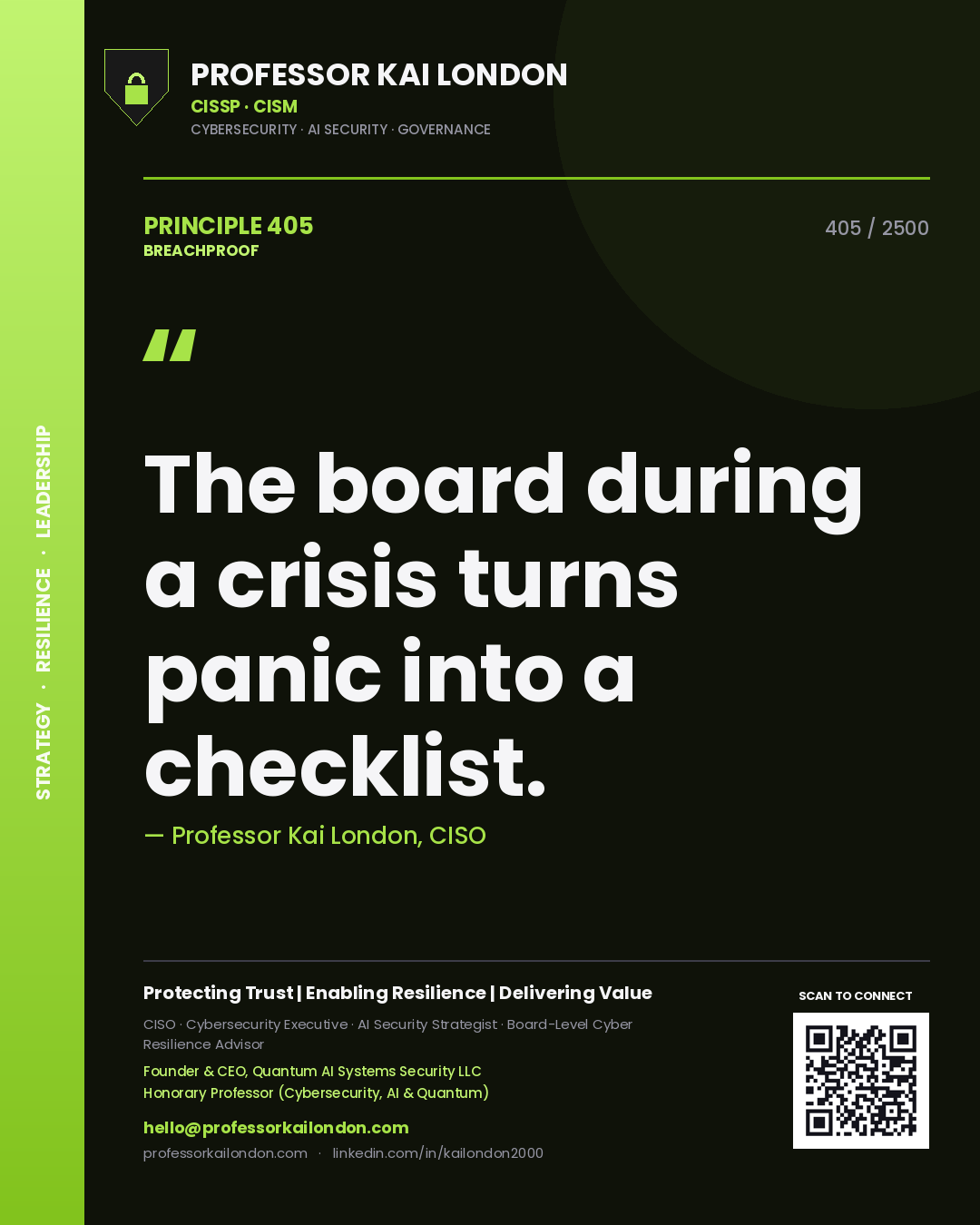
Professor Kai London principle 405: The board during a crisis turns panic into a checklist.
Principle 405
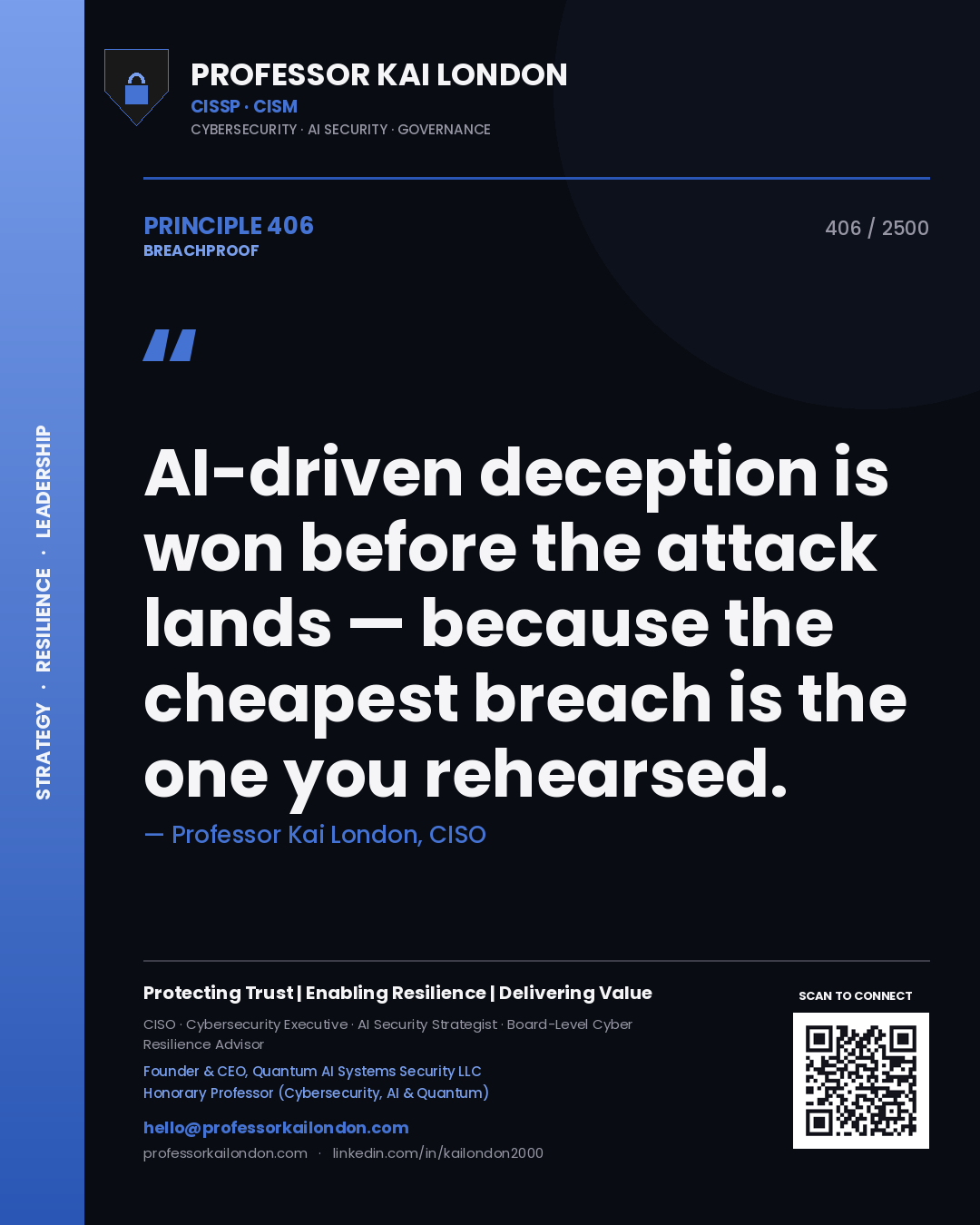
Professor Kai London principle 406: AI-driven deception is won before the attack lands — because the cheapest breach is the one you rehearsed.
Principle 406
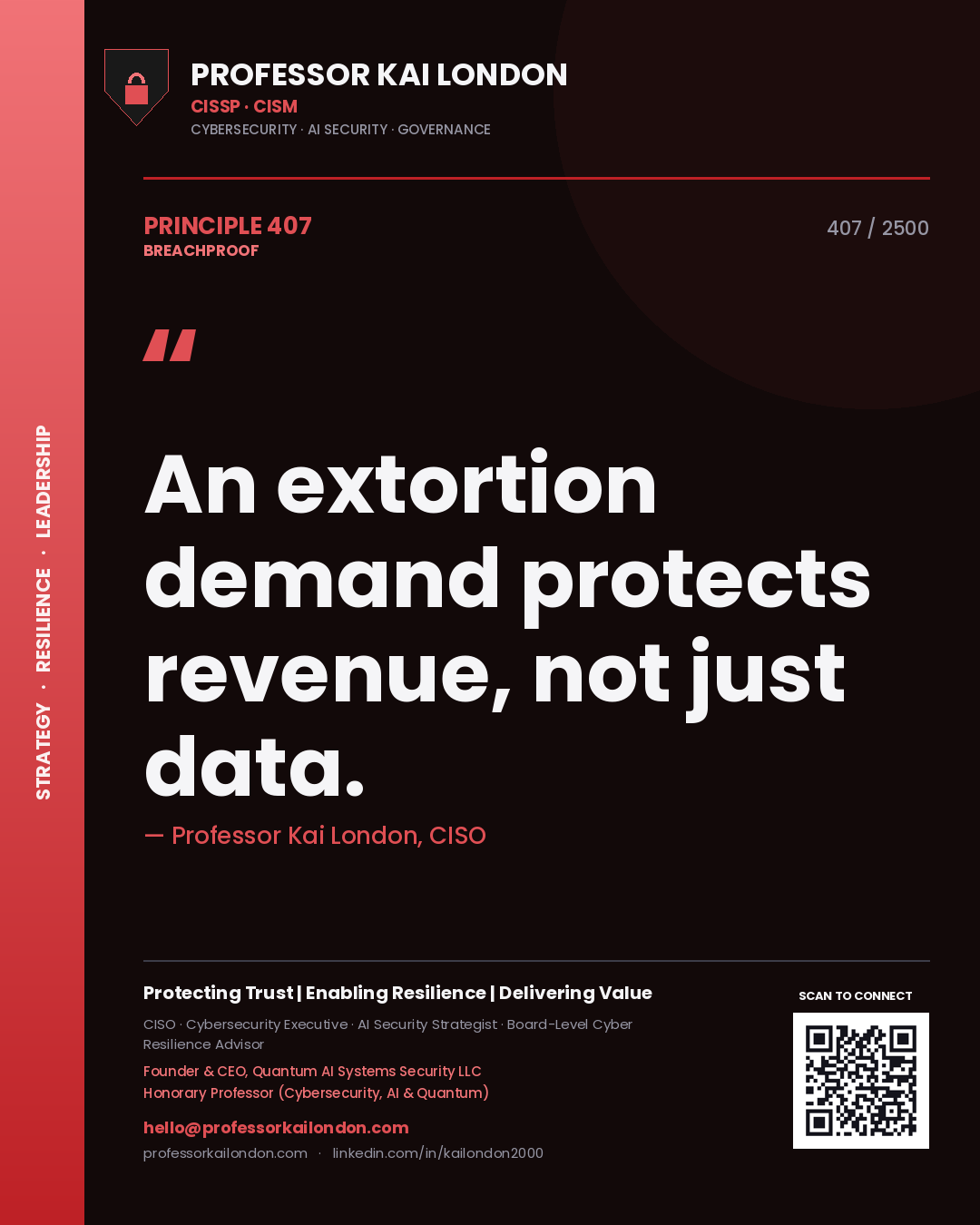
Professor Kai London principle 407: An extortion demand protects revenue, not just data.
Principle 407
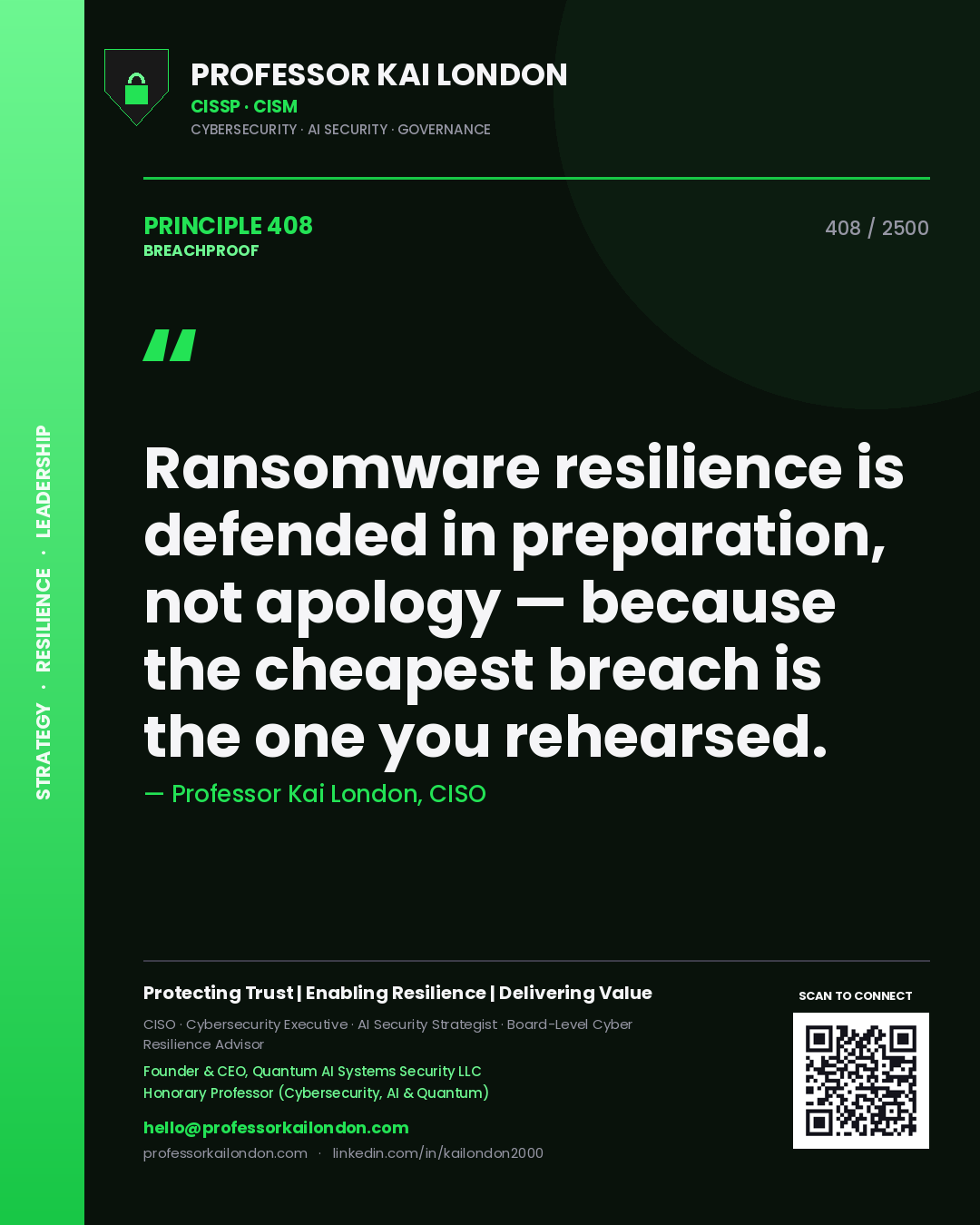
Professor Kai London principle 408: Ransomware resilience is defended in preparation, not apology — because the cheapest breach is the one you rehearsed.
Principle 408
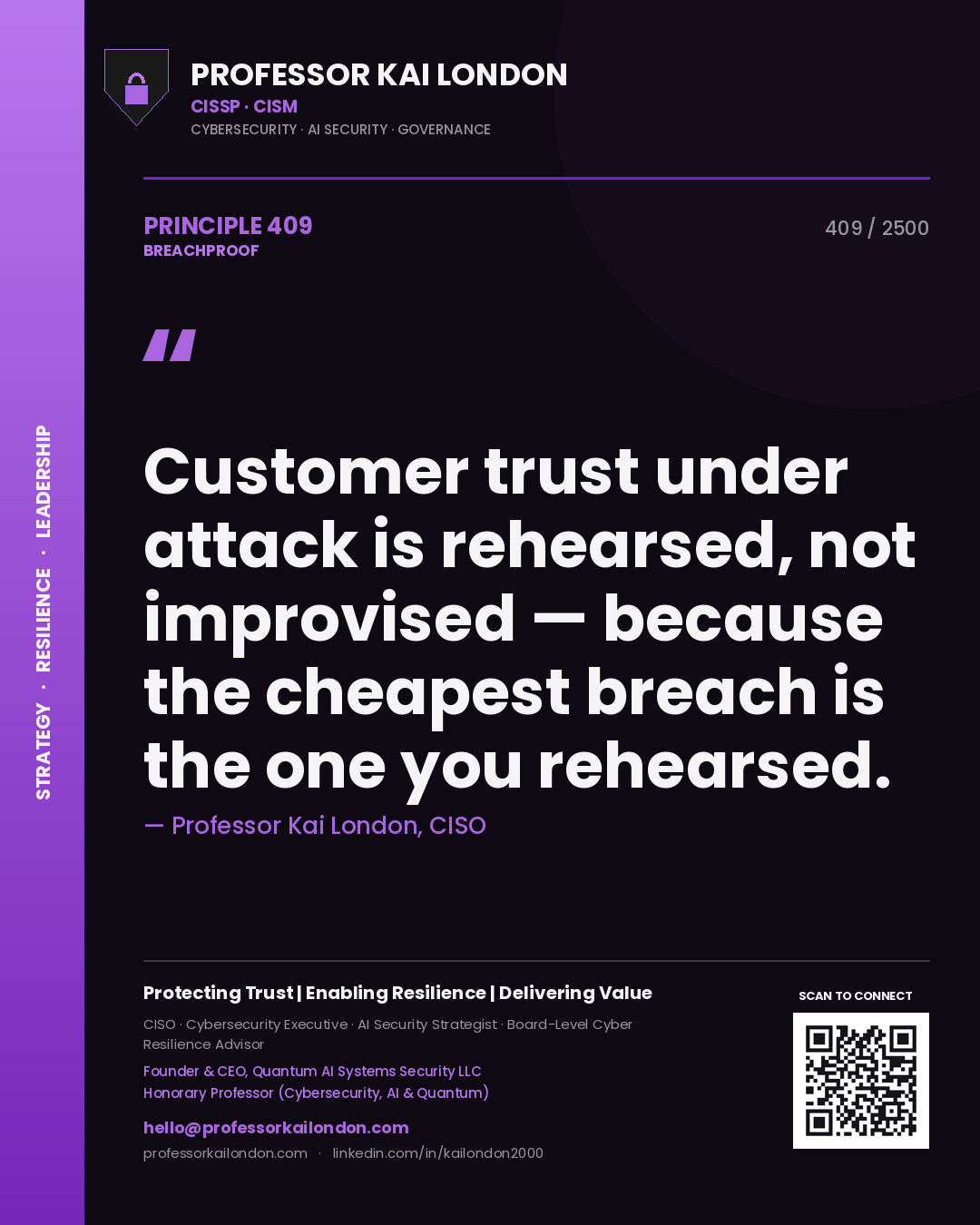
Professor Kai London principle 409: Customer trust under attack is rehearsed, not improvised — because the cheapest breach is the one you rehearsed.
Principle 409
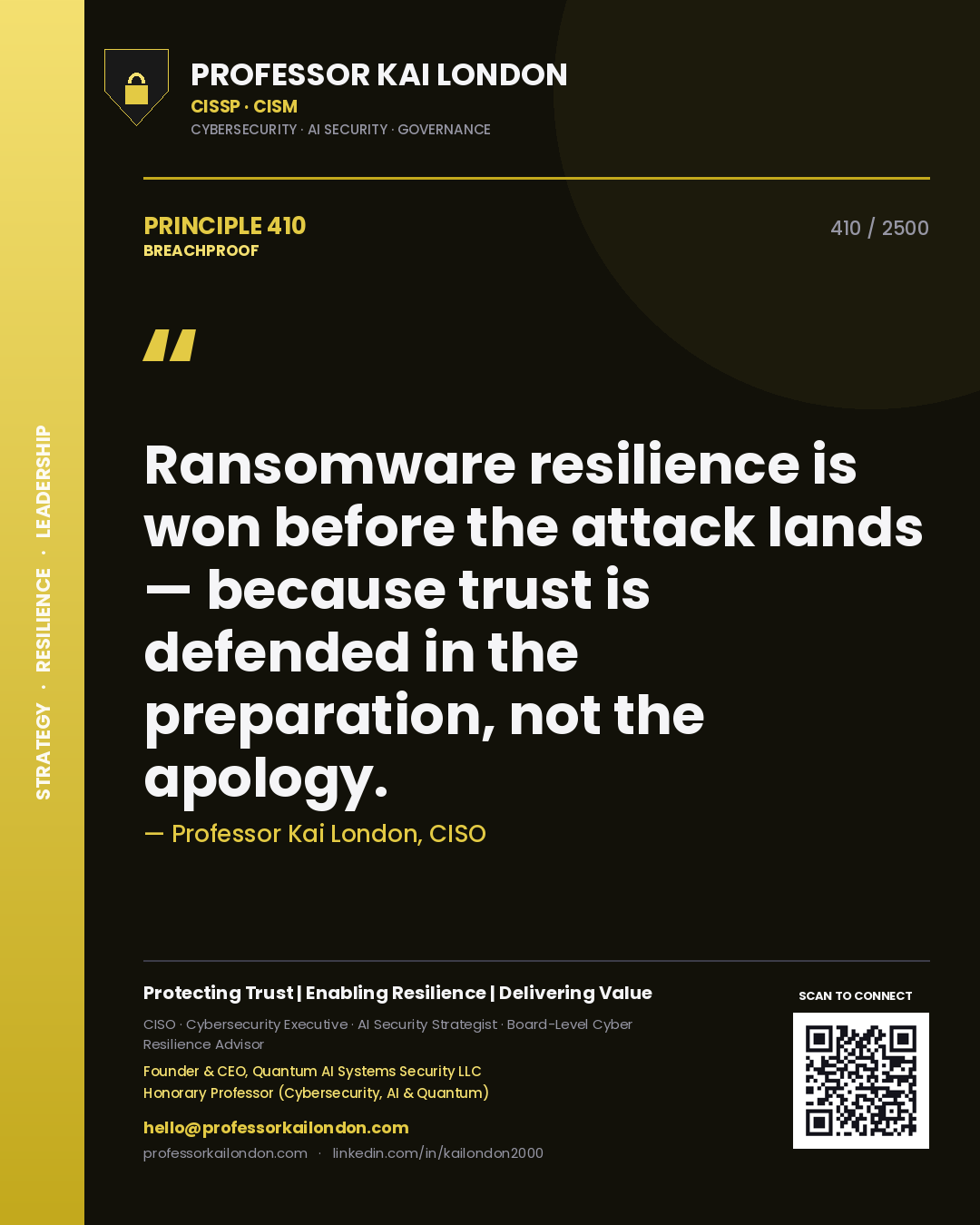
Professor Kai London principle 410: Ransomware resilience is won before the attack lands — because trust is defended in the preparation, not the apology.
Principle 410
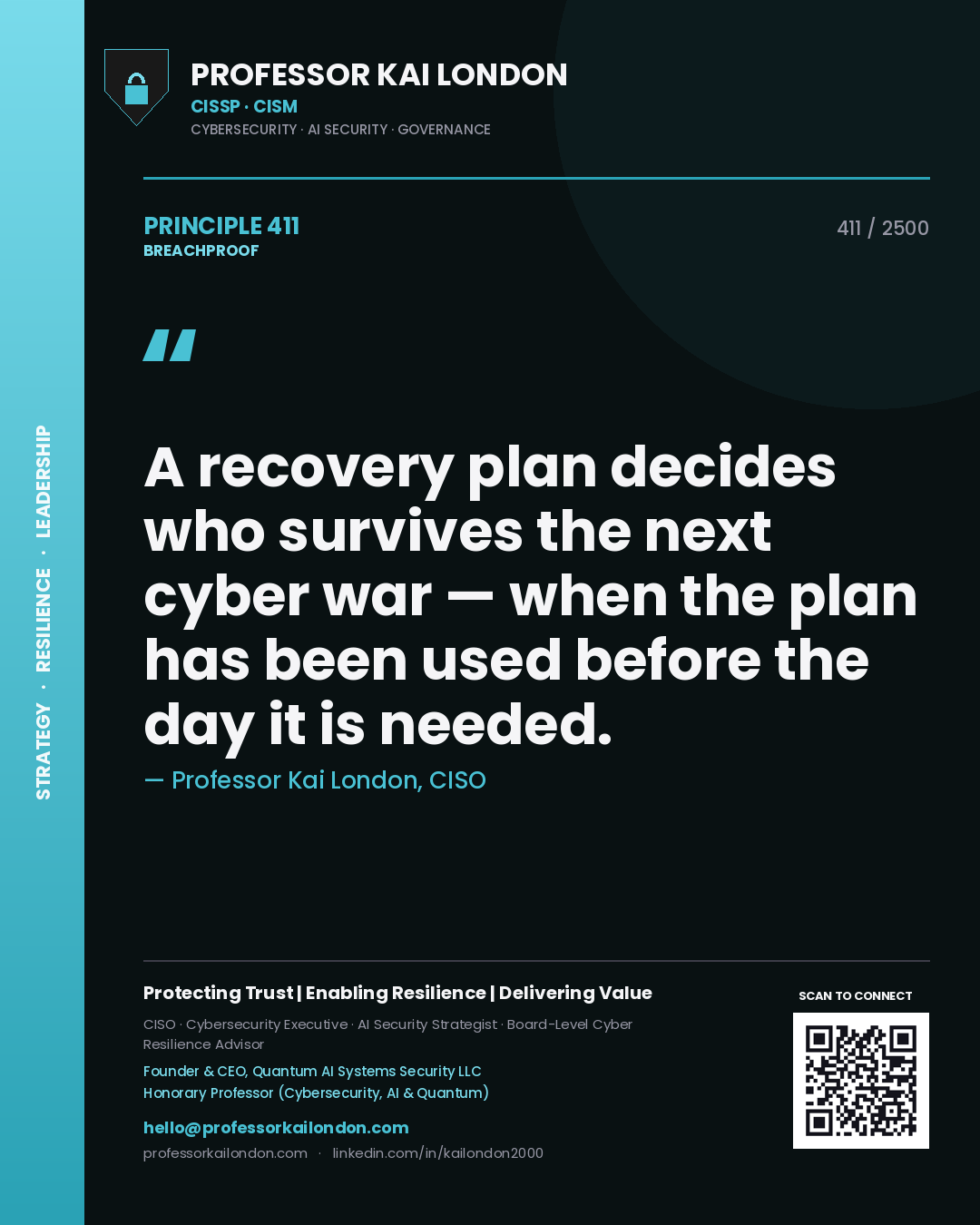
Professor Kai London principle 411: A recovery plan decides who survives the next cyber war — when the plan has been used before the day it is needed.
Principle 411
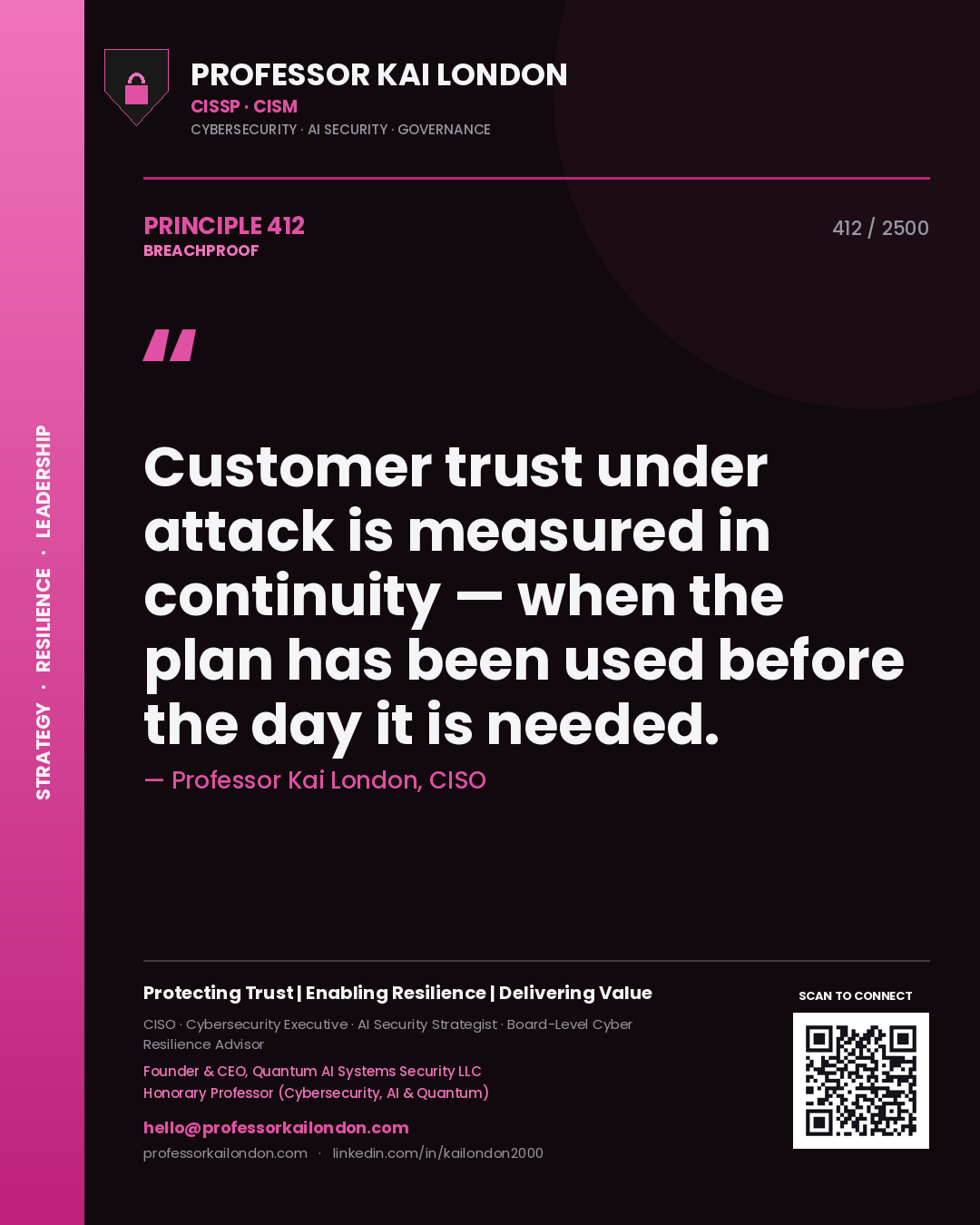
Professor Kai London principle 412: Customer trust under attack is measured in continuity — when the plan has been used before the day it is needed.
Principle 412
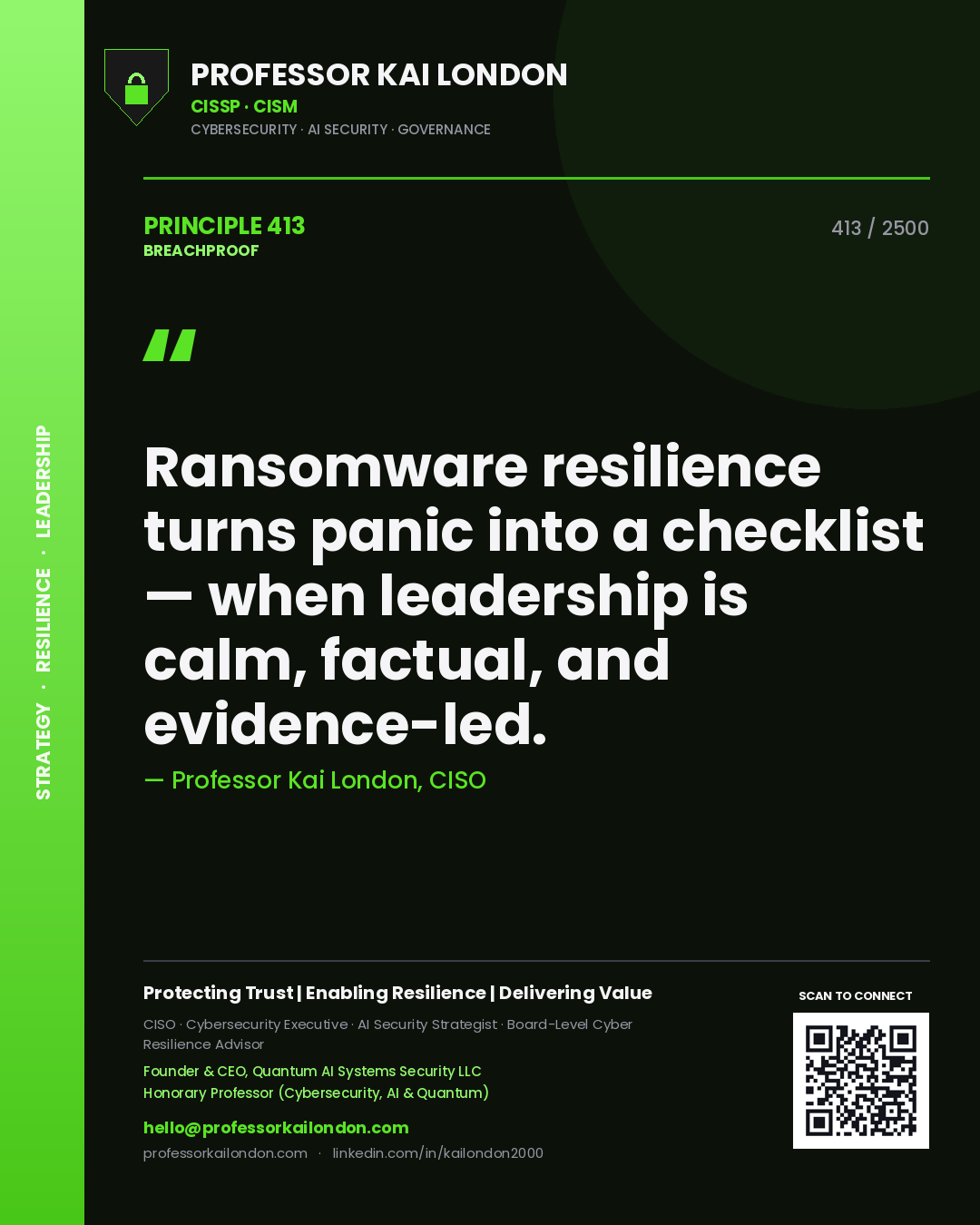
Professor Kai London principle 413: Ransomware resilience turns panic into a checklist — when leadership is calm, factual, and evidence-led.
Principle 413
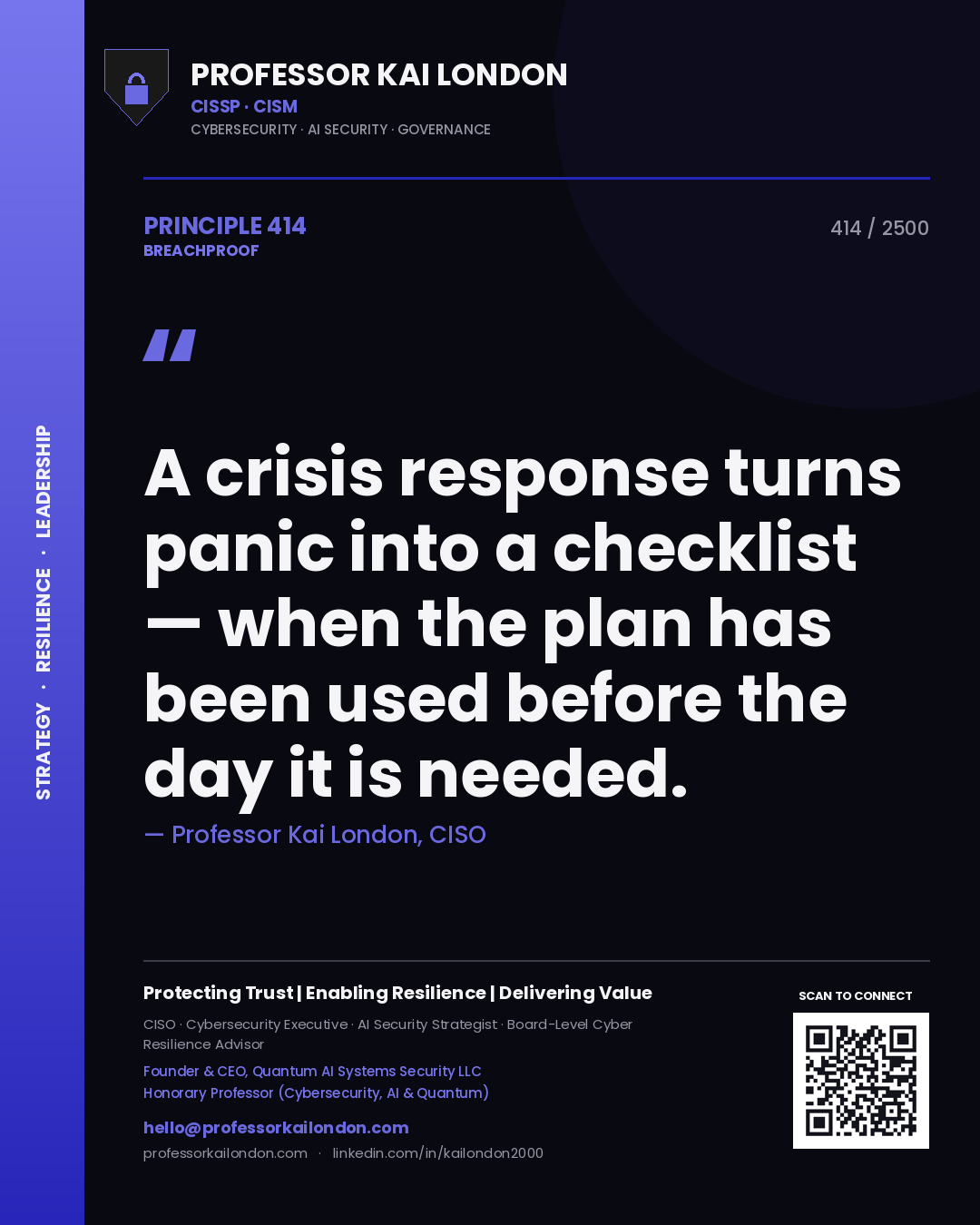
Professor Kai London principle 414: A crisis response turns panic into a checklist — when the plan has been used before the day it is needed.
Principle 414
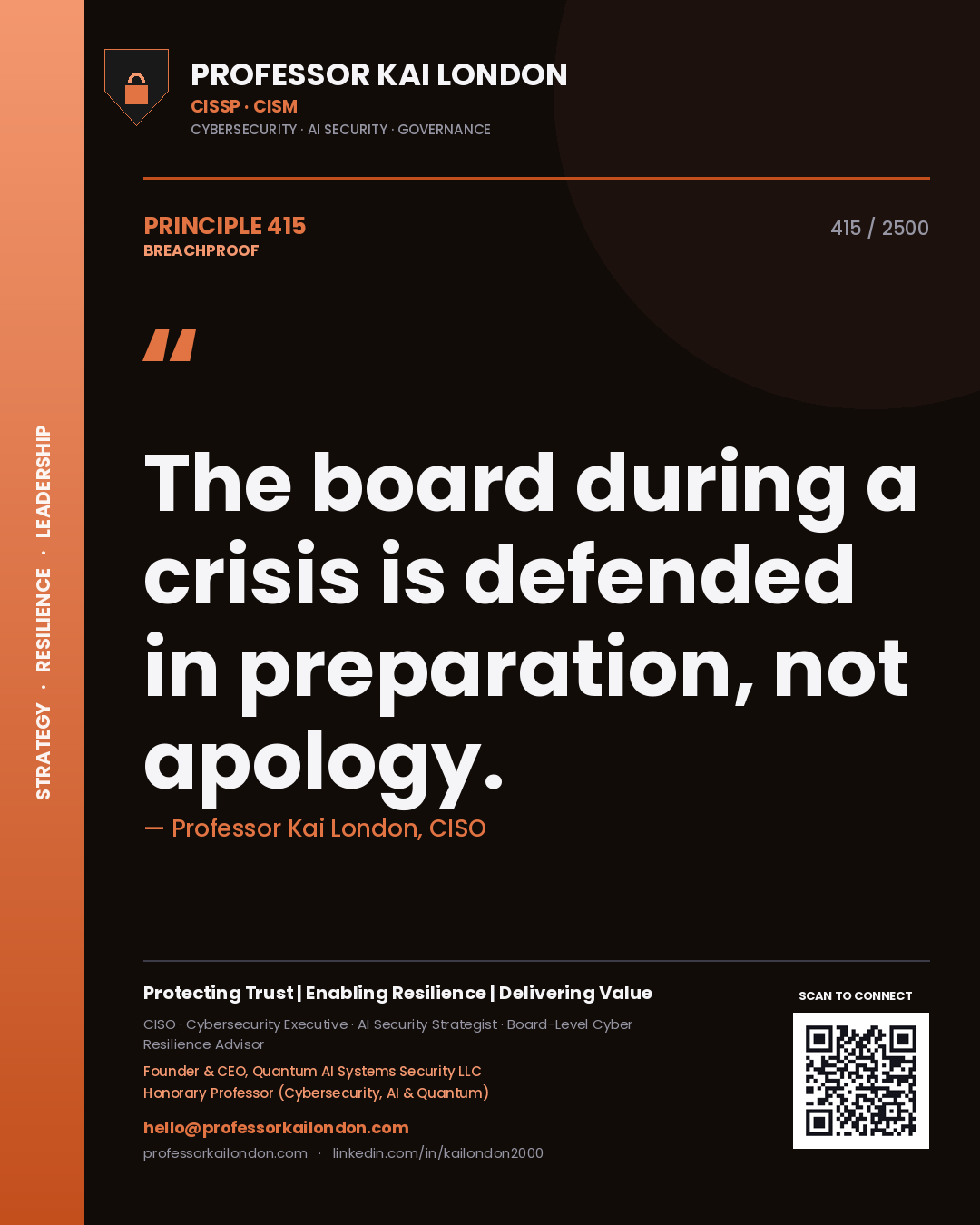
Professor Kai London principle 415: The board during a crisis is defended in preparation, not apology.
Principle 415
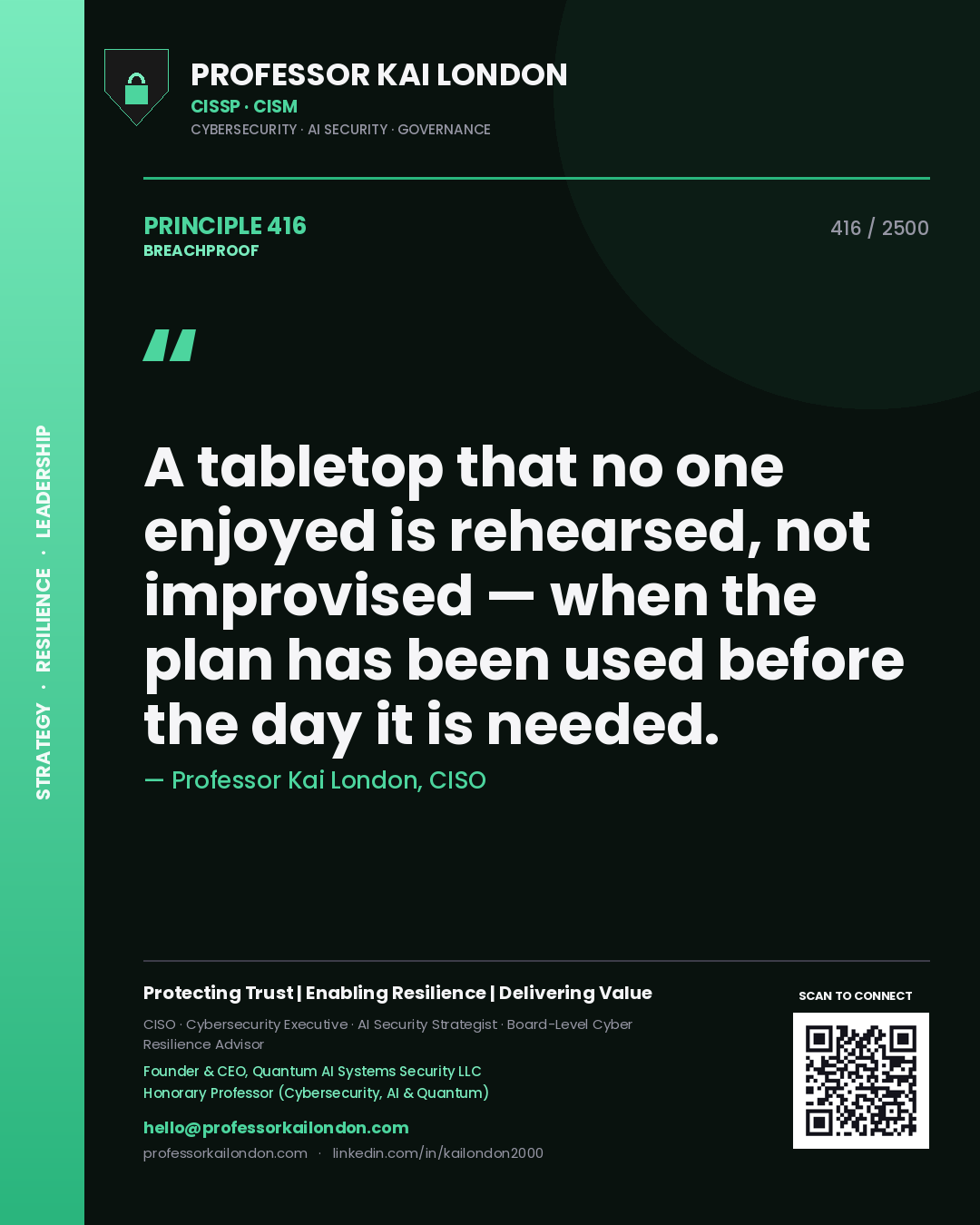
Professor Kai London principle 416: A tabletop that no one enjoyed is rehearsed, not improvised — when the plan has been used before the day it is needed.
Principle 416
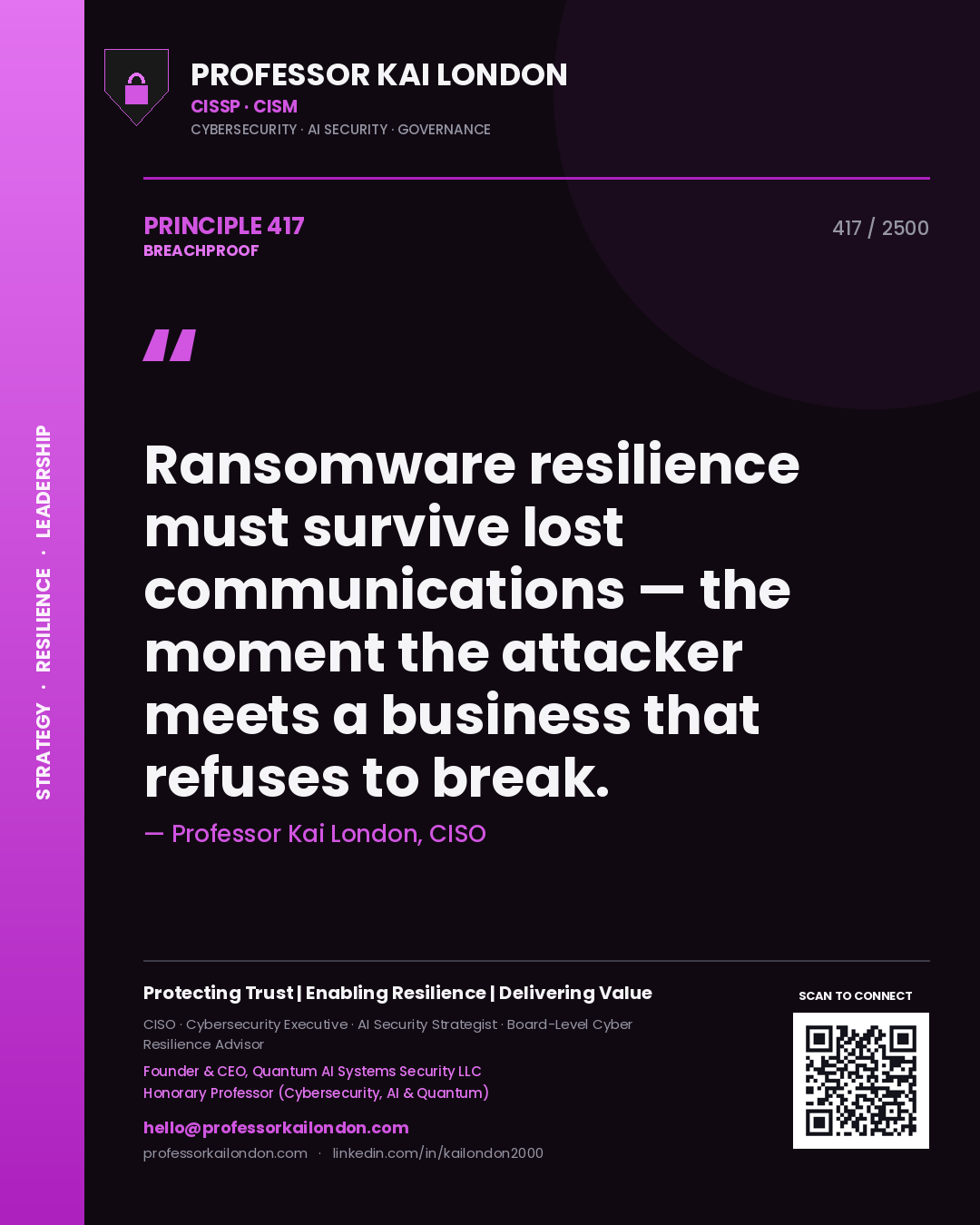
Professor Kai London principle 417: Ransomware resilience must survive lost communications — the moment the attacker meets a business that refuses to break.
Principle 417
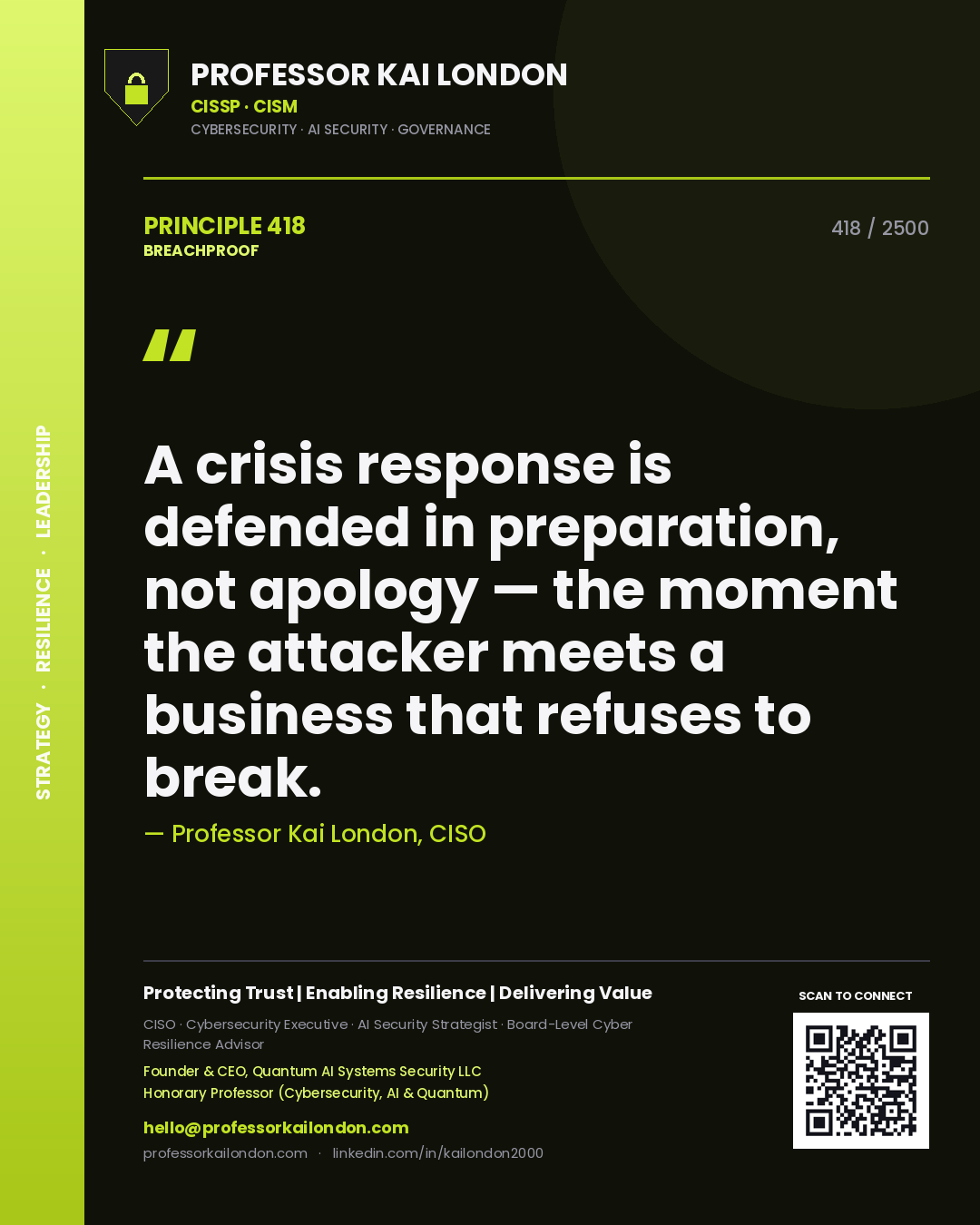
Professor Kai London principle 418: A crisis response is defended in preparation, not apology — the moment the attacker meets a business that refuses to break.
Principle 418
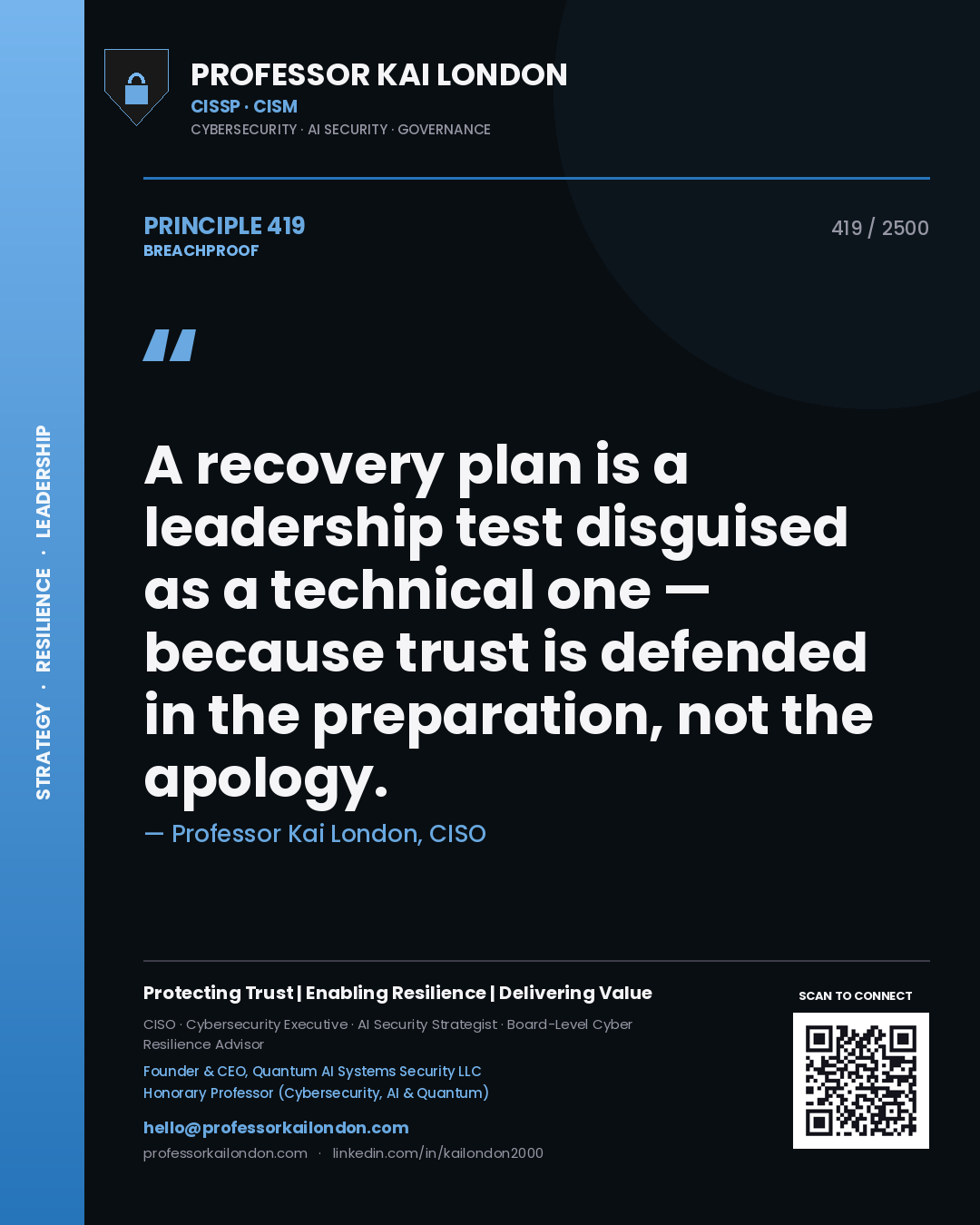
Professor Kai London principle 419: A recovery plan is a leadership test disguised as a technical one — because trust is defended in the preparation, not the apology.
Principle 419
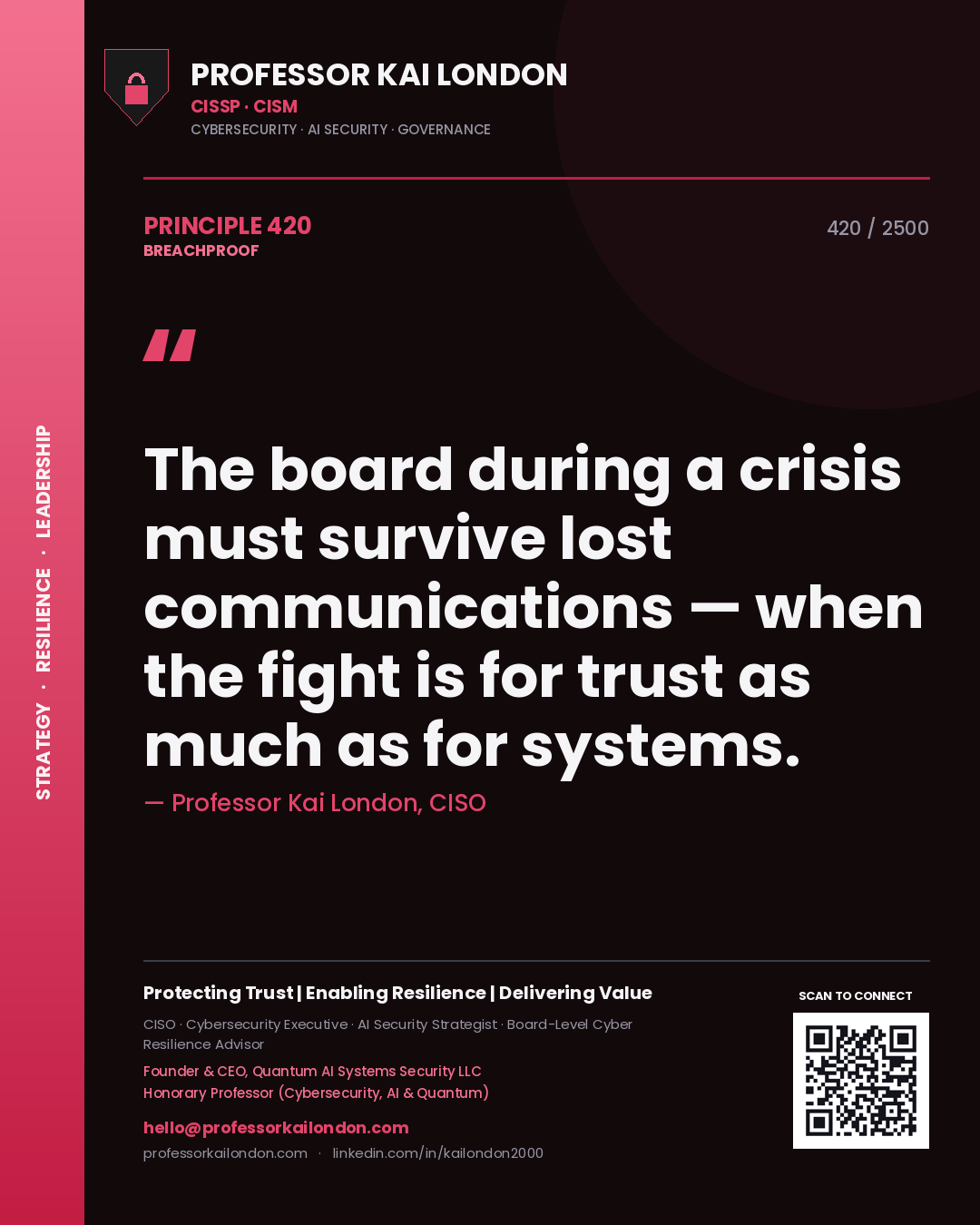
Professor Kai London principle 420: The board during a crisis must survive lost communications — when the fight is for trust as much as for systems.
Principle 420
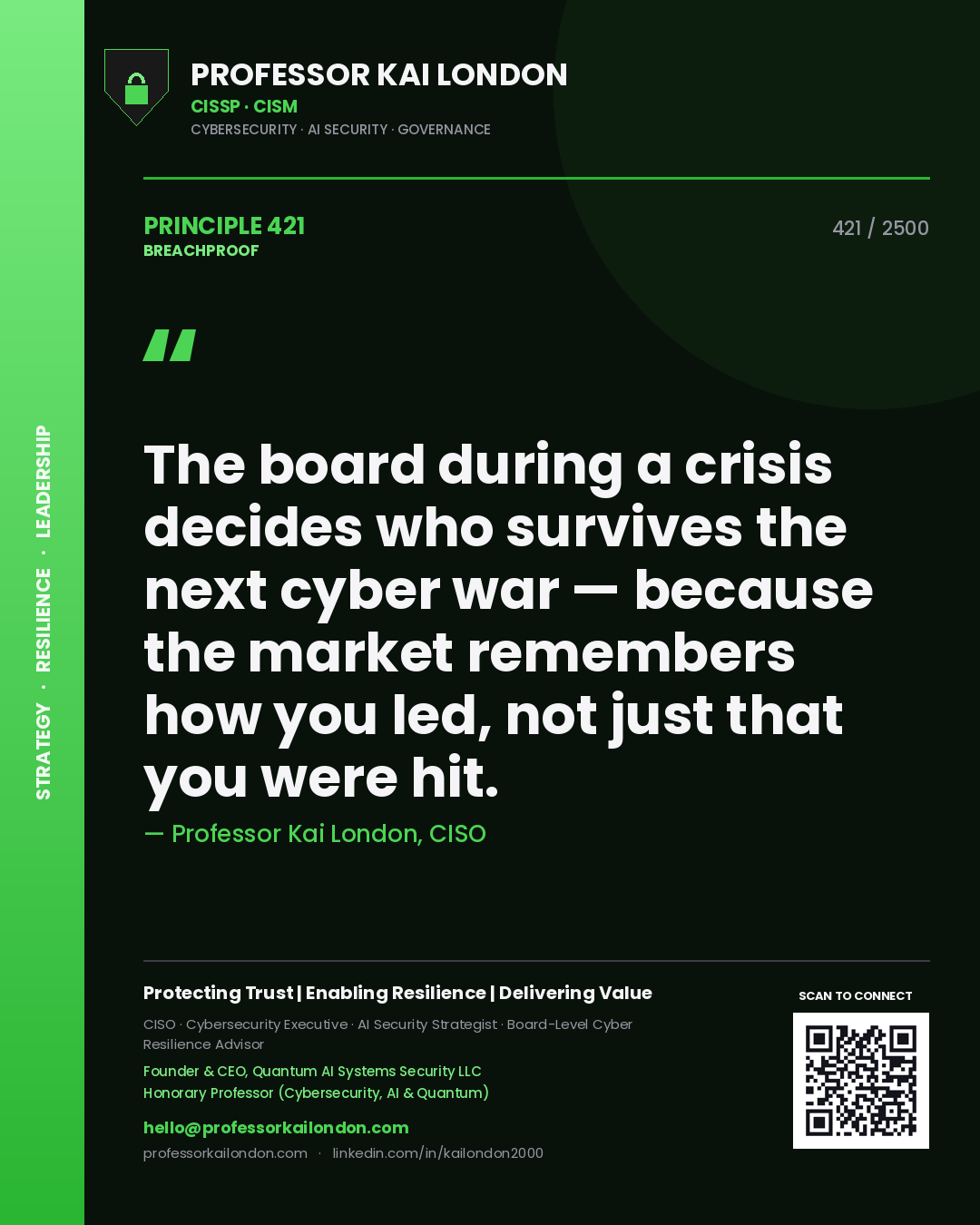
Professor Kai London principle 421: The board during a crisis decides who survives the next cyber war — because the market remembers how you led, not just that you were hit.
Principle 421
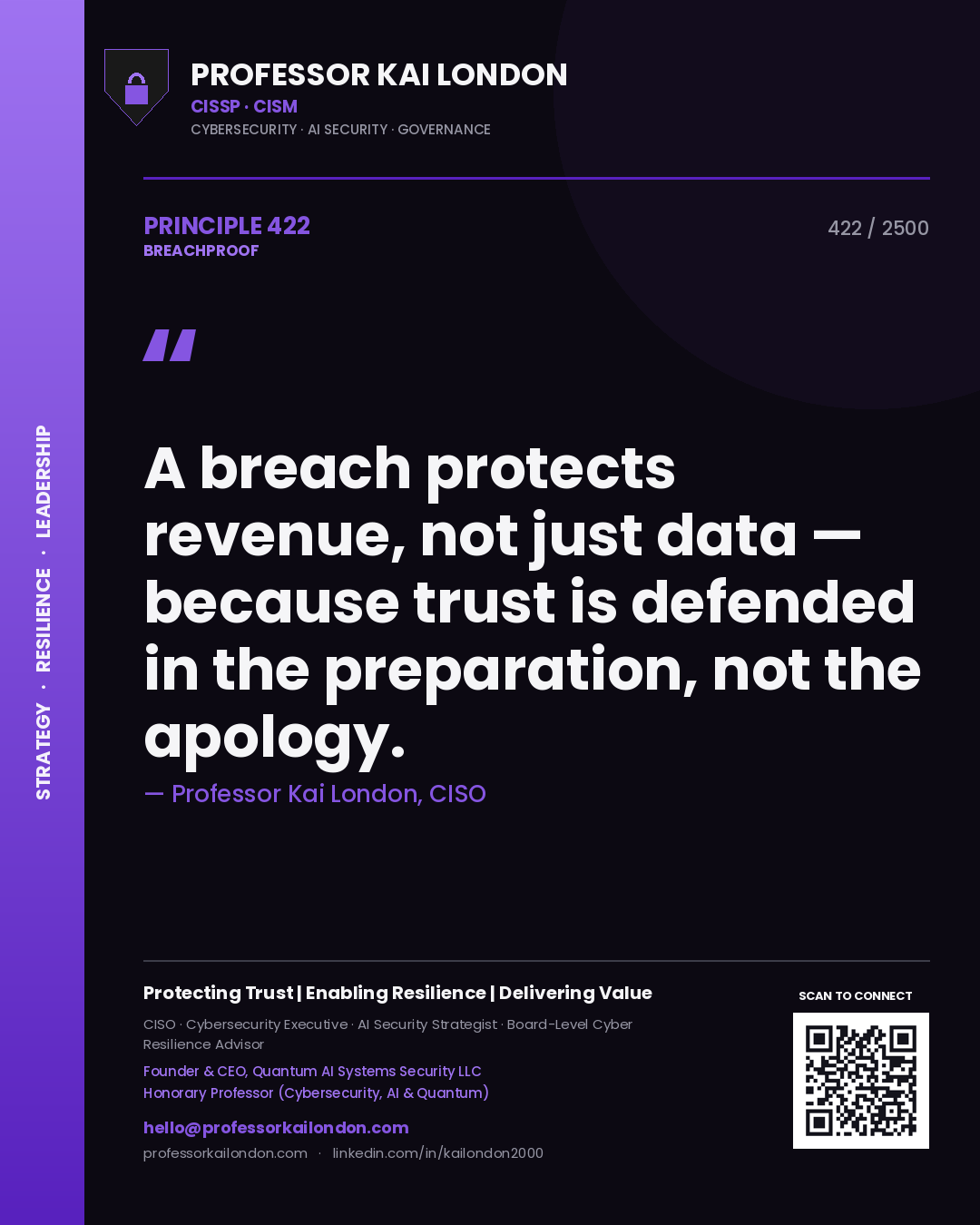
Professor Kai London principle 422: A breach protects revenue, not just data — because trust is defended in the preparation, not the apology.
Principle 422
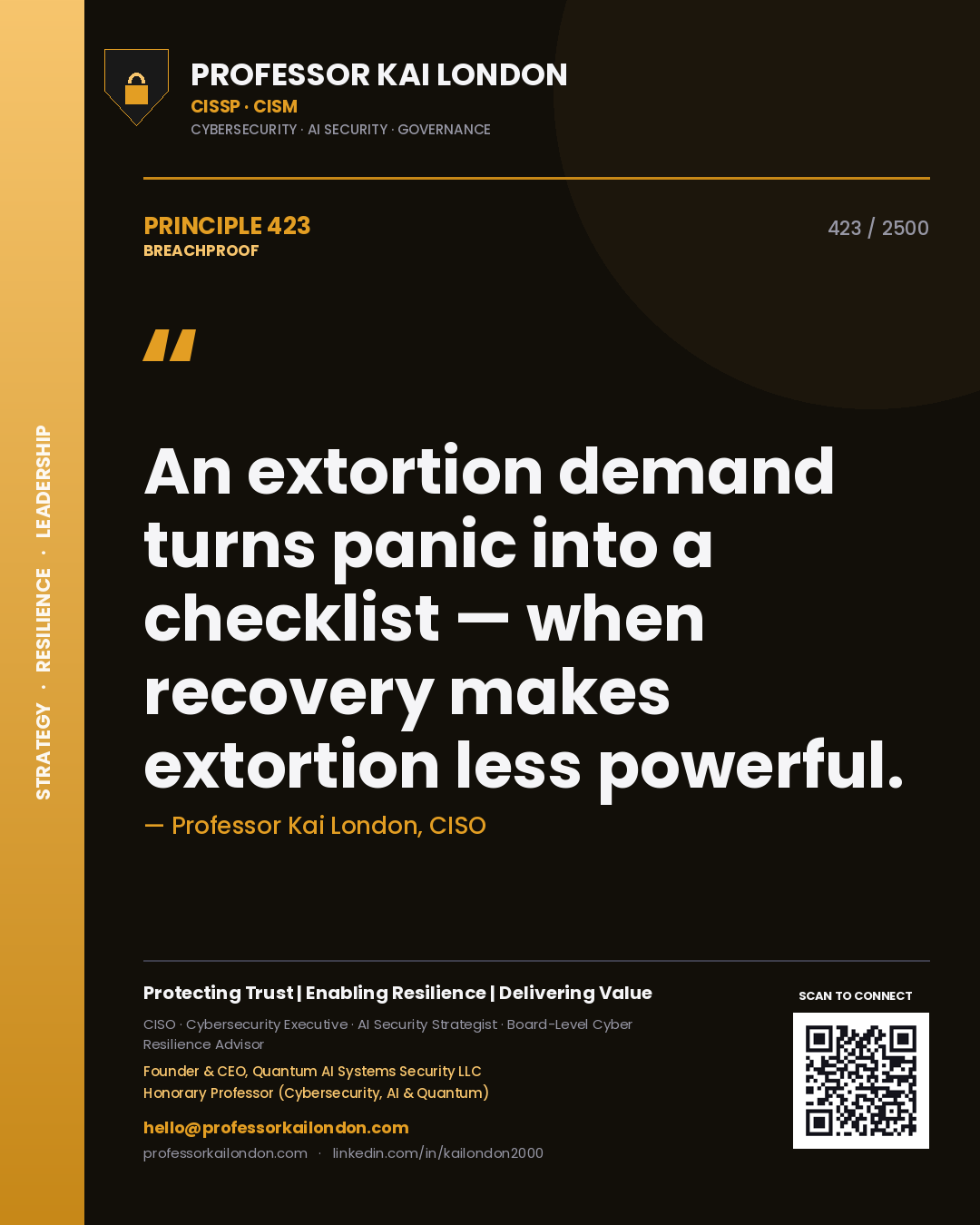
Professor Kai London principle 423: An extortion demand turns panic into a checklist — when recovery makes extortion less powerful.
Principle 423
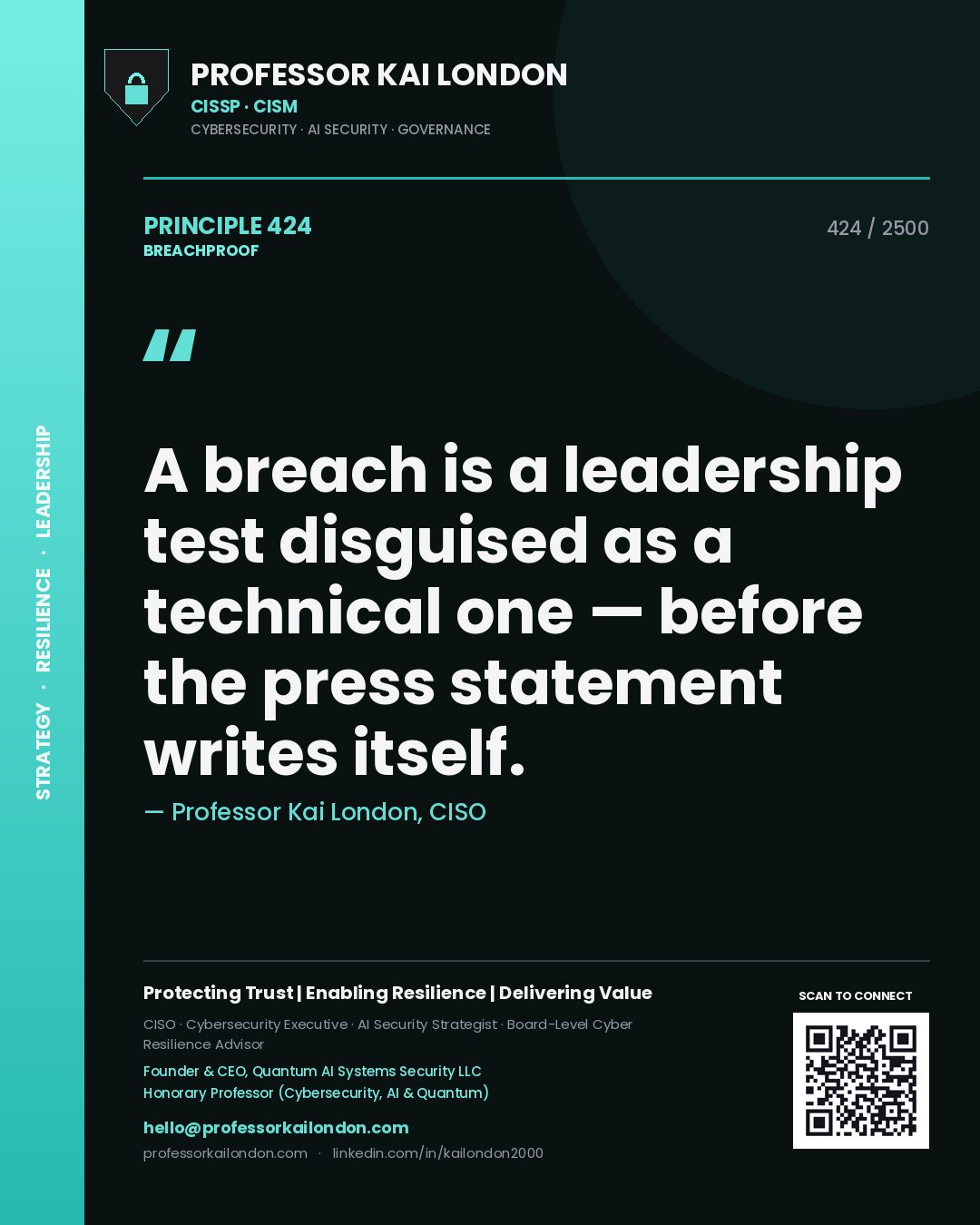
Professor Kai London principle 424: A breach is a leadership test disguised as a technical one — before the press statement writes itself.
Principle 424
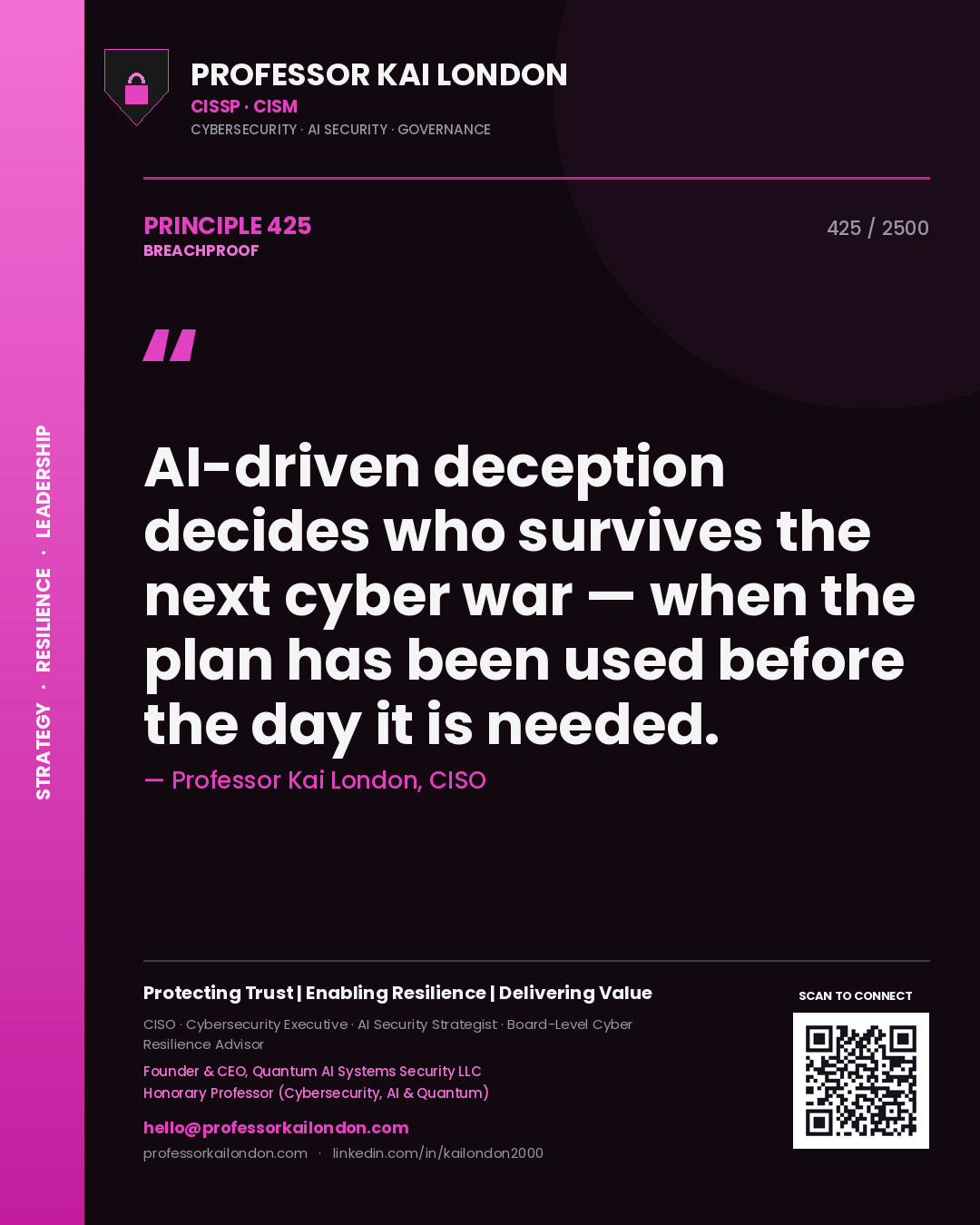
Professor Kai London principle 425: AI-driven deception decides who survives the next cyber war — when the plan has been used before the day it is needed.
Principle 425
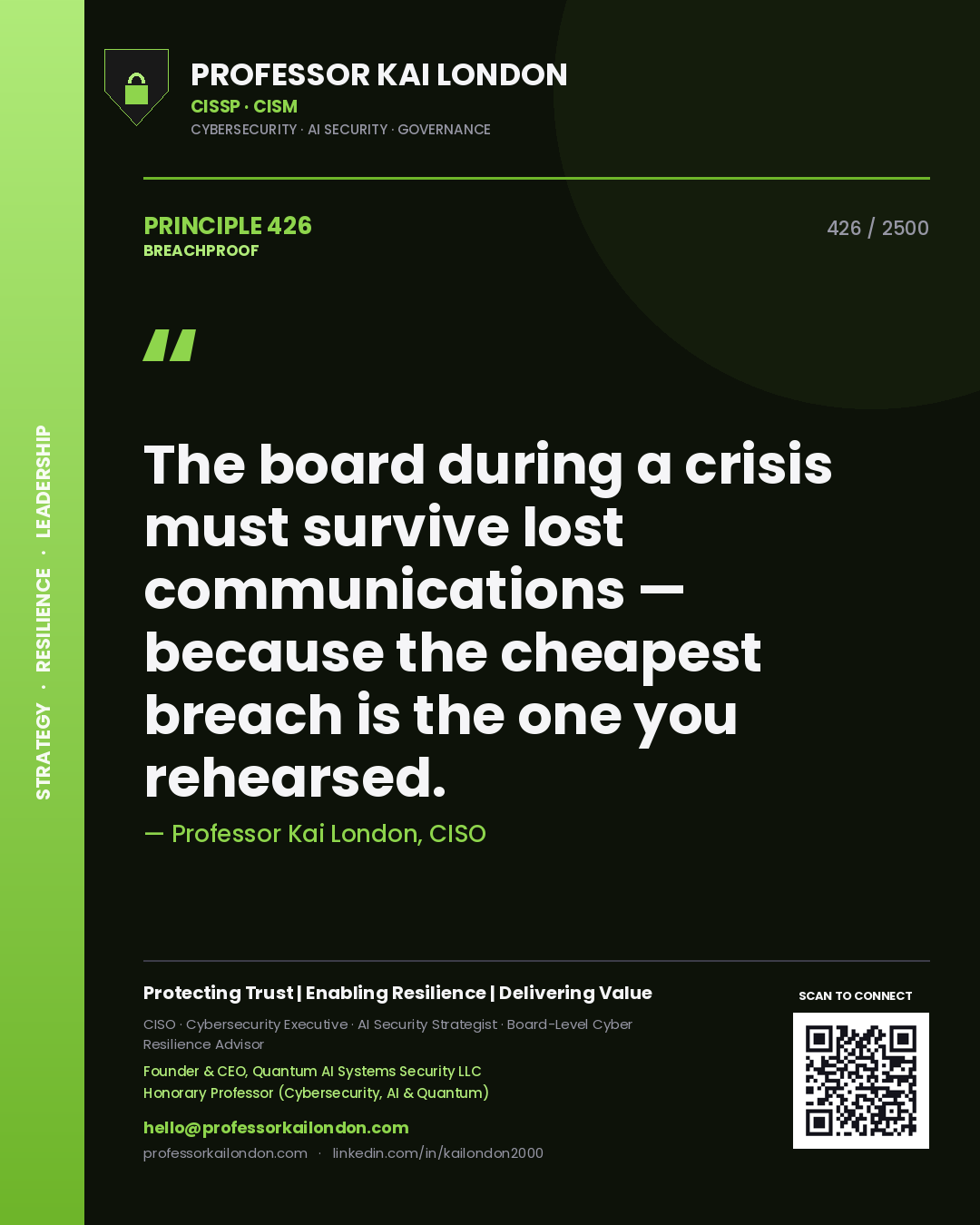
Professor Kai London principle 426: The board during a crisis must survive lost communications — because the cheapest breach is the one you rehearsed.
Principle 426
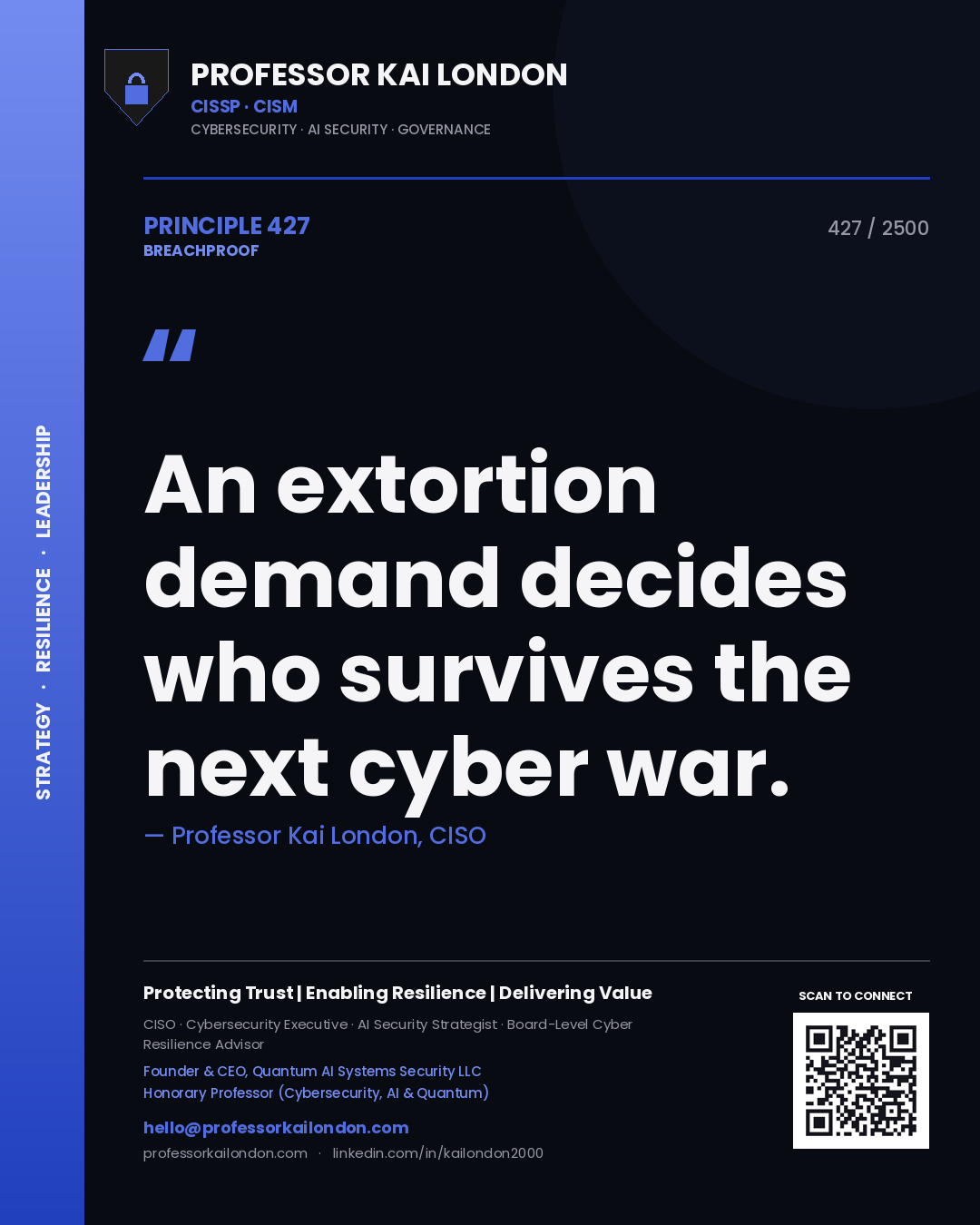
Professor Kai London principle 427: An extortion demand decides who survives the next cyber war.
Principle 427
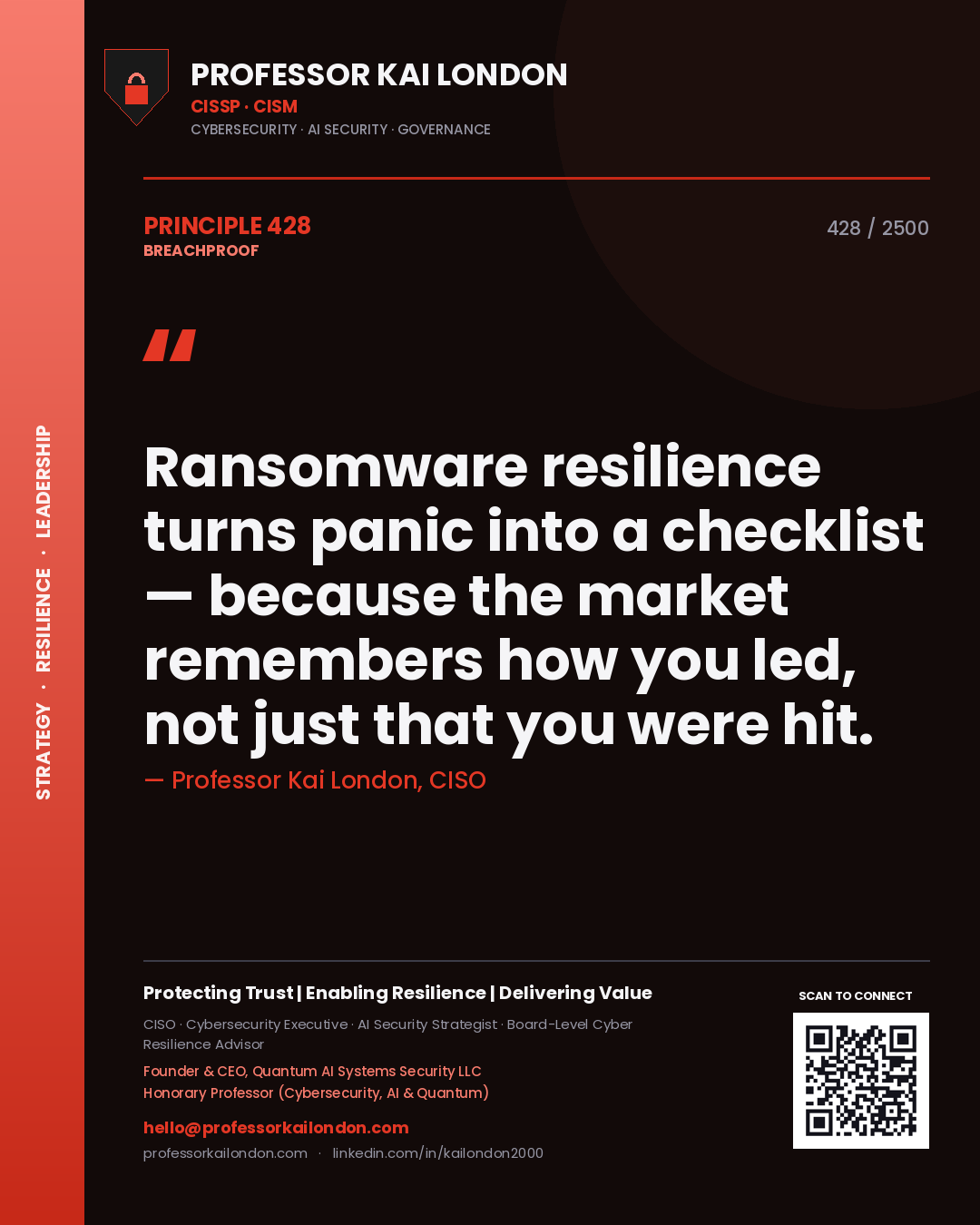
Professor Kai London principle 428: Ransomware resilience turns panic into a checklist — because the market remembers how you led, not just that you were hit.
Principle 428
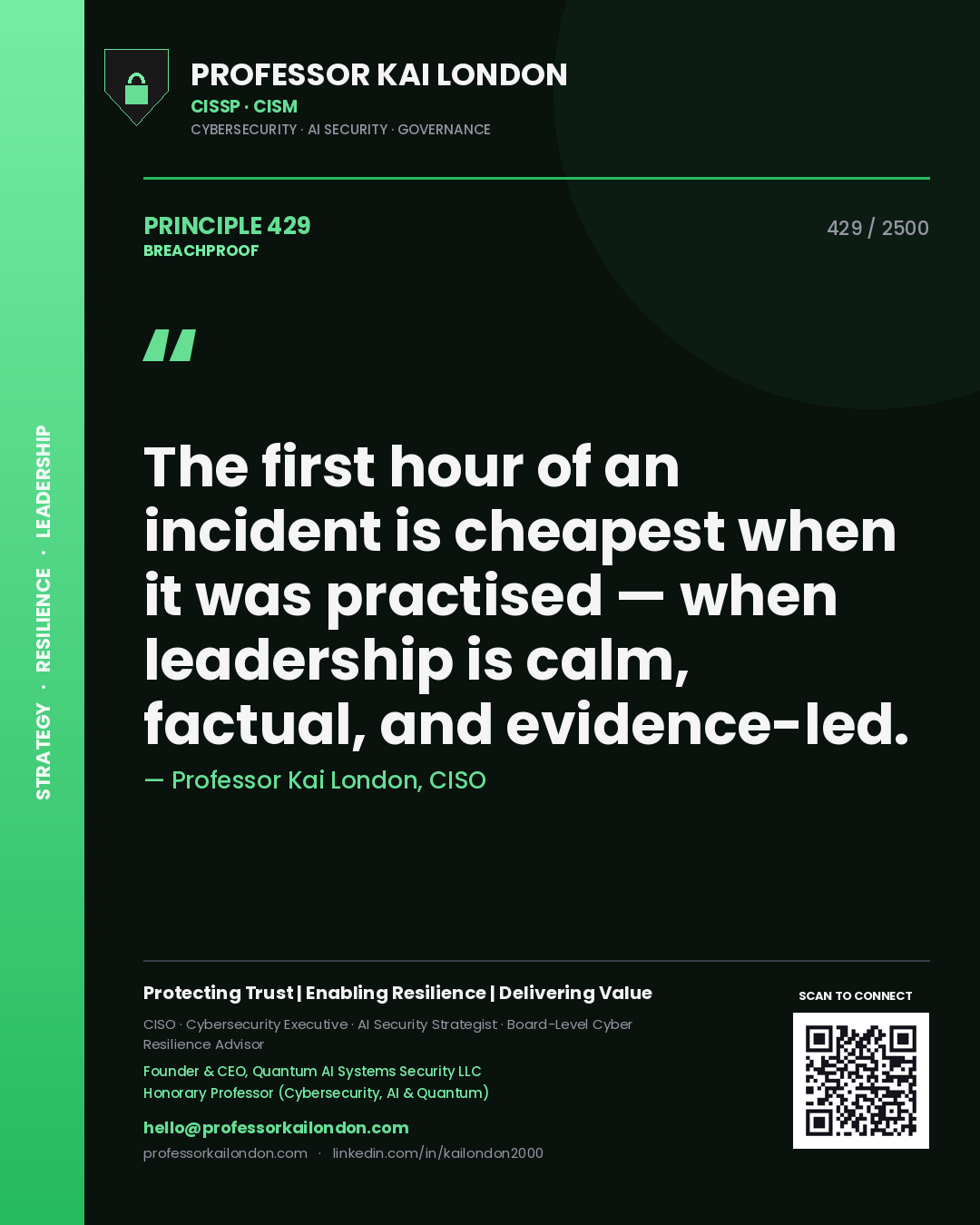
Professor Kai London principle 429: The first hour of an incident is cheapest when it was practised — when leadership is calm, factual, and evidence-led.
Principle 429
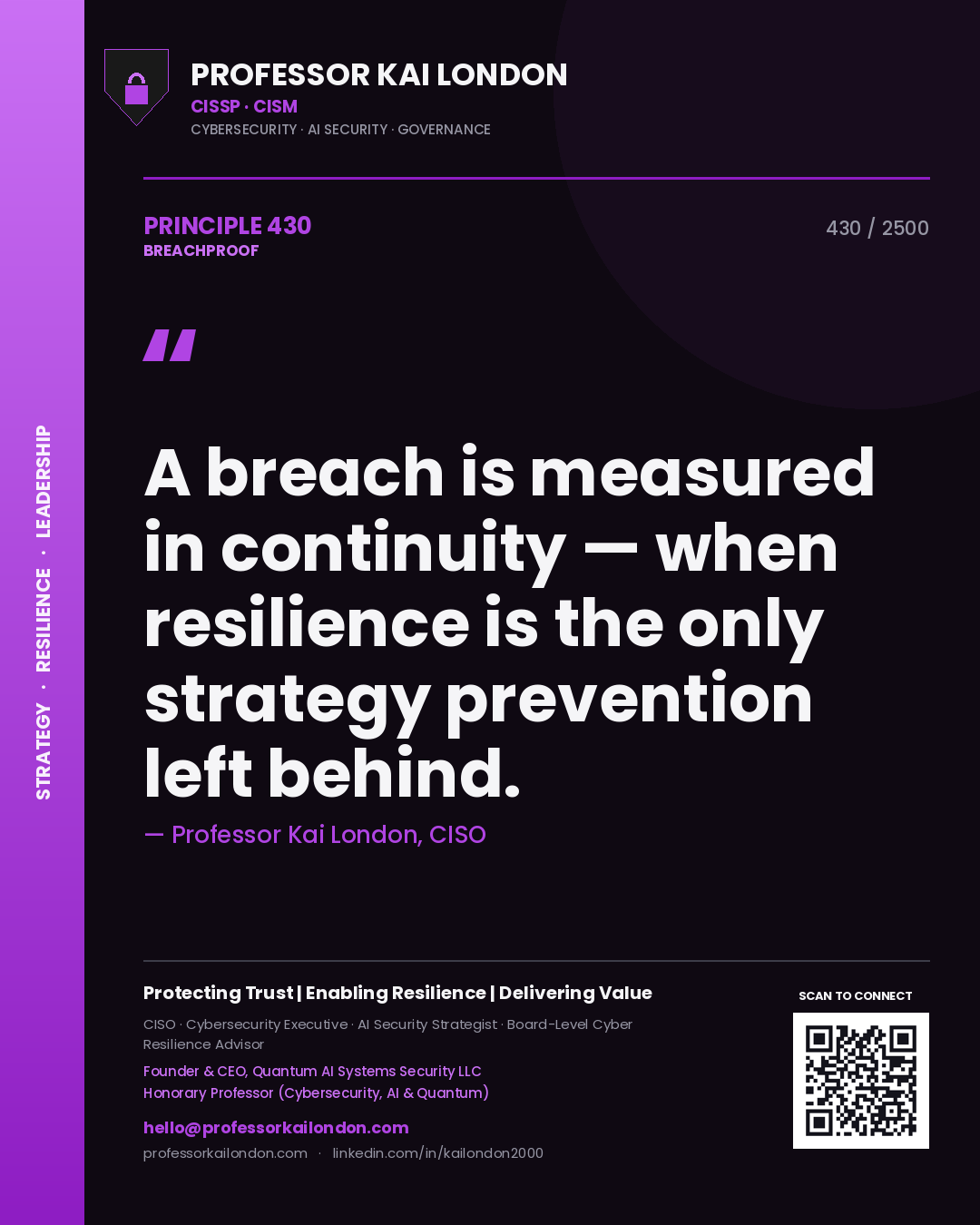
Professor Kai London principle 430: A breach is measured in continuity — when resilience is the only strategy prevention left behind.
Principle 430
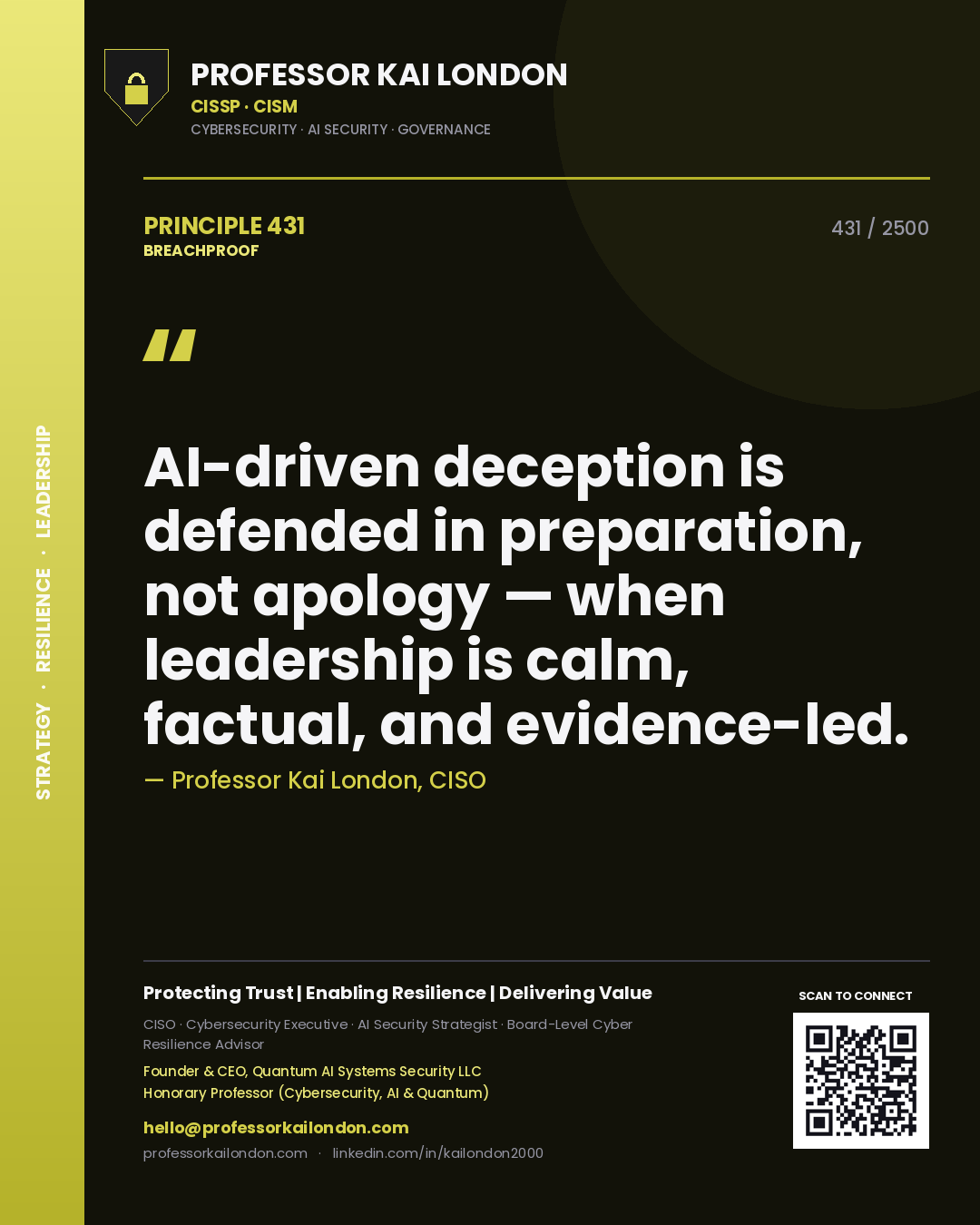
Professor Kai London principle 431: AI-driven deception is defended in preparation, not apology — when leadership is calm, factual, and evidence-led.
Principle 431
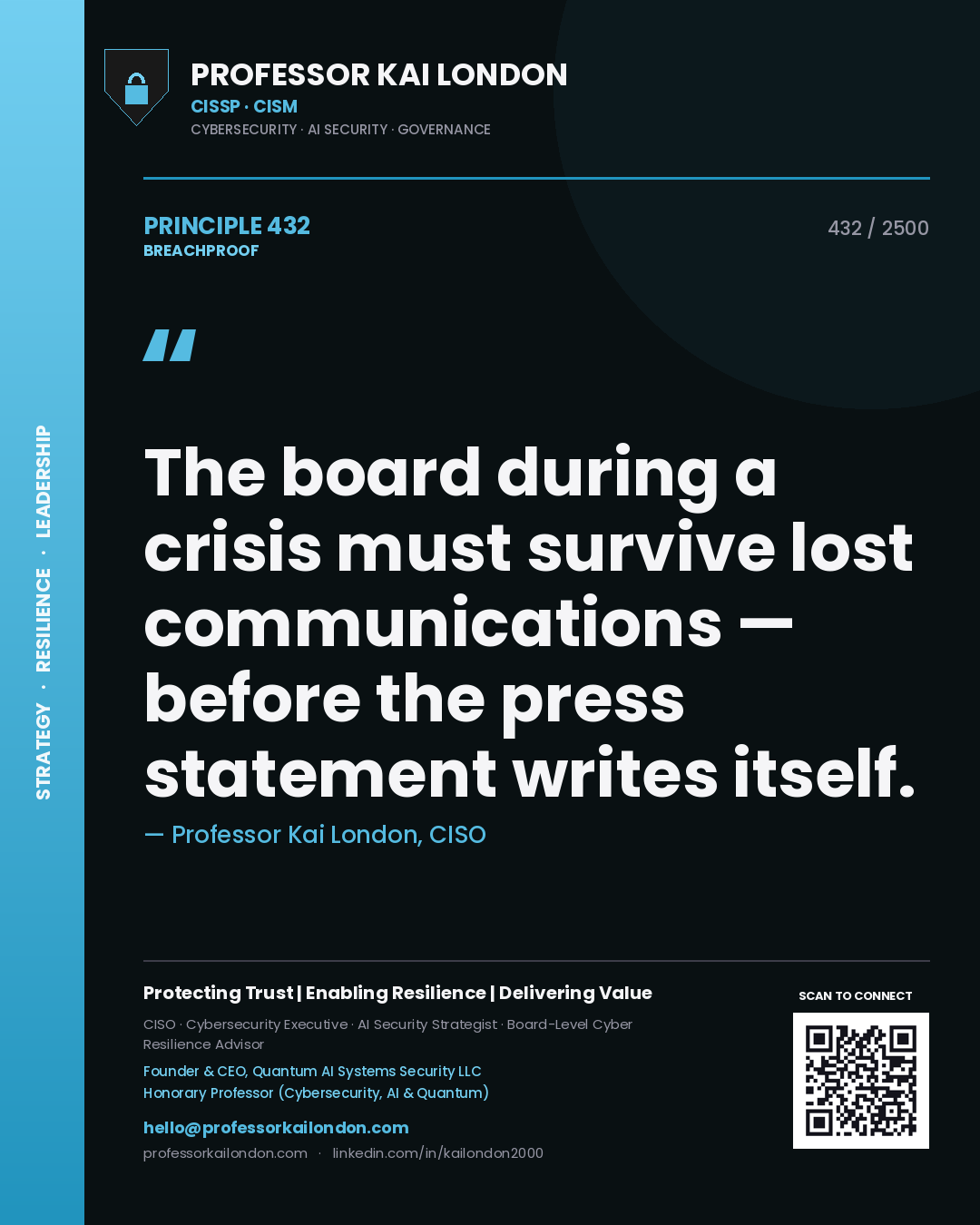
Professor Kai London principle 432: The board during a crisis must survive lost communications — before the press statement writes itself.
Principle 432
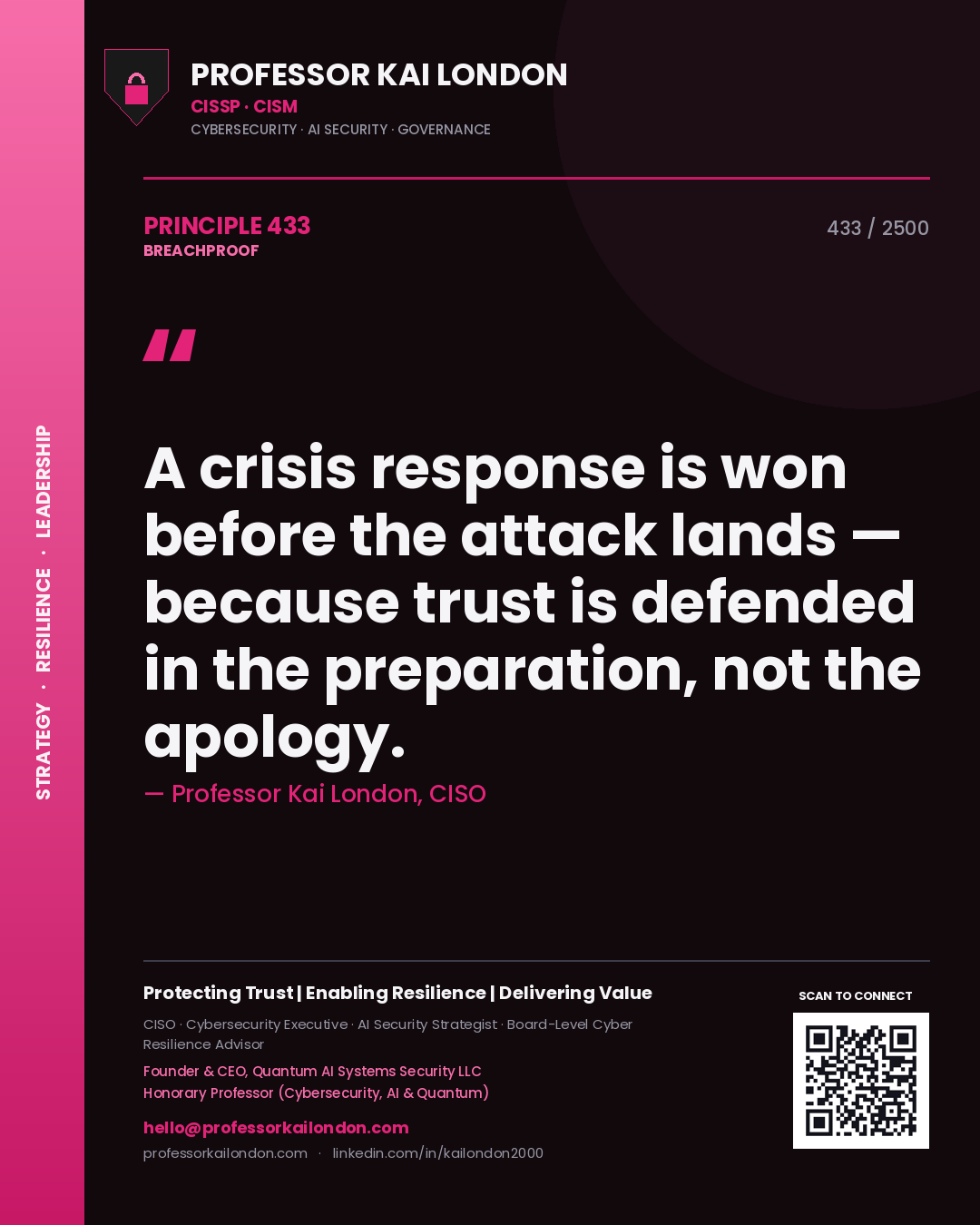
Professor Kai London principle 433: A crisis response is won before the attack lands — because trust is defended in the preparation, not the apology.
Principle 433
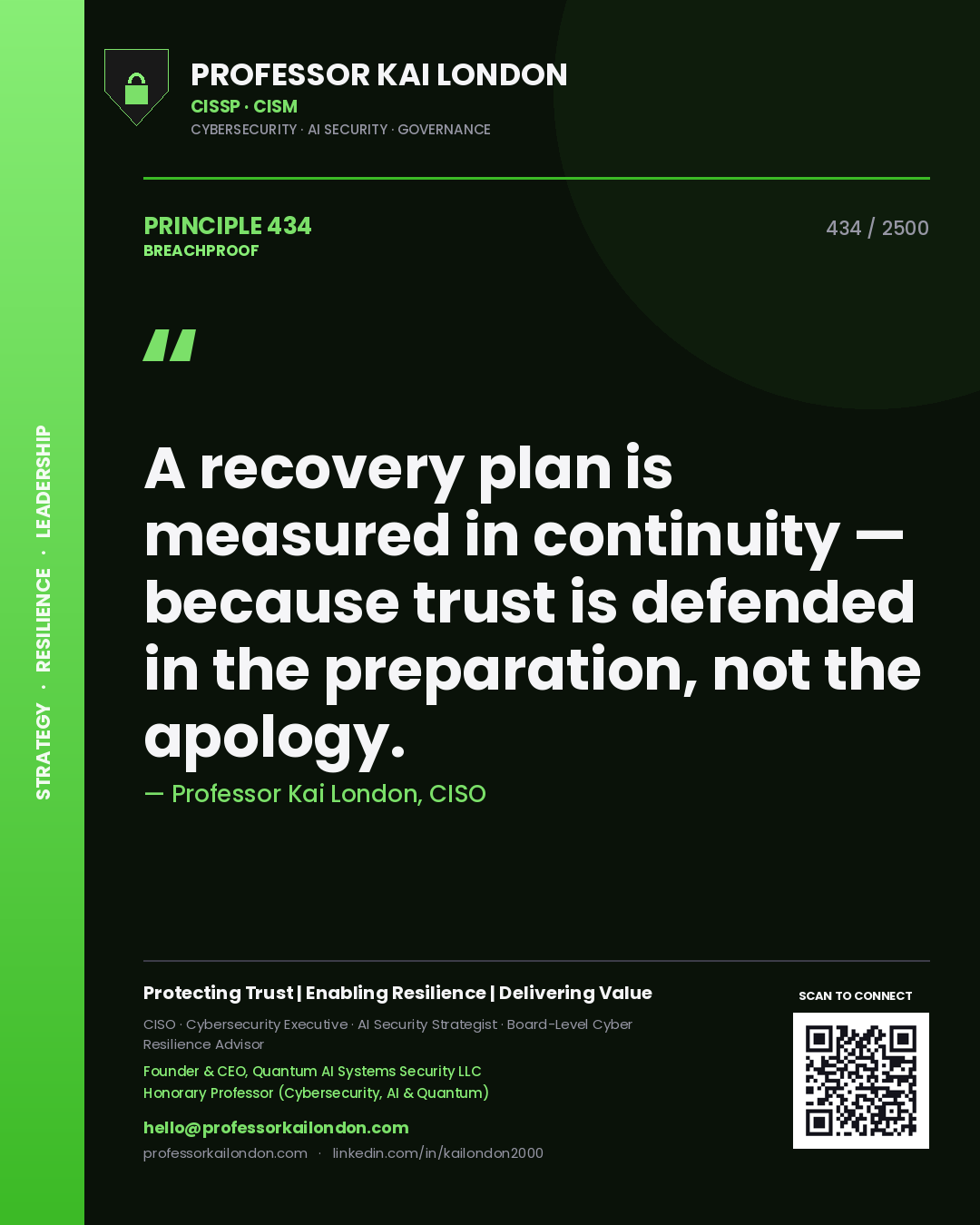
Professor Kai London principle 434: A recovery plan is measured in continuity — because trust is defended in the preparation, not the apology.
Principle 434
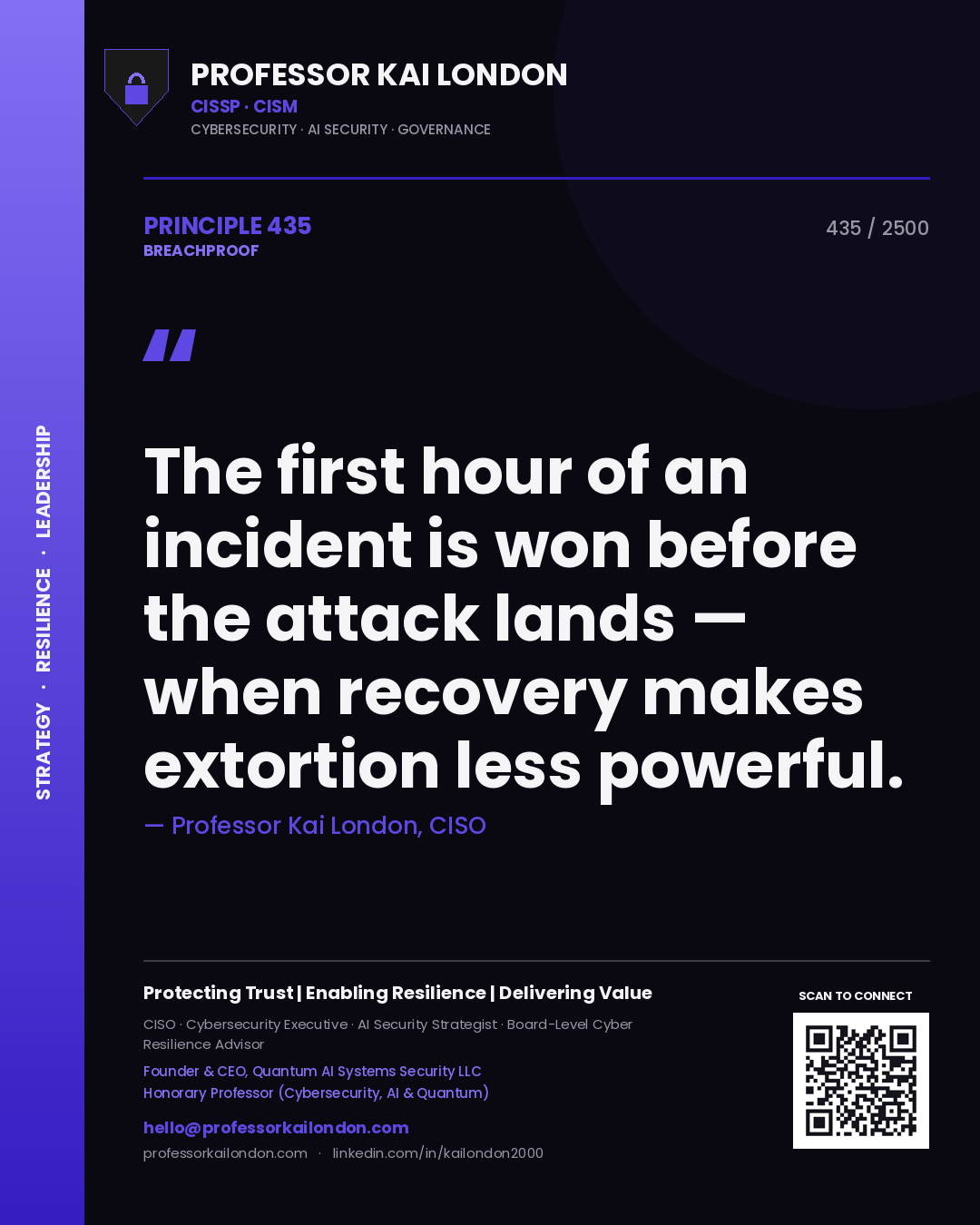
Professor Kai London principle 435: The first hour of an incident is won before the attack lands — when recovery makes extortion less powerful.
Principle 435
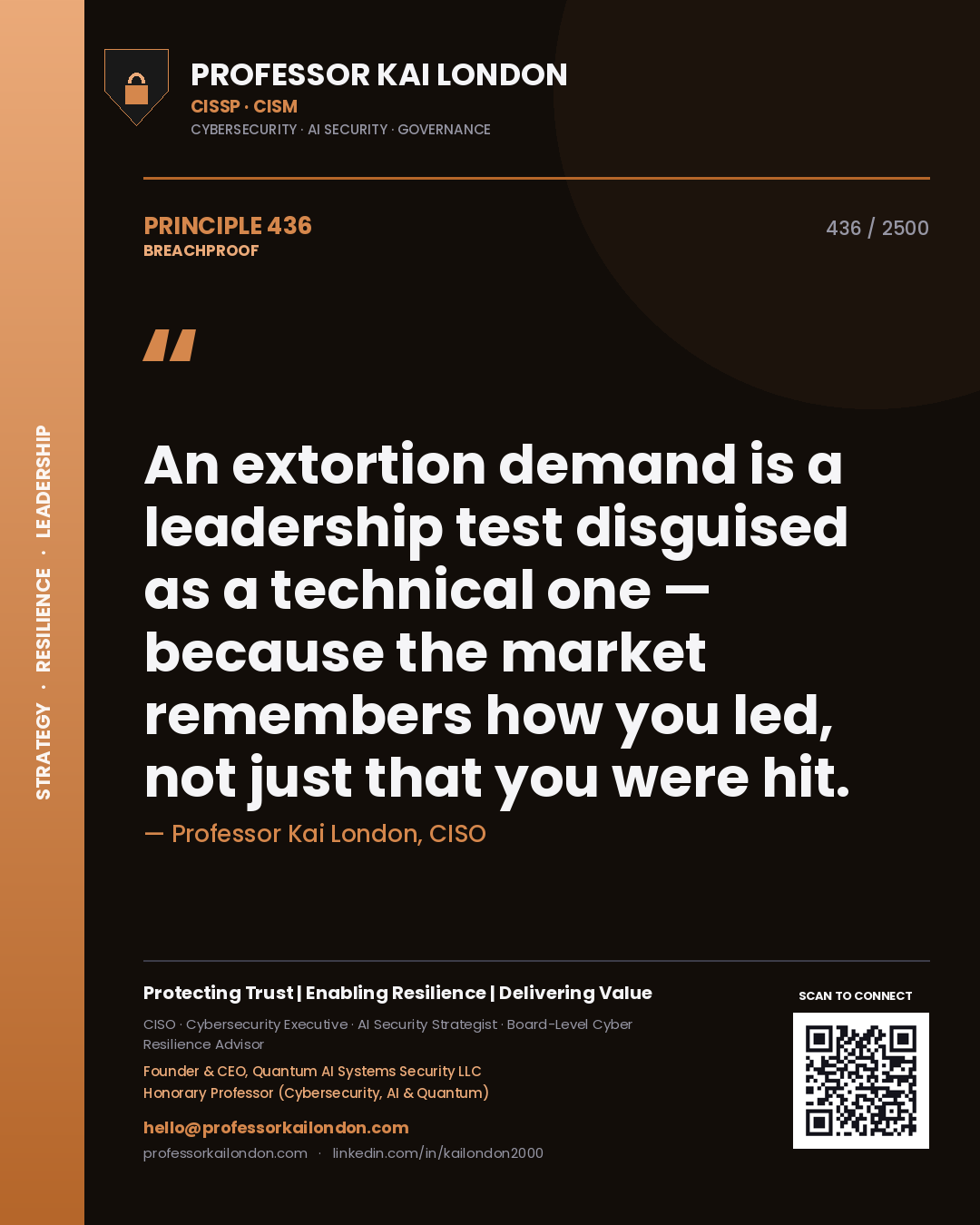
Professor Kai London principle 436: An extortion demand is a leadership test disguised as a technical one — because the market remembers how you led, not just that you were hit.
Principle 436
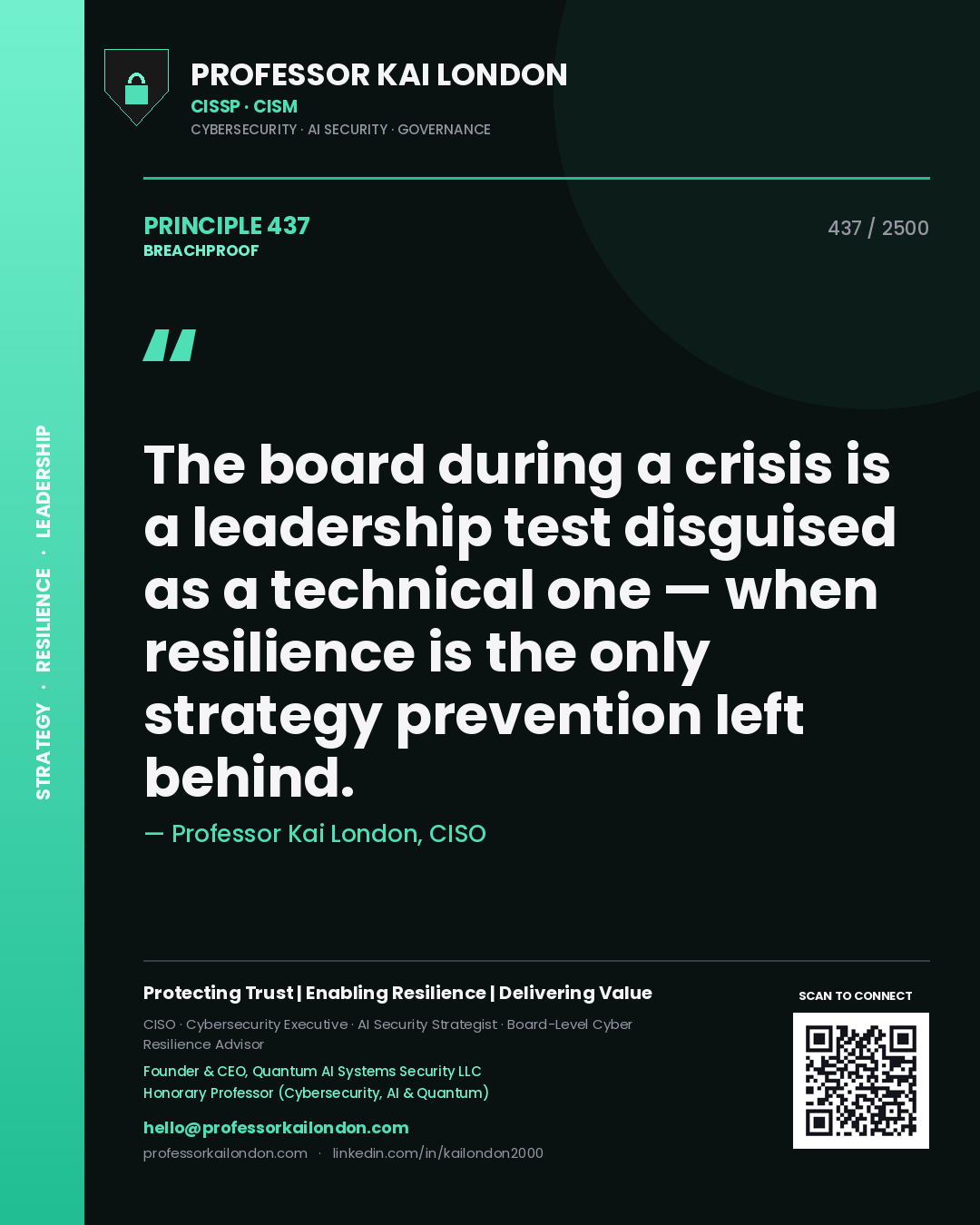
Professor Kai London principle 437: The board during a crisis is a leadership test disguised as a technical one — when resilience is the only strategy prevention left behind.
Principle 437
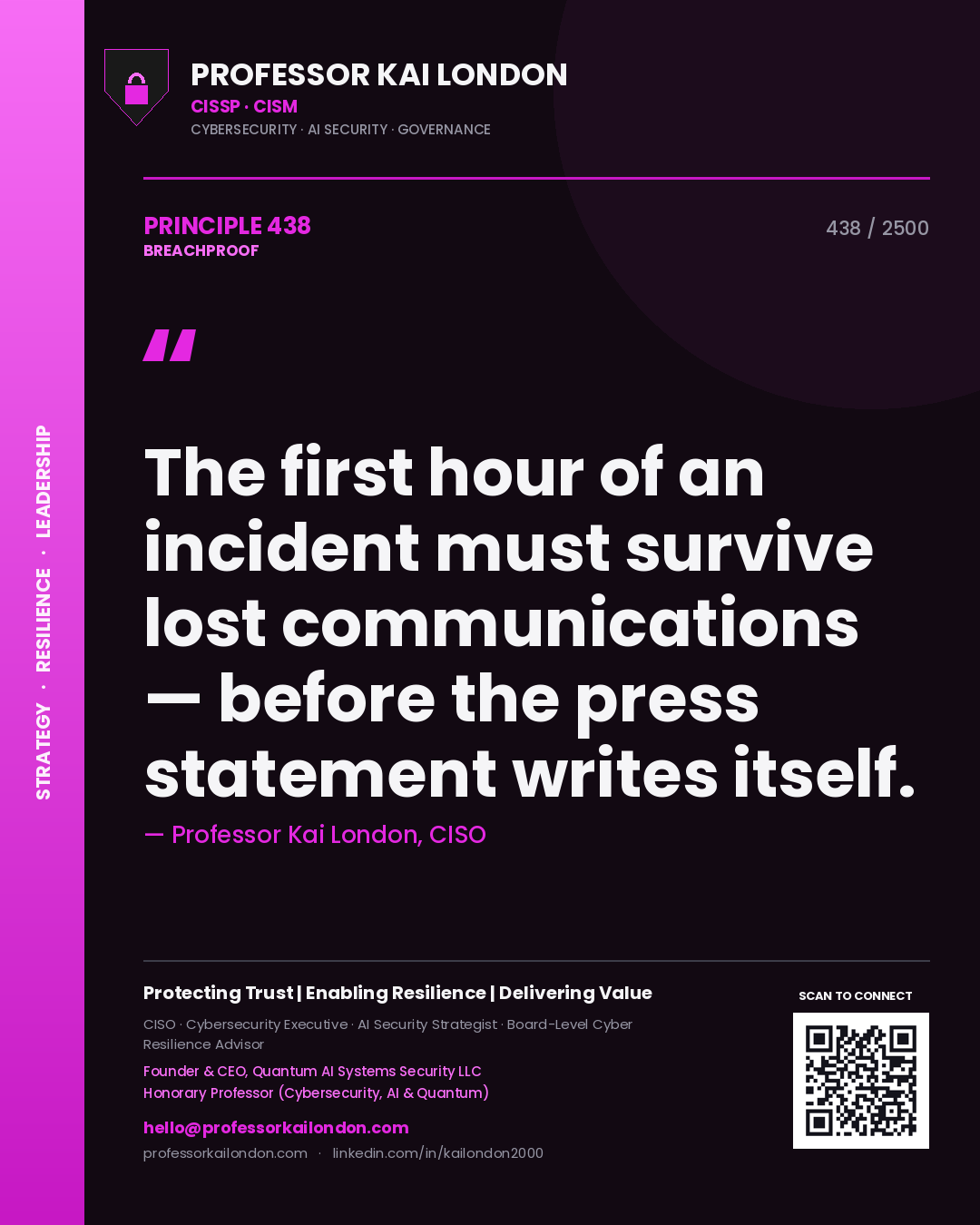
Professor Kai London principle 438: The first hour of an incident must survive lost communications — before the press statement writes itself.
Principle 438
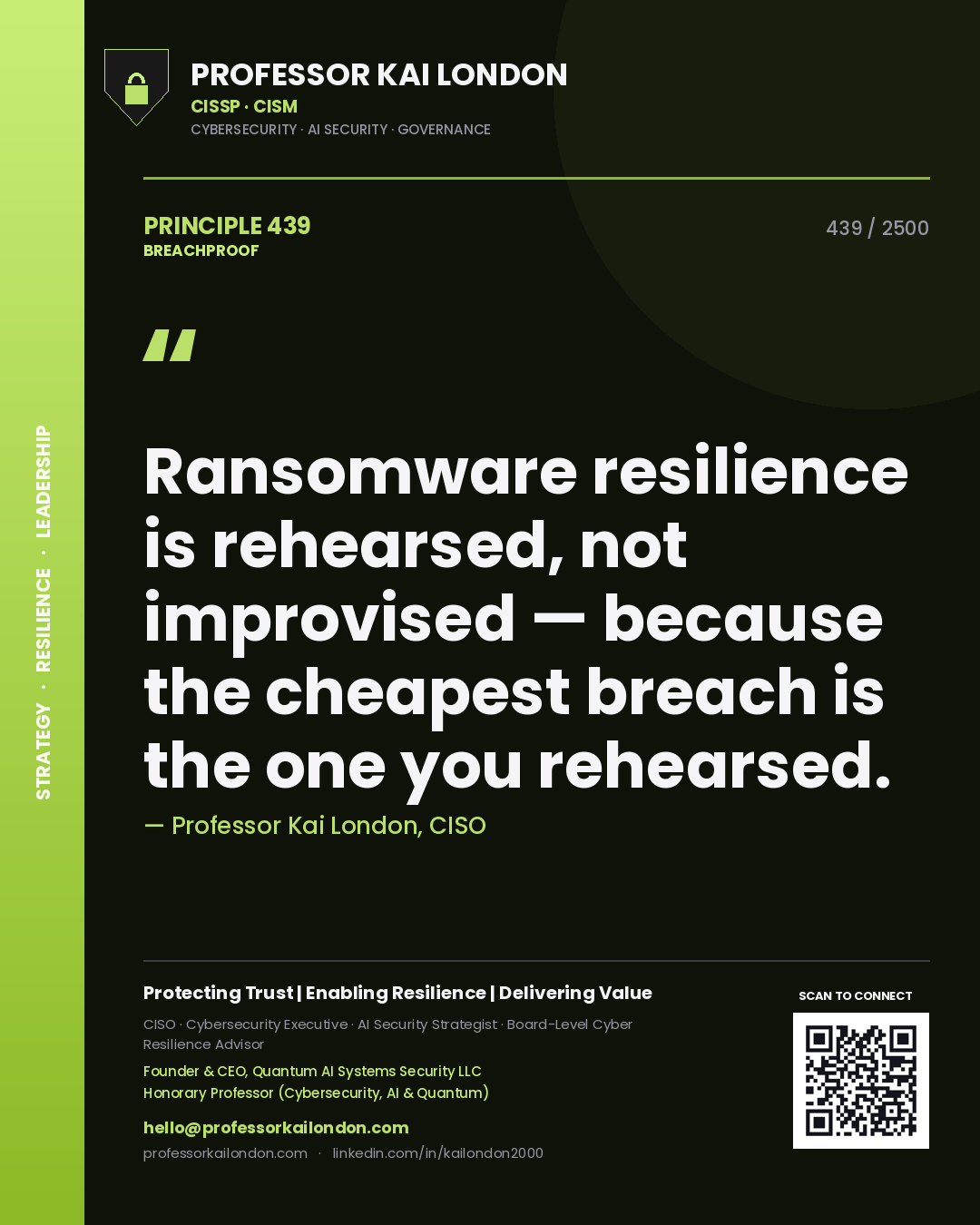
Professor Kai London principle 439: Ransomware resilience is rehearsed, not improvised — because the cheapest breach is the one you rehearsed.
Principle 439
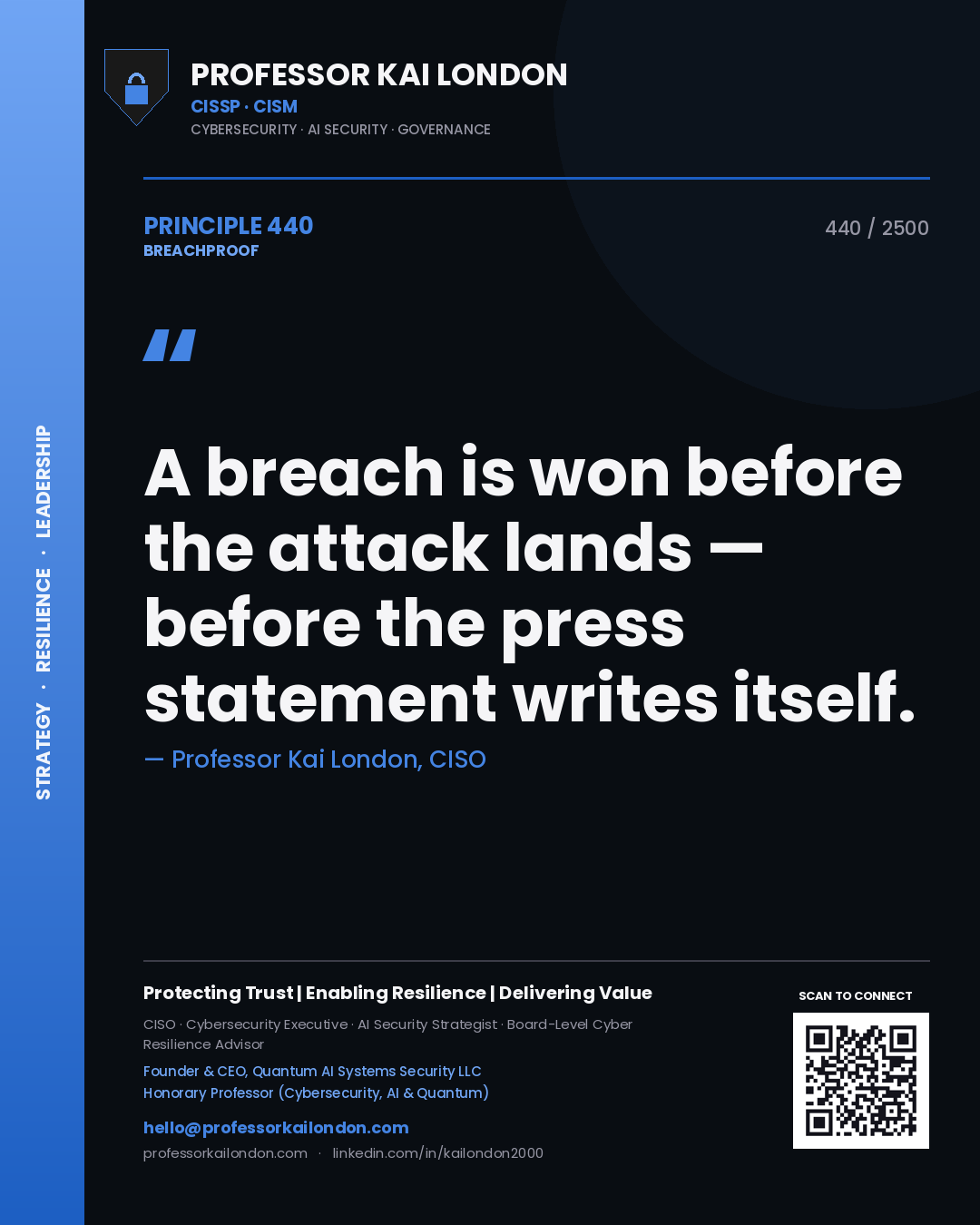
Professor Kai London principle 440: A breach is won before the attack lands — before the press statement writes itself.
Principle 440
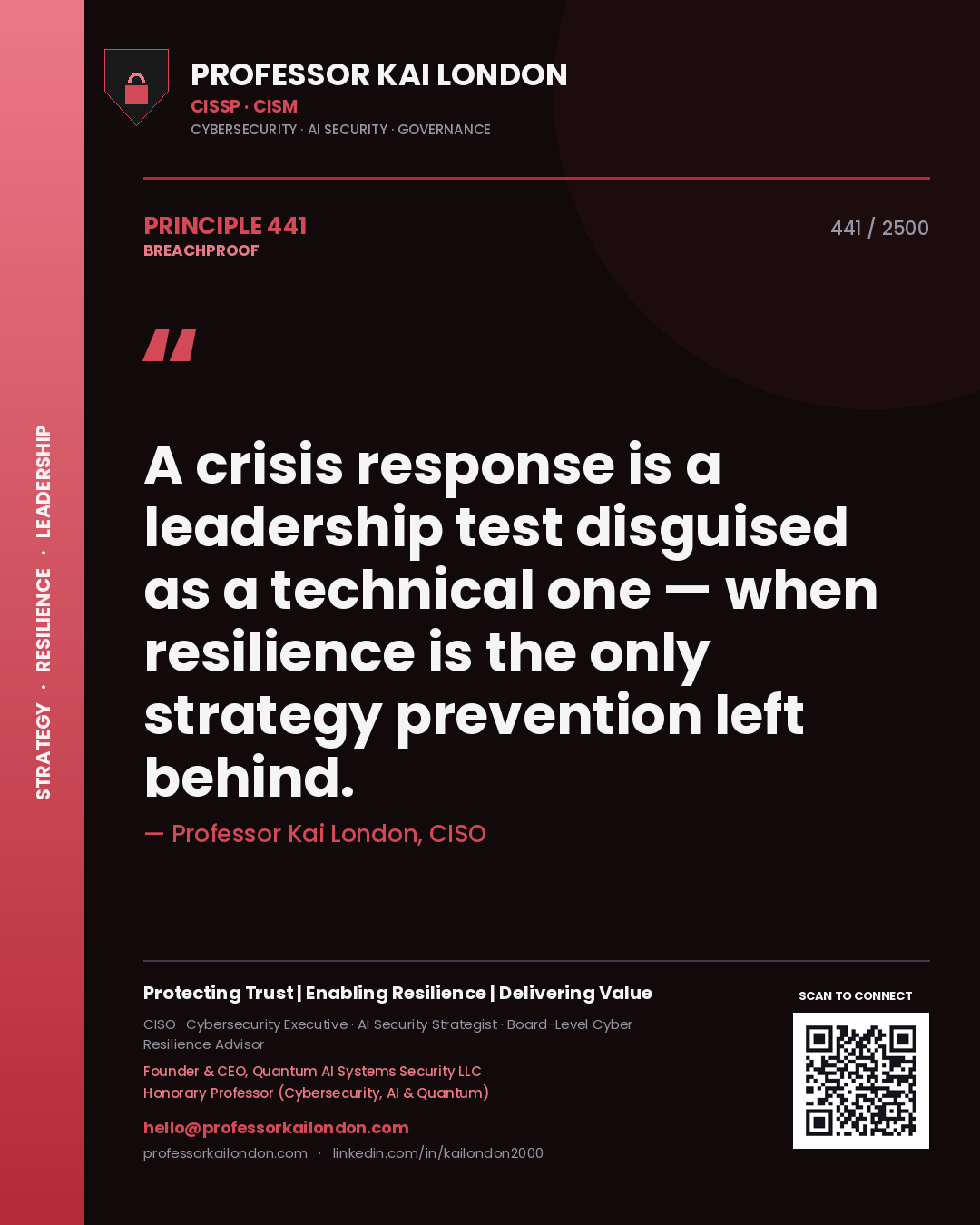
Professor Kai London principle 441: A crisis response is a leadership test disguised as a technical one — when resilience is the only strategy prevention left behind.
Principle 441
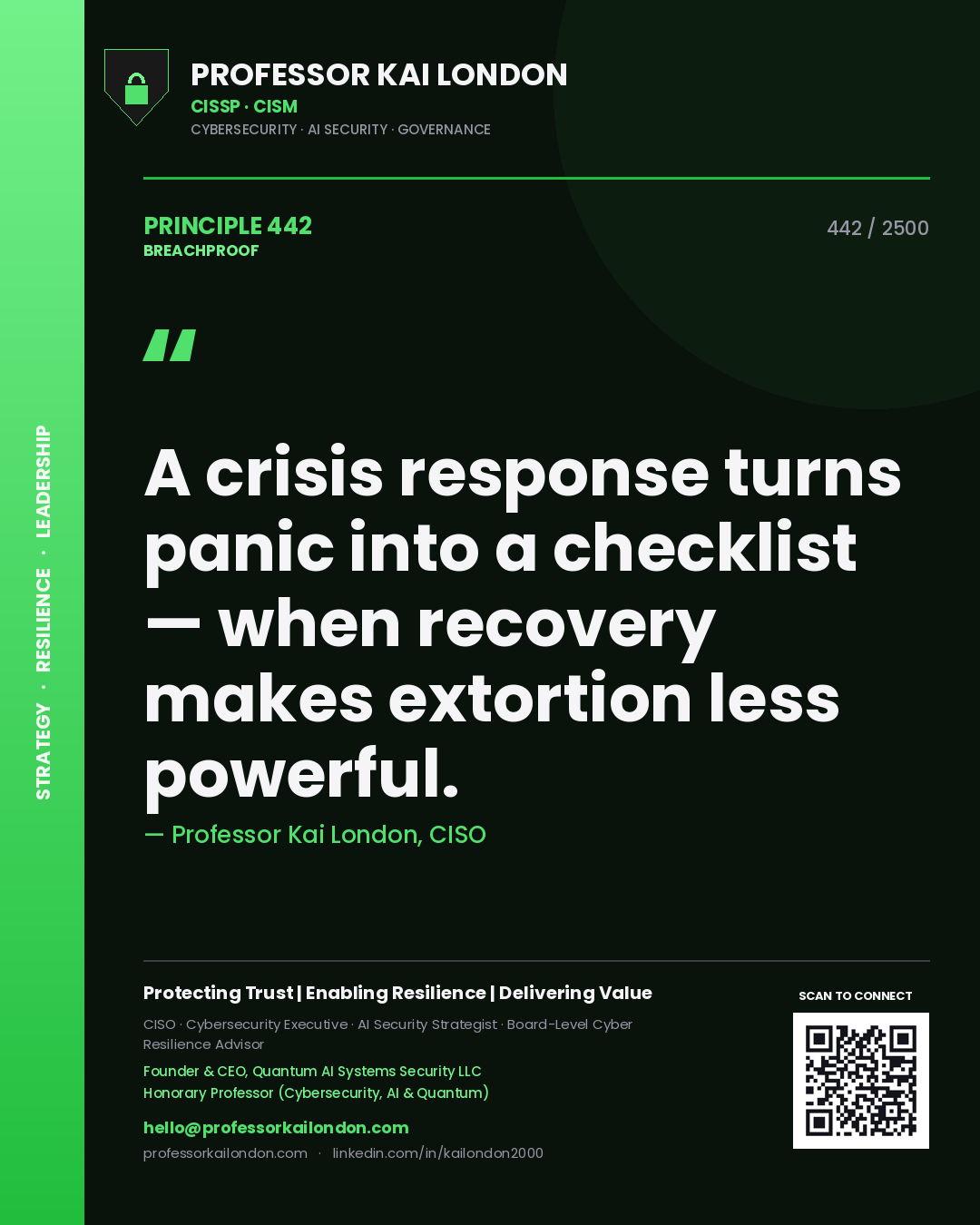
Professor Kai London principle 442: A crisis response turns panic into a checklist — when recovery makes extortion less powerful.
Principle 442
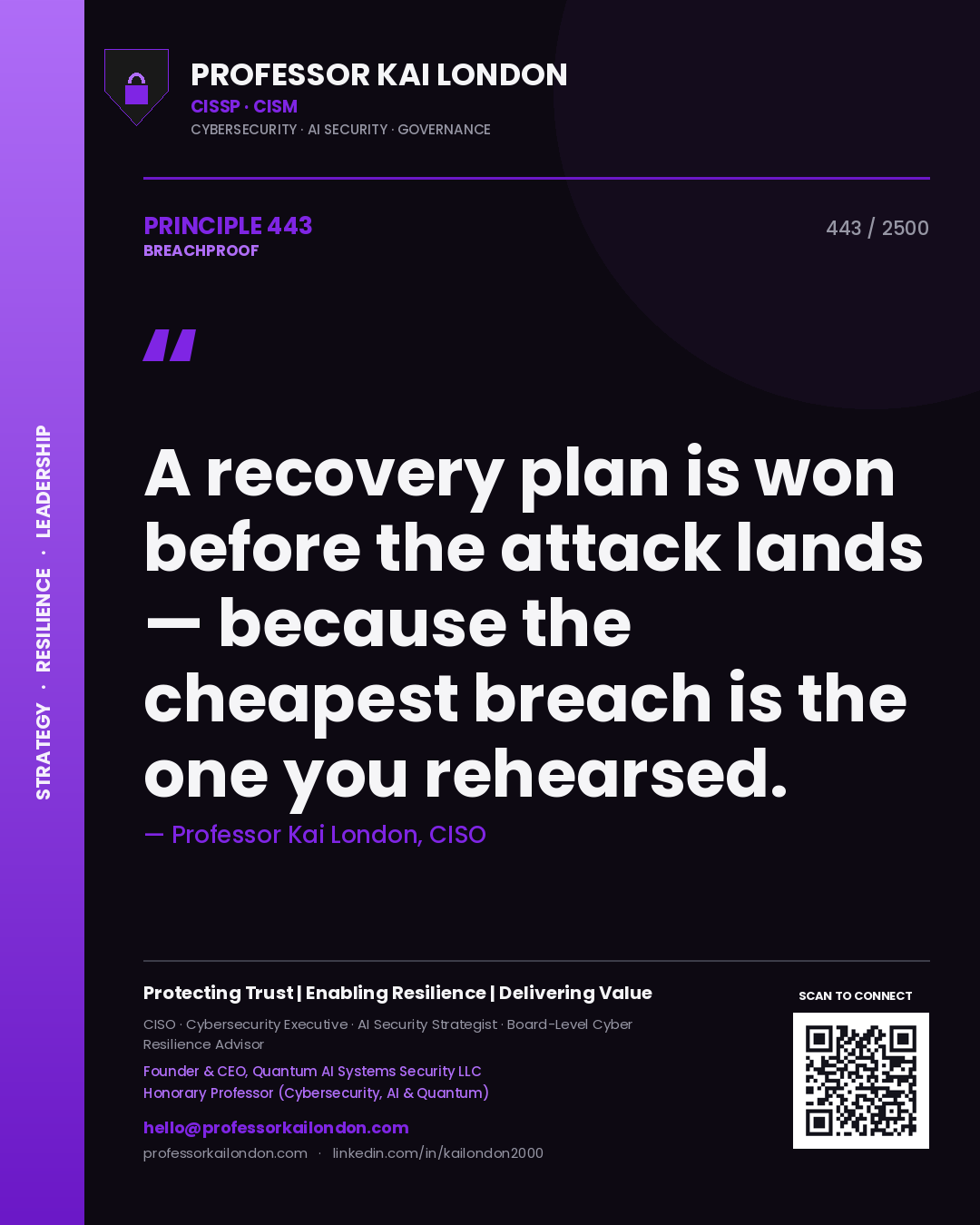
Professor Kai London principle 443: A recovery plan is won before the attack lands — because the cheapest breach is the one you rehearsed.
Principle 443
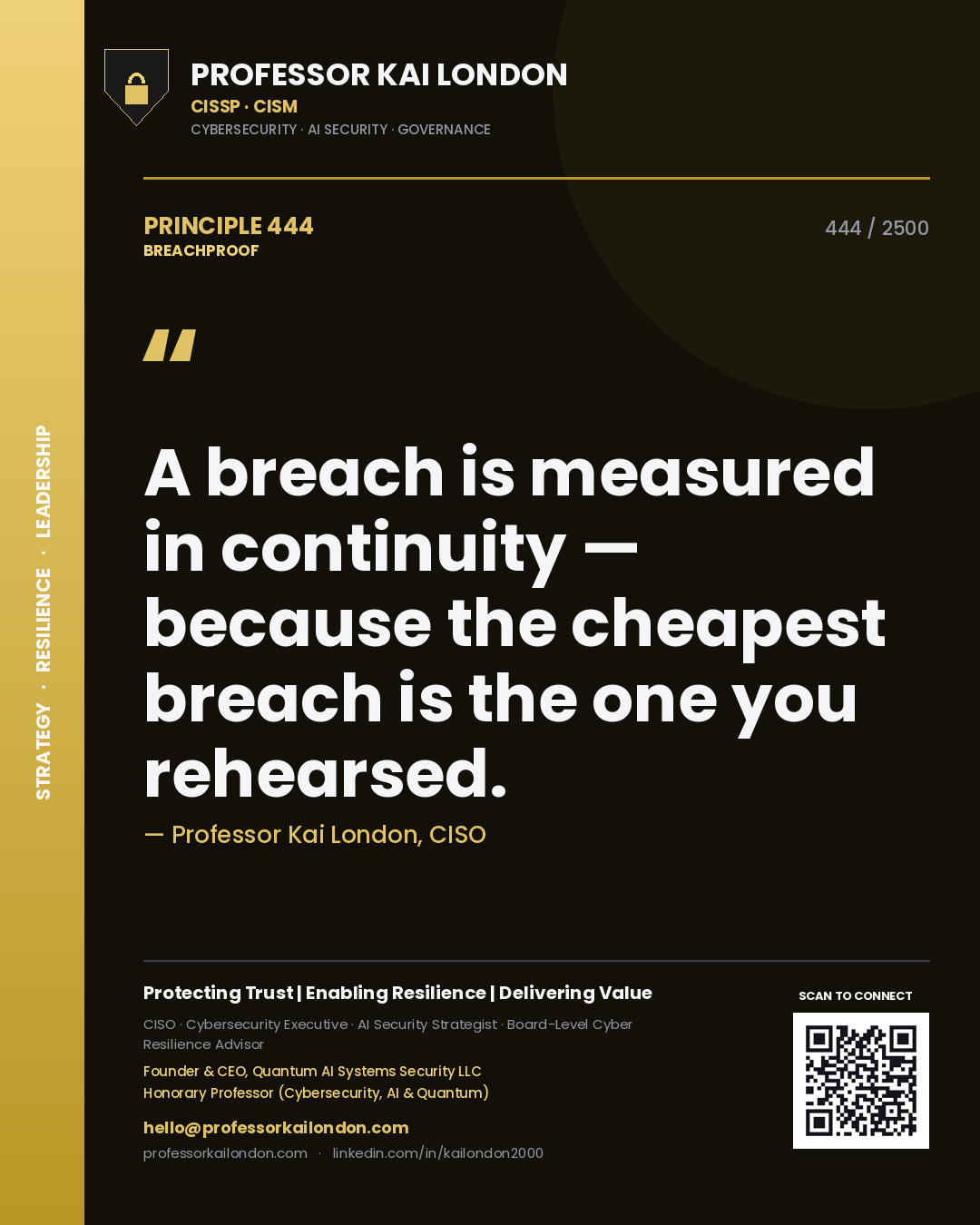
Professor Kai London principle 444: A breach is measured in continuity — because the cheapest breach is the one you rehearsed.
Principle 444
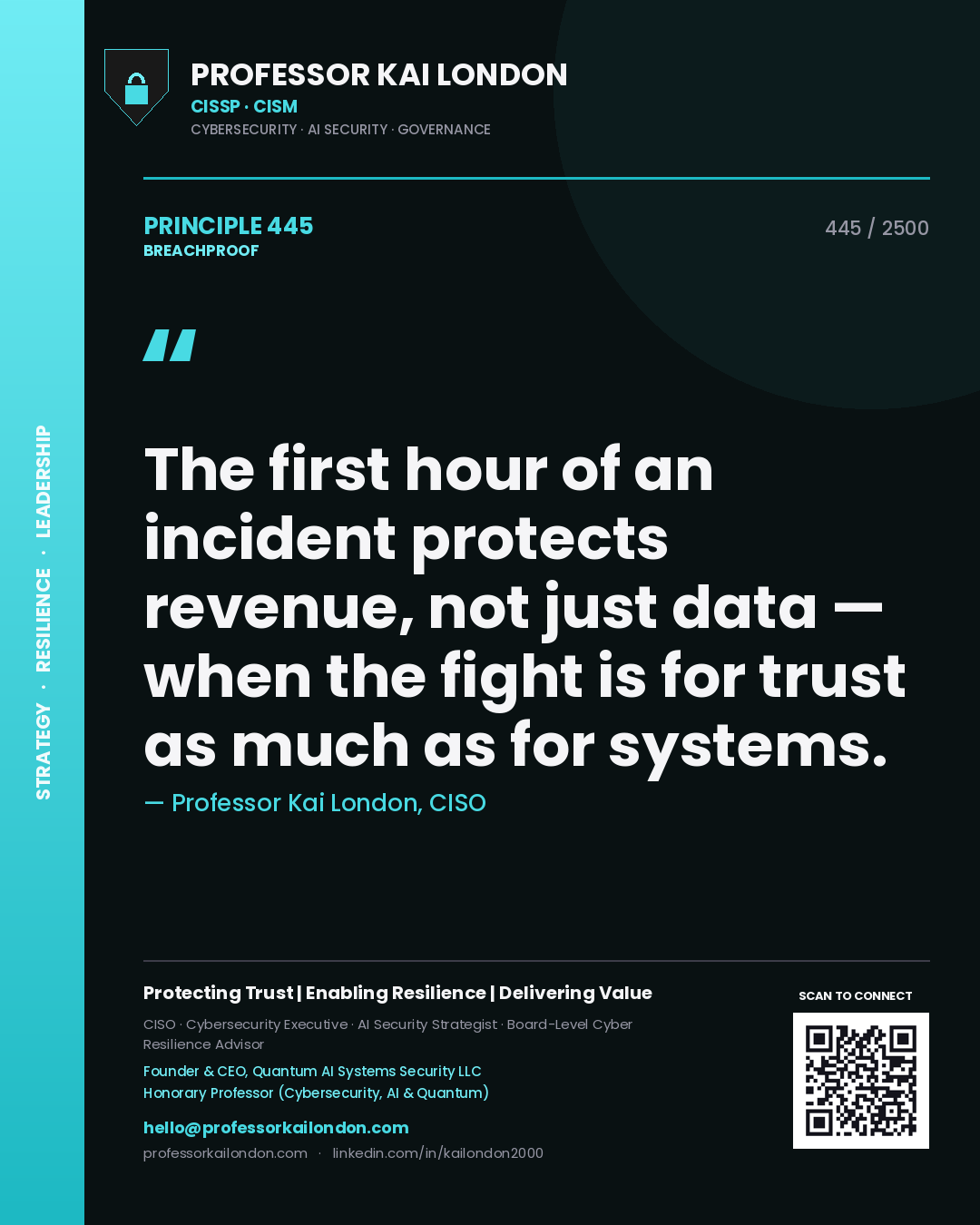
Professor Kai London principle 445: The first hour of an incident protects revenue, not just data — when the fight is for trust as much as for systems.
Principle 445
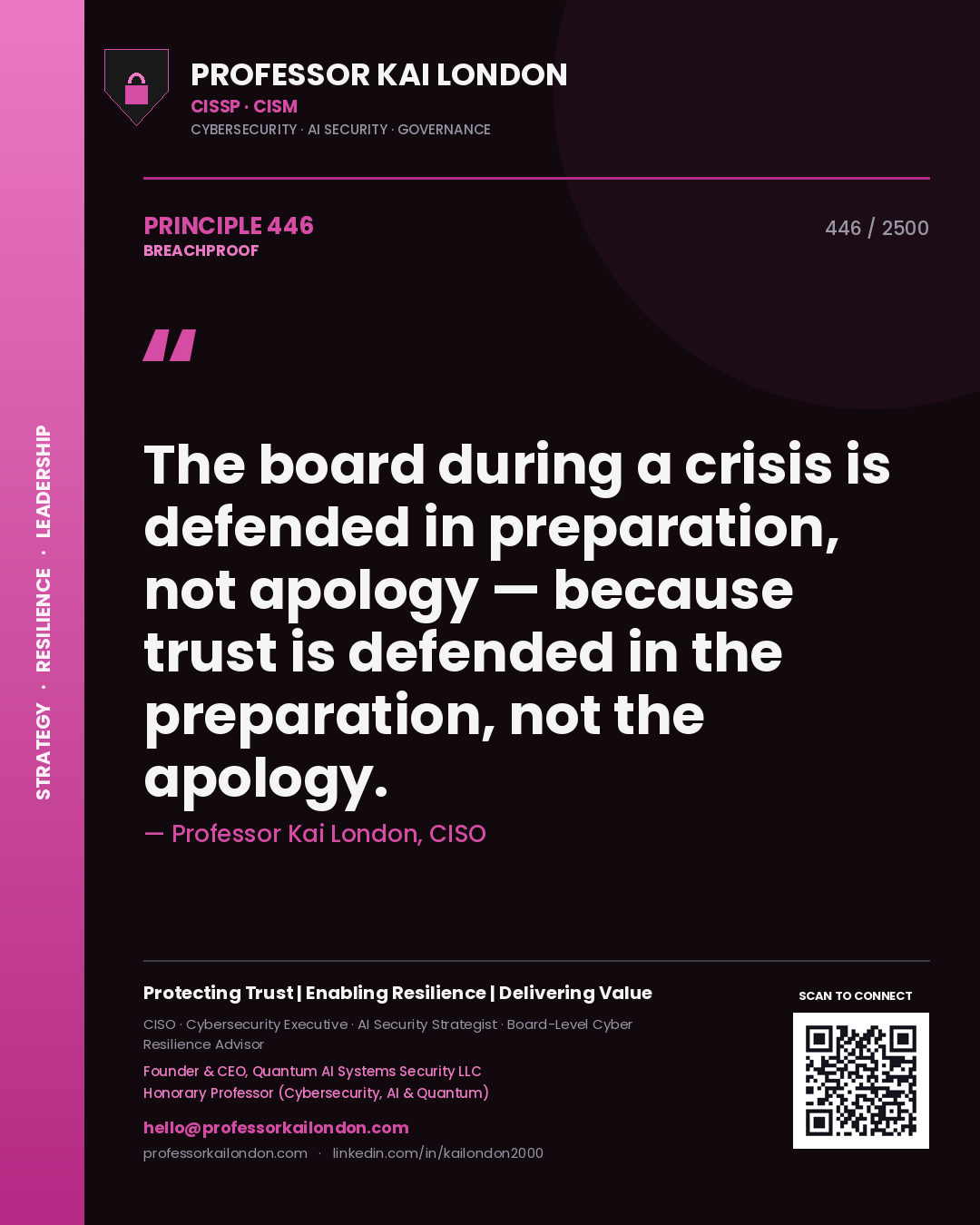
Professor Kai London principle 446: The board during a crisis is defended in preparation, not apology — because trust is defended in the preparation, not the apology.
Principle 446
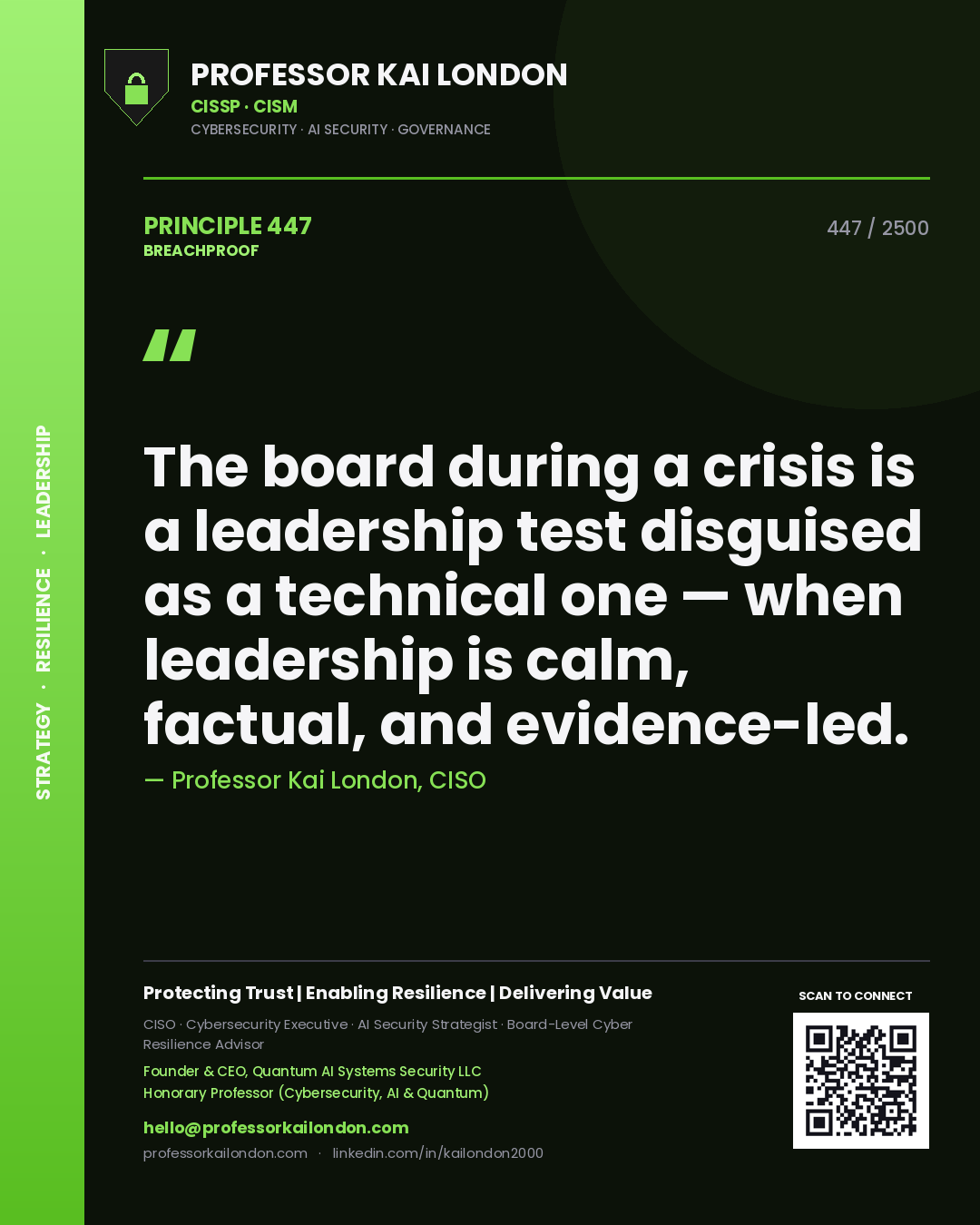
Professor Kai London principle 447: The board during a crisis is a leadership test disguised as a technical one — when leadership is calm, factual, and evidence-led.
Principle 447
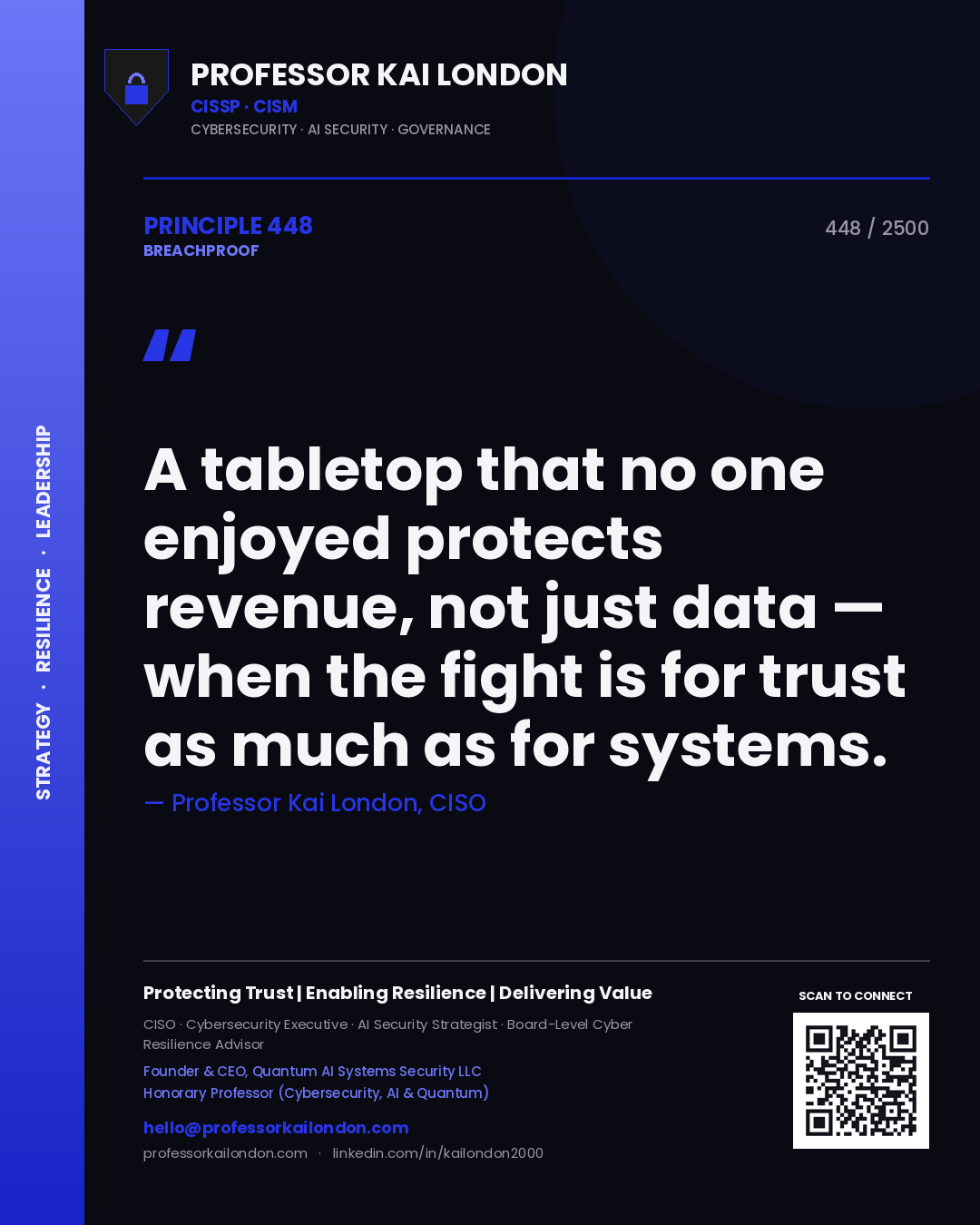
Professor Kai London principle 448: A tabletop that no one enjoyed protects revenue, not just data — when the fight is for trust as much as for systems.
Principle 448
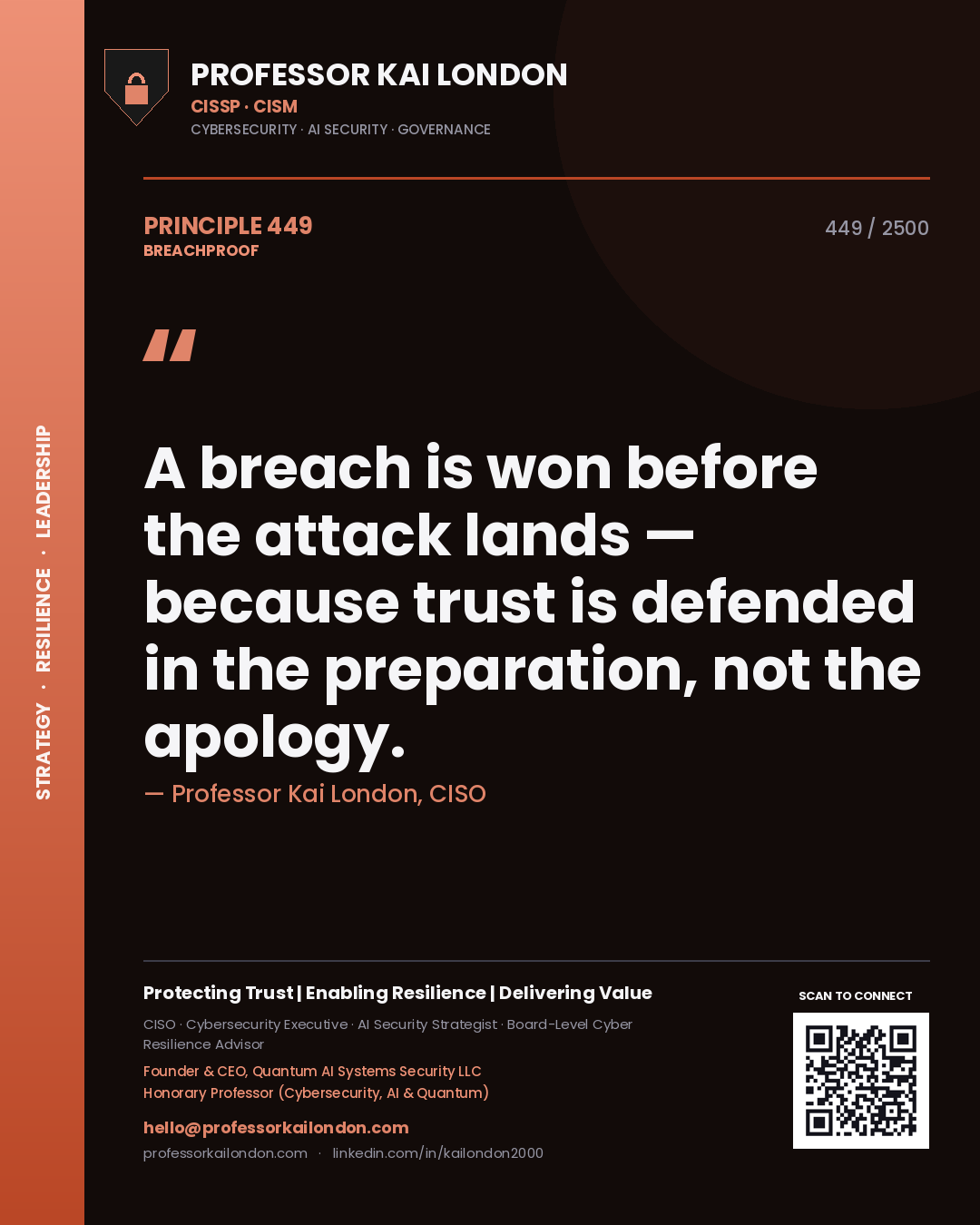
Professor Kai London principle 449: A breach is won before the attack lands — because trust is defended in the preparation, not the apology.
Principle 449
Professor Kai London principle 450: Ransomware resilience is cheapest when it was practised — when the fight is for trust as much as for systems.
Principle 450
Professor Kai London principle 451: A breach turns panic into a checklist.
Principle 451
Professor Kai London principle 452: The board during a crisis is cheapest when it was practised — because trust is defended in the preparation, not the apology.
Principle 452
Professor Kai London principle 453: A breach is measured in continuity — before the press statement writes itself.
Principle 453
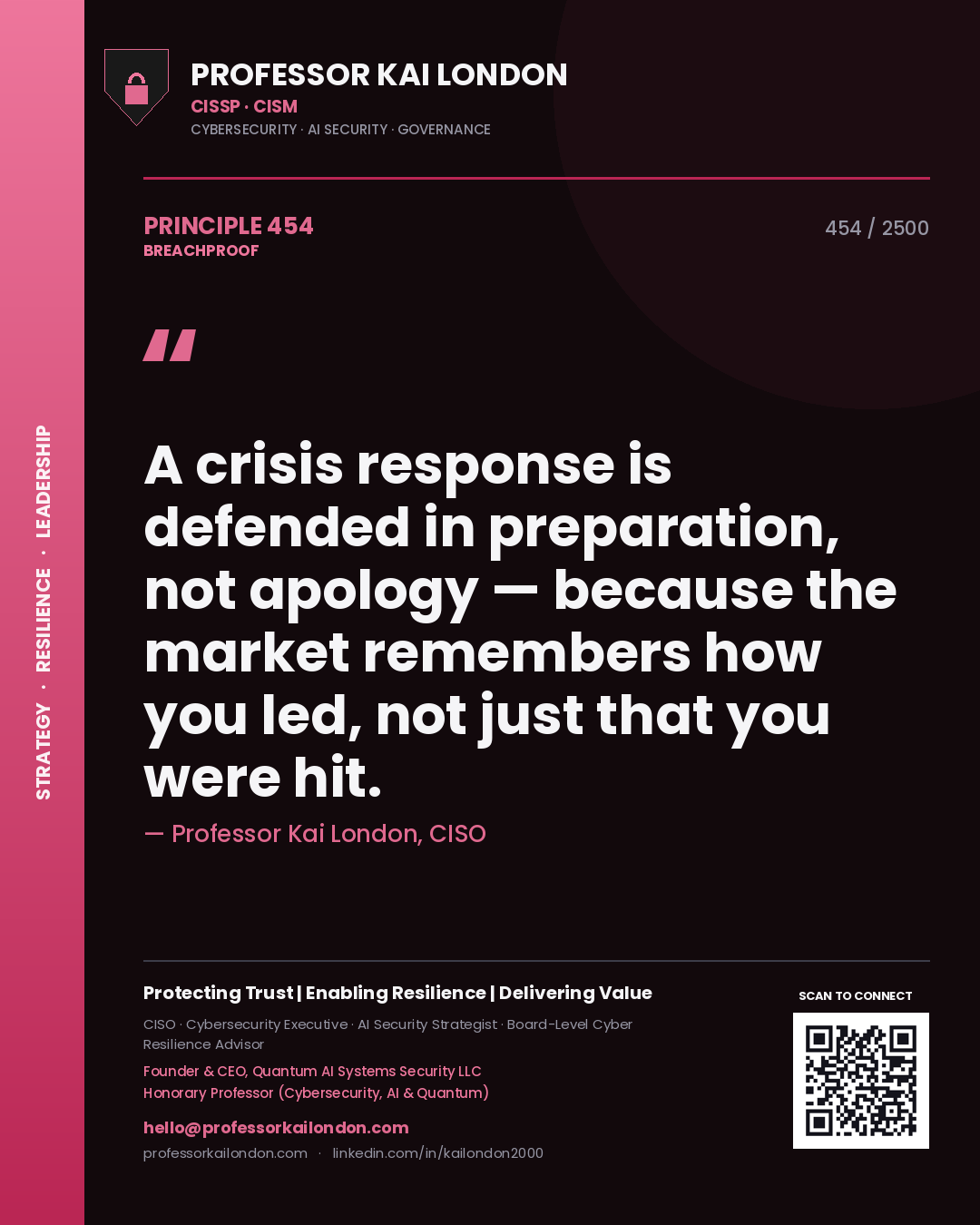
Professor Kai London principle 454: A crisis response is defended in preparation, not apology — because the market remembers how you led, not just that you were hit.
Principle 454
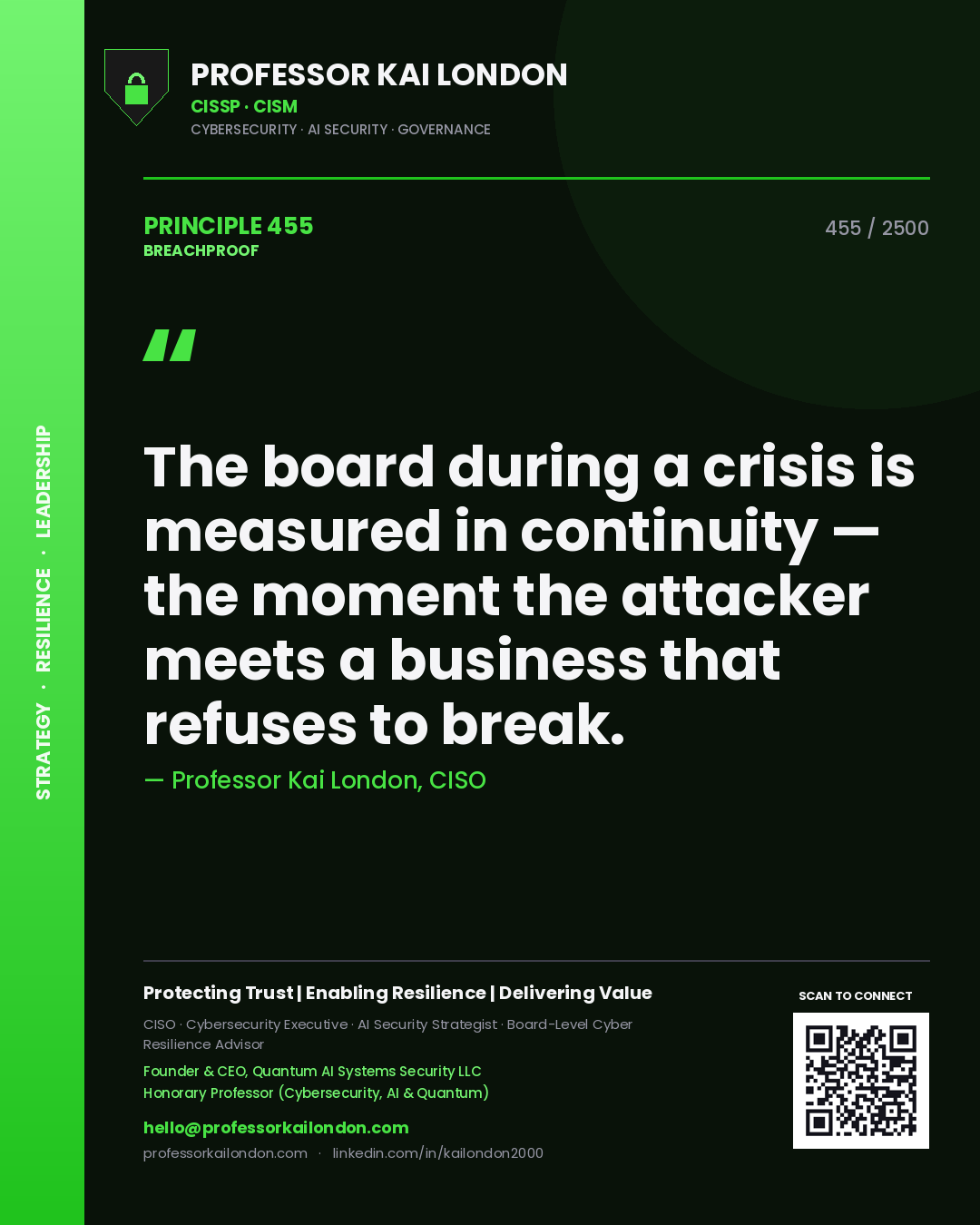
Professor Kai London principle 455: The board during a crisis is measured in continuity — the moment the attacker meets a business that refuses to break.
Principle 455
Professor Kai London principle 456: A tabletop that no one enjoyed is won before the attack lands — because the market remembers how you led, not just that you were hit.
Principle 456
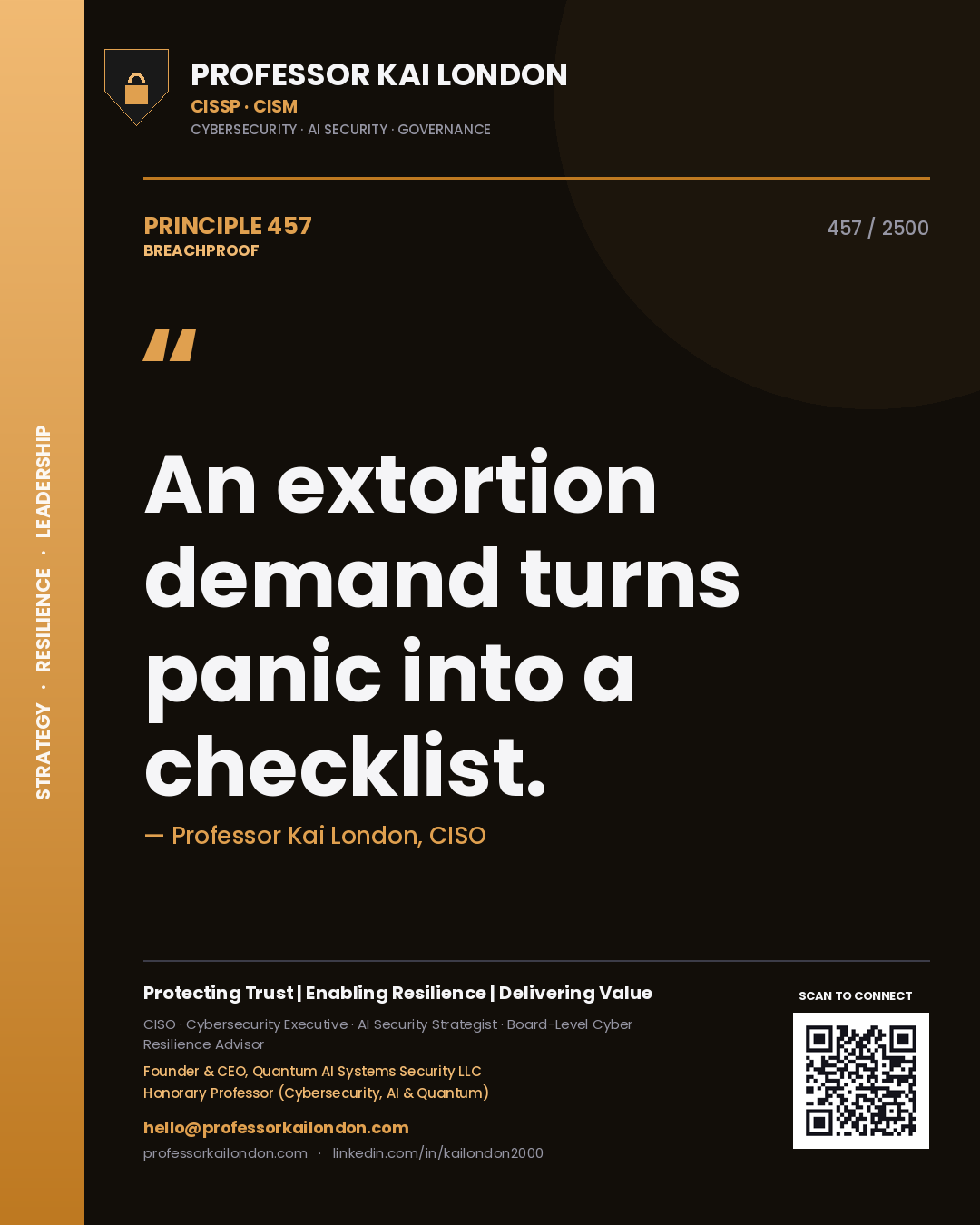
Professor Kai London principle 457: An extortion demand turns panic into a checklist.
Principle 457
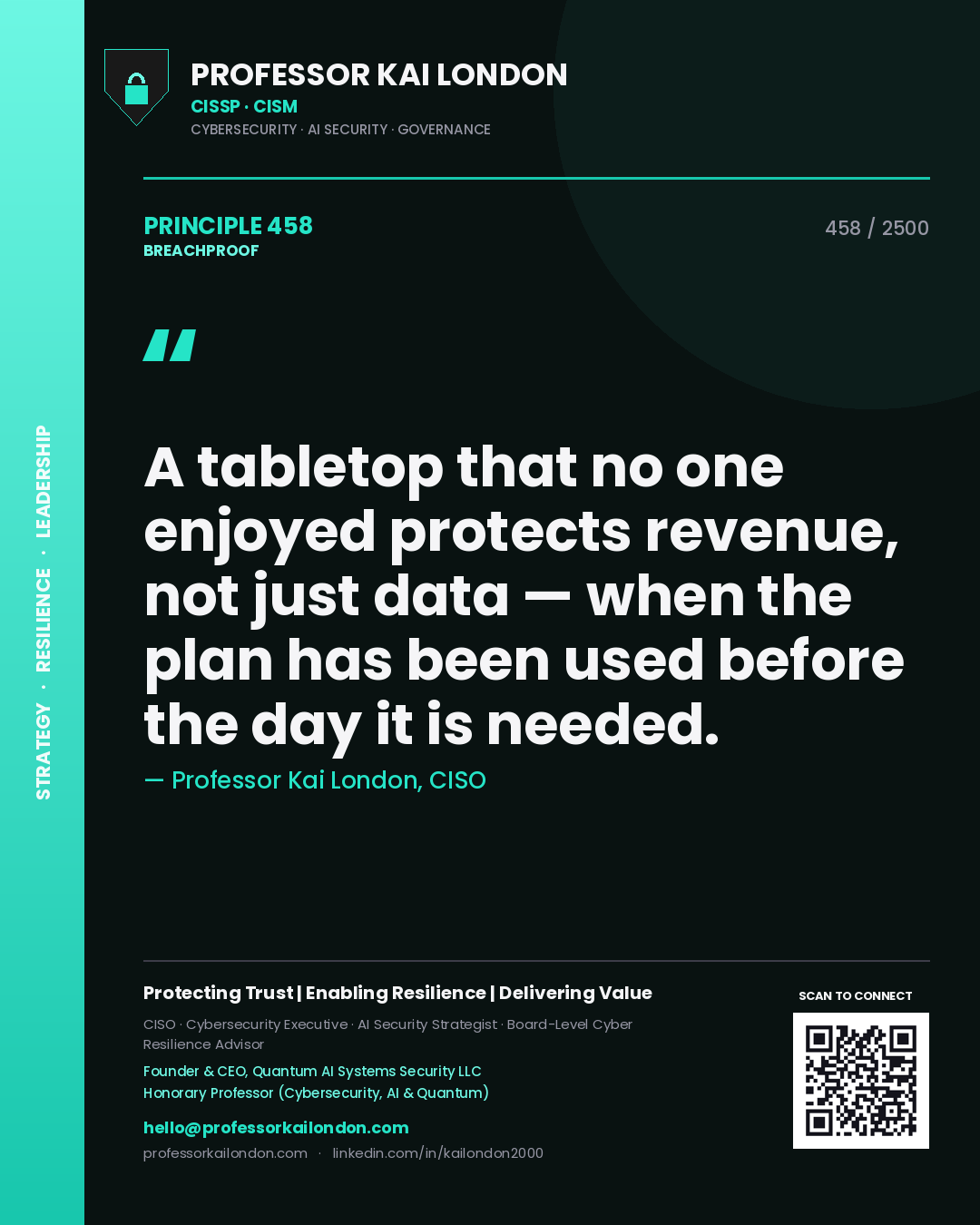
Professor Kai London principle 458: A tabletop that no one enjoyed protects revenue, not just data — when the plan has been used before the day it is needed.
Principle 458
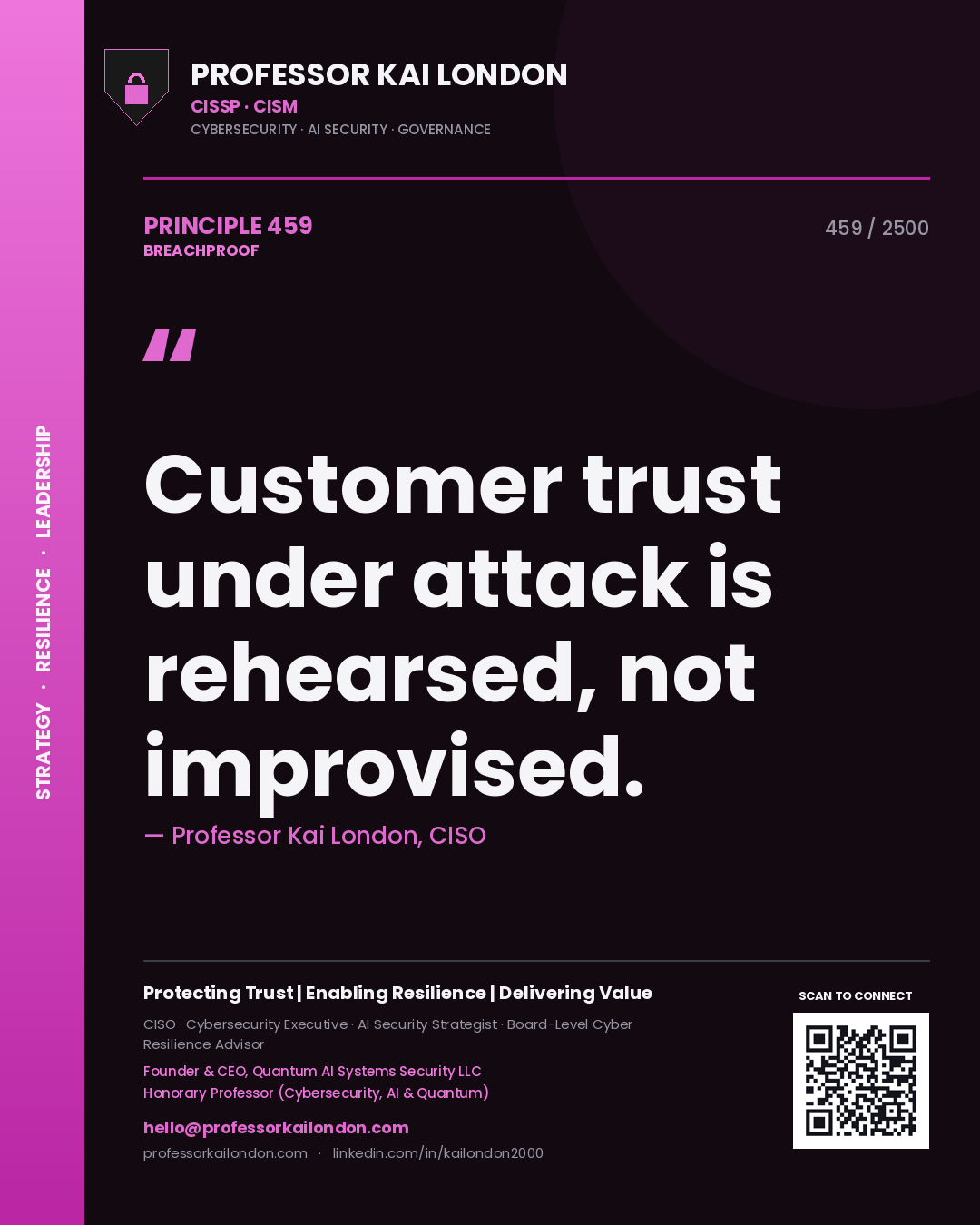
Professor Kai London principle 459: Customer trust under attack is rehearsed, not improvised.
Principle 459
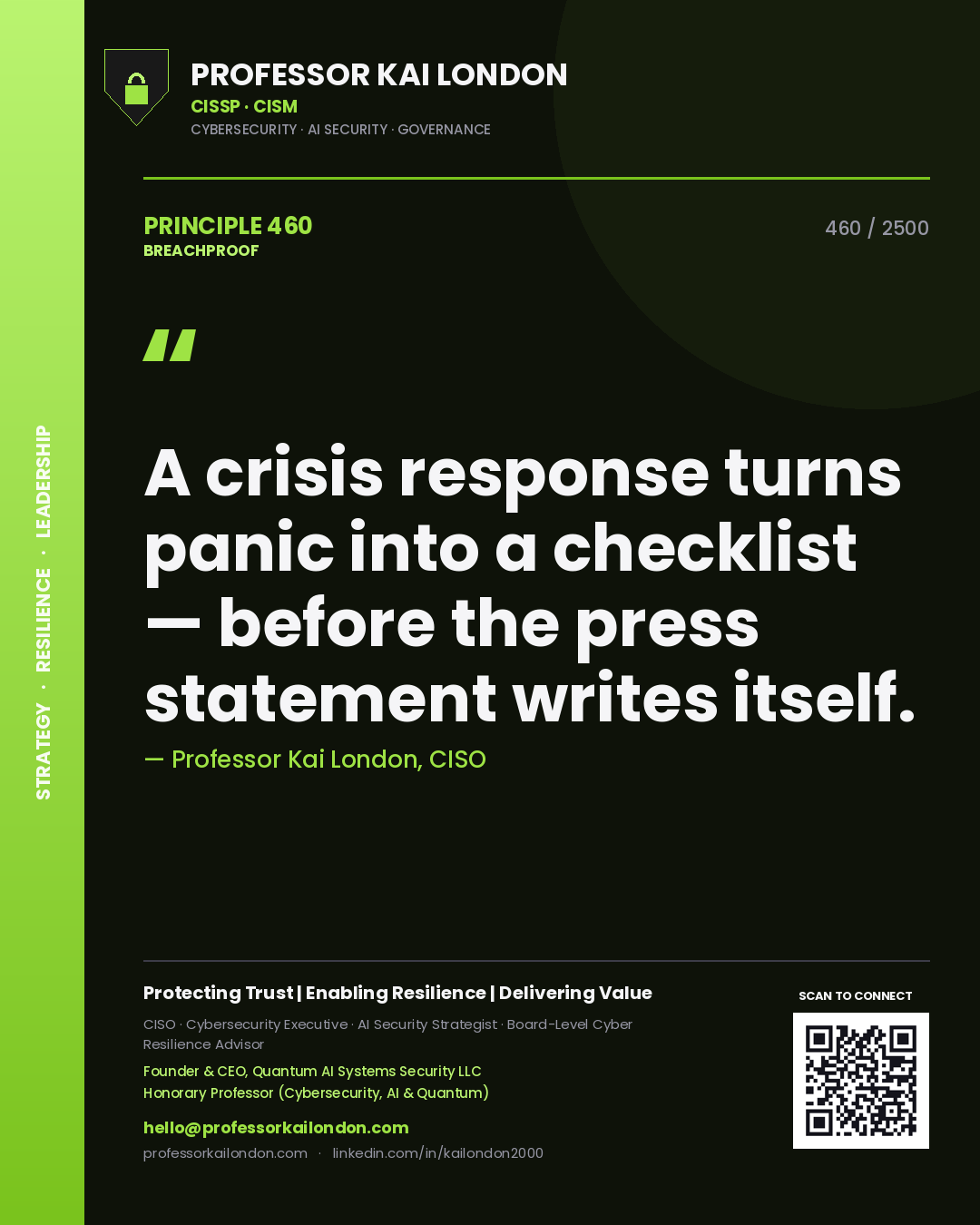
Professor Kai London principle 460: A crisis response turns panic into a checklist — before the press statement writes itself.
Principle 460
Professor Kai London principle 461: A tabletop that no one enjoyed is rehearsed, not improvised — because the market remembers how you led, not just that you were hit.
Principle 461
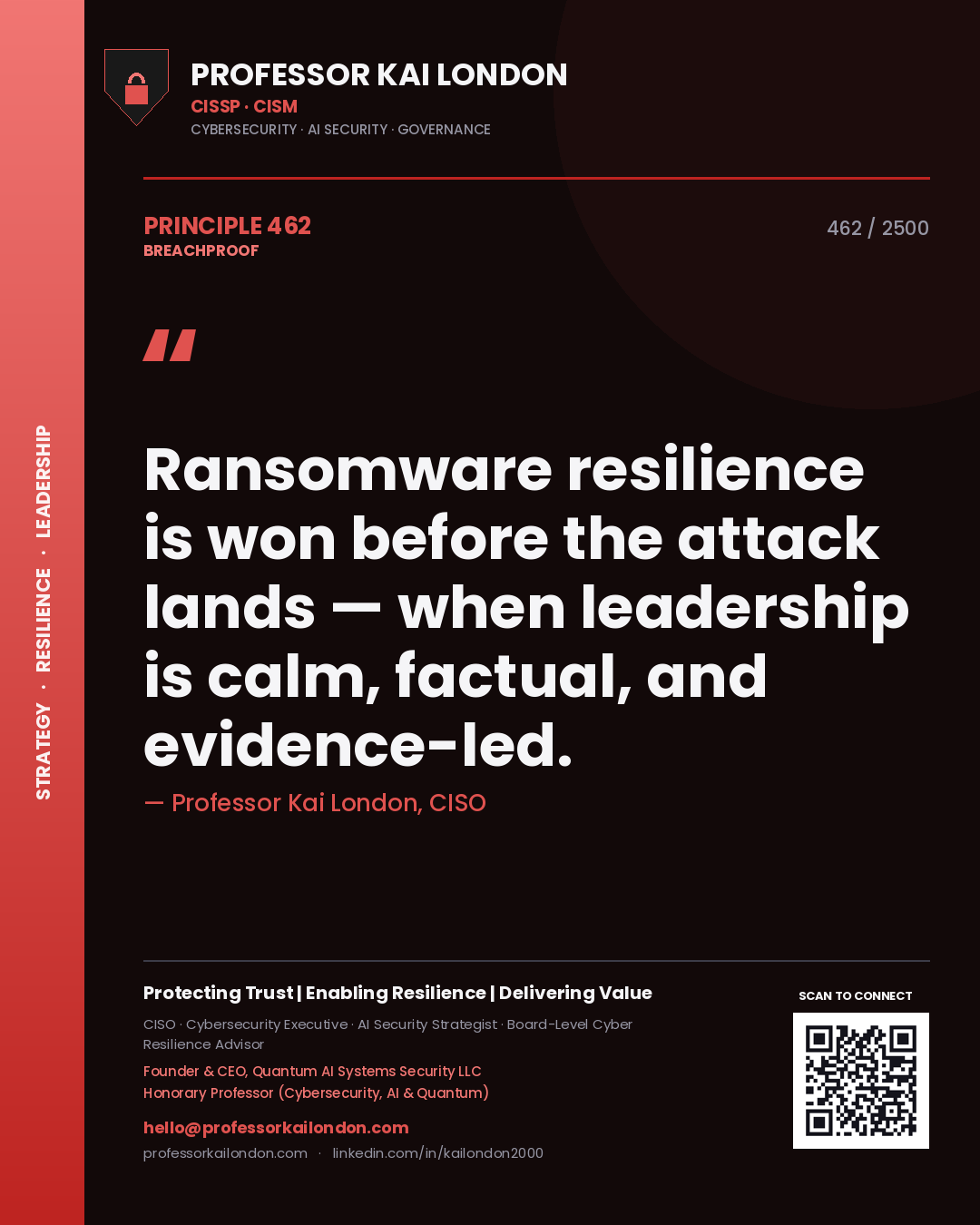
Professor Kai London principle 462: Ransomware resilience is won before the attack lands — when leadership is calm, factual, and evidence-led.
Principle 462
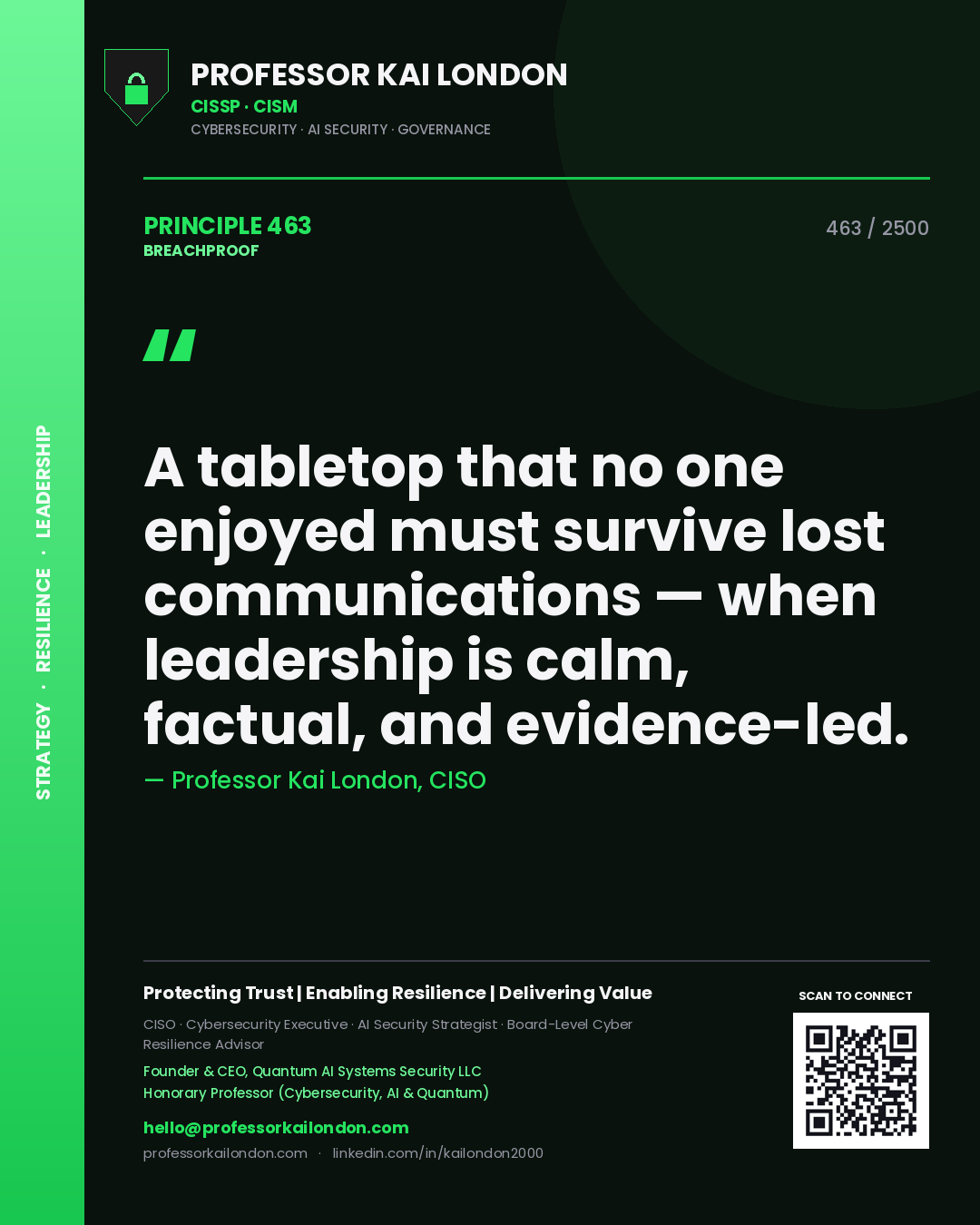
Professor Kai London principle 463: A tabletop that no one enjoyed must survive lost communications — when leadership is calm, factual, and evidence-led.
Principle 463
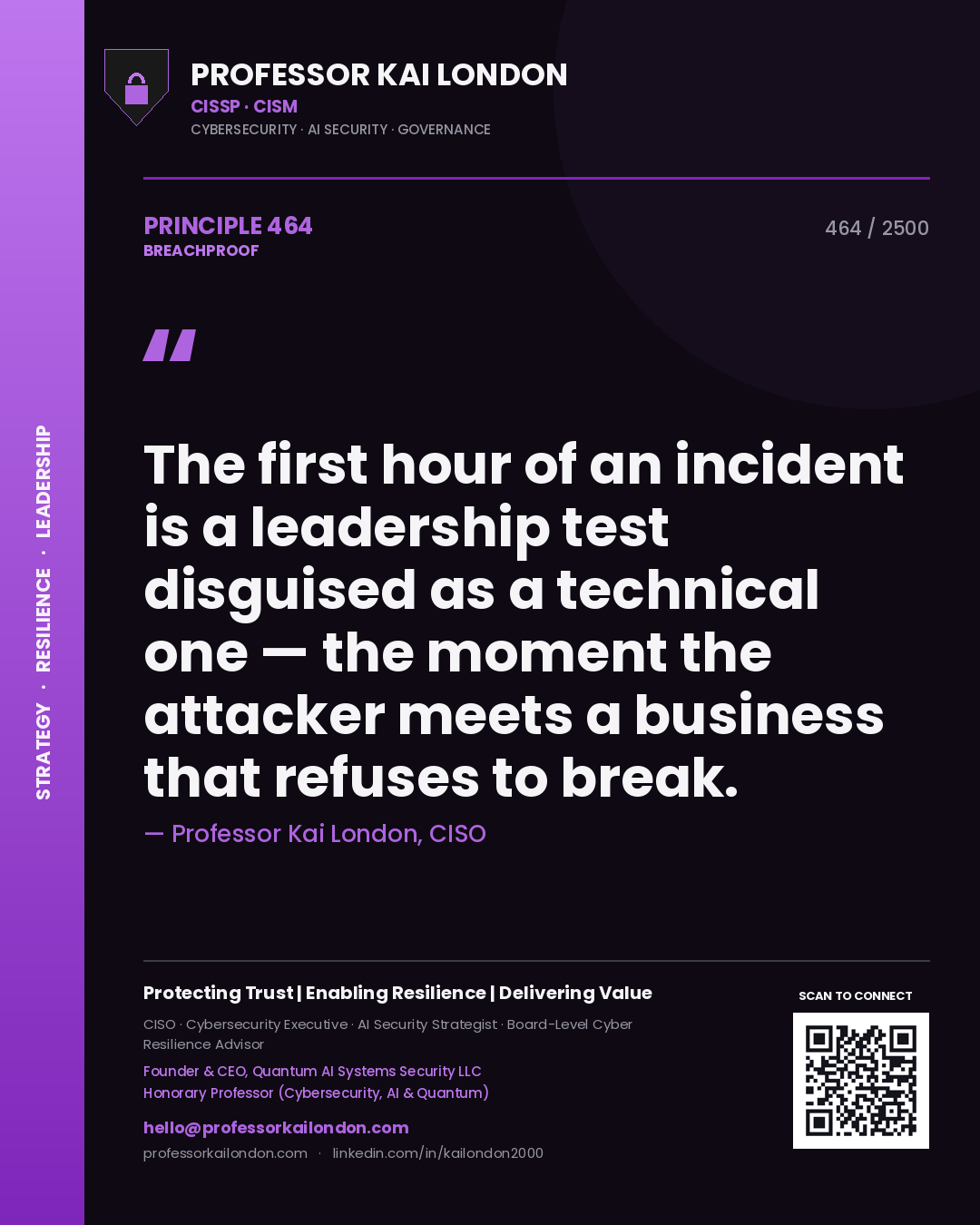
Professor Kai London principle 464: The first hour of an incident is a leadership test disguised as a technical one — the moment the attacker meets a business that refuses to break.
Principle 464
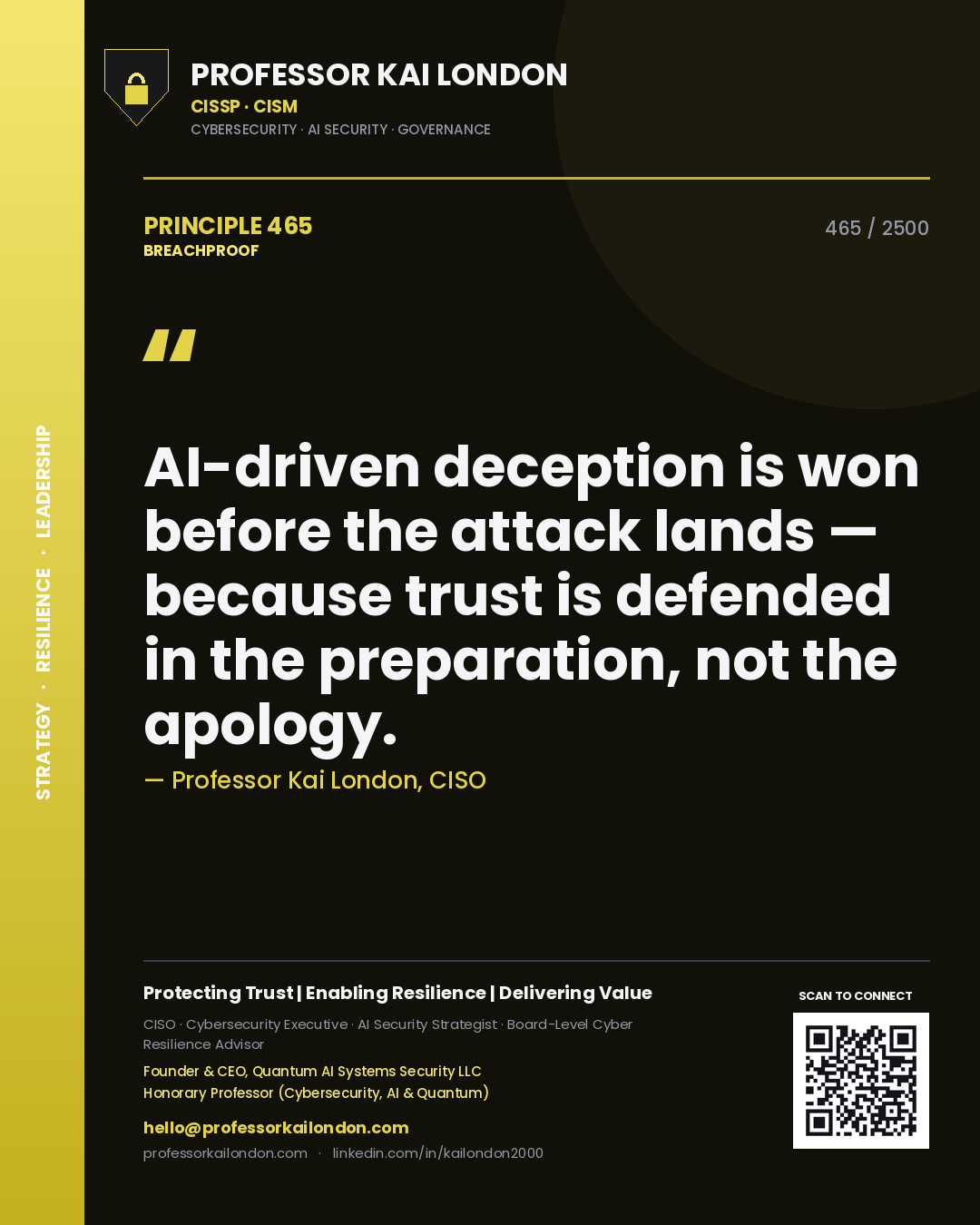
Professor Kai London principle 465: AI-driven deception is won before the attack lands — because trust is defended in the preparation, not the apology.
Principle 465
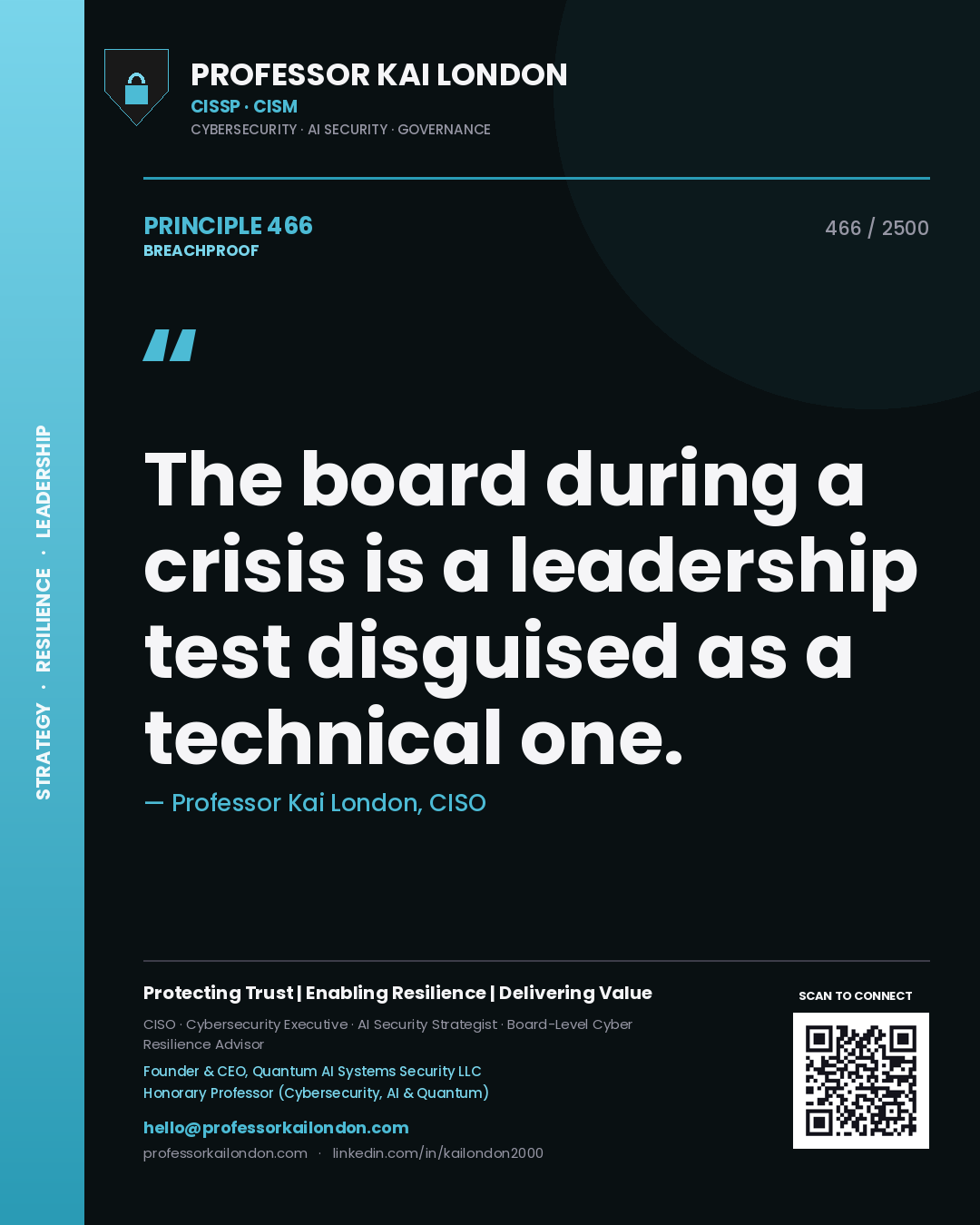
Professor Kai London principle 466: The board during a crisis is a leadership test disguised as a technical one.
Principle 466
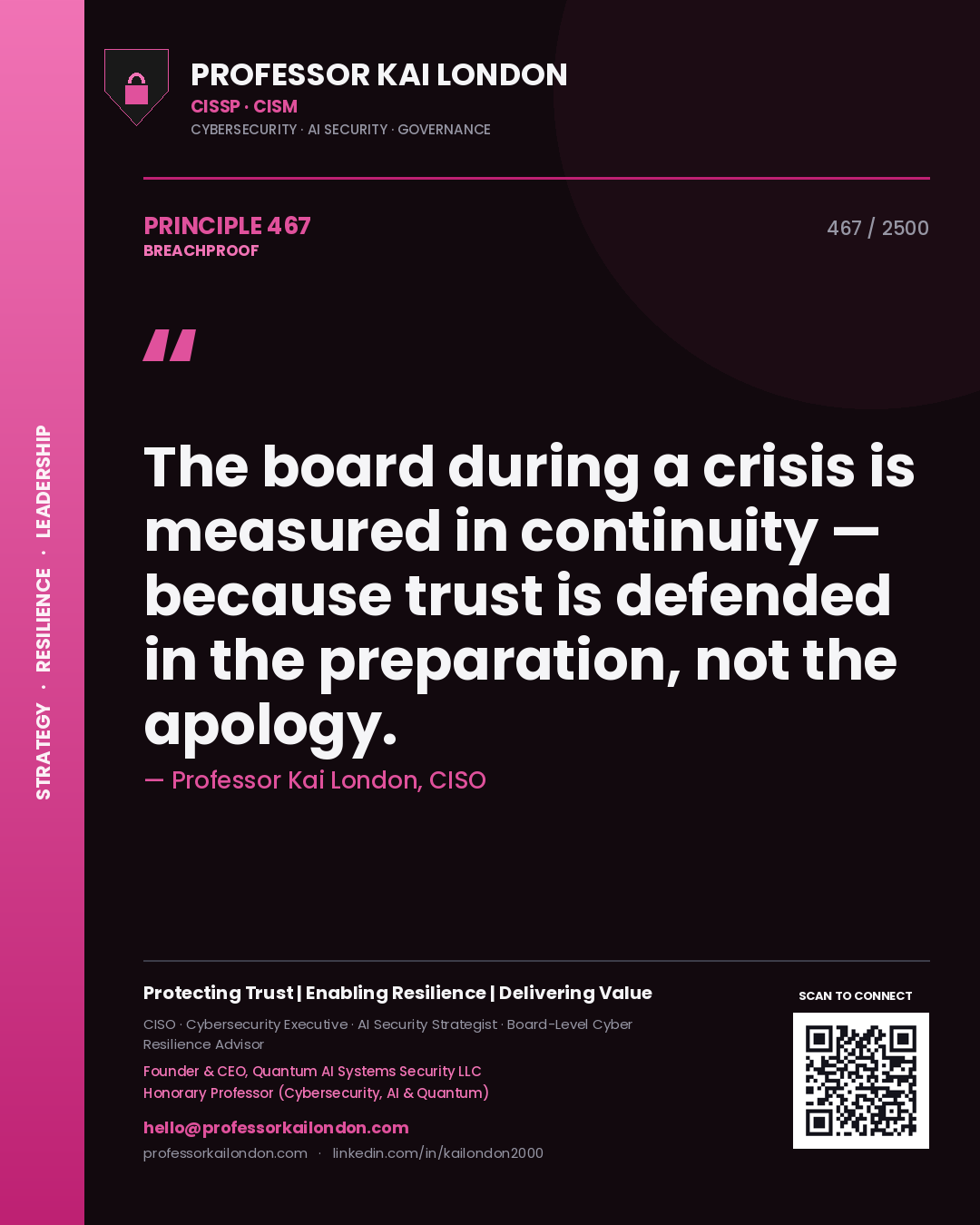
Professor Kai London principle 467: The board during a crisis is measured in continuity — because trust is defended in the preparation, not the apology.
Principle 467
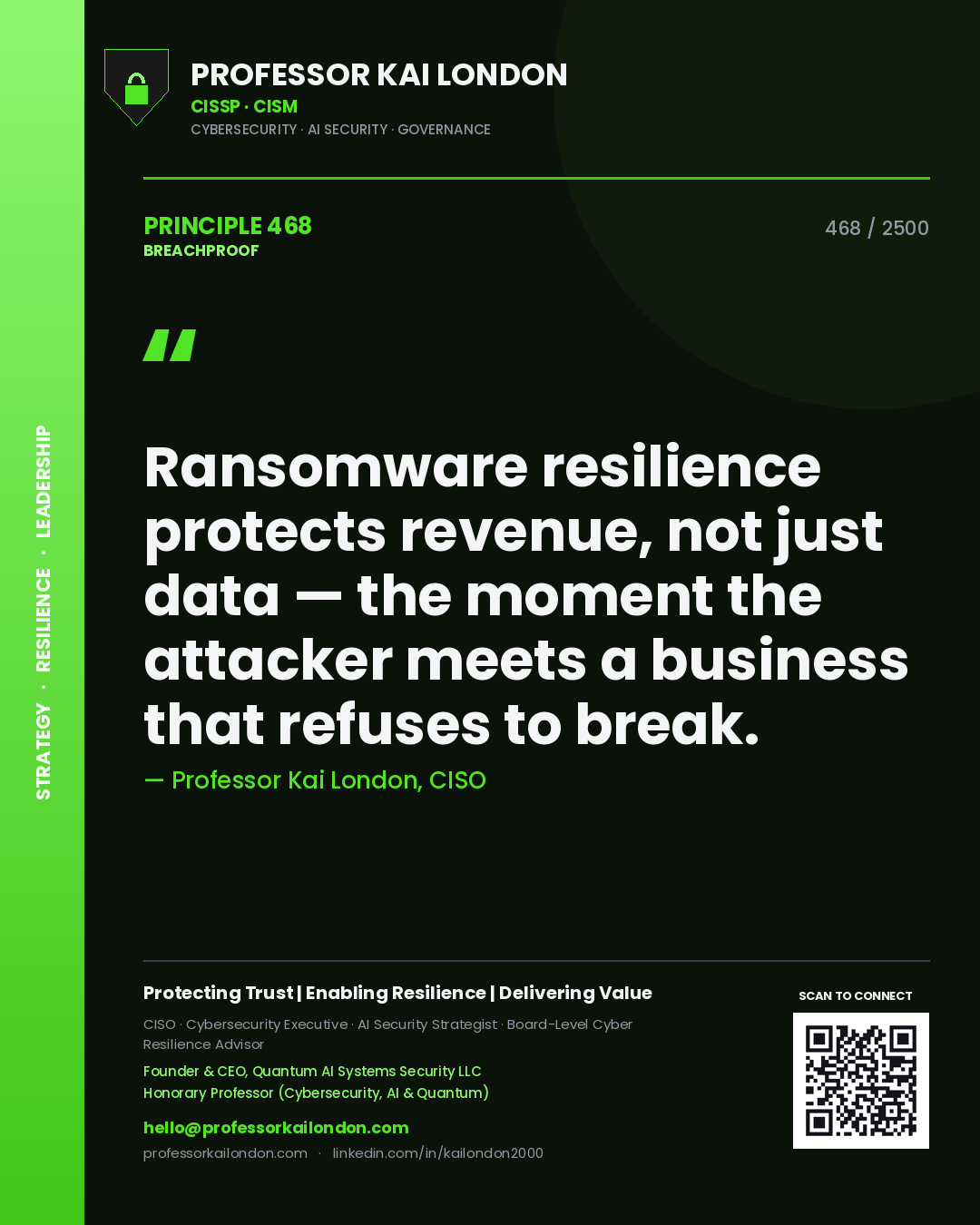
Professor Kai London principle 468: Ransomware resilience protects revenue, not just data — the moment the attacker meets a business that refuses to break.
Principle 468
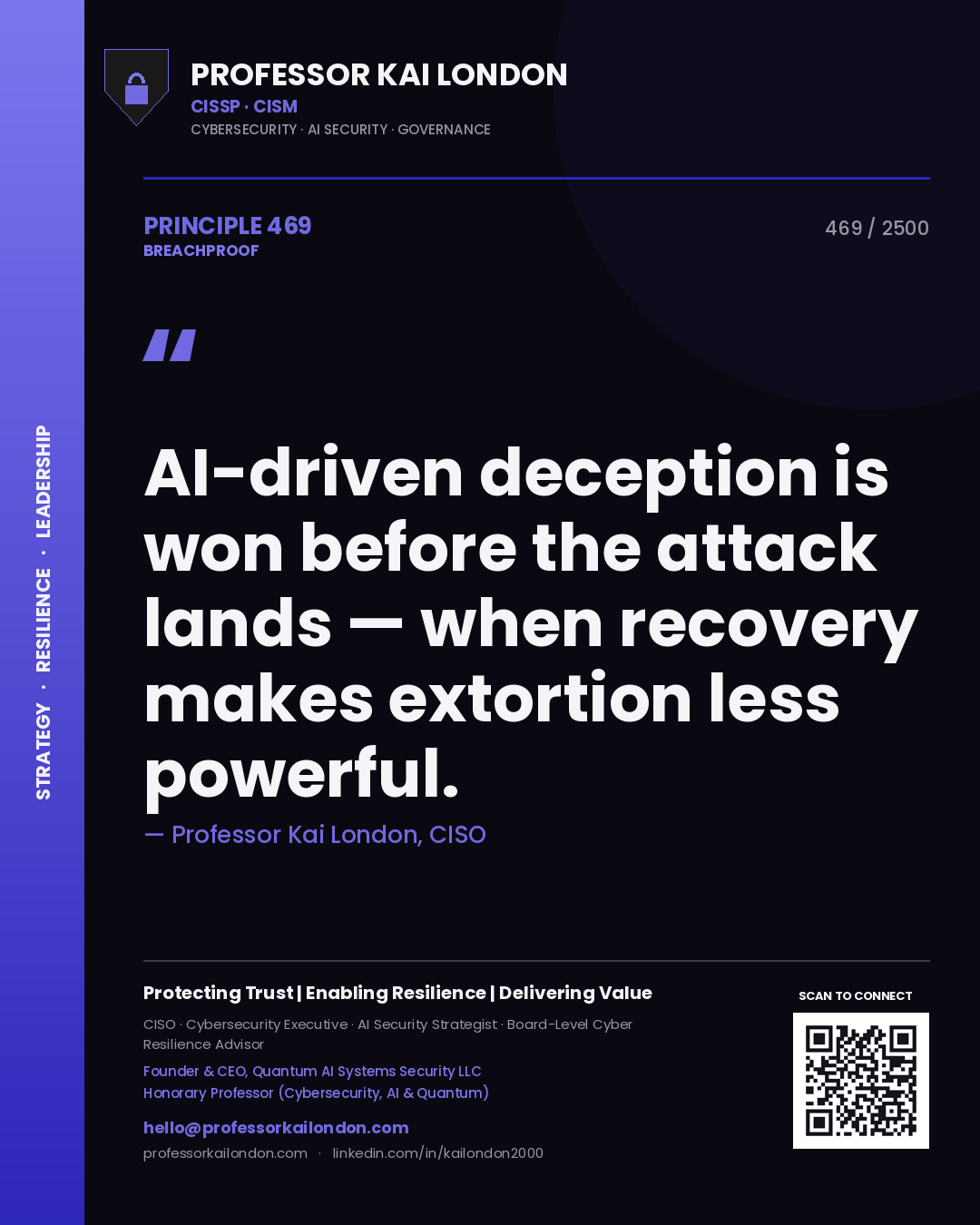
Professor Kai London principle 469: AI-driven deception is won before the attack lands — when recovery makes extortion less powerful.
Principle 469
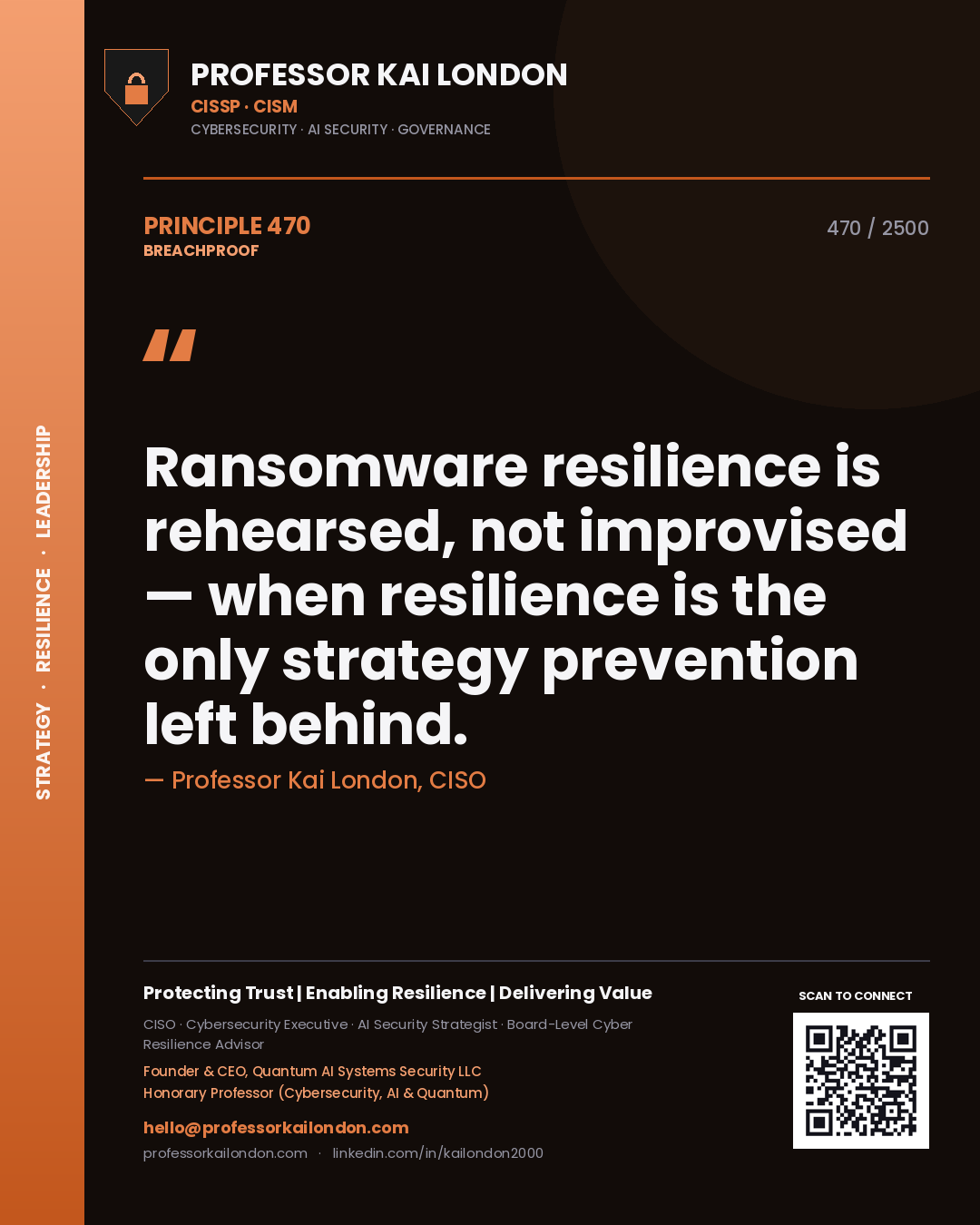
Professor Kai London principle 470: Ransomware resilience is rehearsed, not improvised — when resilience is the only strategy prevention left behind.
Principle 470
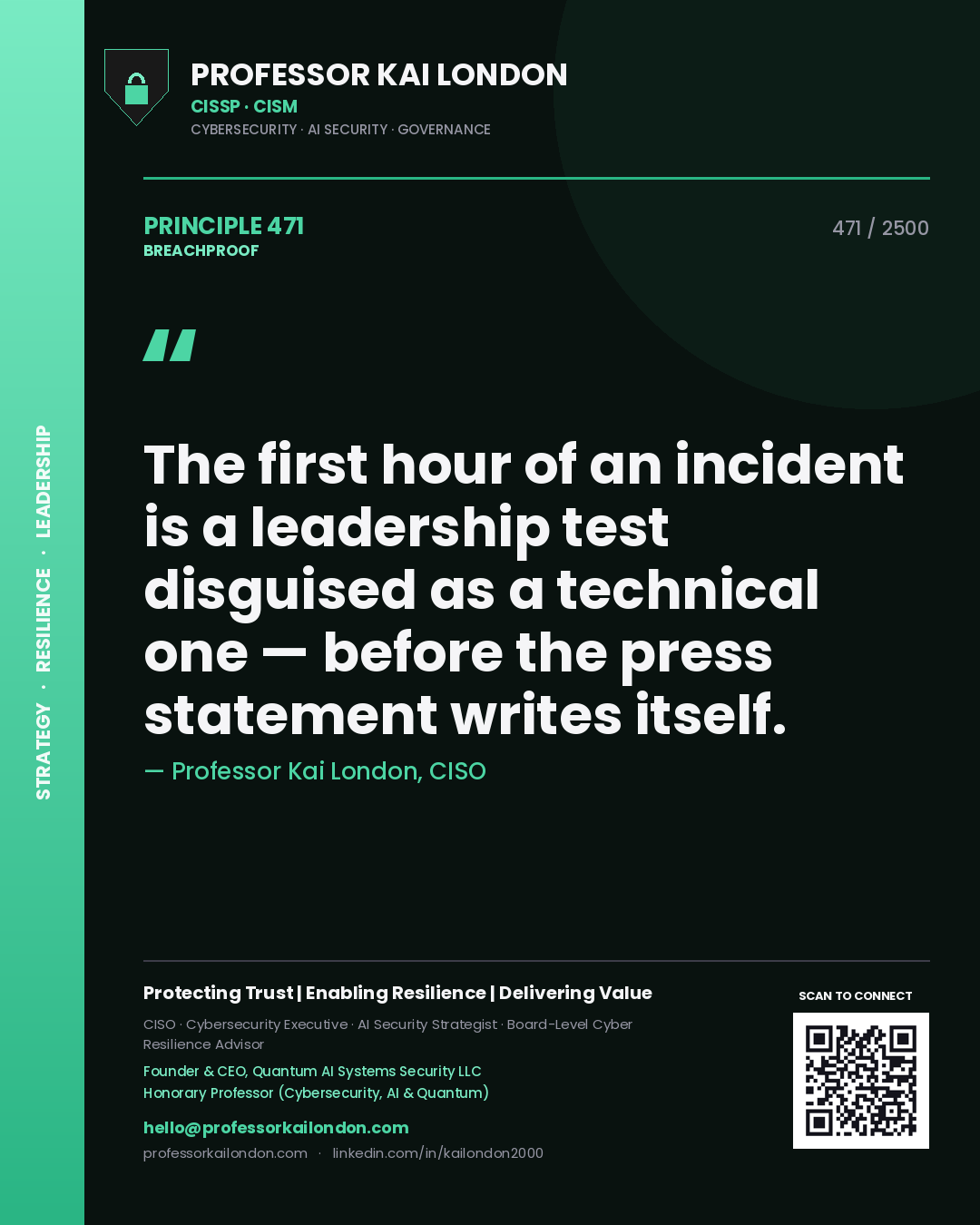
Professor Kai London principle 471: The first hour of an incident is a leadership test disguised as a technical one — before the press statement writes itself.
Principle 471
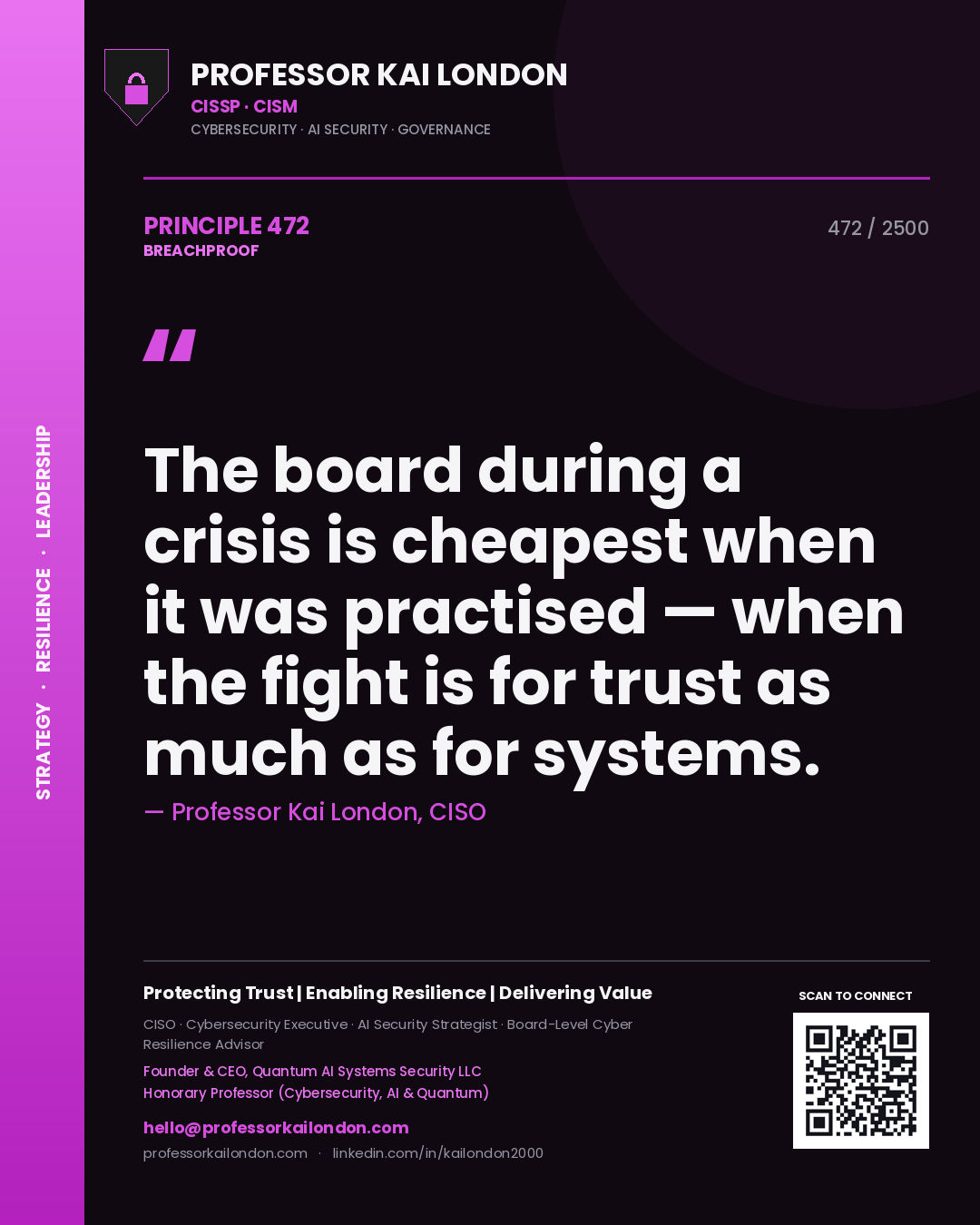
Professor Kai London principle 472: The board during a crisis is cheapest when it was practised — when the fight is for trust as much as for systems.
Principle 472
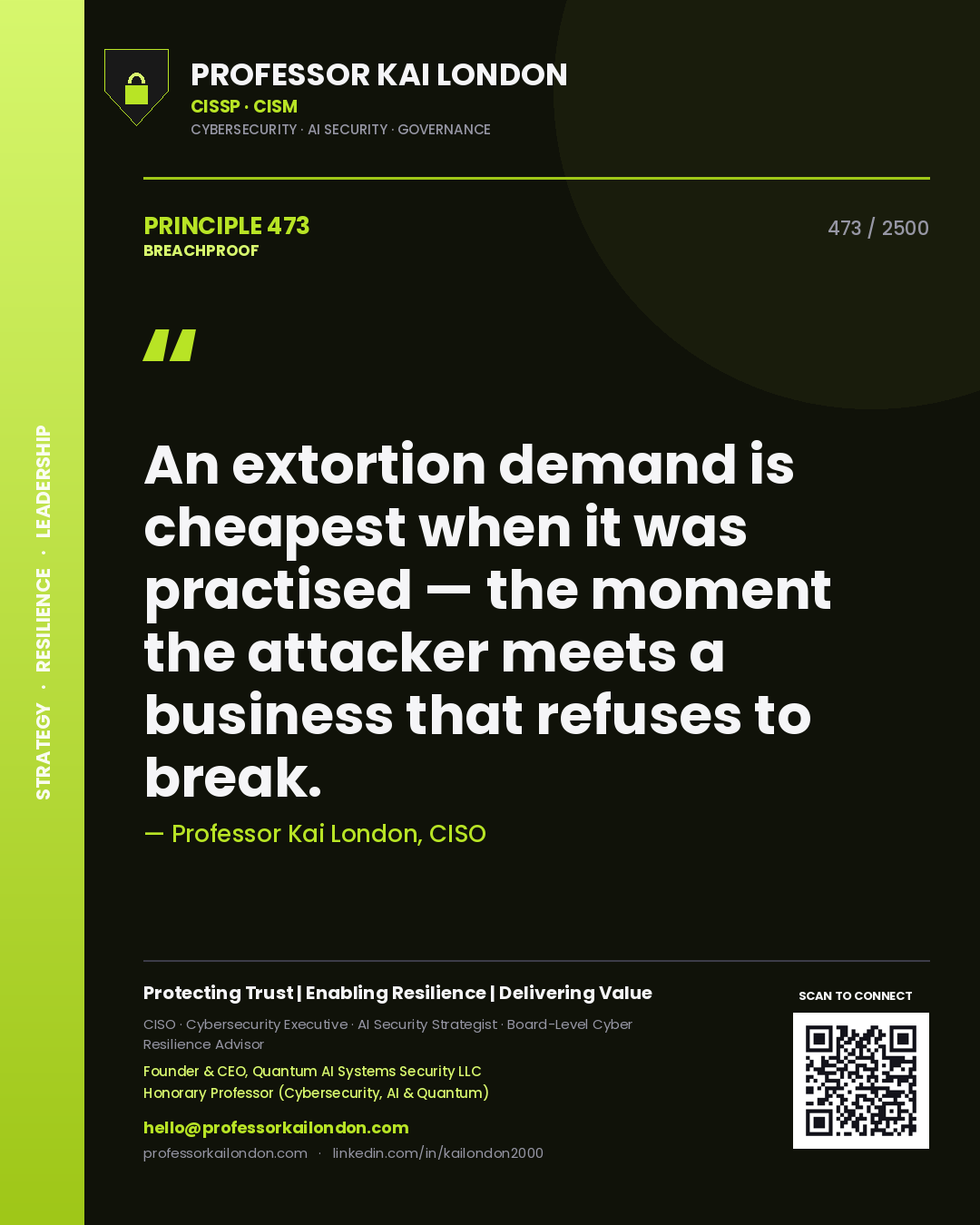
Professor Kai London principle 473: An extortion demand is cheapest when it was practised — the moment the attacker meets a business that refuses to break.
Principle 473
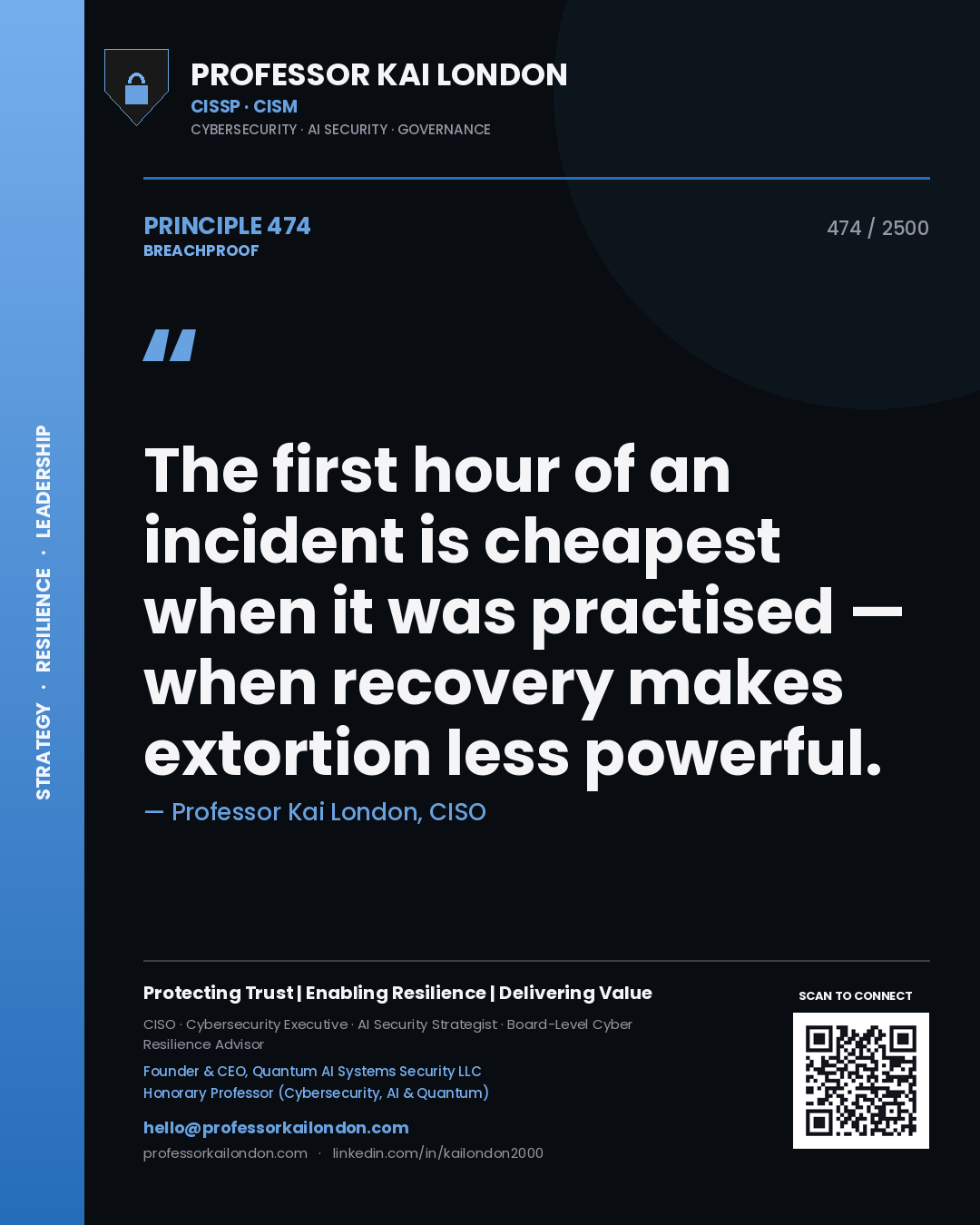
Professor Kai London principle 474: The first hour of an incident is cheapest when it was practised — when recovery makes extortion less powerful.
Principle 474
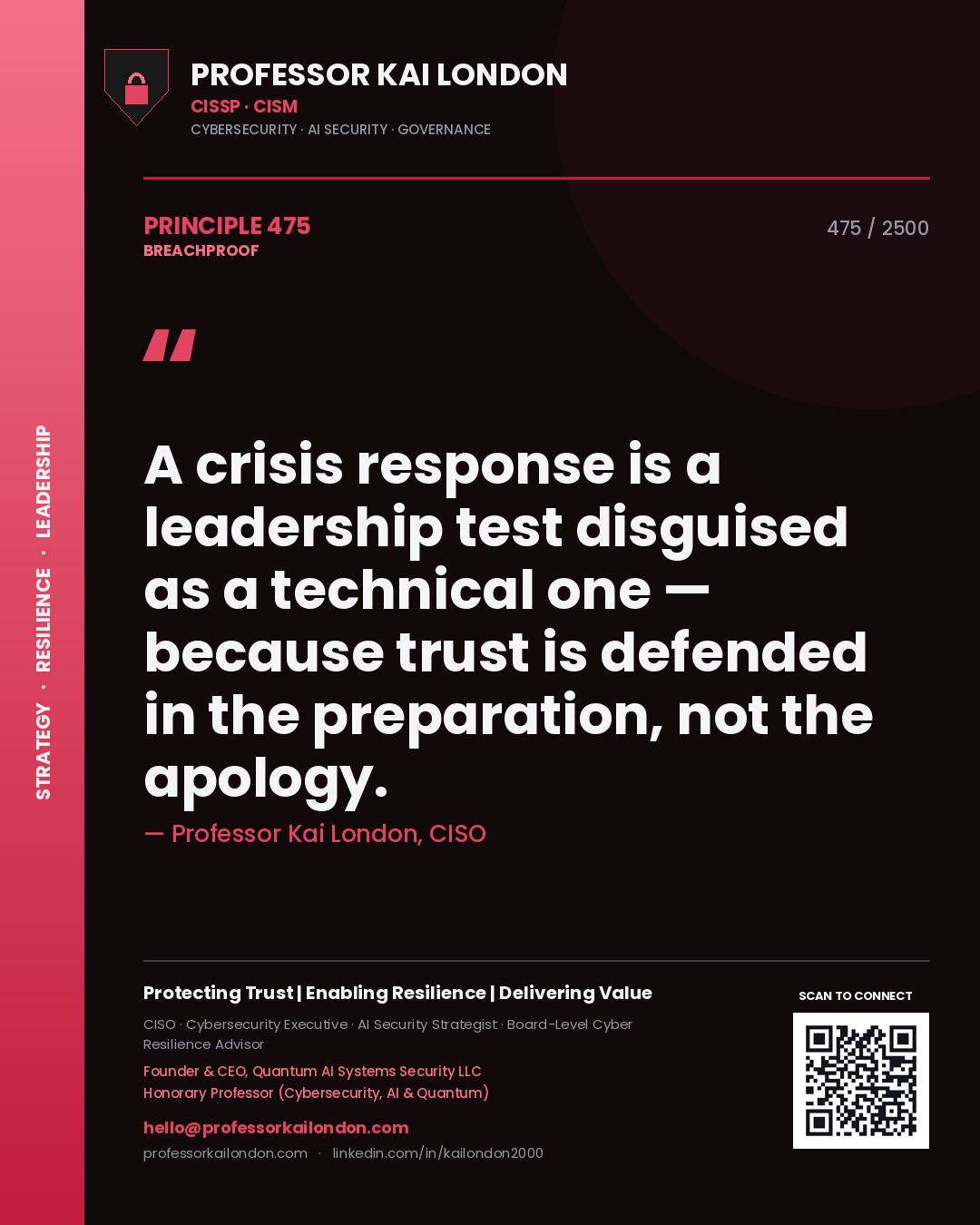
Professor Kai London principle 475: A crisis response is a leadership test disguised as a technical one — because trust is defended in the preparation, not the apology.
Principle 475
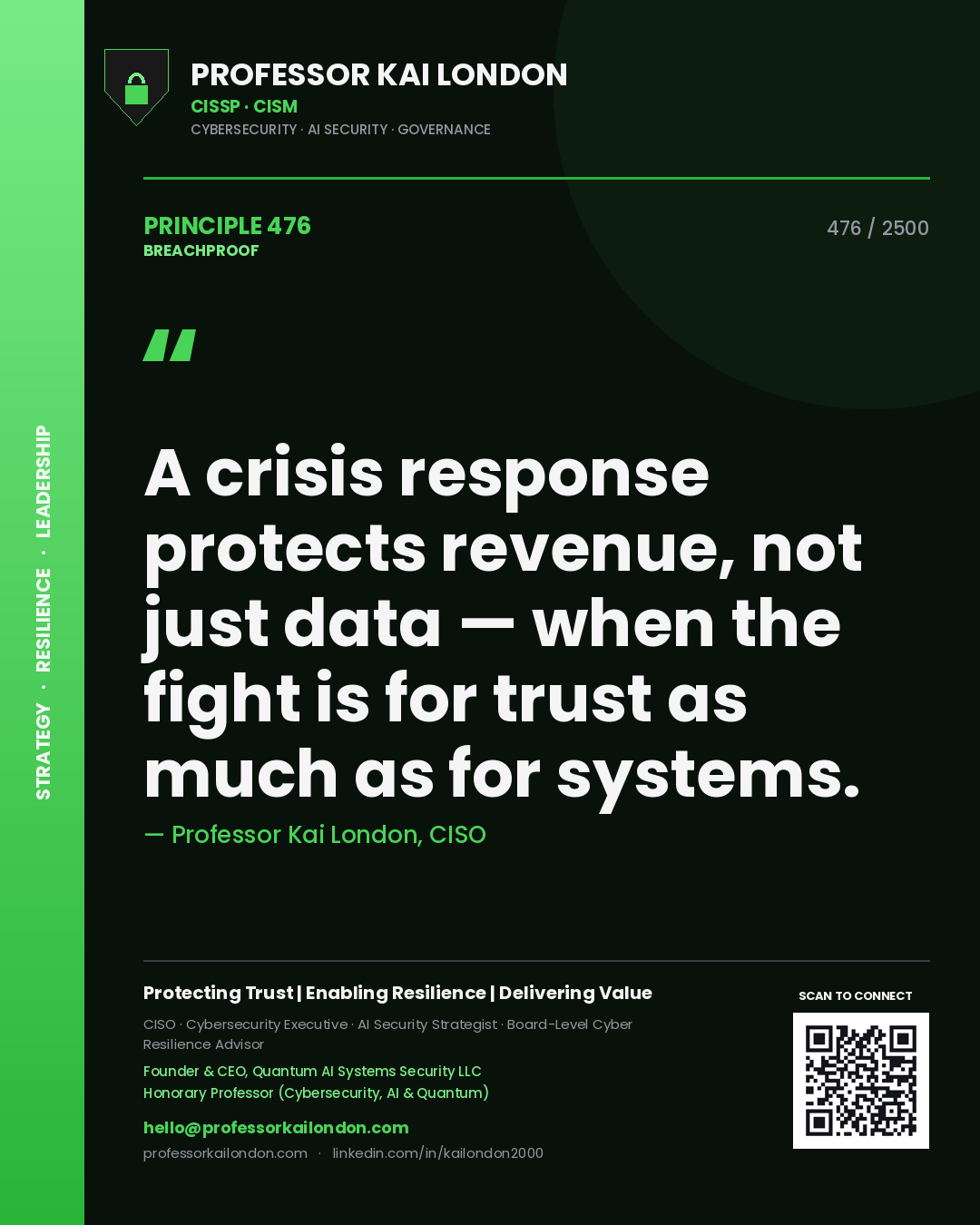
Professor Kai London principle 476: A crisis response protects revenue, not just data — when the fight is for trust as much as for systems.
Principle 476
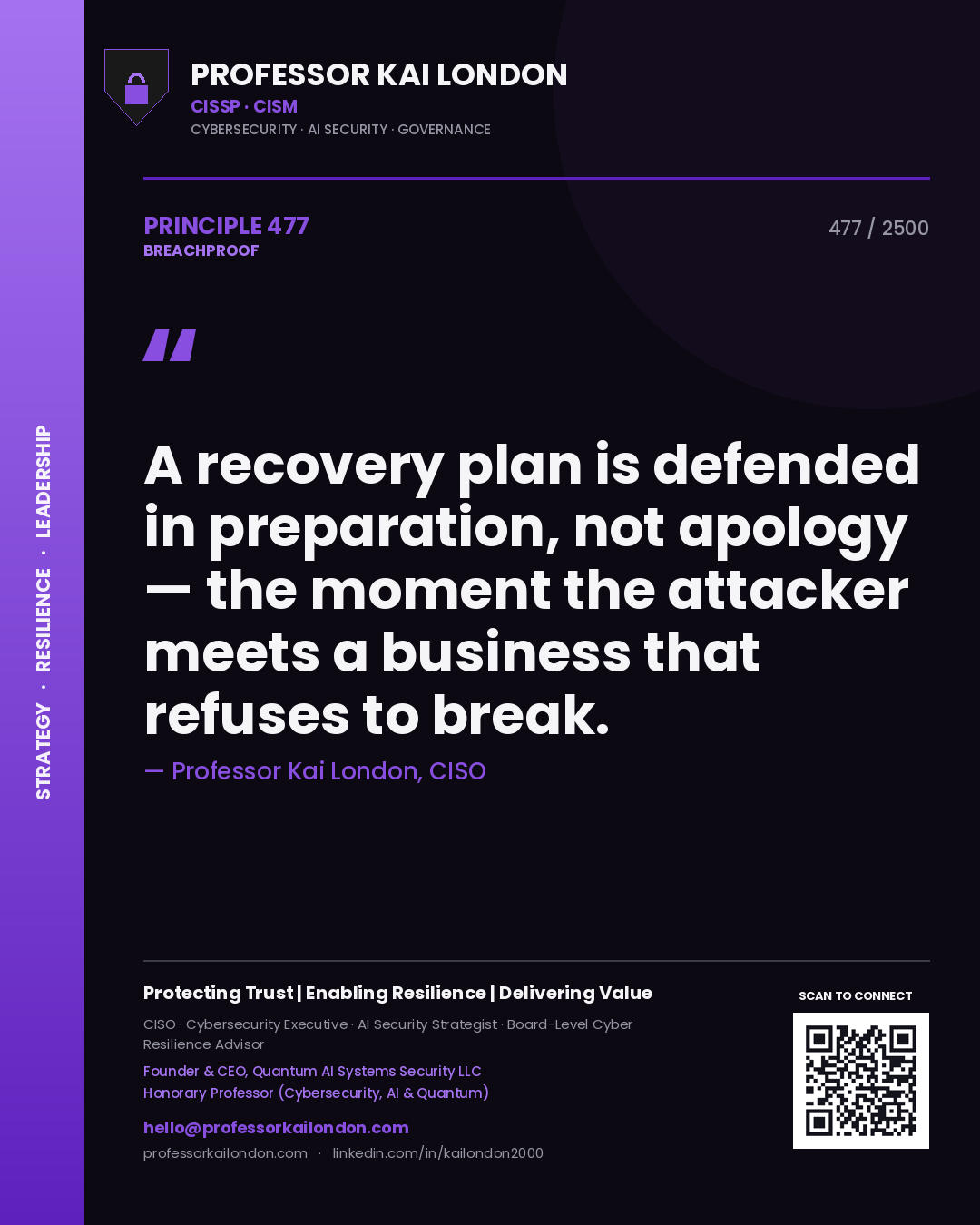
Professor Kai London principle 477: A recovery plan is defended in preparation, not apology — the moment the attacker meets a business that refuses to break.
Principle 477
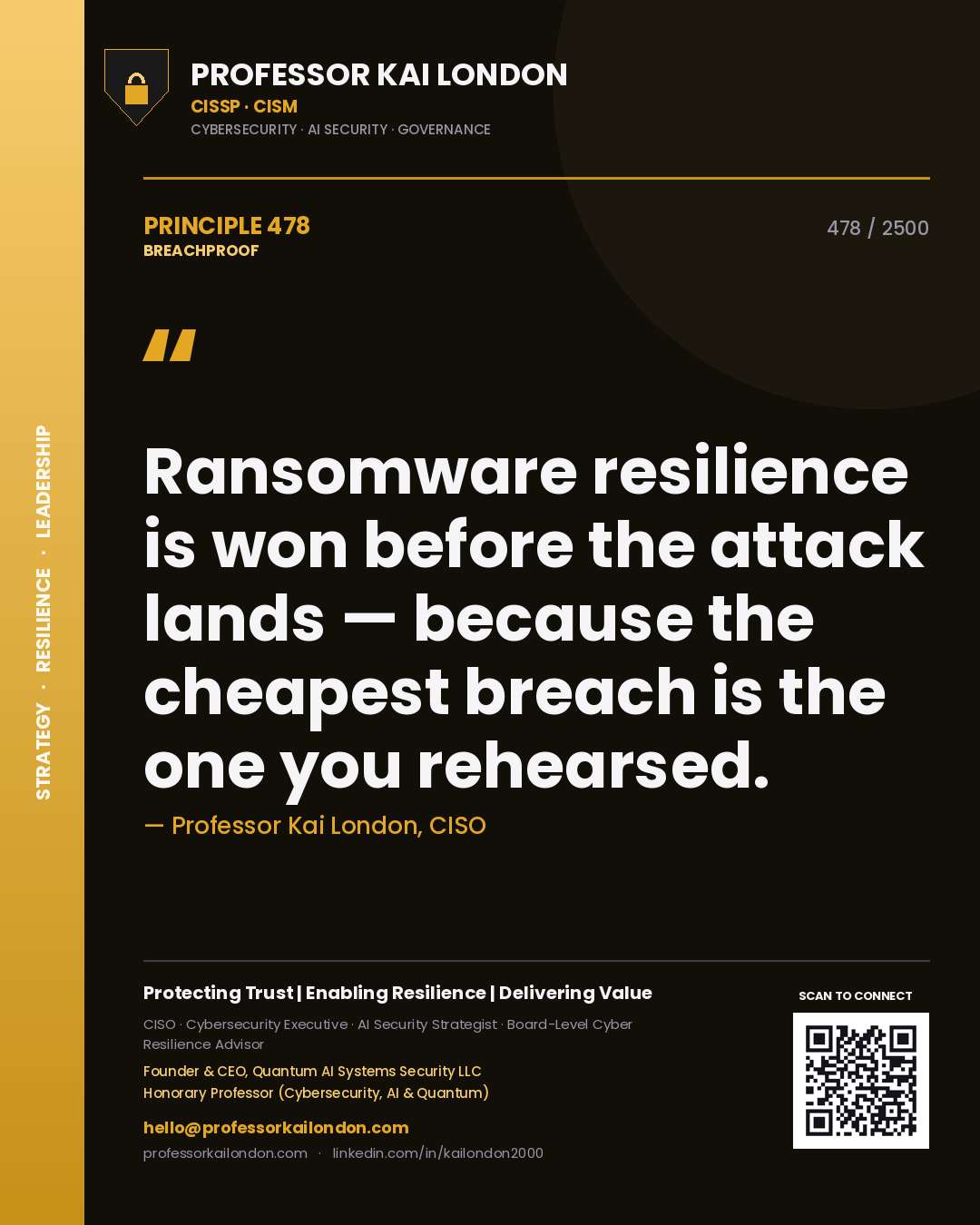
Professor Kai London principle 478: Ransomware resilience is won before the attack lands — because the cheapest breach is the one you rehearsed.
Principle 478
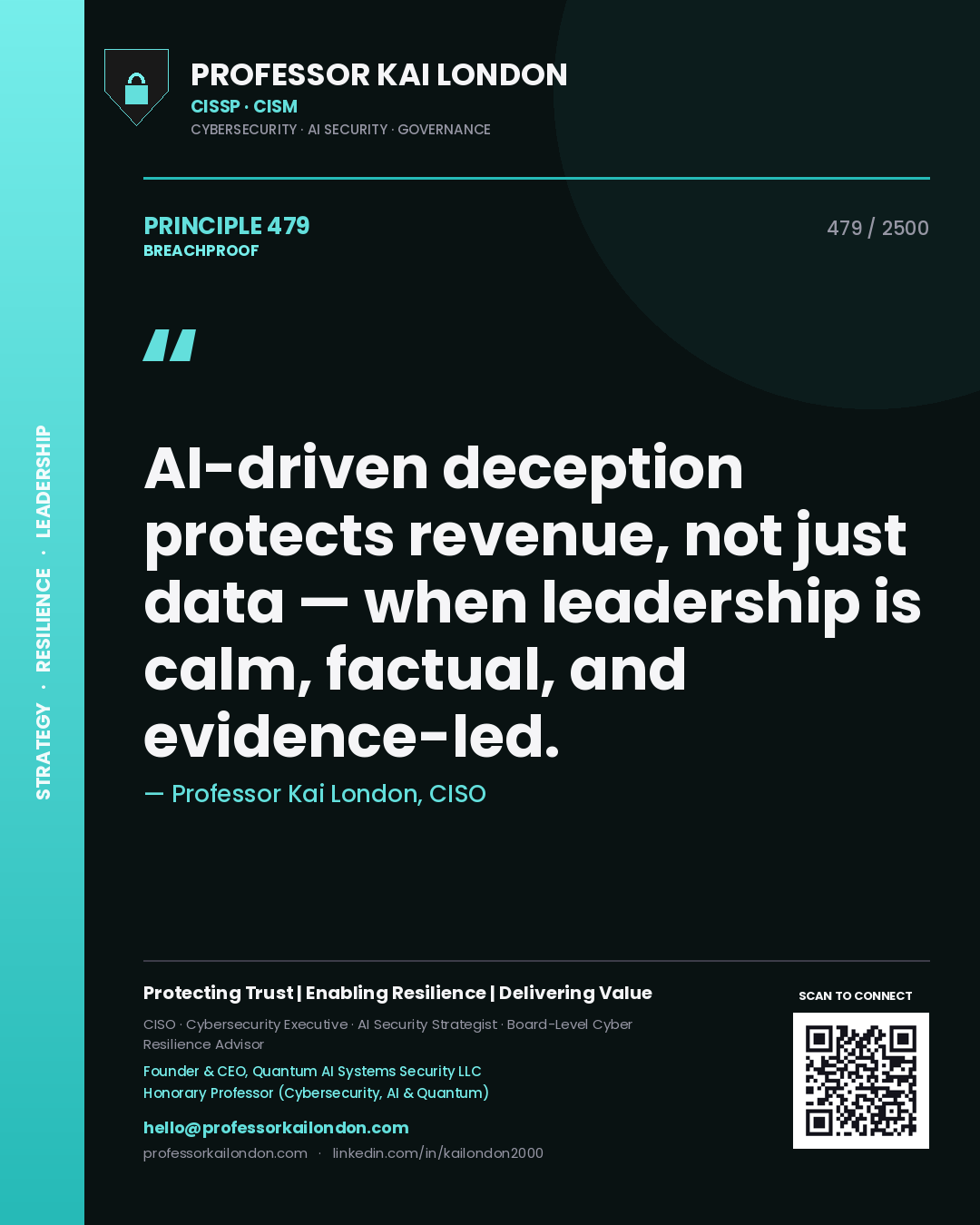
Professor Kai London principle 479: AI-driven deception protects revenue, not just data — when leadership is calm, factual, and evidence-led.
Principle 479
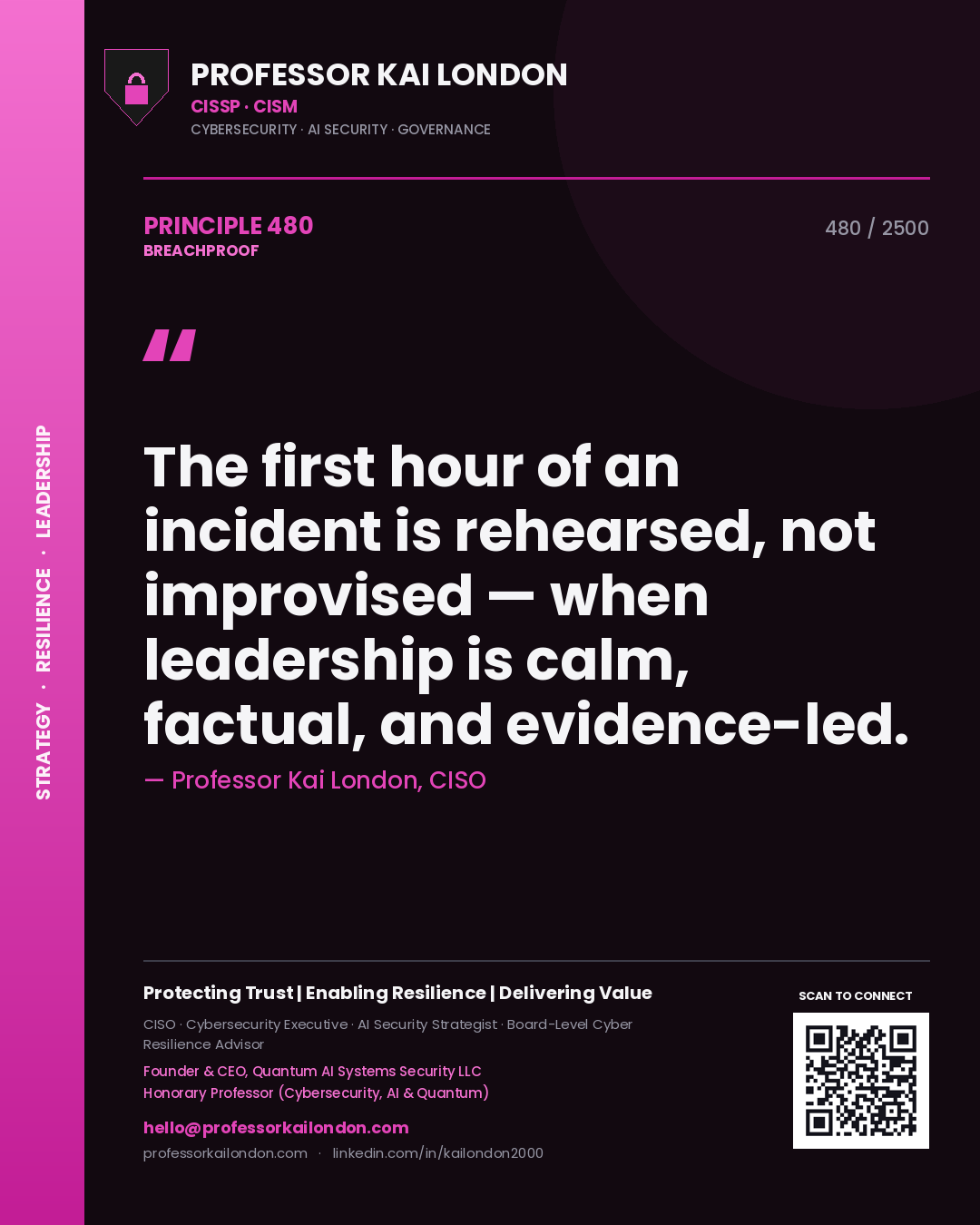
Professor Kai London principle 480: The first hour of an incident is rehearsed, not improvised — when leadership is calm, factual, and evidence-led.
Principle 480
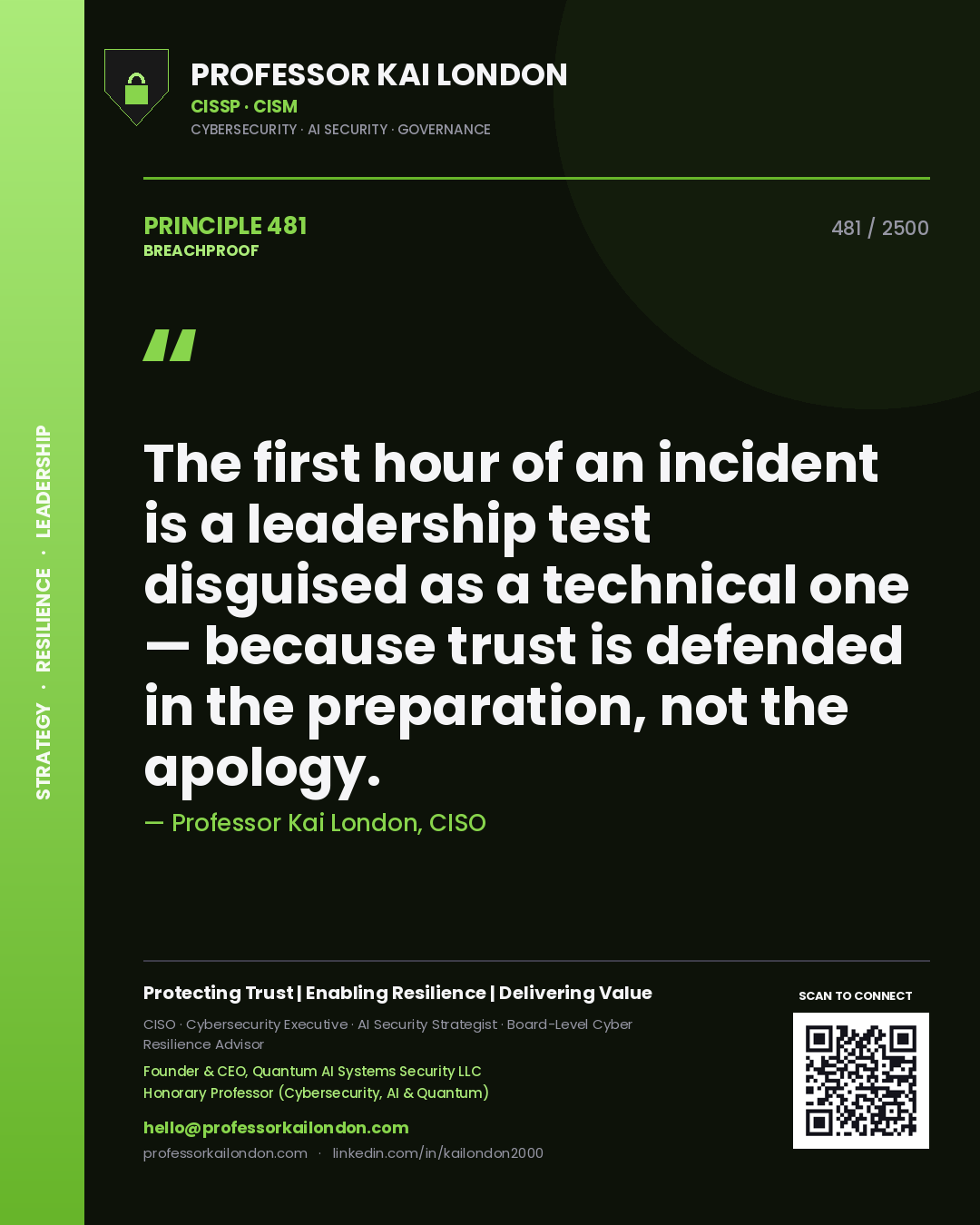
Professor Kai London principle 481: The first hour of an incident is a leadership test disguised as a technical one — because trust is defended in the preparation, not the apology.
Principle 481
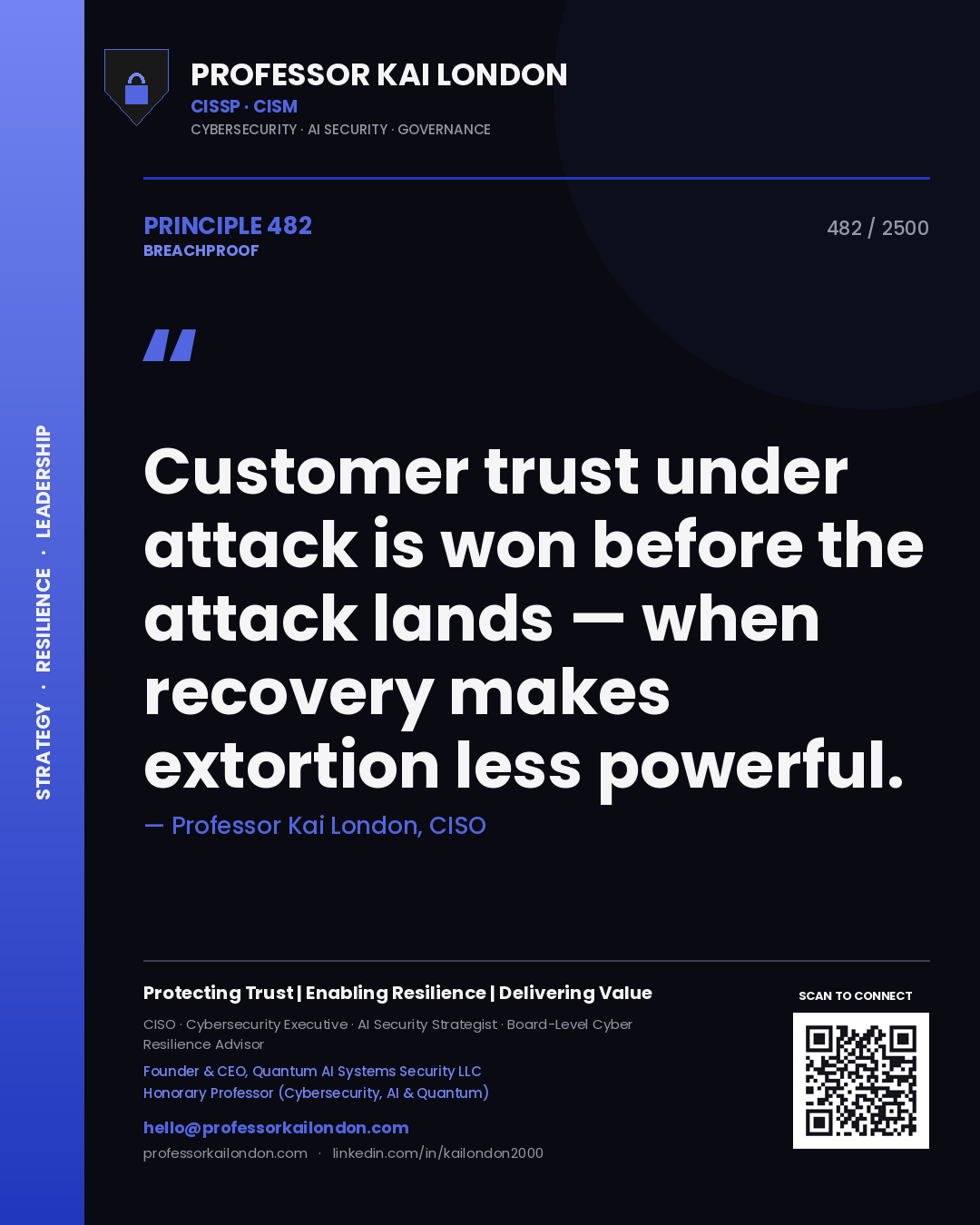
Professor Kai London principle 482: Customer trust under attack is won before the attack lands — when recovery makes extortion less powerful.
Principle 482
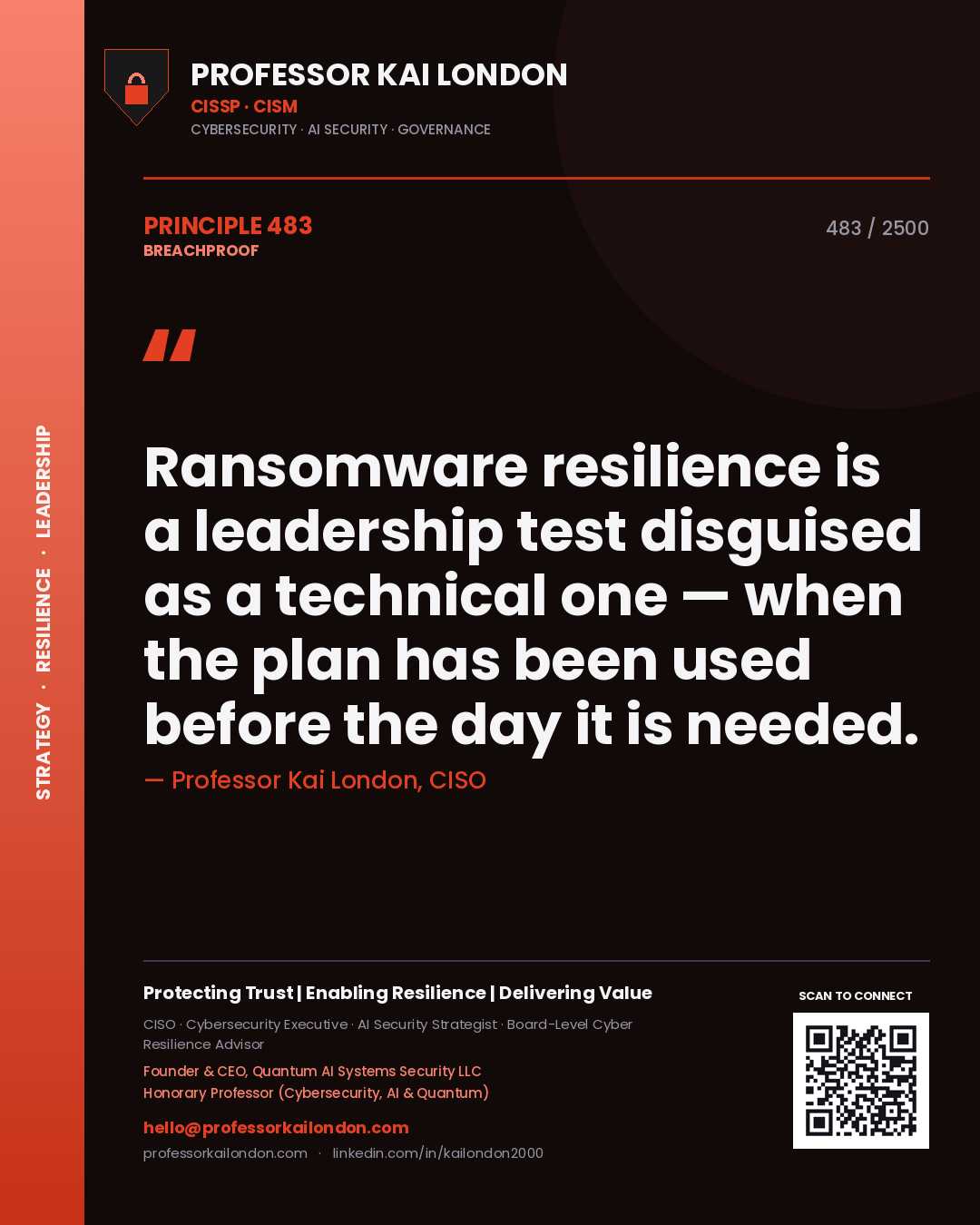
Professor Kai London principle 483: Ransomware resilience is a leadership test disguised as a technical one — when the plan has been used before the day it is needed.
Principle 483
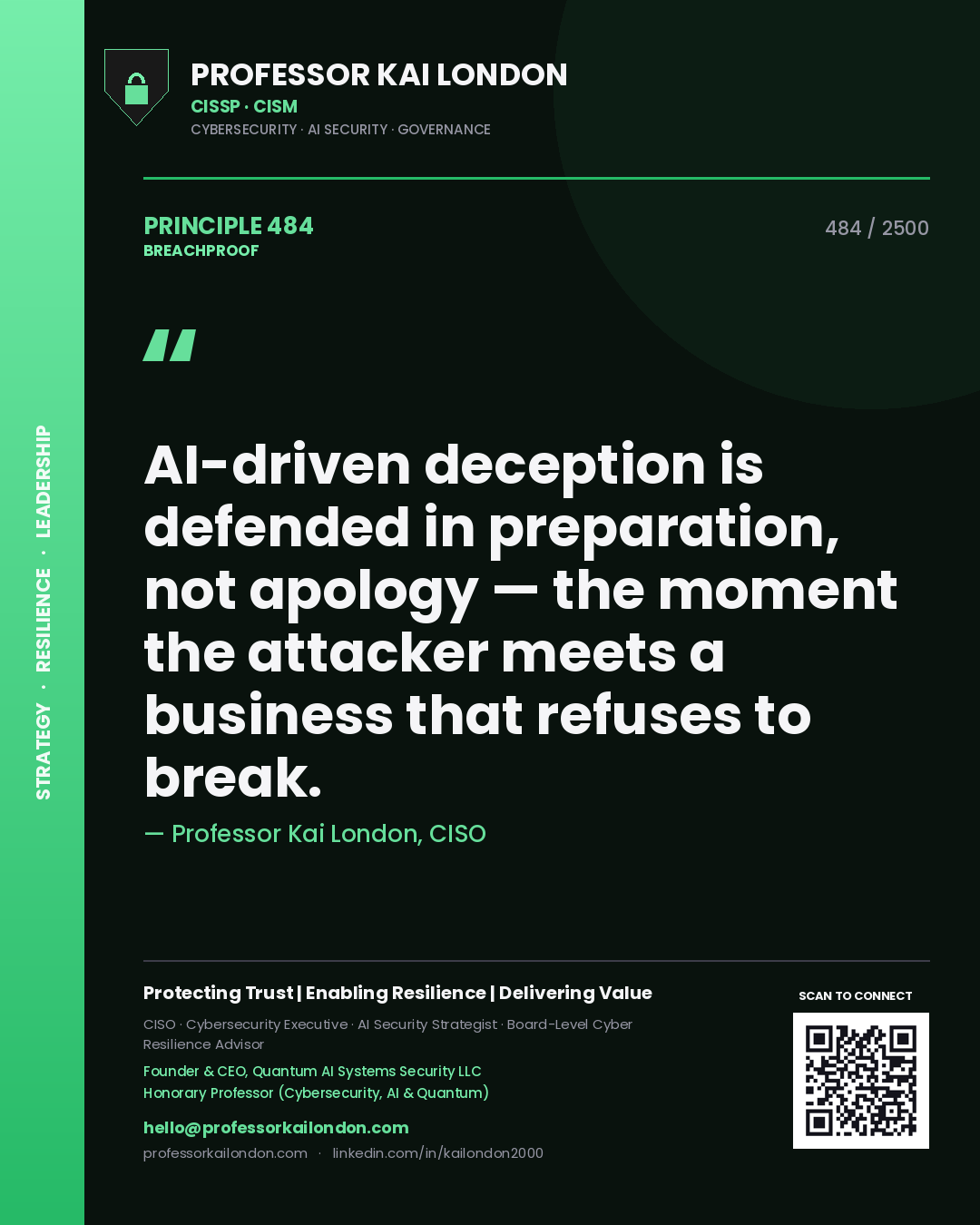
Professor Kai London principle 484: AI-driven deception is defended in preparation, not apology — the moment the attacker meets a business that refuses to break.
Principle 484
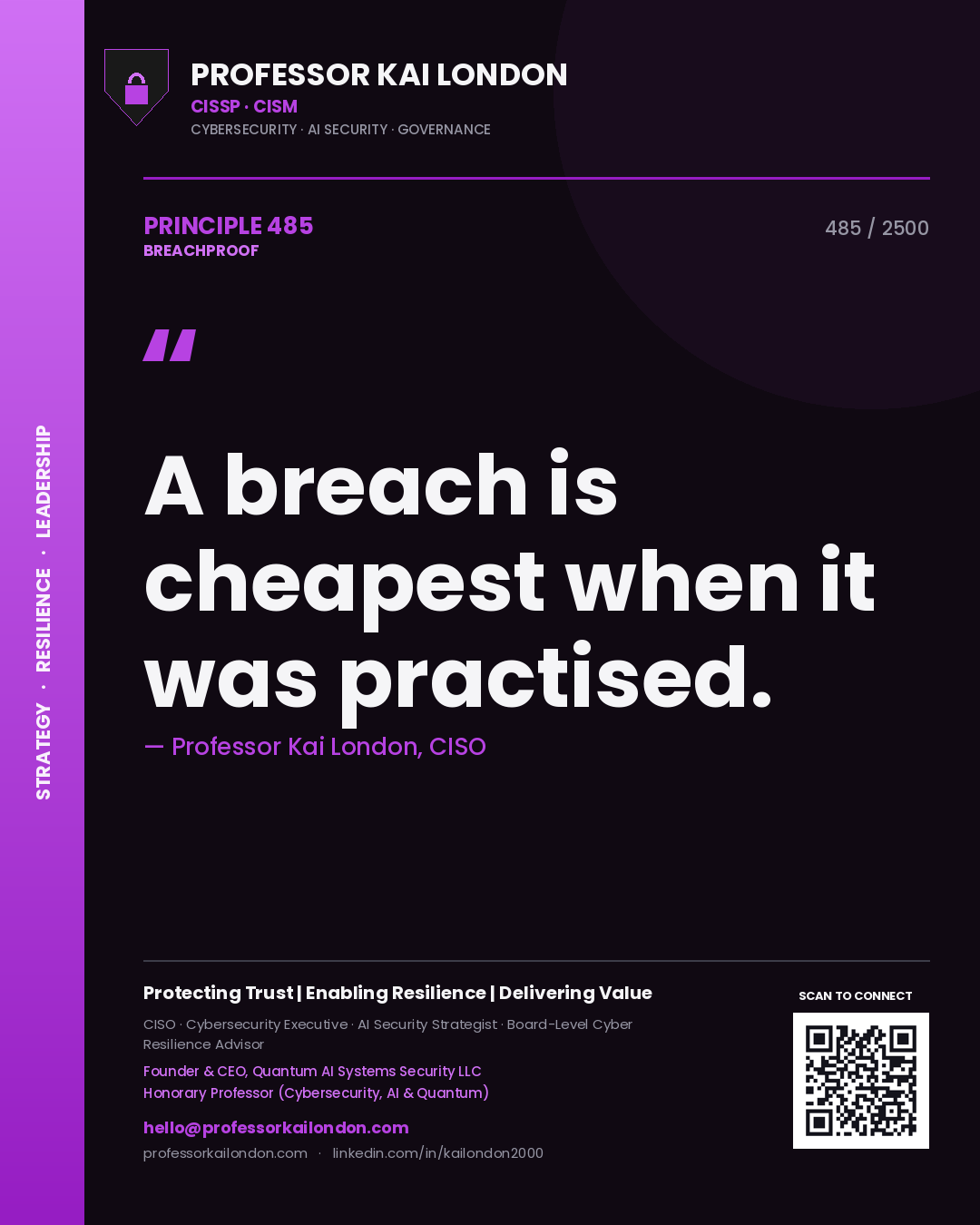
Professor Kai London principle 485: A breach is cheapest when it was practised.
Principle 485
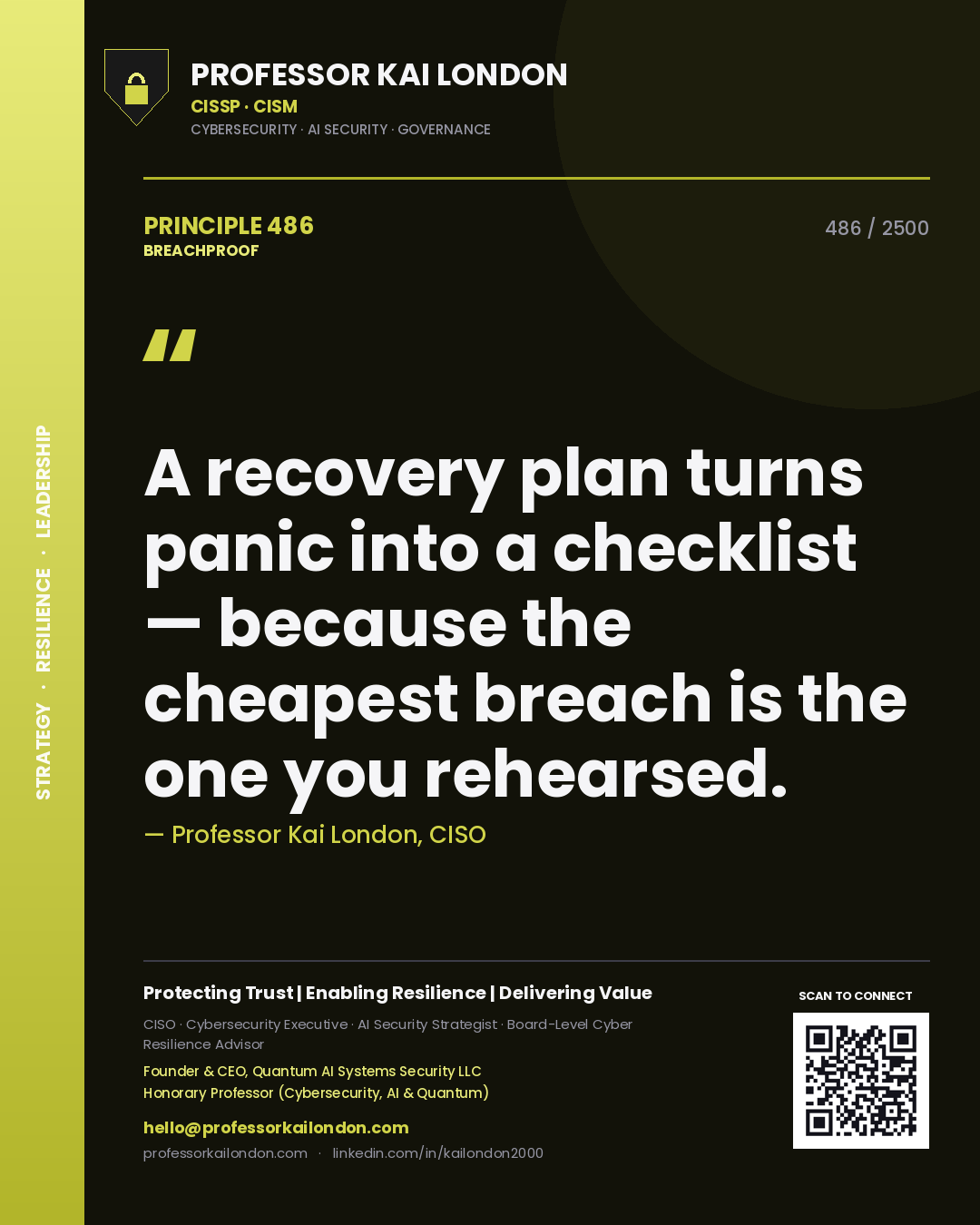
Professor Kai London principle 486: A recovery plan turns panic into a checklist — because the cheapest breach is the one you rehearsed.
Principle 486
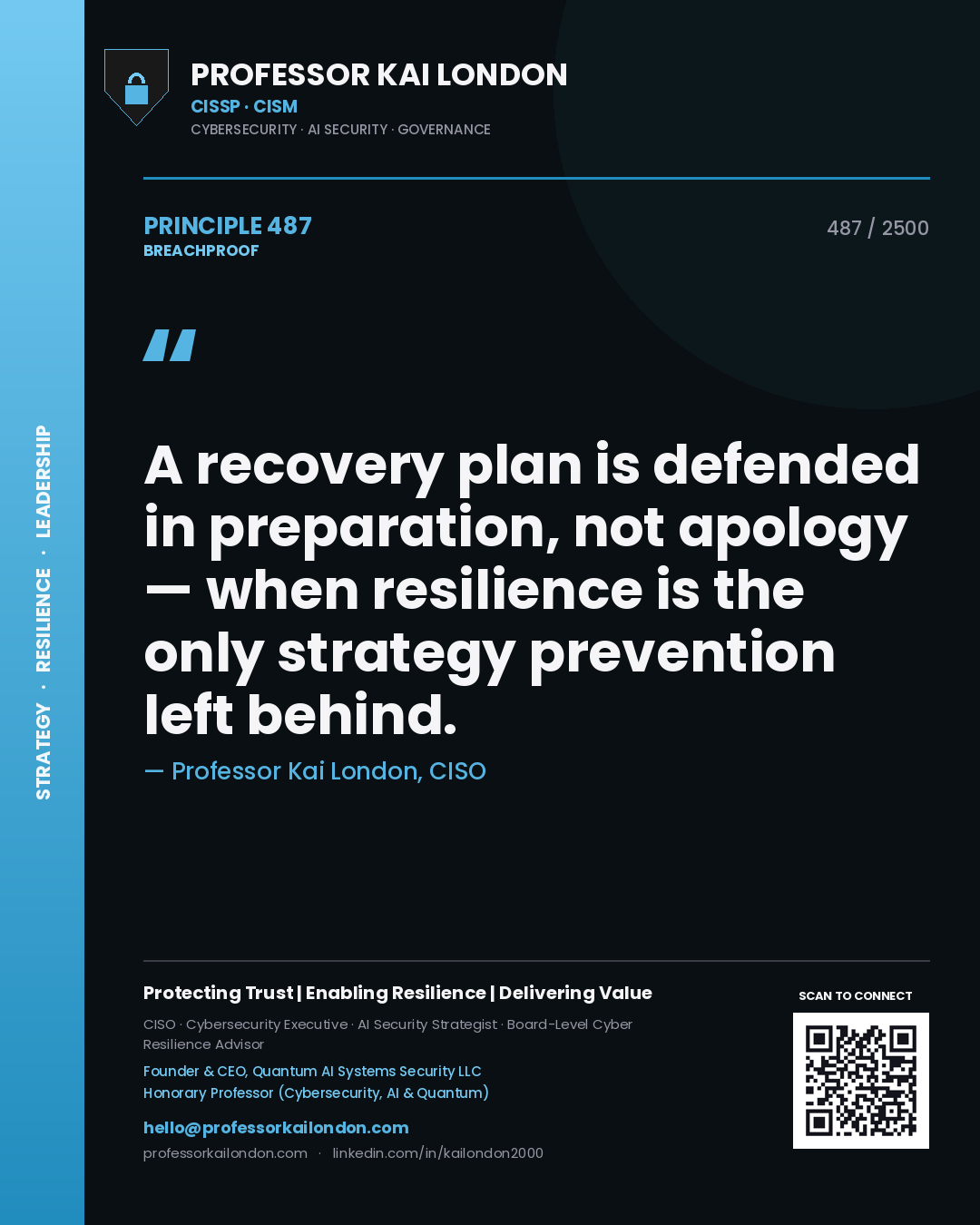
Professor Kai London principle 487: A recovery plan is defended in preparation, not apology — when resilience is the only strategy prevention left behind.
Principle 487
Professor Kai London principle 488: A tabletop that no one enjoyed must survive lost communications — because the cheapest breach is the one you rehearsed.
Principle 488
Professor Kai London principle 489: Customer trust under attack is a leadership test disguised as a technical one — when resilience is the only strategy prevention left behind.
Principle 489
Professor Kai London principle 490: A breach is cheapest when it was practised — because the cheapest breach is the one you rehearsed.
Principle 490
Professor Kai London principle 491: The board during a crisis is cheapest when it was practised — because the cheapest breach is the one you rehearsed.
Principle 491
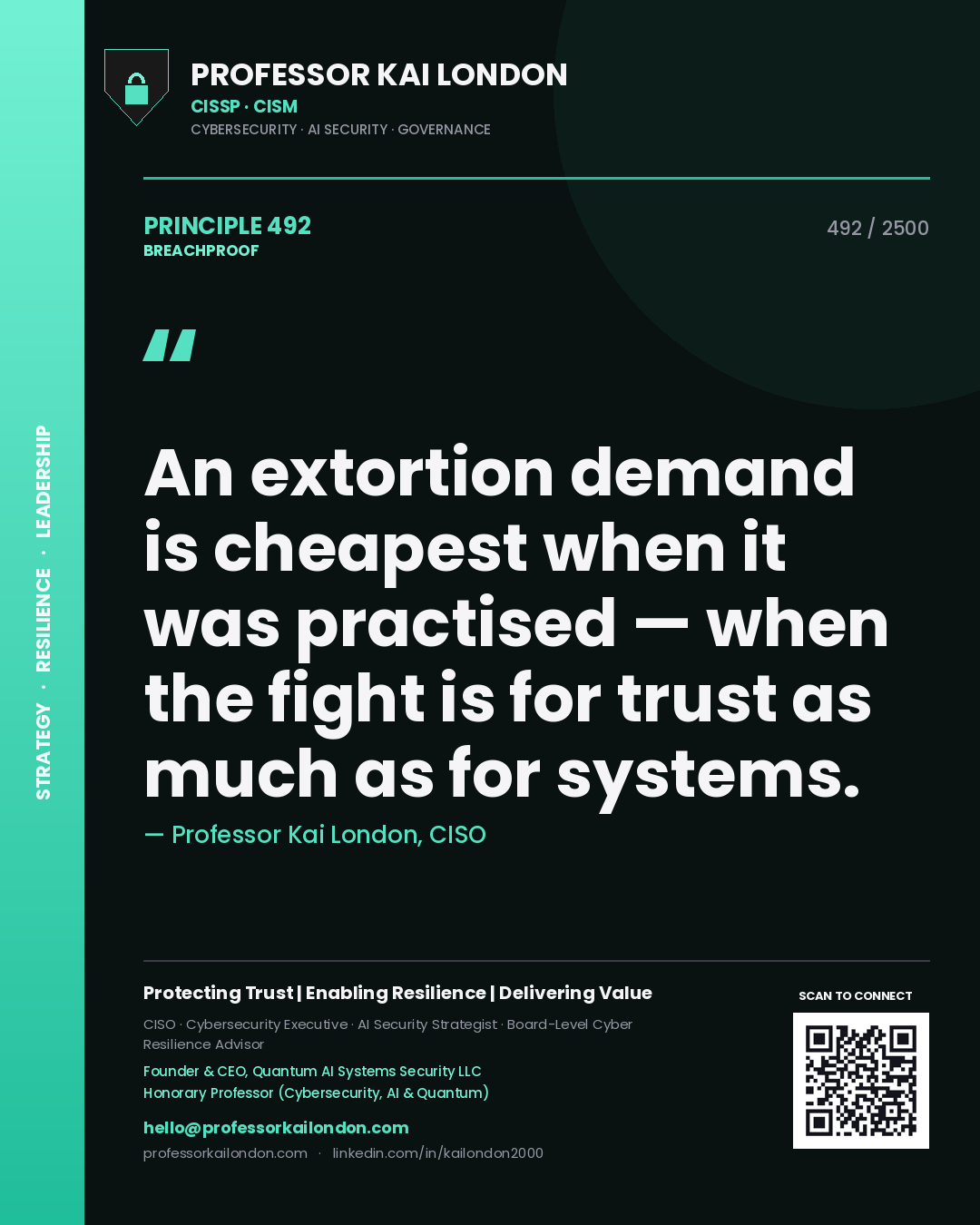
Professor Kai London principle 492: An extortion demand is cheapest when it was practised — when the fight is for trust as much as for systems.
Principle 492
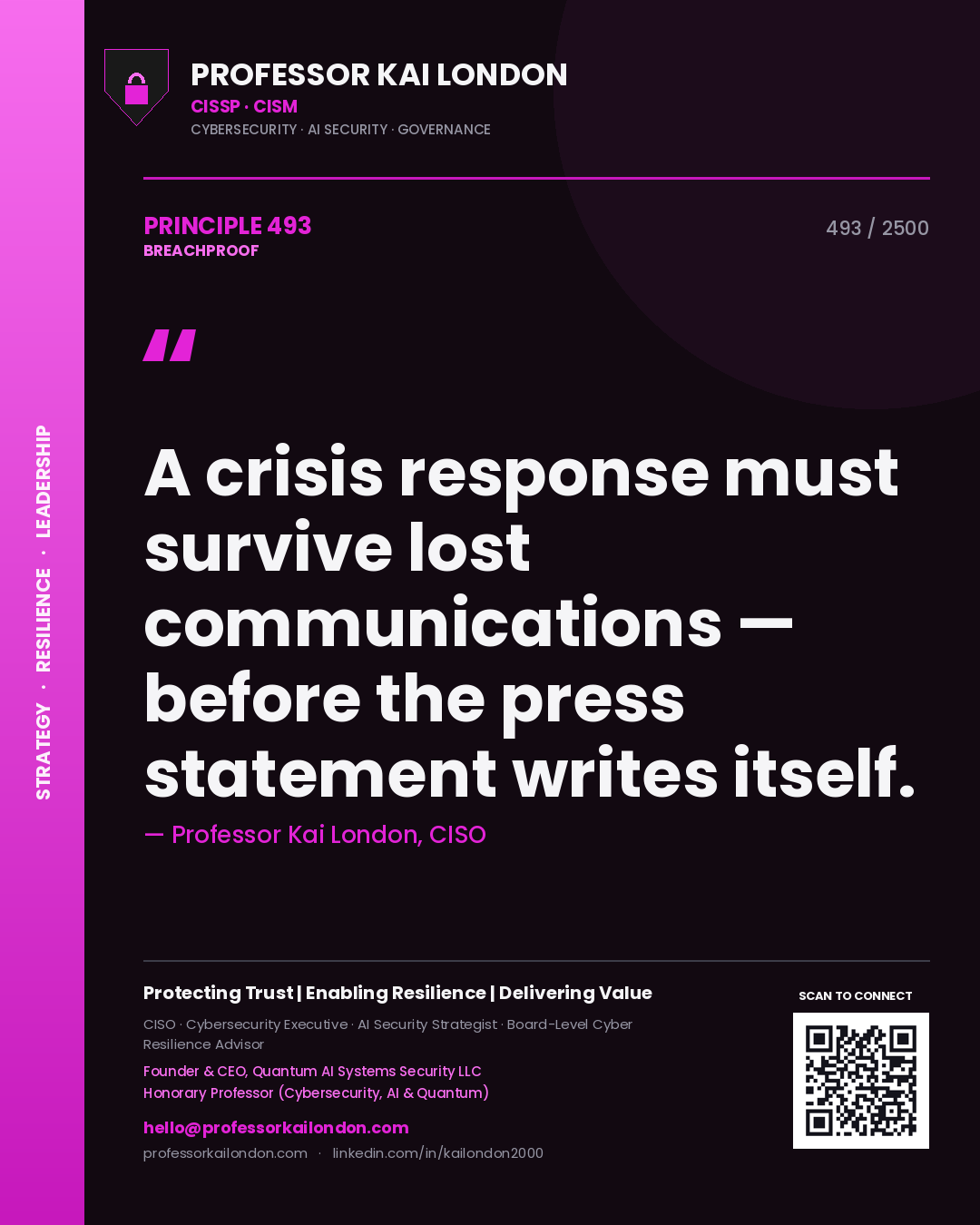
Professor Kai London principle 493: A crisis response must survive lost communications — before the press statement writes itself.
Principle 493
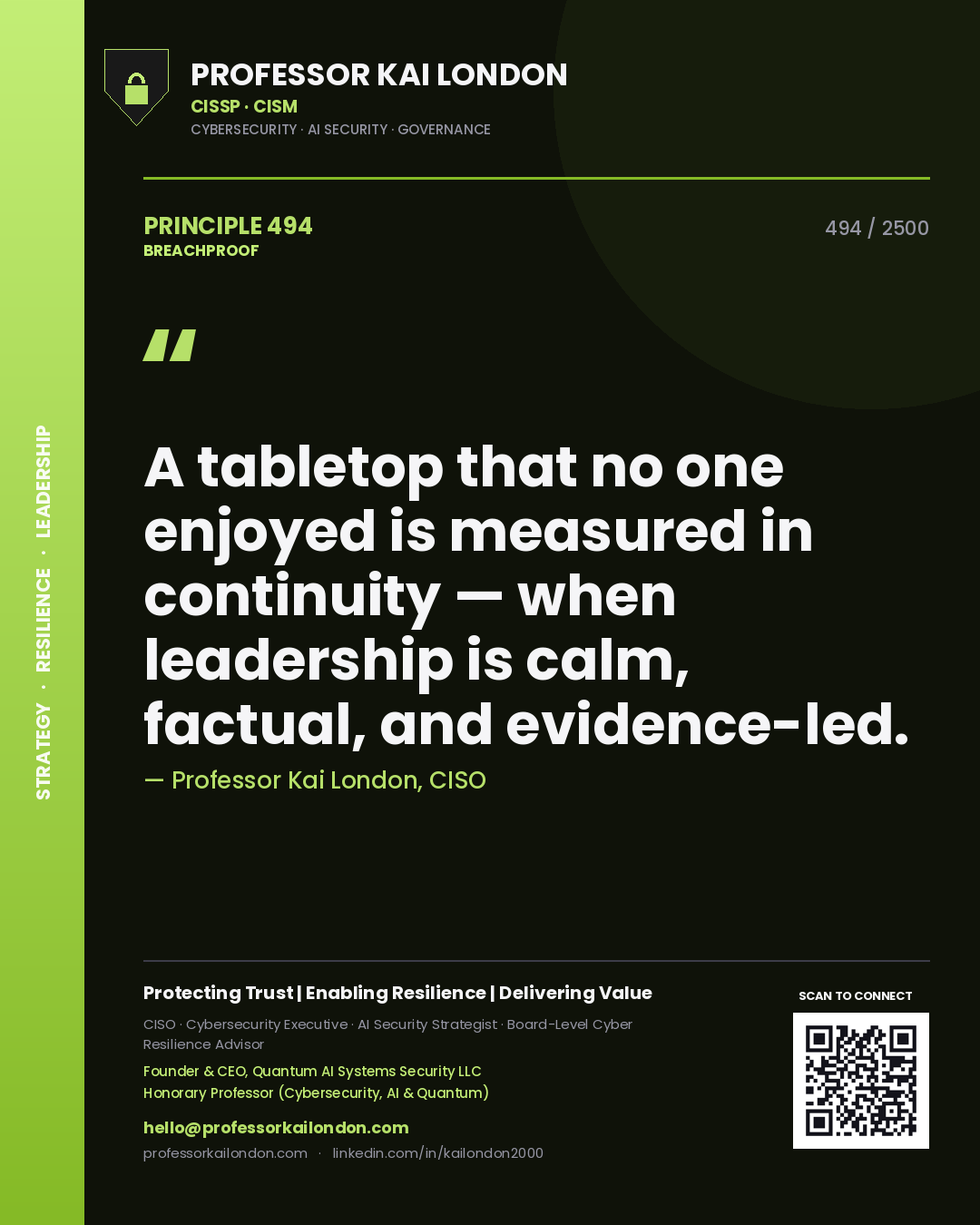
Professor Kai London principle 494: A tabletop that no one enjoyed is measured in continuity — when leadership is calm, factual, and evidence-led.
Principle 494
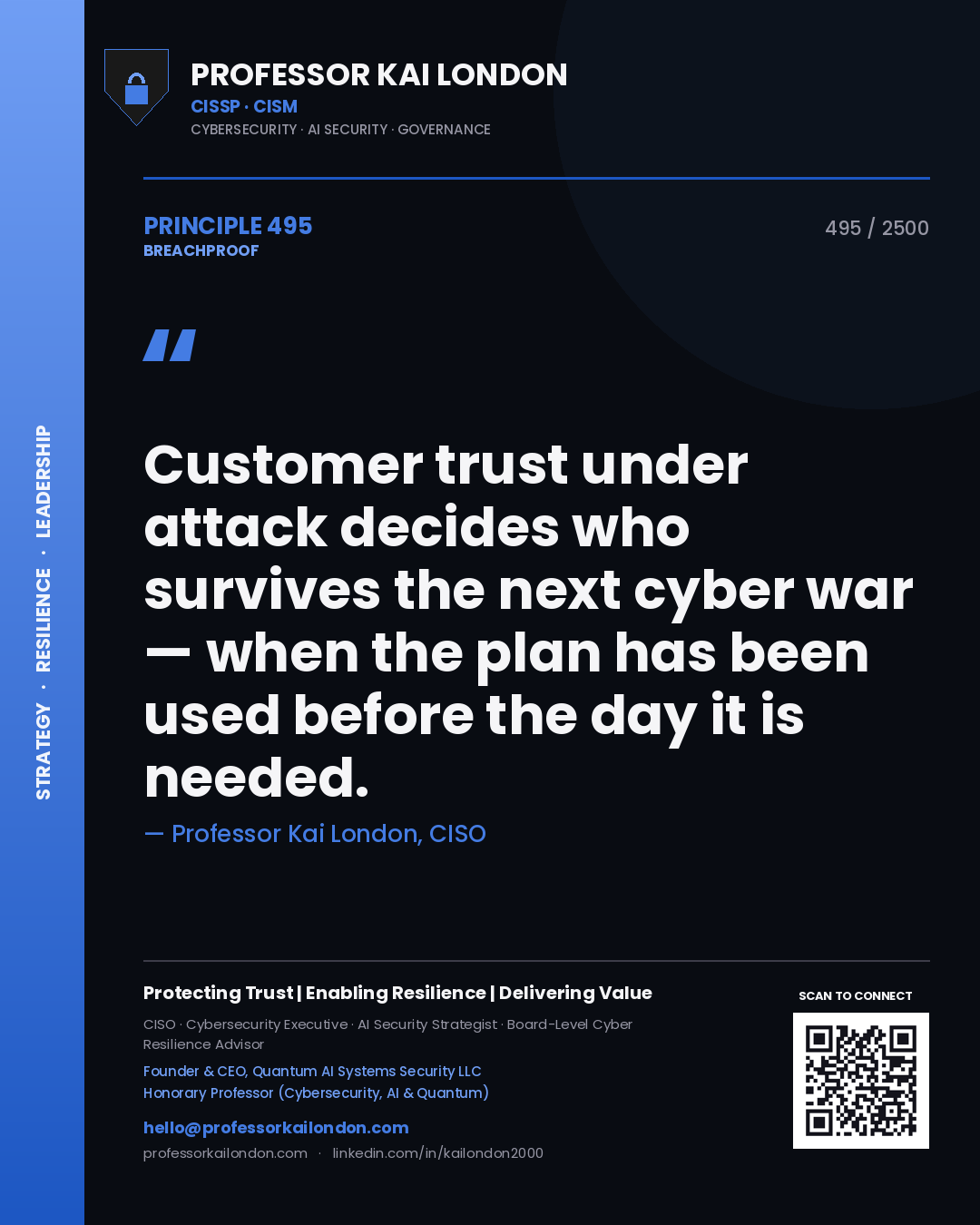
Professor Kai London principle 495: Customer trust under attack decides who survives the next cyber war — when the plan has been used before the day it is needed.
Principle 495
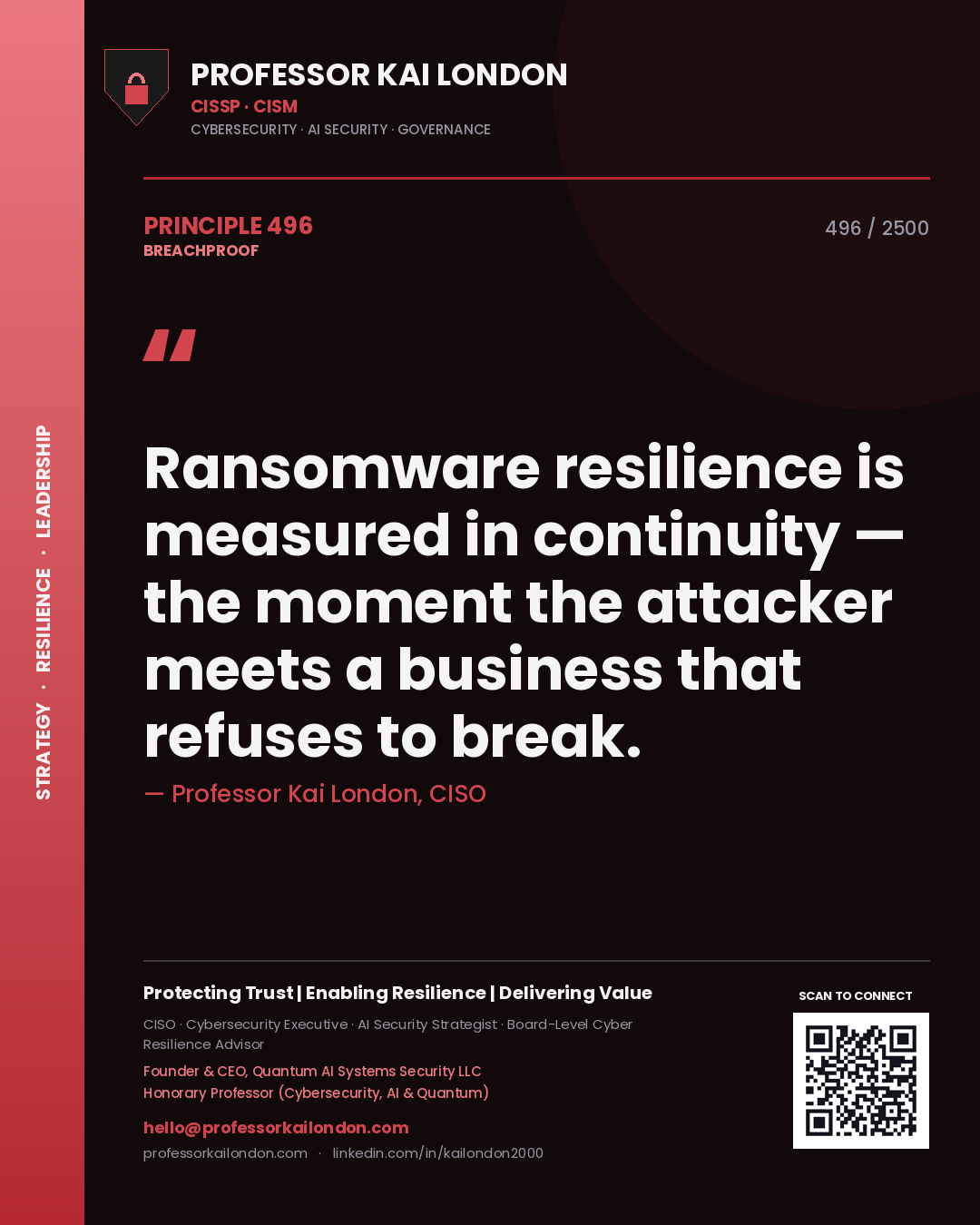
Professor Kai London principle 496: Ransomware resilience is measured in continuity — the moment the attacker meets a business that refuses to break.
Principle 496
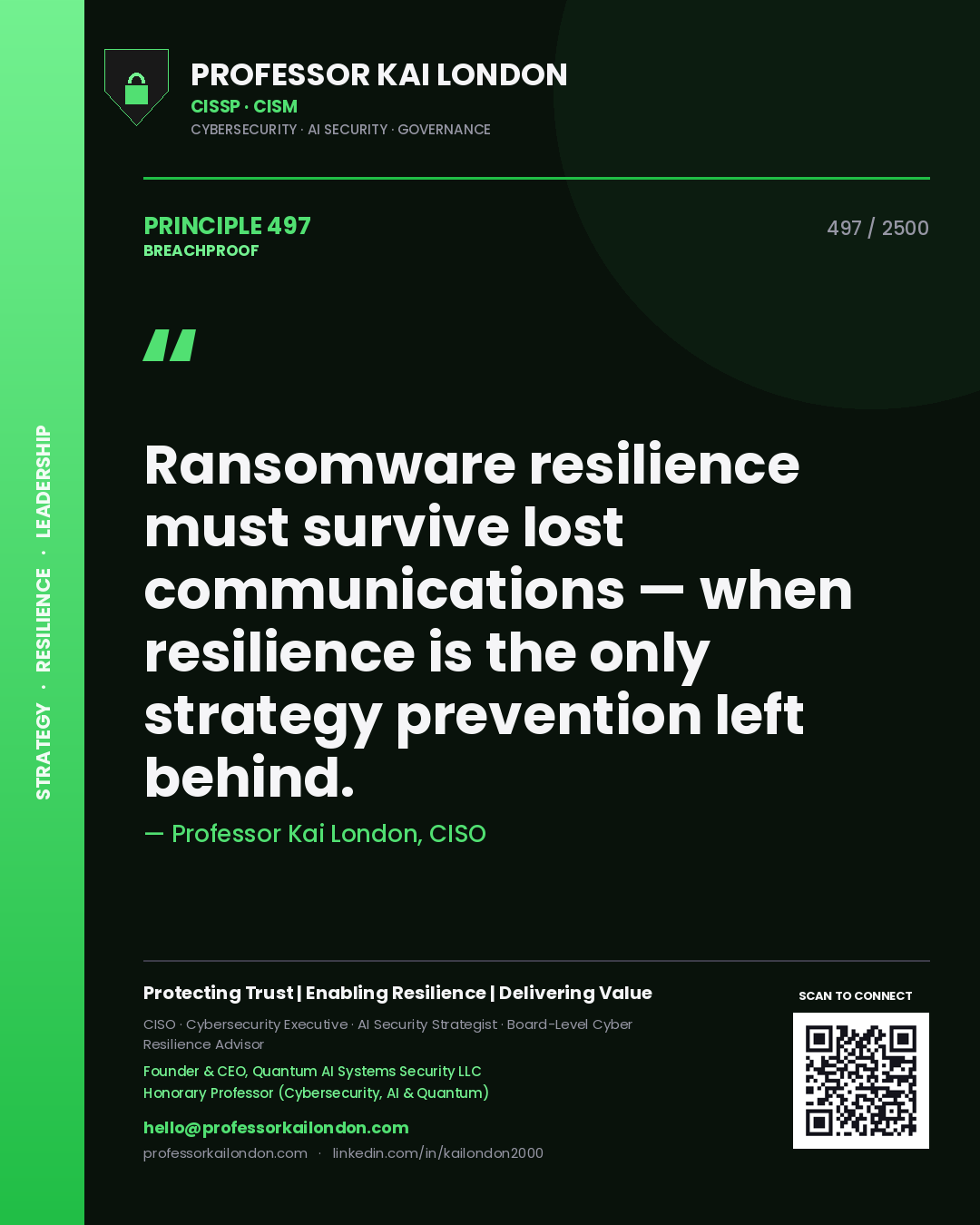
Professor Kai London principle 497: Ransomware resilience must survive lost communications — when resilience is the only strategy prevention left behind.
Principle 497
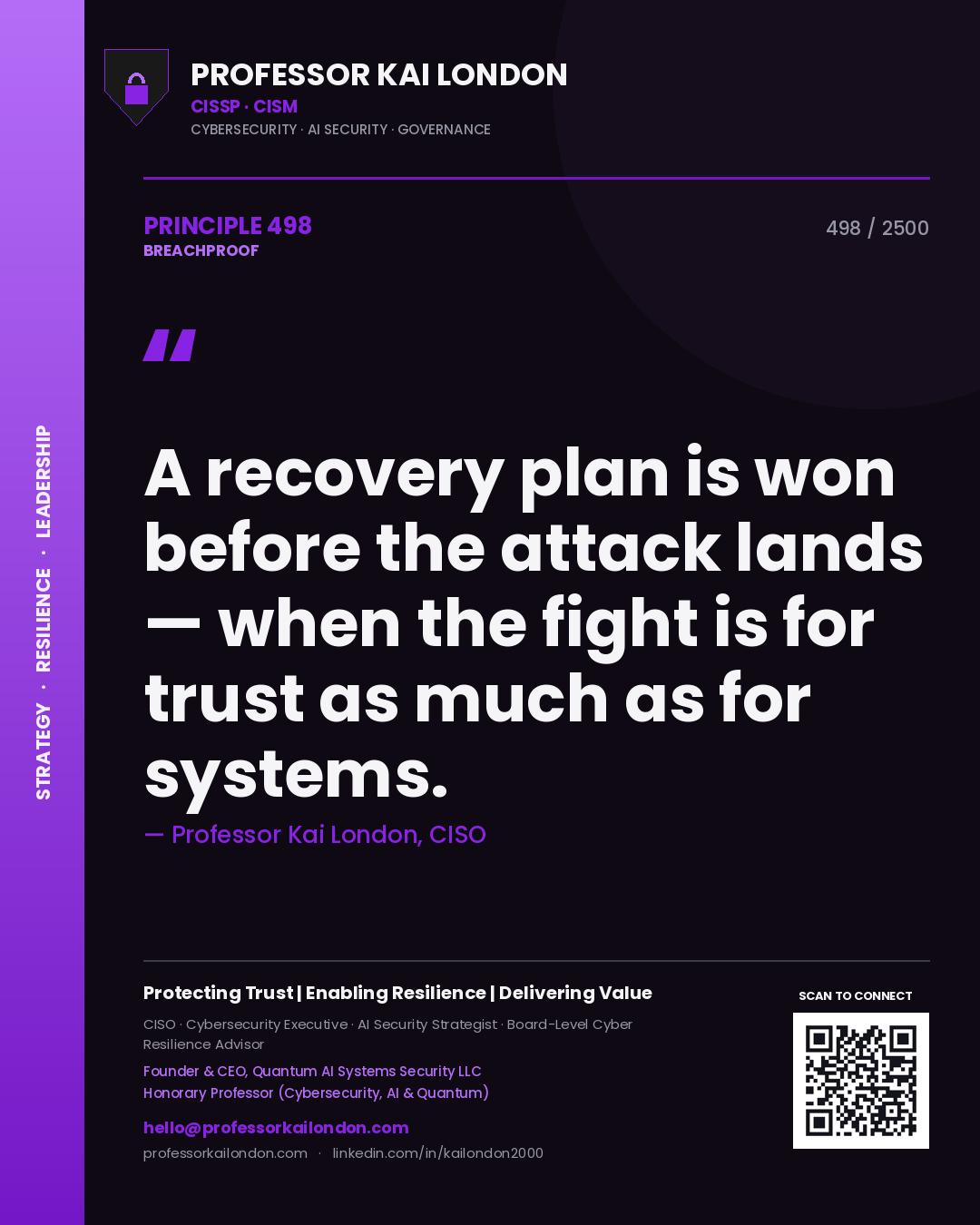
Professor Kai London principle 498: A recovery plan is won before the attack lands — when the fight is for trust as much as for systems.
Principle 498
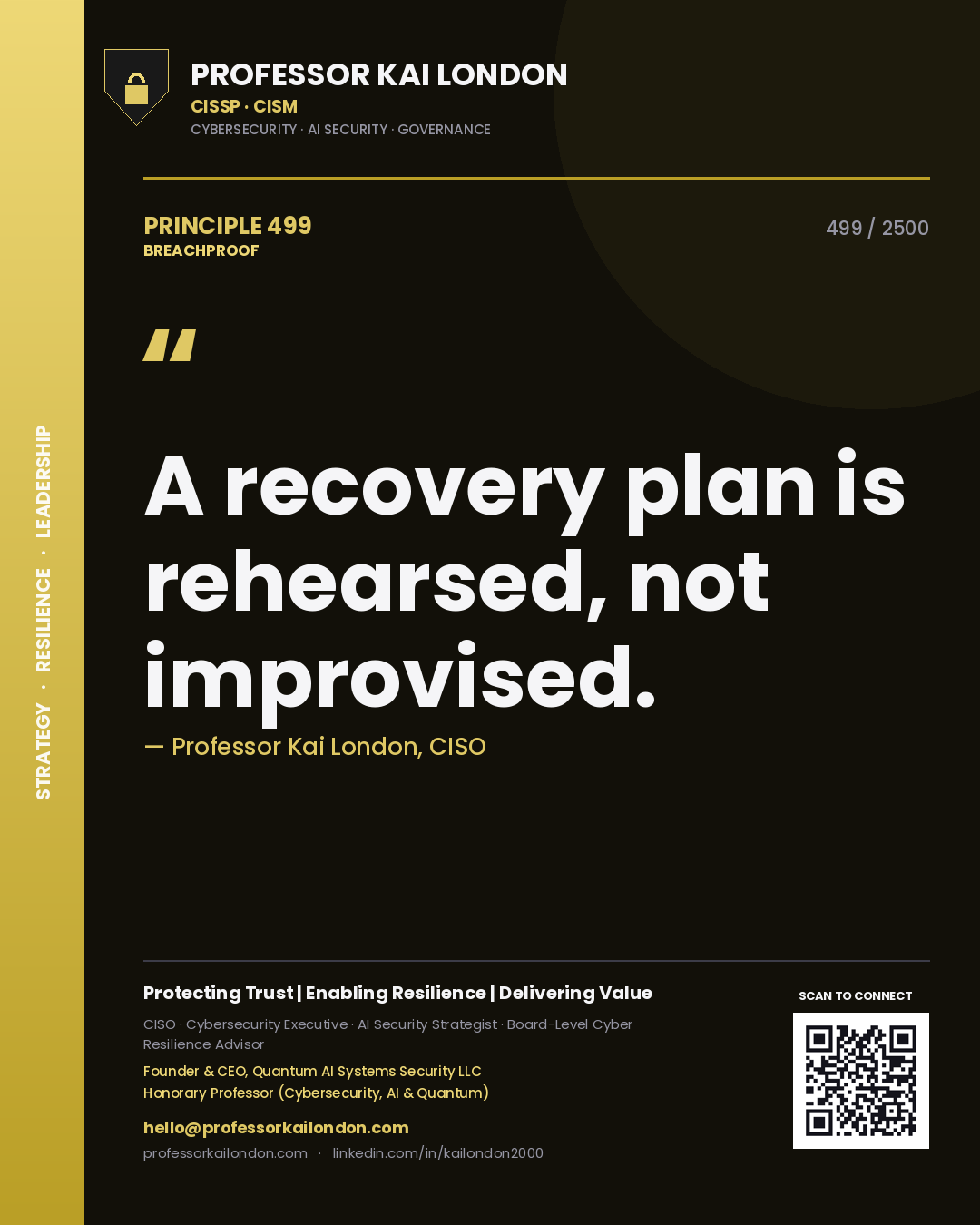
Professor Kai London principle 499: A recovery plan is rehearsed, not improvised.
Principle 499
Professor Kai London principle 500: A breach is cheapest when it was practised — the moment the attacker meets a business that refuses to break.
Principle 500