Breachproof — Gallery (Page 19 of 100)
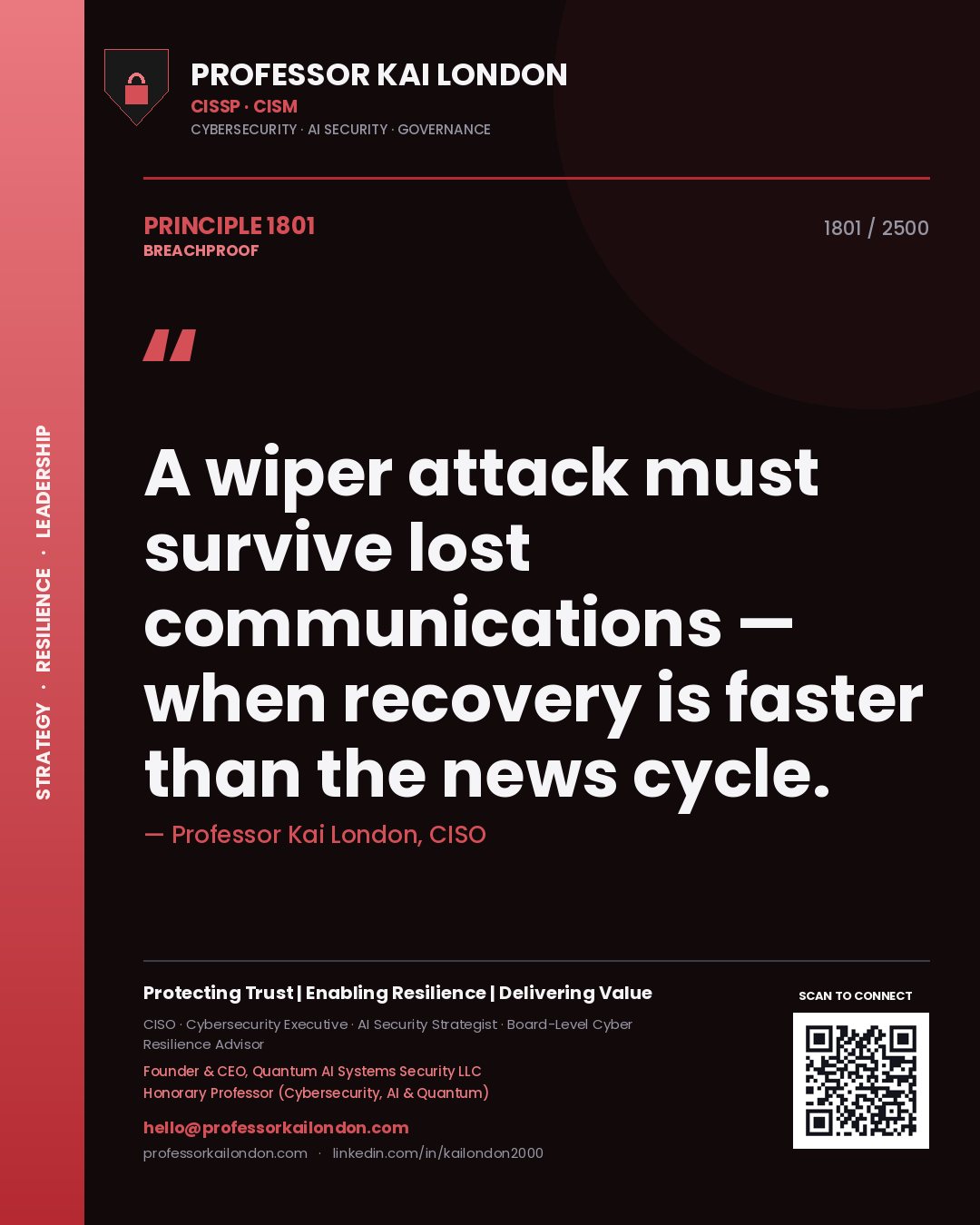
Professor Kai London principle 1801: A wiper attack must survive lost communications — when recovery is faster than the news cycle.
Principle 1801
Professor Kai London principle 1802: A tabletop that no one enjoyed tests the board, not just the SOC — the moment the attacker meets a business that refuses to break.
Principle 1802
Professor Kai London principle 1803: The first hour of an incident punishes the improvised — when the fight is for trust as much as for systems.
Principle 1803
Professor Kai London principle 1804: A breach is won before the attack lands — when the plan has been used before the day it is needed.
Principle 1804
Professor Kai London principle 1805: A double-extortion demand decides who survives the next cyber war — because the market remembers how you led, not just that you were hit.
Principle 1805
Professor Kai London principle 1806: Ransomware resilience punishes the improvised — when resilience is the only strategy prevention left behind.
Principle 1806
Professor Kai London principle 1807: A deepfake CEO call punishes the improvised — when the plan has been used before the day it is needed.
Principle 1807
Professor Kai London principle 1808: Customer trust under attack is rehearsed, not improvised — because the market remembers how you led, not just that you were hit.
Principle 1808
Professor Kai London principle 1809: An extortion demand is won before the attack lands — because the plan you practised is the plan that works.
Principle 1809
Professor Kai London principle 1810: Customer trust under attack tests the board, not just the SOC — before the press statement writes itself.
Principle 1810
Professor Kai London principle 1811: A breach decides who survives the next cyber war — before the ransom note becomes the strategy.
Principle 1811
Professor Kai London principle 1812: A wiper attack is cheapest when it was practised — when recovery is faster than the news cycle.
Principle 1812
Professor Kai London principle 1813: A recovery plan is survivable with rehearsal — the moment the attacker meets a business that refuses to break.
Principle 1813
Professor Kai London principle 1814: Customer trust under attack is survivable with rehearsal — before the ransom note becomes the strategy.
Principle 1814
Professor Kai London principle 1815: A deepfake CEO call is a leadership test disguised as a technical one — when trust is defended louder than it is attacked.
Principle 1815
Professor Kai London principle 1816: A wiper attack is measured in continuity — when recovery makes extortion less powerful.
Principle 1816
Professor Kai London principle 1817: A wiper attack protects revenue, not just data — the moment the attacker meets a business that refuses to break.
Principle 1817
Professor Kai London principle 1818: A tabletop that no one enjoyed is survivable with rehearsal — because the plan you practised is the plan that works.
Principle 1818
Professor Kai London principle 1819: A negotiation clock is a leadership test disguised as a technical one — because trust is defended in the preparation, not the apology.
Principle 1819
Professor Kai London principle 1820: A negotiation clock rewards the prepared — before the press statement writes itself.
Principle 1820
Professor Kai London principle 1821: A wiper attack must survive lost communications — when resilience is the only strategy prevention left behind.
Principle 1821
Professor Kai London principle 1822: A double-extortion demand rewards the prepared — when the plan has been used before the day it is needed.
Principle 1822
Professor Kai London principle 1823: A breach turns panic into a checklist — when trust is defended louder than it is attacked.
Principle 1823
Professor Kai London principle 1824: A crisis response is survivable with rehearsal — before the ransom note becomes the strategy.
Principle 1824
Professor Kai London principle 1825: The first hour of an incident is cheapest when it was practised — when the plan has been used before the day it is needed.
Principle 1825
Professor Kai London principle 1826: A wiper attack is rehearsed, not improvised.
Principle 1826
Professor Kai London principle 1827: A supply-chain intrusion decides who survives the next cyber war — when resilience is the only strategy prevention left behind.
Principle 1827
Professor Kai London principle 1828: An extortion demand is survivable with rehearsal — when recovery makes extortion less powerful.
Principle 1828
Professor Kai London principle 1829: A crisis response is defended in preparation, not apology — when trust is defended louder than it is attacked.
Principle 1829
Professor Kai London principle 1830: A data-leak site listing is defended in preparation, not apology — when resilience is the only strategy prevention left behind.
Principle 1830
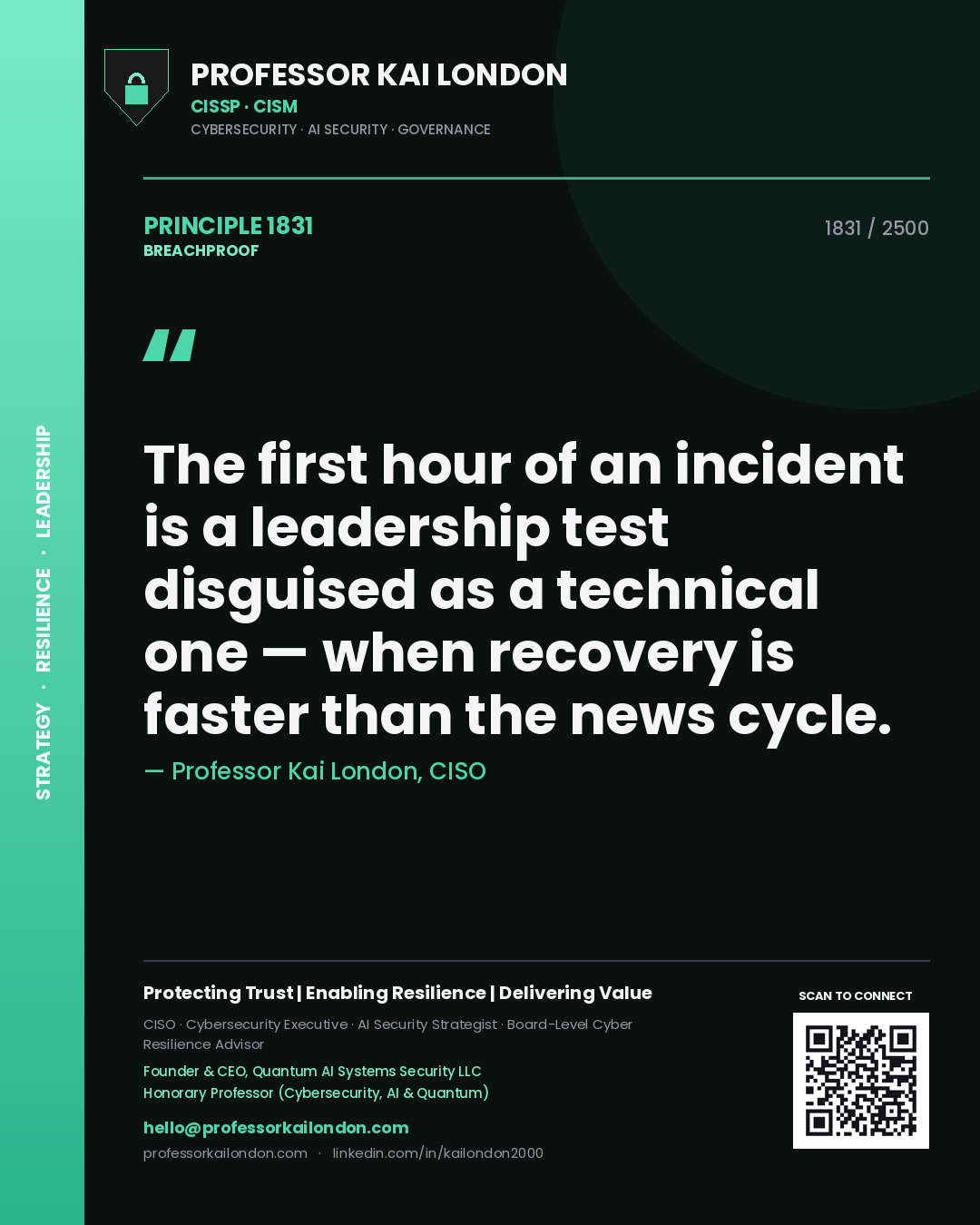
Professor Kai London principle 1831: The first hour of an incident is a leadership test disguised as a technical one — when recovery is faster than the news cycle.
Principle 1831
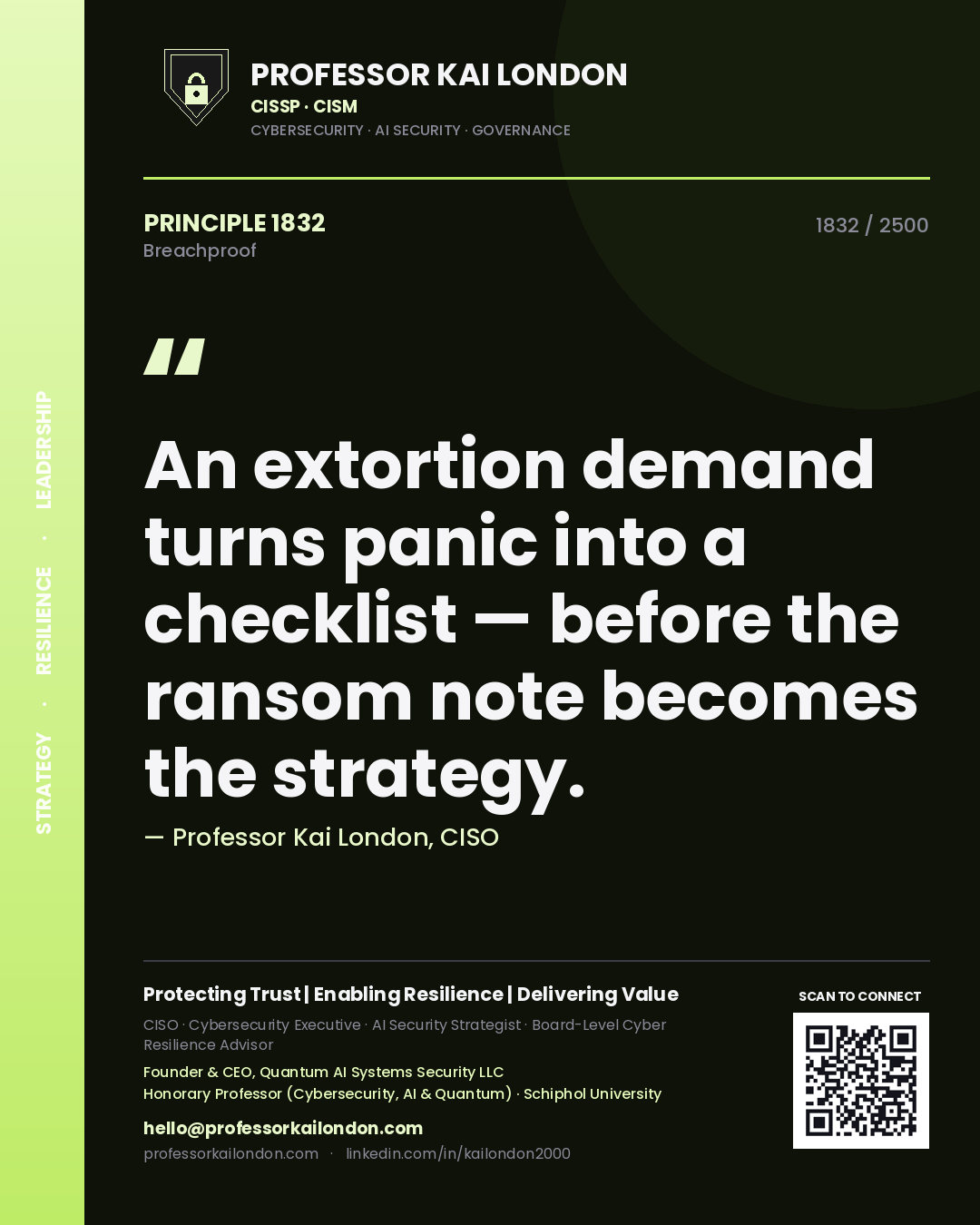
Professor Kai London principle 1832: An extortion demand turns panic into a checklist — before the ransom note becomes the strategy.
Principle 1832
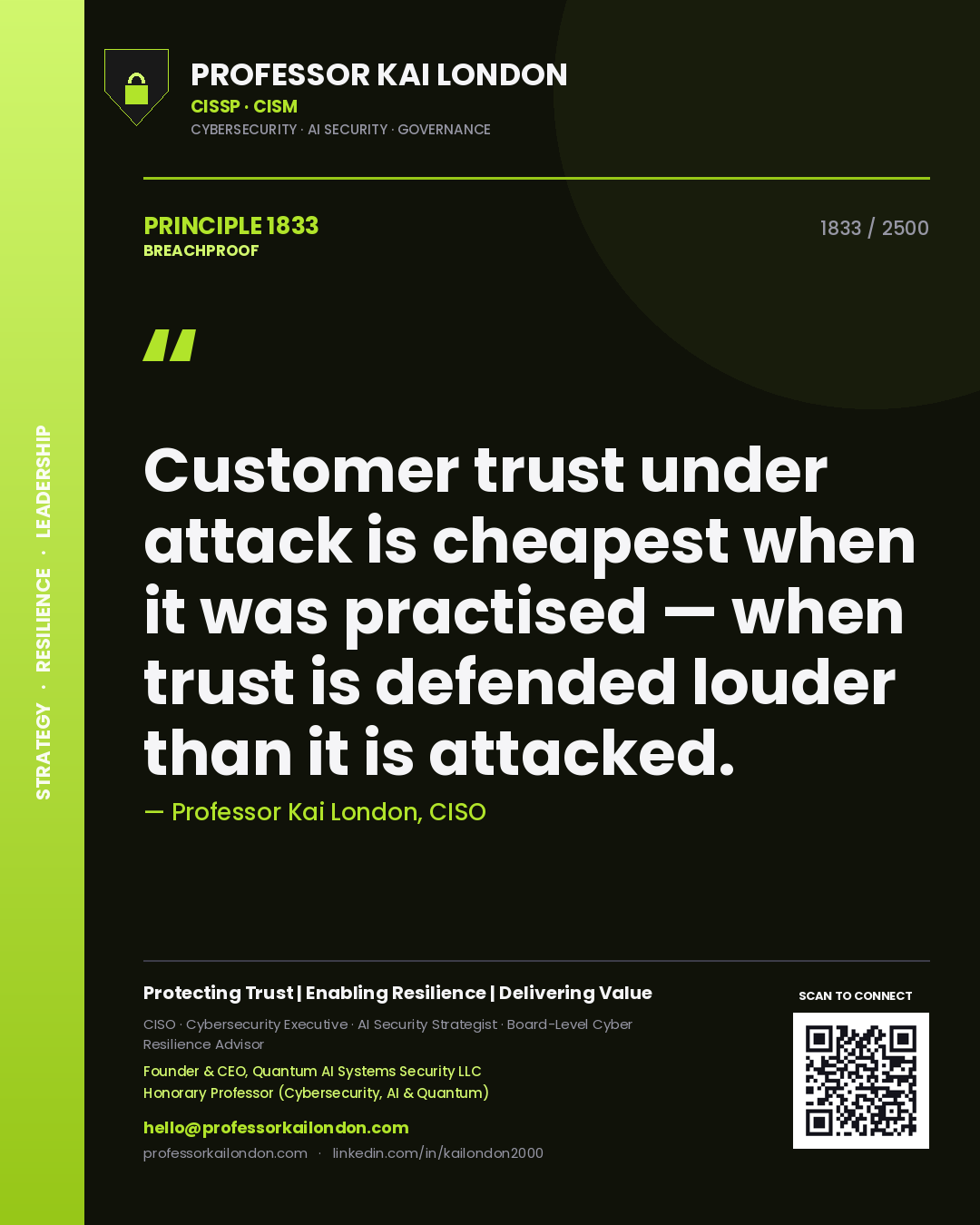
Professor Kai London principle 1833: Customer trust under attack is cheapest when it was practised — when trust is defended louder than it is attacked.
Principle 1833
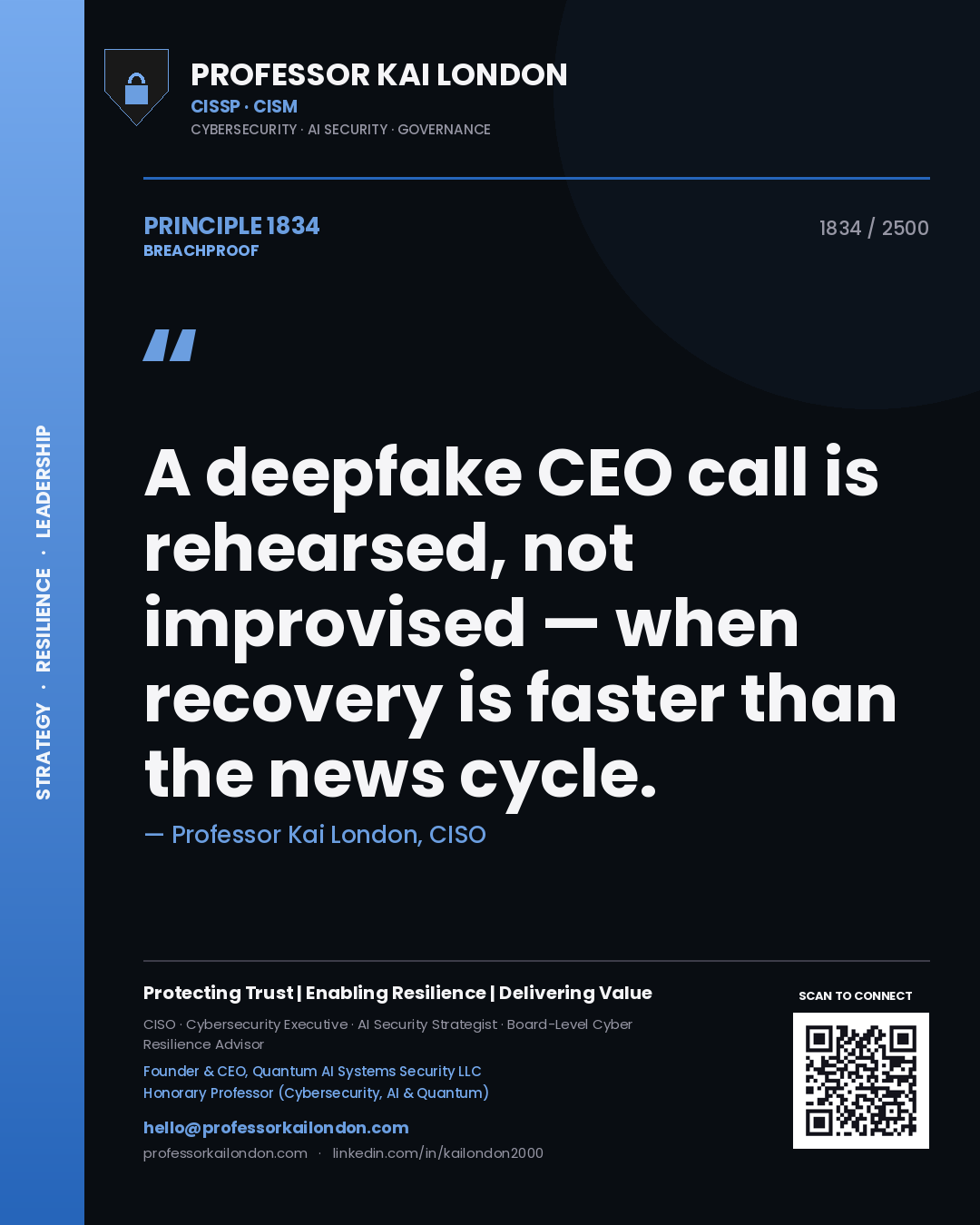
Professor Kai London principle 1834: A deepfake CEO call is rehearsed, not improvised — when recovery is faster than the news cycle.
Principle 1834
Professor Kai London principle 1835: The first hour of an incident tests the board, not just the SOC — because the market remembers how you led, not just that you were hit.
Principle 1835
Professor Kai London principle 1836: An extortion demand punishes the improvised — when the fight is for trust as much as for systems.
Principle 1836
Professor Kai London principle 1837: A wiper attack rewards the prepared — because trust is defended in the preparation, not the apology.
Principle 1837
Professor Kai London principle 1838: A negotiation clock must survive lost communications — because the plan you practised is the plan that works.
Principle 1838
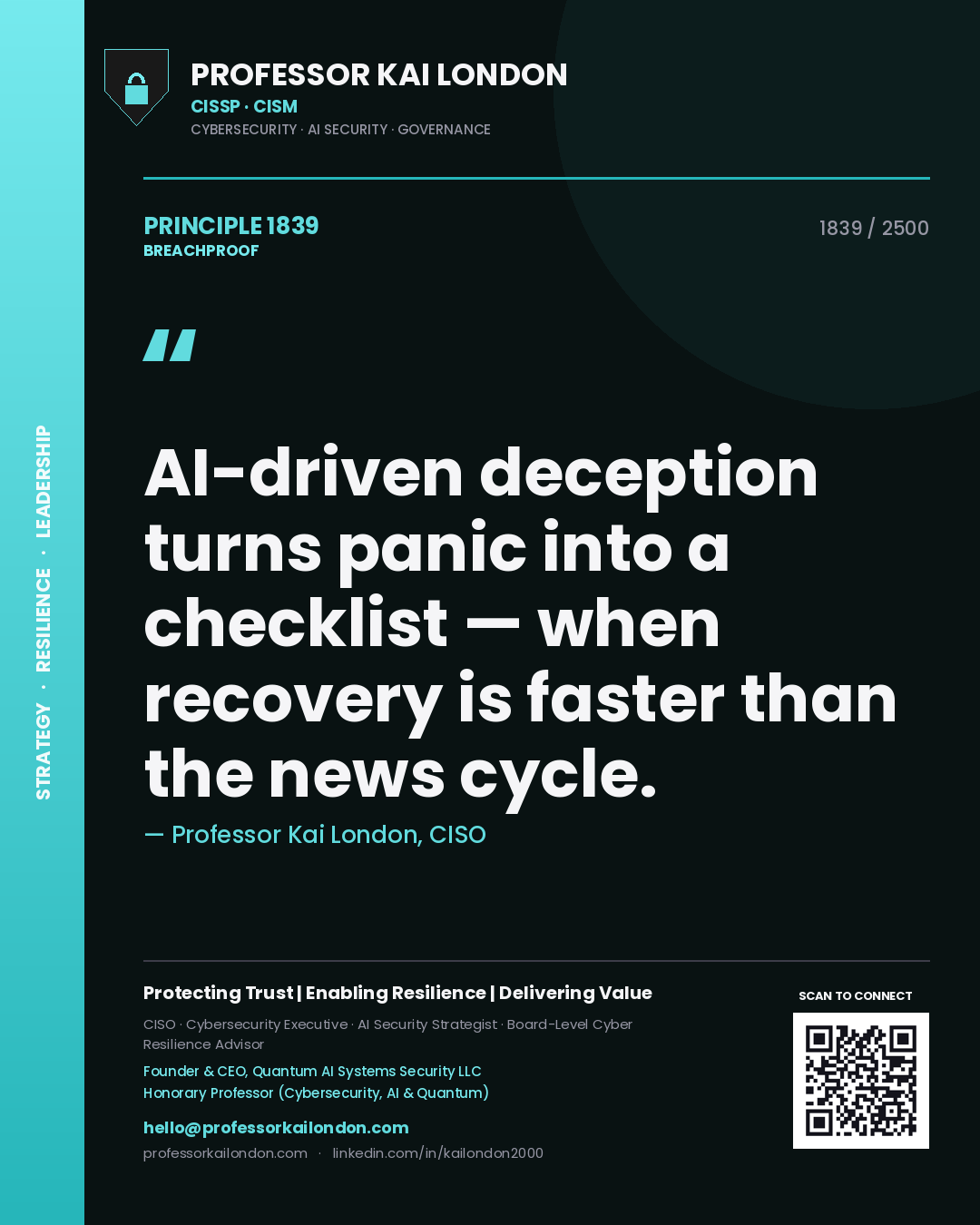
Professor Kai London principle 1839: AI-driven deception turns panic into a checklist — when recovery is faster than the news cycle.
Principle 1839
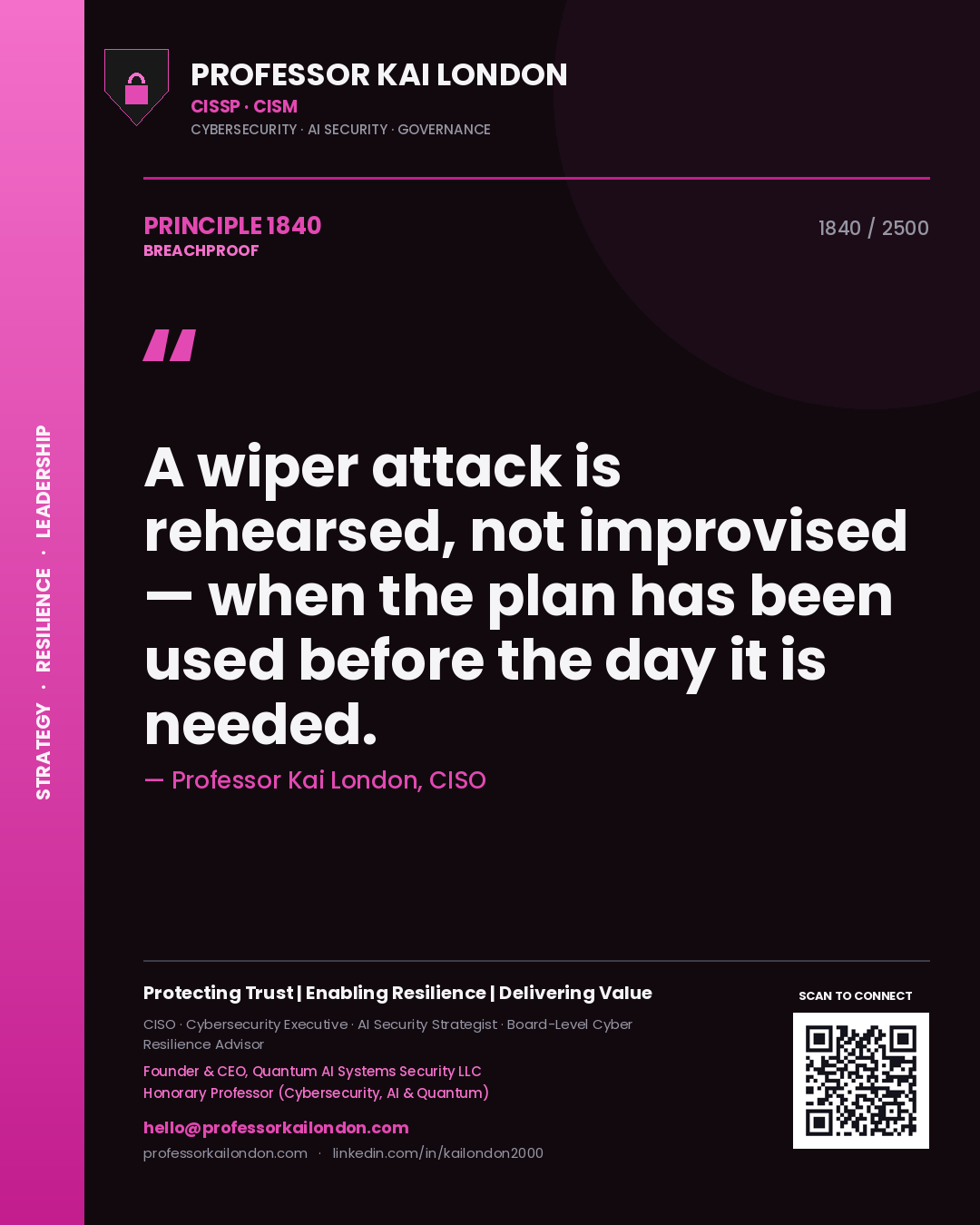
Professor Kai London principle 1840: A wiper attack is rehearsed, not improvised — when the plan has been used before the day it is needed.
Principle 1840
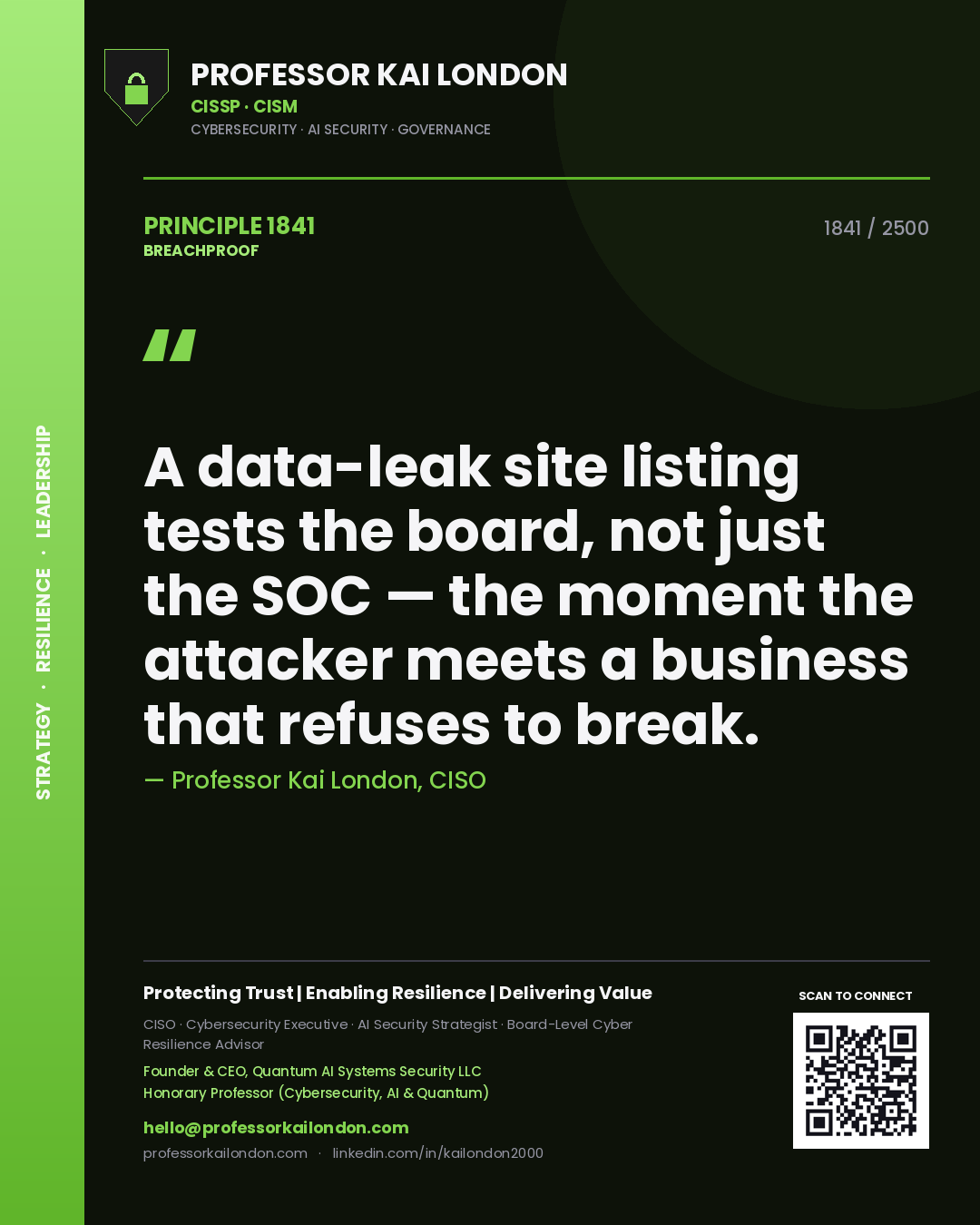
Professor Kai London principle 1841: A data-leak site listing tests the board, not just the SOC — the moment the attacker meets a business that refuses to break.
Principle 1841
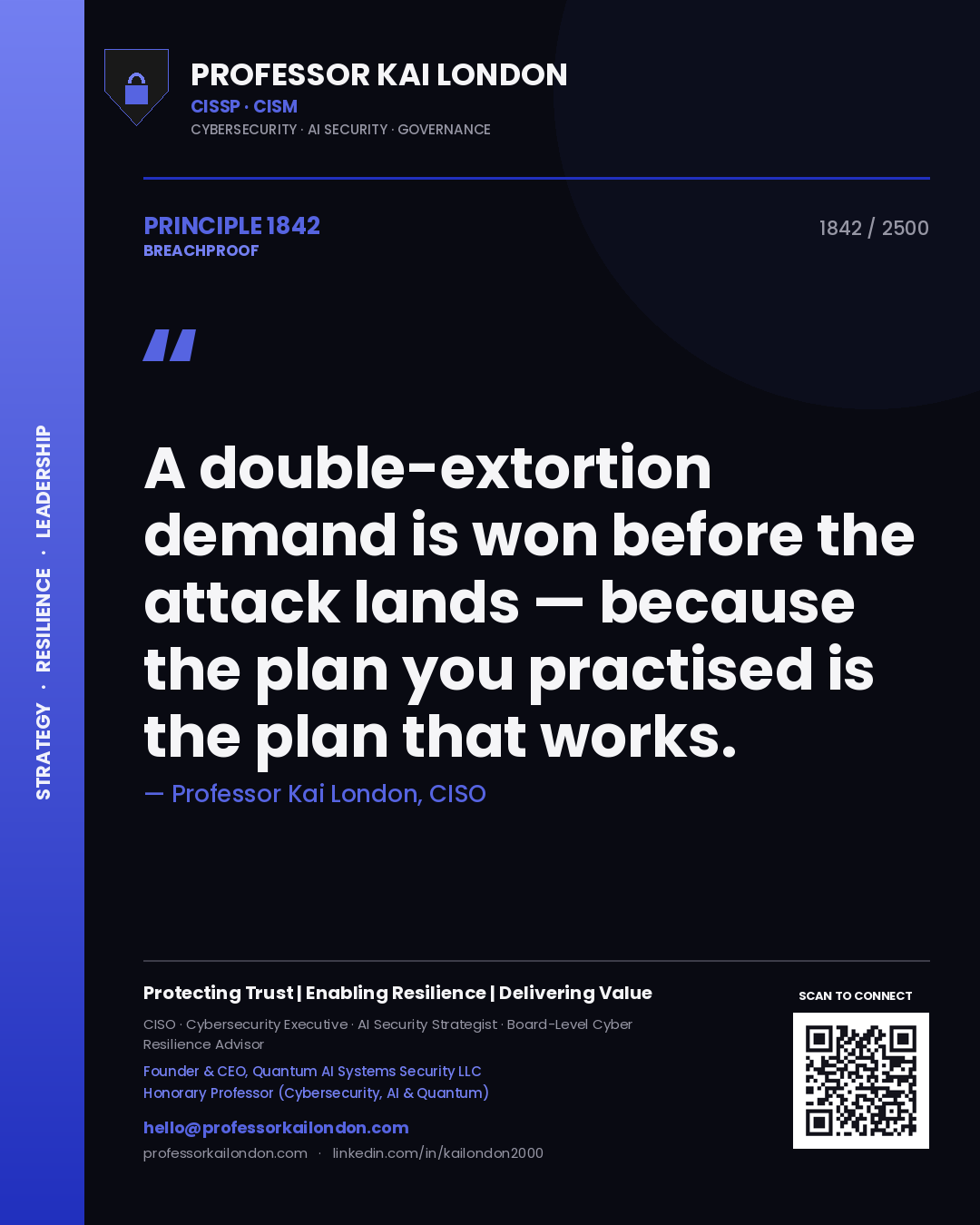
Professor Kai London principle 1842: A double-extortion demand is won before the attack lands — because the plan you practised is the plan that works.
Principle 1842
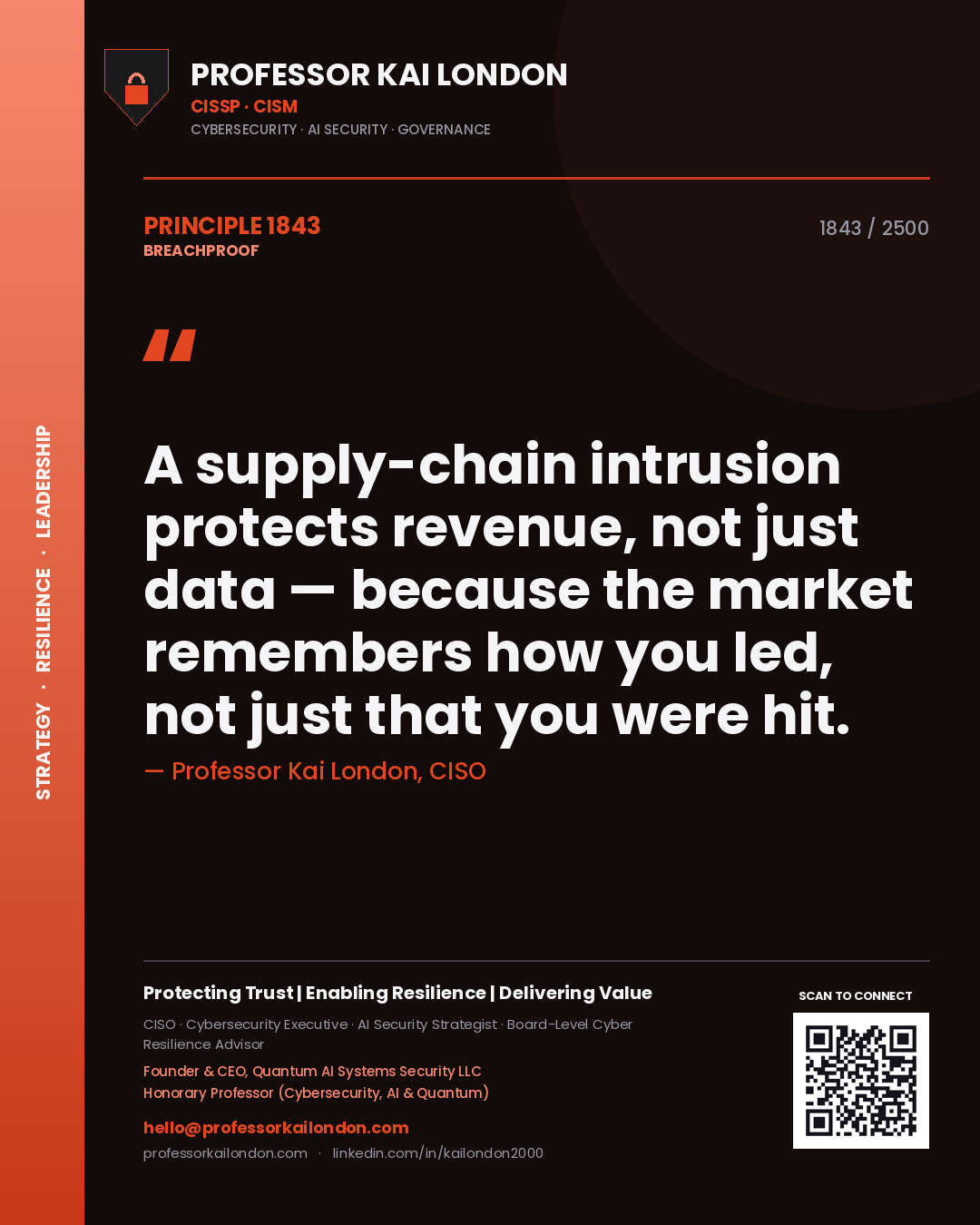
Professor Kai London principle 1843: A supply-chain intrusion protects revenue, not just data — because the market remembers how you led, not just that you were hit.
Principle 1843
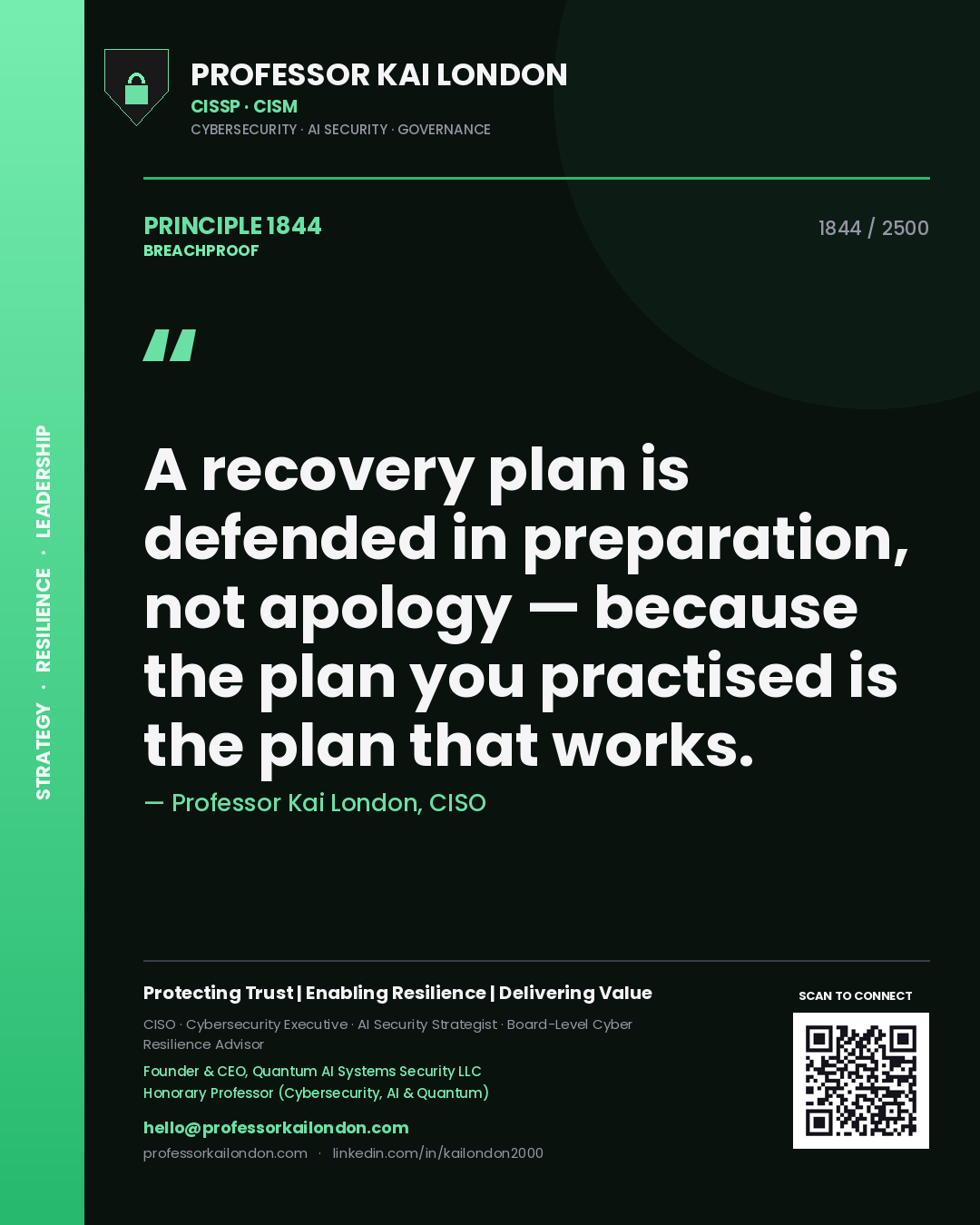
Professor Kai London principle 1844: A recovery plan is defended in preparation, not apology — because the plan you practised is the plan that works.
Principle 1844
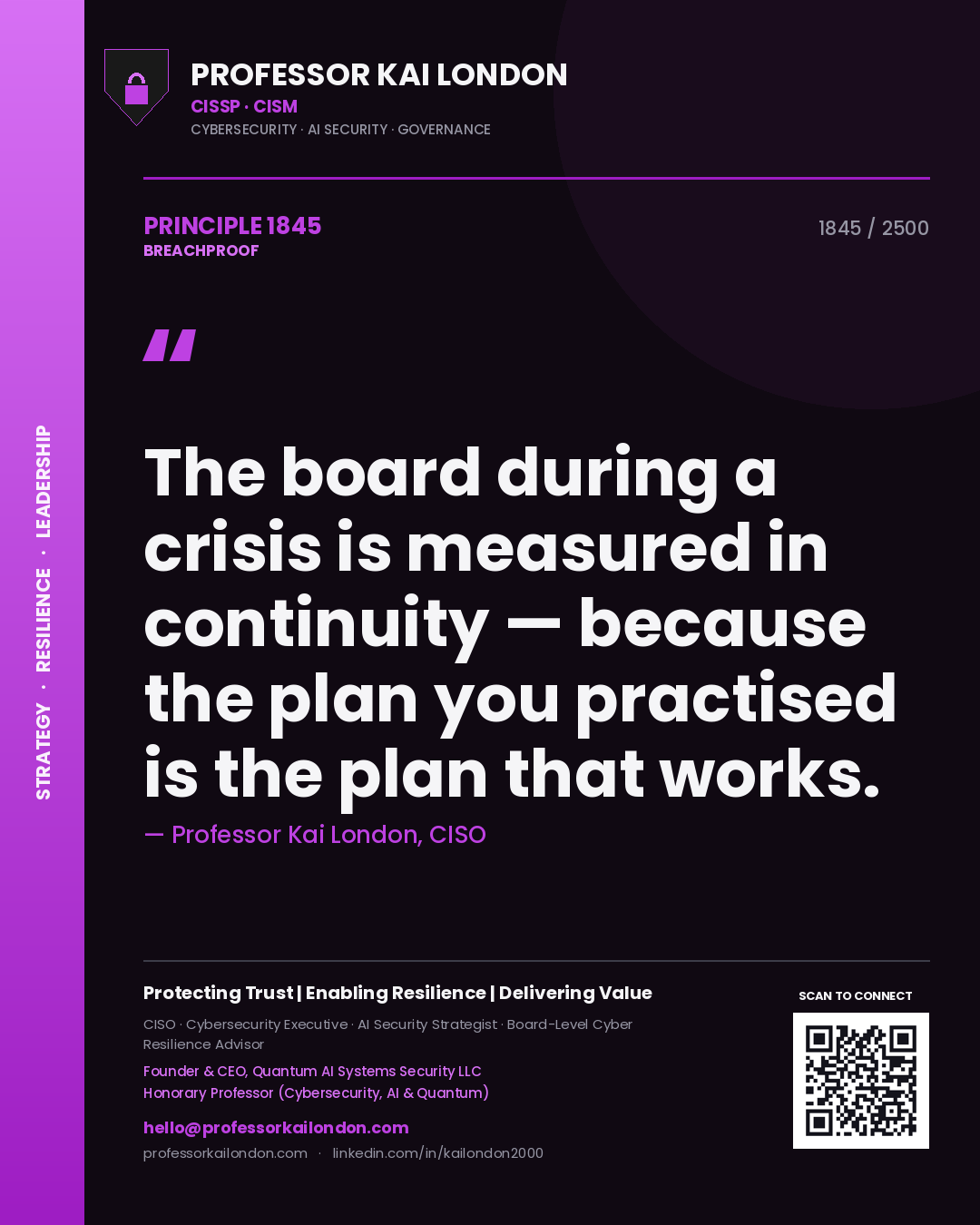
Professor Kai London principle 1845: The board during a crisis is measured in continuity — because the plan you practised is the plan that works.
Principle 1845
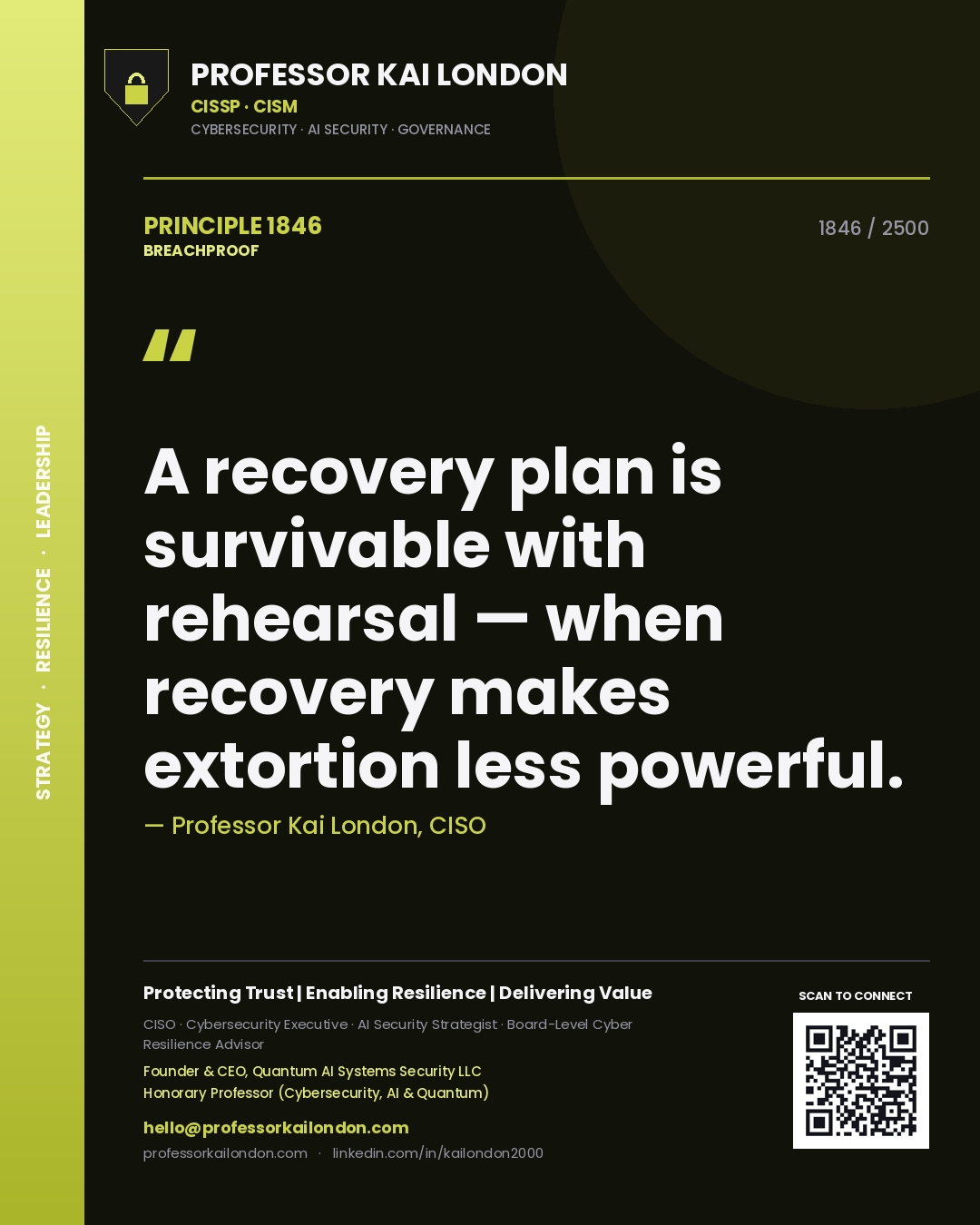
Professor Kai London principle 1846: A recovery plan is survivable with rehearsal — when recovery makes extortion less powerful.
Principle 1846
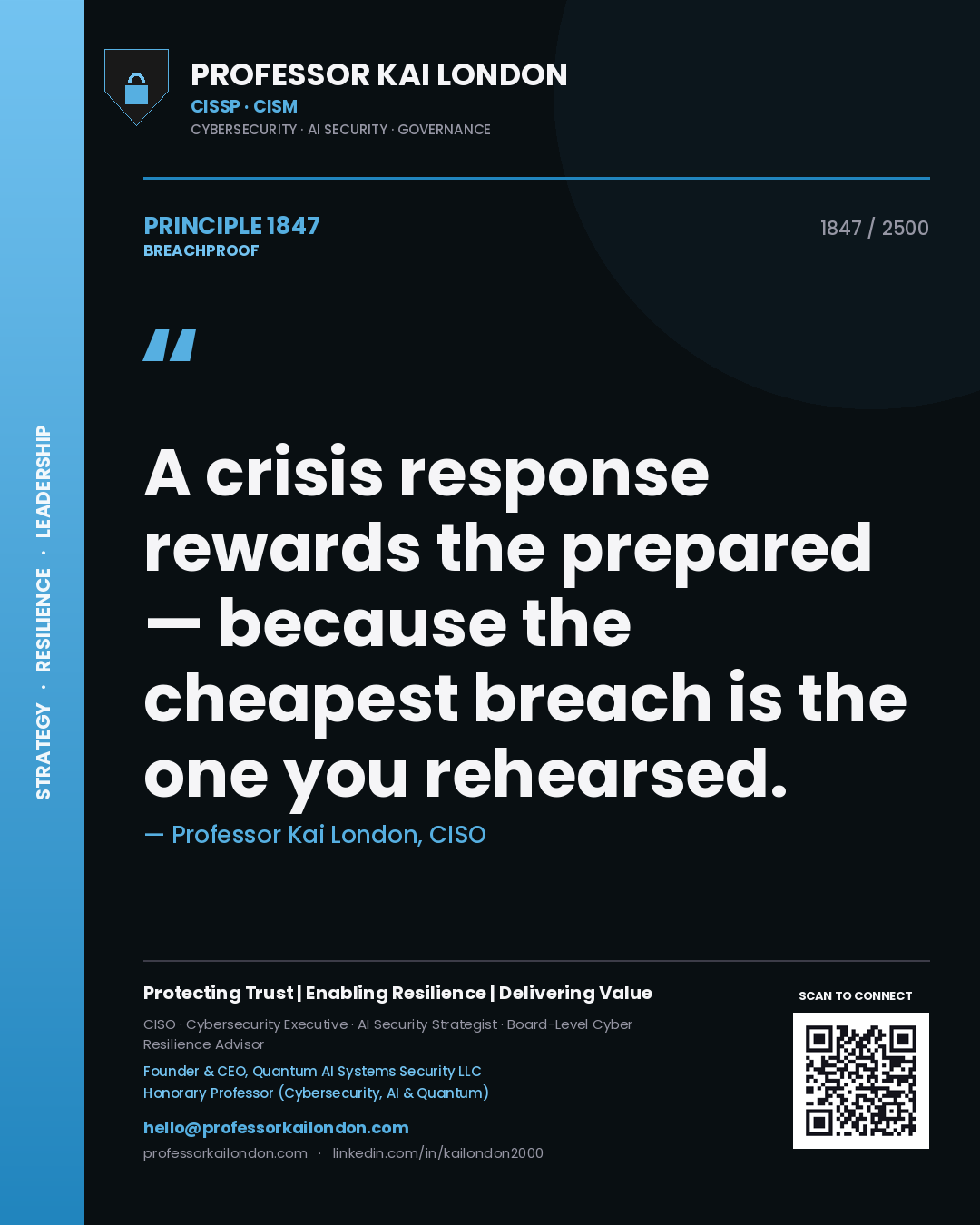
Professor Kai London principle 1847: A crisis response rewards the prepared — because the cheapest breach is the one you rehearsed.
Principle 1847
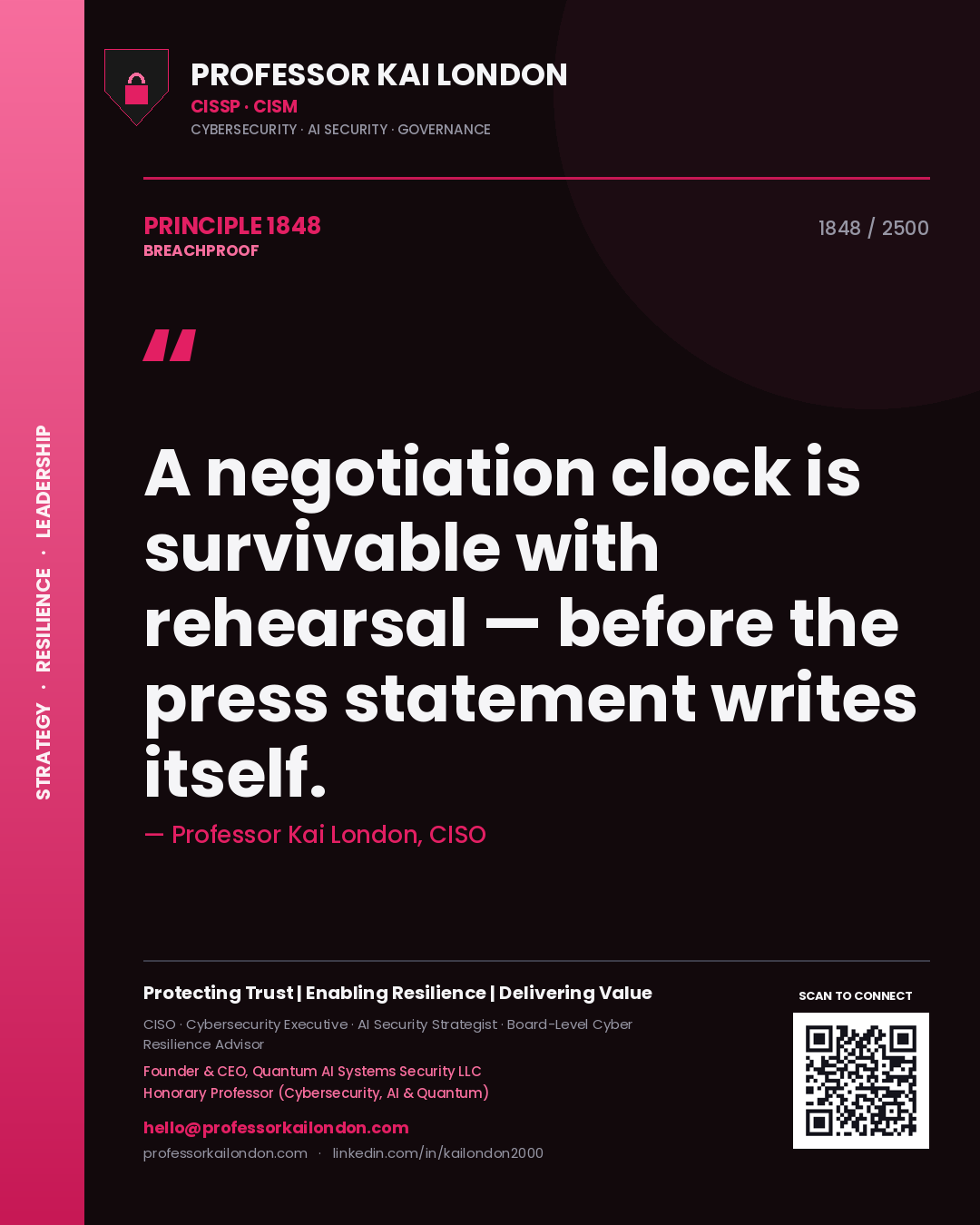
Professor Kai London principle 1848: A negotiation clock is survivable with rehearsal — before the press statement writes itself.
Principle 1848
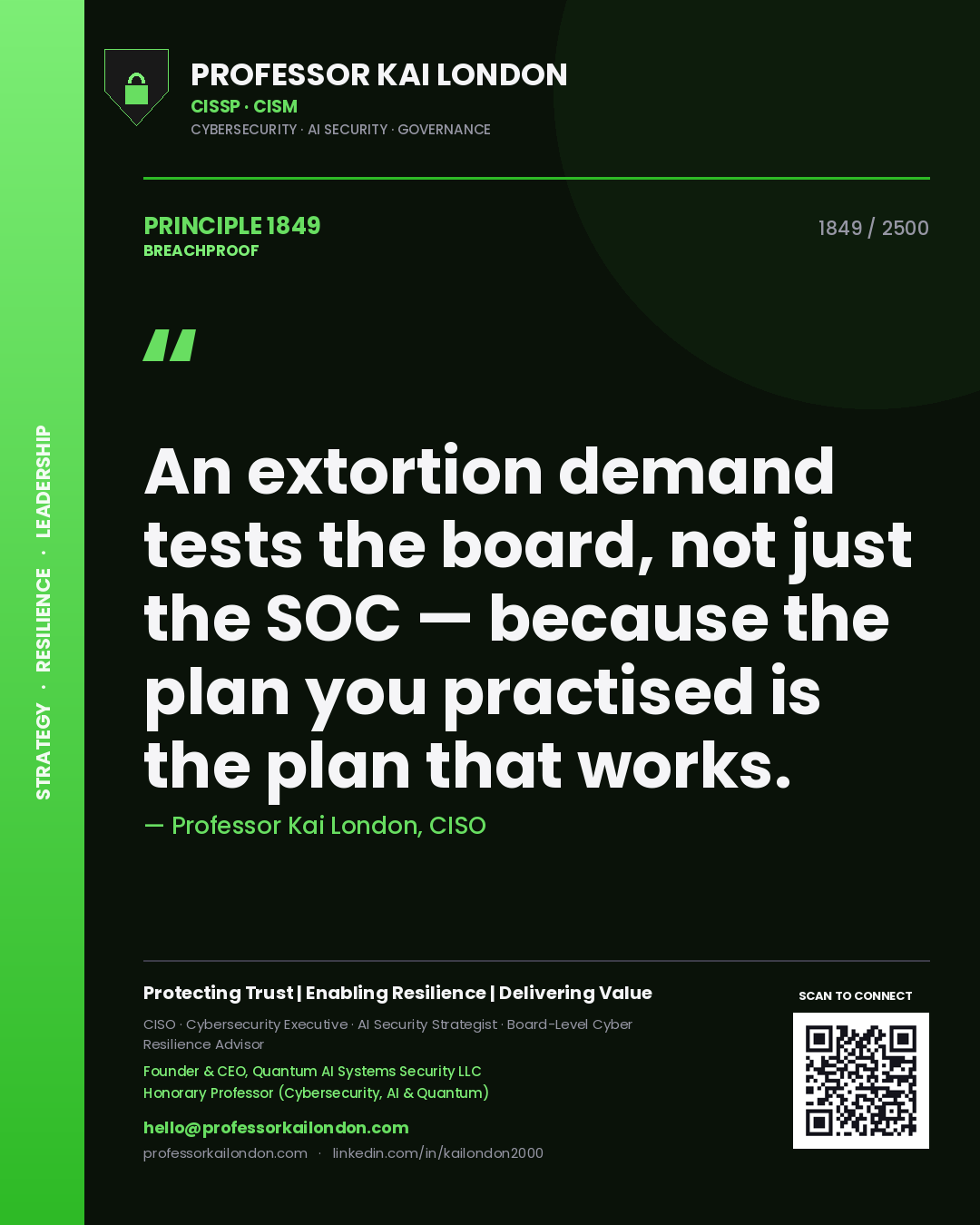
Professor Kai London principle 1849: An extortion demand tests the board, not just the SOC — because the plan you practised is the plan that works.
Principle 1849
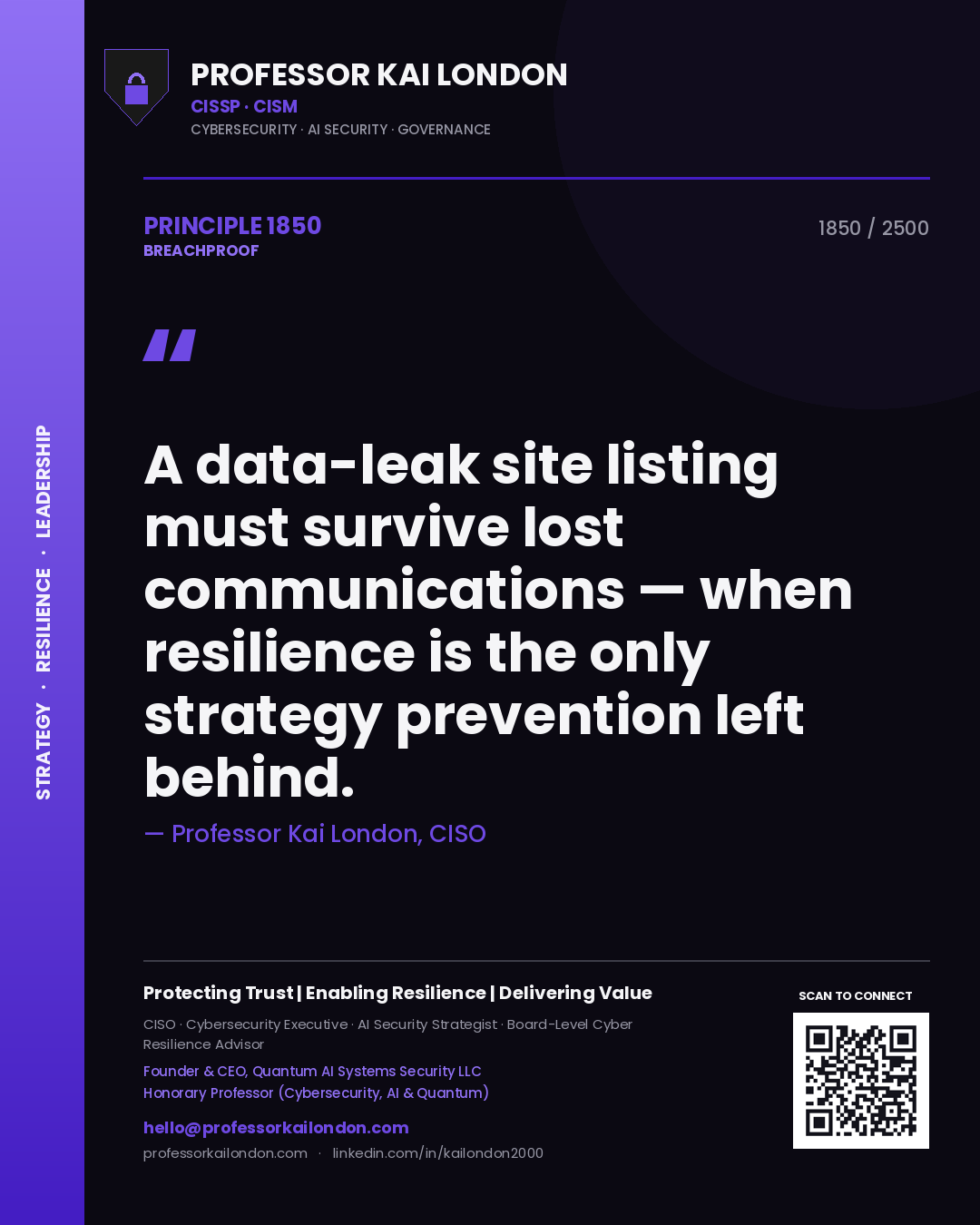
Professor Kai London principle 1850: A data-leak site listing must survive lost communications — when resilience is the only strategy prevention left behind.
Principle 1850
Professor Kai London principle 1851: A double-extortion demand is a leadership test disguised as a technical one — when recovery is faster than the news cycle.
Principle 1851
Professor Kai London principle 1852: A negotiation clock punishes the improvised — because trust is defended in the preparation, not the apology.
Principle 1852
Professor Kai London principle 1853: A data-leak site listing protects revenue, not just data — when leadership is calm, factual, and evidence-led.
Principle 1853
Professor Kai London principle 1854: A recovery plan punishes the improvised — when recovery makes extortion less powerful.
Principle 1854
Professor Kai London principle 1855: A deepfake CEO call punishes the improvised — because the market remembers how you led, not just that you were hit.
Principle 1855
Professor Kai London principle 1856: The board during a crisis tests the board, not just the SOC — before the press statement writes itself.
Principle 1856
Professor Kai London principle 1857: A supply-chain intrusion decides who survives the next cyber war — when recovery makes extortion less powerful.
Principle 1857
Professor Kai London principle 1858: A crisis response punishes the improvised.
Principle 1858
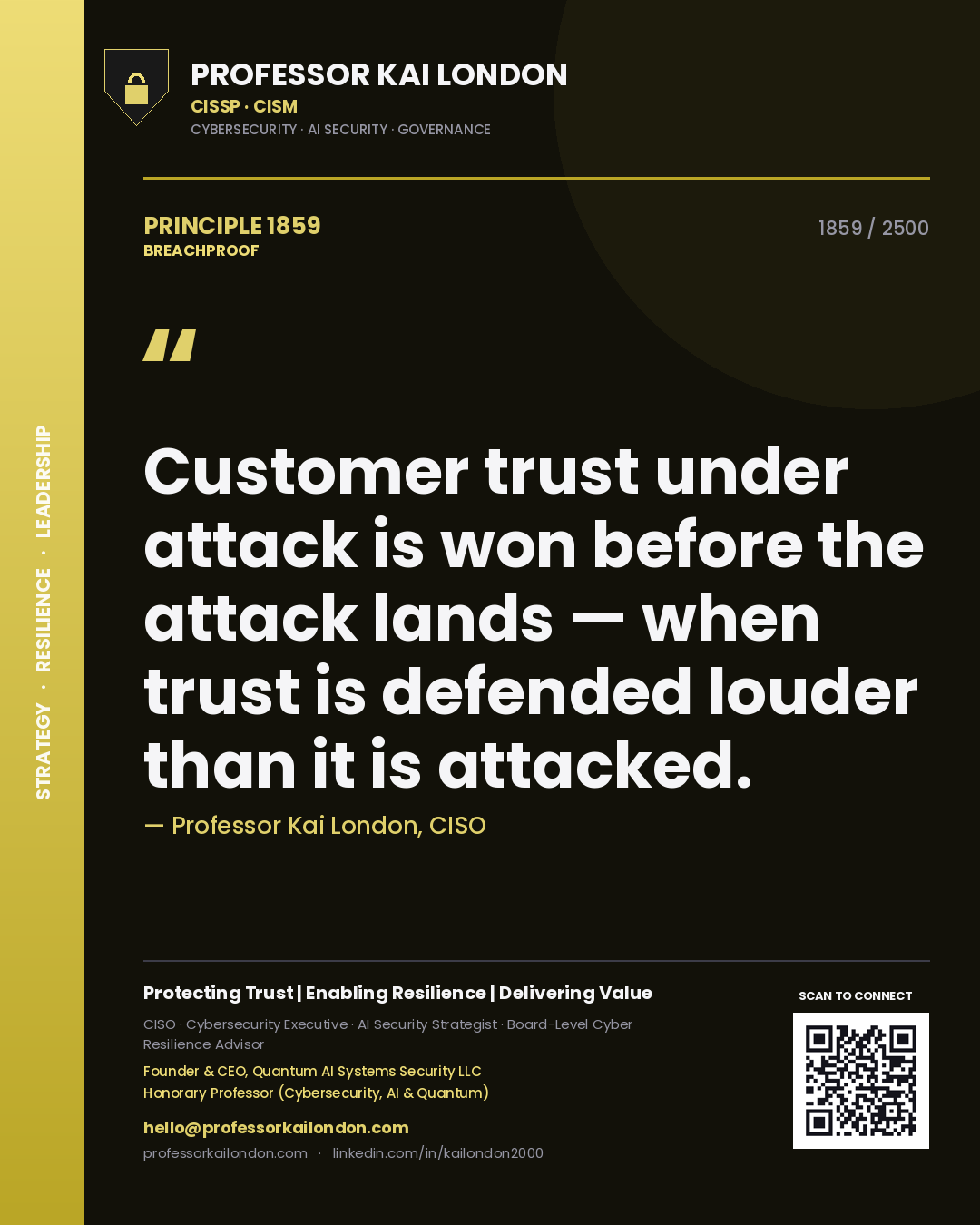
Professor Kai London principle 1859: Customer trust under attack is won before the attack lands — when trust is defended louder than it is attacked.
Principle 1859
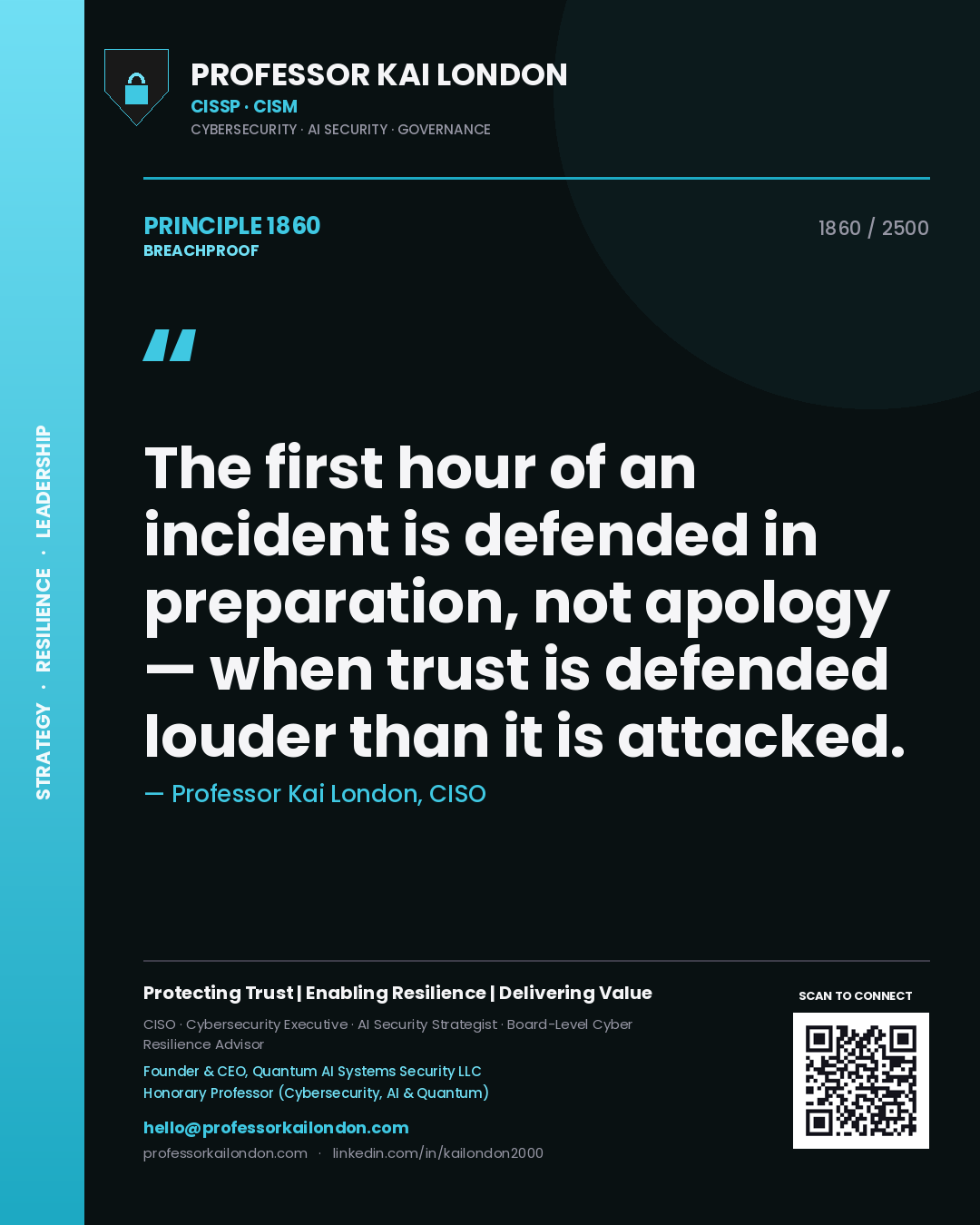
Professor Kai London principle 1860: The first hour of an incident is defended in preparation, not apology — when trust is defended louder than it is attacked.
Principle 1860
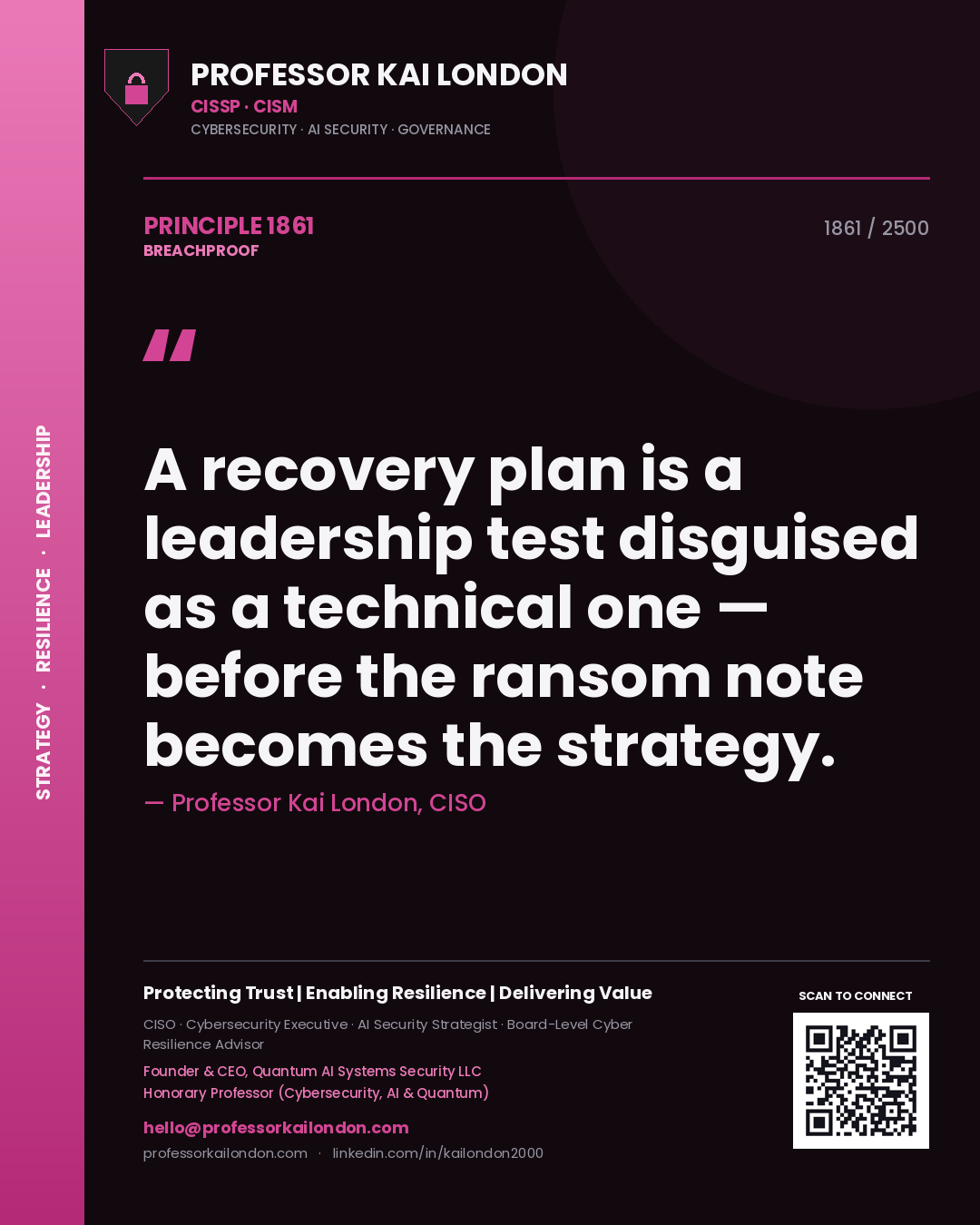
Professor Kai London principle 1861: A recovery plan is a leadership test disguised as a technical one — before the ransom note becomes the strategy.
Principle 1861
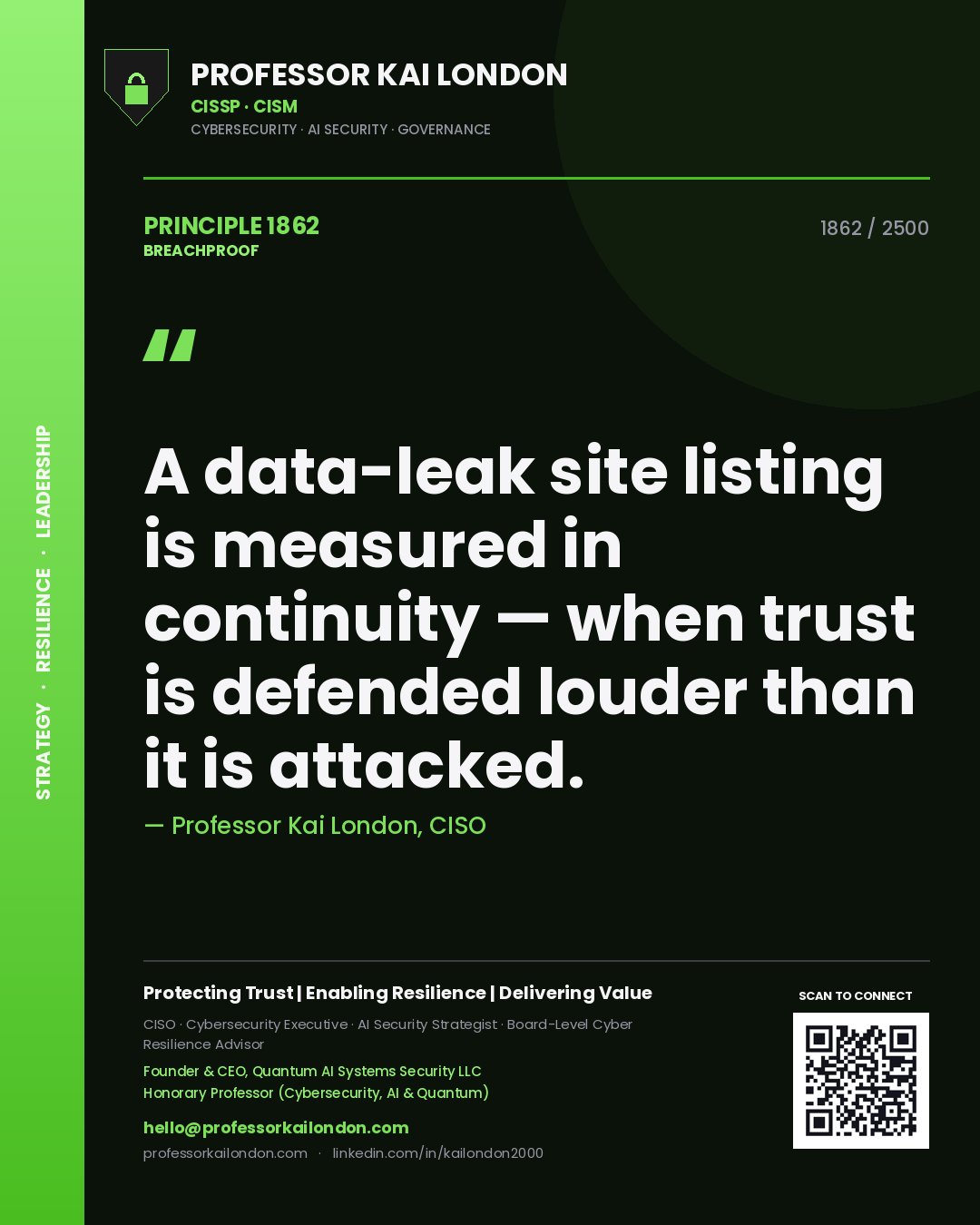
Professor Kai London principle 1862: A data-leak site listing is measured in continuity — when trust is defended louder than it is attacked.
Principle 1862
Professor Kai London principle 1863: A supply-chain intrusion turns panic into a checklist — the moment the attacker meets a business that refuses to break.
Principle 1863
Professor Kai London principle 1864: A supply-chain intrusion punishes the improvised — because the plan you practised is the plan that works.
Principle 1864
Professor Kai London principle 1865: A deepfake CEO call turns panic into a checklist — before the press statement writes itself.
Principle 1865
Professor Kai London principle 1866: A wiper attack is defended in preparation, not apology — before the ransom note becomes the strategy.
Principle 1866
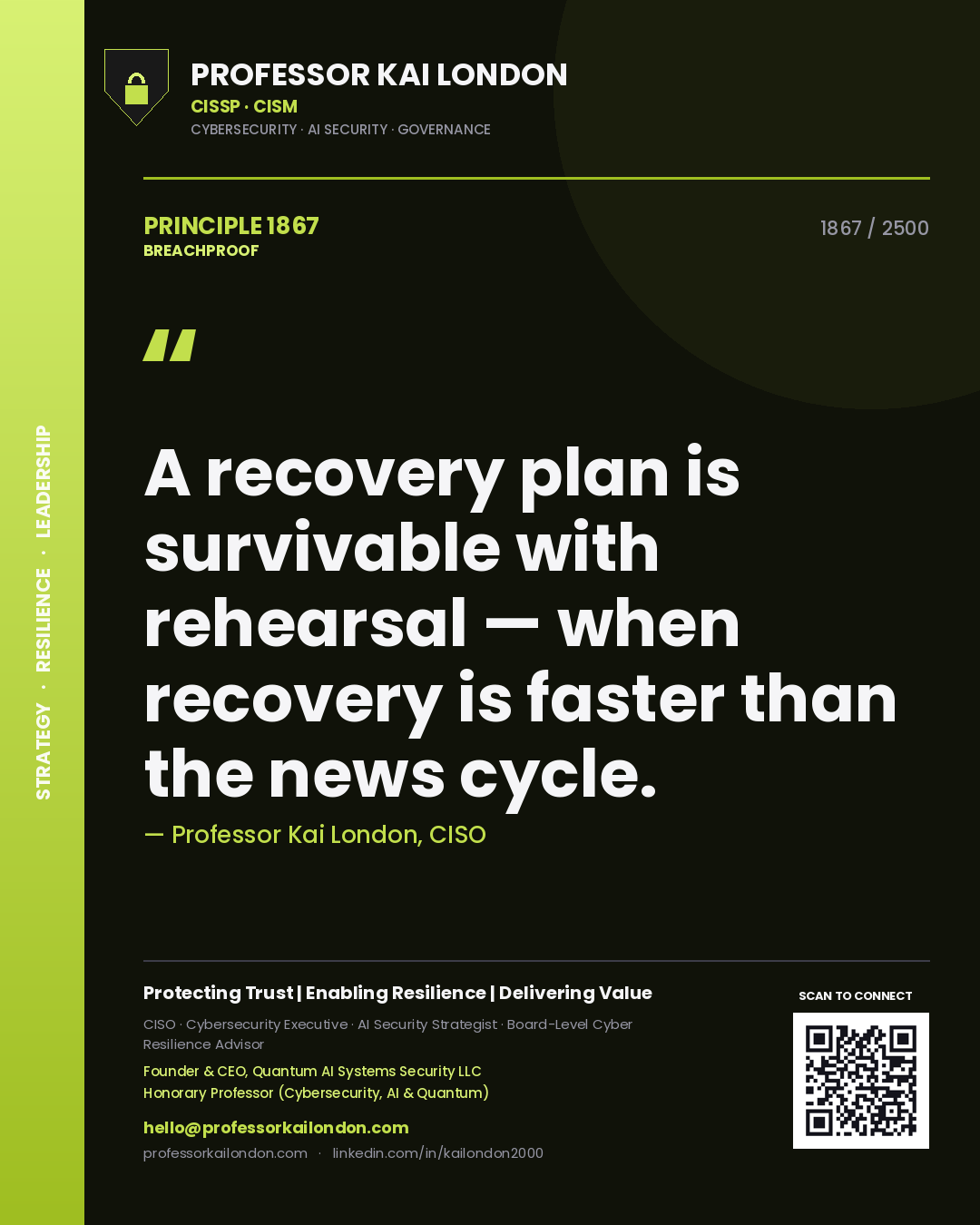
Professor Kai London principle 1867: A recovery plan is survivable with rehearsal — when recovery is faster than the news cycle.
Principle 1867
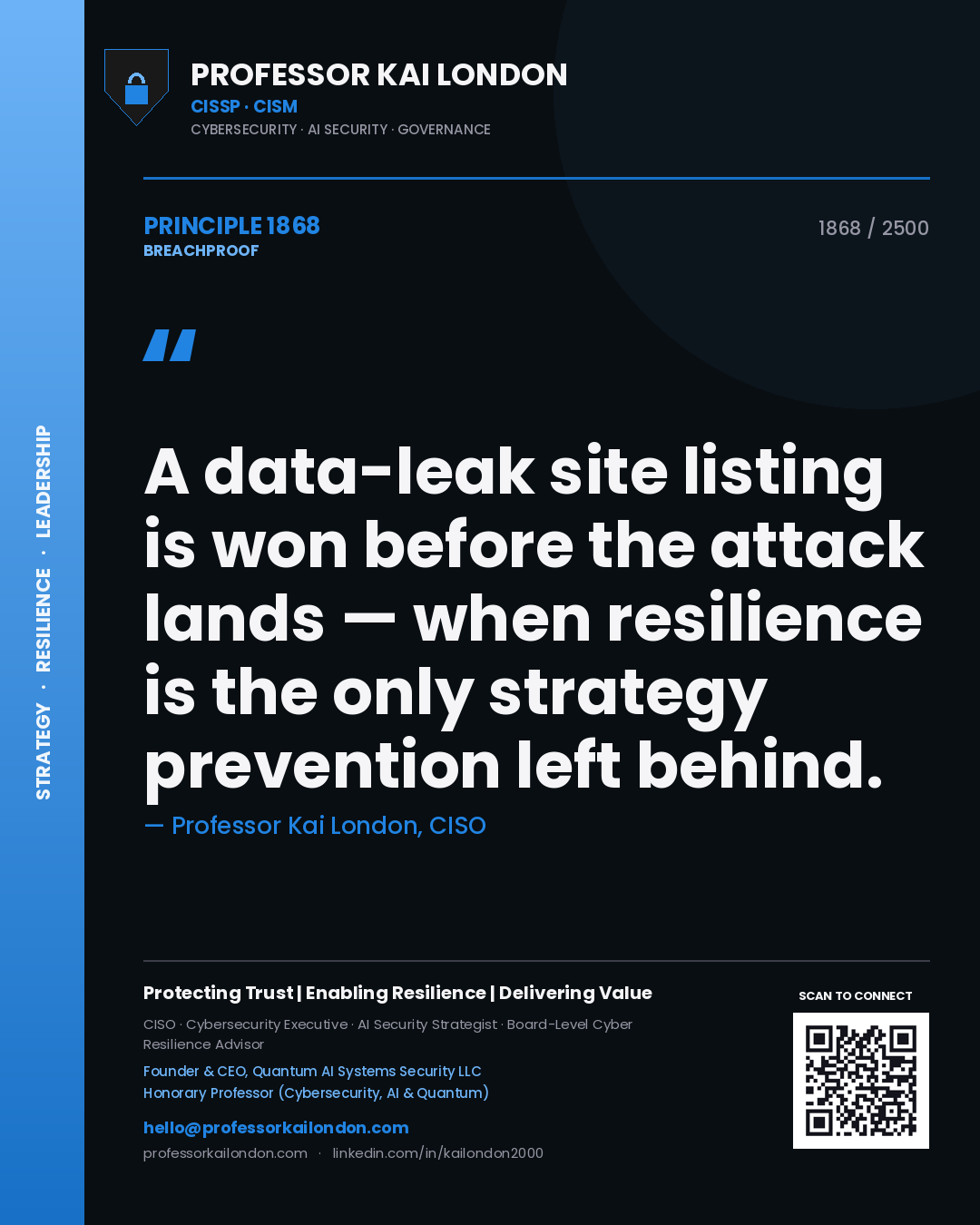
Professor Kai London principle 1868: A data-leak site listing is won before the attack lands — when resilience is the only strategy prevention left behind.
Principle 1868
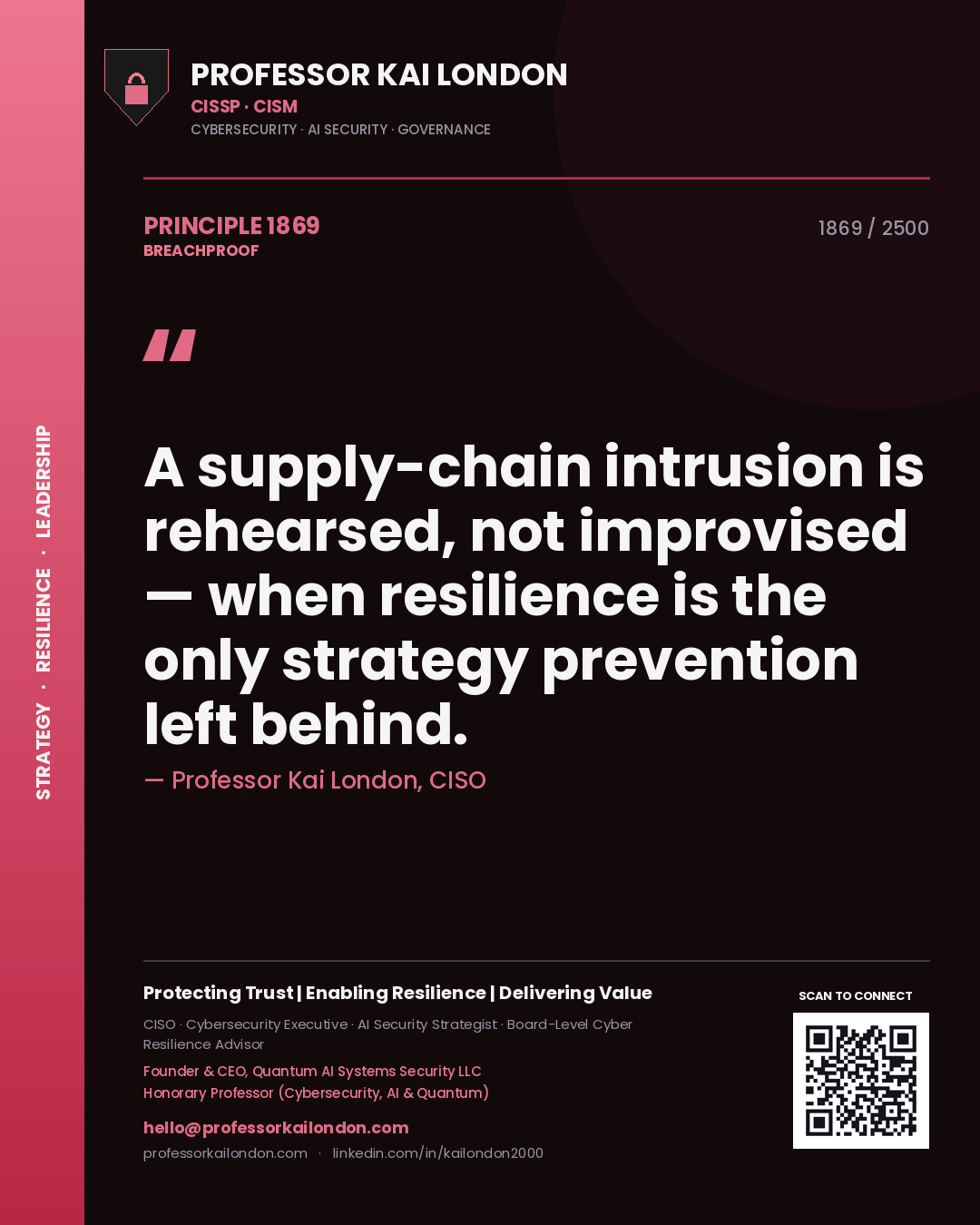
Professor Kai London principle 1869: A supply-chain intrusion is rehearsed, not improvised — when resilience is the only strategy prevention left behind.
Principle 1869
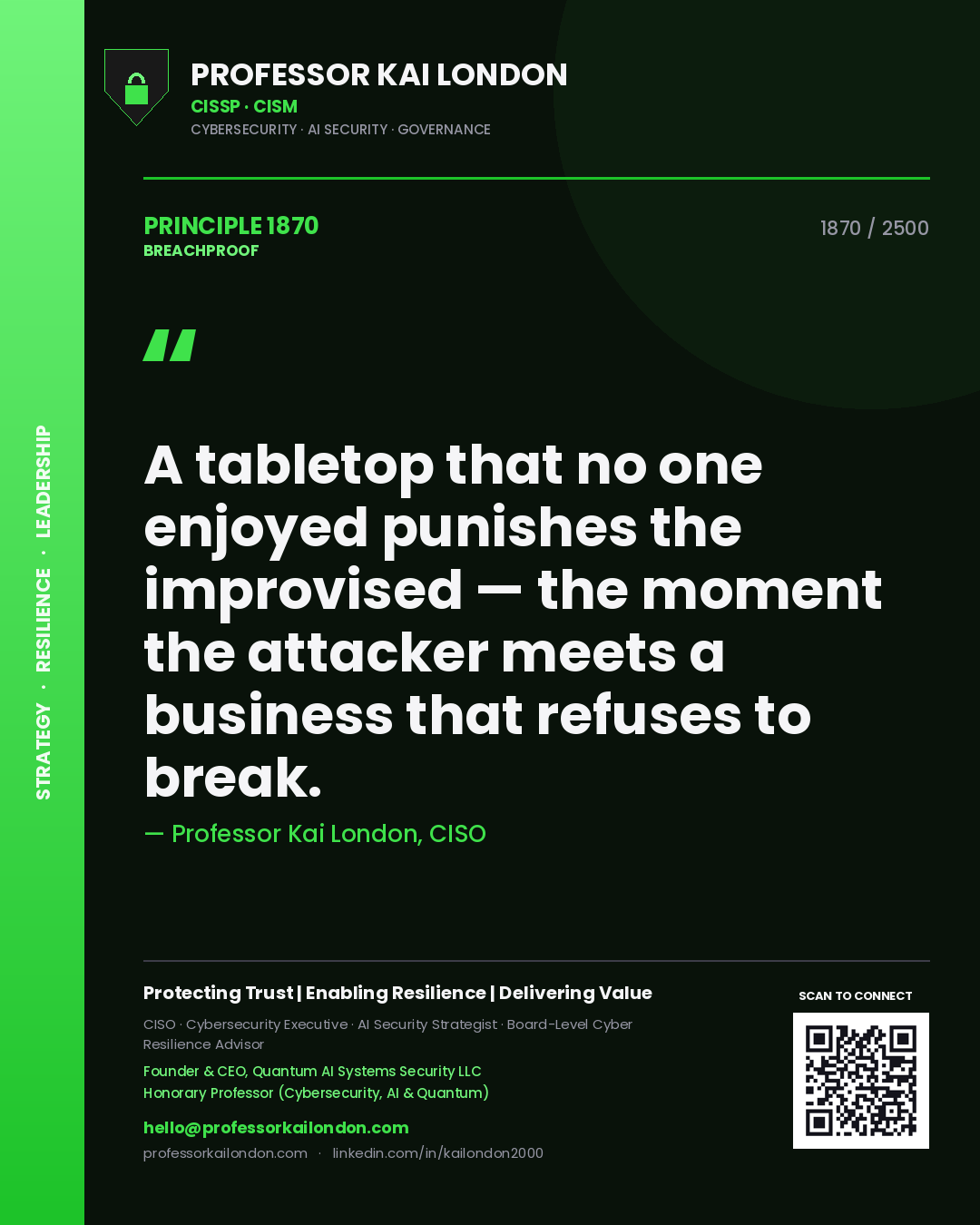
Professor Kai London principle 1870: A tabletop that no one enjoyed punishes the improvised — the moment the attacker meets a business that refuses to break.
Principle 1870
Professor Kai London principle 1871: A data-leak site listing must survive lost communications — when recovery is faster than the news cycle.
Principle 1871
Professor Kai London principle 1872: A deepfake CEO call is defended in preparation, not apology — because trust is defended in the preparation, not the apology.
Principle 1872
Professor Kai London principle 1873: A wiper attack is cheapest when it was practised — when leadership is calm, factual, and evidence-led.
Principle 1873
Professor Kai London principle 1874: A breach punishes the improvised — the moment the attacker meets a business that refuses to break.
Principle 1874
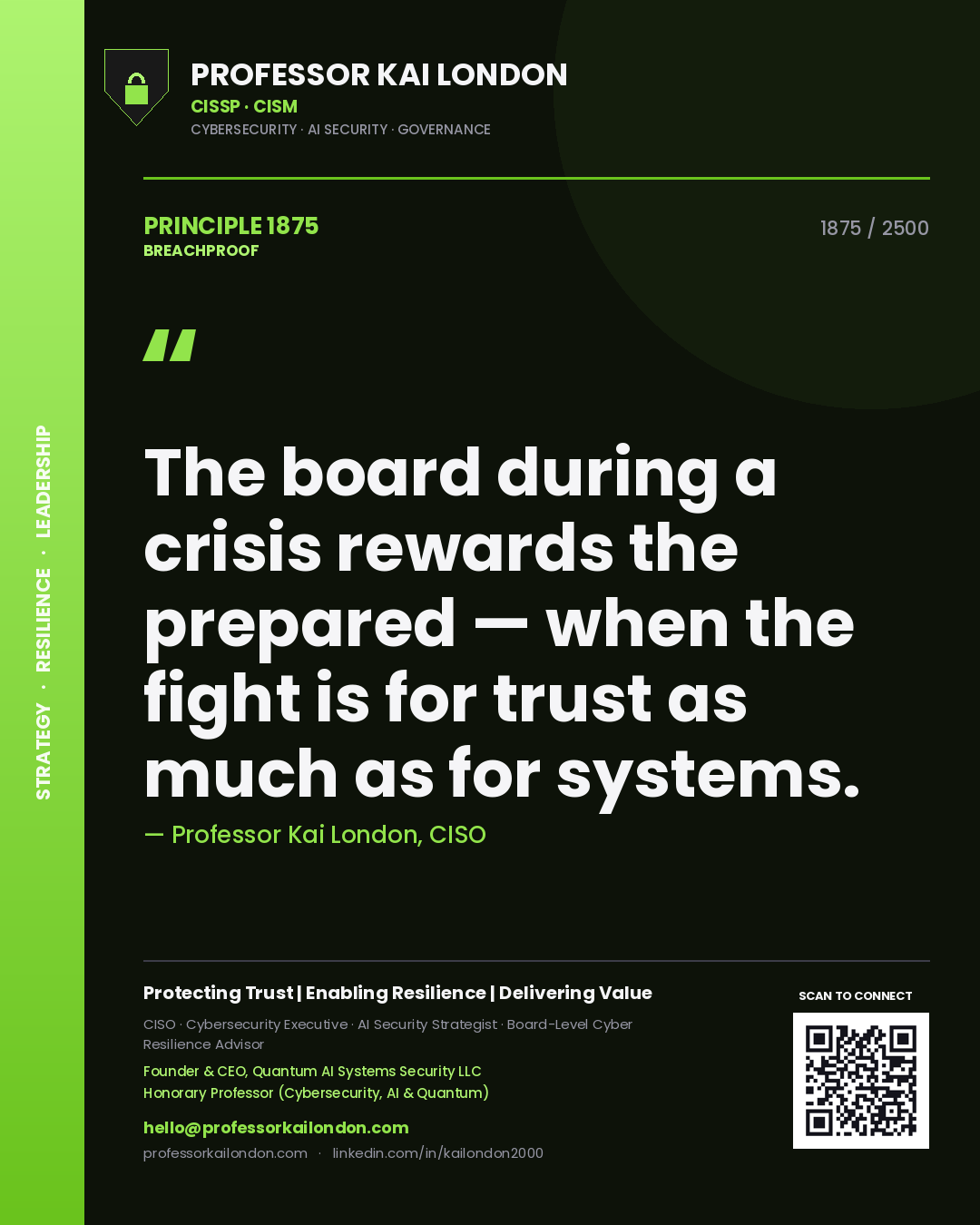
Professor Kai London principle 1875: The board during a crisis rewards the prepared — when the fight is for trust as much as for systems.
Principle 1875
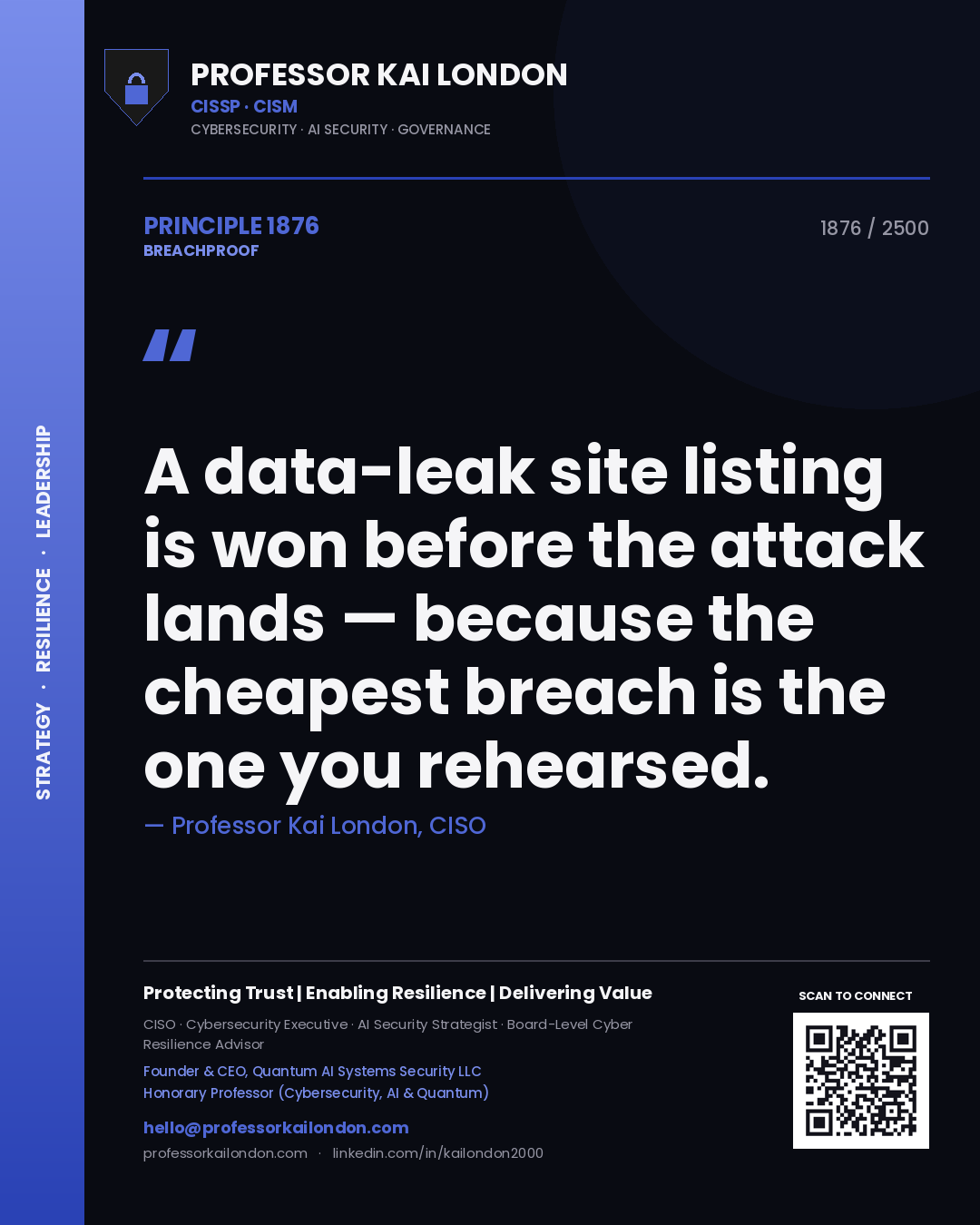
Professor Kai London principle 1876: A data-leak site listing is won before the attack lands — because the cheapest breach is the one you rehearsed.
Principle 1876
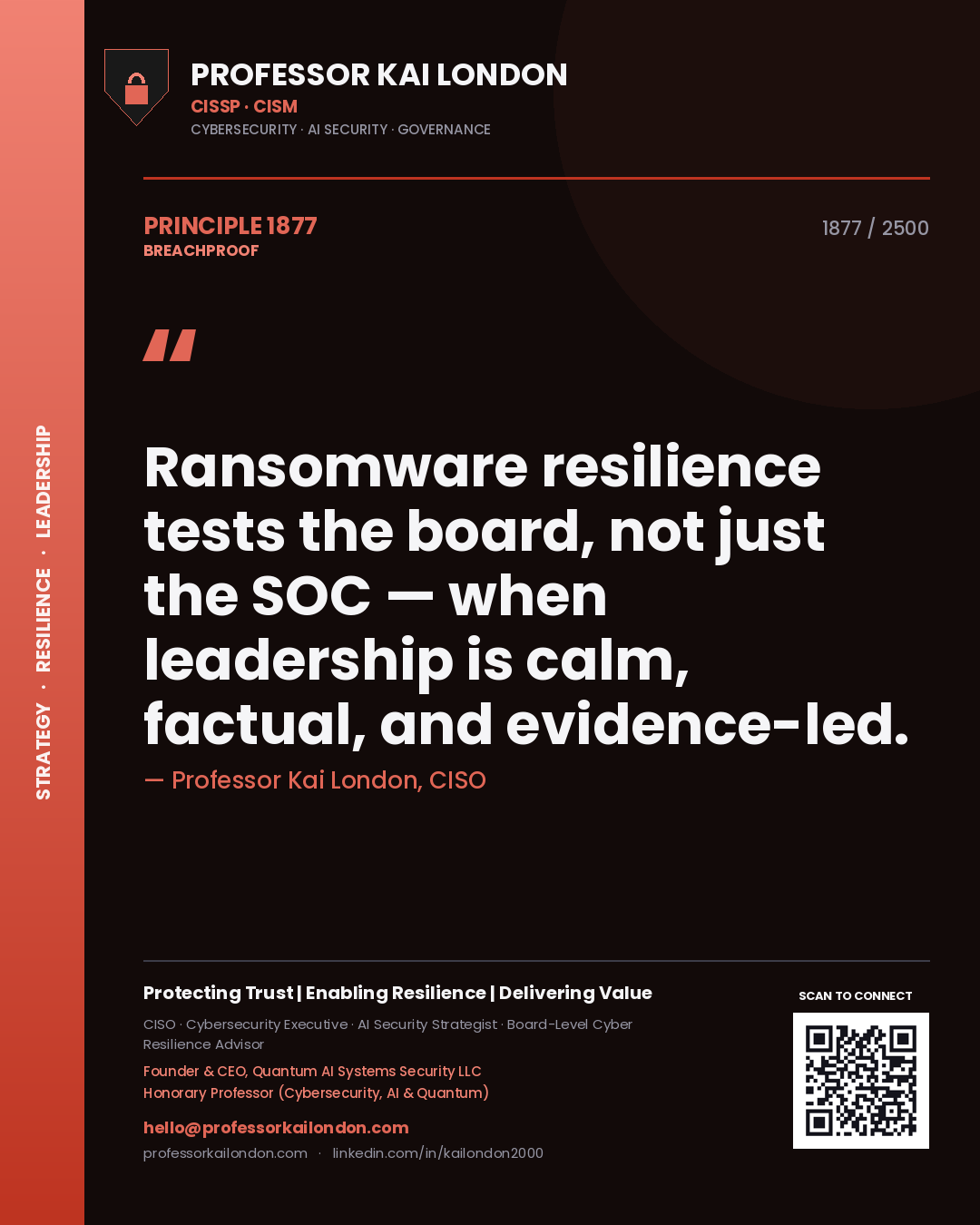
Professor Kai London principle 1877: Ransomware resilience tests the board, not just the SOC — when leadership is calm, factual, and evidence-led.
Principle 1877
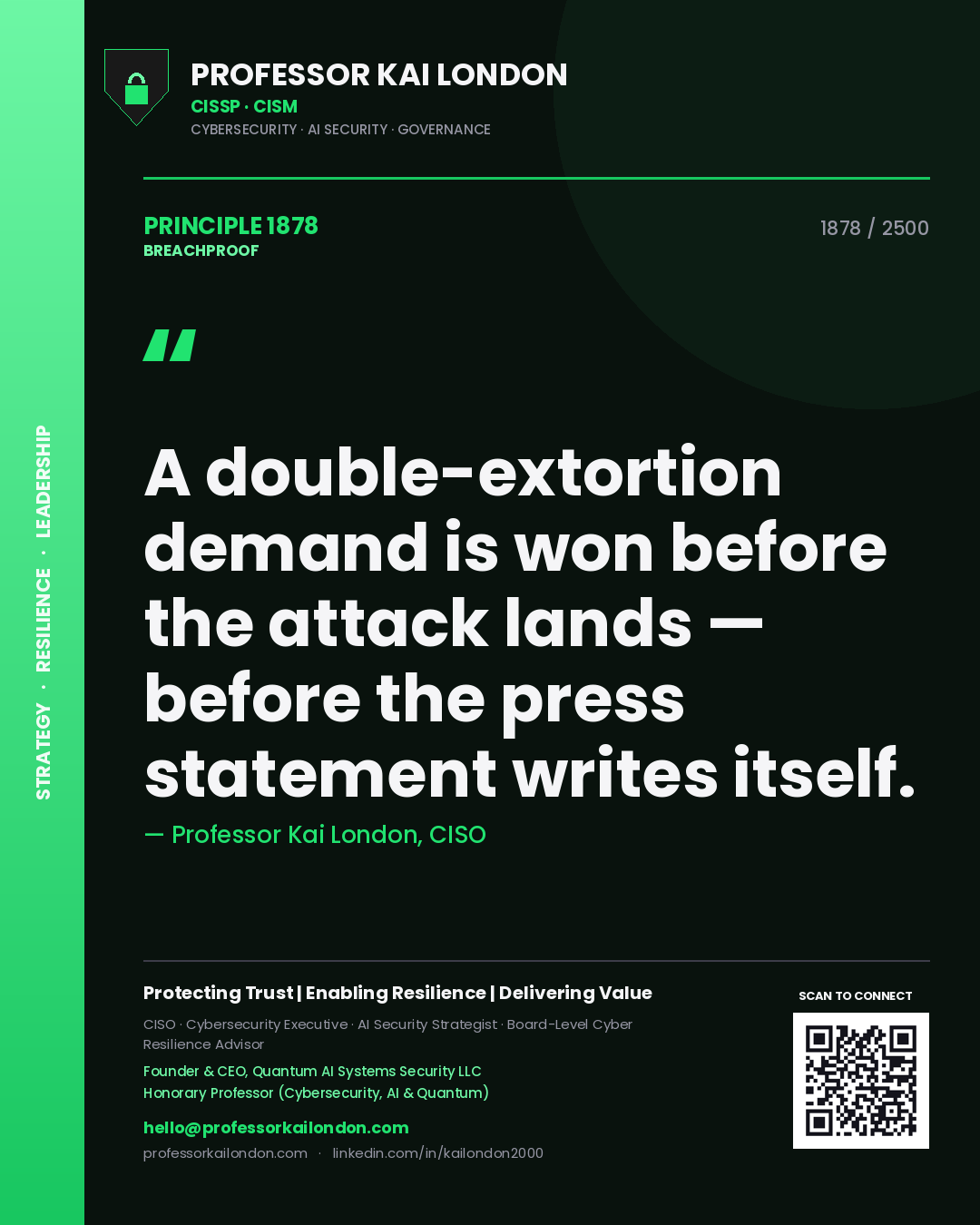
Professor Kai London principle 1878: A double-extortion demand is won before the attack lands — before the press statement writes itself.
Principle 1878
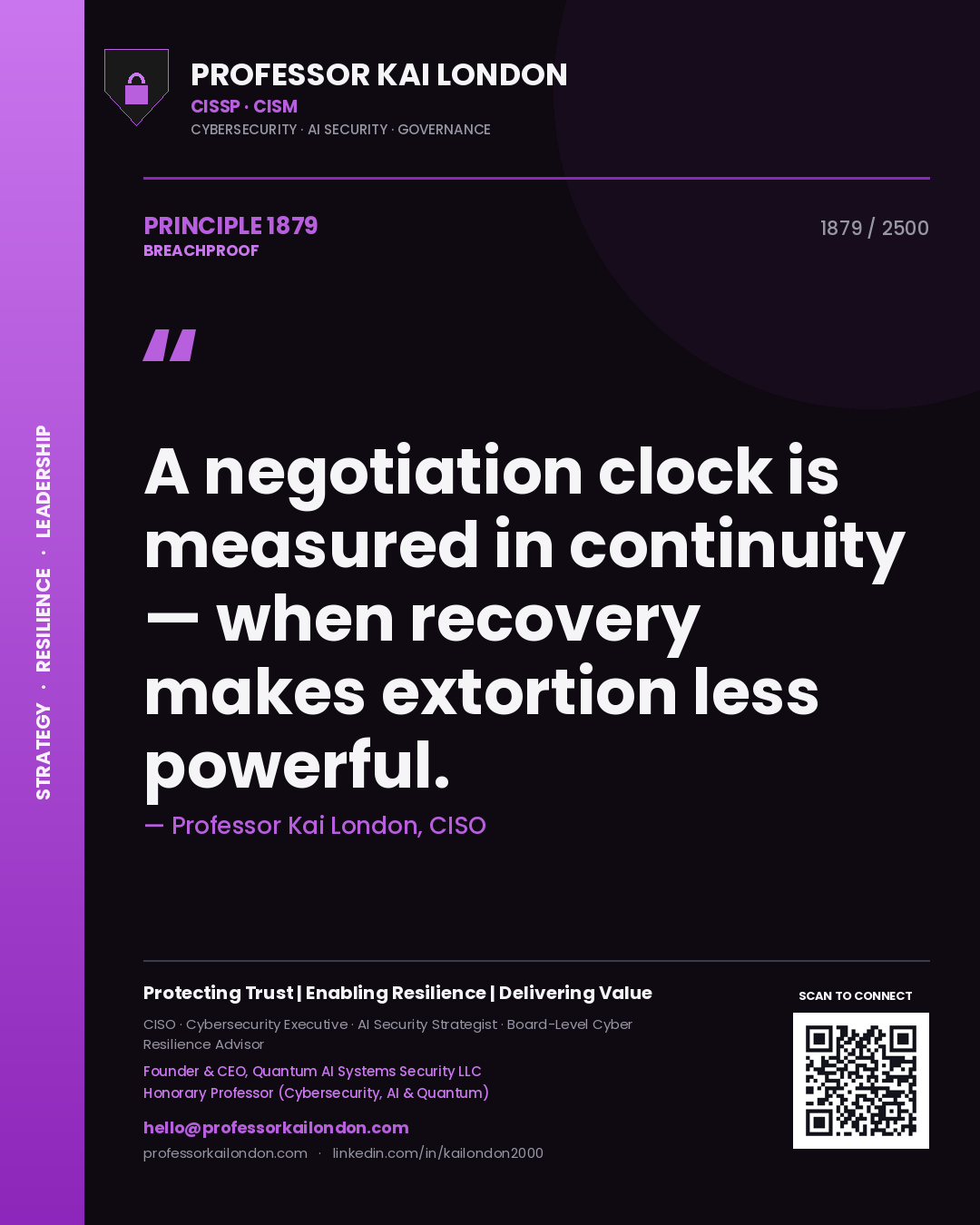
Professor Kai London principle 1879: A negotiation clock is measured in continuity — when recovery makes extortion less powerful.
Principle 1879
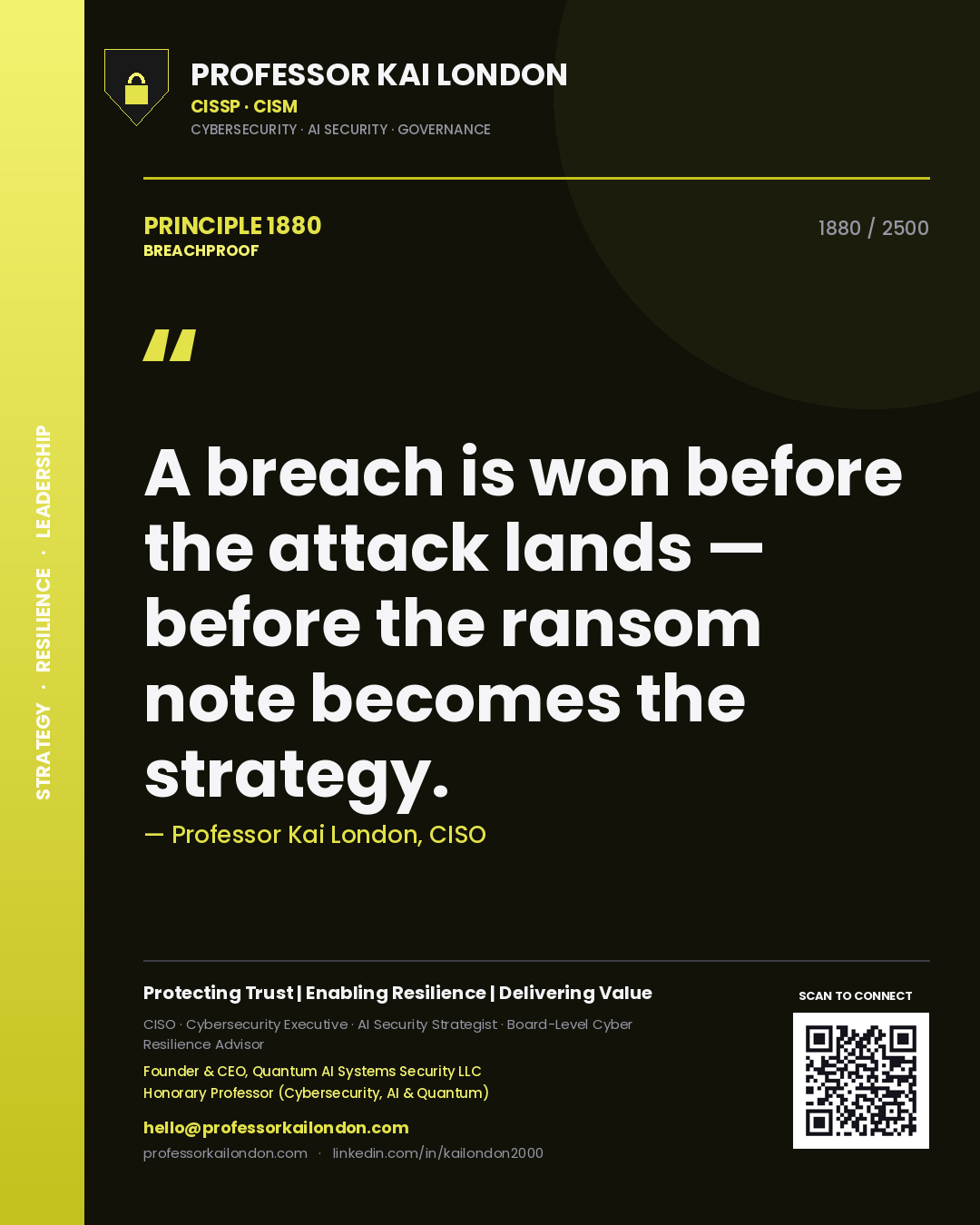
Professor Kai London principle 1880: A breach is won before the attack lands — before the ransom note becomes the strategy.
Principle 1880
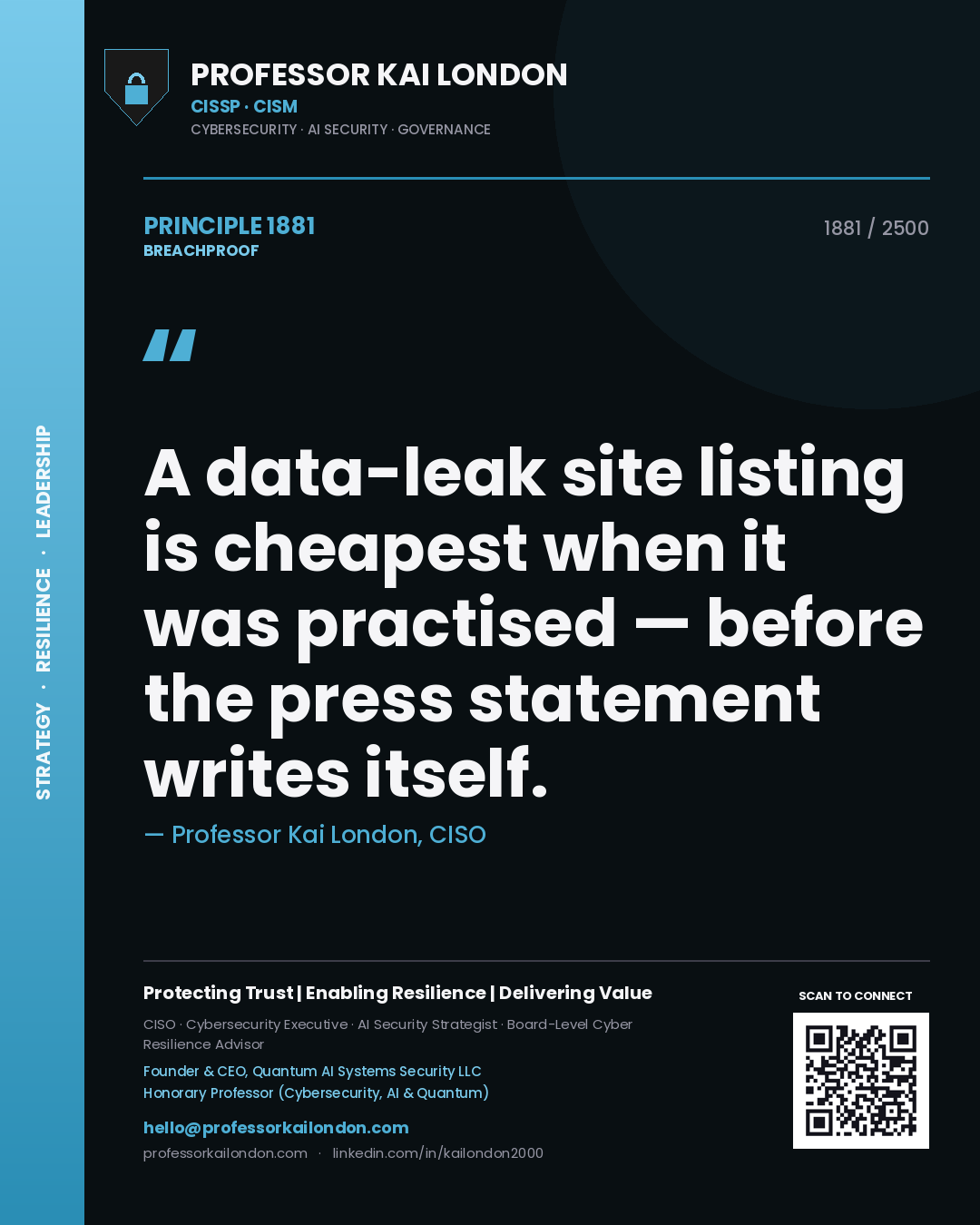
Professor Kai London principle 1881: A data-leak site listing is cheapest when it was practised — before the press statement writes itself.
Principle 1881
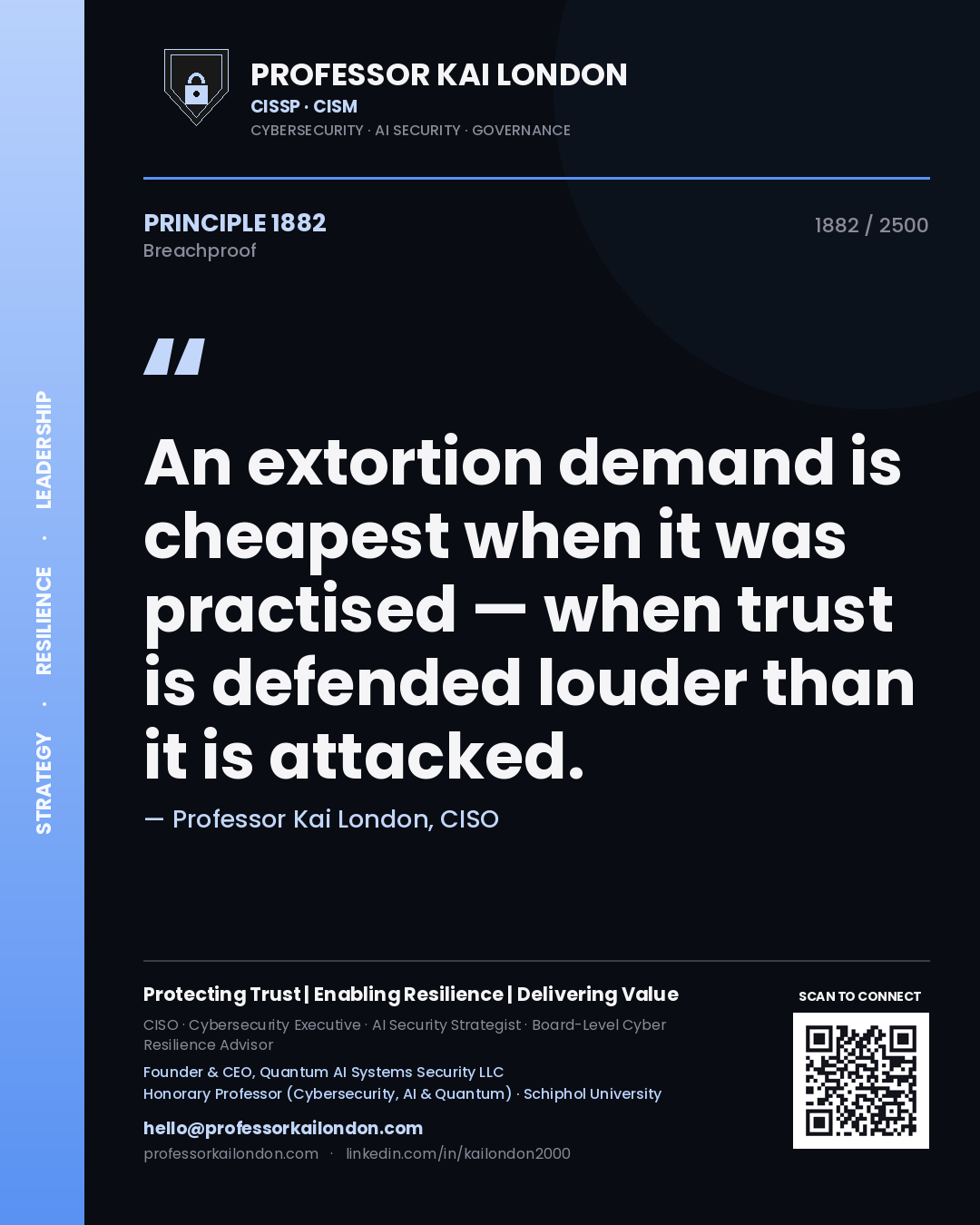
Professor Kai London principle 1882: An extortion demand is cheapest when it was practised — when trust is defended louder than it is attacked.
Principle 1882
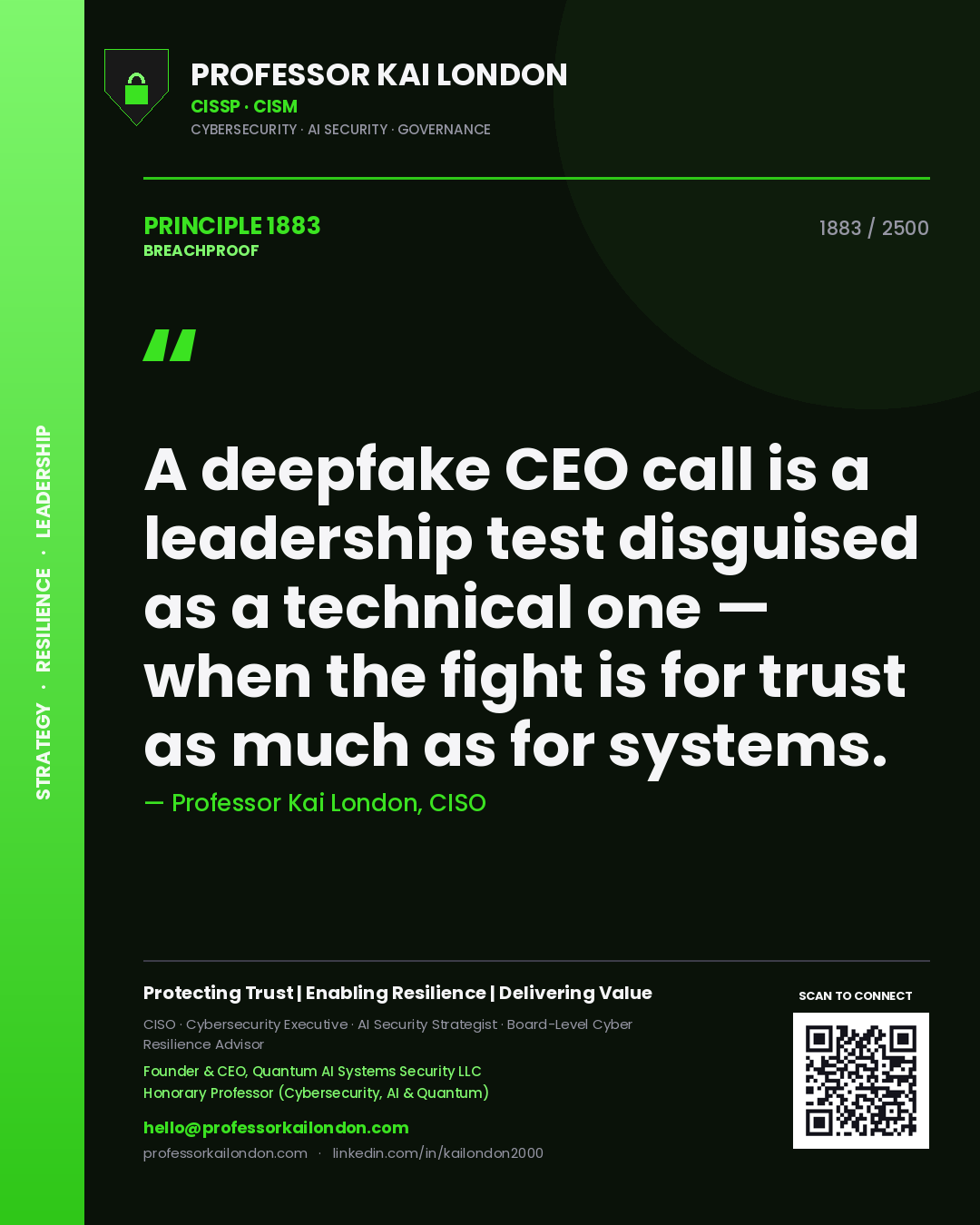
Professor Kai London principle 1883: A deepfake CEO call is a leadership test disguised as a technical one — when the fight is for trust as much as for systems.
Principle 1883
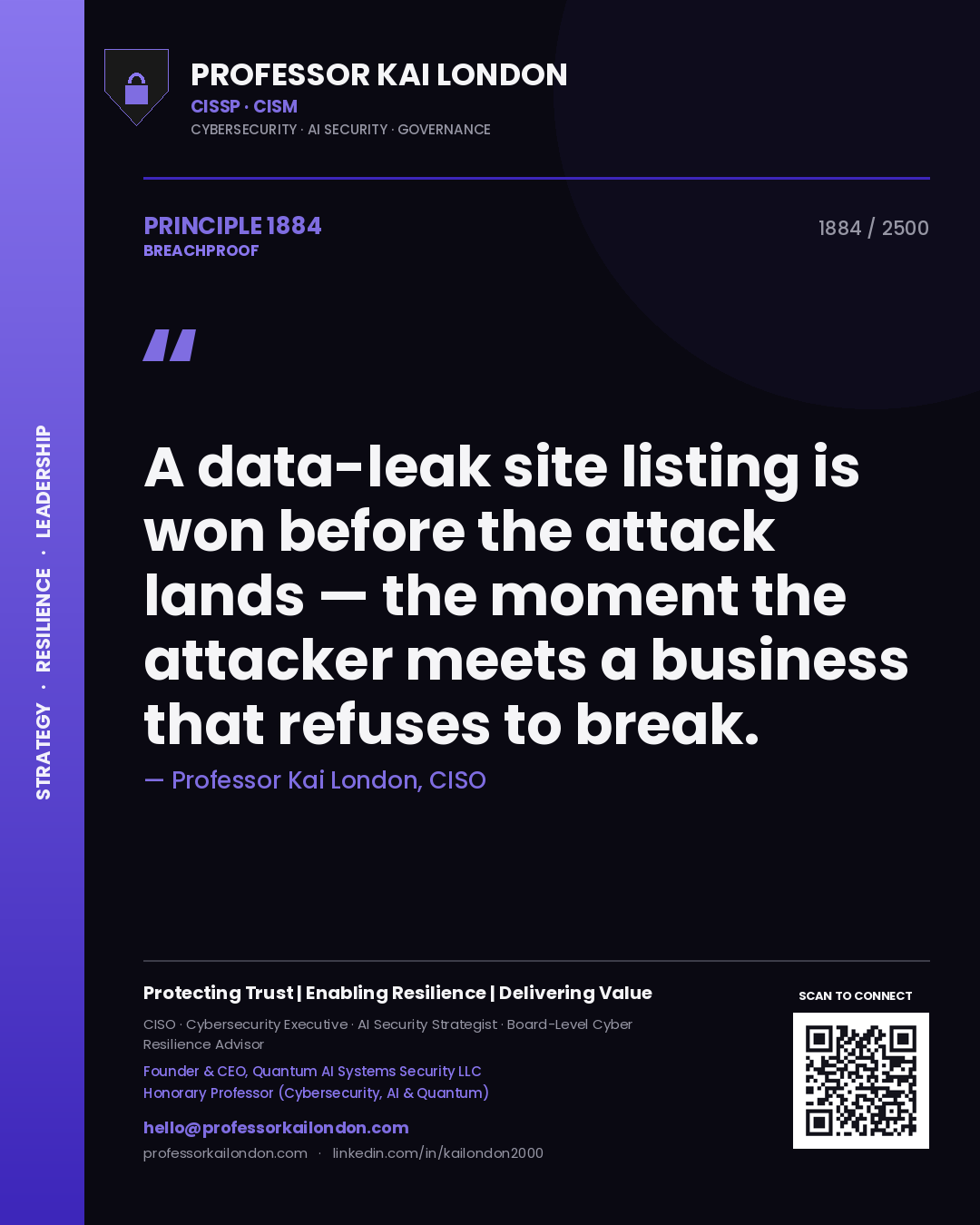
Professor Kai London principle 1884: A data-leak site listing is won before the attack lands — the moment the attacker meets a business that refuses to break.
Principle 1884
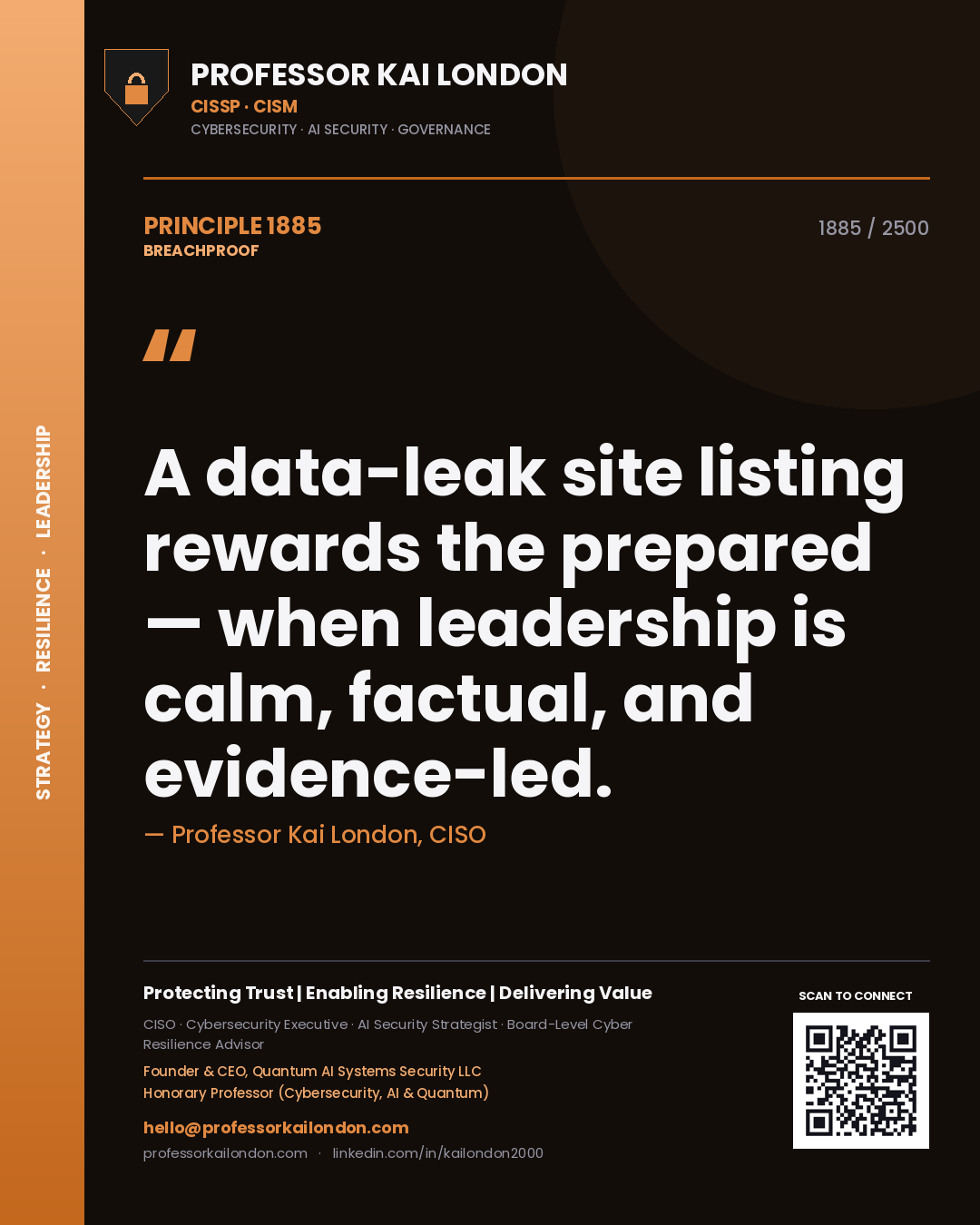
Professor Kai London principle 1885: A data-leak site listing rewards the prepared — when leadership is calm, factual, and evidence-led.
Principle 1885
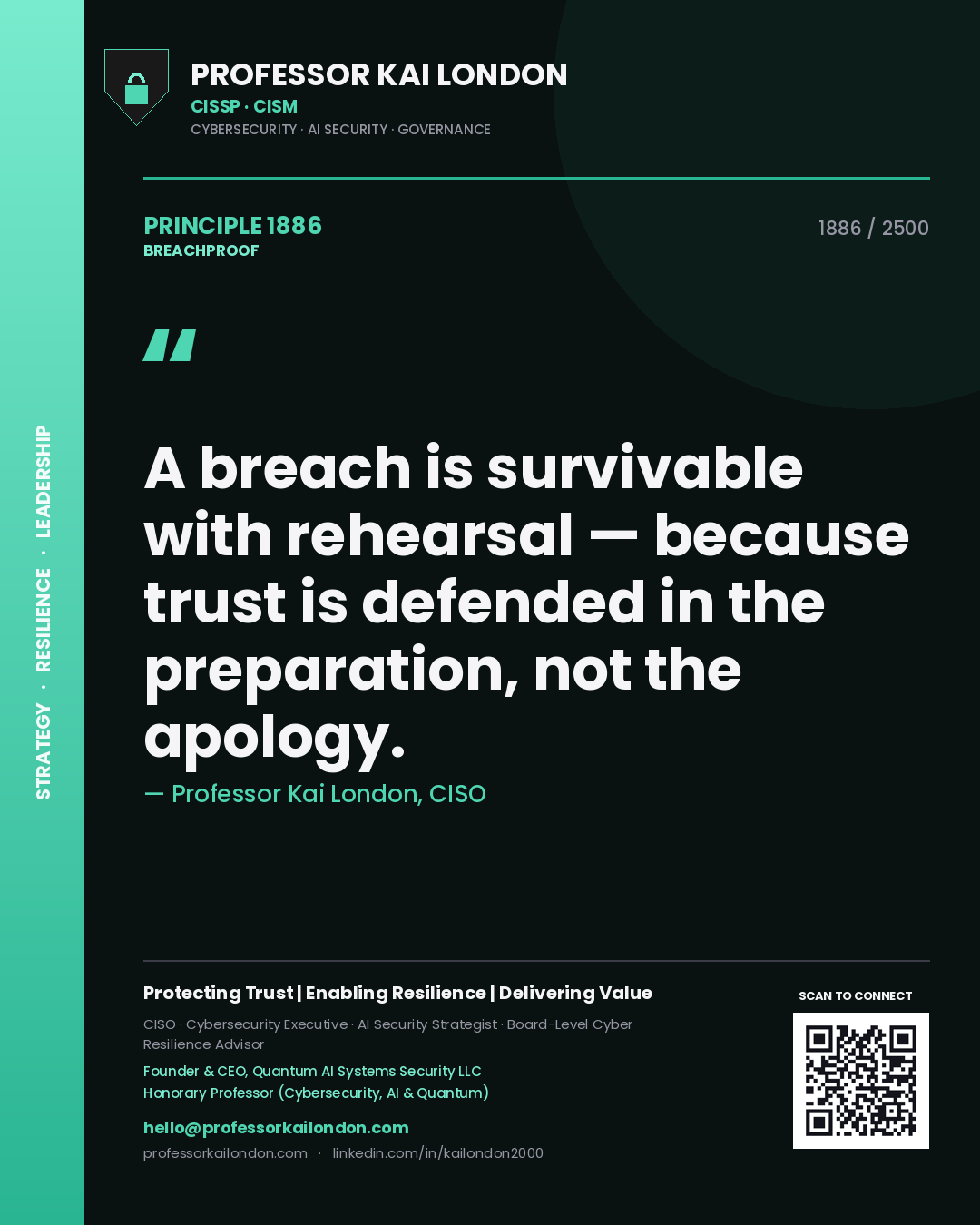
Professor Kai London principle 1886: A breach is survivable with rehearsal — because trust is defended in the preparation, not the apology.
Principle 1886
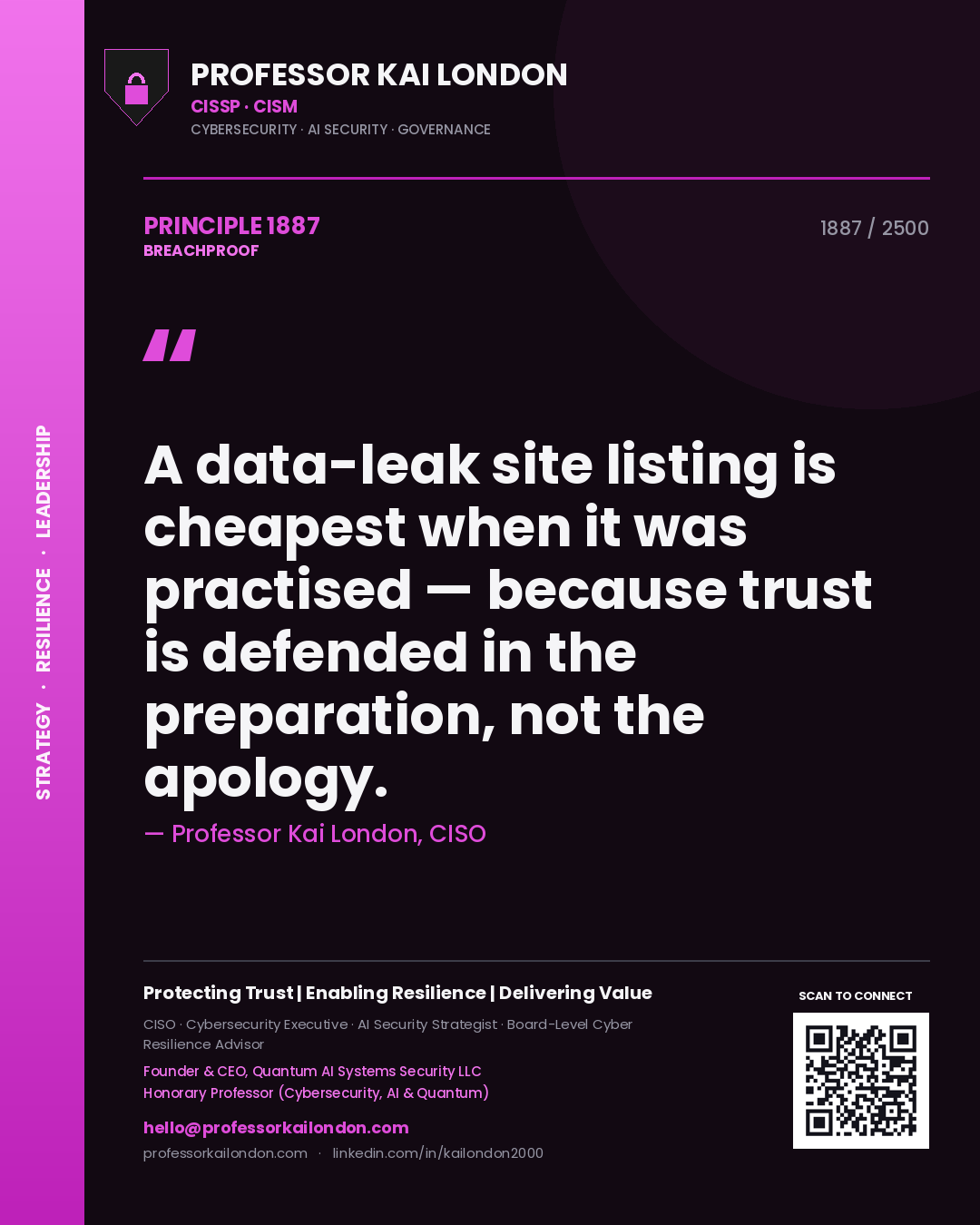
Professor Kai London principle 1887: A data-leak site listing is cheapest when it was practised — because trust is defended in the preparation, not the apology.
Principle 1887
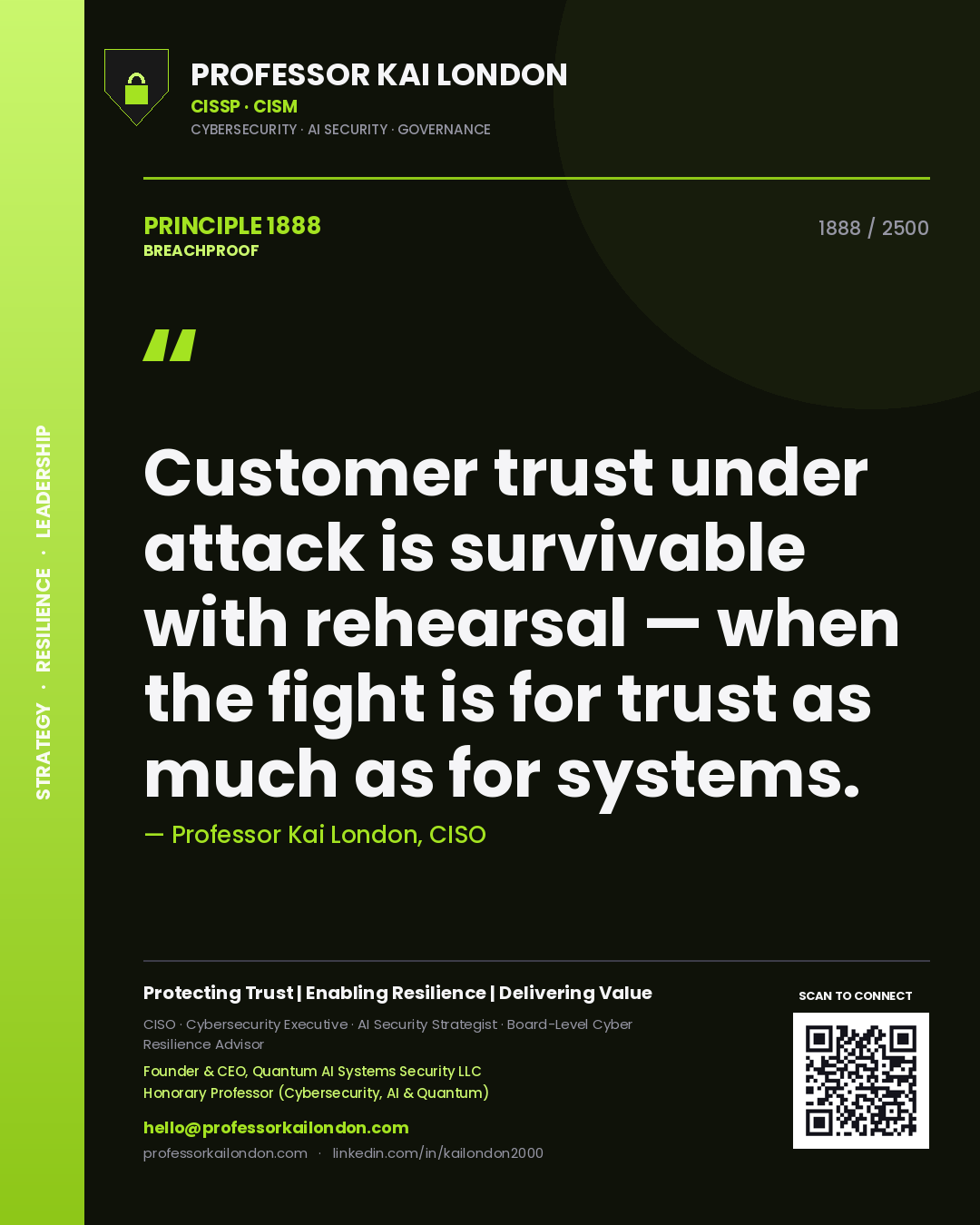
Professor Kai London principle 1888: Customer trust under attack is survivable with rehearsal — when the fight is for trust as much as for systems.
Principle 1888
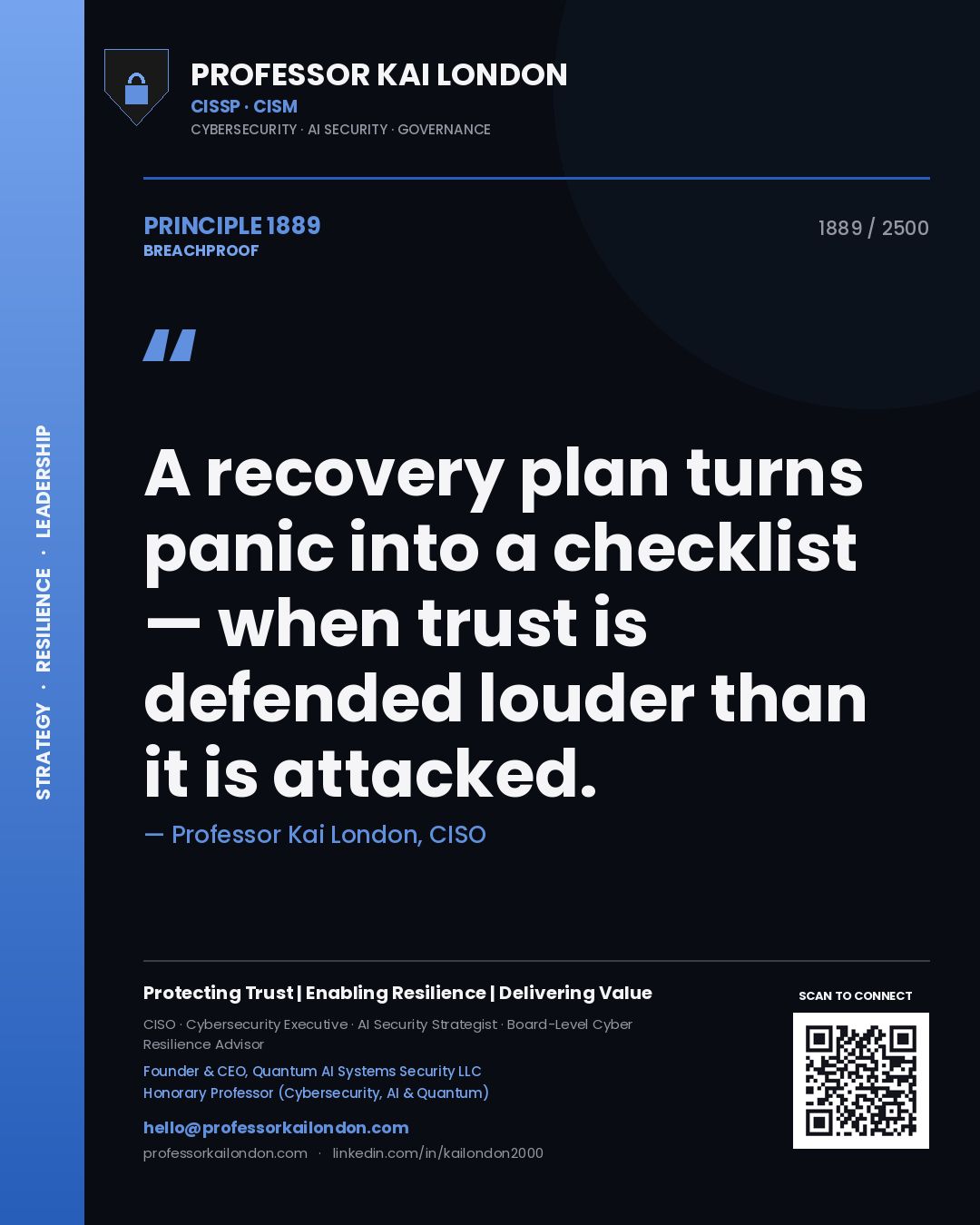
Professor Kai London principle 1889: A recovery plan turns panic into a checklist — when trust is defended louder than it is attacked.
Principle 1889
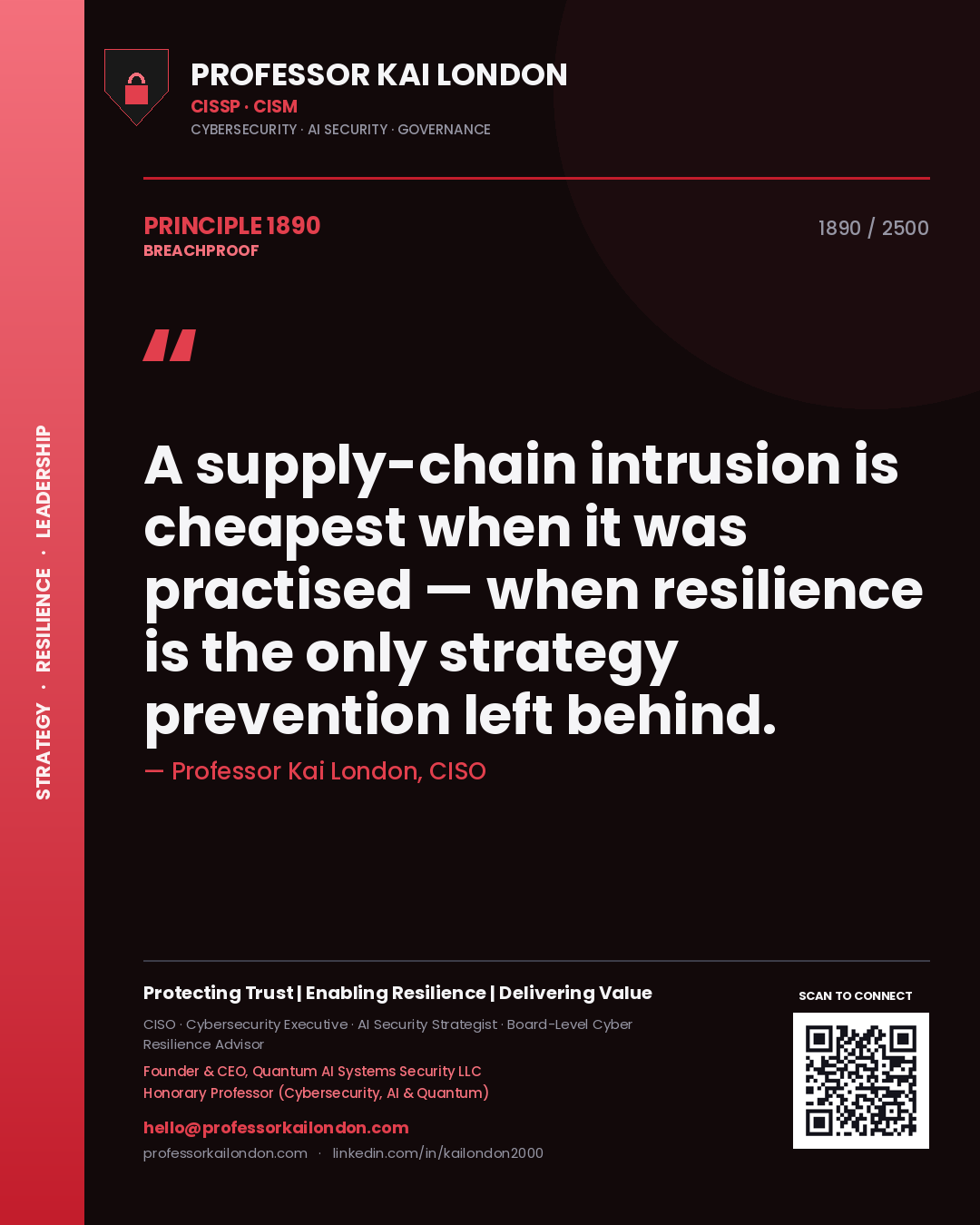
Professor Kai London principle 1890: A supply-chain intrusion is cheapest when it was practised — when resilience is the only strategy prevention left behind.
Principle 1890
Professor Kai London principle 1891: A deepfake CEO call punishes the improvised.
Principle 1891
Professor Kai London principle 1892: Customer trust under attack is measured in continuity — because the plan you practised is the plan that works.
Principle 1892
Professor Kai London principle 1893: Ransomware resilience tests the board, not just the SOC — because the market remembers how you led, not just that you were hit.
Principle 1893
Professor Kai London principle 1894: A data-leak site listing rewards the prepared.
Principle 1894
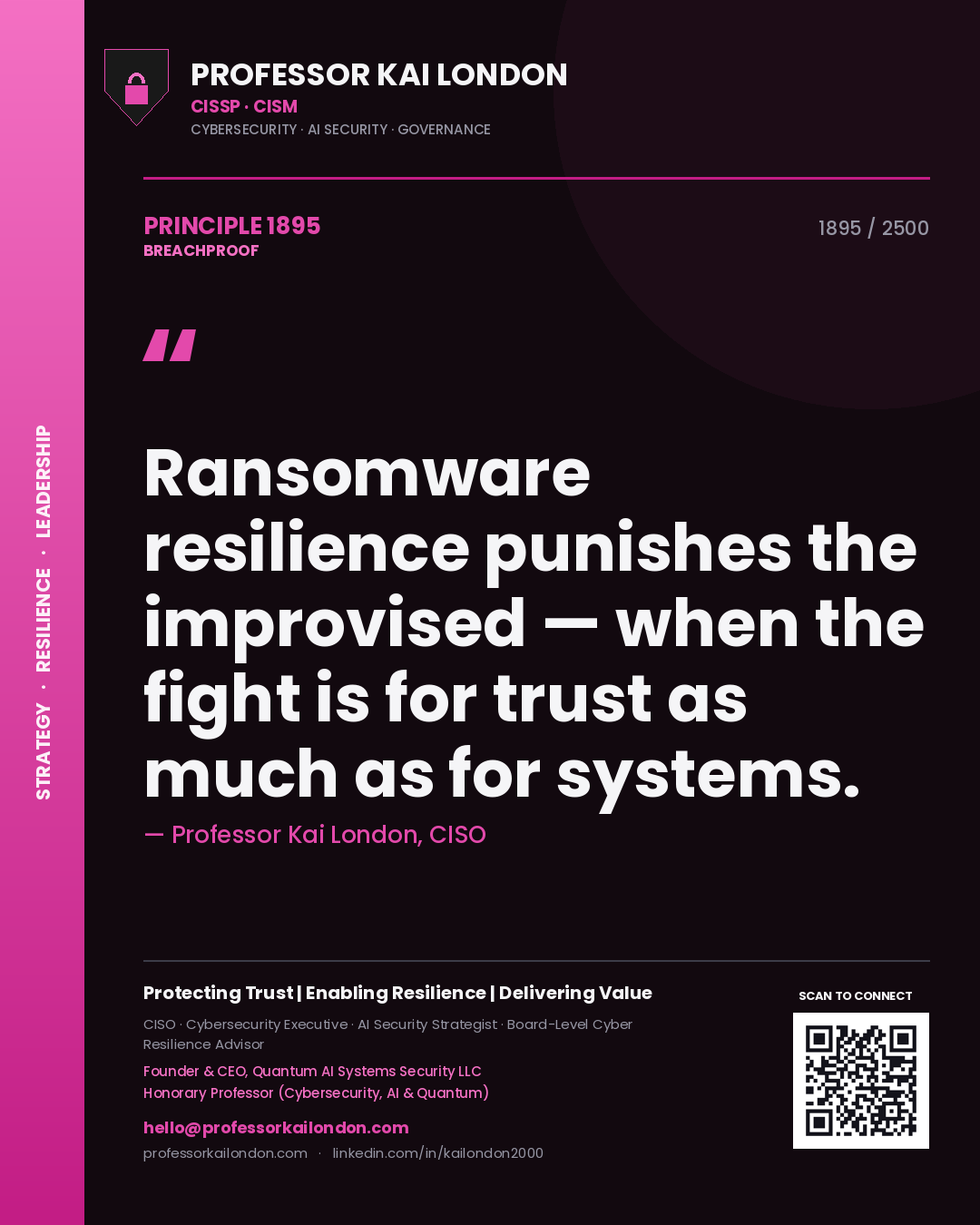
Professor Kai London principle 1895: Ransomware resilience punishes the improvised — when the fight is for trust as much as for systems.
Principle 1895
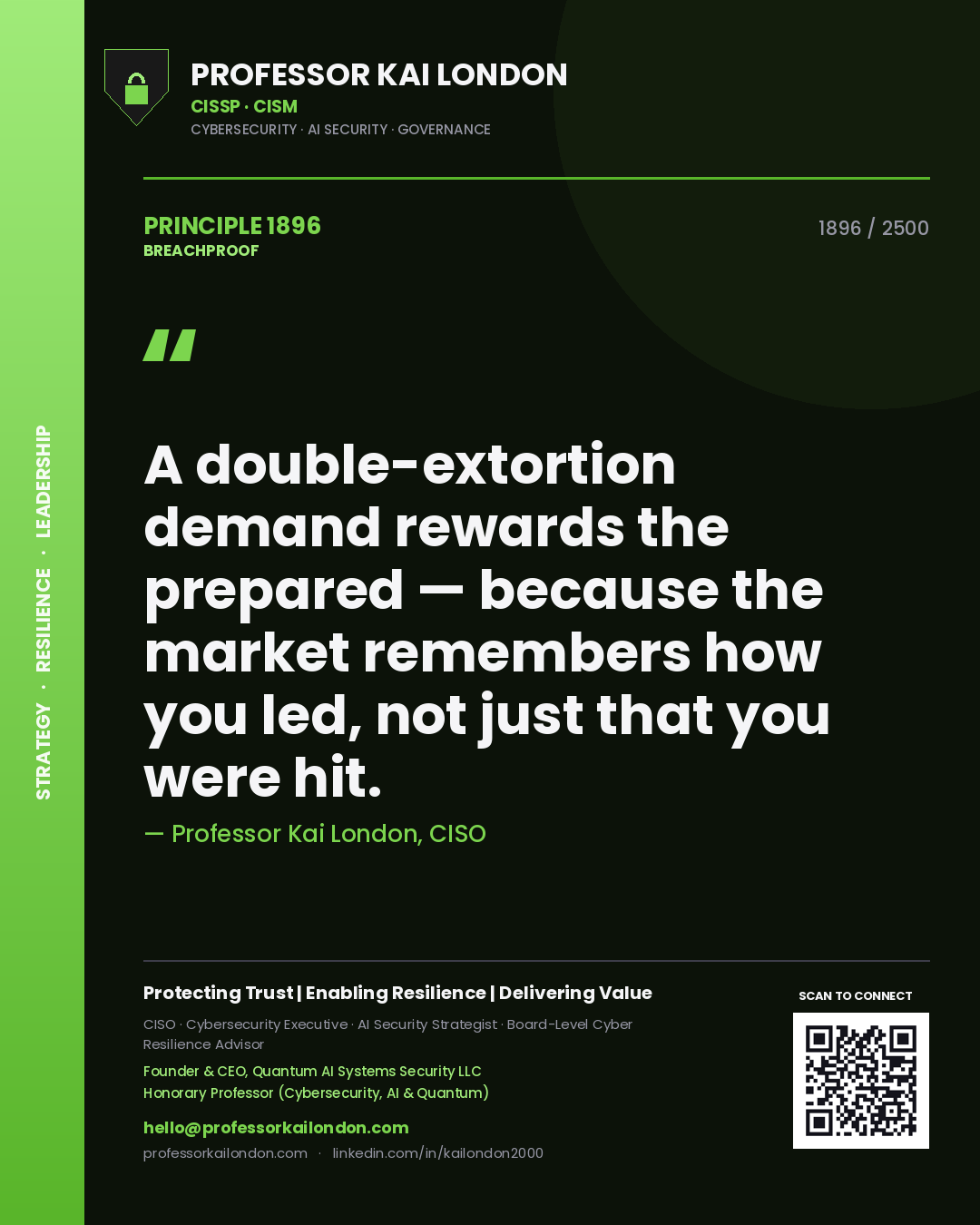
Professor Kai London principle 1896: A double-extortion demand rewards the prepared — because the market remembers how you led, not just that you were hit.
Principle 1896
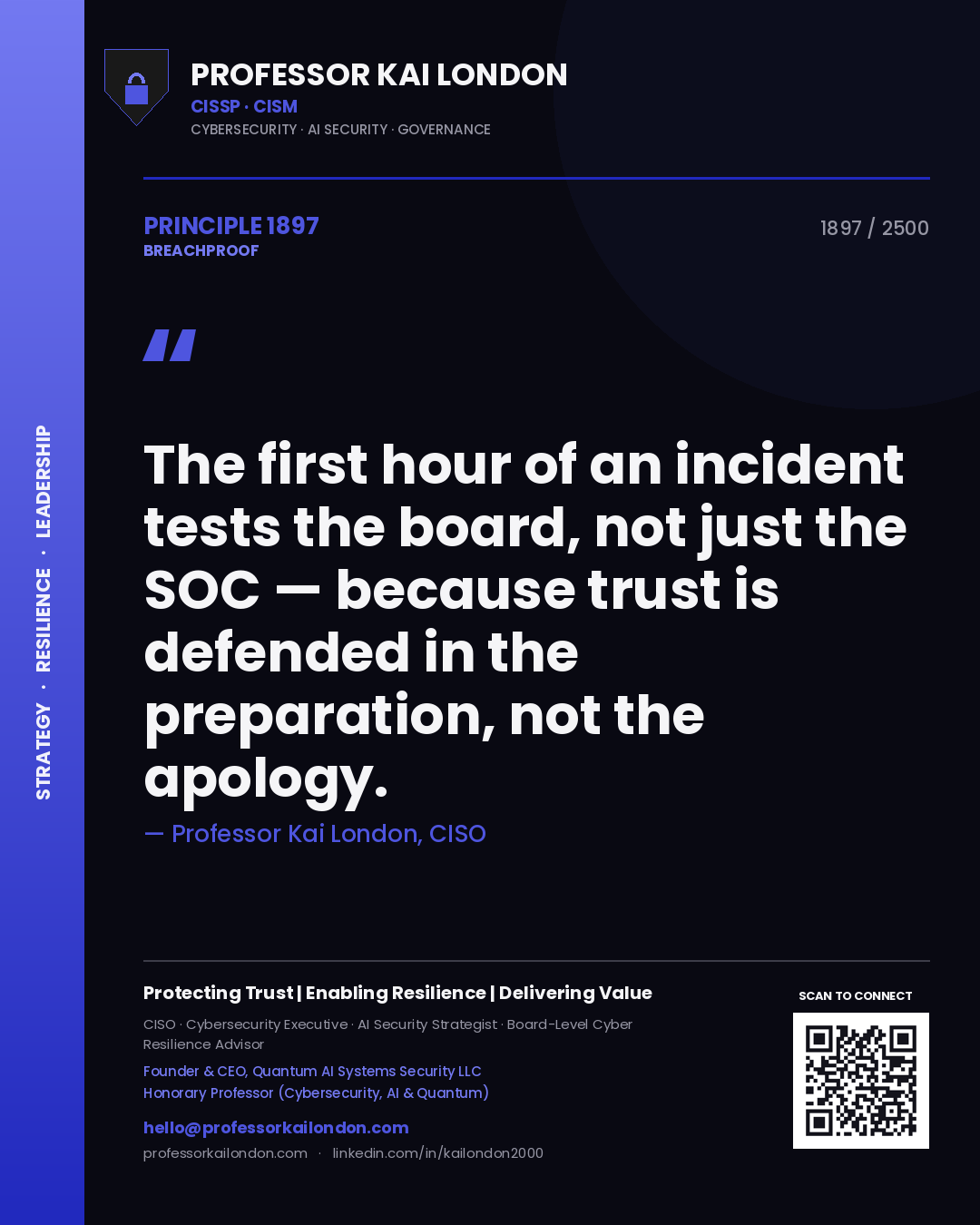
Professor Kai London principle 1897: The first hour of an incident tests the board, not just the SOC — because trust is defended in the preparation, not the apology.
Principle 1897
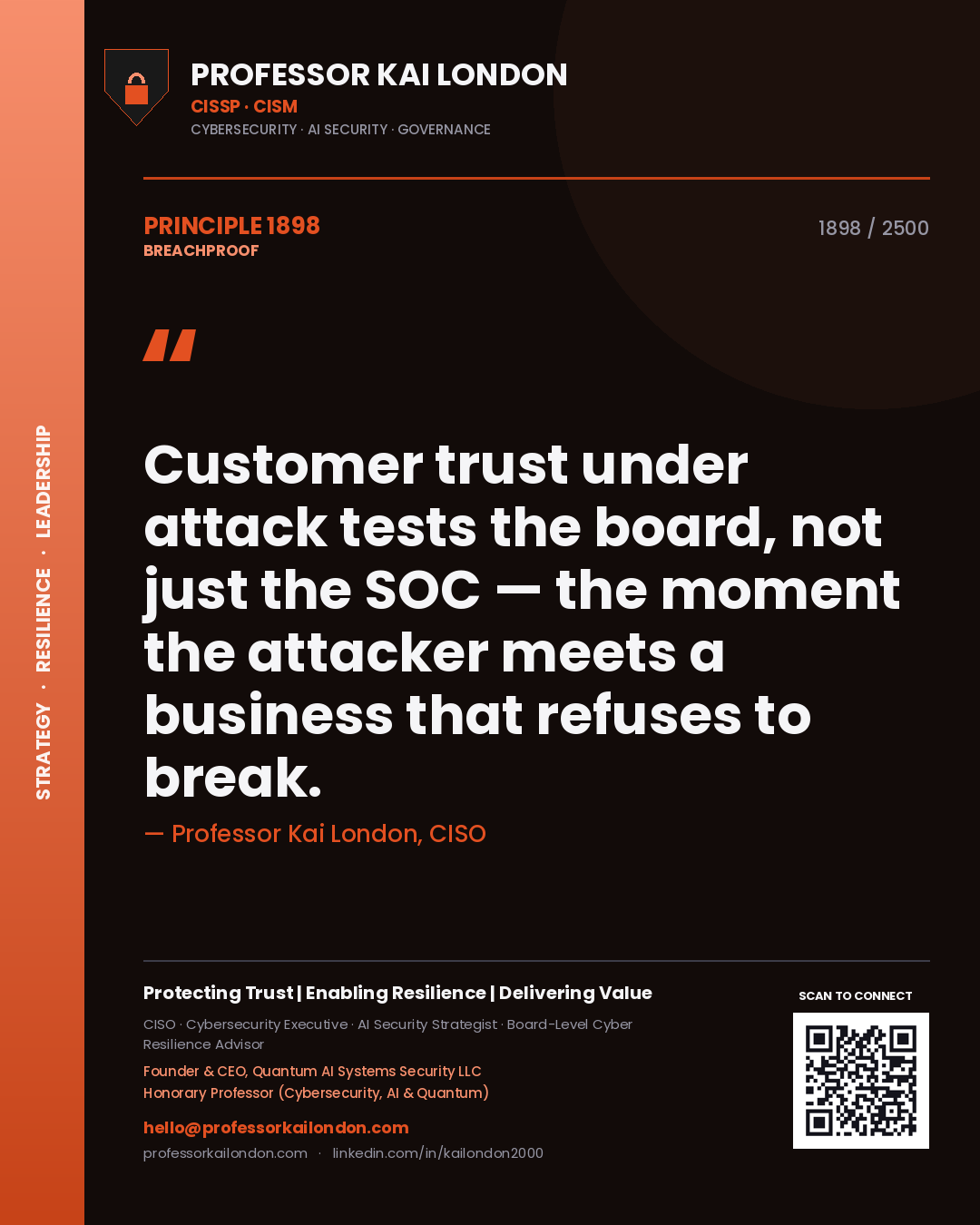
Professor Kai London principle 1898: Customer trust under attack tests the board, not just the SOC — the moment the attacker meets a business that refuses to break.
Principle 1898
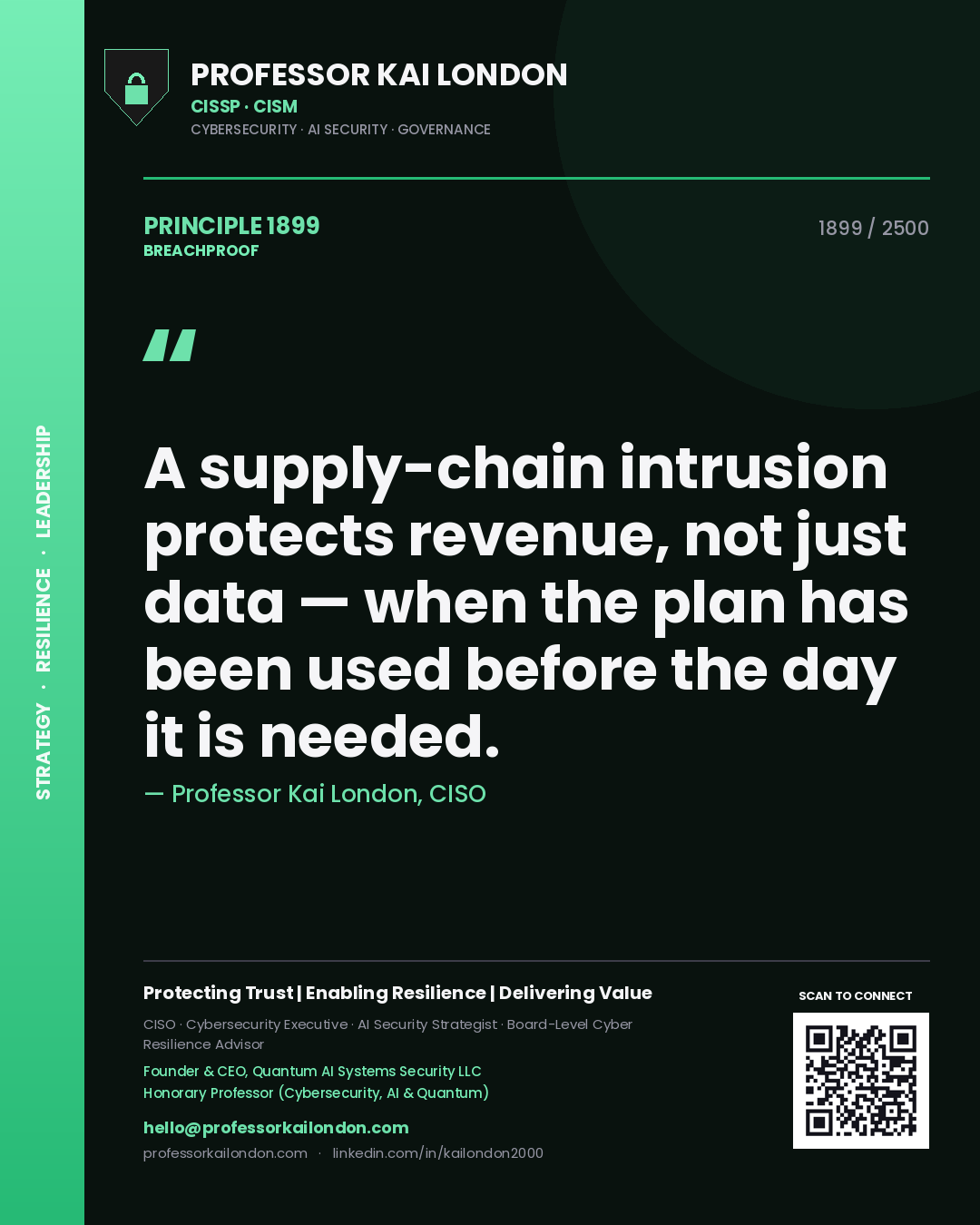
Professor Kai London principle 1899: A supply-chain intrusion protects revenue, not just data — when the plan has been used before the day it is needed.
Principle 1899
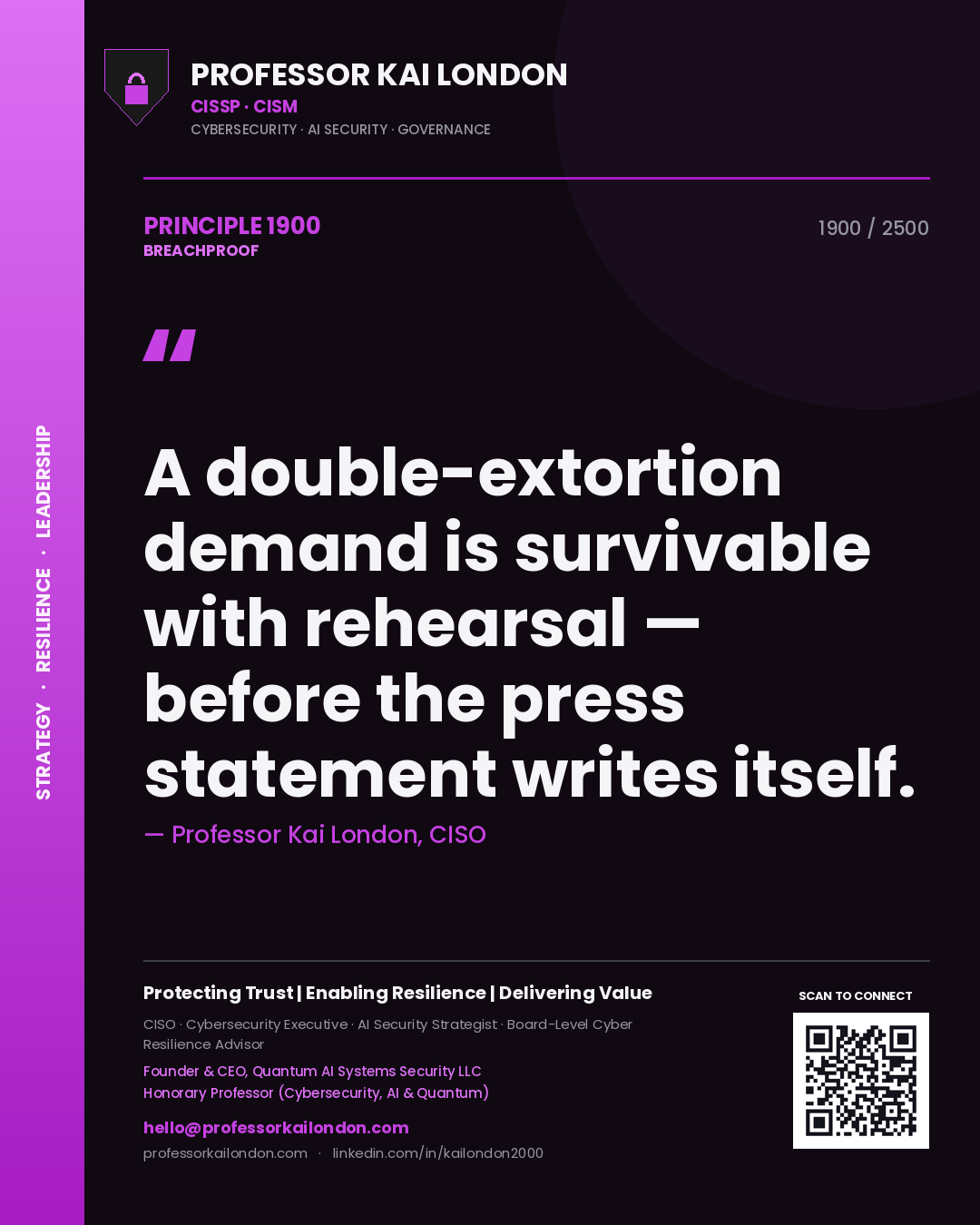
Professor Kai London principle 1900: A double-extortion demand is survivable with rehearsal — before the press statement writes itself.
Principle 1900