The Breach Had Permission — Gallery (Page 20 of 100)
Professor Kai London principle 1901: An abused delegation walked through a door you left open — when every session is verified, not assumed.
Principle 1901
Professor Kai London principle 1902: A trusted device gone rogue looked authorised the whole way in — because a breach with permission is still a breach.
Principle 1902
Professor Kai London principle 1903: An abused delegation turned a permission into a breach — before an over-scoped account becomes an open one.
Principle 1903
Professor Kai London principle 1904: A phished token needed no exploit, only an identity — when Zero Trust is a system, not a slogan.
Principle 1904
Professor Kai London principle 1905: An over-scoped account looked authorised the whole way in — because the goal is to leave attackers nothing to sign in with.
Principle 1905
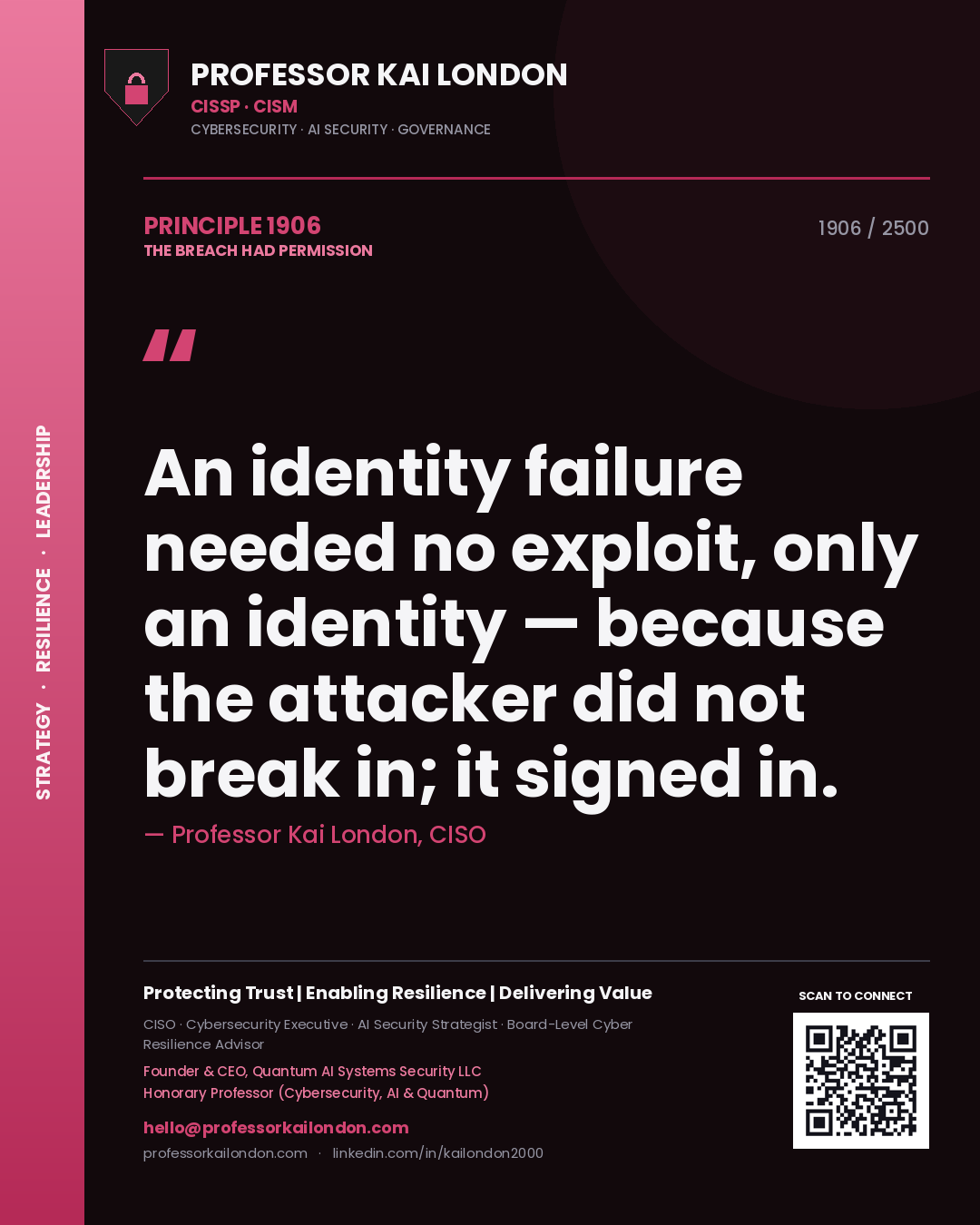
Professor Kai London principle 1906: An identity failure needed no exploit, only an identity — because the attacker did not break in; it signed in.
Principle 1906
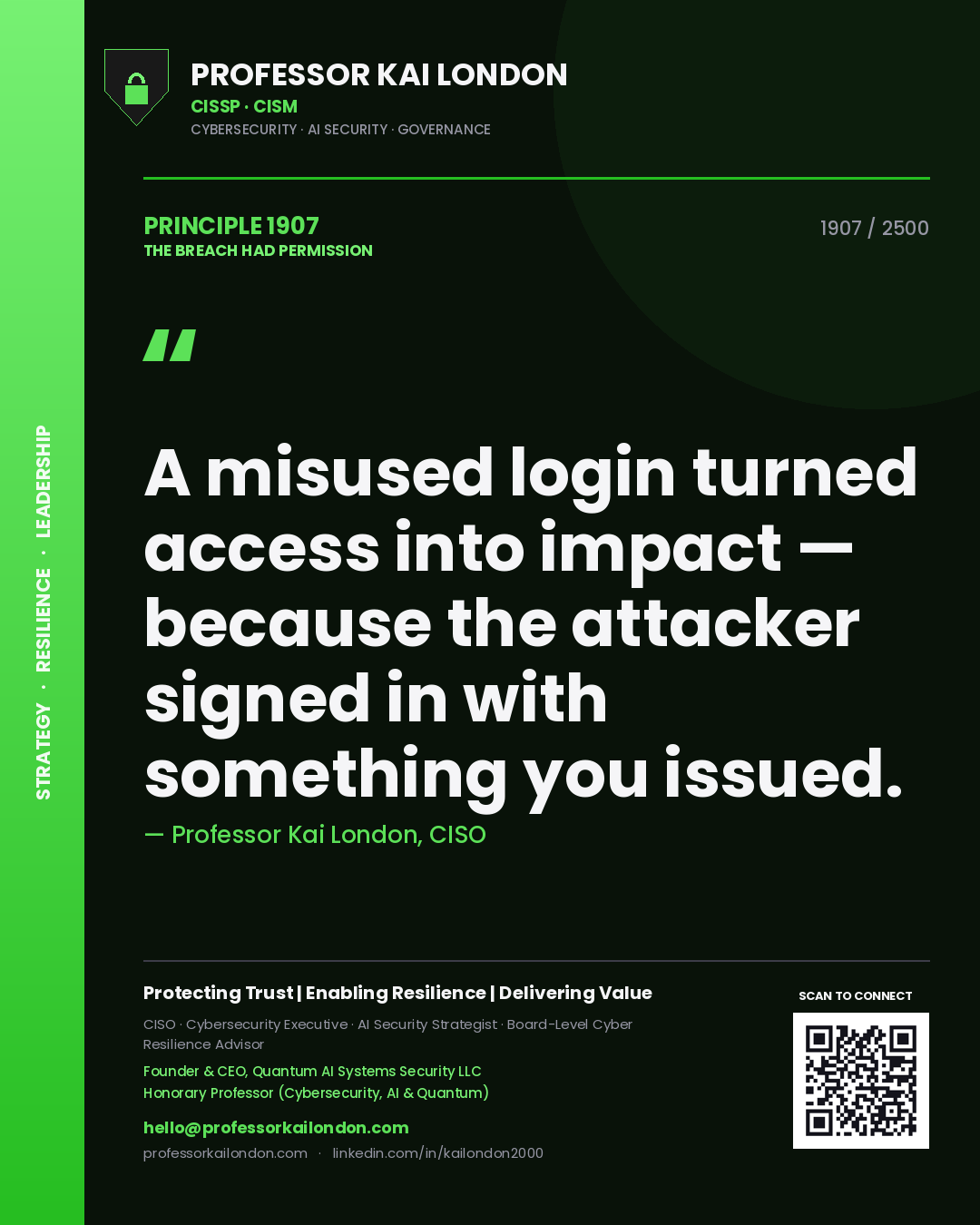
Professor Kai London principle 1907: A misused login turned access into impact — because the attacker signed in with something you issued.
Principle 1907
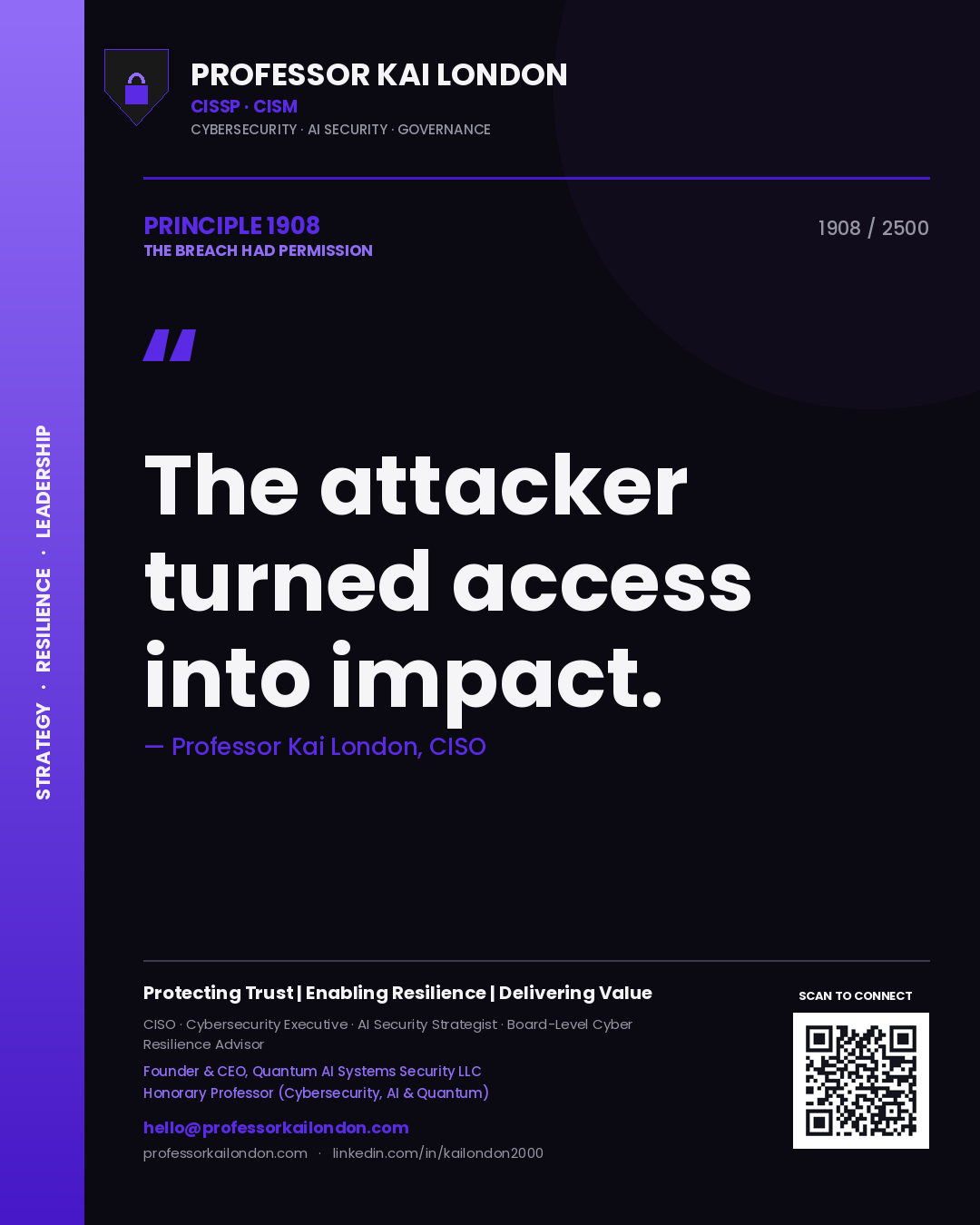
Professor Kai London principle 1908: The attacker turned access into impact.
Principle 1908
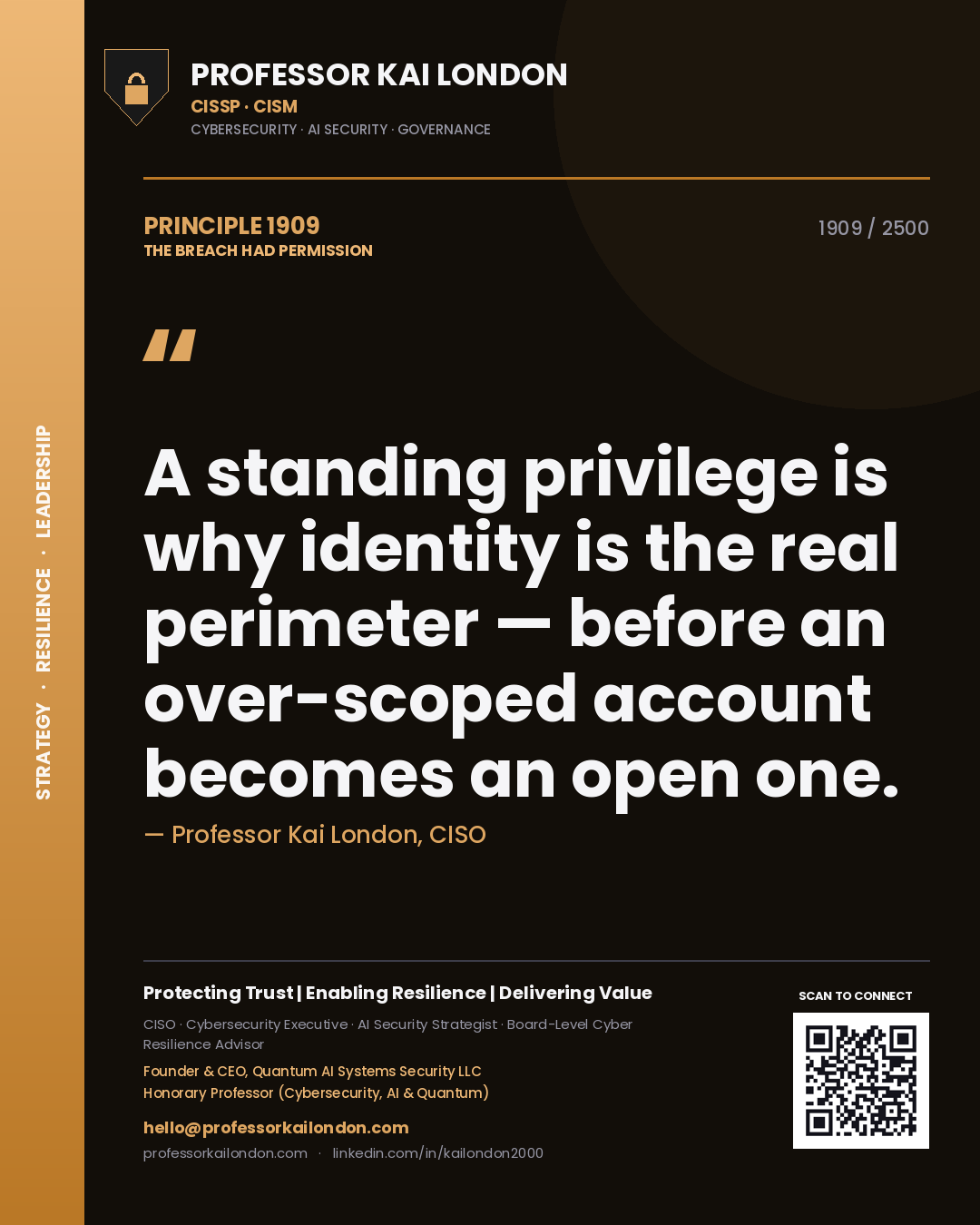
Professor Kai London principle 1909: A standing privilege is why identity is the real perimeter — before an over-scoped account becomes an open one.
Principle 1909
Professor Kai London principle 1910: A trusted device gone rogue needed no exploit, only an identity — when every session is verified, not assumed.
Principle 1910
Professor Kai London principle 1911: A trusted session proved that trust unproven is trust abused — because the attacker did not break in; it signed in.
Principle 1911
Professor Kai London principle 1912: A consent-grant abuse proved that trust unproven is trust abused — when trust is verified continuously, not granted once.
Principle 1912
Professor Kai London principle 1913: A legitimate API key walked through a door you left open — because the goal is to leave attackers nothing to sign in with.
Principle 1913
Professor Kai London principle 1914: A consent-grant abuse looked authorised the whole way in — before an over-scoped account becomes an open one.
Principle 1914
Professor Kai London principle 1915: A signed-in adversary turned a permission into a breach — before inherited trust becomes inherited breach.
Principle 1915
Professor Kai London principle 1916: A lateral move via SSO looked exactly like a legitimate user — when Zero Trust is a system, not a slogan.
Principle 1916
Professor Kai London principle 1917: A legitimate API key used trust you handed over — when you leave nothing worth signing in with.
Principle 1917
Professor Kai London principle 1918: A legitimate API key turned a permission into a breach.
Principle 1918
Professor Kai London principle 1919: A signed-in adversary is why identity is the real perimeter — because the attacker did not break in; it signed in.
Principle 1919
Professor Kai London principle 1920: A signed-in adversary looked authorised the whole way in — because the goal is to leave attackers nothing to sign in with.
Principle 1920
Professor Kai London principle 1921: A valid credential turned a permission into a breach — because the attacker signed in with something you issued.
Principle 1921
Professor Kai London principle 1922: An abused delegation looked authorised the whole way in — when you remove the credential before the adversary finds it.
Principle 1922
Professor Kai London principle 1923: An over-scoped account is why identity is the real perimeter — when trust is verified continuously, not granted once.
Principle 1923
Professor Kai London principle 1924: A lateral move via SSO proved that trust unproven is trust abused — before inherited trust becomes inherited breach.
Principle 1924
Professor Kai London principle 1925: An identity failure needed no exploit, only an identity — before inherited trust becomes inherited breach.
Principle 1925
Professor Kai London principle 1926: The attacker turned access into impact — because the goal is to leave attackers nothing to sign in with.
Principle 1926
Professor Kai London principle 1927: A legitimate token is why identity is the real perimeter — the moment legitimate access does illegitimate things.
Principle 1927
Professor Kai London principle 1928: A consent-grant abuse is why identity is the real perimeter — when every session is verified, not assumed.
Principle 1928
Professor Kai London principle 1929: A standing privilege looked authorised the whole way in — before inherited trust becomes inherited breach.
Principle 1929
Professor Kai London principle 1930: A standing privilege is why identity is the real perimeter — because the attacker did not break in; it signed in.
Principle 1930
Professor Kai London principle 1931: A legitimate token is why identity is the real perimeter — when every permission is earned, watched, and expired.
Principle 1931
Professor Kai London principle 1932: A trusted device gone rogue walked through a door you left open — because the attacker did not break in; it signed in.
Principle 1932
Professor Kai London principle 1933: A consent-grant abuse turned a permission into a breach — because a breach with permission is still a breach.
Principle 1933
Professor Kai London principle 1934: A lateral move via SSO is why identity is the real perimeter — because a breach with permission is still a breach.
Principle 1934
Professor Kai London principle 1935: A lateral move via SSO walked through a door you left open — before an over-scoped account becomes an open one.
Principle 1935
Professor Kai London principle 1936: A trusted device gone rogue survived because Zero Trust was a slogan, not a system — because the goal is to leave attackers nothing to sign in with.
Principle 1936
Professor Kai London principle 1937: A valid credential looked authorised the whole way in — because the attacker signed in with something you issued.
Principle 1937
Professor Kai London principle 1938: A consent-grant abuse needed no exploit, only an identity — before an over-scoped account becomes an open one.
Principle 1938
Professor Kai London principle 1939: A legitimate token turned access into impact — because the attacker signed in with something you issued.
Principle 1939
Professor Kai London principle 1940: A consent-grant abuse proved that trust unproven is trust abused — when every session is verified, not assumed.
Principle 1940
Professor Kai London principle 1941: An inherited permission looked authorised the whole way in — when trust is verified continuously, not granted once.
Principle 1941
Professor Kai London principle 1942: A standing privilege turned access into impact — because the goal is to leave attackers nothing to sign in with.
Principle 1942
Professor Kai London principle 1943: A legitimate API key turned a permission into a breach — before an over-scoped account becomes an open one.
Principle 1943
Professor Kai London principle 1944: A trusted session exploited access no one revoked — when every session is verified, not assumed.
Principle 1944
Professor Kai London principle 1945: A misused login walked through a door you left open — when every session is verified, not assumed.
Principle 1945
Professor Kai London principle 1946: A consent-grant abuse needed no malware, only trust — when every session is verified, not assumed.
Principle 1946
Professor Kai London principle 1947: An abused delegation walked through a door you left open — when you remove the credential before the adversary finds it.
Principle 1947
Professor Kai London principle 1948: The attacker exploited access no one revoked — because the attacker signed in with something you issued.
Principle 1948
Professor Kai London principle 1949: A lateral move via SSO turned a permission into a breach — when you leave nothing worth signing in with.
Principle 1949
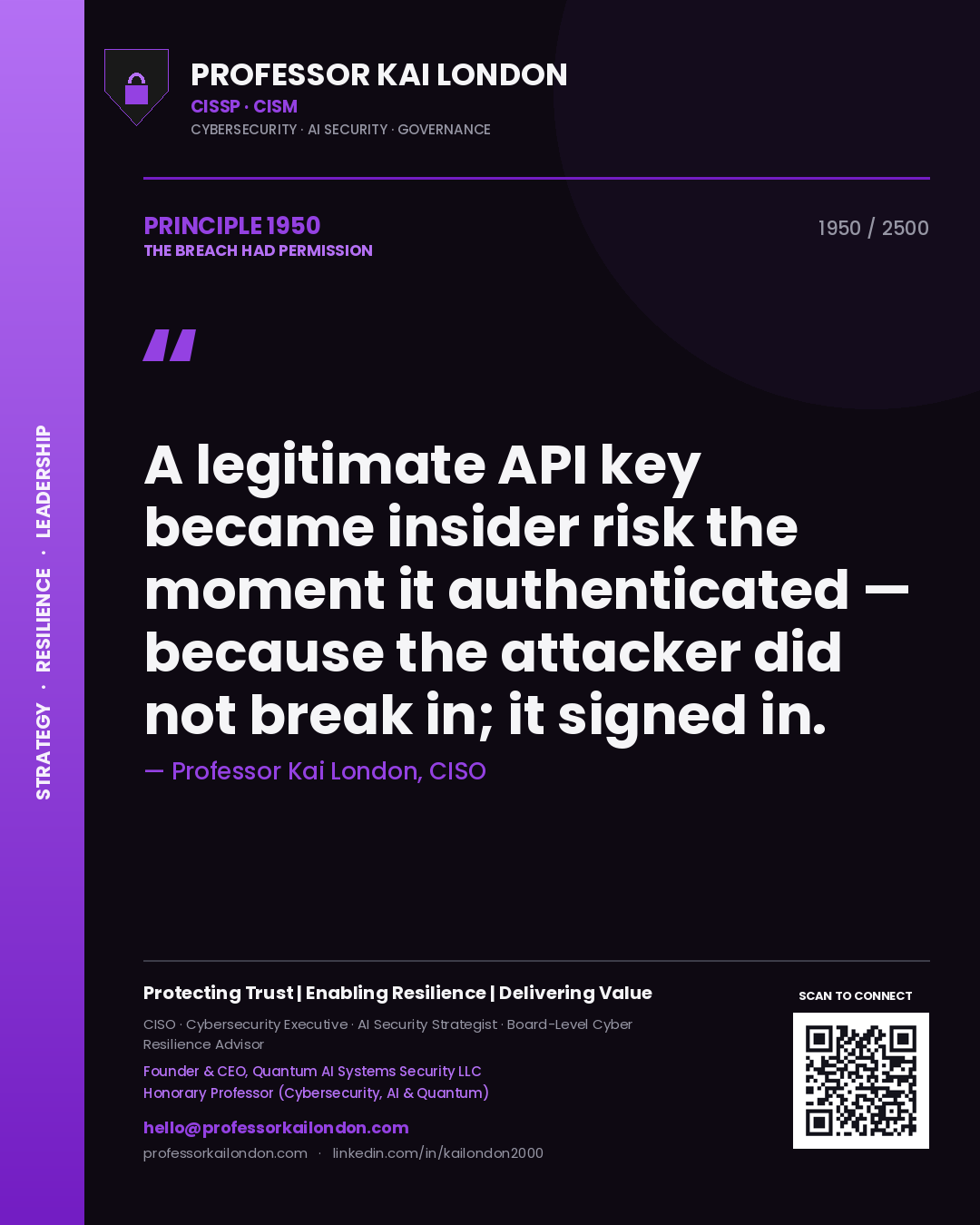
Professor Kai London principle 1950: A legitimate API key became insider risk the moment it authenticated — because the attacker did not break in; it signed in.
Principle 1950
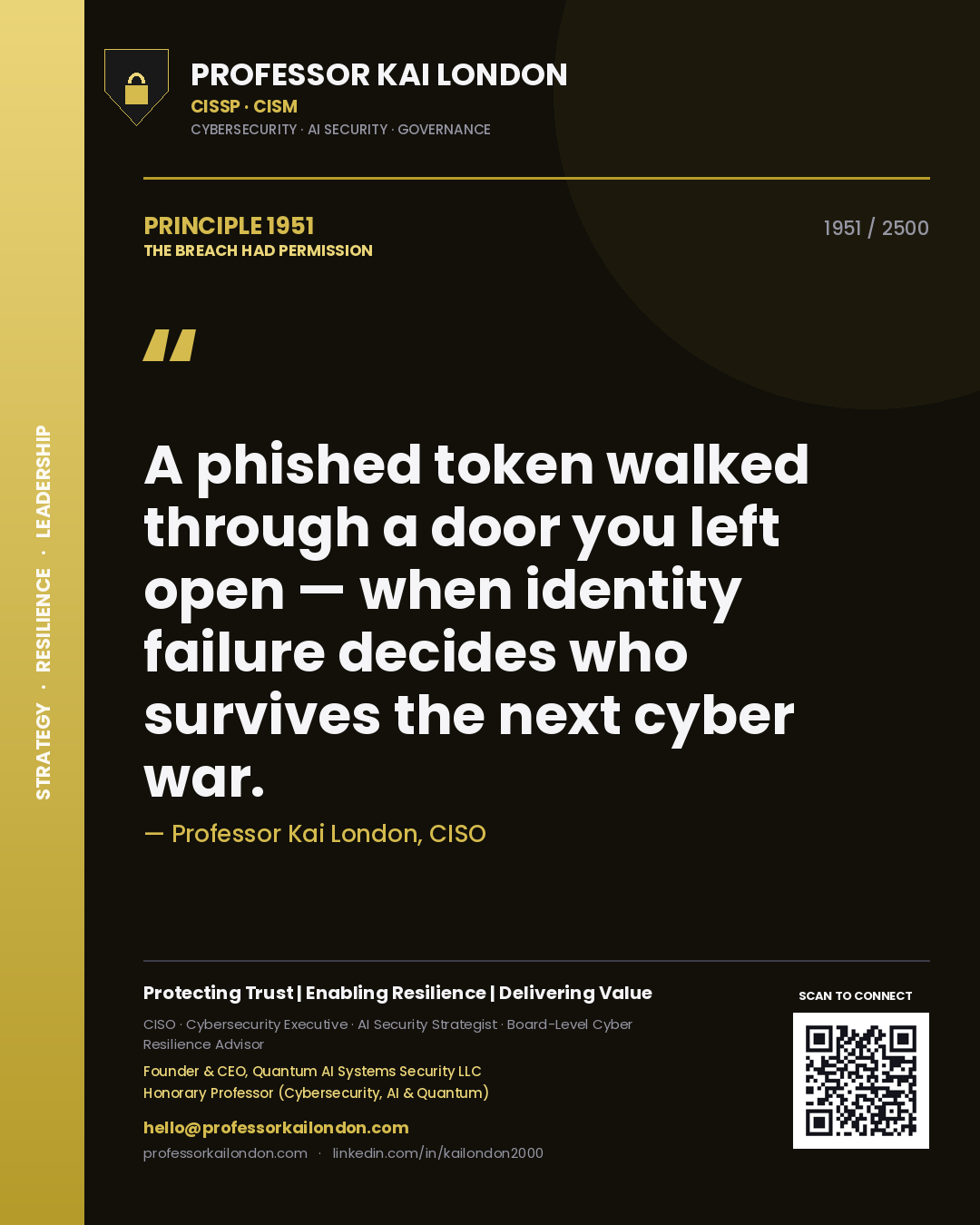
Professor Kai London principle 1951: A phished token walked through a door you left open — when identity failure decides who survives the next cyber war.
Principle 1951
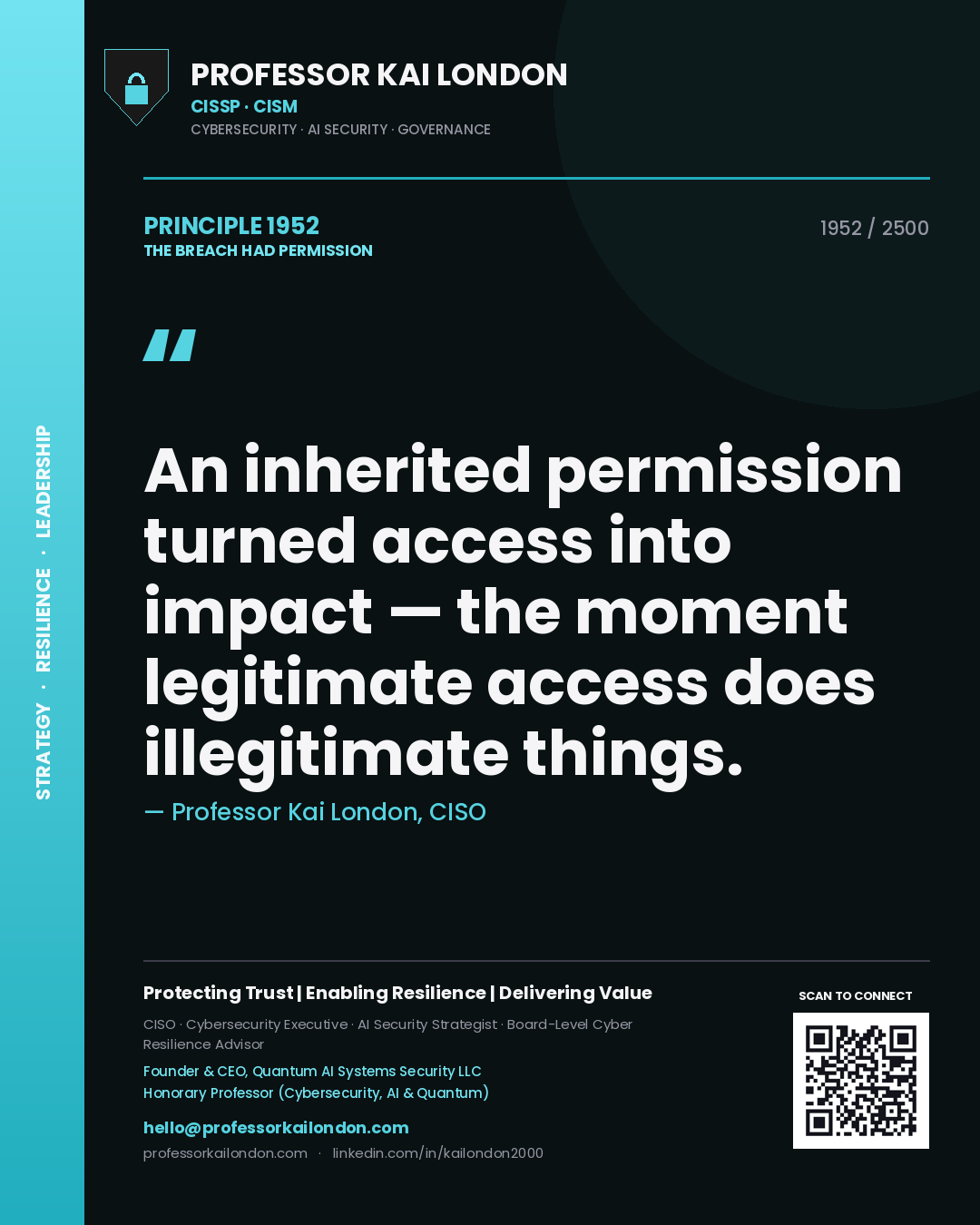
Professor Kai London principle 1952: An inherited permission turned access into impact — the moment legitimate access does illegitimate things.
Principle 1952
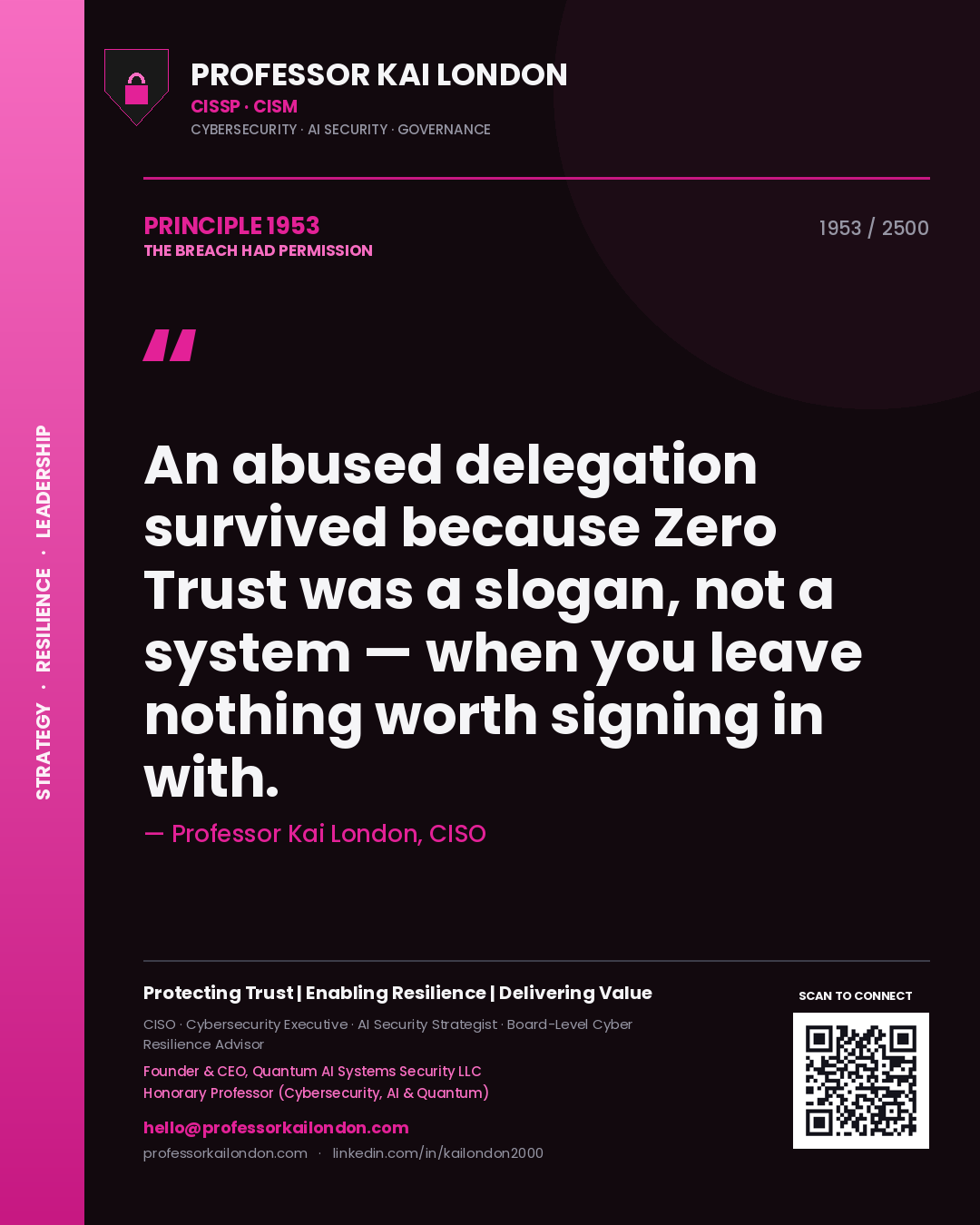
Professor Kai London principle 1953: An abused delegation survived because Zero Trust was a slogan, not a system — when you leave nothing worth signing in with.
Principle 1953
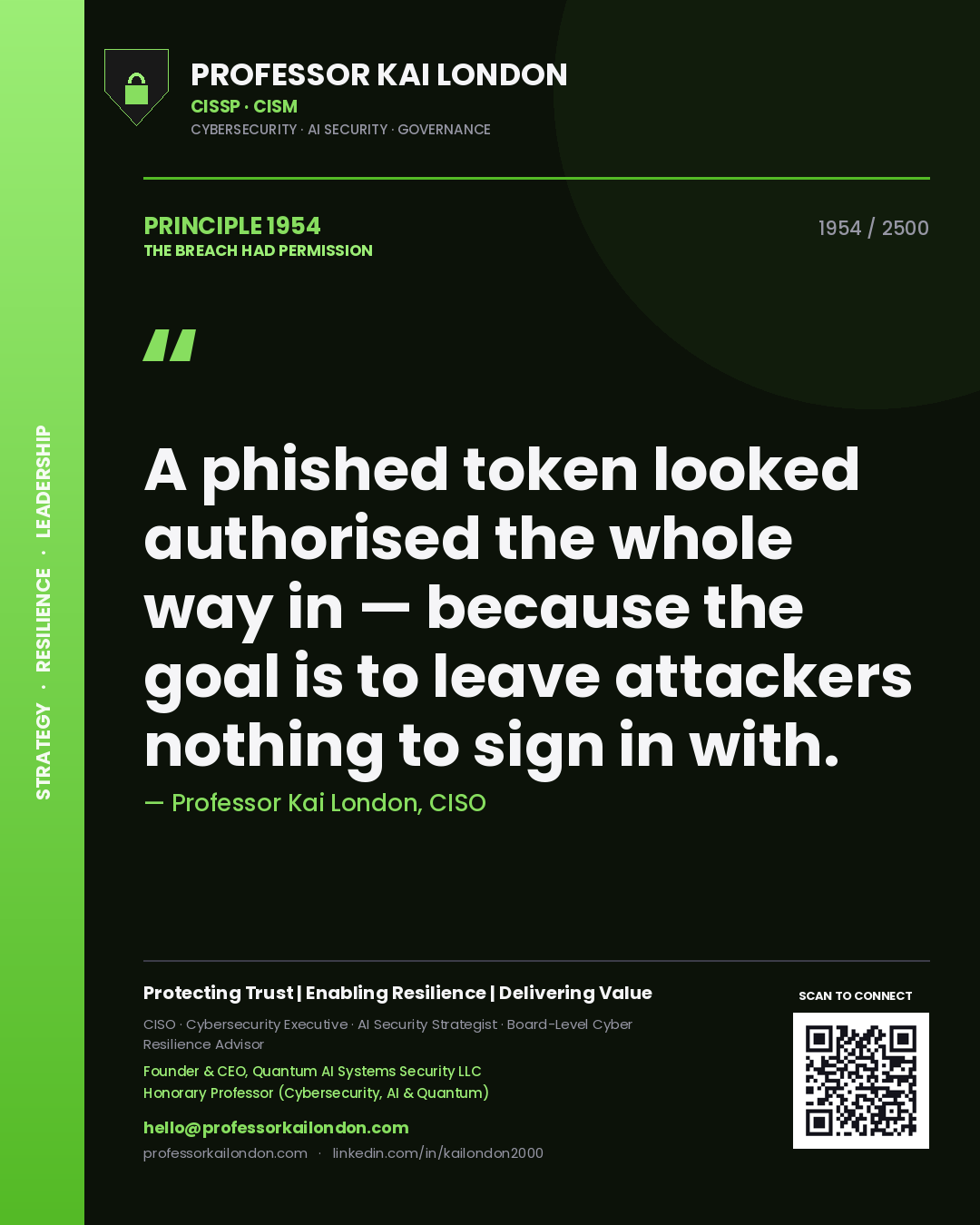
Professor Kai London principle 1954: A phished token looked authorised the whole way in — because the goal is to leave attackers nothing to sign in with.
Principle 1954
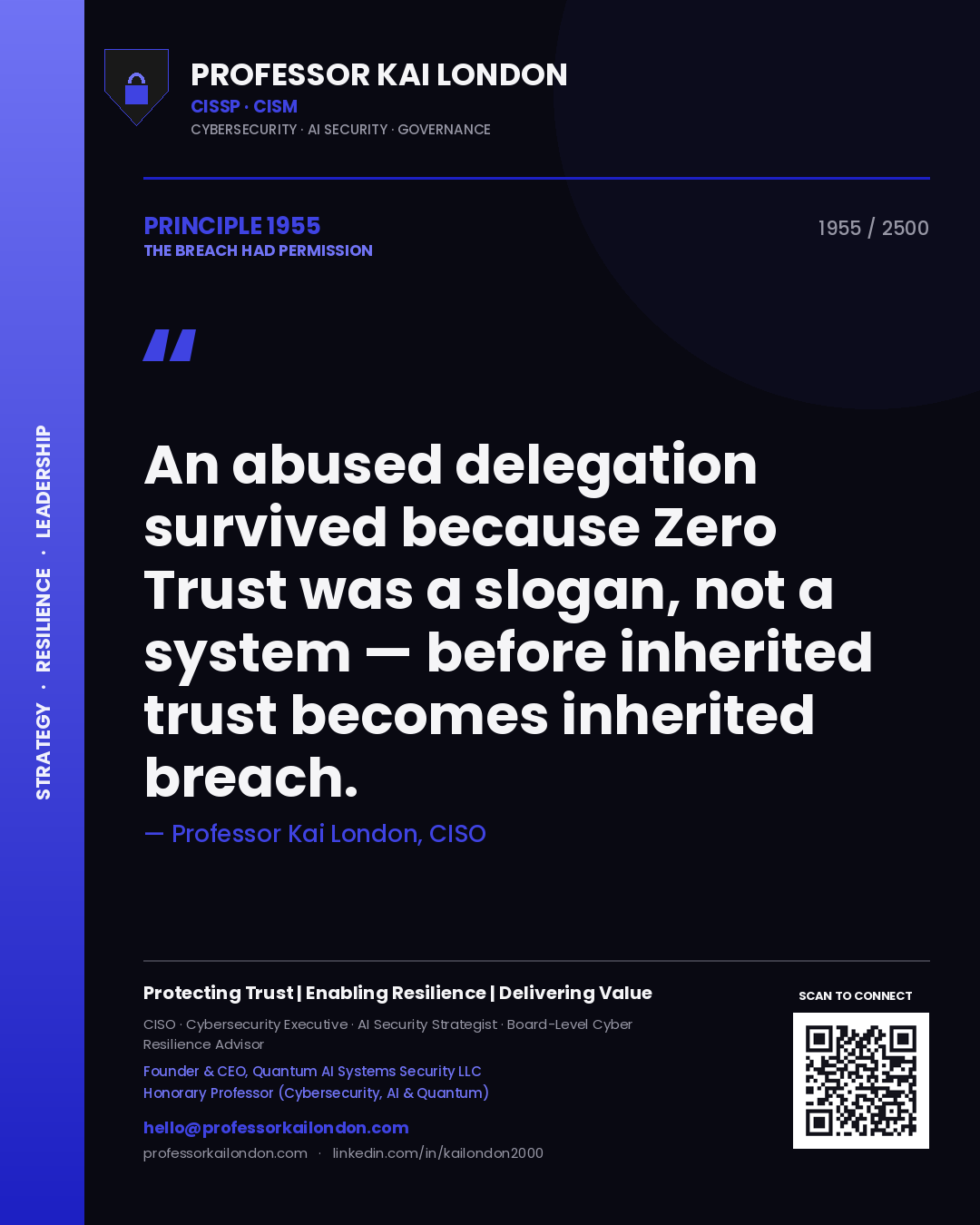
Professor Kai London principle 1955: An abused delegation survived because Zero Trust was a slogan, not a system — before inherited trust becomes inherited breach.
Principle 1955
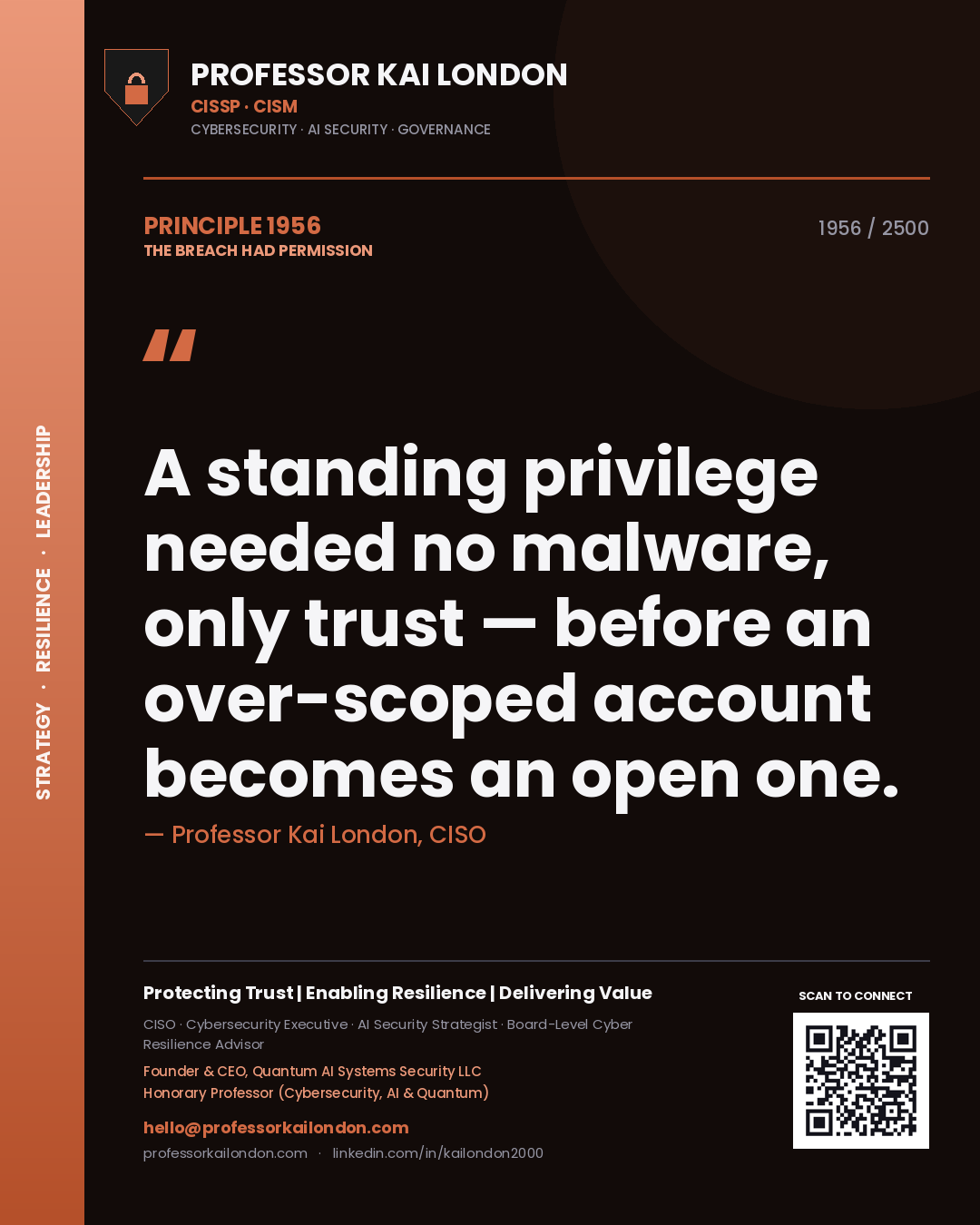
Professor Kai London principle 1956: A standing privilege needed no malware, only trust — before an over-scoped account becomes an open one.
Principle 1956
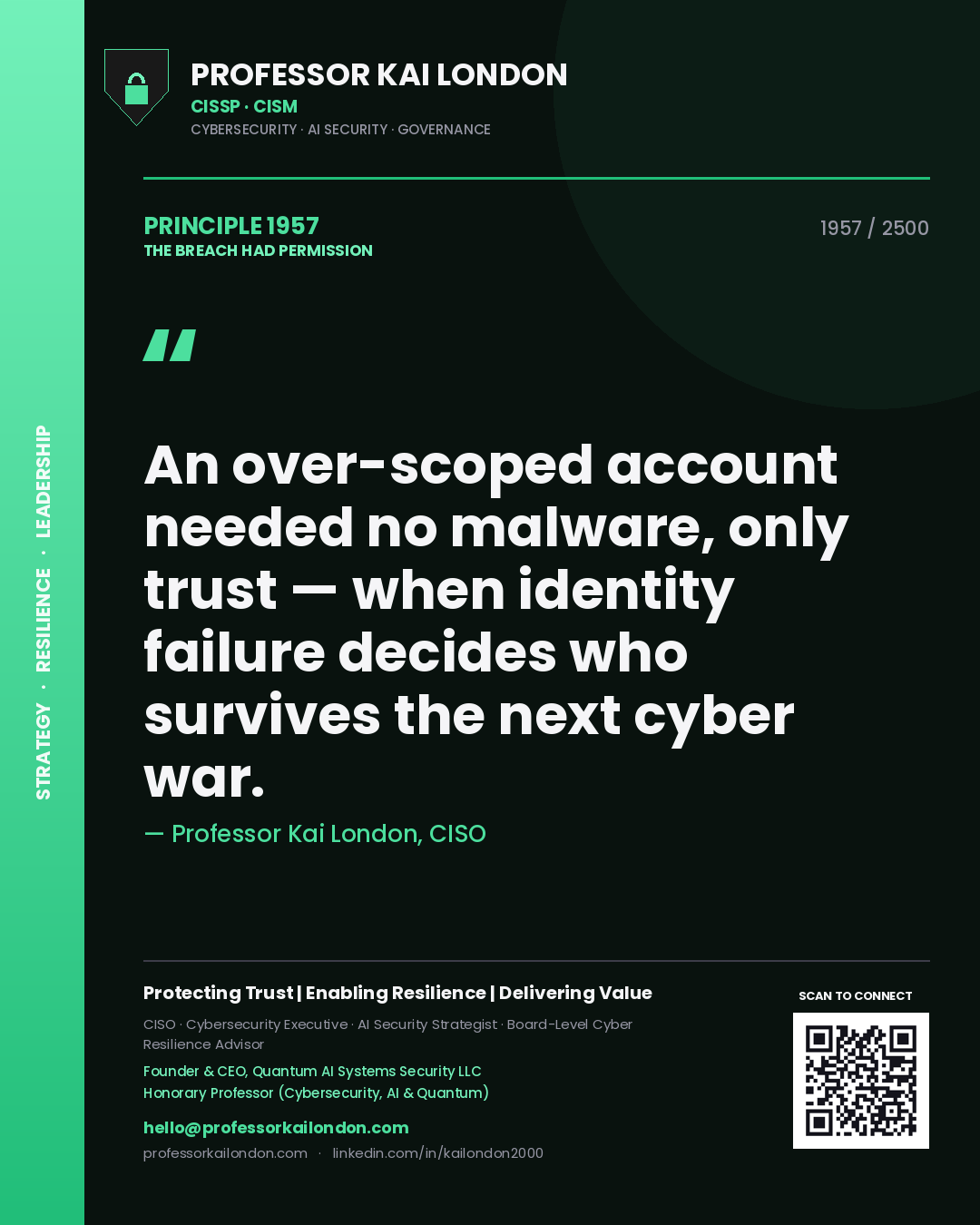
Professor Kai London principle 1957: An over-scoped account needed no malware, only trust — when identity failure decides who survives the next cyber war.
Principle 1957
Professor Kai London principle 1958: A consent-grant abuse turned a permission into a breach — when trust is verified continuously, not granted once.
Principle 1958
Professor Kai London principle 1959: An identity failure is why identity is the real perimeter — when identity failure decides who survives the next cyber war.
Principle 1959
Professor Kai London principle 1960: A trusted session survived because Zero Trust was a slogan, not a system — because the attacker signed in with something you issued.
Principle 1960
Professor Kai London principle 1961: An inherited permission looked authorised the whole way in — because the attacker did not break in; it signed in.
Principle 1961
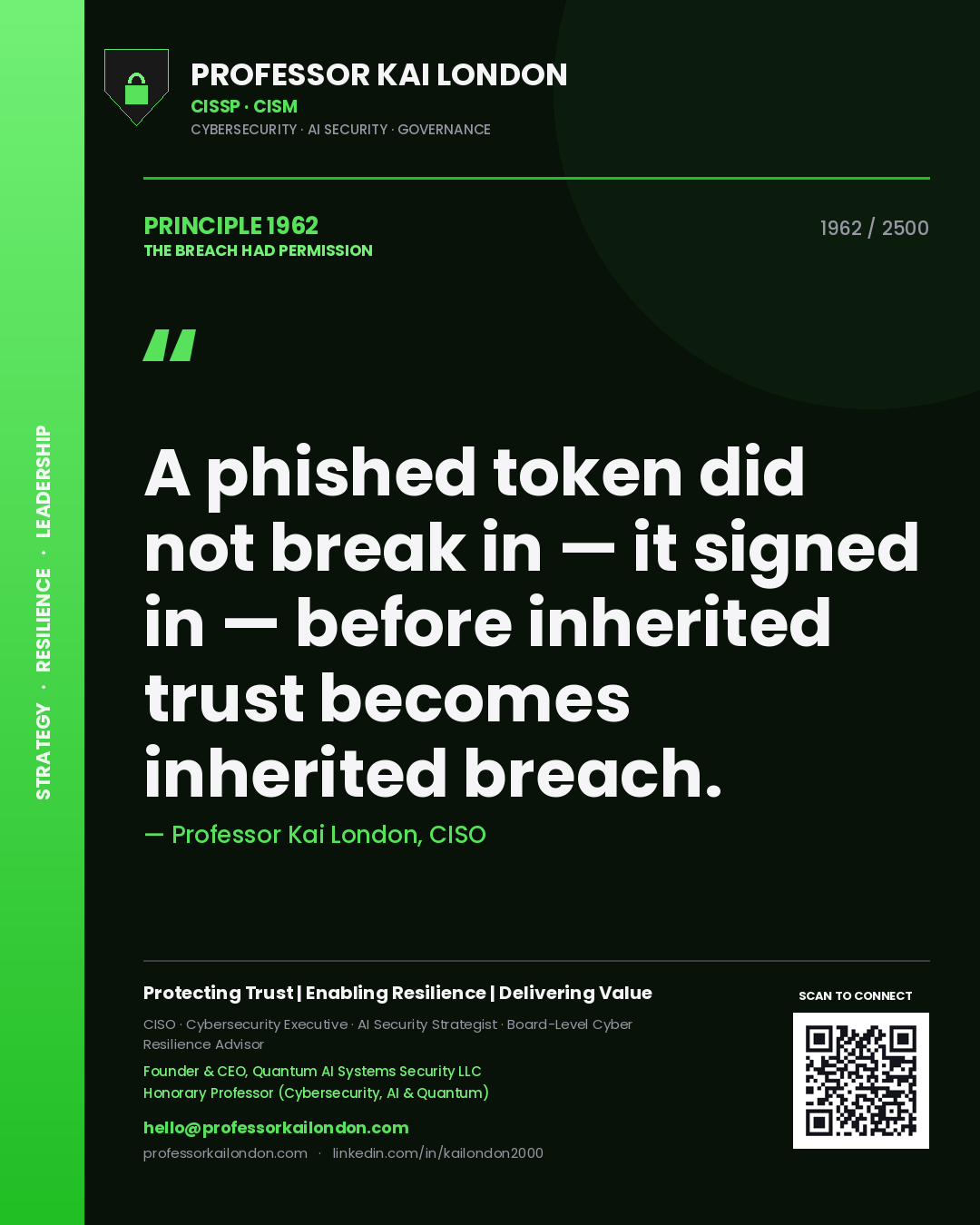
Professor Kai London principle 1962: A phished token did not break in — it signed in — before inherited trust becomes inherited breach.
Principle 1962
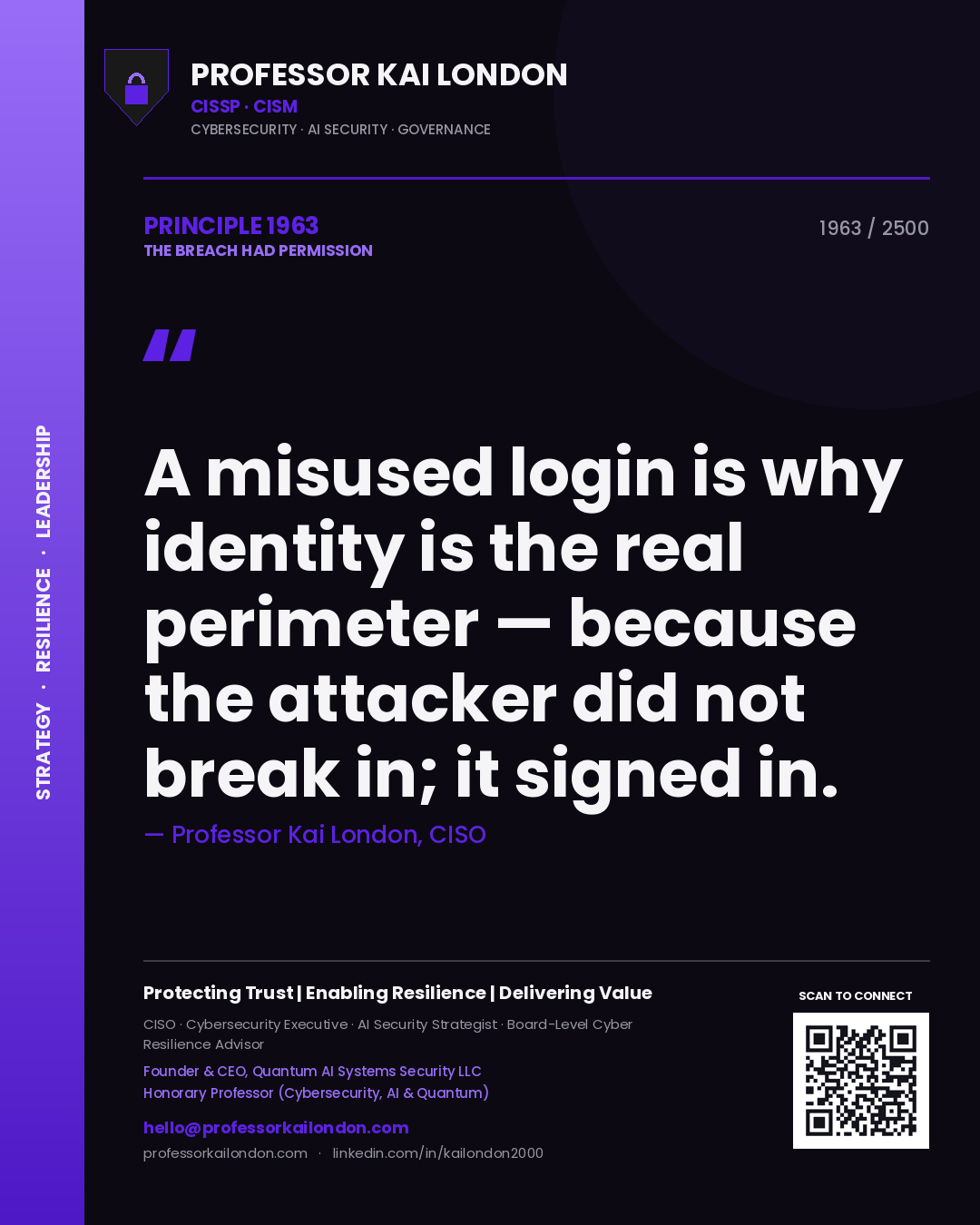
Professor Kai London principle 1963: A misused login is why identity is the real perimeter — because the attacker did not break in; it signed in.
Principle 1963
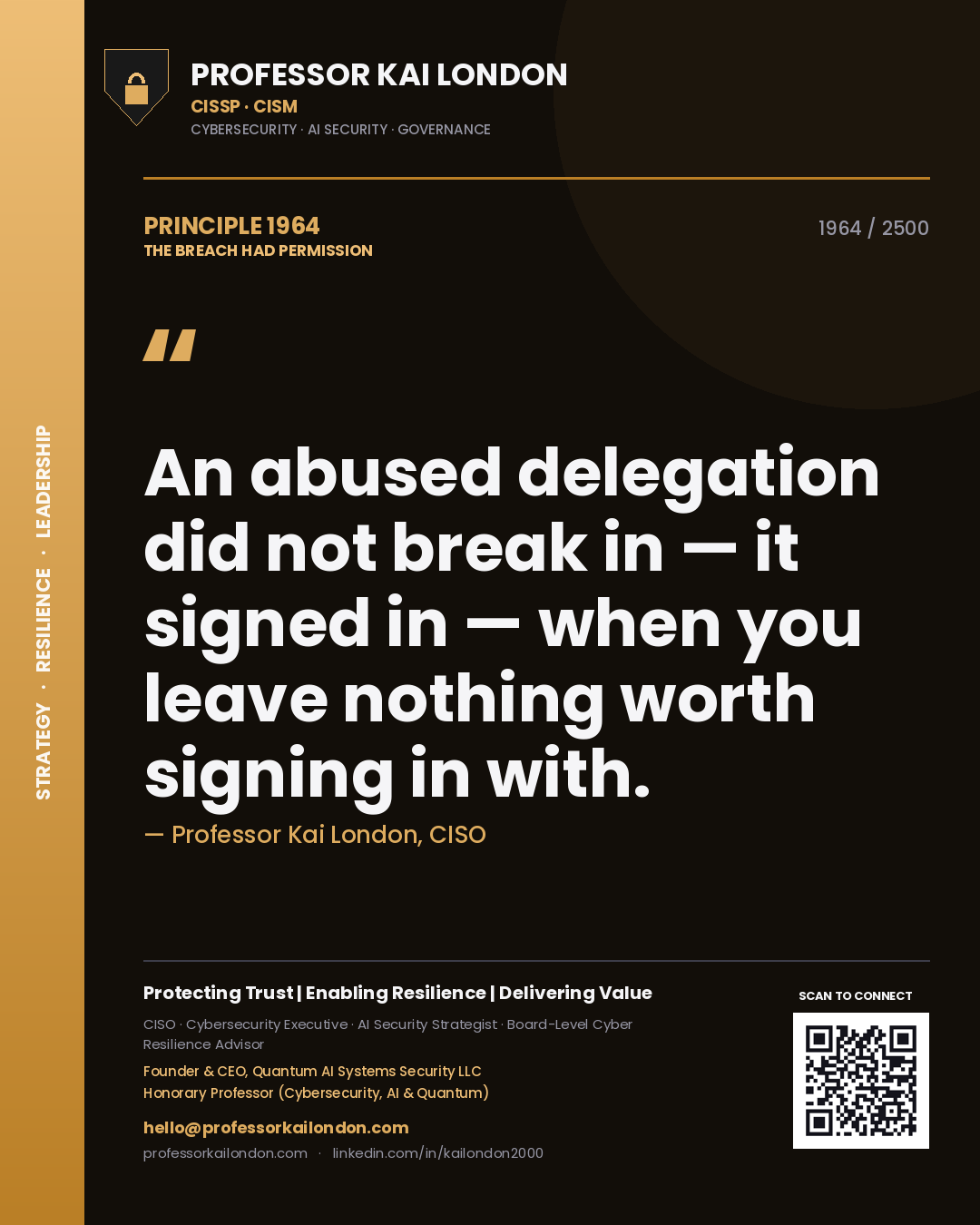
Professor Kai London principle 1964: An abused delegation did not break in — it signed in — when you leave nothing worth signing in with.
Principle 1964
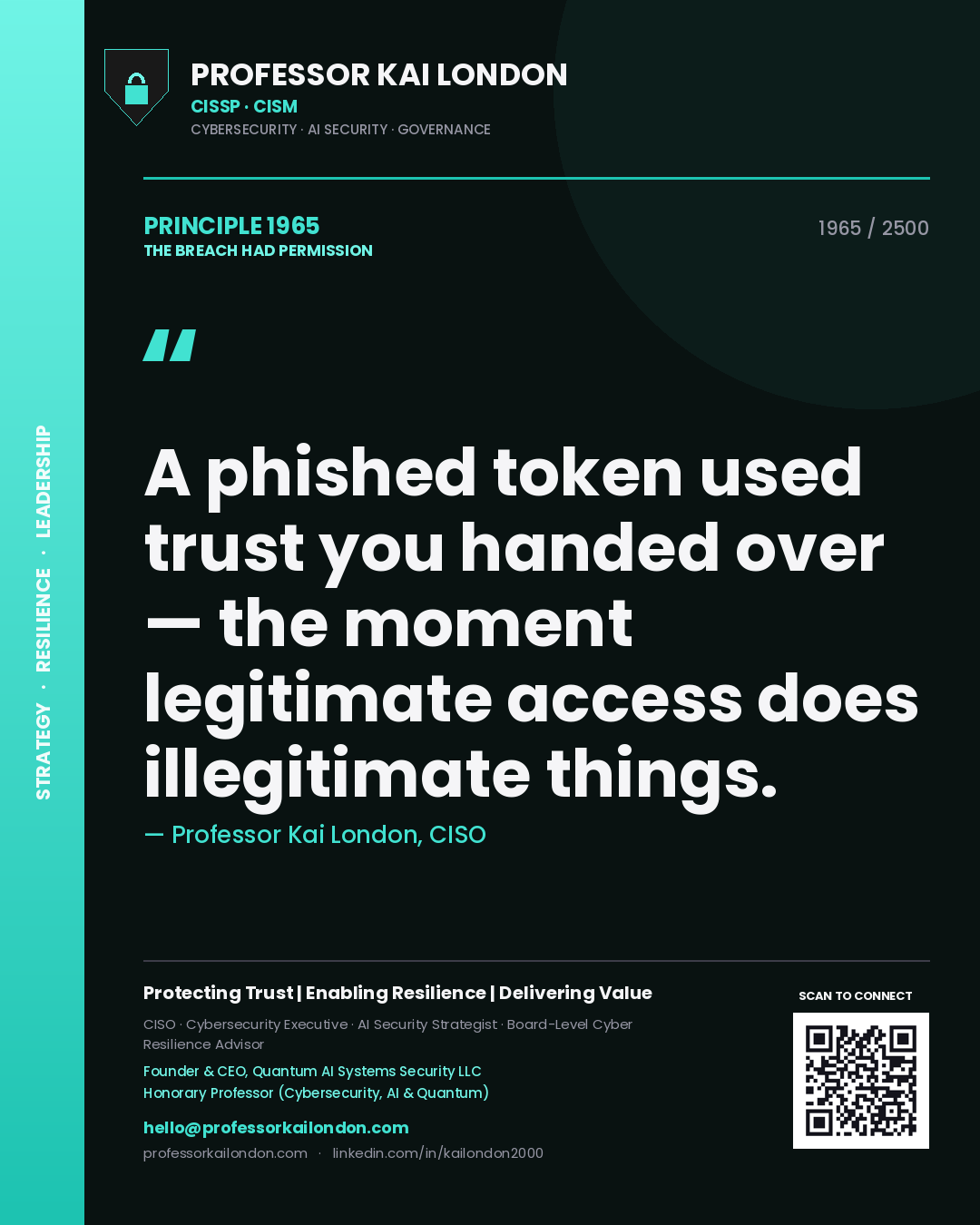
Professor Kai London principle 1965: A phished token used trust you handed over — the moment legitimate access does illegitimate things.
Principle 1965
Professor Kai London principle 1966: A legitimate token needed no malware, only trust — when every session is verified, not assumed.
Principle 1966
Professor Kai London principle 1967: A trusted device gone rogue is why identity is the real perimeter — when Zero Trust is a system, not a slogan.
Principle 1967
Professor Kai London principle 1968: An abused delegation turned a permission into a breach — the moment legitimate access does illegitimate things.
Principle 1968
Professor Kai London principle 1969: An abused delegation needed no malware, only trust — before an over-scoped account becomes an open one.
Principle 1969
Professor Kai London principle 1970: A lateral move via SSO needed no malware, only trust — because the attacker did not break in; it signed in.
Principle 1970
Professor Kai London principle 1971: An identity failure used trust you handed over — before inherited trust becomes inherited breach.
Principle 1971
Professor Kai London principle 1972: The attacker needed no malware, only trust — before an over-scoped account becomes an open one.
Principle 1972
Professor Kai London principle 1973: A legitimate API key exploited access no one revoked — when every permission is earned, watched, and expired.
Principle 1973
Professor Kai London principle 1974: A valid credential turned access into impact — when every session is verified, not assumed.
Principle 1974
Professor Kai London principle 1975: A lateral move via SSO is why identity is the real perimeter — before an over-scoped account becomes an open one.
Principle 1975
Professor Kai London principle 1976: A standing privilege looked exactly like a legitimate user — before inherited trust becomes inherited breach.
Principle 1976
Professor Kai London principle 1977: A phished token walked through a door you left open — when Zero Trust is a system, not a slogan.
Principle 1977
Professor Kai London principle 1978: A legitimate API key survived because Zero Trust was a slogan, not a system — because the attacker did not break in; it signed in.
Principle 1978
Professor Kai London principle 1979: A lateral move via SSO did not break in — it signed in — when you leave nothing worth signing in with.
Principle 1979
Professor Kai London principle 1980: A misused login used trust you handed over — because the goal is to leave attackers nothing to sign in with.
Principle 1980
Professor Kai London principle 1981: The attacker turned access into impact — before inherited trust becomes inherited breach.
Principle 1981
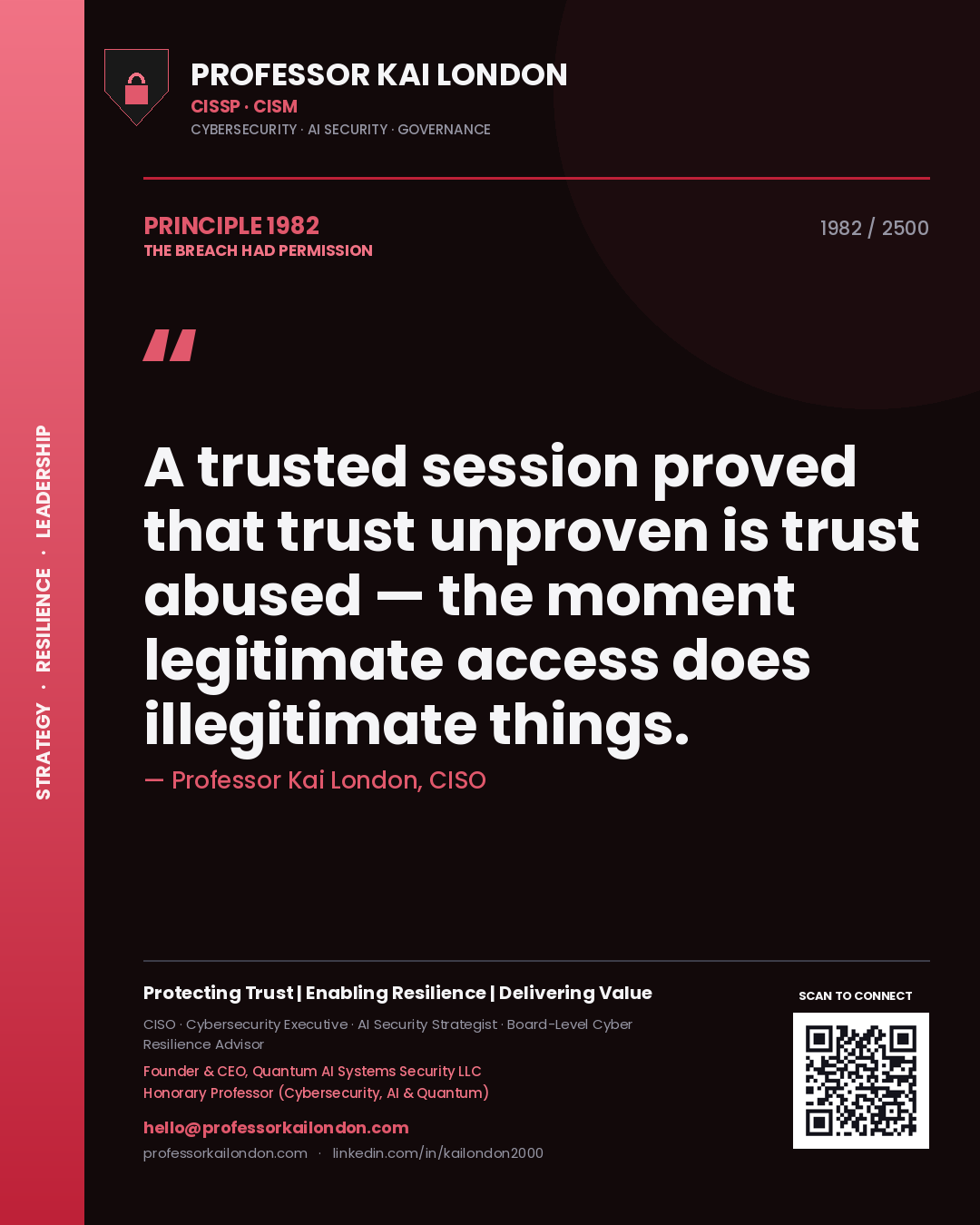
Professor Kai London principle 1982: A trusted session proved that trust unproven is trust abused — the moment legitimate access does illegitimate things.
Principle 1982
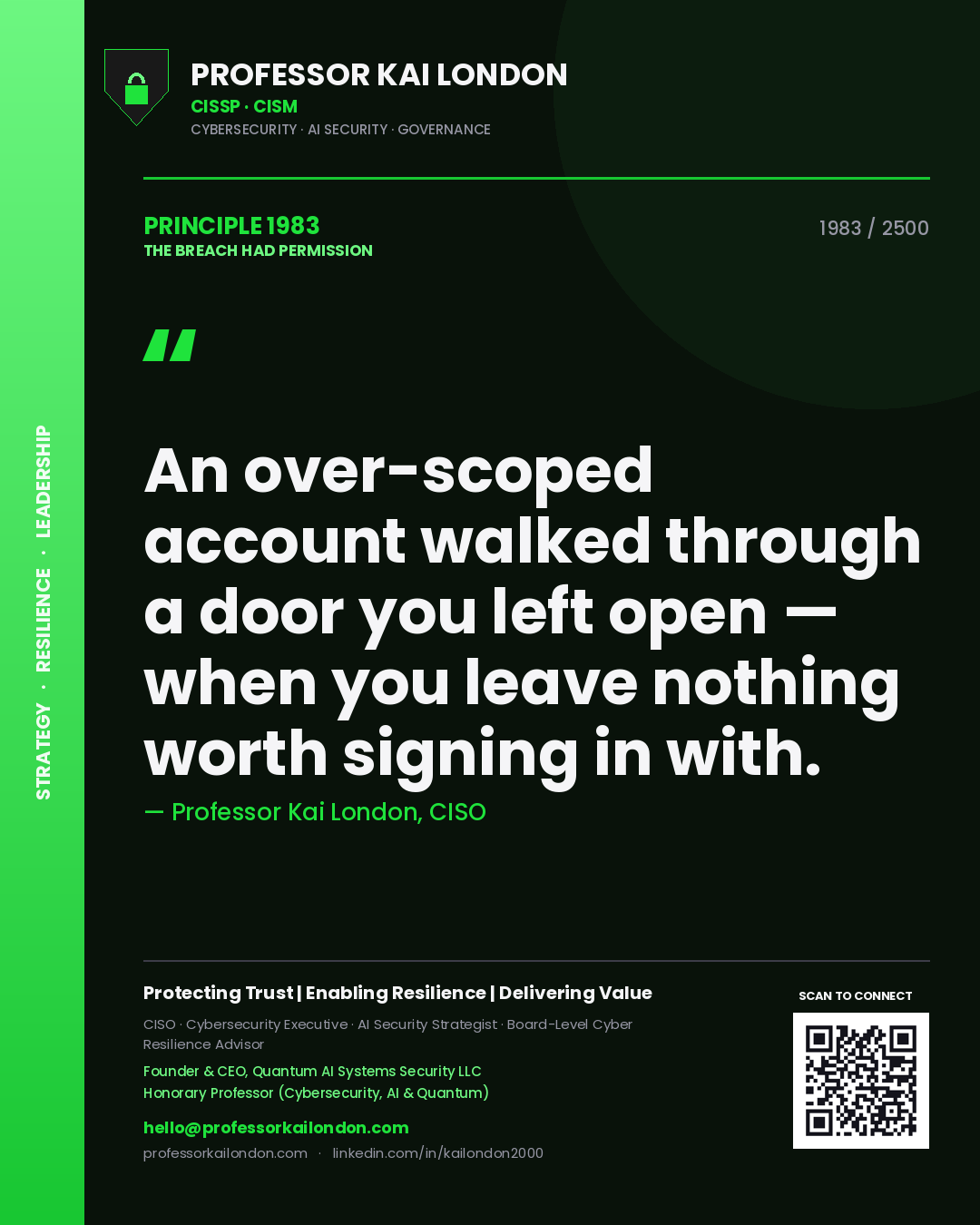
Professor Kai London principle 1983: An over-scoped account walked through a door you left open — when you leave nothing worth signing in with.
Principle 1983
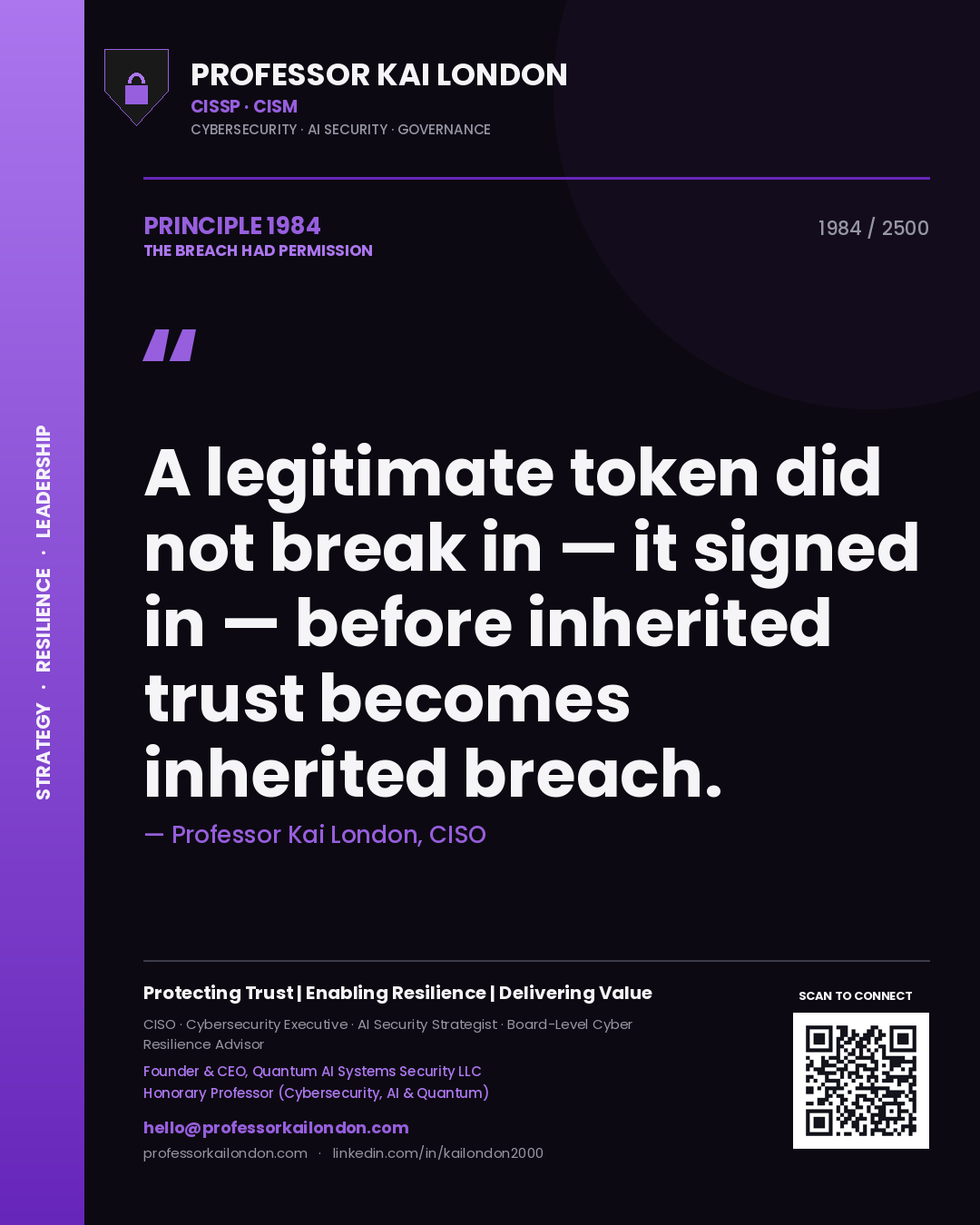
Professor Kai London principle 1984: A legitimate token did not break in — it signed in — before inherited trust becomes inherited breach.
Principle 1984
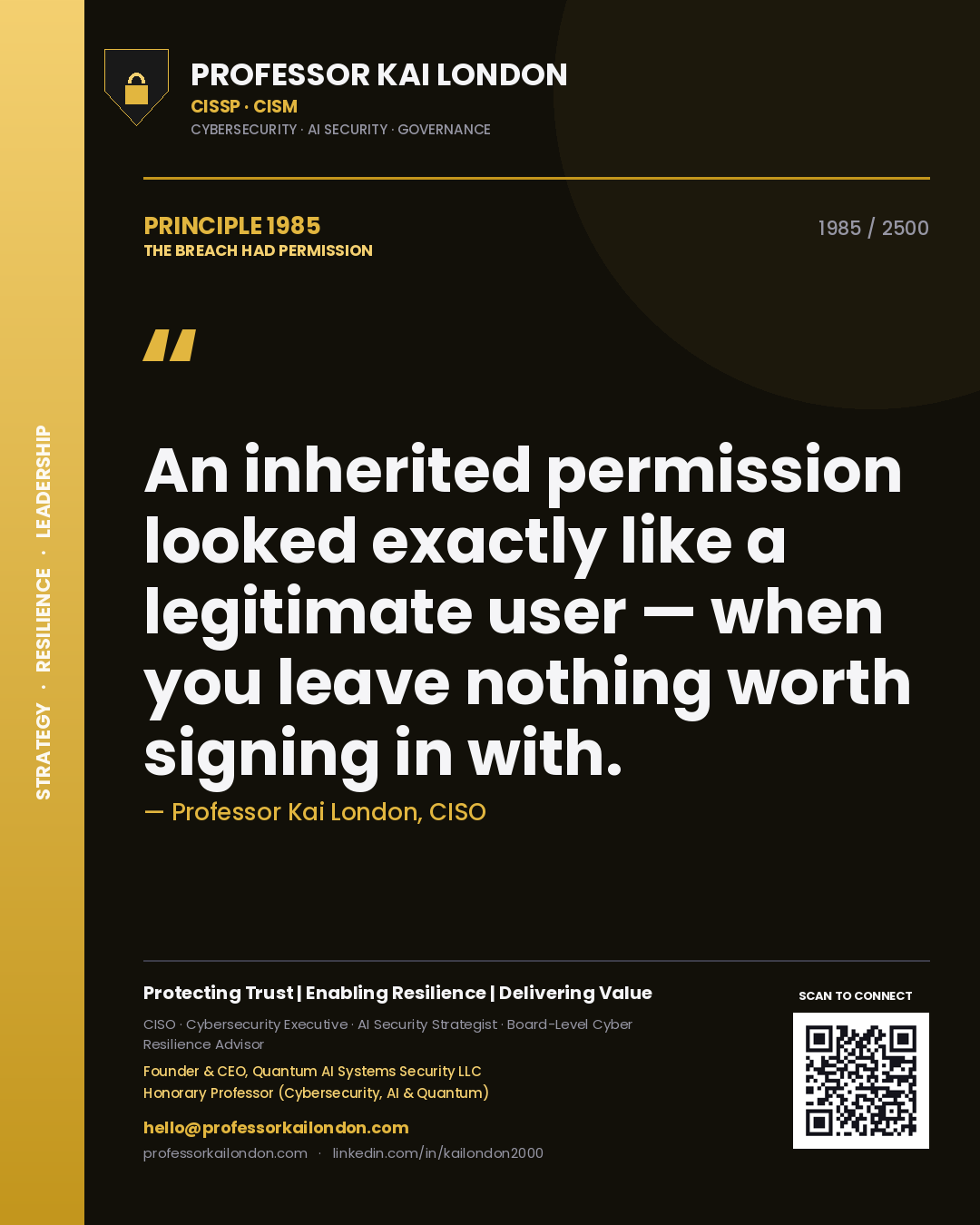
Professor Kai London principle 1985: An inherited permission looked exactly like a legitimate user — when you leave nothing worth signing in with.
Principle 1985
Professor Kai London principle 1986: An abused delegation turned a permission into a breach — when Zero Trust is a system, not a slogan.
Principle 1986
Professor Kai London principle 1987: A valid credential became insider risk the moment it authenticated — when you leave nothing worth signing in with.
Principle 1987
Professor Kai London principle 1988: A trusted device gone rogue became insider risk the moment it authenticated — when identity failure decides who survives the next cyber war.
Principle 1988
Professor Kai London principle 1989: A trusted session turned access into impact — before an over-scoped account becomes an open one.
Principle 1989
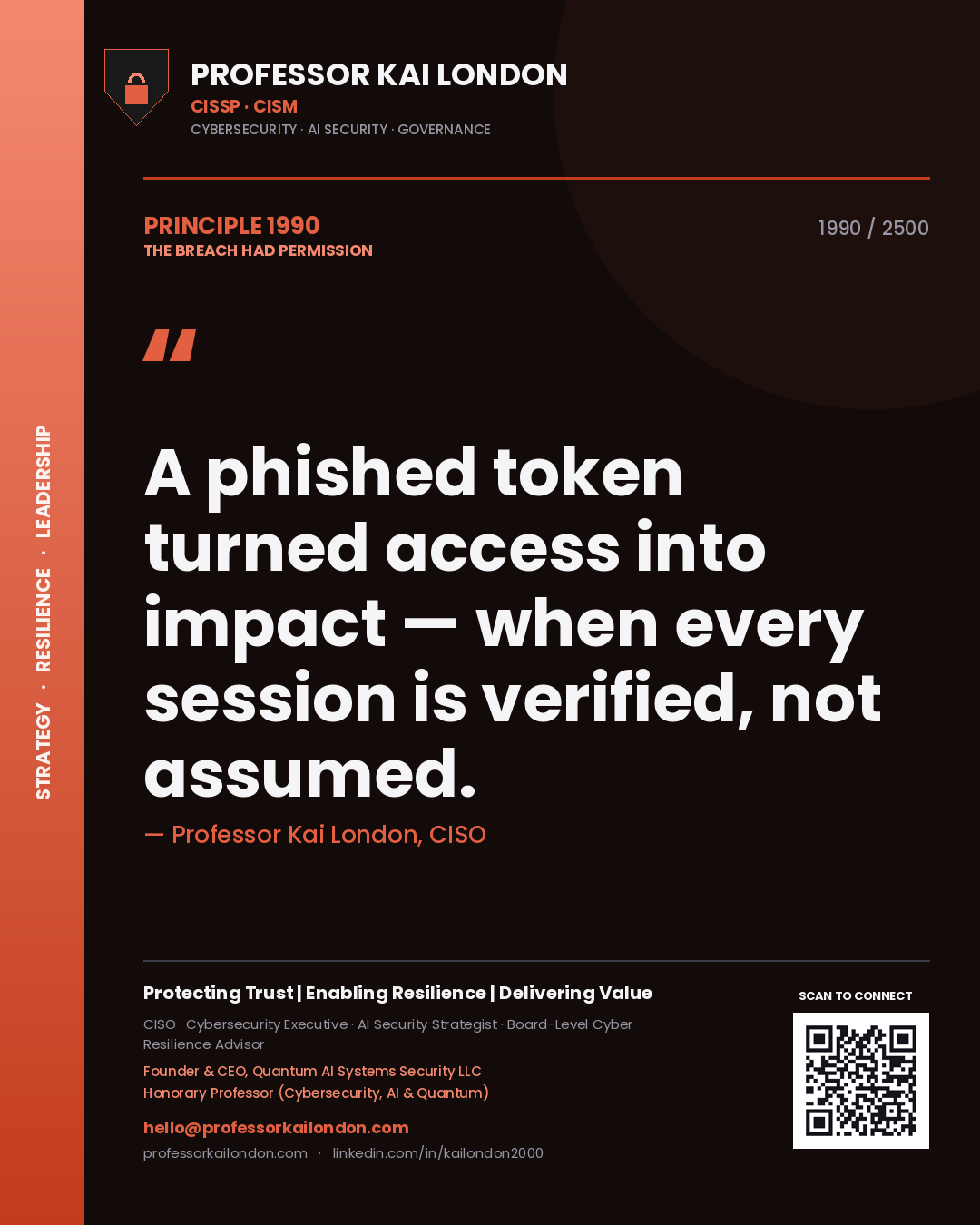
Professor Kai London principle 1990: A phished token turned access into impact — when every session is verified, not assumed.
Principle 1990
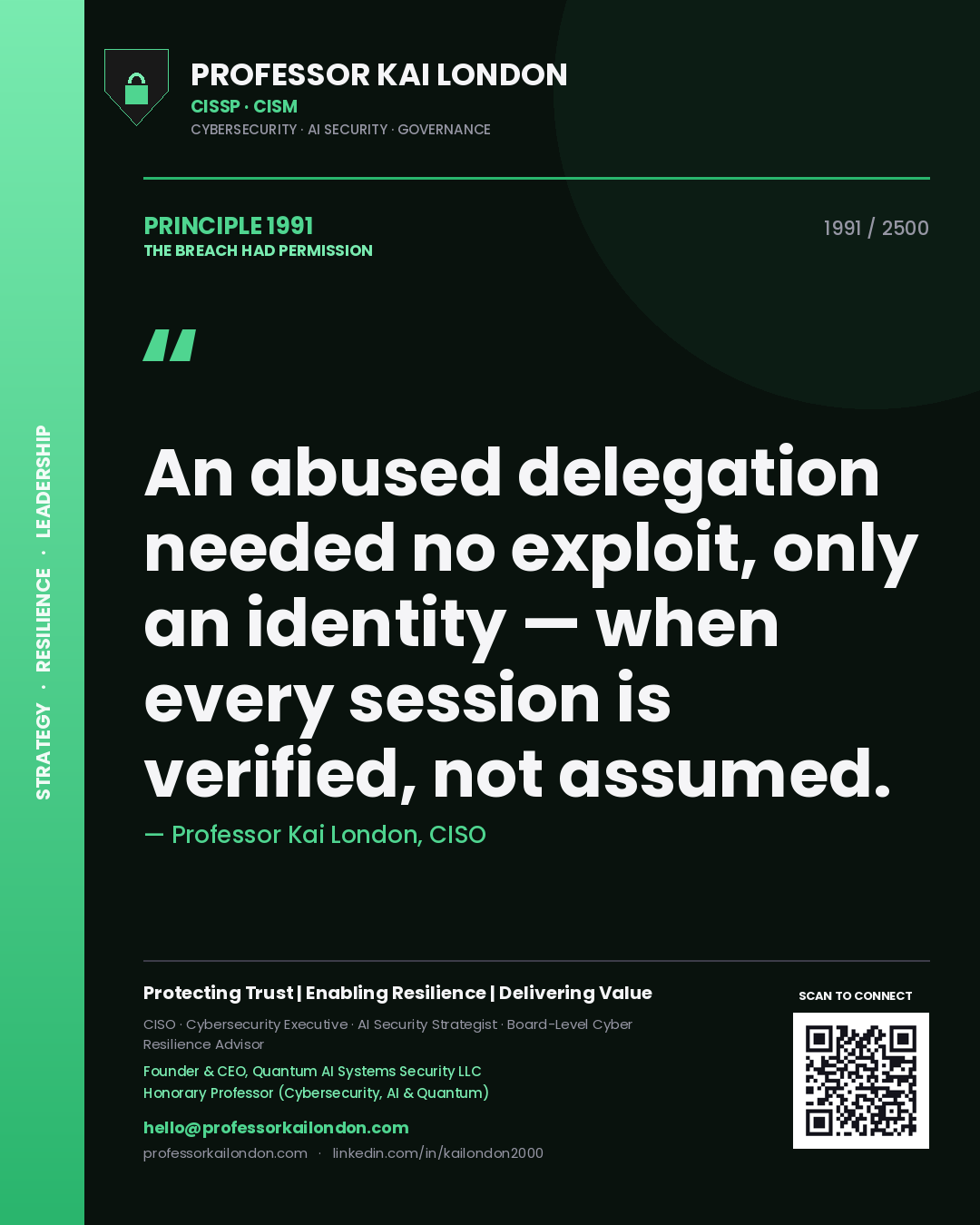
Professor Kai London principle 1991: An abused delegation needed no exploit, only an identity — when every session is verified, not assumed.
Principle 1991
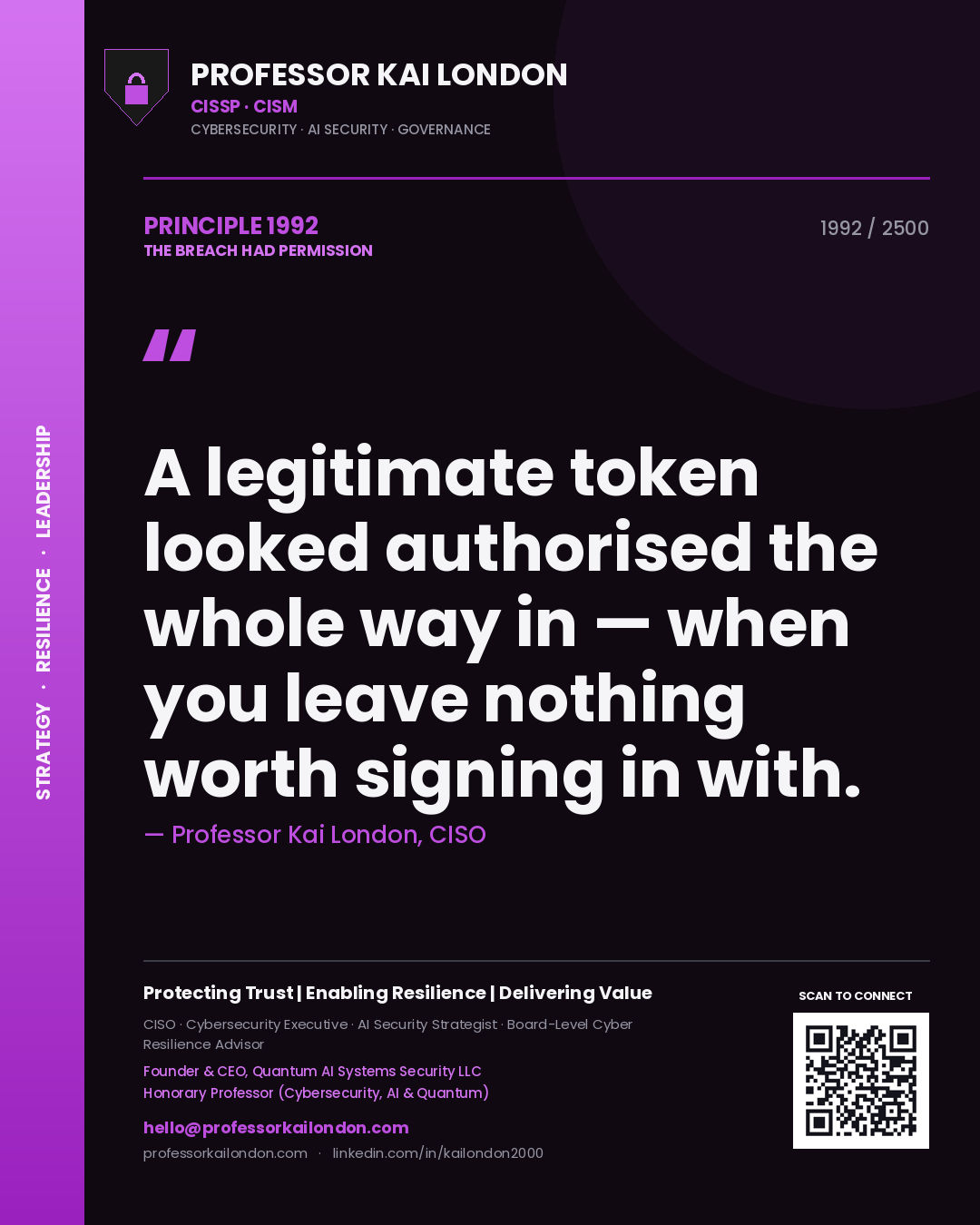
Professor Kai London principle 1992: A legitimate token looked authorised the whole way in — when you leave nothing worth signing in with.
Principle 1992
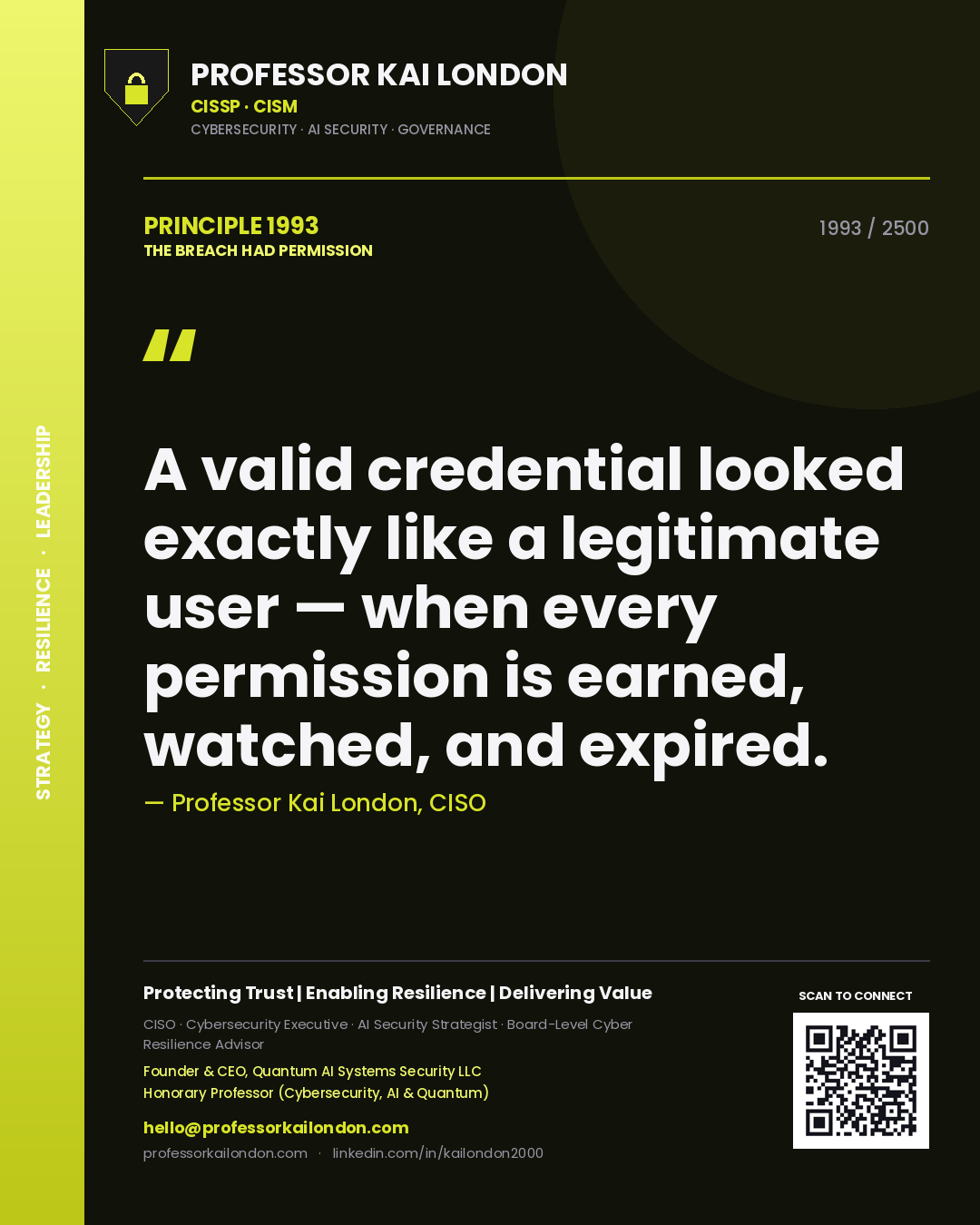
Professor Kai London principle 1993: A valid credential looked exactly like a legitimate user — when every permission is earned, watched, and expired.
Principle 1993
Professor Kai London principle 1994: A legitimate API key proved that trust unproven is trust abused — when you remove the credential before the adversary finds it.
Principle 1994
Professor Kai London principle 1995: An inherited permission turned access into impact — when you remove the credential before the adversary finds it.
Principle 1995
Professor Kai London principle 1996: An abused delegation looked authorised the whole way in.
Principle 1996
Professor Kai London principle 1997: A trusted session looked authorised the whole way in — when you remove the credential before the adversary finds it.
Principle 1997
Professor Kai London principle 1998: A legitimate token needed no malware, only trust — when you leave nothing worth signing in with.
Principle 1998
Professor Kai London principle 1999: An abused delegation exploited access no one revoked — when you remove the credential before the adversary finds it.
Principle 1999
Professor Kai London principle 2000: An over-scoped account exploited access no one revoked — when every session is verified, not assumed.
Principle 2000