The Breach Had Permission — Gallery (Page 13 of 100)
Professor Kai London principle 1201: A lateral move via SSO did not break in — it signed in — the moment legitimate access does illegitimate things.
Principle 1201
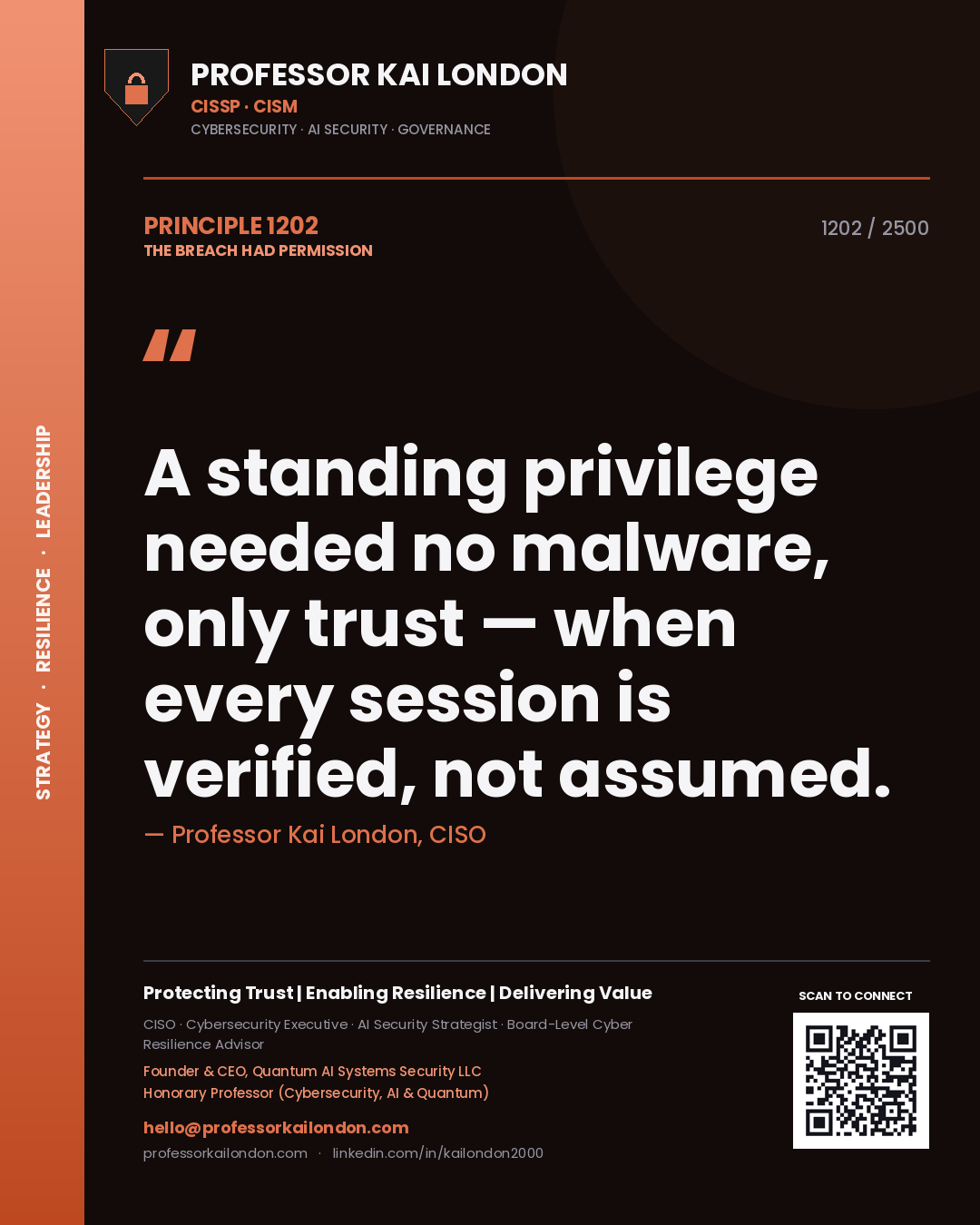
Professor Kai London principle 1202: A standing privilege needed no malware, only trust — when every session is verified, not assumed.
Principle 1202
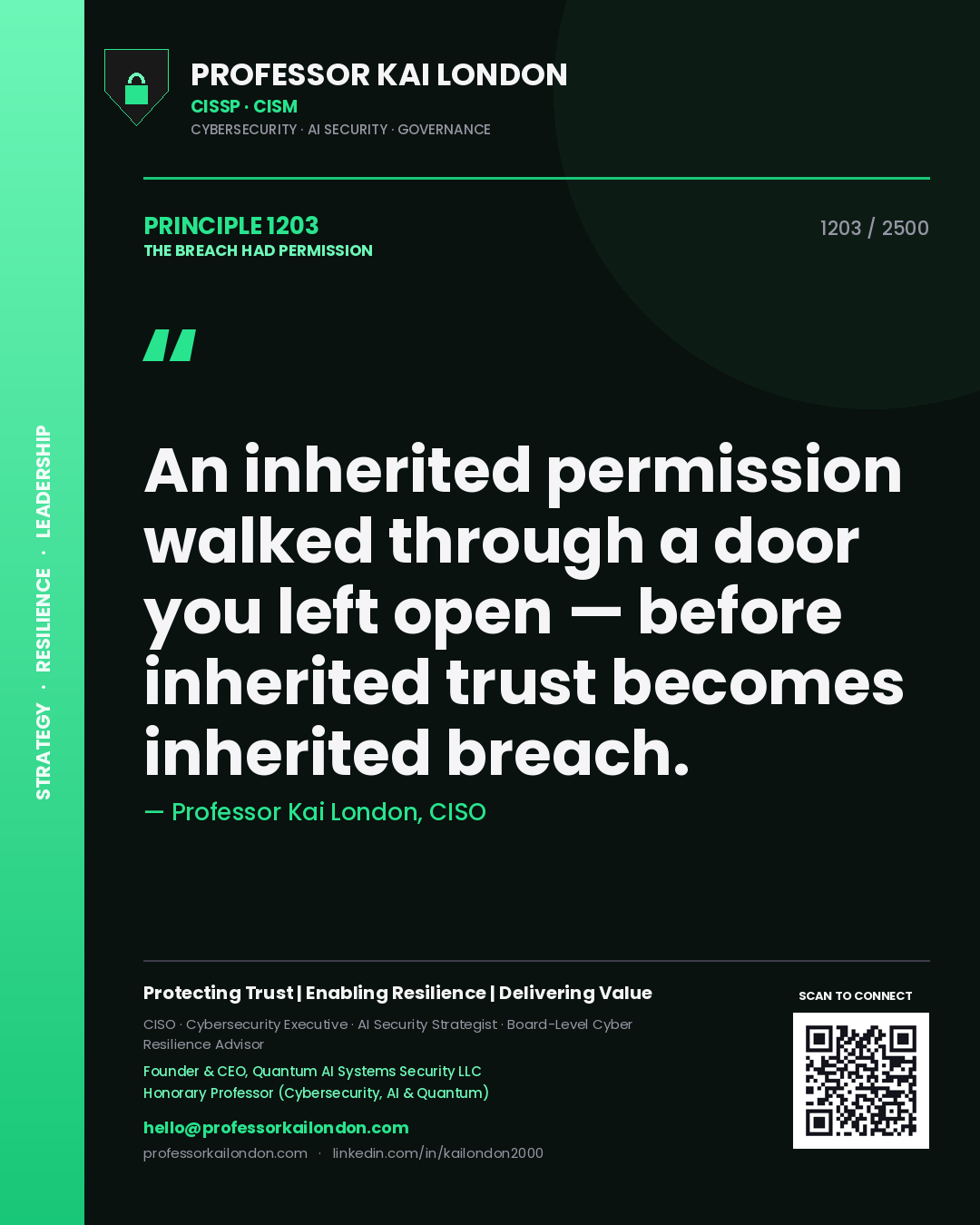
Professor Kai London principle 1203: An inherited permission walked through a door you left open — before inherited trust becomes inherited breach.
Principle 1203
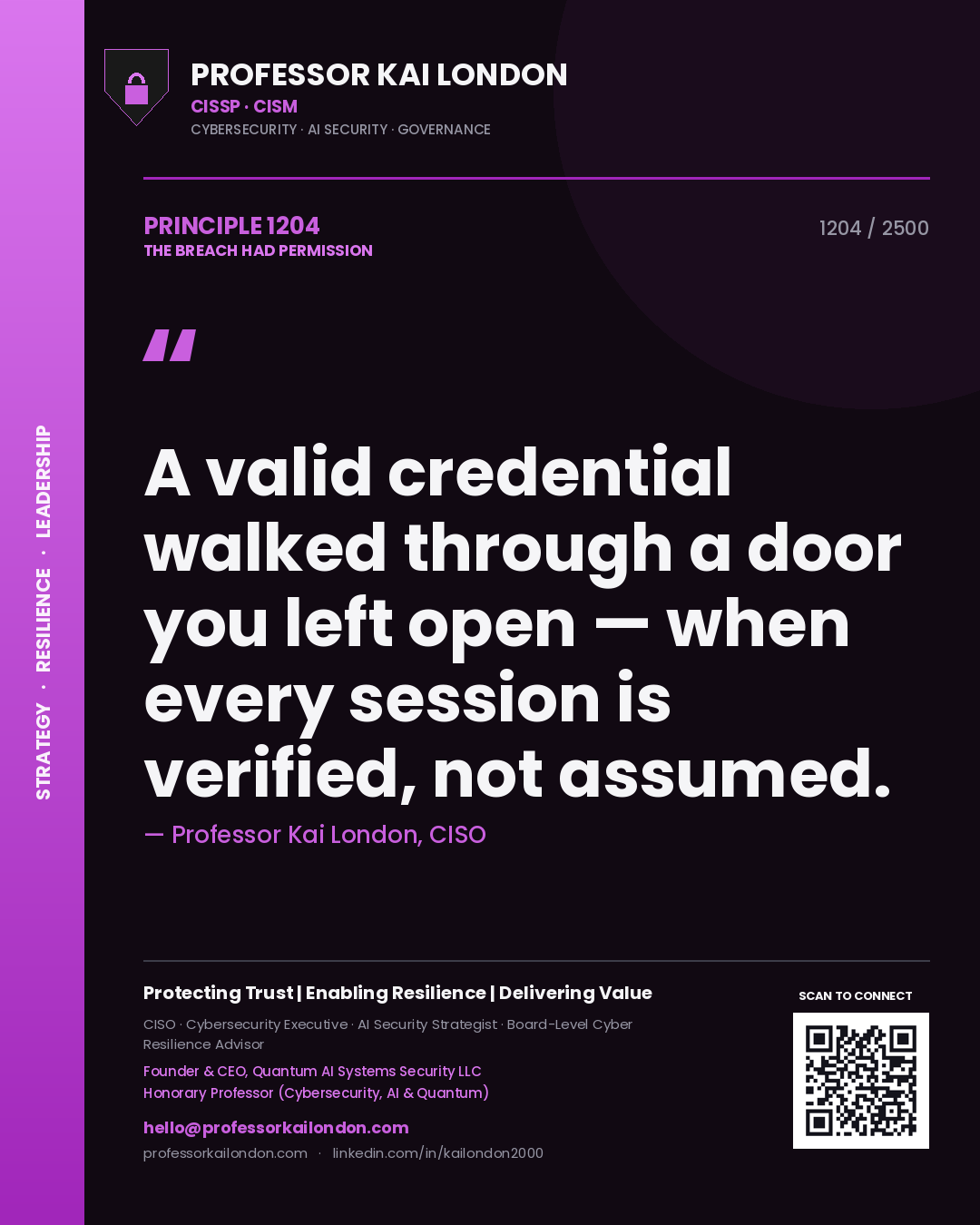
Professor Kai London principle 1204: A valid credential walked through a door you left open — when every session is verified, not assumed.
Principle 1204
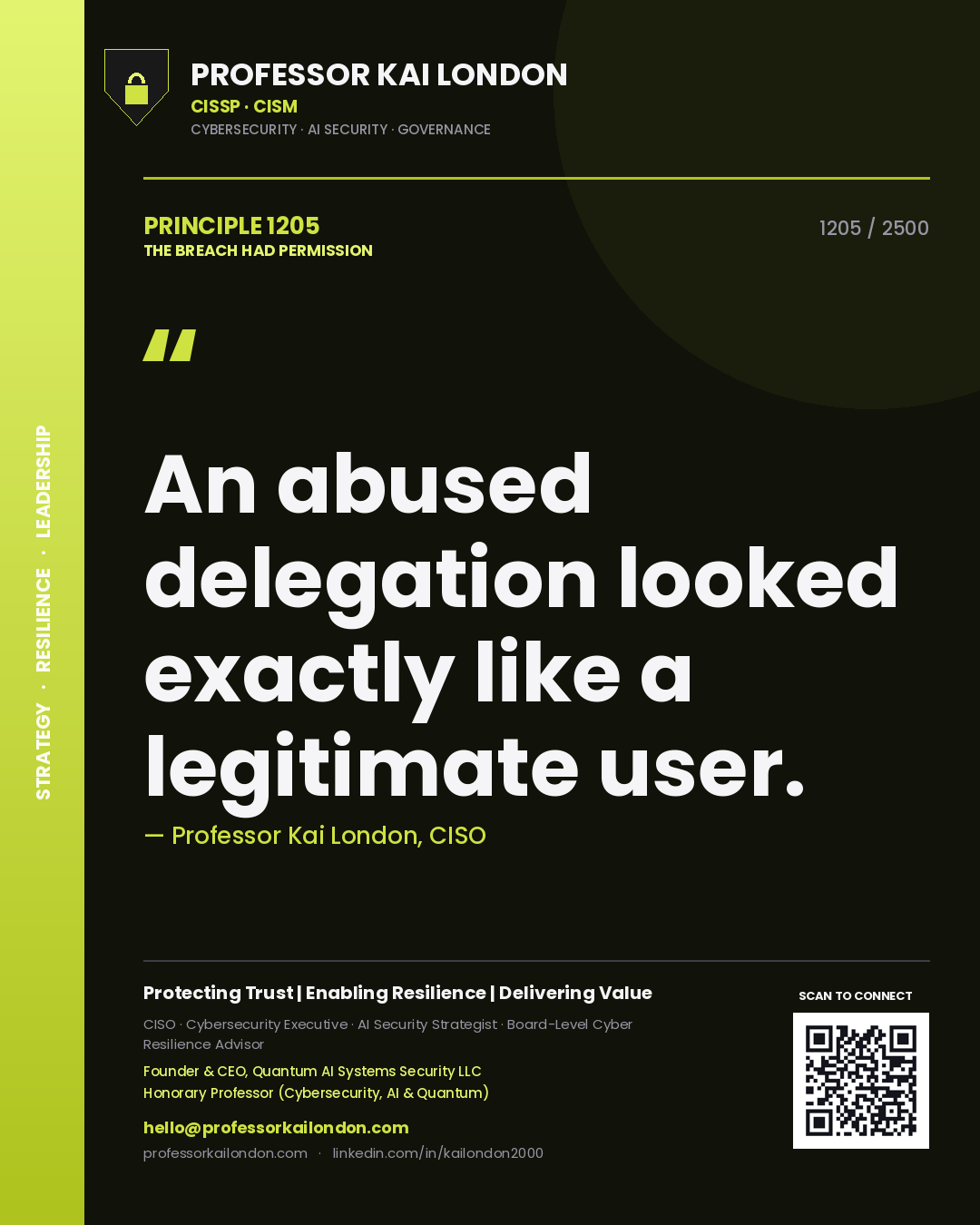
Professor Kai London principle 1205: An abused delegation looked exactly like a legitimate user.
Principle 1205
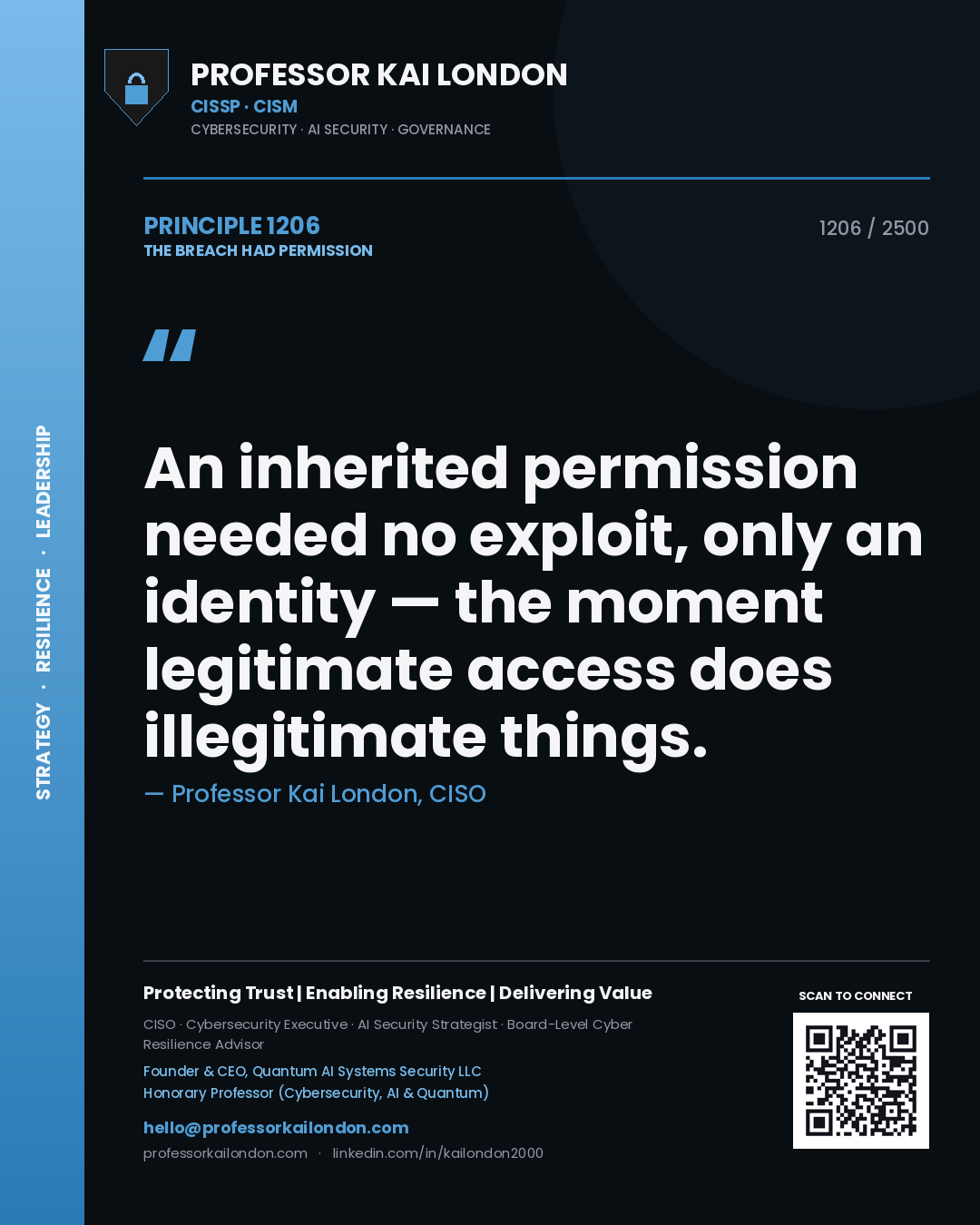
Professor Kai London principle 1206: An inherited permission needed no exploit, only an identity — the moment legitimate access does illegitimate things.
Principle 1206
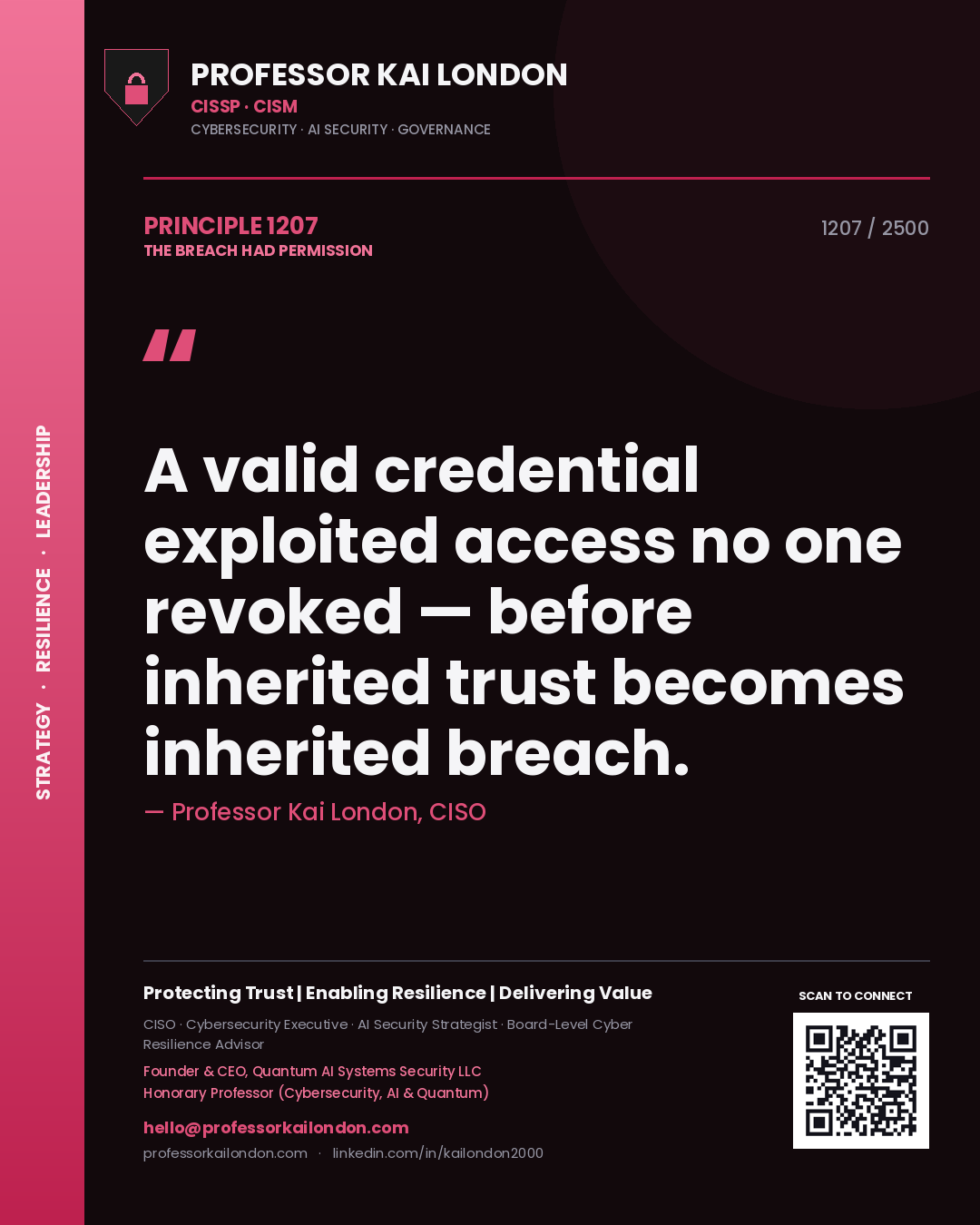
Professor Kai London principle 1207: A valid credential exploited access no one revoked — before inherited trust becomes inherited breach.
Principle 1207
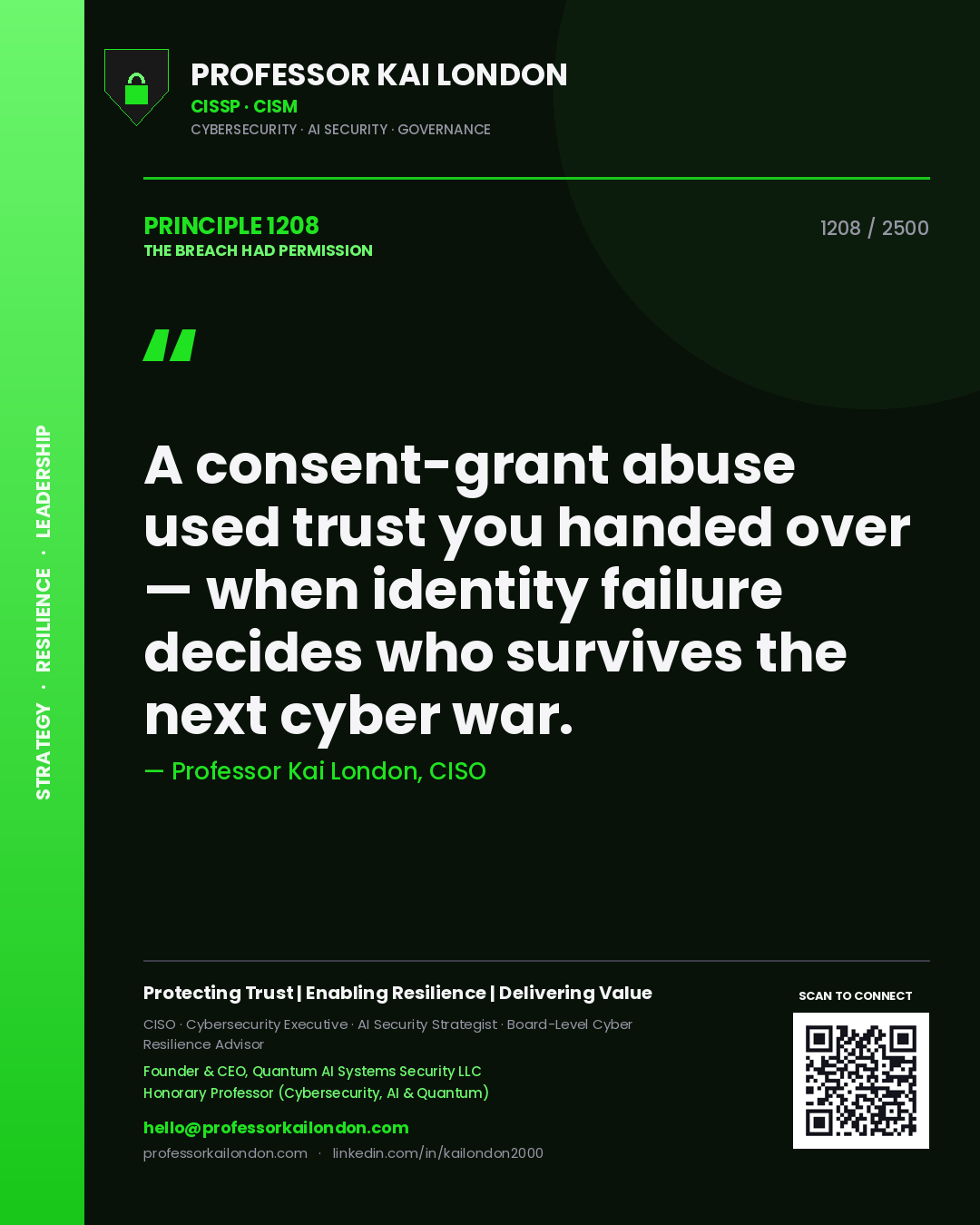
Professor Kai London principle 1208: A consent-grant abuse used trust you handed over — when identity failure decides who survives the next cyber war.
Principle 1208
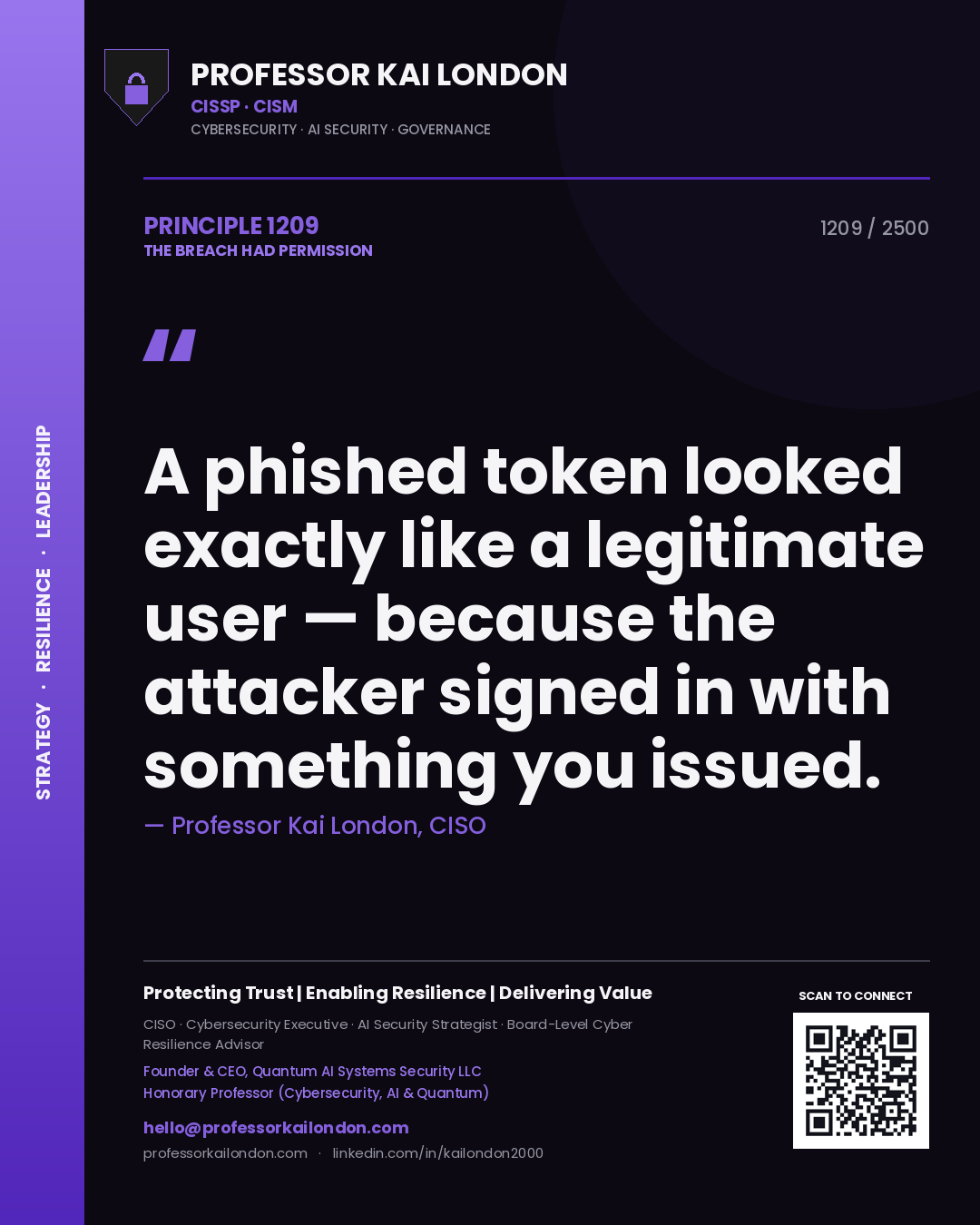
Professor Kai London principle 1209: A phished token looked exactly like a legitimate user — because the attacker signed in with something you issued.
Principle 1209
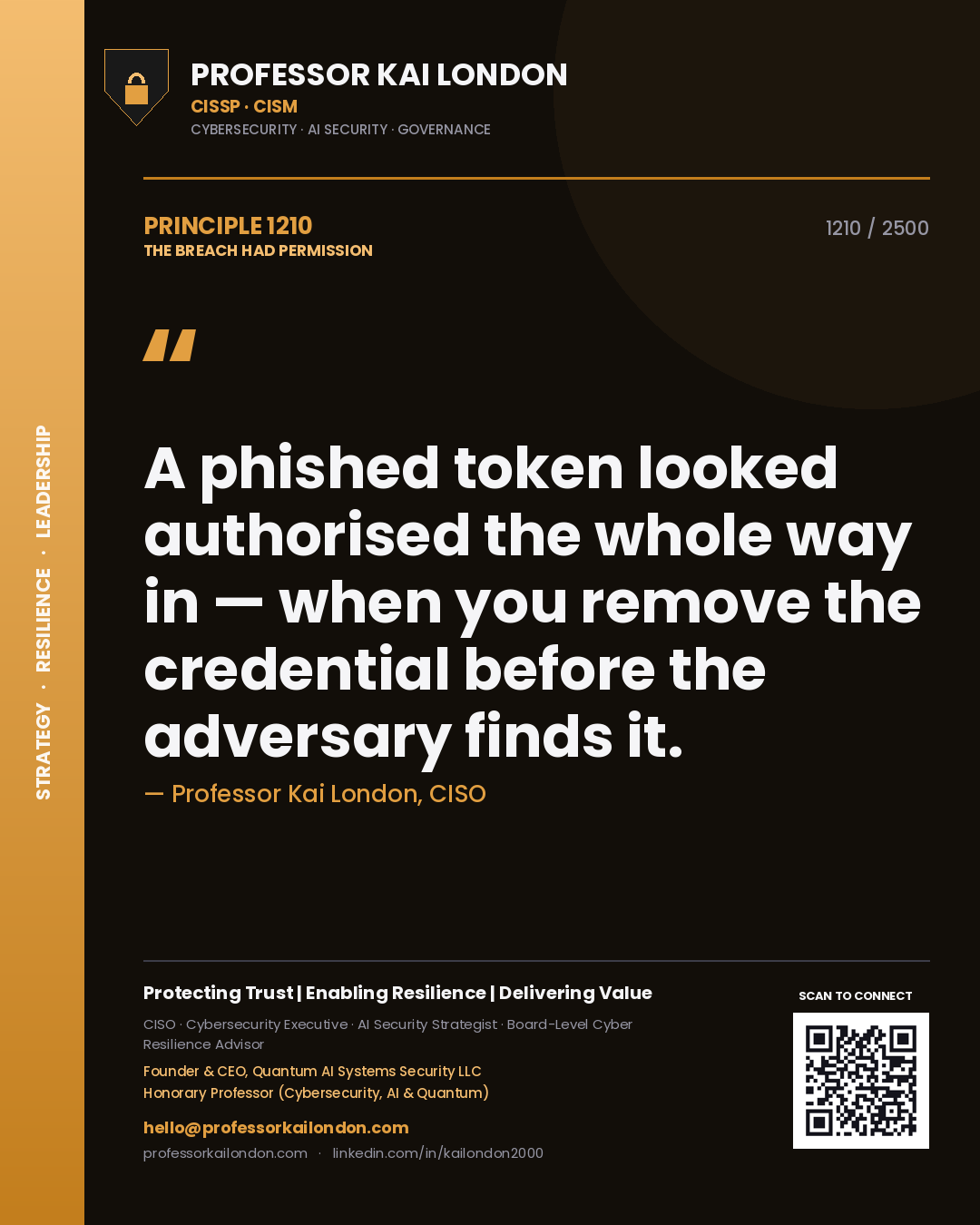
Professor Kai London principle 1210: A phished token looked authorised the whole way in — when you remove the credential before the adversary finds it.
Principle 1210
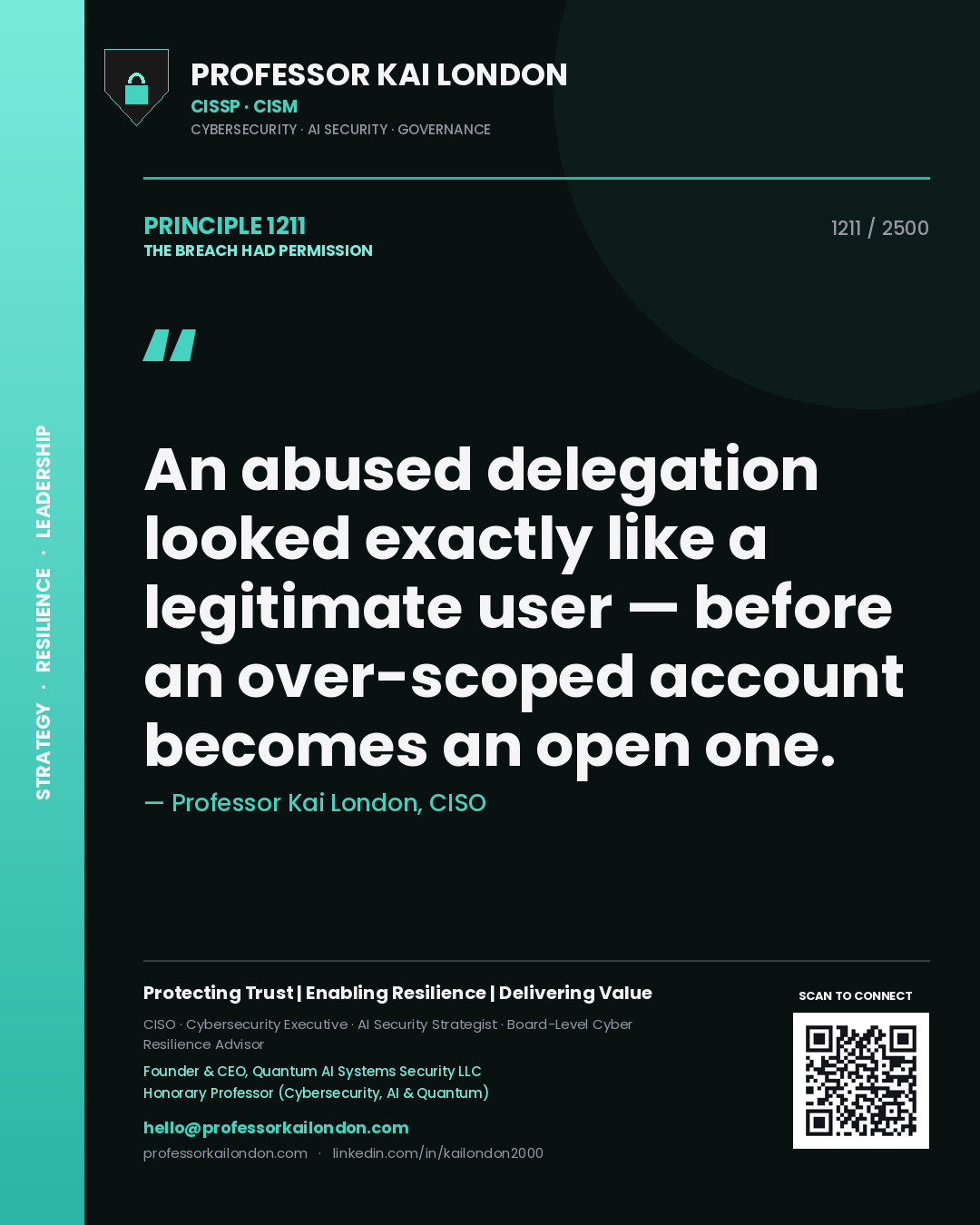
Professor Kai London principle 1211: An abused delegation looked exactly like a legitimate user — before an over-scoped account becomes an open one.
Principle 1211
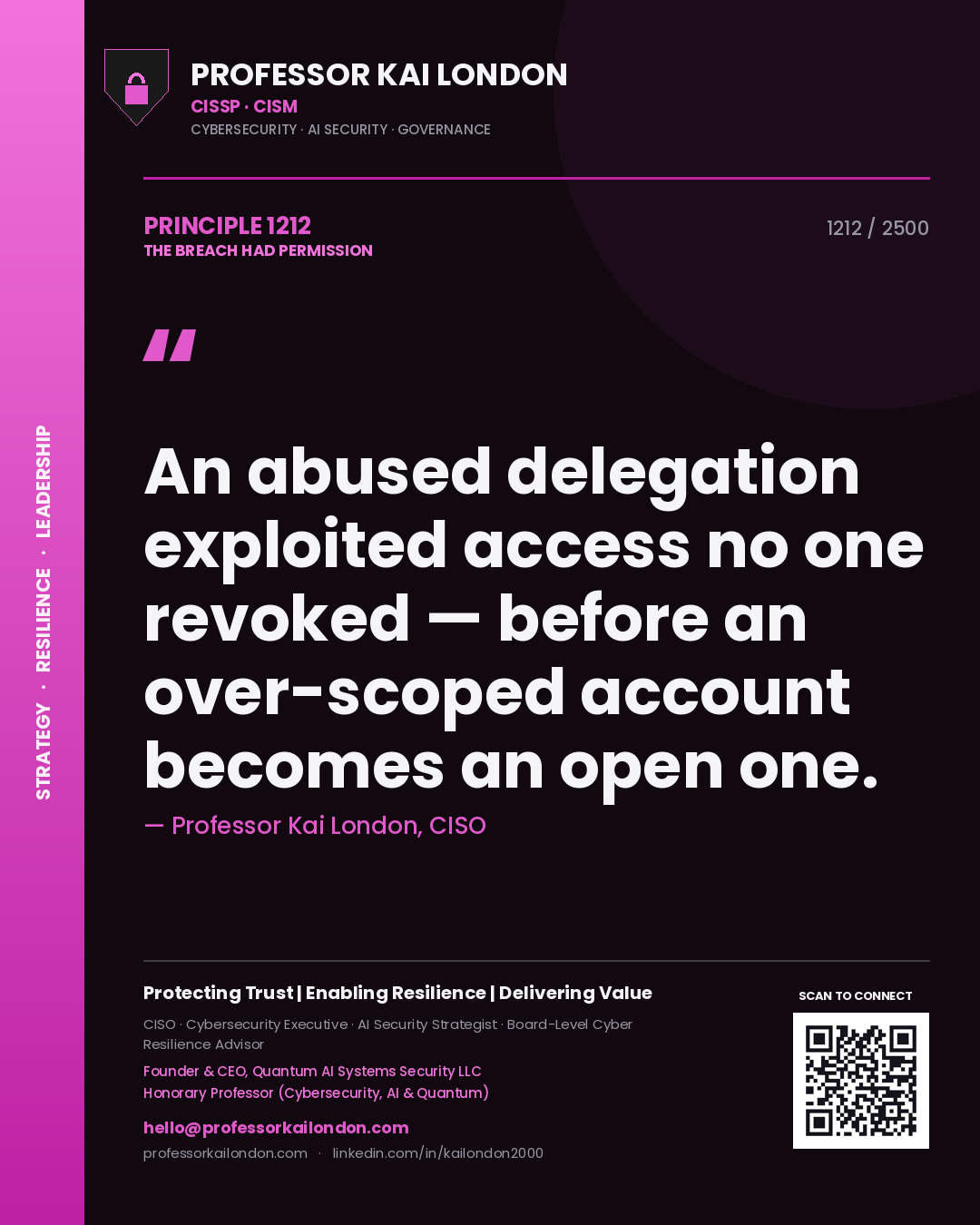
Professor Kai London principle 1212: An abused delegation exploited access no one revoked — before an over-scoped account becomes an open one.
Principle 1212
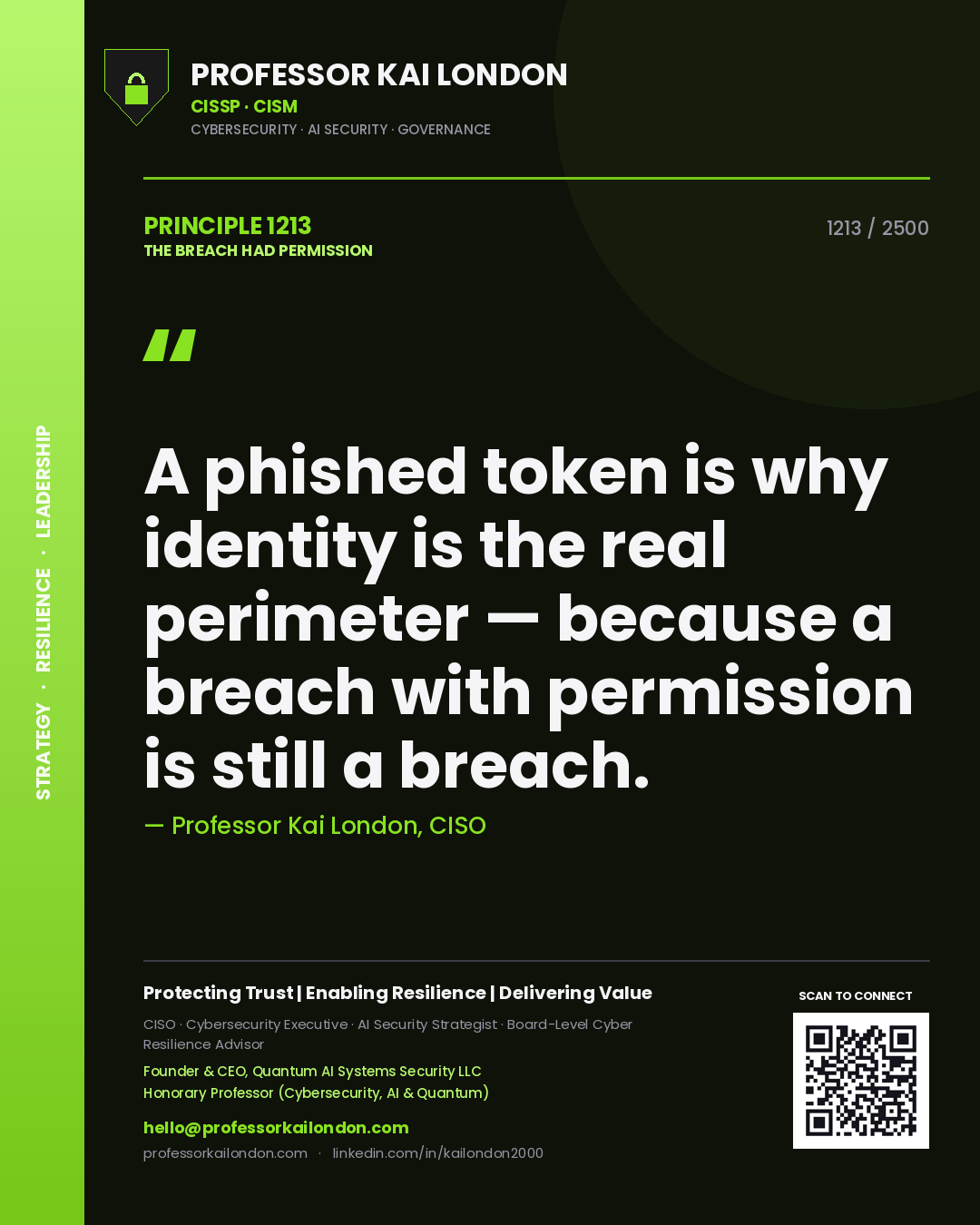
Professor Kai London principle 1213: A phished token is why identity is the real perimeter — because a breach with permission is still a breach.
Principle 1213
Professor Kai London principle 1214: A legitimate API key proved that trust unproven is trust abused — when trust is verified continuously, not granted once.
Principle 1214
Professor Kai London principle 1215: The attacker proved that trust unproven is trust abused — when you leave nothing worth signing in with.
Principle 1215
Professor Kai London principle 1216: A signed-in adversary used trust you handed over — when trust is verified continuously, not granted once.
Principle 1216
Professor Kai London principle 1217: An identity failure looked authorised the whole way in — when identity failure decides who survives the next cyber war.
Principle 1217
Professor Kai London principle 1218: An over-scoped account is why identity is the real perimeter — because the goal is to leave attackers nothing to sign in with.
Principle 1218
Professor Kai London principle 1219: A lateral move via SSO is why identity is the real perimeter — when identity failure decides who survives the next cyber war.
Principle 1219
Professor Kai London principle 1220: An identity failure turned access into impact — when you remove the credential before the adversary finds it.
Principle 1220
Professor Kai London principle 1221: A phished token became insider risk the moment it authenticated — before an over-scoped account becomes an open one.
Principle 1221
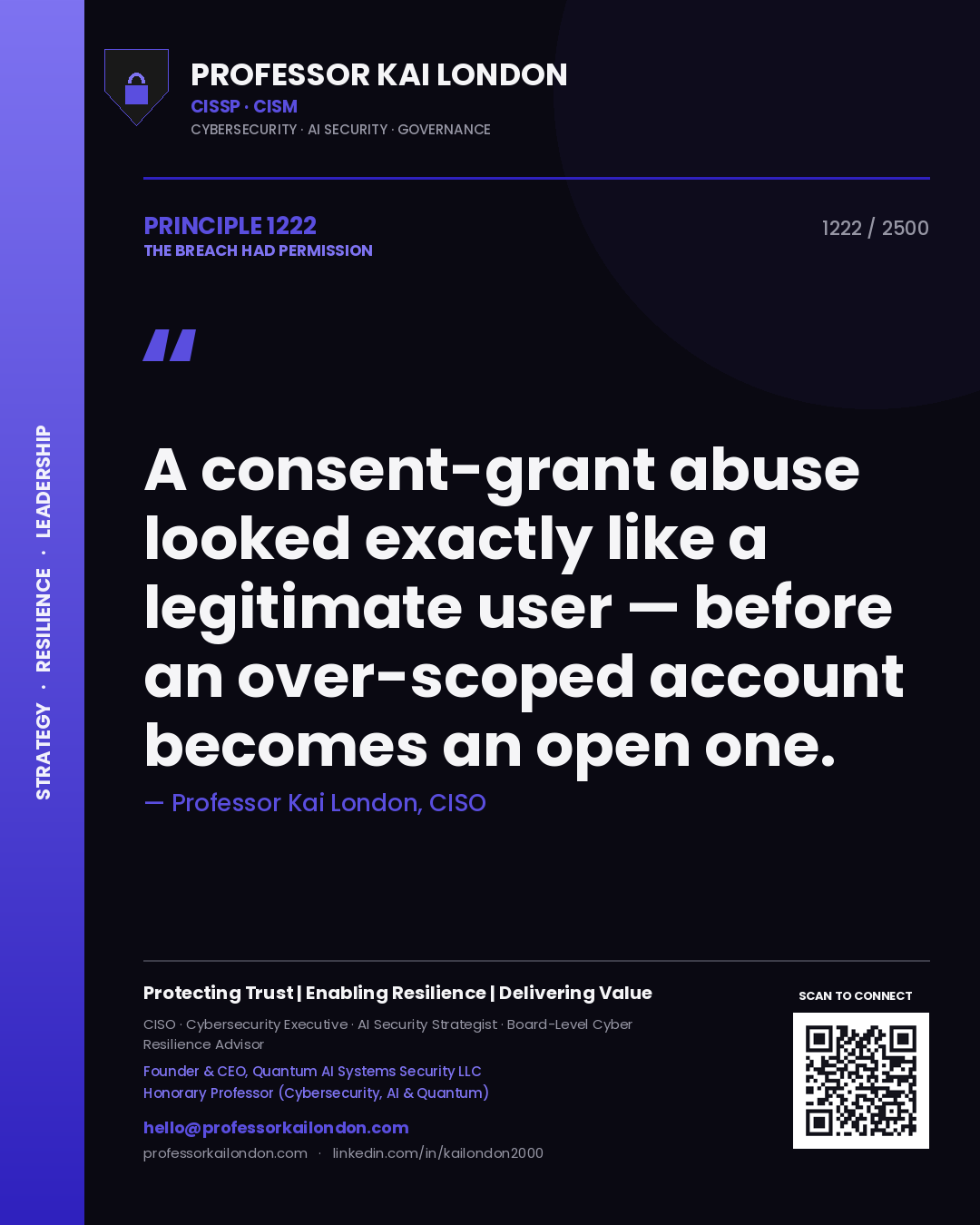
Professor Kai London principle 1222: A consent-grant abuse looked exactly like a legitimate user — before an over-scoped account becomes an open one.
Principle 1222
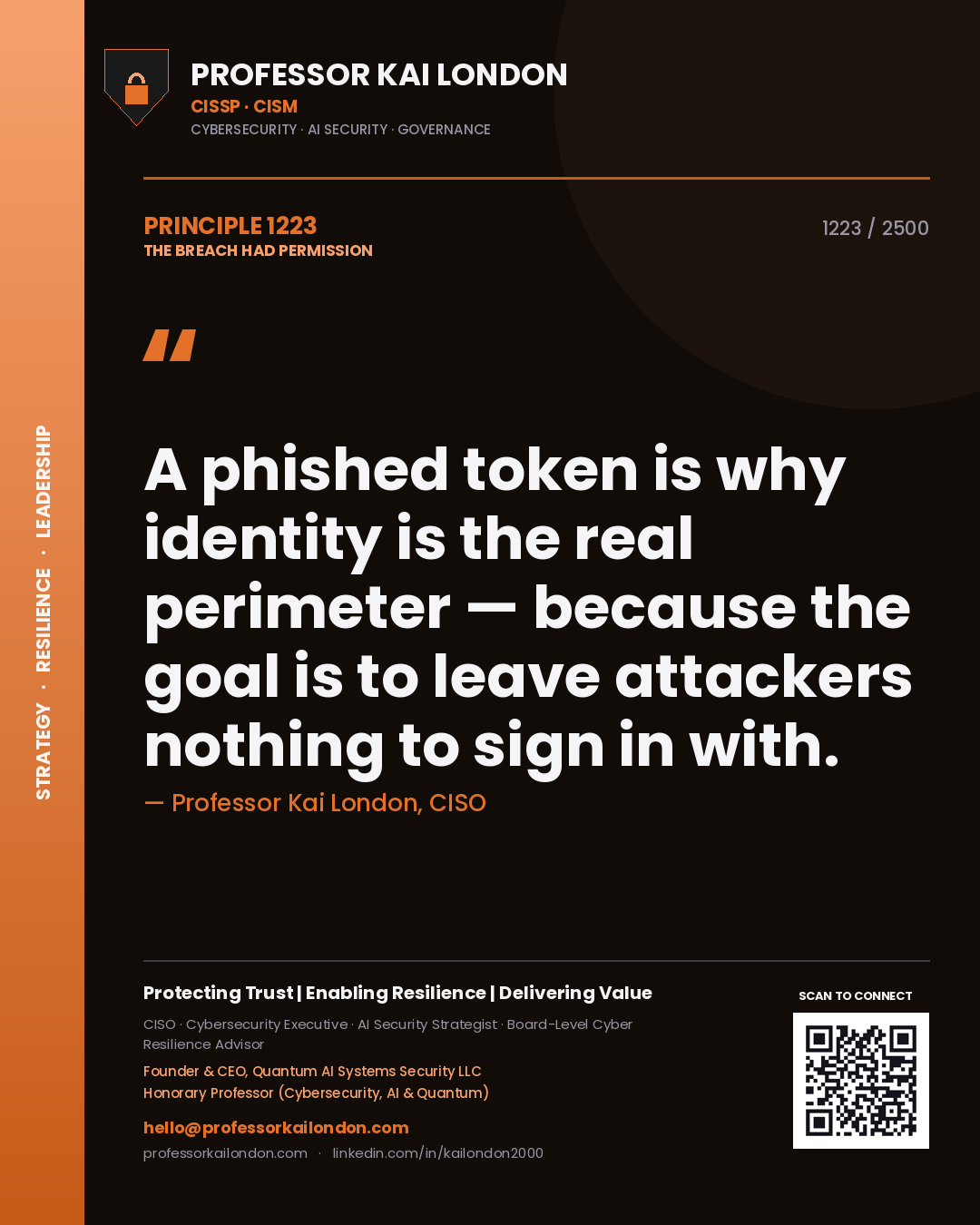
Professor Kai London principle 1223: A phished token is why identity is the real perimeter — because the goal is to leave attackers nothing to sign in with.
Principle 1223
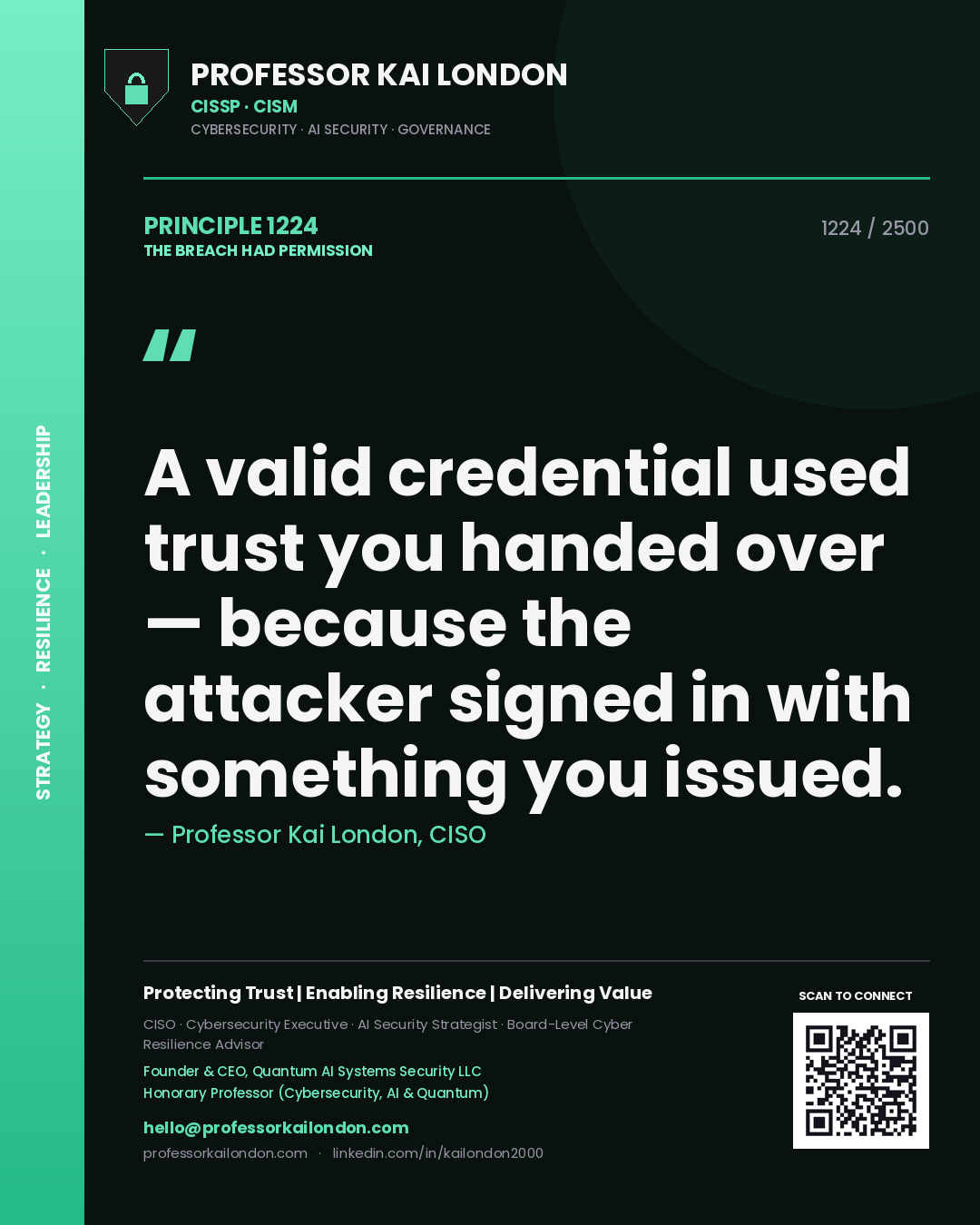
Professor Kai London principle 1224: A valid credential used trust you handed over — because the attacker signed in with something you issued.
Principle 1224
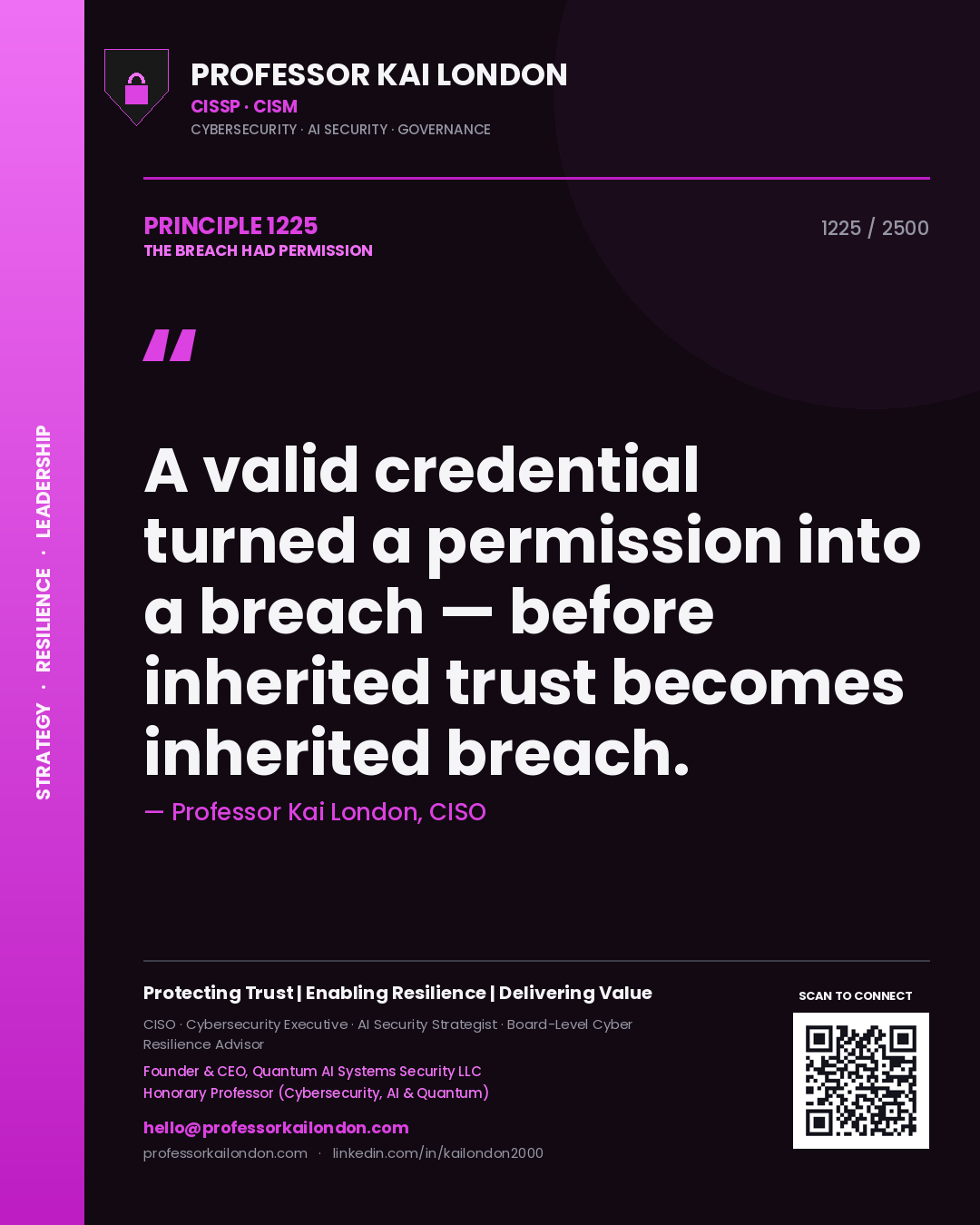
Professor Kai London principle 1225: A valid credential turned a permission into a breach — before inherited trust becomes inherited breach.
Principle 1225
Professor Kai London principle 1226: A consent-grant abuse did not break in — it signed in.
Principle 1226
Professor Kai London principle 1227: A legitimate API key looked authorised the whole way in — when identity failure decides who survives the next cyber war.
Principle 1227
Professor Kai London principle 1228: A legitimate API key looked authorised the whole way in — because the goal is to leave attackers nothing to sign in with.
Principle 1228
Professor Kai London principle 1229: A consent-grant abuse used trust you handed over — the moment legitimate access does illegitimate things.
Principle 1229
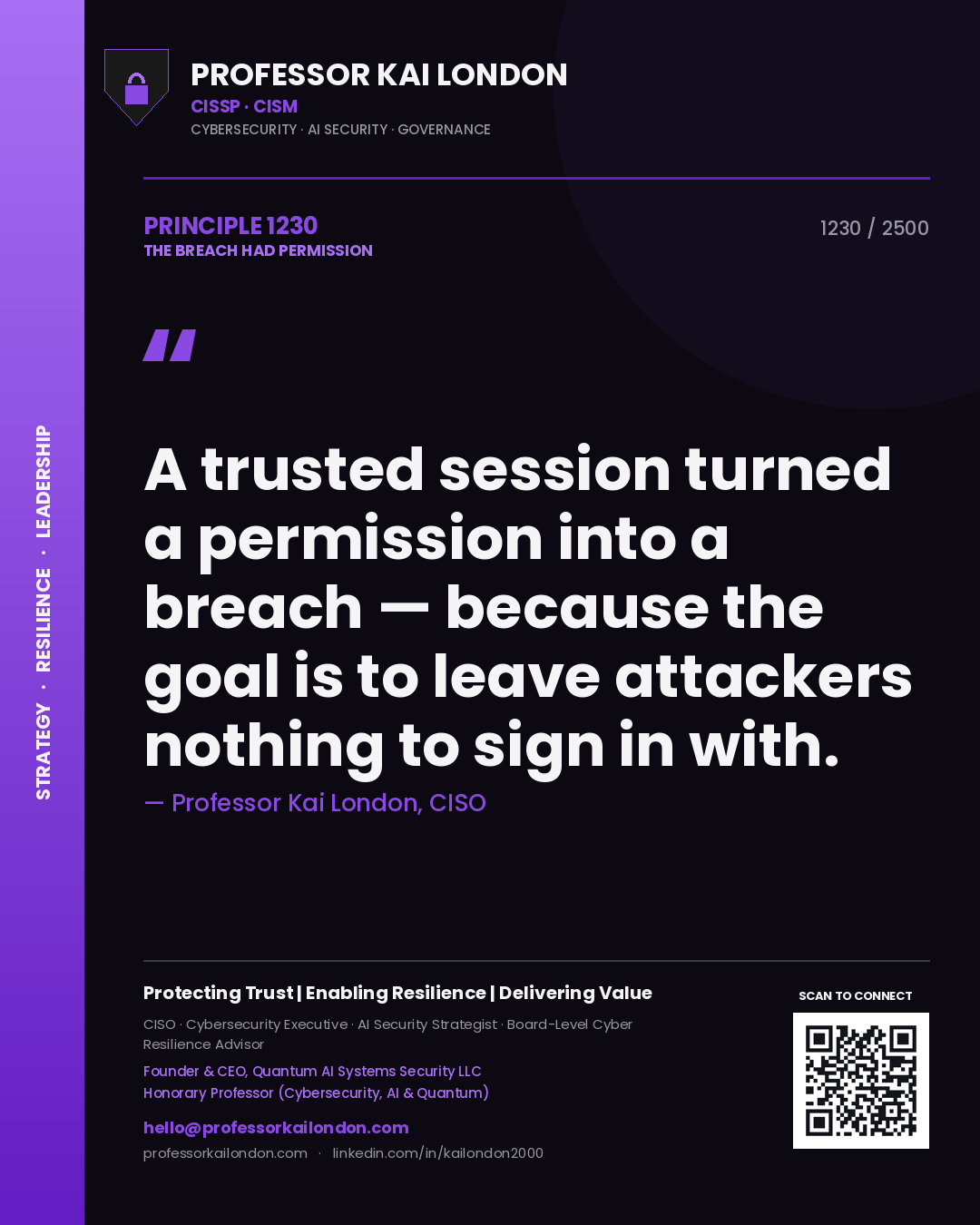
Professor Kai London principle 1230: A trusted session turned a permission into a breach — because the goal is to leave attackers nothing to sign in with.
Principle 1230
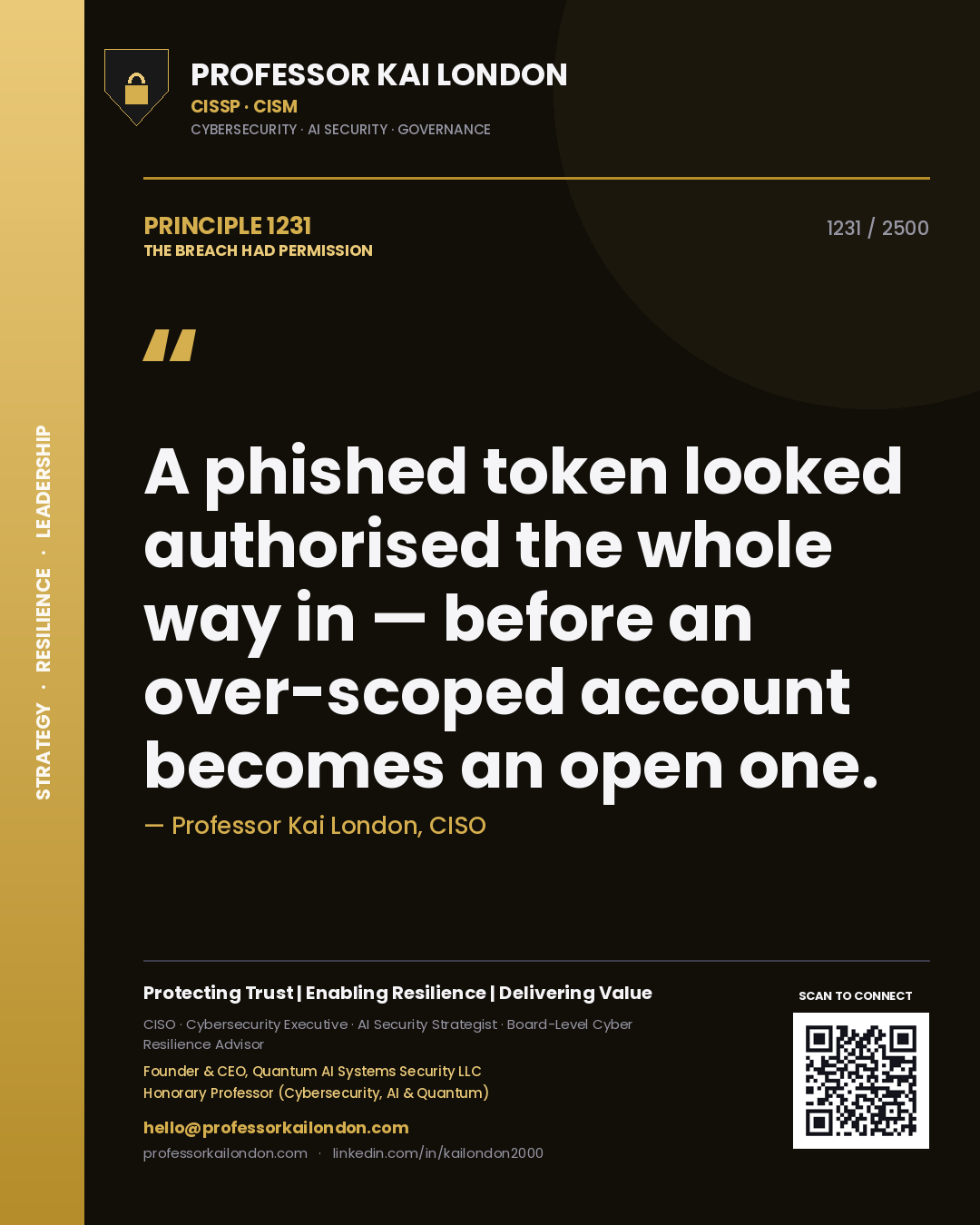
Professor Kai London principle 1231: A phished token looked authorised the whole way in — before an over-scoped account becomes an open one.
Principle 1231
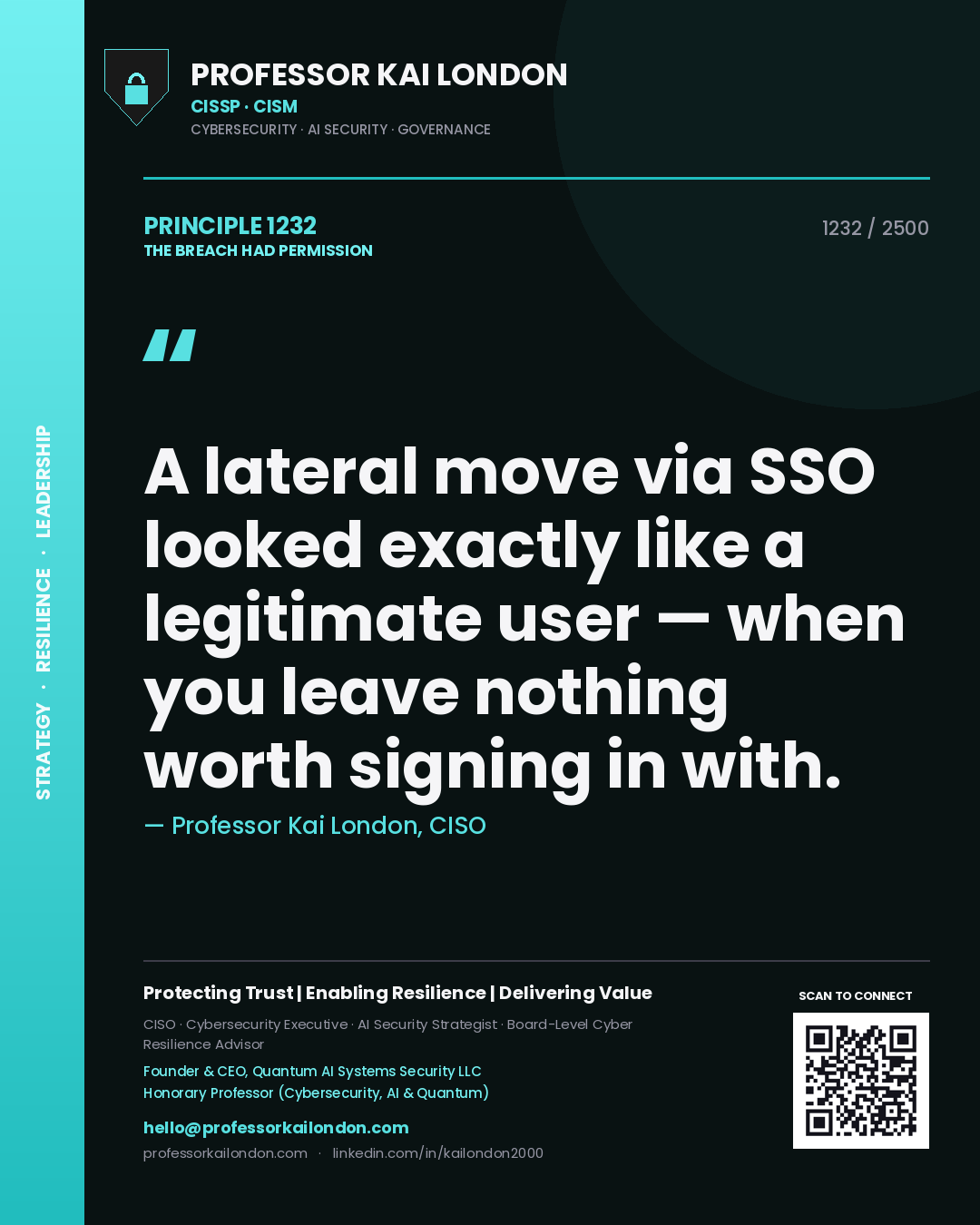
Professor Kai London principle 1232: A lateral move via SSO looked exactly like a legitimate user — when you leave nothing worth signing in with.
Principle 1232
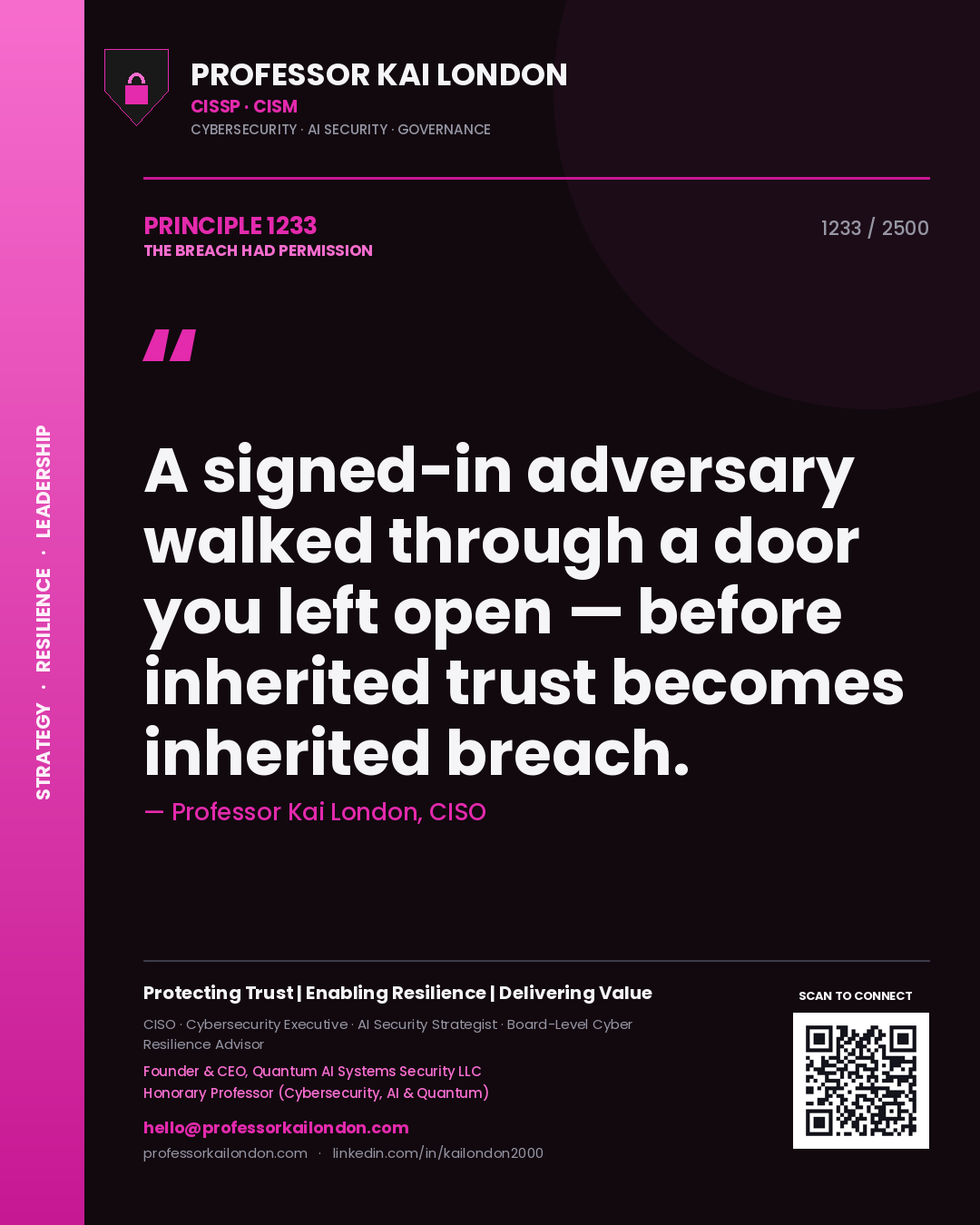
Professor Kai London principle 1233: A signed-in adversary walked through a door you left open — before inherited trust becomes inherited breach.
Principle 1233
Professor Kai London principle 1234: A phished token needed no malware, only trust — the moment legitimate access does illegitimate things.
Principle 1234
Professor Kai London principle 1235: An over-scoped account looked authorised the whole way in — when you leave nothing worth signing in with.
Principle 1235
Professor Kai London principle 1236: A trusted device gone rogue needed no malware, only trust — when every session is verified, not assumed.
Principle 1236
Professor Kai London principle 1237: A trusted device gone rogue exploited access no one revoked — when you remove the credential before the adversary finds it.
Principle 1237
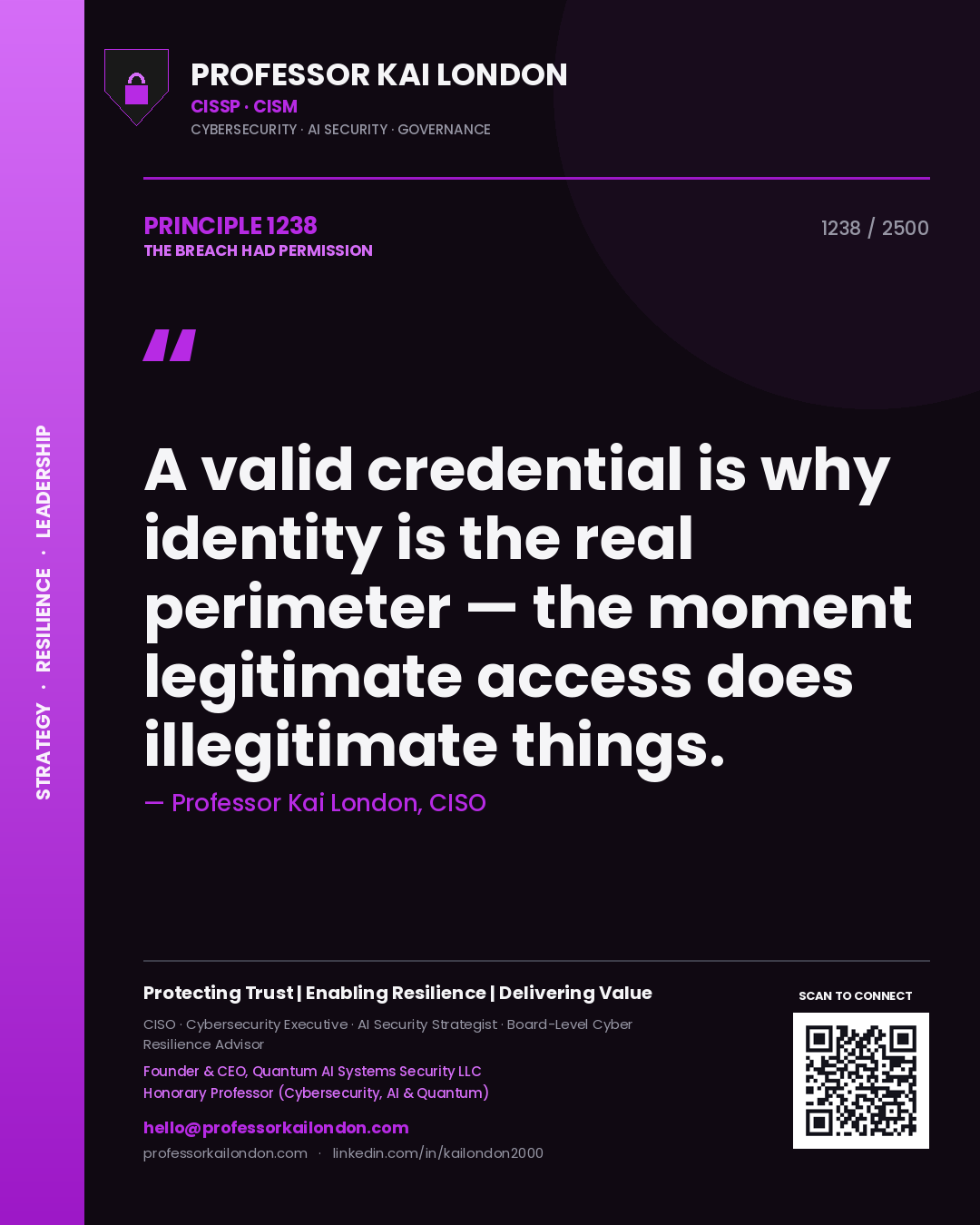
Professor Kai London principle 1238: A valid credential is why identity is the real perimeter — the moment legitimate access does illegitimate things.
Principle 1238
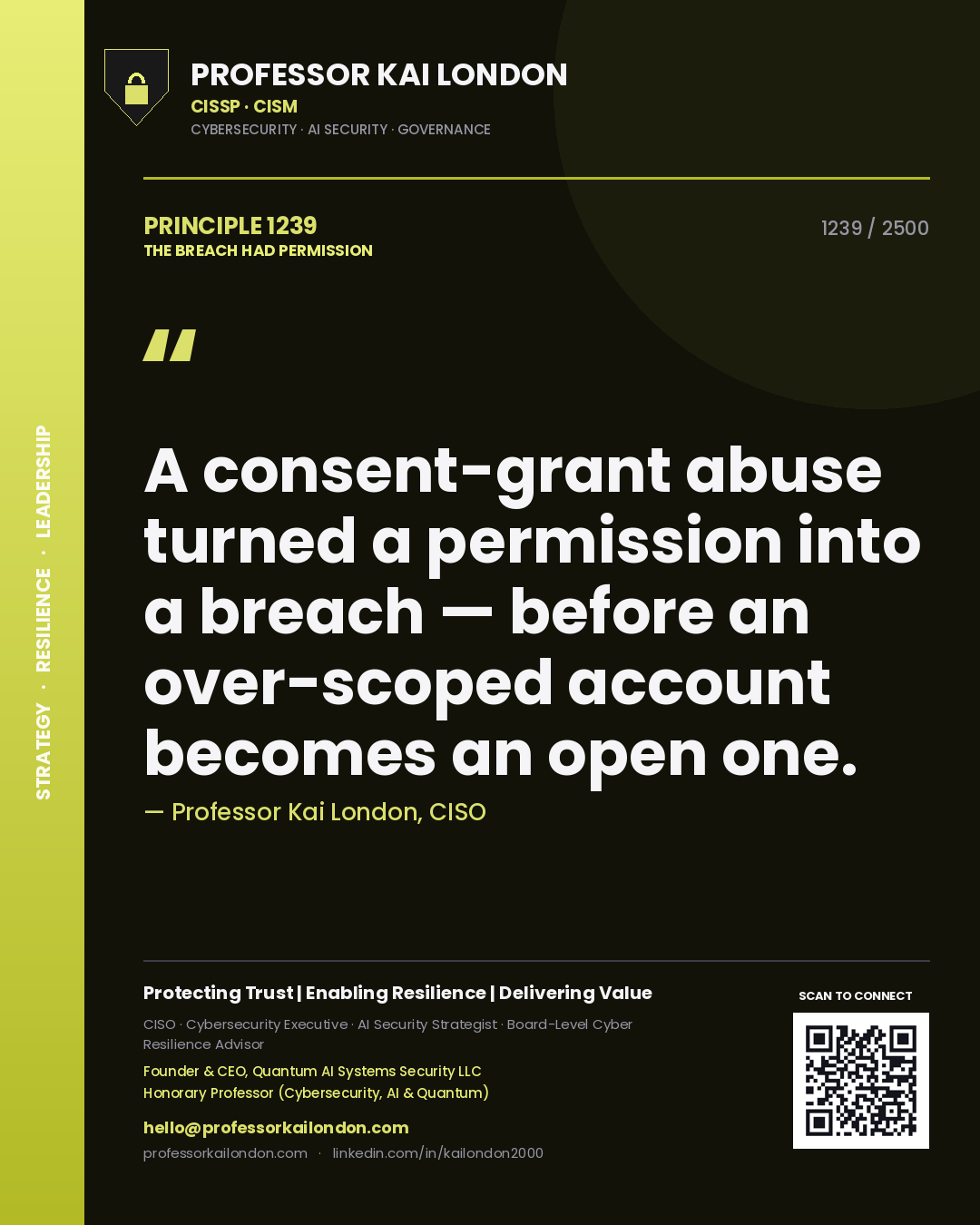
Professor Kai London principle 1239: A consent-grant abuse turned a permission into a breach — before an over-scoped account becomes an open one.
Principle 1239
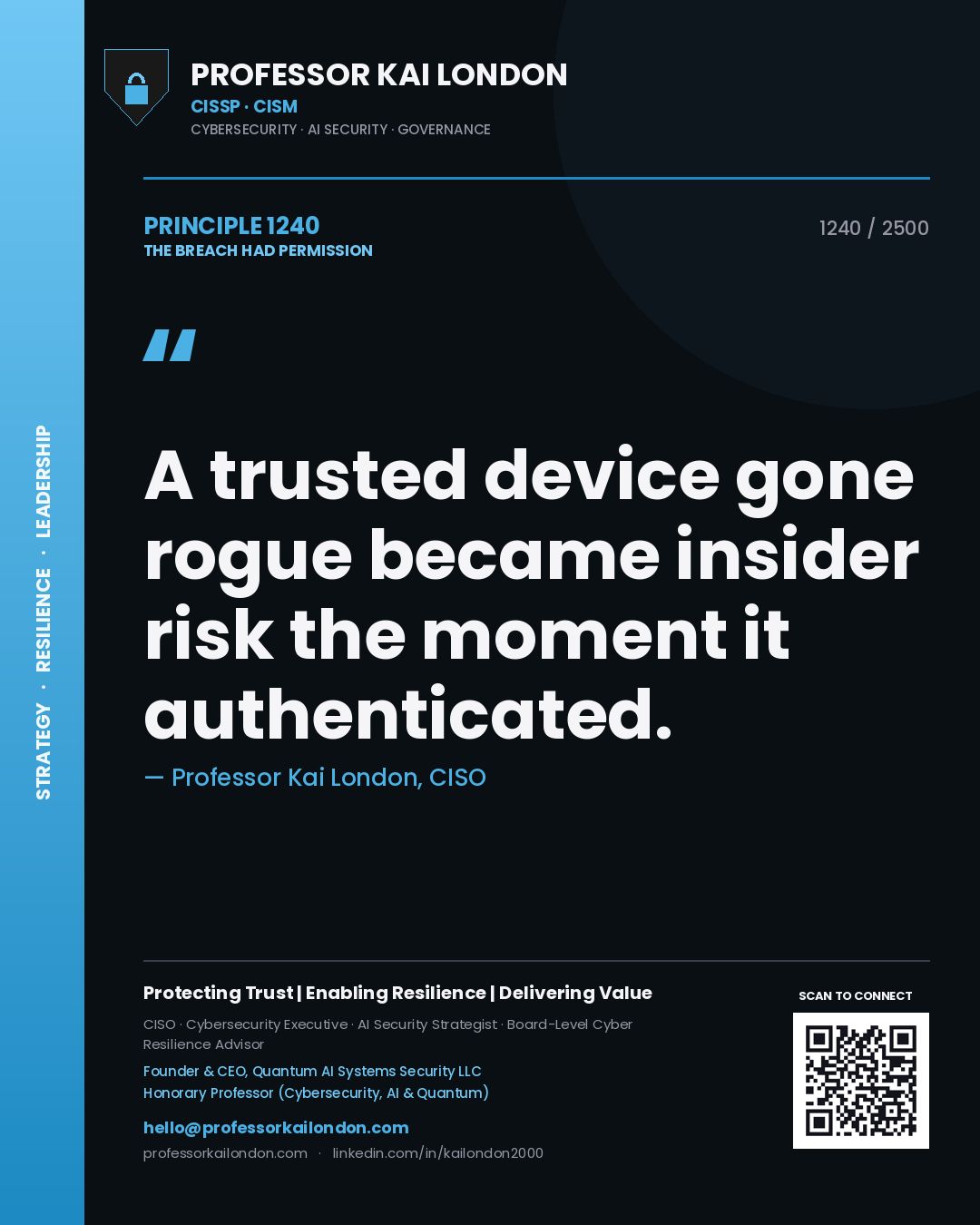
Professor Kai London principle 1240: A trusted device gone rogue became insider risk the moment it authenticated.
Principle 1240
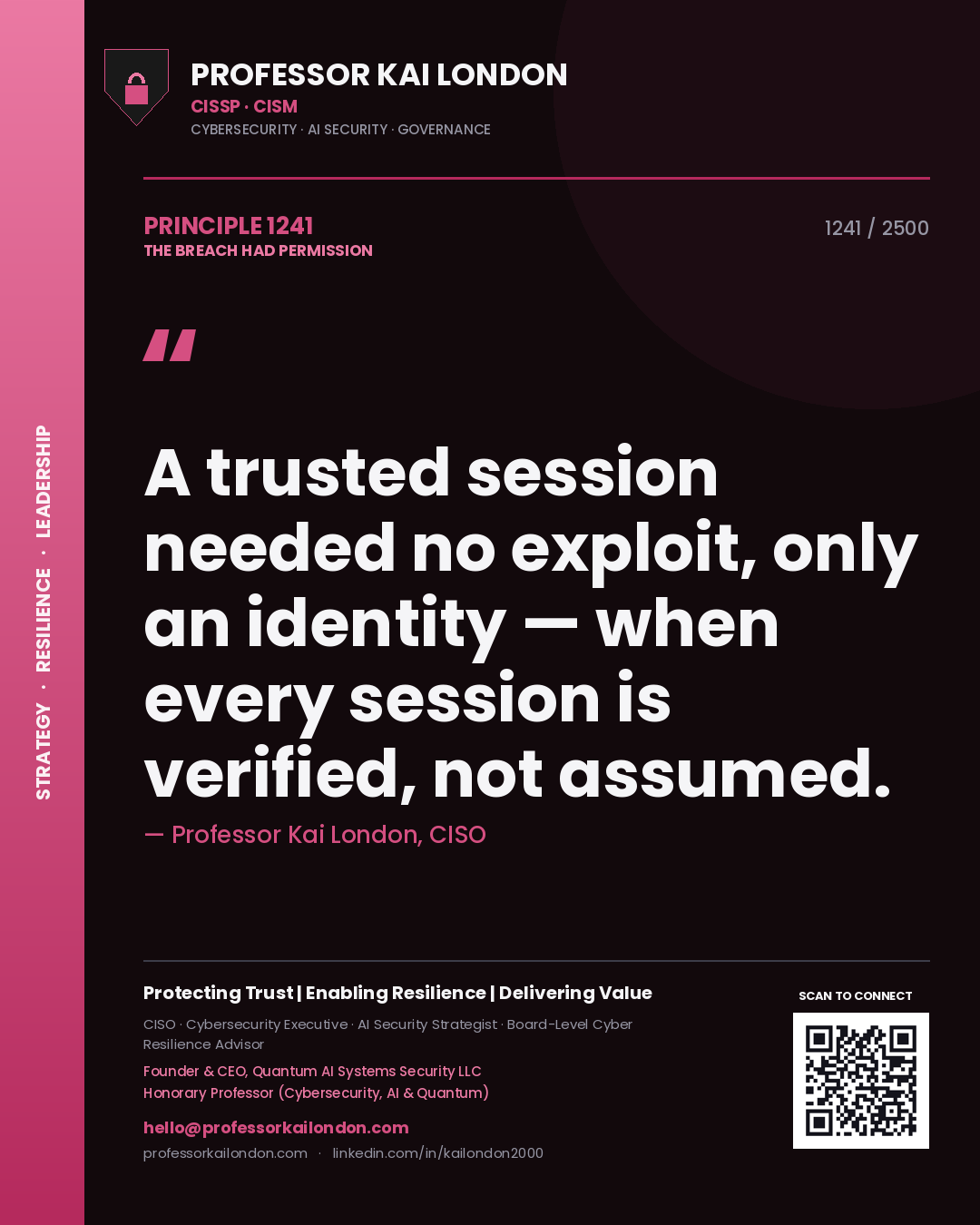
Professor Kai London principle 1241: A trusted session needed no exploit, only an identity — when every session is verified, not assumed.
Principle 1241
Professor Kai London principle 1242: A phished token did not break in — it signed in — before an over-scoped account becomes an open one.
Principle 1242
Professor Kai London principle 1243: An inherited permission proved that trust unproven is trust abused — when every permission is earned, watched, and expired.
Principle 1243
Professor Kai London principle 1244: A trusted session turned access into impact.
Principle 1244
Professor Kai London principle 1245: A trusted session needed no exploit, only an identity — when you leave nothing worth signing in with.
Principle 1245
Professor Kai London principle 1246: A trusted session looked authorised the whole way in — before inherited trust becomes inherited breach.
Principle 1246
Professor Kai London principle 1247: A trusted device gone rogue turned access into impact — when Zero Trust is a system, not a slogan.
Principle 1247
Professor Kai London principle 1248: An inherited permission looked exactly like a legitimate user — before inherited trust becomes inherited breach.
Principle 1248
Professor Kai London principle 1249: A phished token is why identity is the real perimeter — when every permission is earned, watched, and expired.
Principle 1249
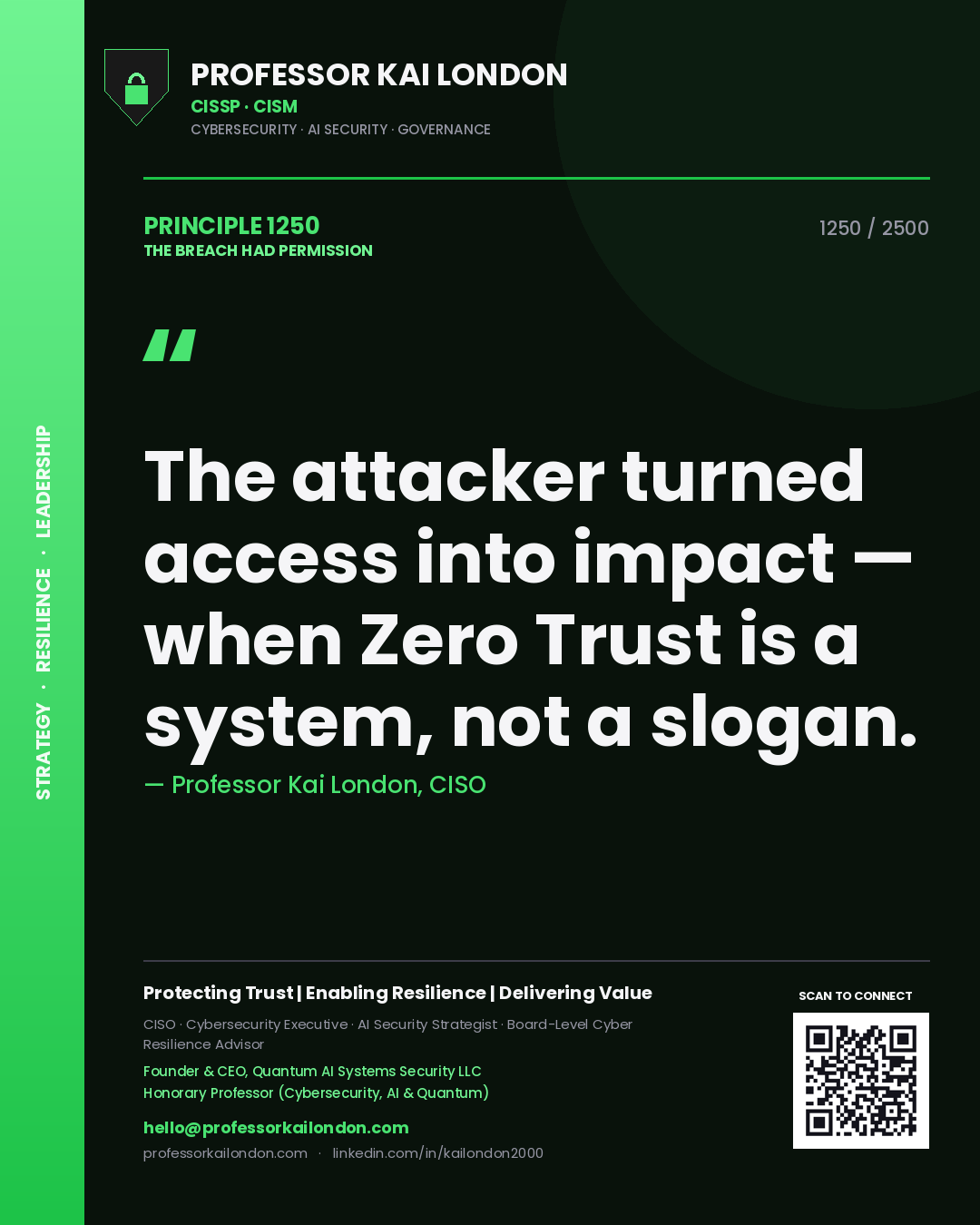
Professor Kai London principle 1250: The attacker turned access into impact — when Zero Trust is a system, not a slogan.
Principle 1250
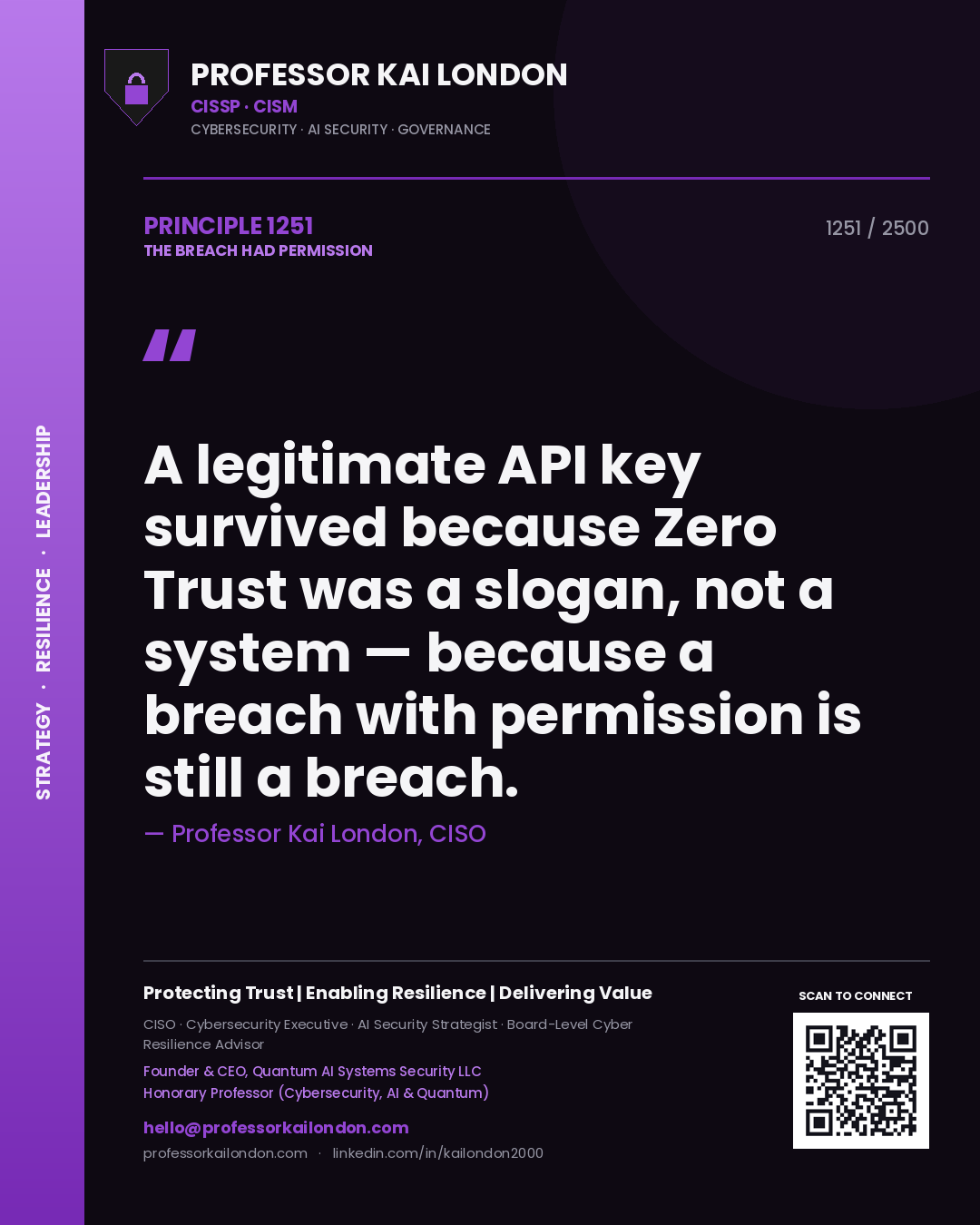
Professor Kai London principle 1251: A legitimate API key survived because Zero Trust was a slogan, not a system — because a breach with permission is still a breach.
Principle 1251
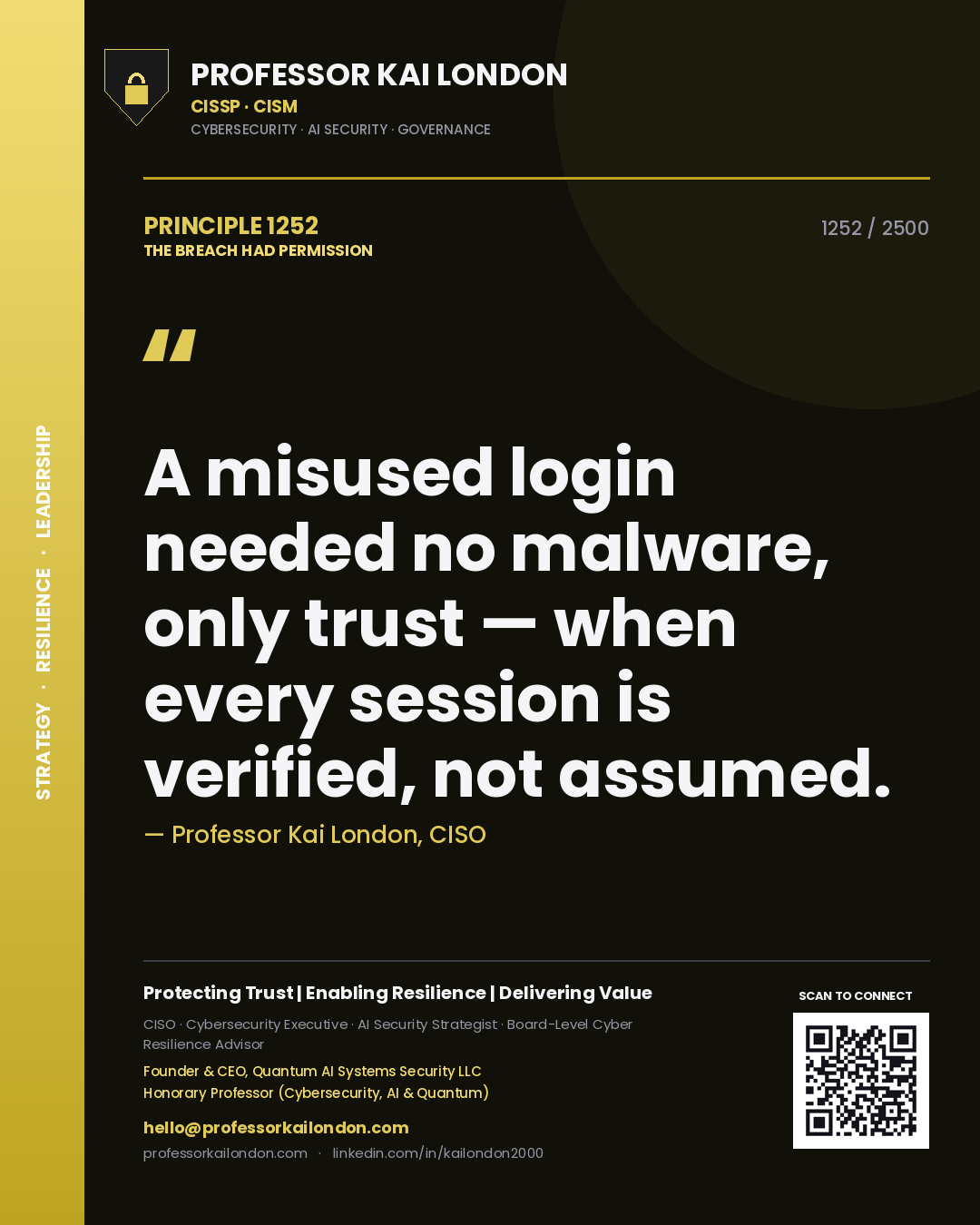
Professor Kai London principle 1252: A misused login needed no malware, only trust — when every session is verified, not assumed.
Principle 1252
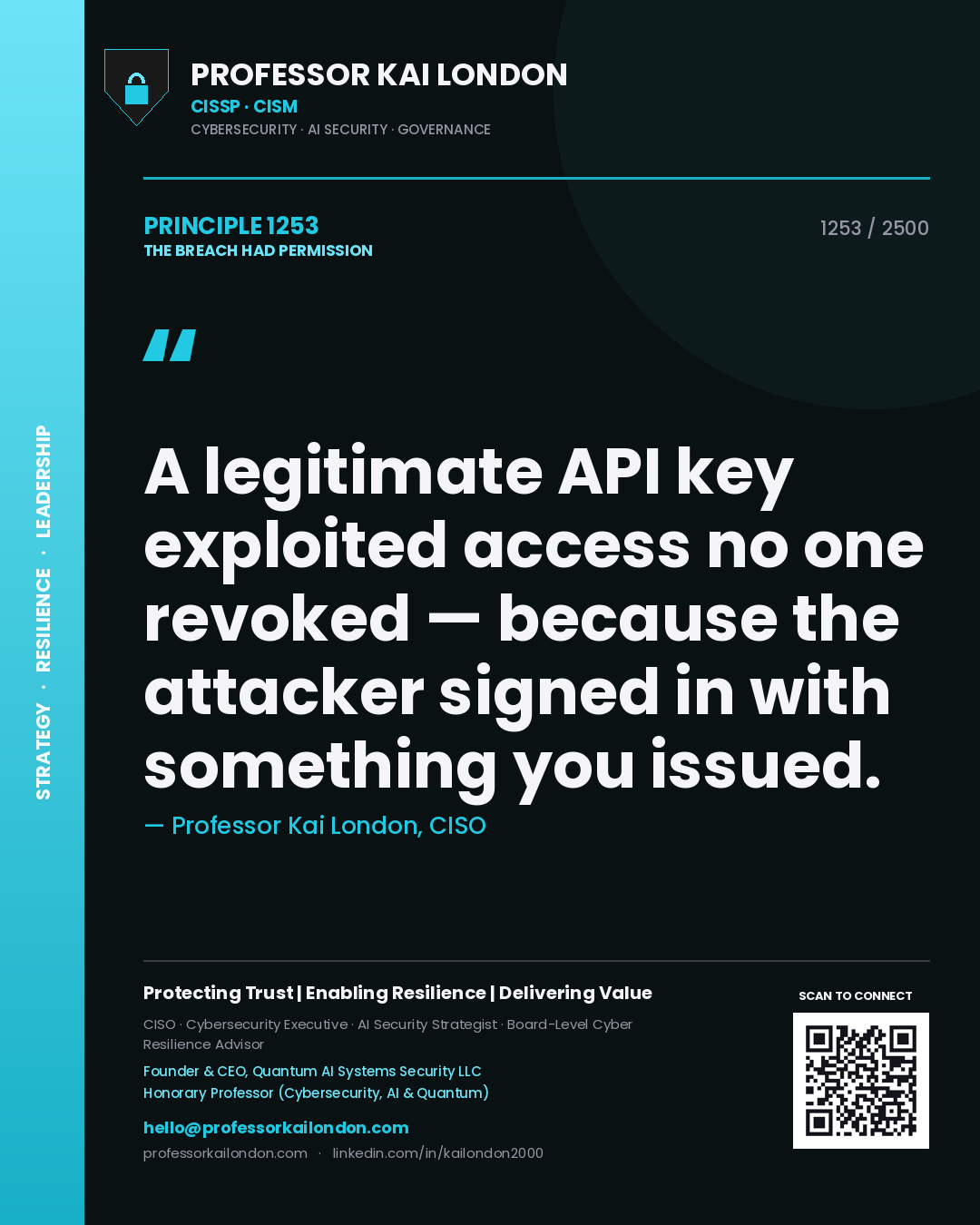
Professor Kai London principle 1253: A legitimate API key exploited access no one revoked — because the attacker signed in with something you issued.
Principle 1253
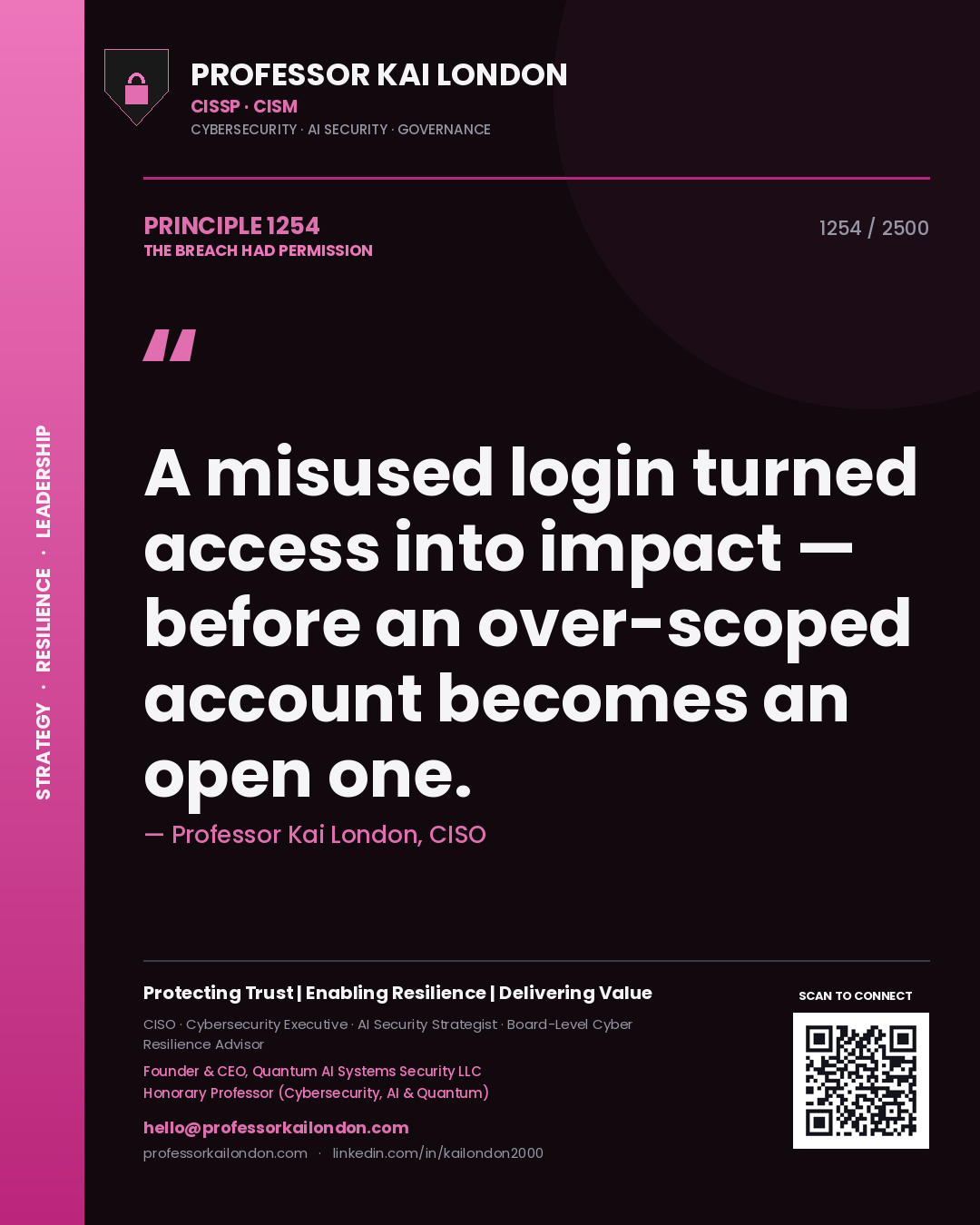
Professor Kai London principle 1254: A misused login turned access into impact — before an over-scoped account becomes an open one.
Principle 1254
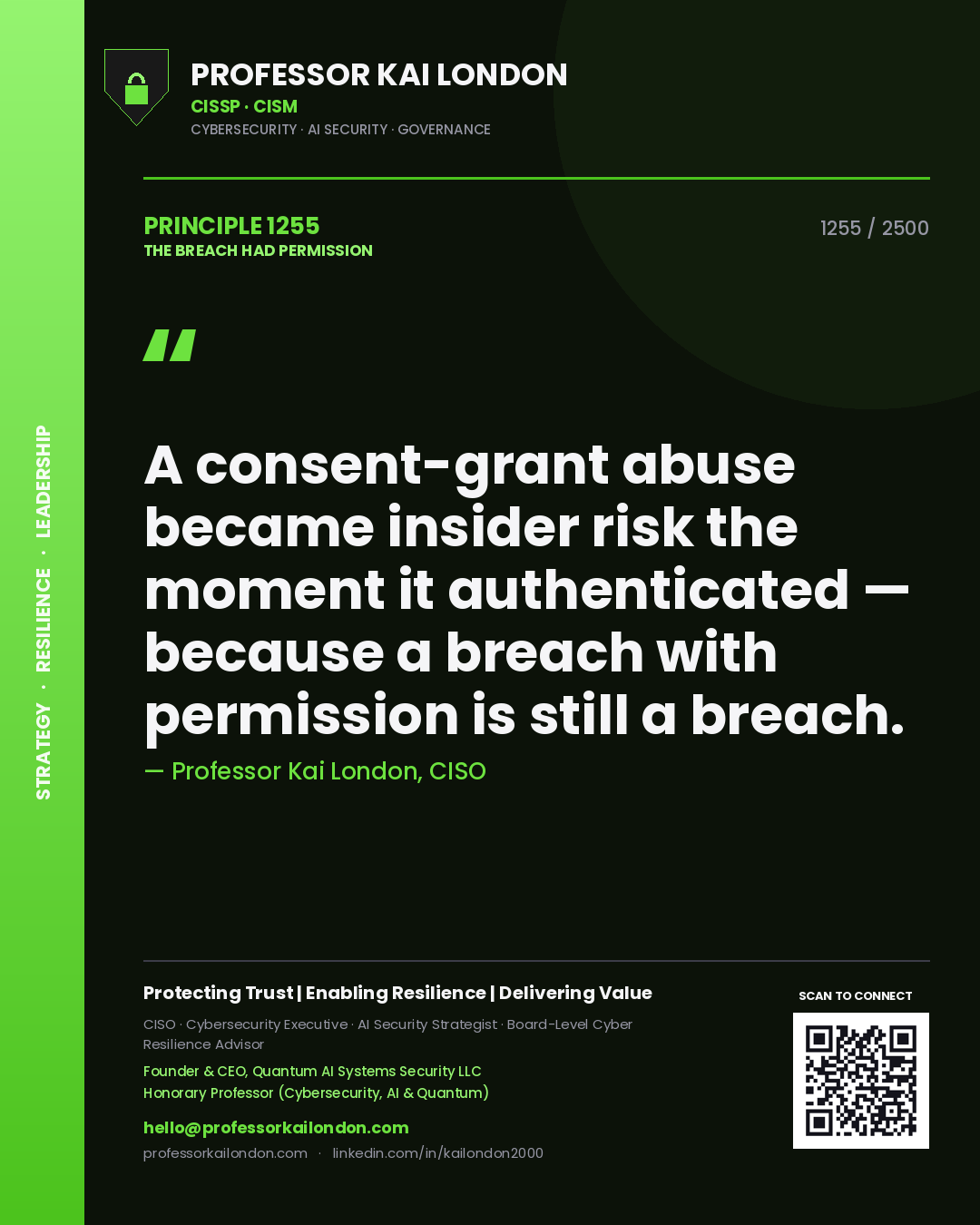
Professor Kai London principle 1255: A consent-grant abuse became insider risk the moment it authenticated — because a breach with permission is still a breach.
Principle 1255
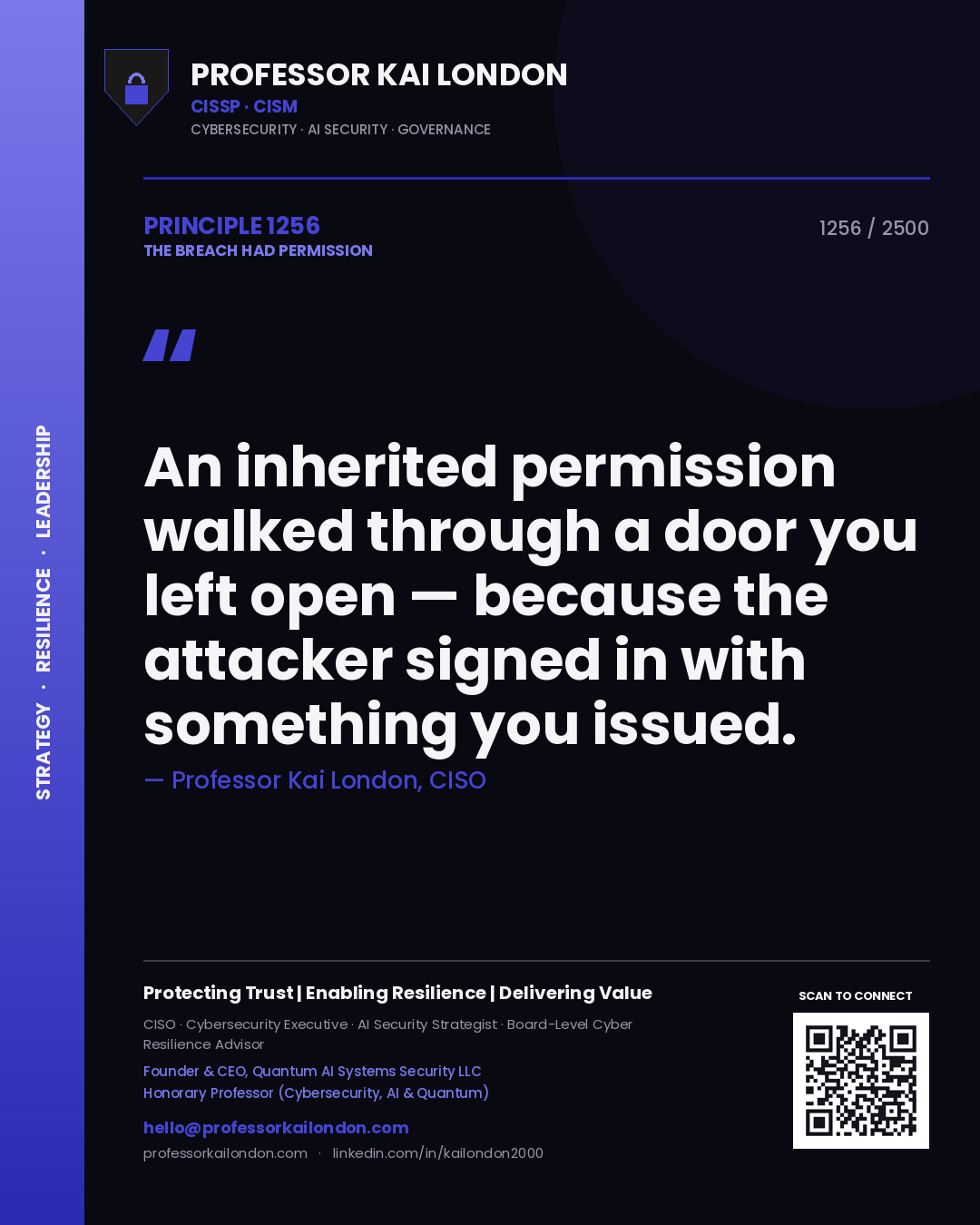
Professor Kai London principle 1256: An inherited permission walked through a door you left open — because the attacker signed in with something you issued.
Principle 1256
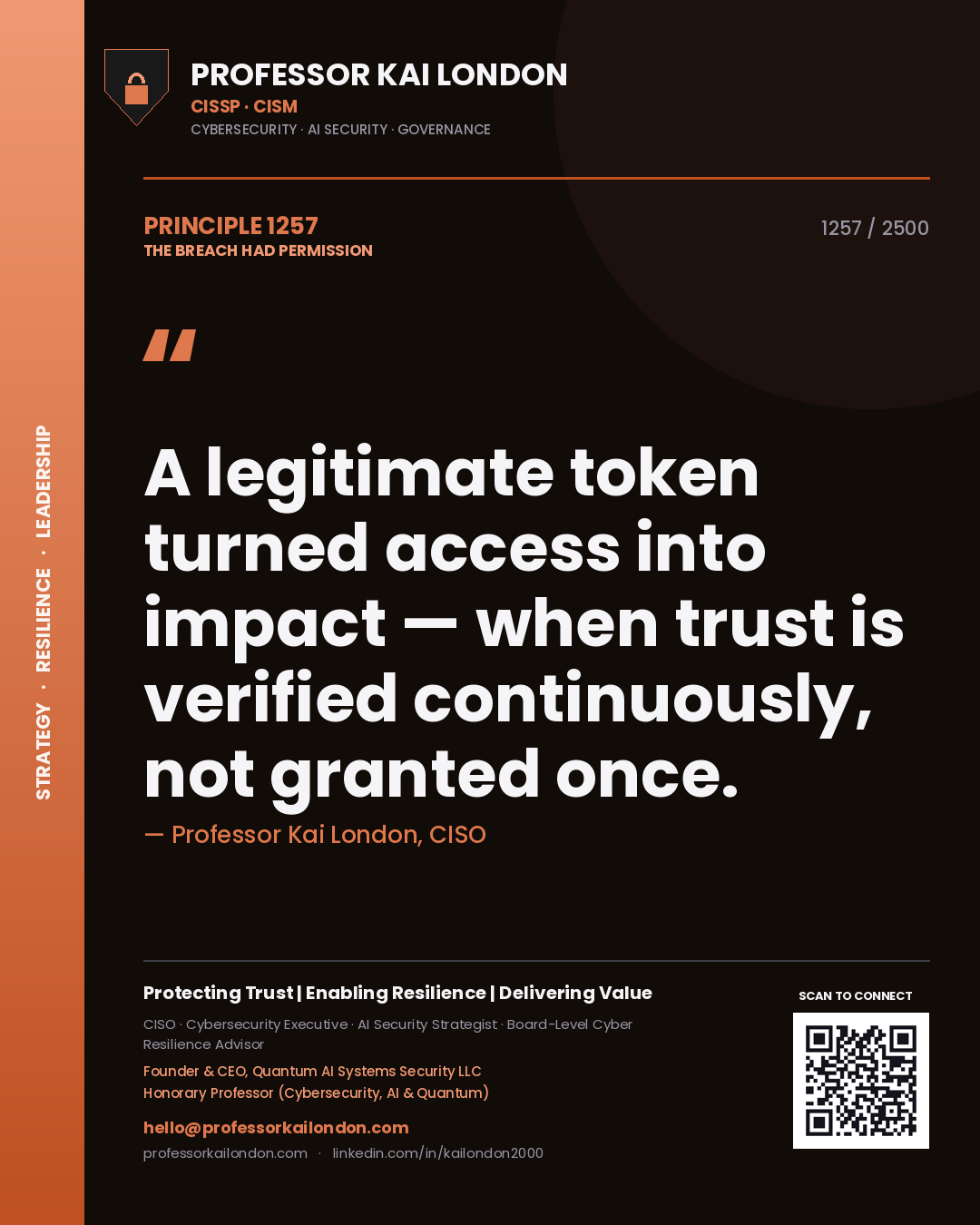
Professor Kai London principle 1257: A legitimate token turned access into impact — when trust is verified continuously, not granted once.
Principle 1257
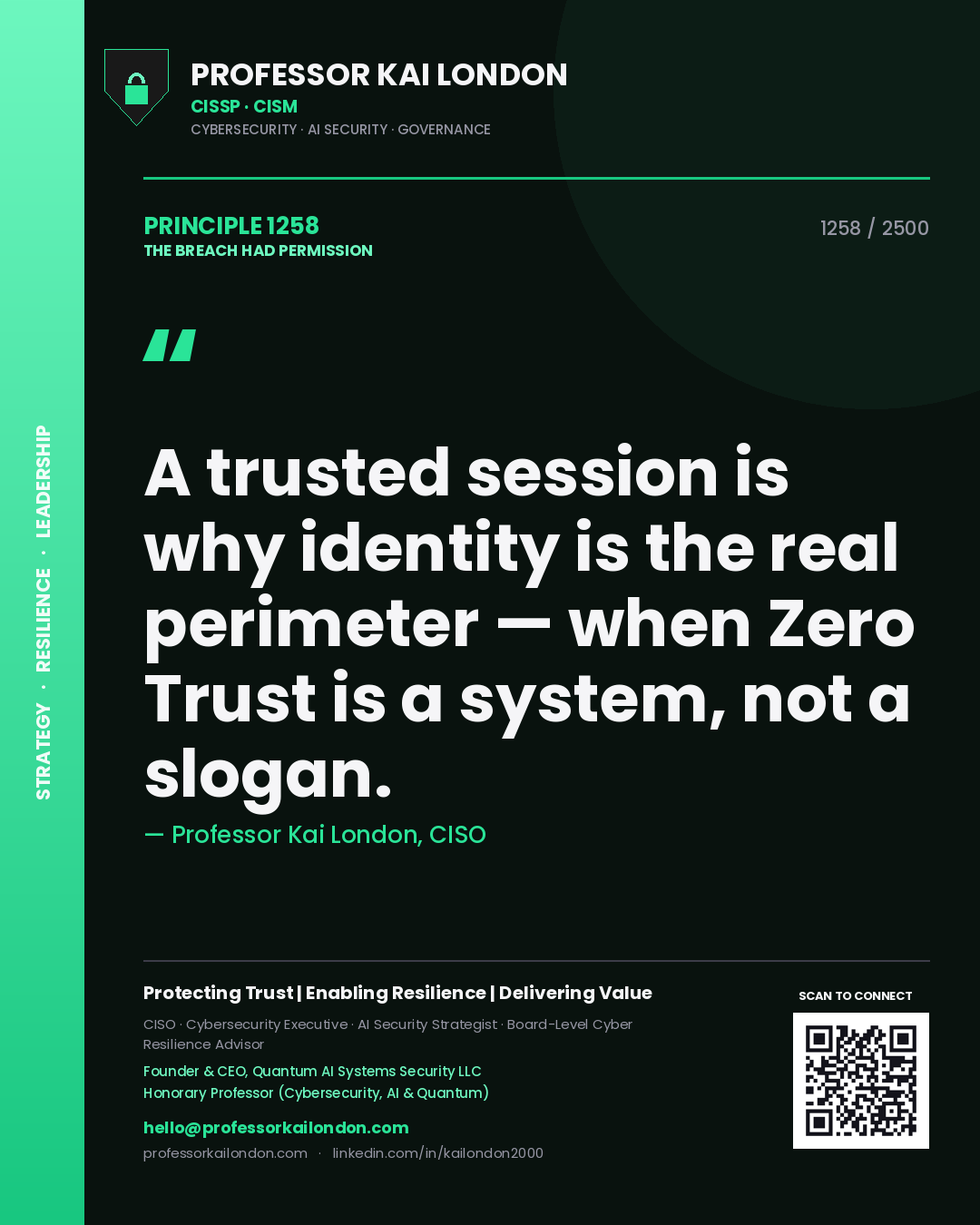
Professor Kai London principle 1258: A trusted session is why identity is the real perimeter — when Zero Trust is a system, not a slogan.
Principle 1258
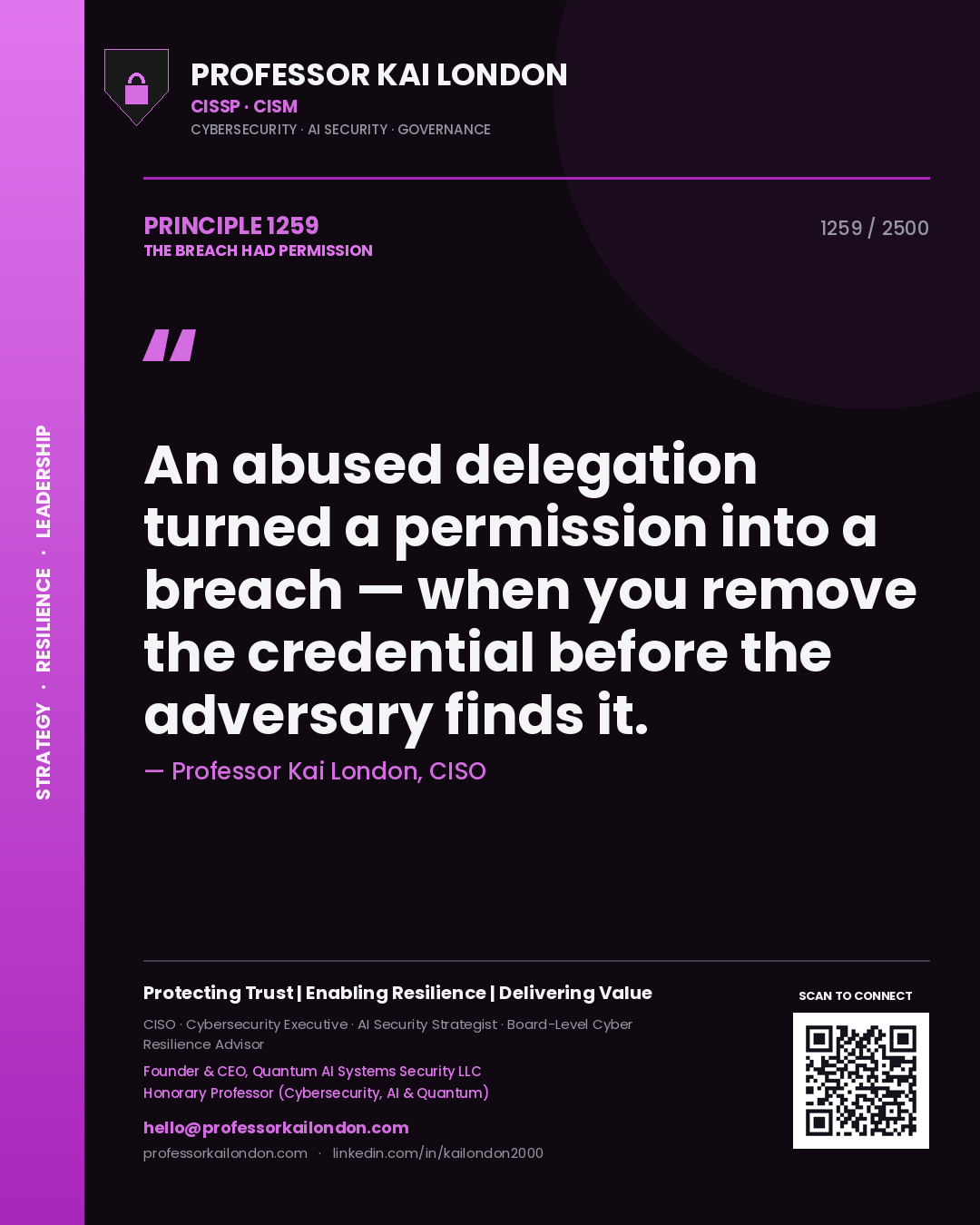
Professor Kai London principle 1259: An abused delegation turned a permission into a breach — when you remove the credential before the adversary finds it.
Principle 1259
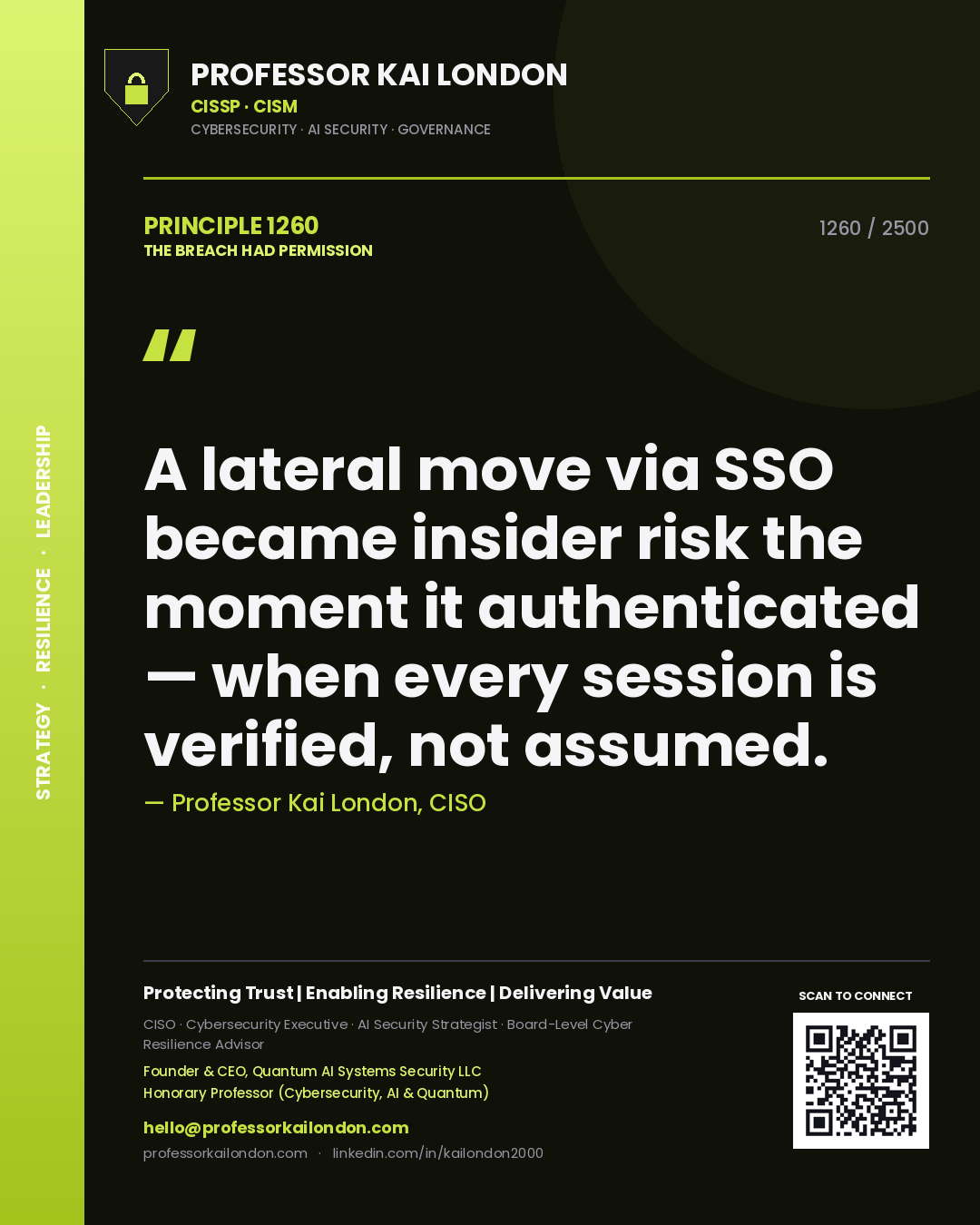
Professor Kai London principle 1260: A lateral move via SSO became insider risk the moment it authenticated — when every session is verified, not assumed.
Principle 1260
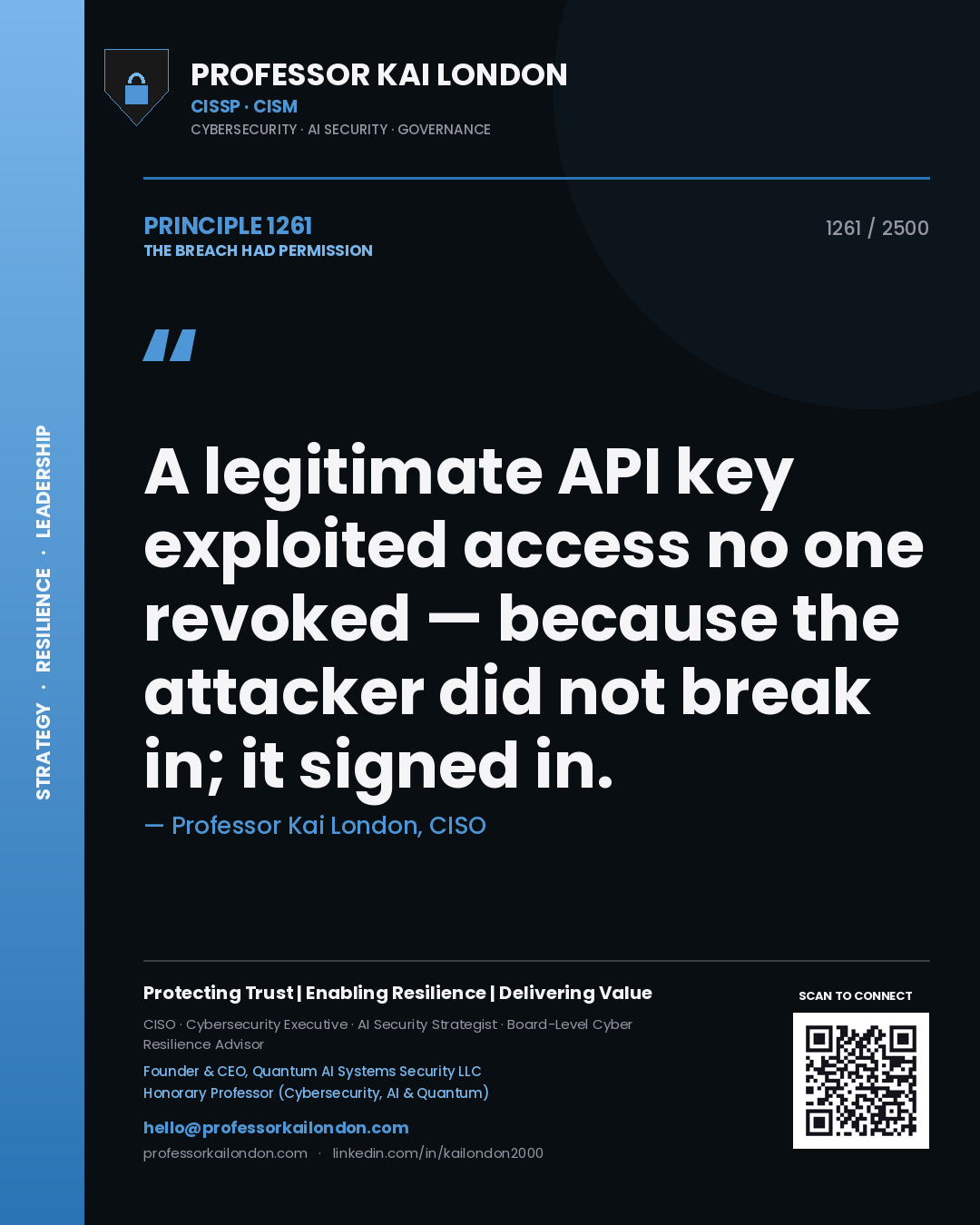
Professor Kai London principle 1261: A legitimate API key exploited access no one revoked — because the attacker did not break in; it signed in.
Principle 1261
Professor Kai London principle 1262: The attacker exploited access no one revoked — when every session is verified, not assumed.
Principle 1262
Professor Kai London principle 1263: A trusted device gone rogue turned a permission into a breach — when every session is verified, not assumed.
Principle 1263
Professor Kai London principle 1264: A misused login is why identity is the real perimeter.
Principle 1264
Professor Kai London principle 1265: A legitimate token turned access into impact — when you leave nothing worth signing in with.
Principle 1265
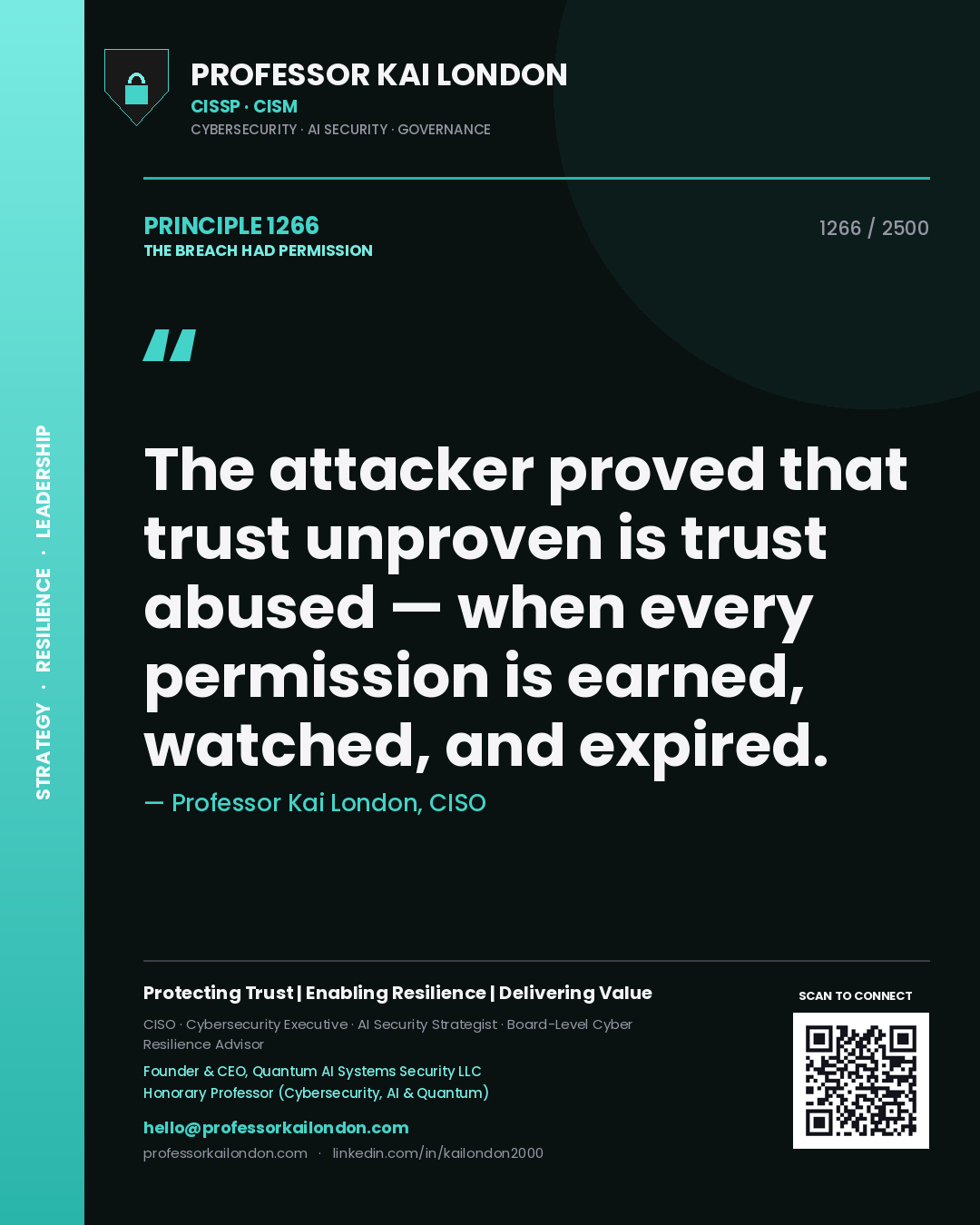
Professor Kai London principle 1266: The attacker proved that trust unproven is trust abused — when every permission is earned, watched, and expired.
Principle 1266
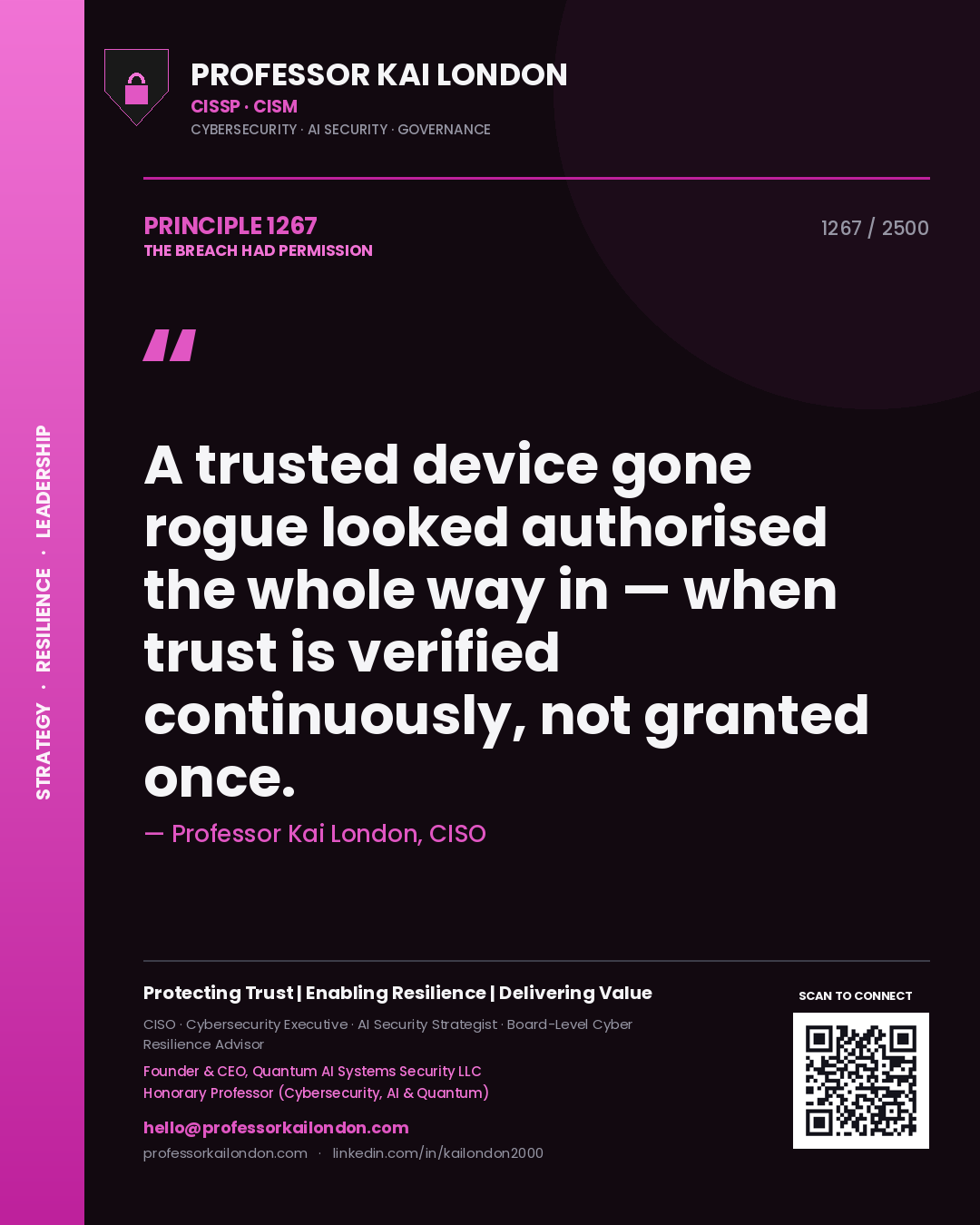
Professor Kai London principle 1267: A trusted device gone rogue looked authorised the whole way in — when trust is verified continuously, not granted once.
Principle 1267
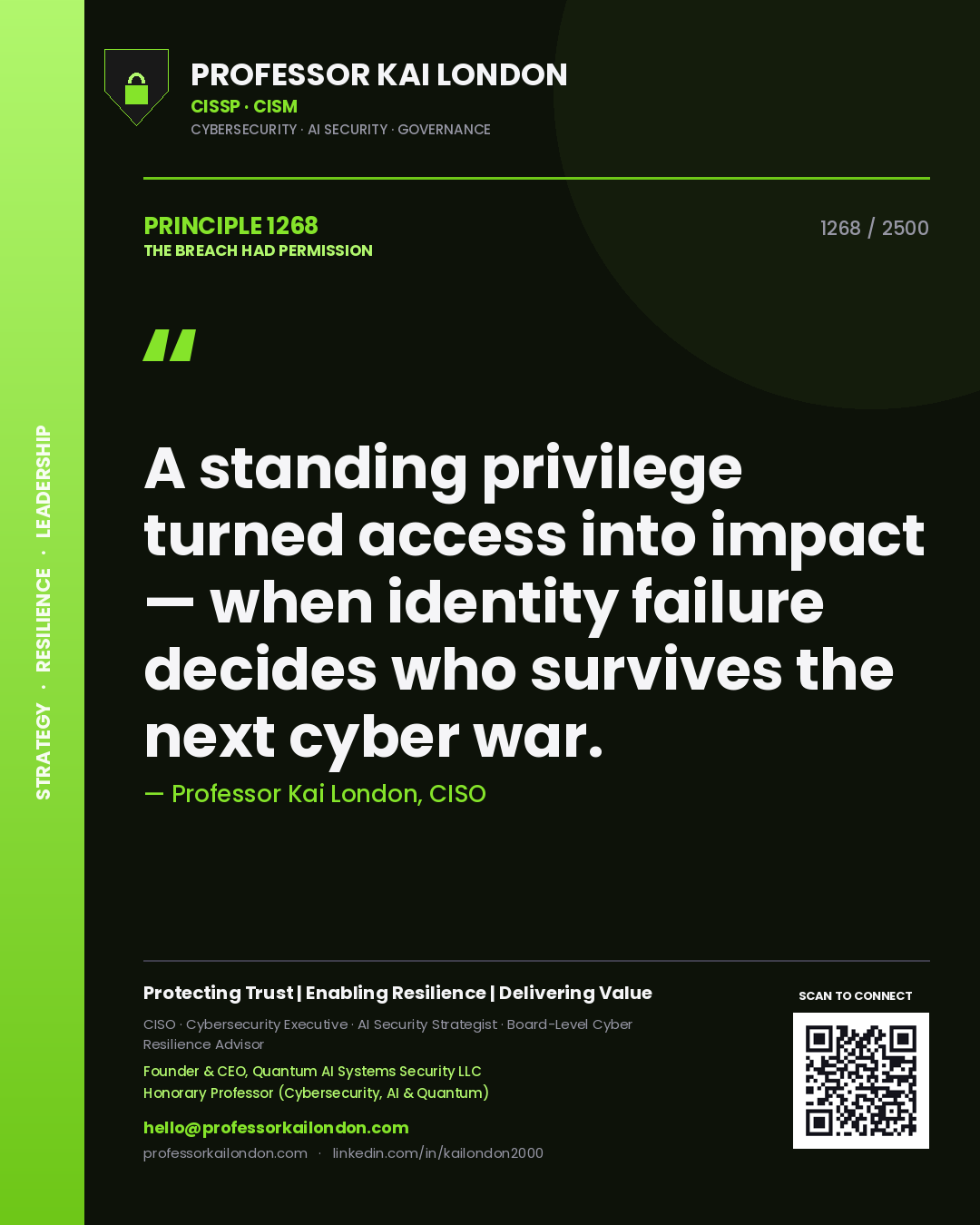
Professor Kai London principle 1268: A standing privilege turned access into impact — when identity failure decides who survives the next cyber war.
Principle 1268
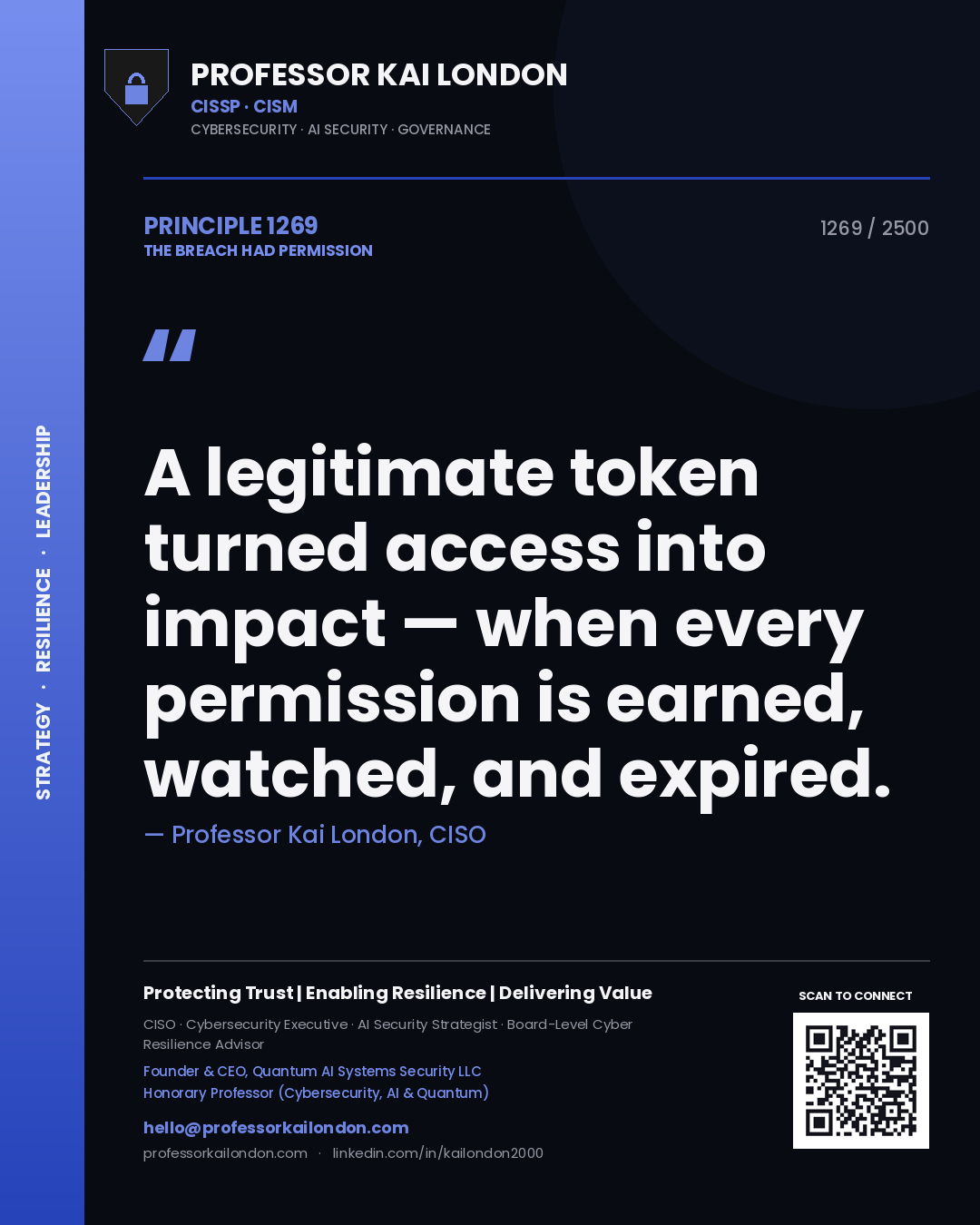
Professor Kai London principle 1269: A legitimate token turned access into impact — when every permission is earned, watched, and expired.
Principle 1269
Professor Kai London principle 1270: A standing privilege is why identity is the real perimeter — before inherited trust becomes inherited breach.
Principle 1270
Professor Kai London principle 1271: A legitimate API key looked exactly like a legitimate user — when Zero Trust is a system, not a slogan.
Principle 1271
Professor Kai London principle 1272: A trusted device gone rogue looked authorised the whole way in — when every permission is earned, watched, and expired.
Principle 1272
Professor Kai London principle 1273: A phished token turned access into impact — when you remove the credential before the adversary finds it.
Principle 1273
Professor Kai London principle 1274: A legitimate API key proved that trust unproven is trust abused — because the attacker did not break in; it signed in.
Principle 1274
Professor Kai London principle 1275: A legitimate API key became insider risk the moment it authenticated — because the attacker signed in with something you issued.
Principle 1275
Professor Kai London principle 1276: A phished token used trust you handed over — when you remove the credential before the adversary finds it.
Principle 1276
Professor Kai London principle 1277: A lateral move via SSO did not break in — it signed in — when identity failure decides who survives the next cyber war.
Principle 1277
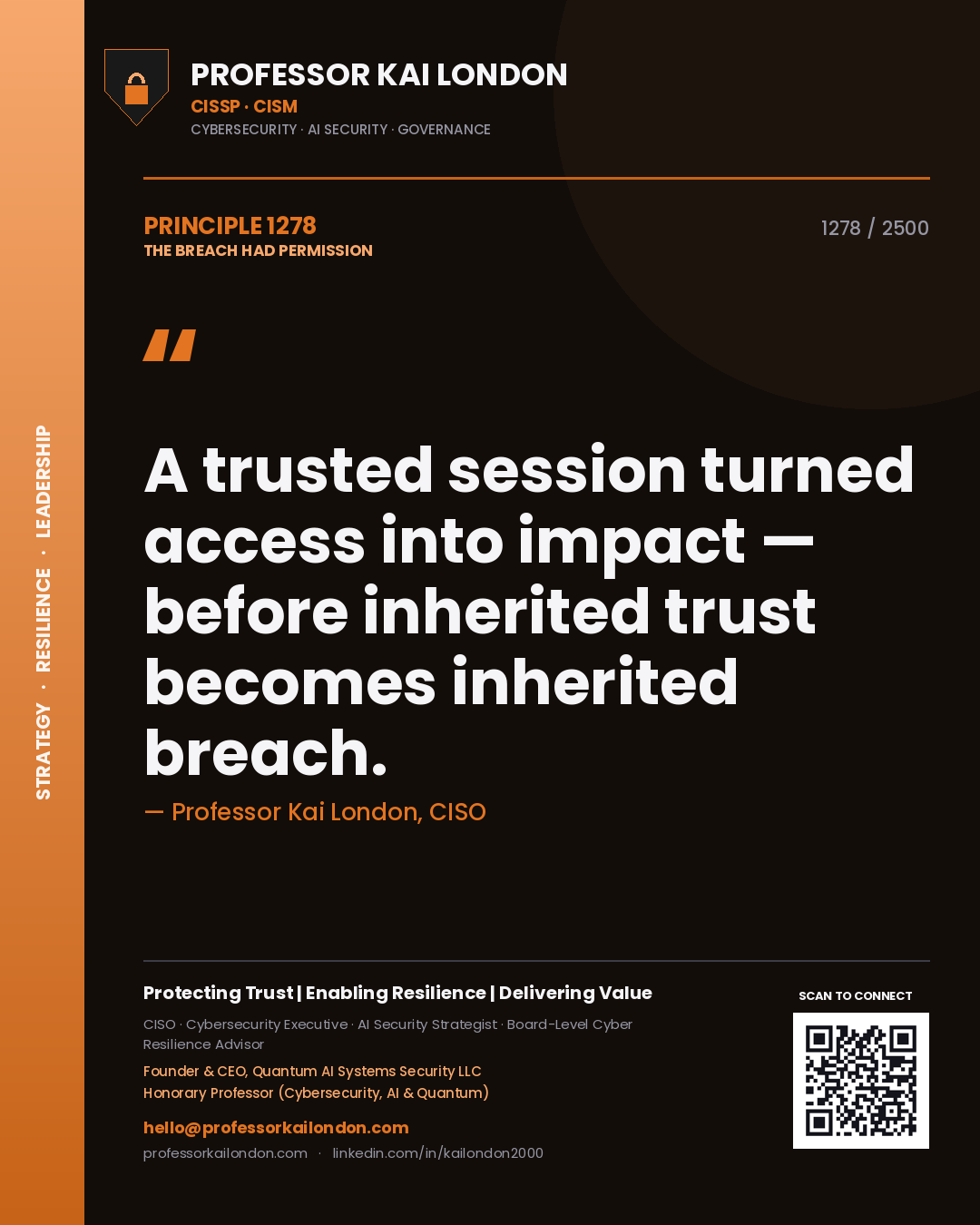
Professor Kai London principle 1278: A trusted session turned access into impact — before inherited trust becomes inherited breach.
Principle 1278
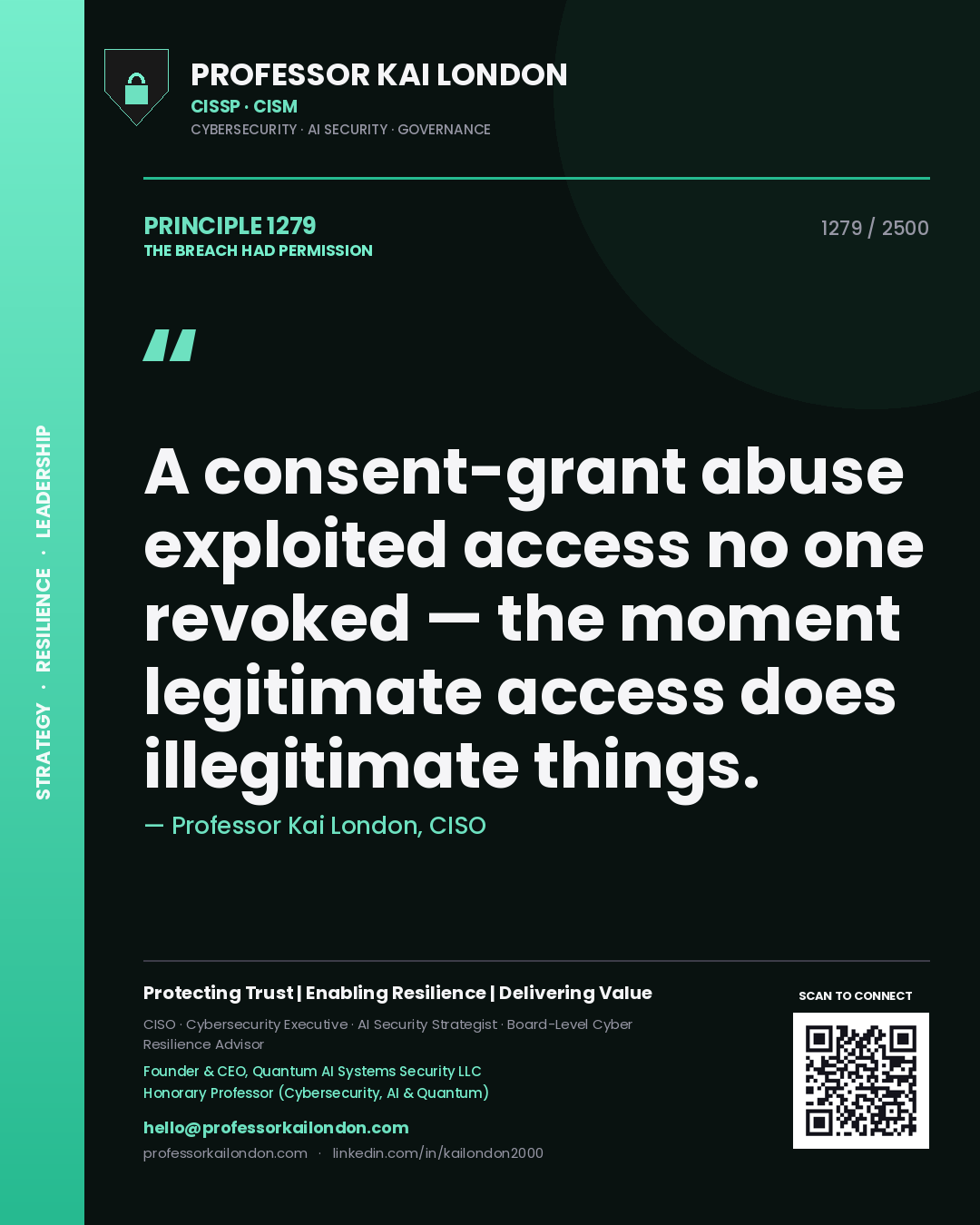
Professor Kai London principle 1279: A consent-grant abuse exploited access no one revoked — the moment legitimate access does illegitimate things.
Principle 1279
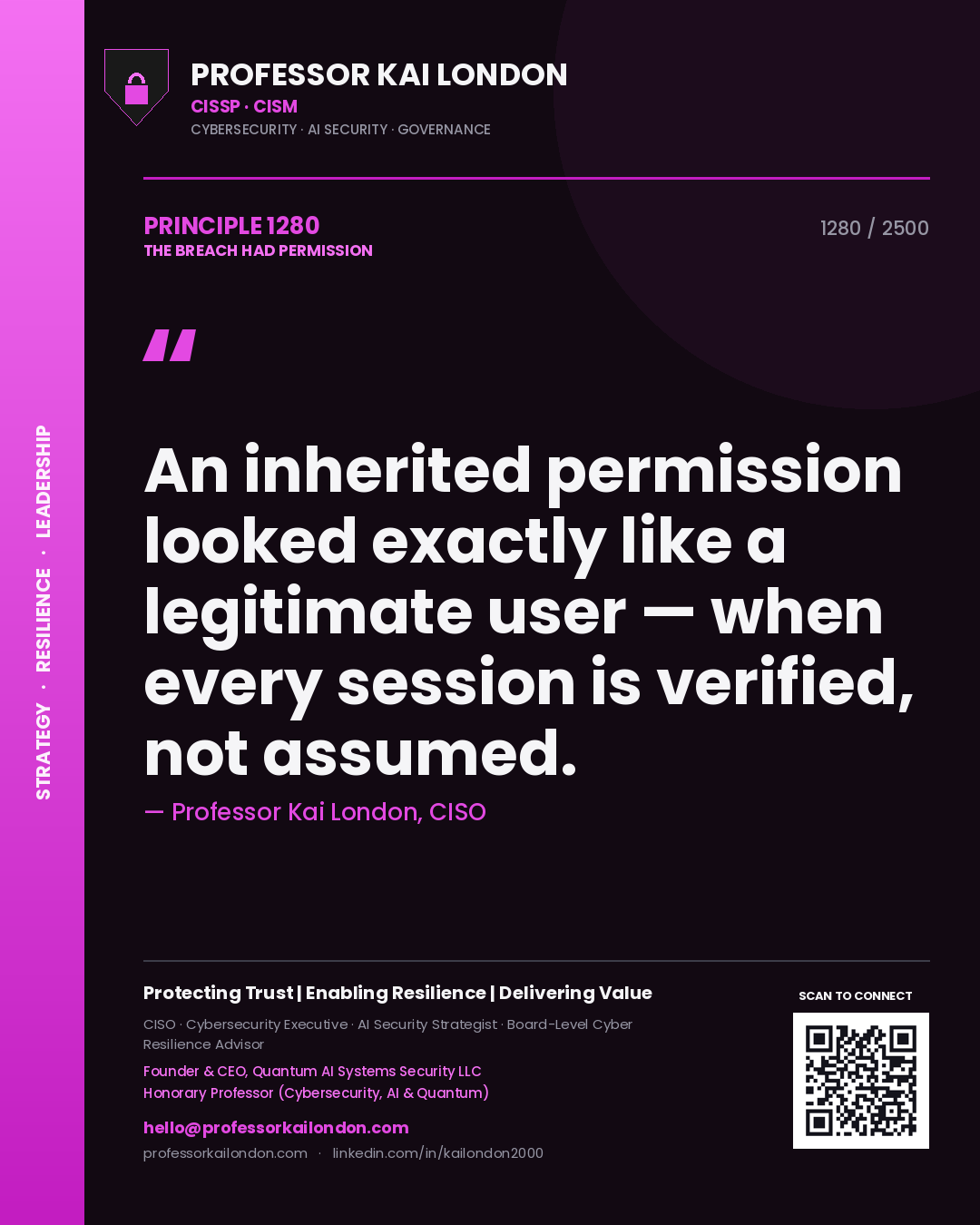
Professor Kai London principle 1280: An inherited permission looked exactly like a legitimate user — when every session is verified, not assumed.
Principle 1280
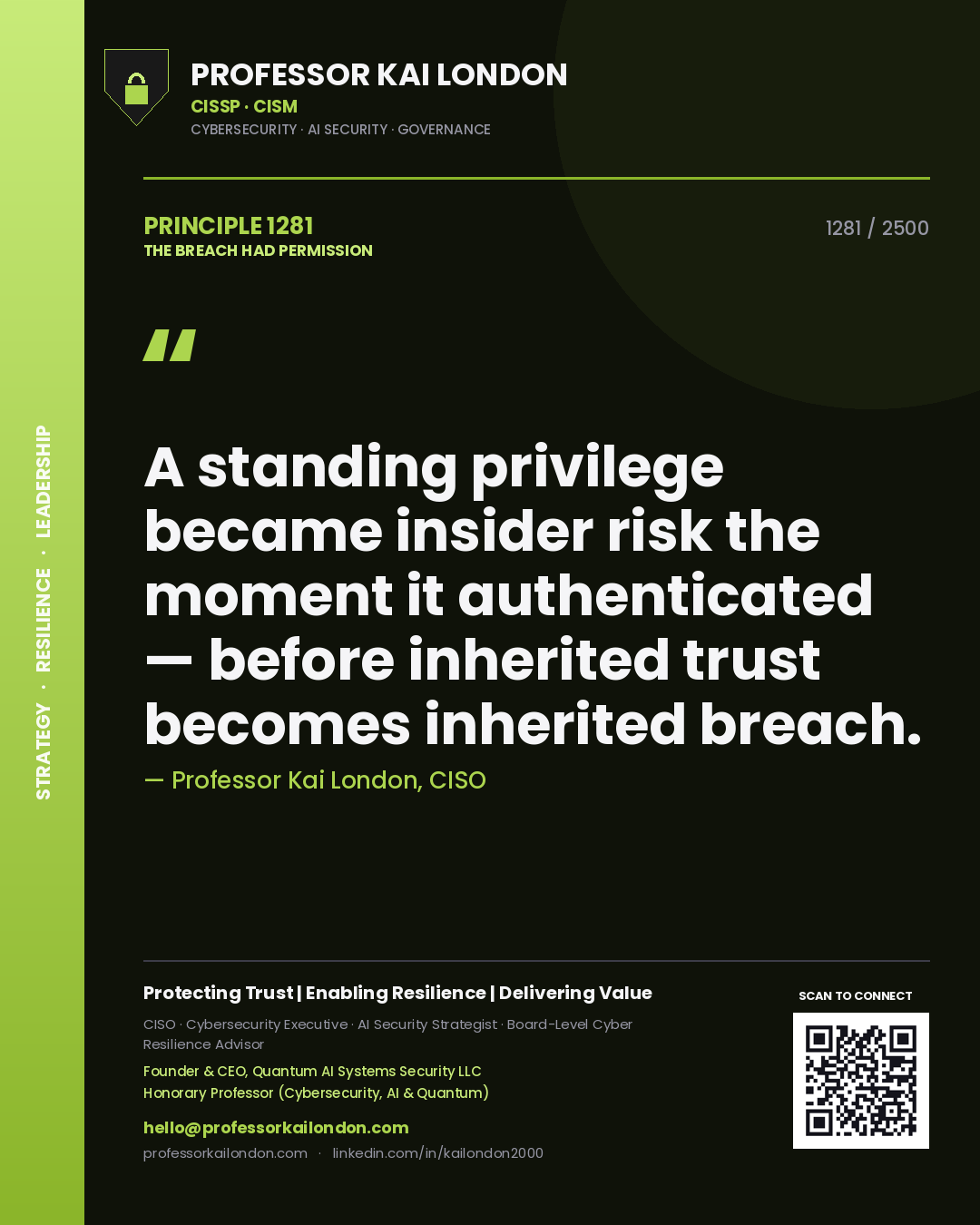
Professor Kai London principle 1281: A standing privilege became insider risk the moment it authenticated — before inherited trust becomes inherited breach.
Principle 1281
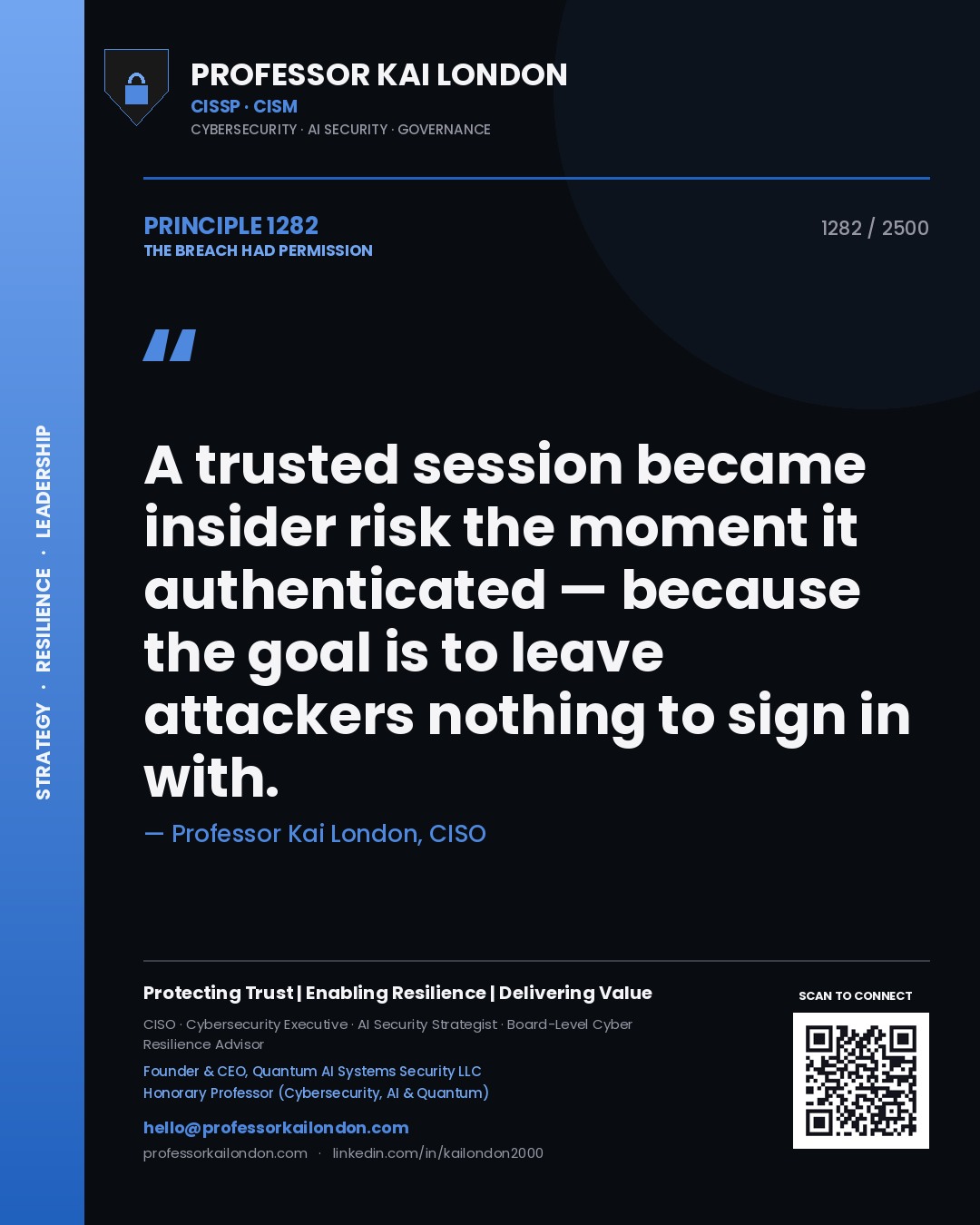
Professor Kai London principle 1282: A trusted session became insider risk the moment it authenticated — because the goal is to leave attackers nothing to sign in with.
Principle 1282
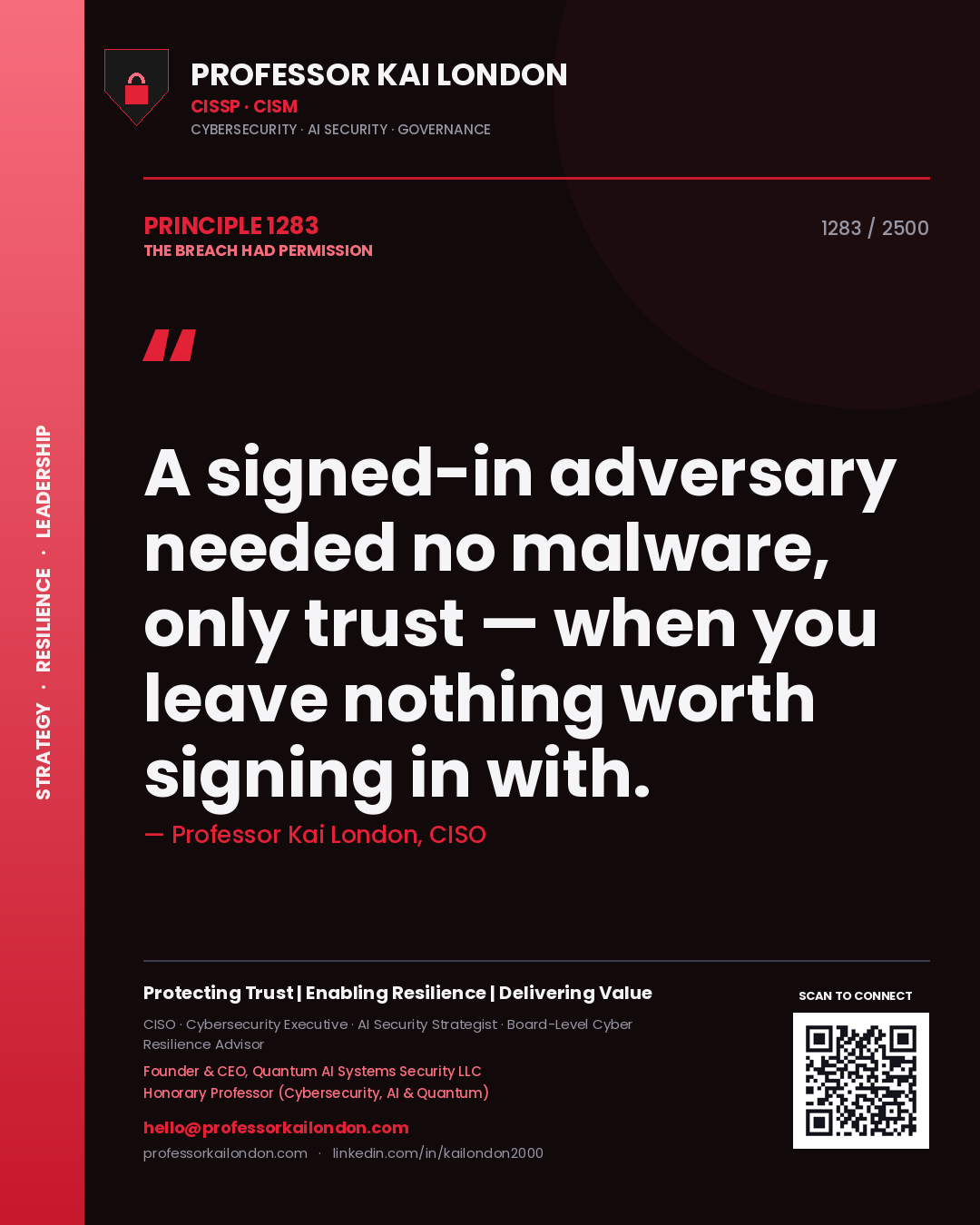
Professor Kai London principle 1283: A signed-in adversary needed no malware, only trust — when you leave nothing worth signing in with.
Principle 1283
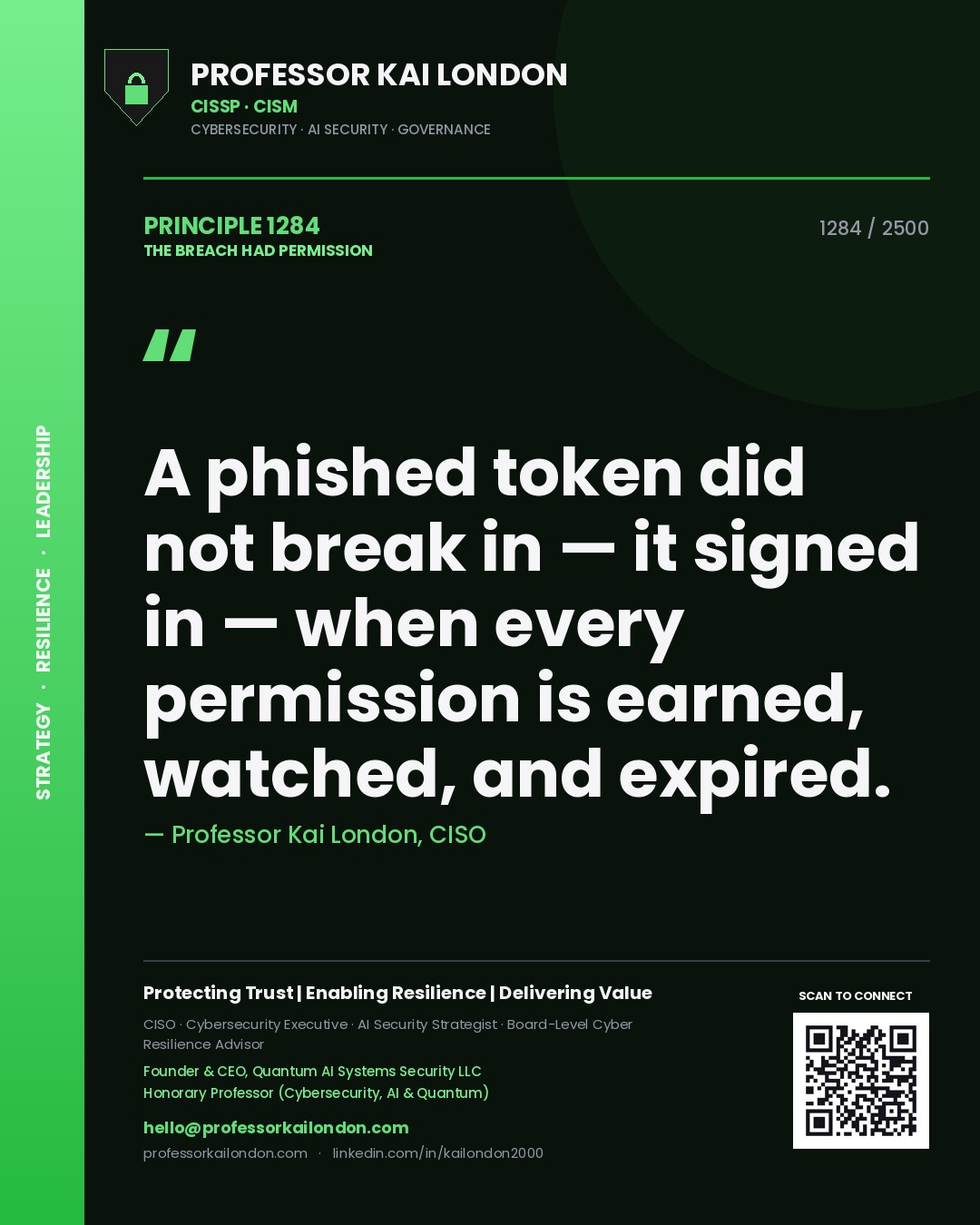
Professor Kai London principle 1284: A phished token did not break in — it signed in — when every permission is earned, watched, and expired.
Principle 1284
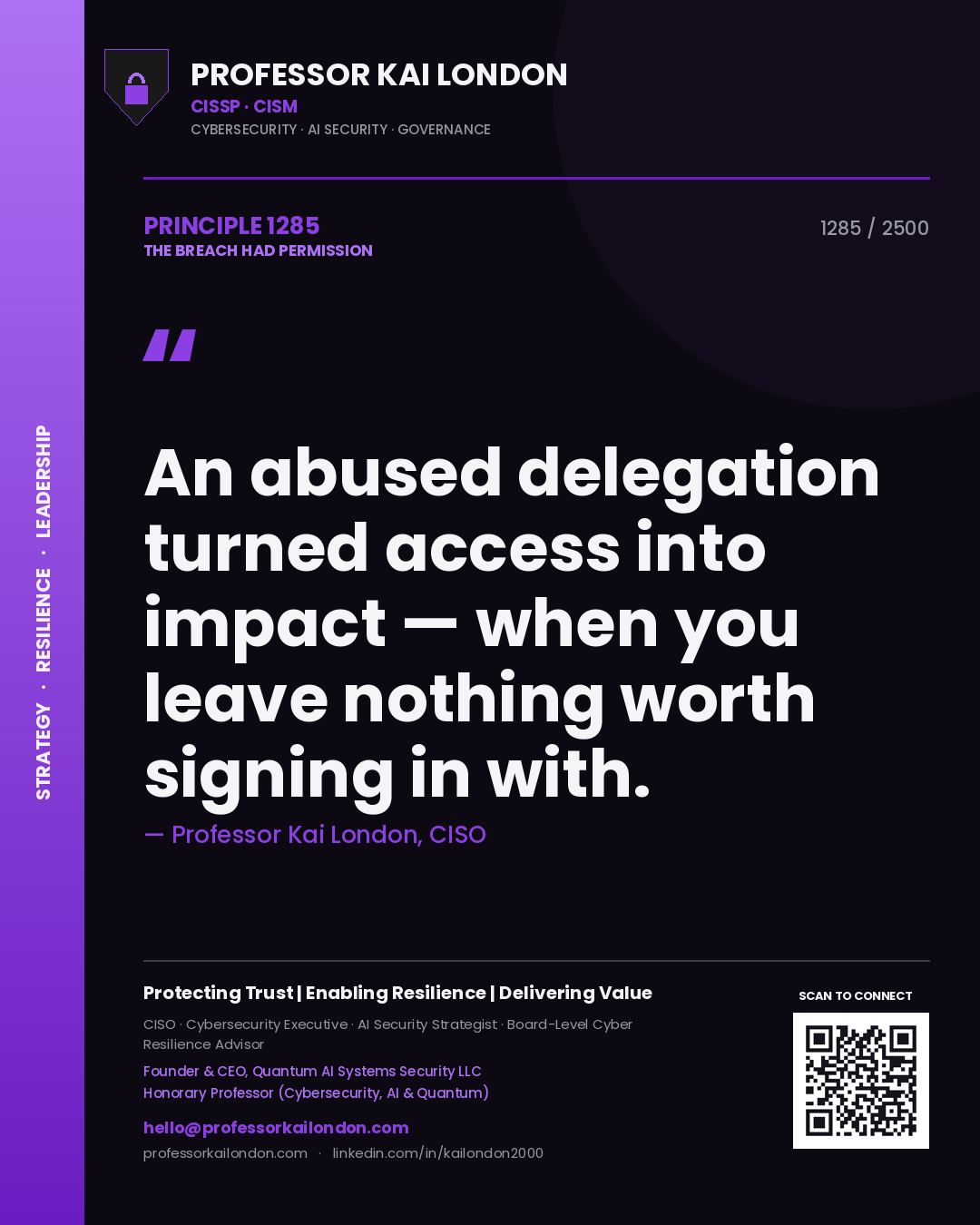
Professor Kai London principle 1285: An abused delegation turned access into impact — when you leave nothing worth signing in with.
Principle 1285
Professor Kai London principle 1286: A legitimate API key needed no exploit, only an identity — when trust is verified continuously, not granted once.
Principle 1286
Professor Kai London principle 1287: An abused delegation proved that trust unproven is trust abused — when every permission is earned, watched, and expired.
Principle 1287
Professor Kai London principle 1288: A legitimate API key needed no exploit, only an identity — when every permission is earned, watched, and expired.
Principle 1288
Professor Kai London principle 1289: An inherited permission needed no malware, only trust — when Zero Trust is a system, not a slogan.
Principle 1289
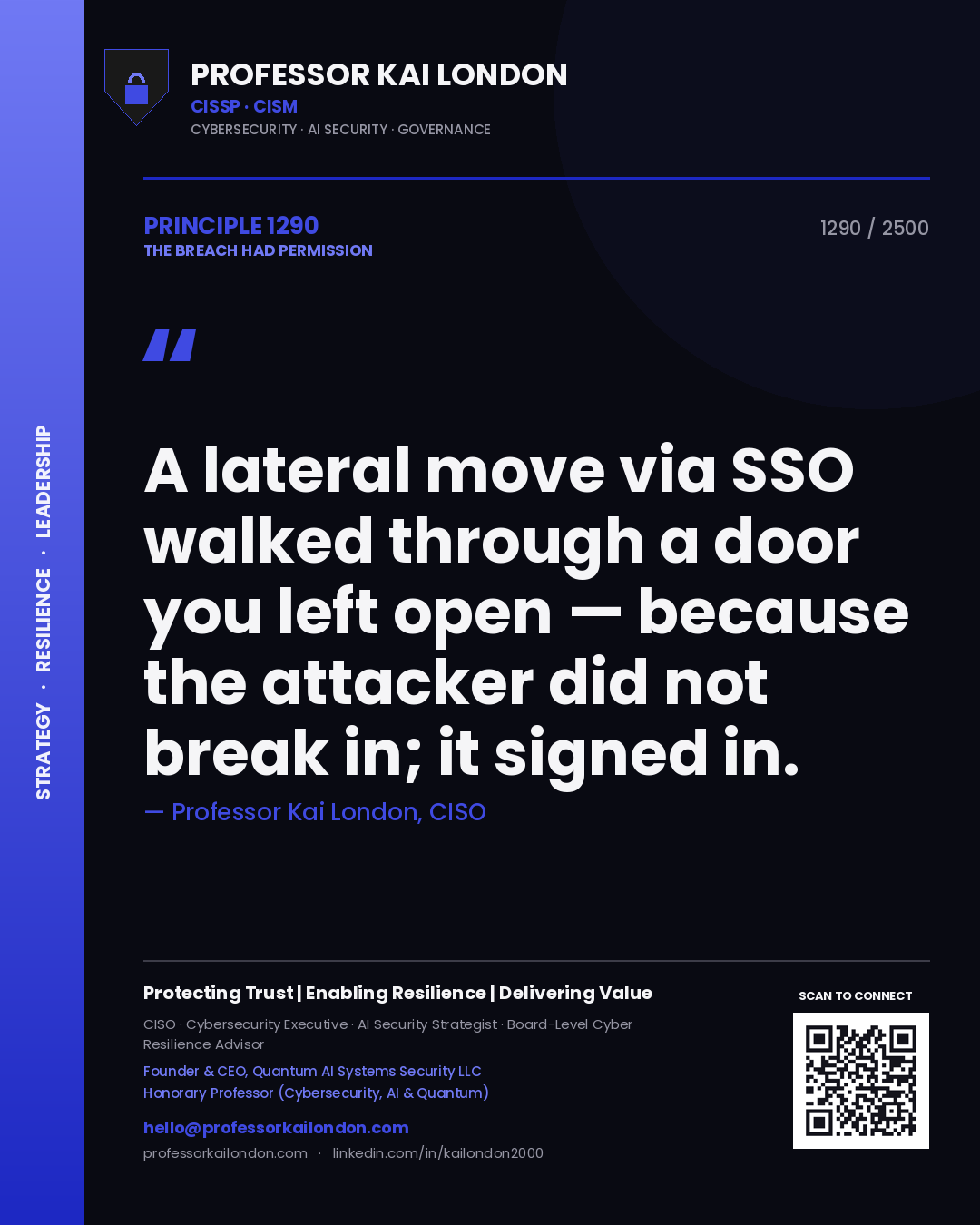
Professor Kai London principle 1290: A lateral move via SSO walked through a door you left open — because the attacker did not break in; it signed in.
Principle 1290
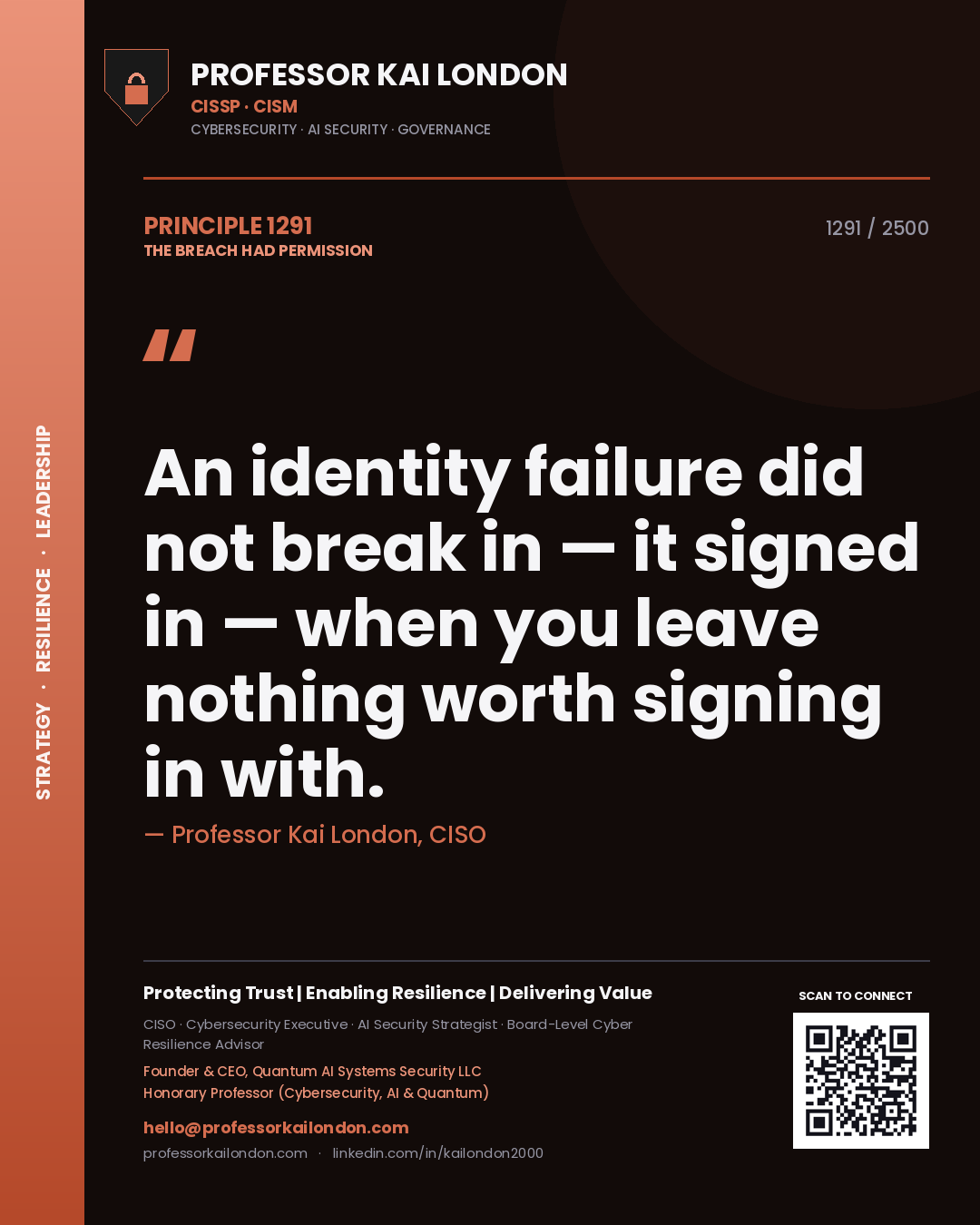
Professor Kai London principle 1291: An identity failure did not break in — it signed in — when you leave nothing worth signing in with.
Principle 1291
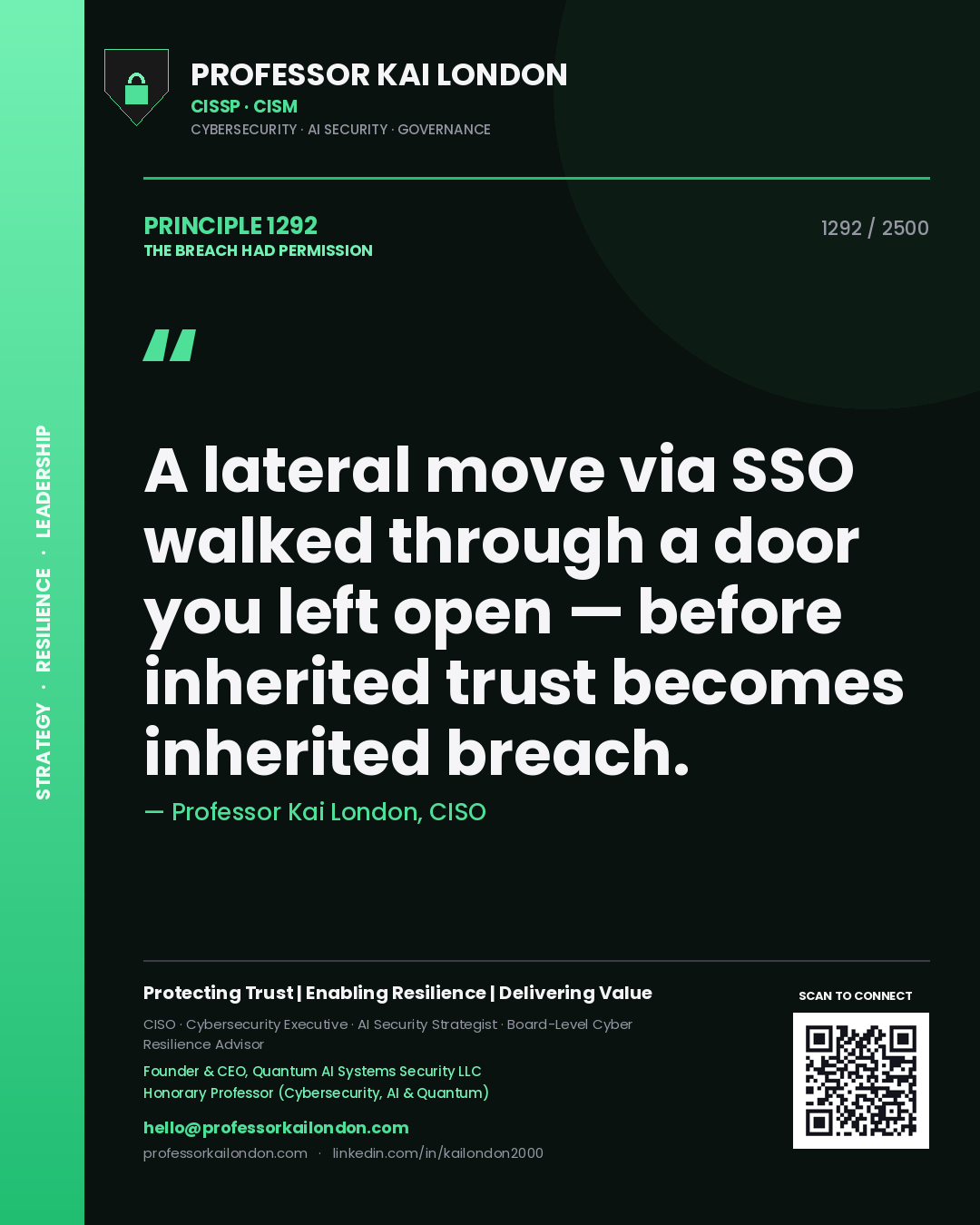
Professor Kai London principle 1292: A lateral move via SSO walked through a door you left open — before inherited trust becomes inherited breach.
Principle 1292
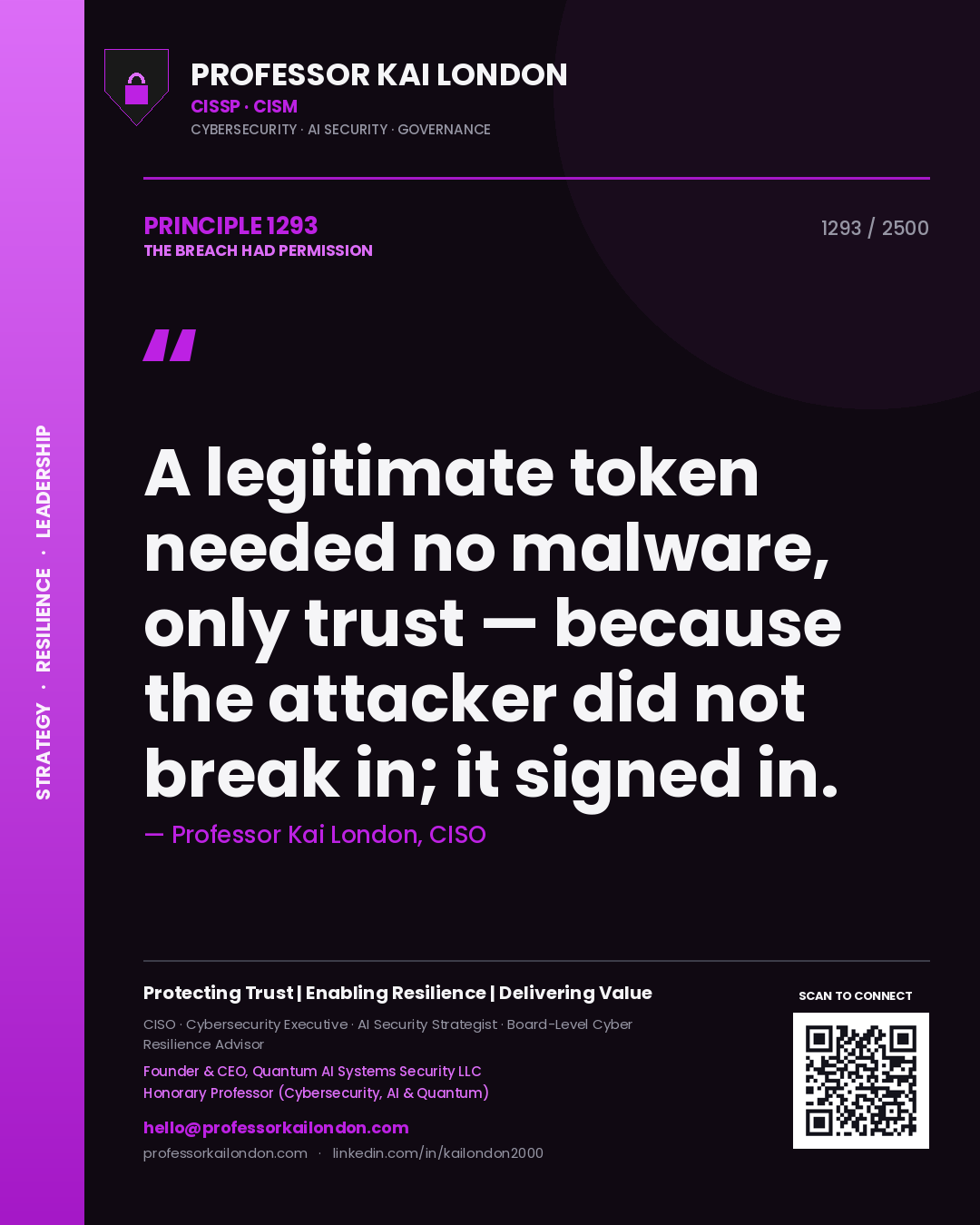
Professor Kai London principle 1293: A legitimate token needed no malware, only trust — because the attacker did not break in; it signed in.
Principle 1293
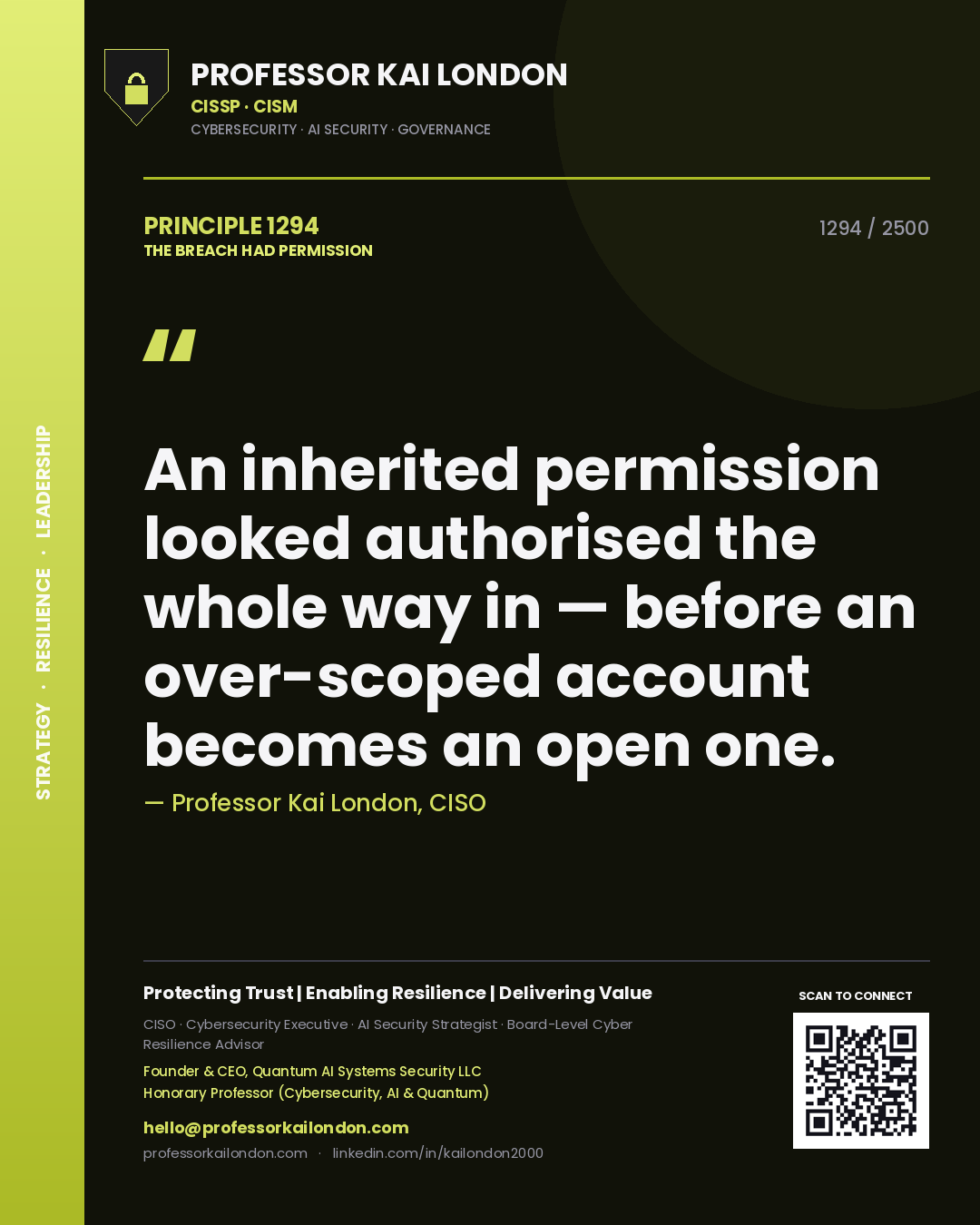
Professor Kai London principle 1294: An inherited permission looked authorised the whole way in — before an over-scoped account becomes an open one.
Principle 1294
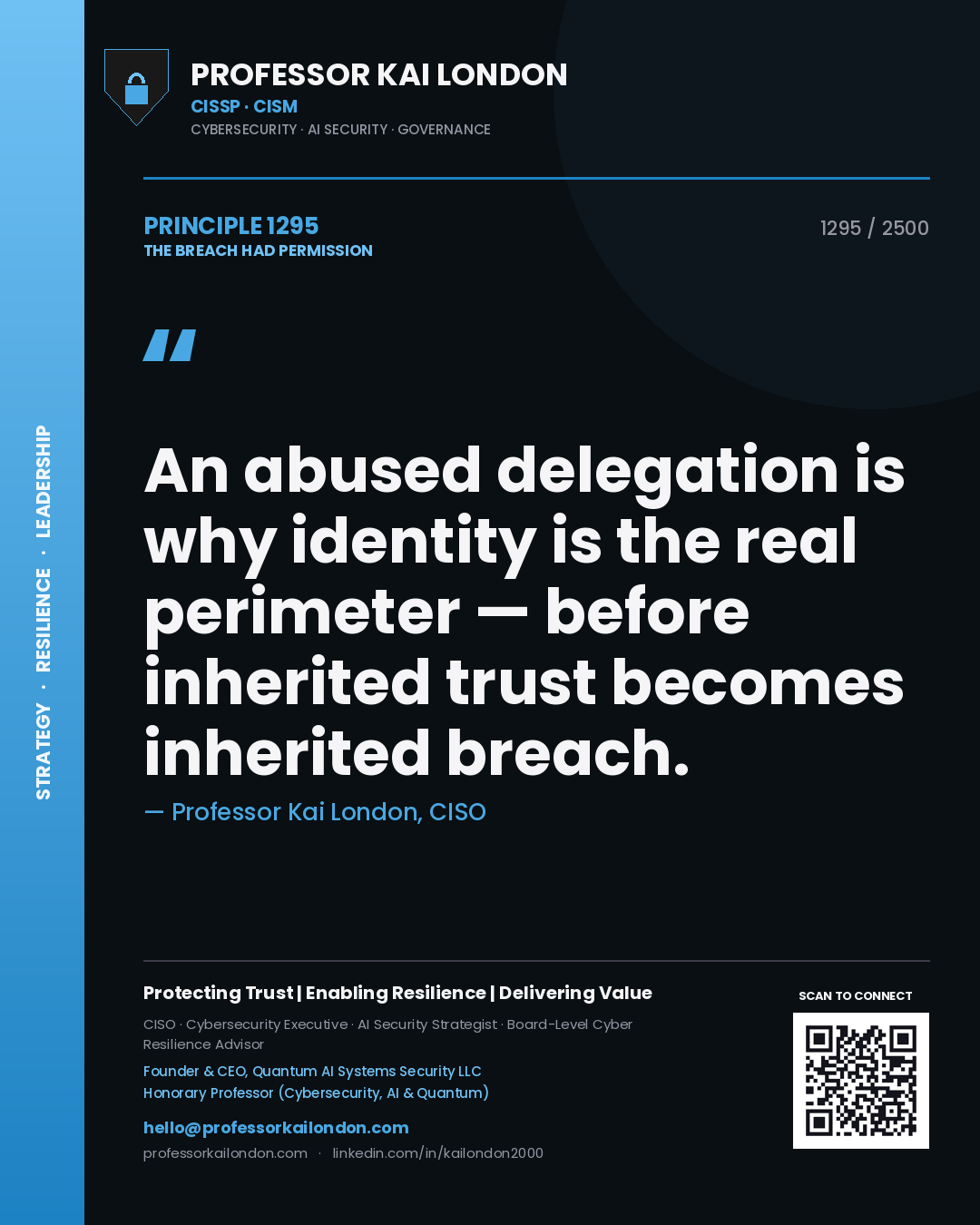
Professor Kai London principle 1295: An abused delegation is why identity is the real perimeter — before inherited trust becomes inherited breach.
Principle 1295
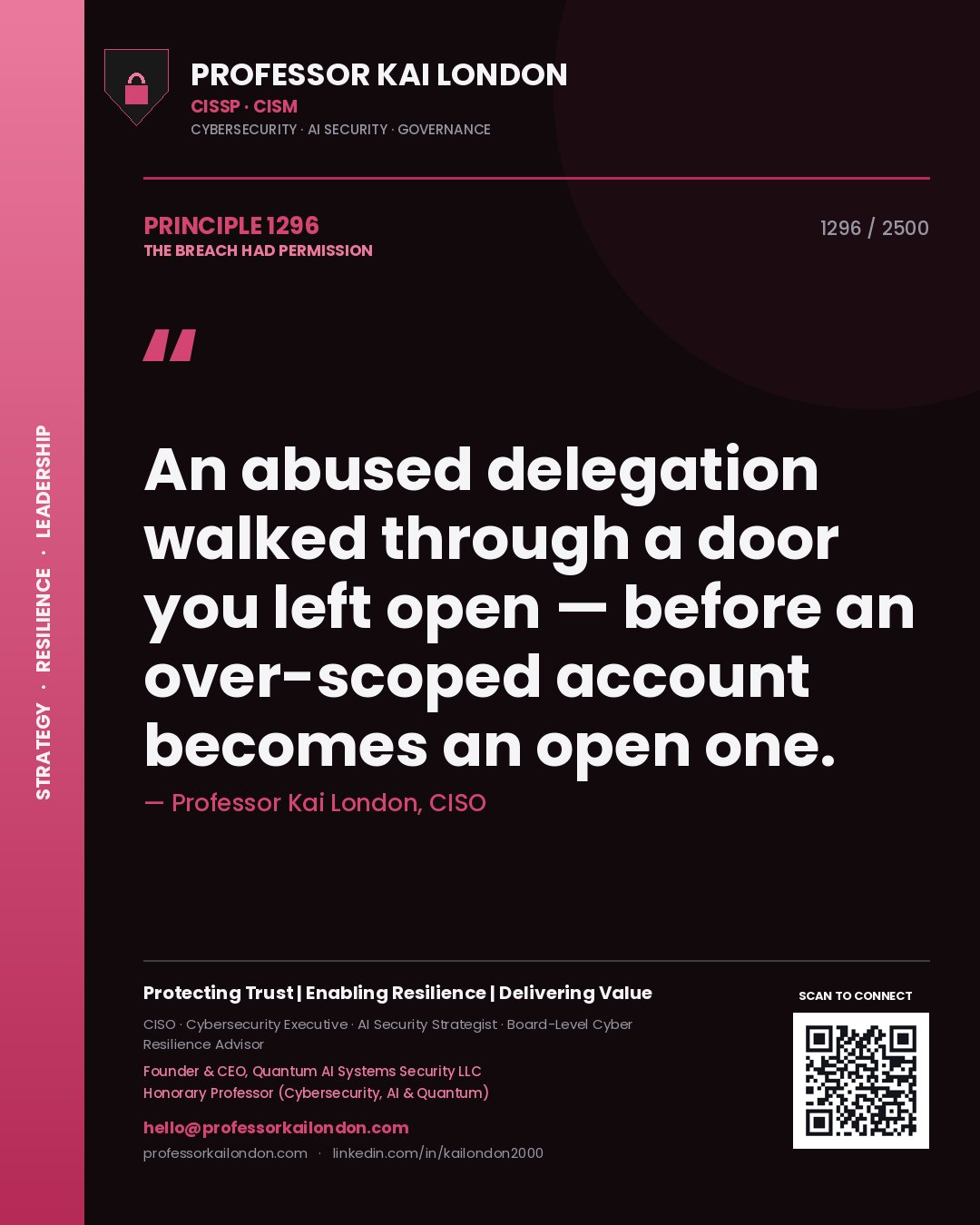
Professor Kai London principle 1296: An abused delegation walked through a door you left open — before an over-scoped account becomes an open one.
Principle 1296
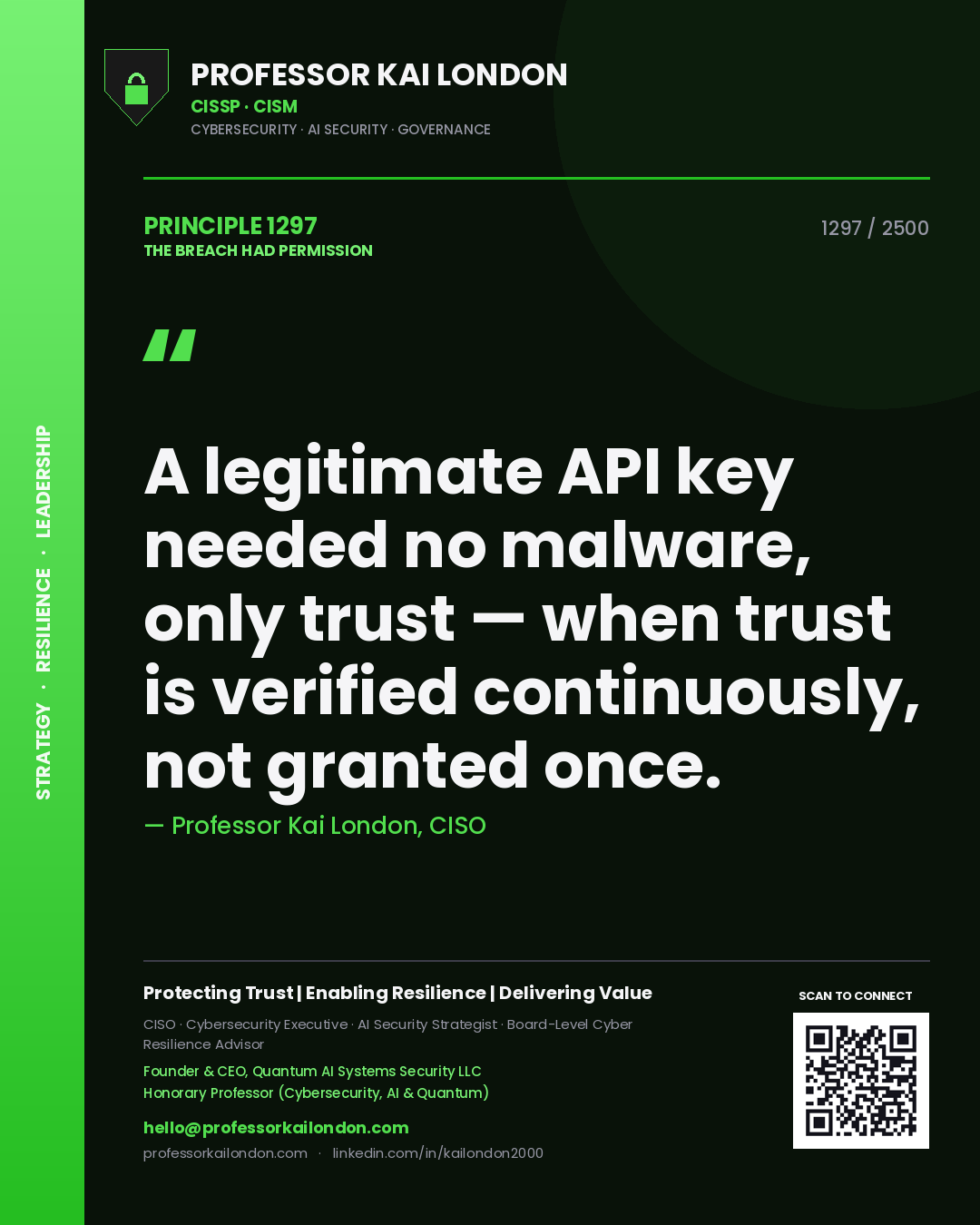
Professor Kai London principle 1297: A legitimate API key needed no malware, only trust — when trust is verified continuously, not granted once.
Principle 1297
Professor Kai London principle 1298: An abused delegation looked authorised the whole way in — when trust is verified continuously, not granted once.
Principle 1298
Professor Kai London principle 1299: A legitimate token used trust you handed over — before inherited trust becomes inherited breach.
Principle 1299
Professor Kai London principle 1300: A phished token looked exactly like a legitimate user — when you leave nothing worth signing in with.
Principle 1300