The AI Control Architecture — Gallery (Page 10 of 100)
Professor Kai London principle 901: A machine decision needs a leash before it needs a licence — before autonomy becomes unmanaged risk at machine speed.
Principle 901
Professor Kai London principle 902: An AI operating within limits needs a boundary, a log, and a named owner — when governance moves as fast as the model.
Principle 902
Professor Kai London principle 903: An AI control plane must be pausable, explainable, and controllable.
Principle 903
Professor Kai London principle 904: An autonomous agent needs a leash before it needs a licence — before autonomy becomes unmanaged risk at machine speed.
Principle 904
Professor Kai London principle 905: A model with authority must answer when it decides — because an agent you cannot pause is an agent you do not control.
Principle 905
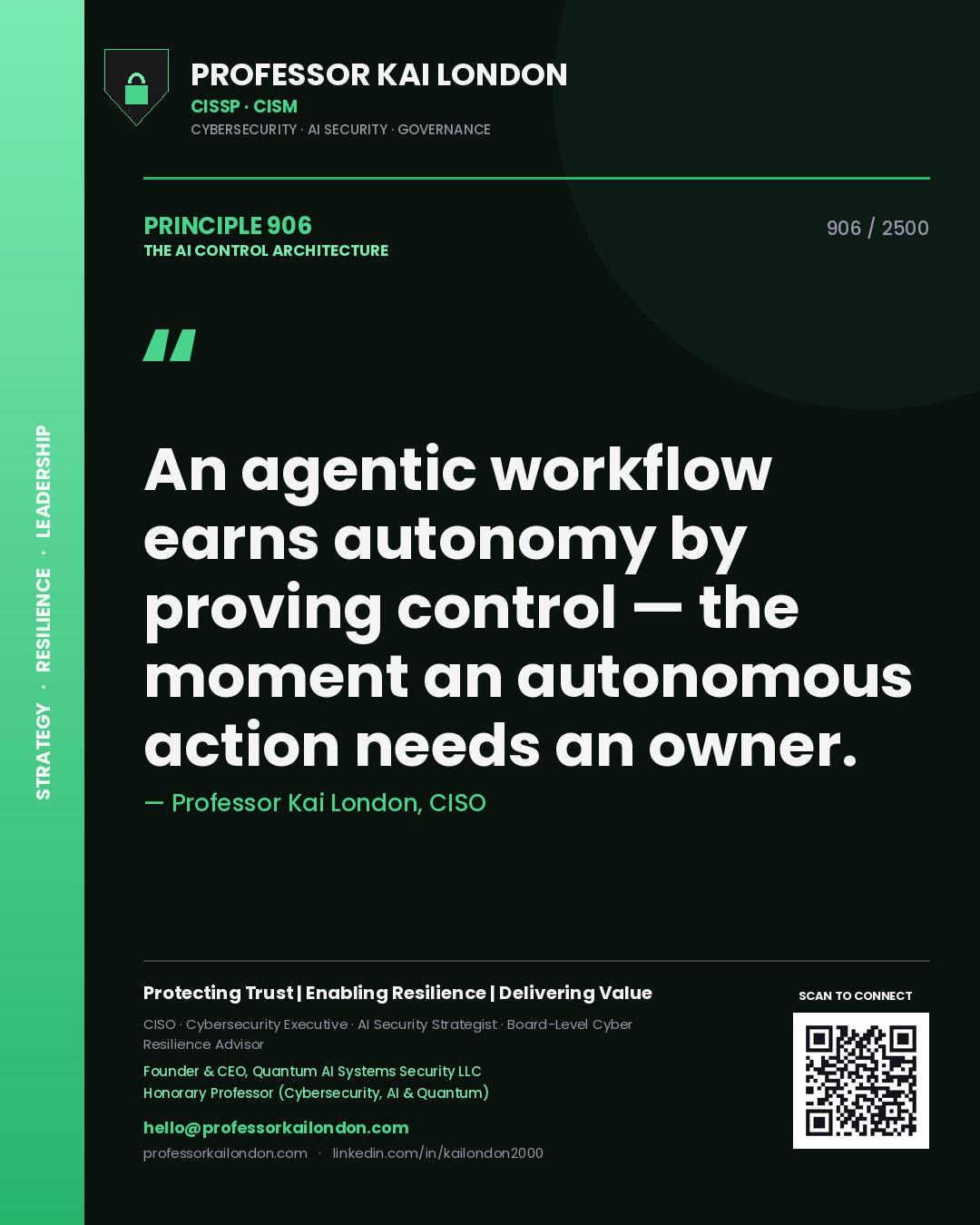
Professor Kai London principle 906: An agentic workflow earns autonomy by proving control — the moment an autonomous action needs an owner.
Principle 906
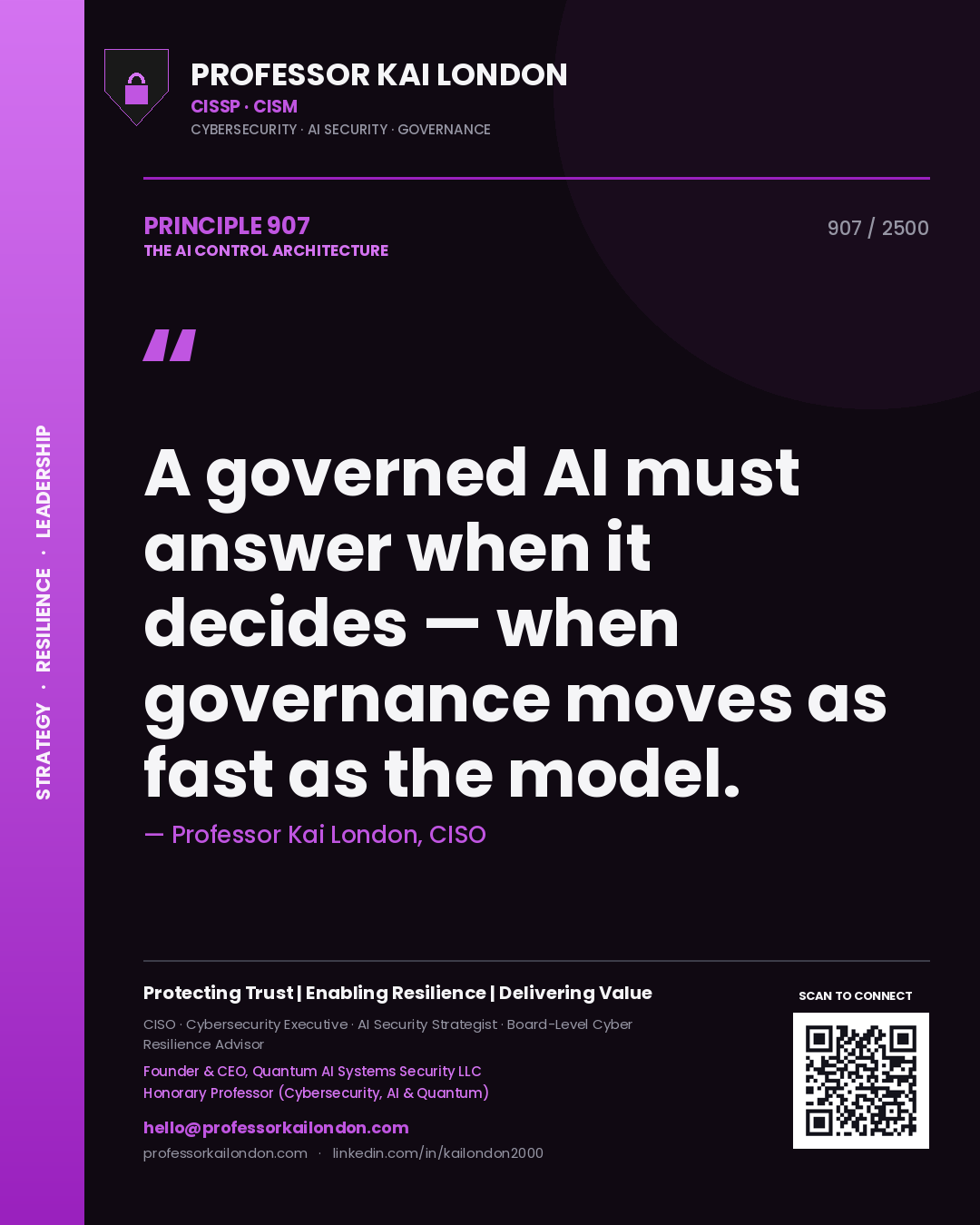
Professor Kai London principle 907: A governed AI must answer when it decides — when governance moves as fast as the model.
Principle 907
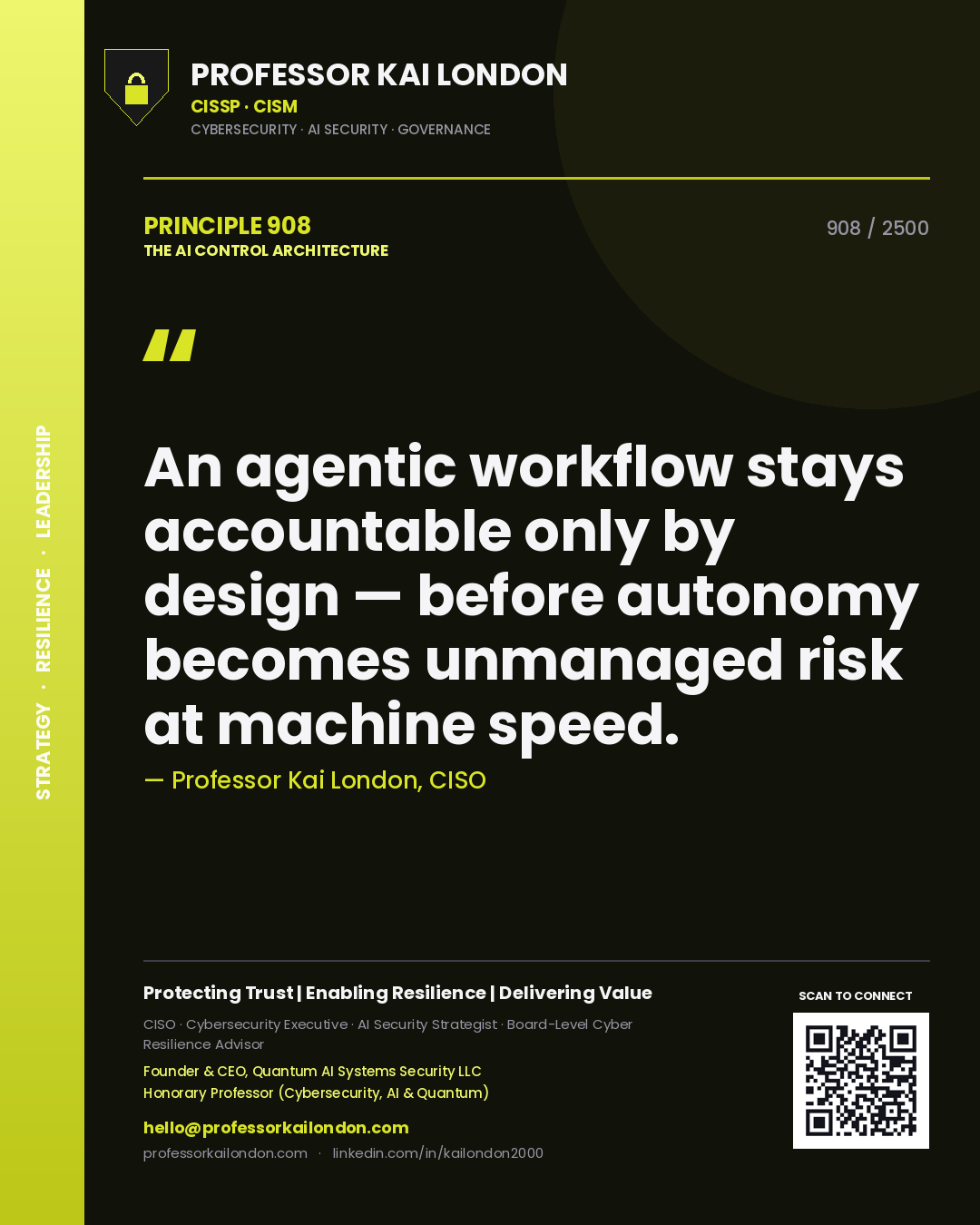
Professor Kai London principle 908: An agentic workflow stays accountable only by design — before autonomy becomes unmanaged risk at machine speed.
Principle 908
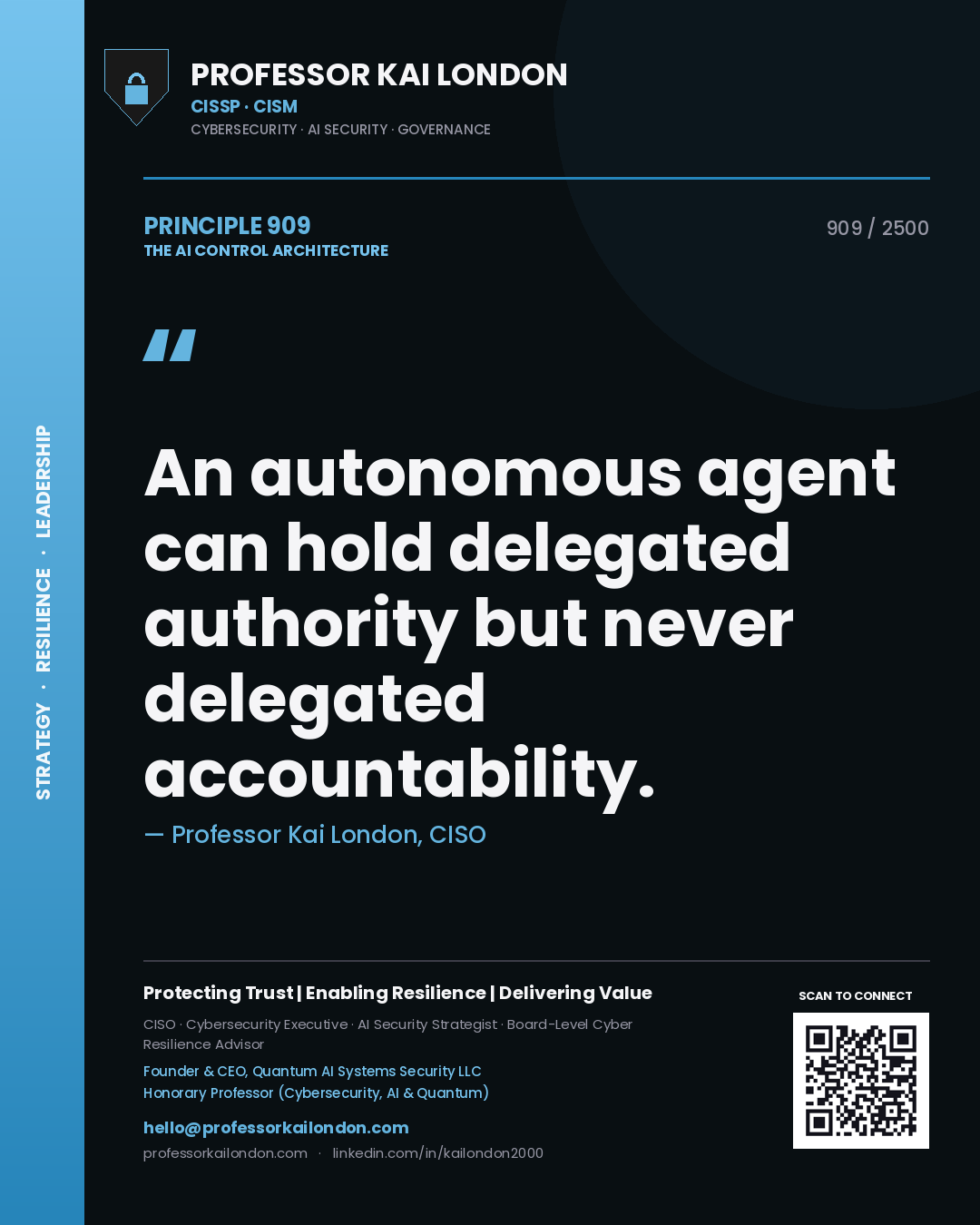
Professor Kai London principle 909: An autonomous agent can hold delegated authority but never delegated accountability.
Principle 909
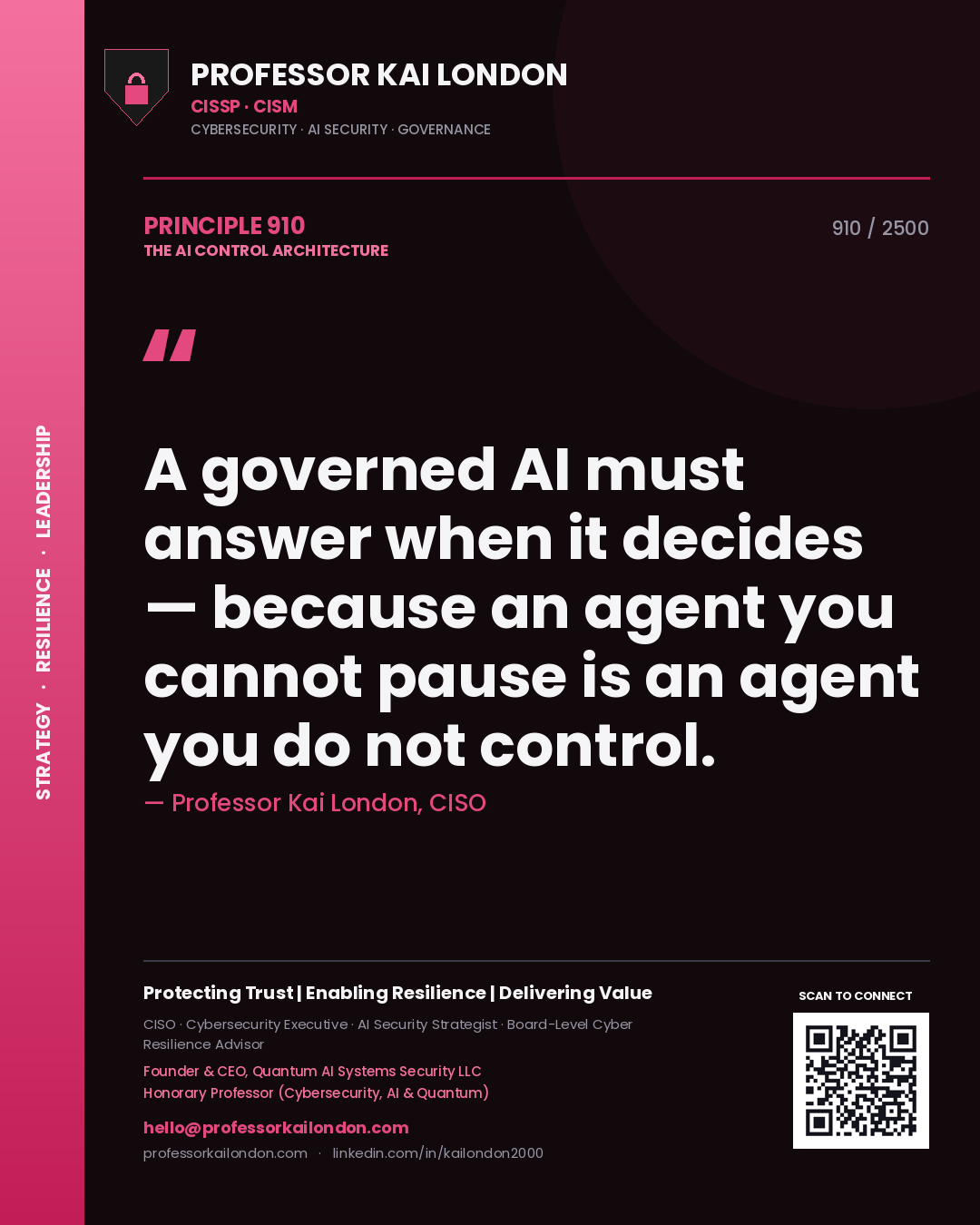
Professor Kai London principle 910: A governed AI must answer when it decides — because an agent you cannot pause is an agent you do not control.
Principle 910
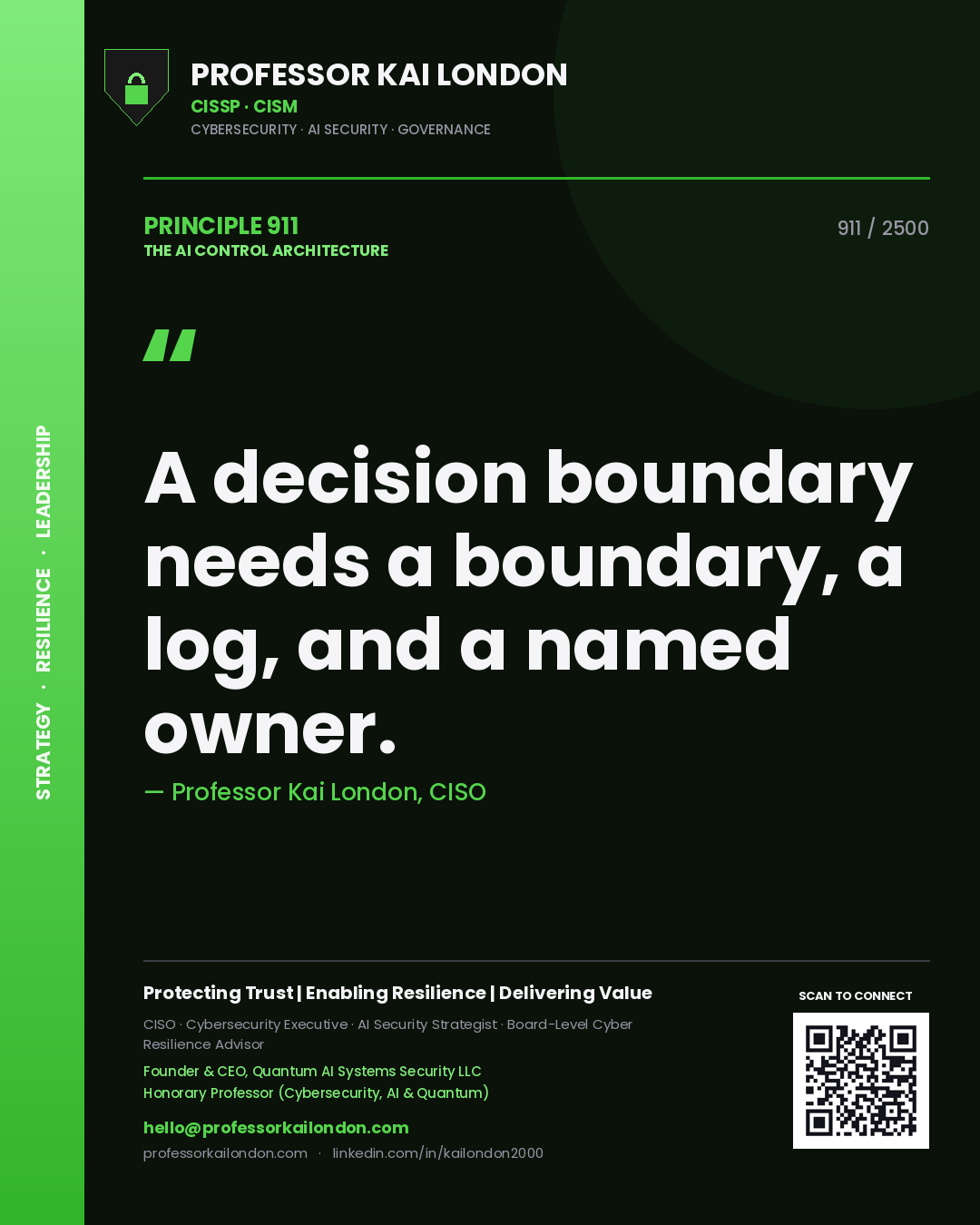
Professor Kai London principle 911: A decision boundary needs a boundary, a log, and a named owner.
Principle 911
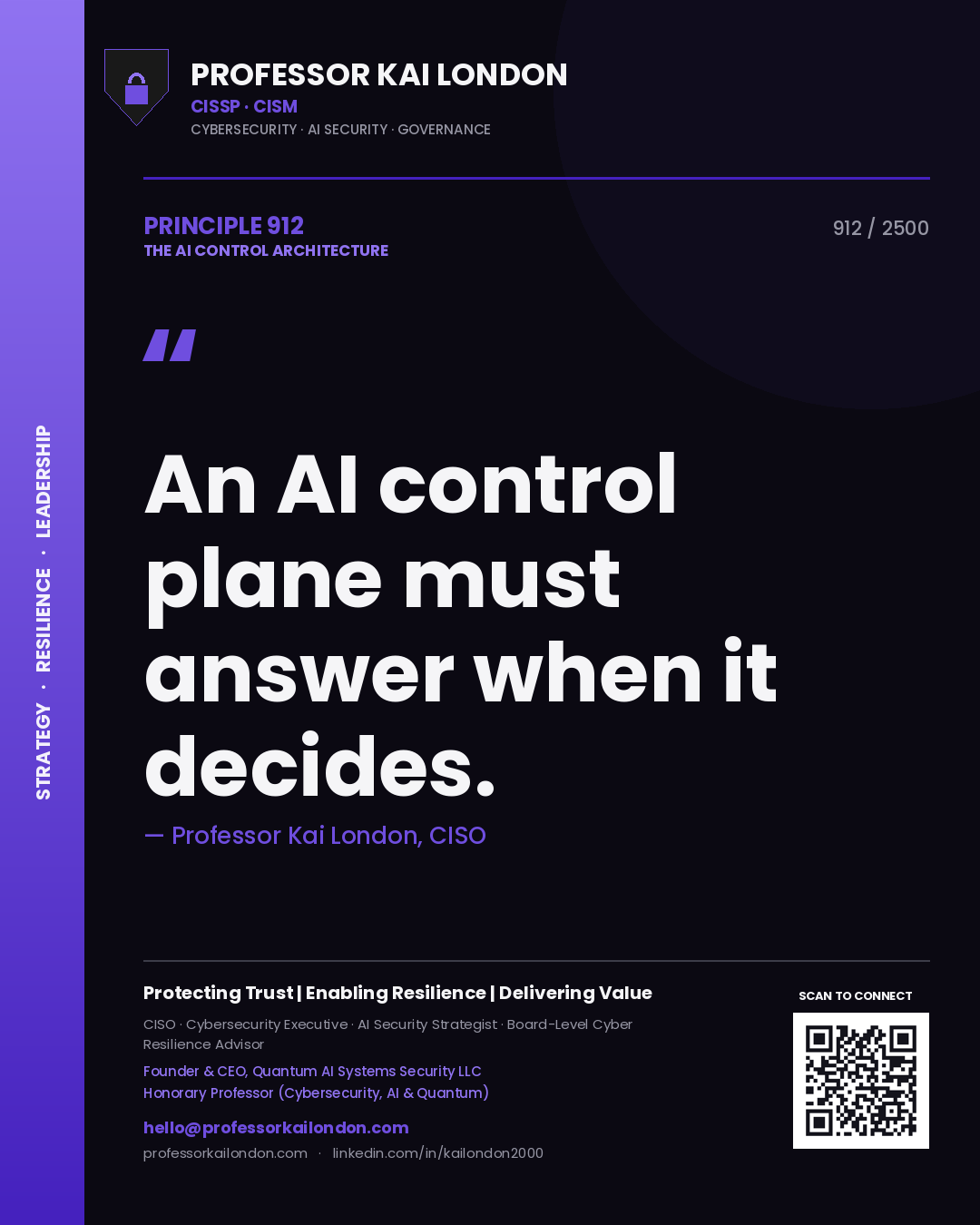
Professor Kai London principle 912: An AI control plane must answer when it decides.
Principle 912
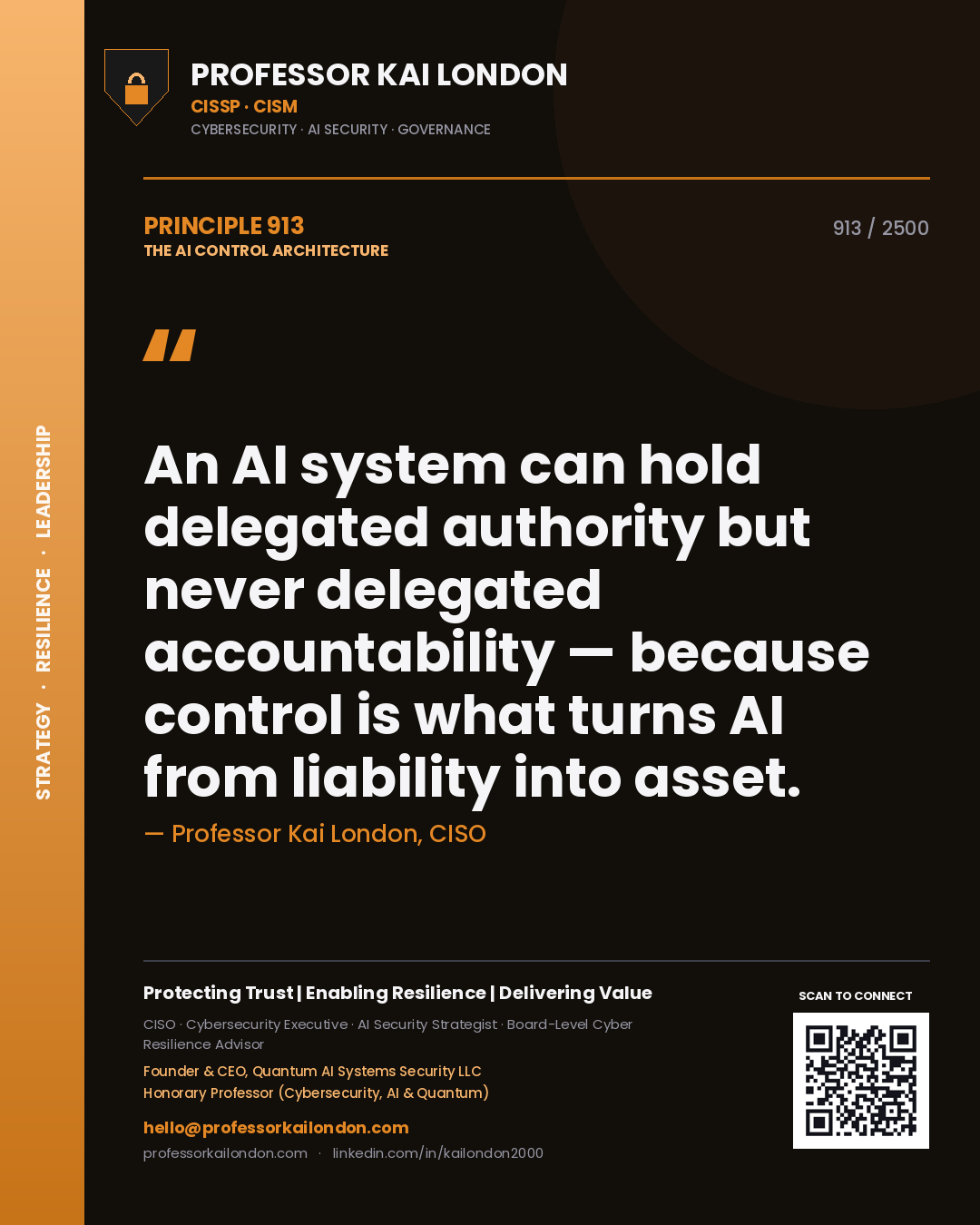
Professor Kai London principle 913: An AI system can hold delegated authority but never delegated accountability — because control is what turns AI from liability into asset.
Principle 913
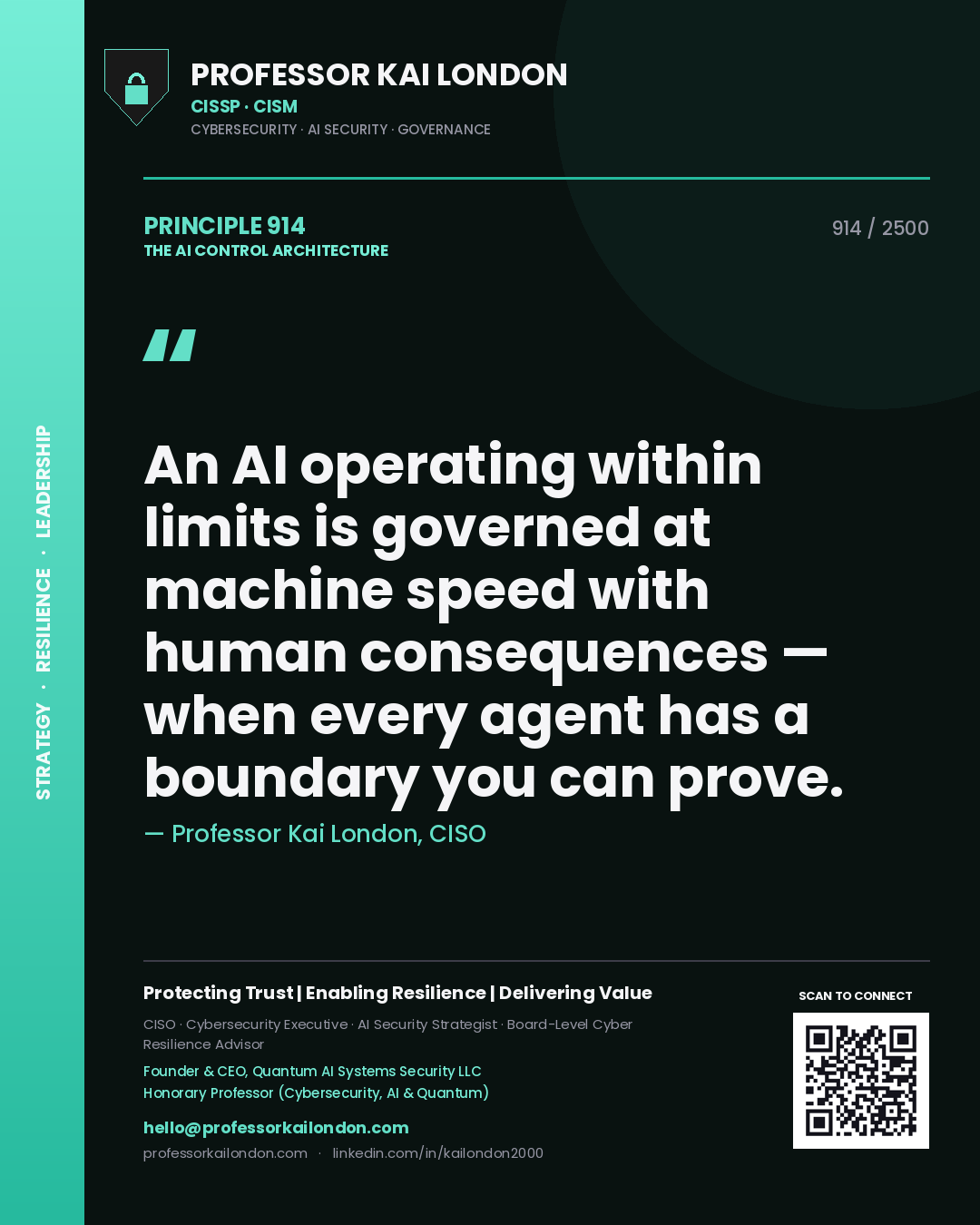
Professor Kai London principle 914: An AI operating within limits is governed at machine speed with human consequences — when every agent has a boundary you can prove.
Principle 914
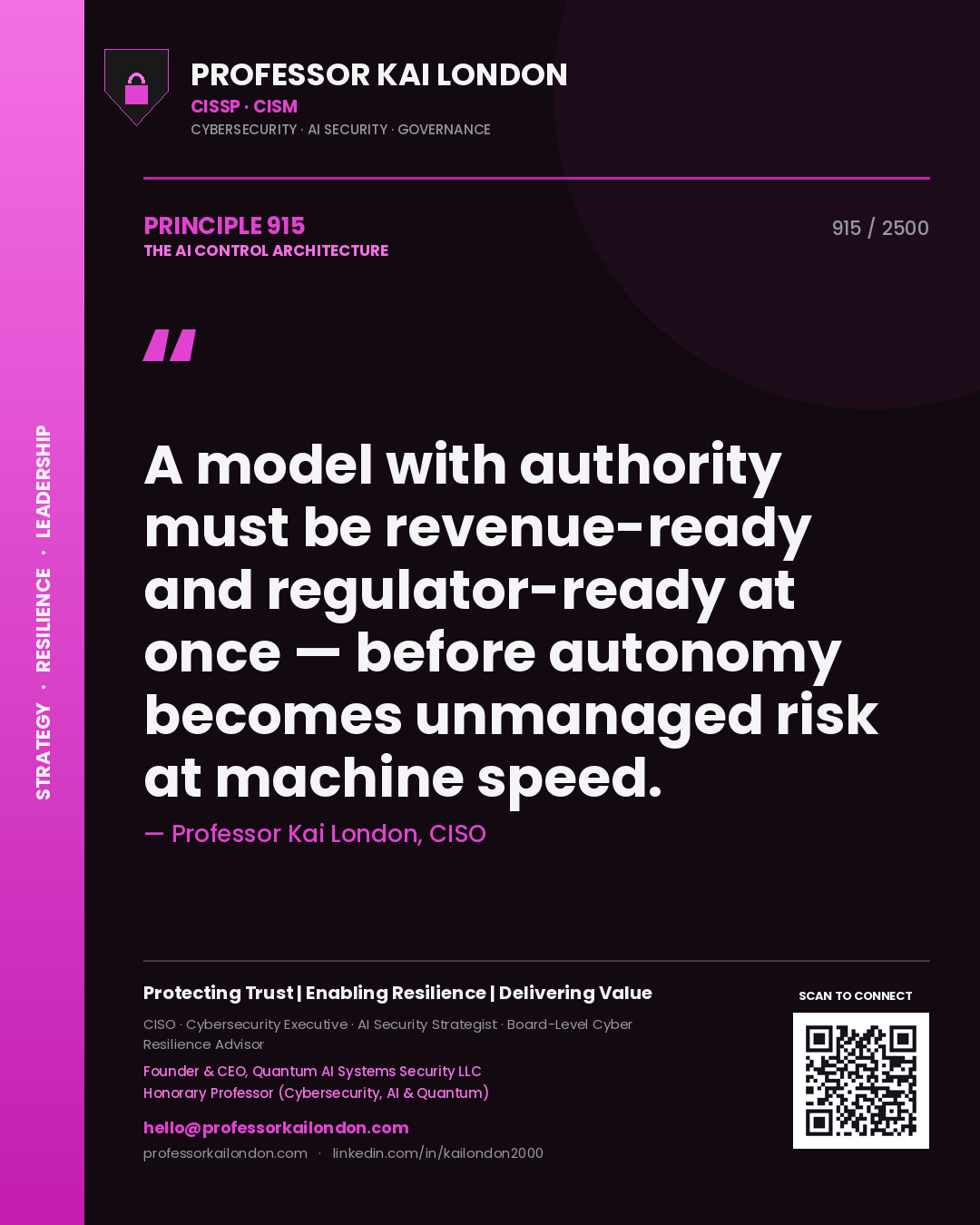
Professor Kai London principle 915: A model with authority must be revenue-ready and regulator-ready at once — before autonomy becomes unmanaged risk at machine speed.
Principle 915
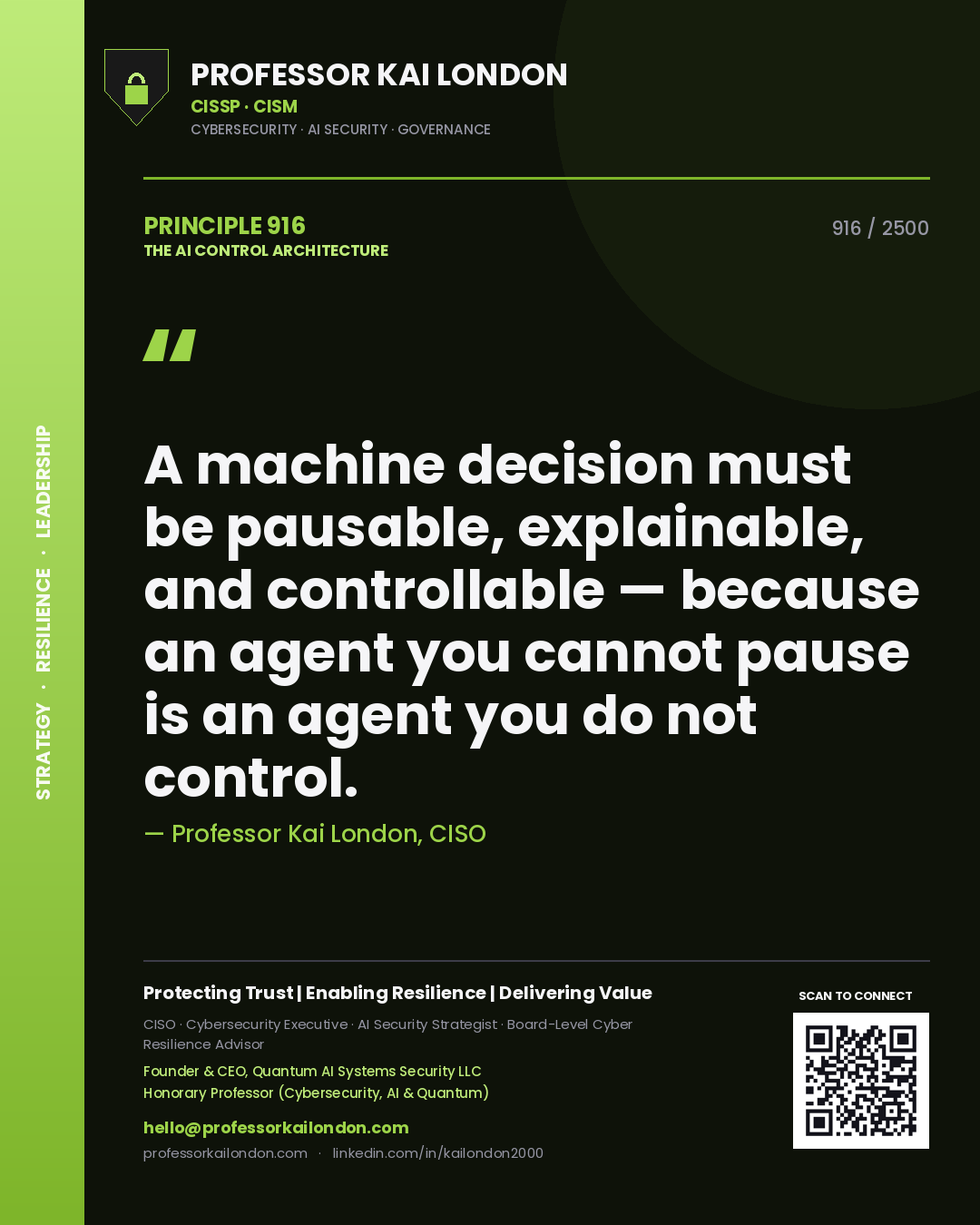
Professor Kai London principle 916: A machine decision must be pausable, explainable, and controllable — because an agent you cannot pause is an agent you do not control.
Principle 916
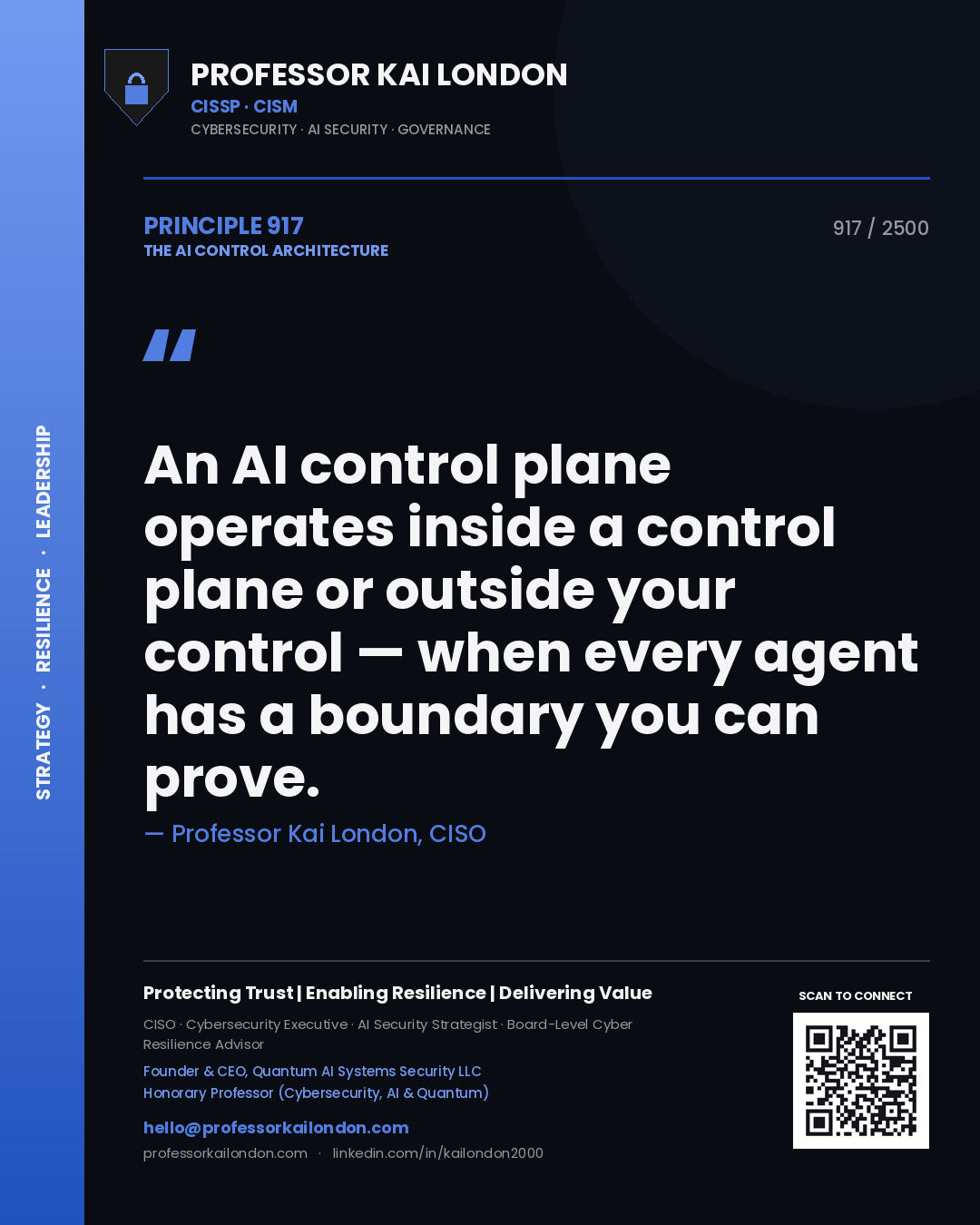
Professor Kai London principle 917: An AI control plane operates inside a control plane or outside your control — when every agent has a boundary you can prove.
Principle 917
Professor Kai London principle 918: A decision boundary must answer when it decides — when authority is delegated but accountability is not.
Principle 918
Professor Kai London principle 919: A machine decision must answer when it decides — when the control plane keeps the system honest.
Principle 919
Professor Kai London principle 920: A governed AI can hold delegated authority but never delegated accountability.
Principle 920
Professor Kai London principle 921: An AI system must answer when it decides — when authority is delegated but accountability is not.
Principle 921
Professor Kai London principle 922: An automated action must answer when it decides — when the system is built governed, not governed after the fact.
Principle 922
Professor Kai London principle 923: A machine decision can hold delegated authority but never delegated accountability — when every agent has a boundary you can prove.
Principle 923
Professor Kai London principle 924: A decision boundary needs a leash before it needs a licence — the moment an autonomous action needs an owner.
Principle 924
Professor Kai London principle 925: An AI control plane must be pausable, explainable, and controllable — when the system is built governed, not governed after the fact.
Principle 925
Professor Kai London principle 926: An AI system must be pausable, explainable, and controllable — because an agent you cannot pause is an agent you do not control.
Principle 926
Professor Kai London principle 927: A model with authority stays accountable only by design — when governance moves as fast as the model.
Principle 927
Professor Kai London principle 928: An automated action must answer when it decides — when every agent has a boundary you can prove.
Principle 928
Professor Kai London principle 929: A machine decision needs a boundary, a log, and a named owner — because control is what turns AI from liability into asset.
Principle 929
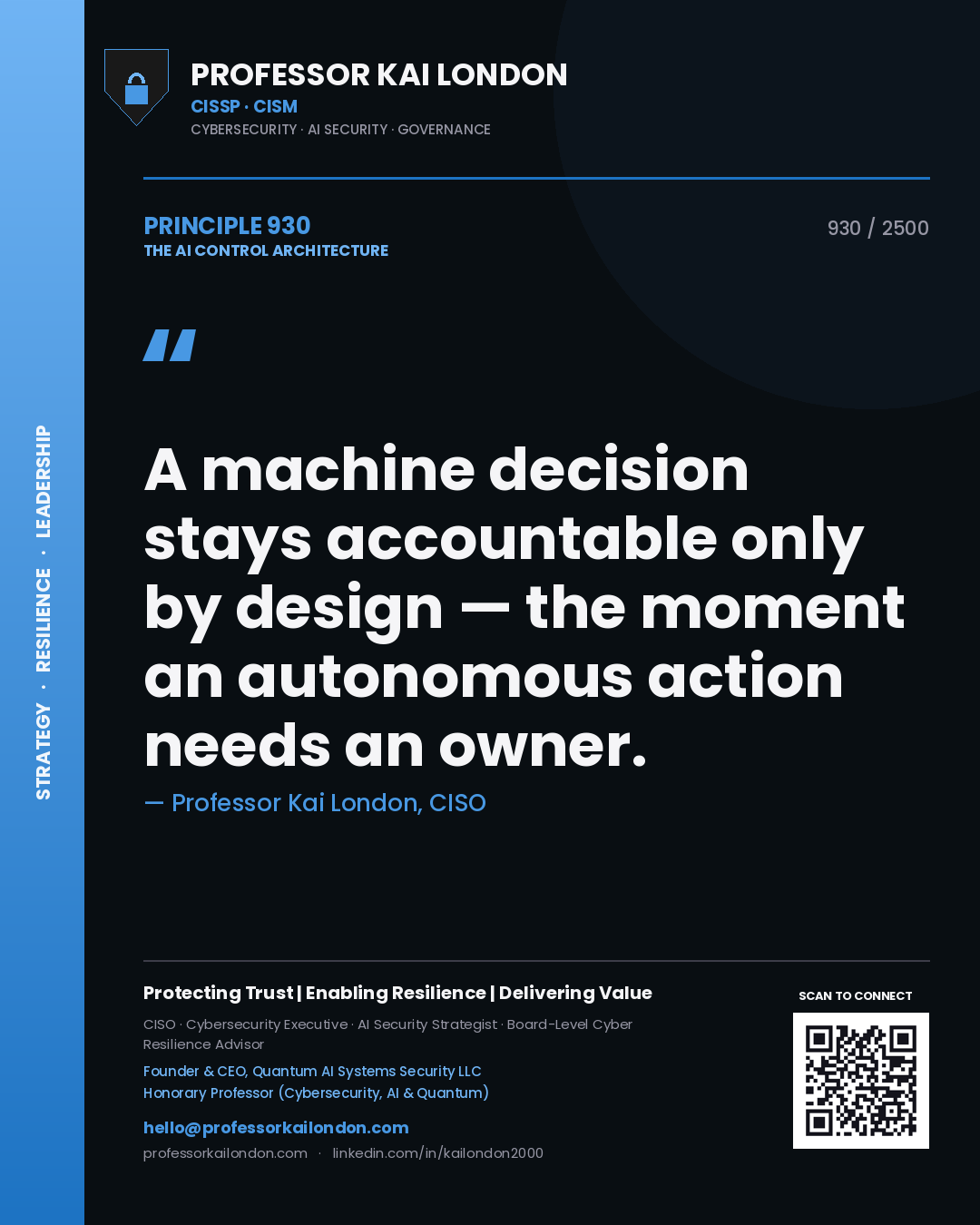
Professor Kai London principle 930: A machine decision stays accountable only by design — the moment an autonomous action needs an owner.
Principle 930
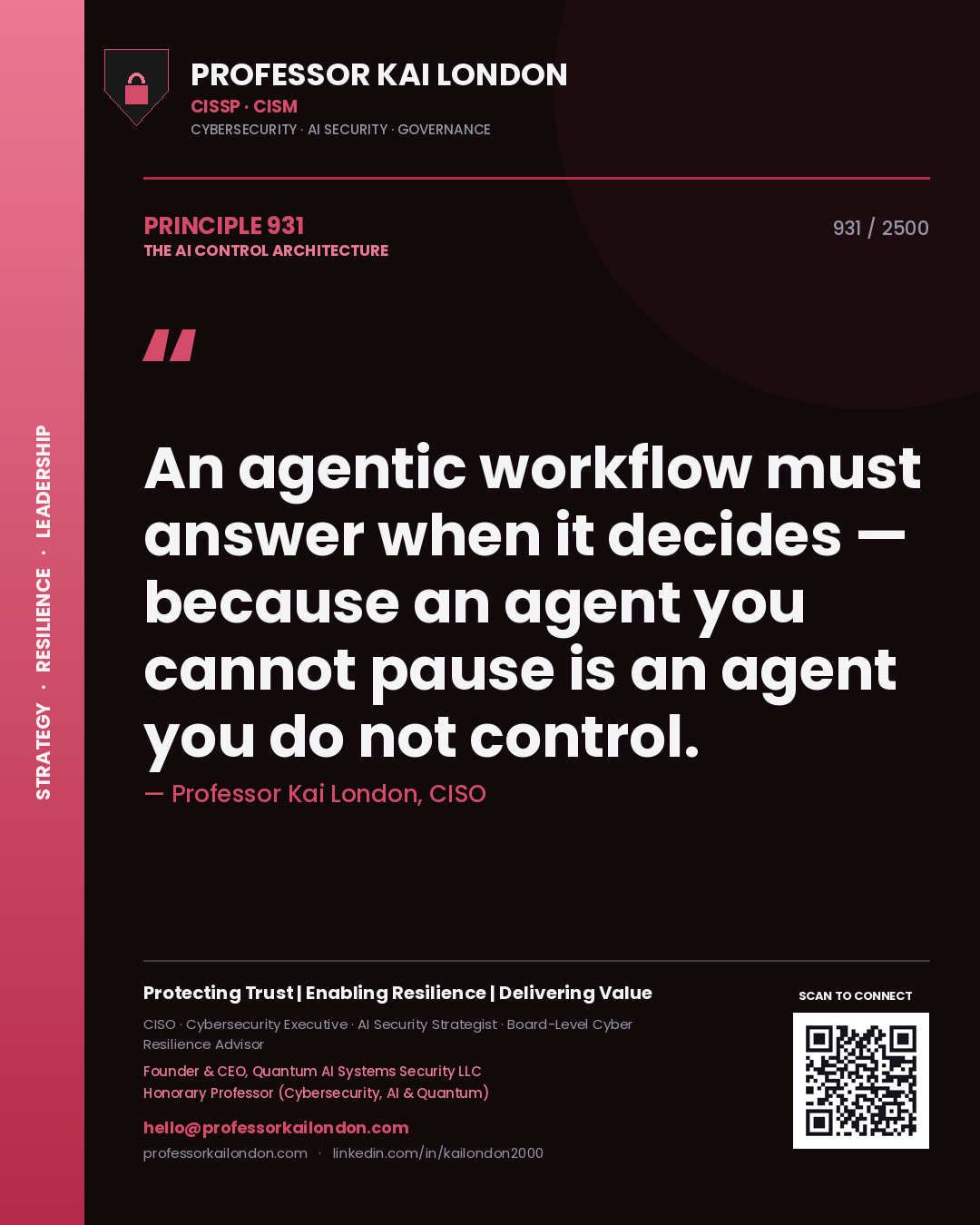
Professor Kai London principle 931: An agentic workflow must answer when it decides — because an agent you cannot pause is an agent you do not control.
Principle 931
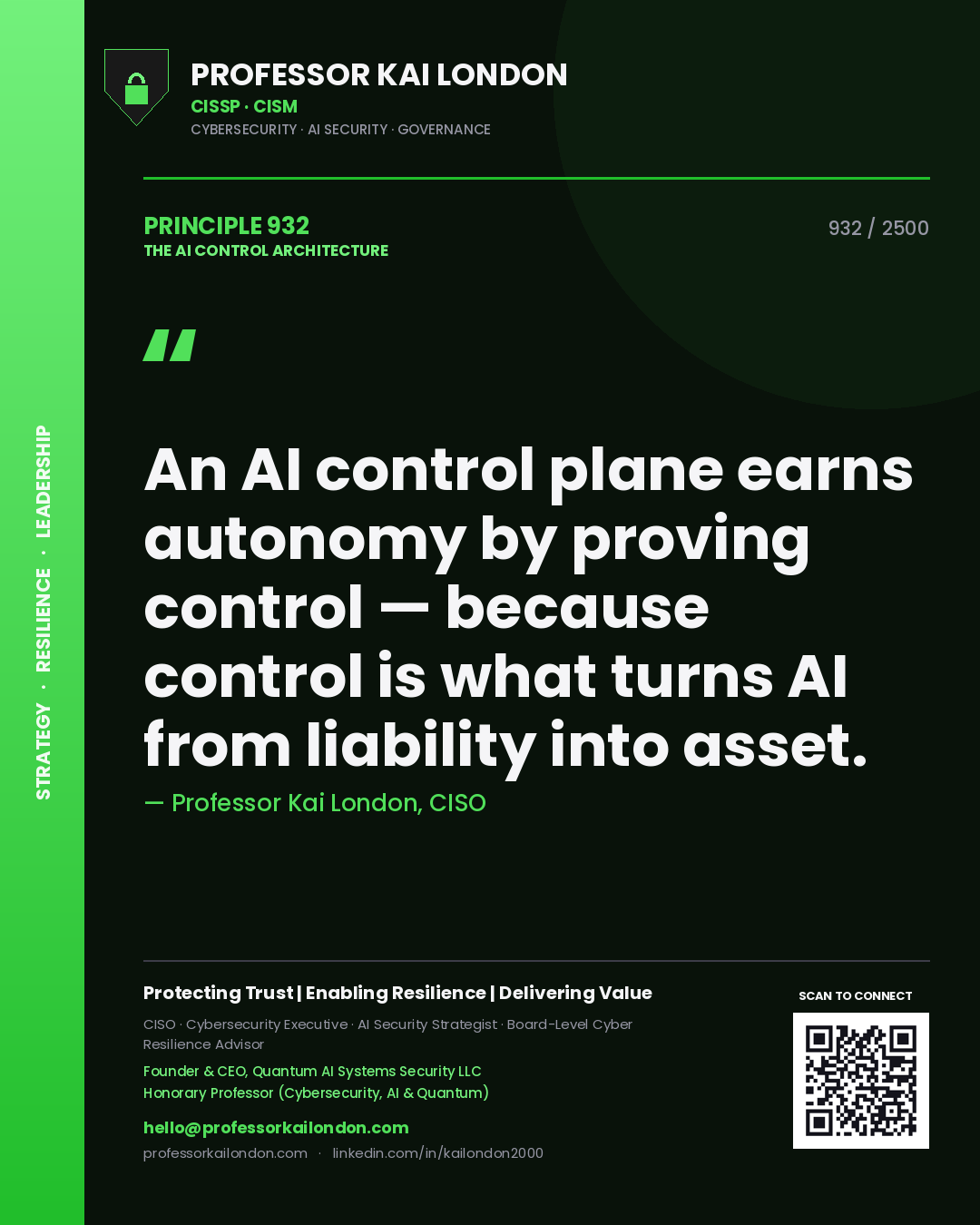
Professor Kai London principle 932: An AI control plane earns autonomy by proving control — because control is what turns AI from liability into asset.
Principle 932
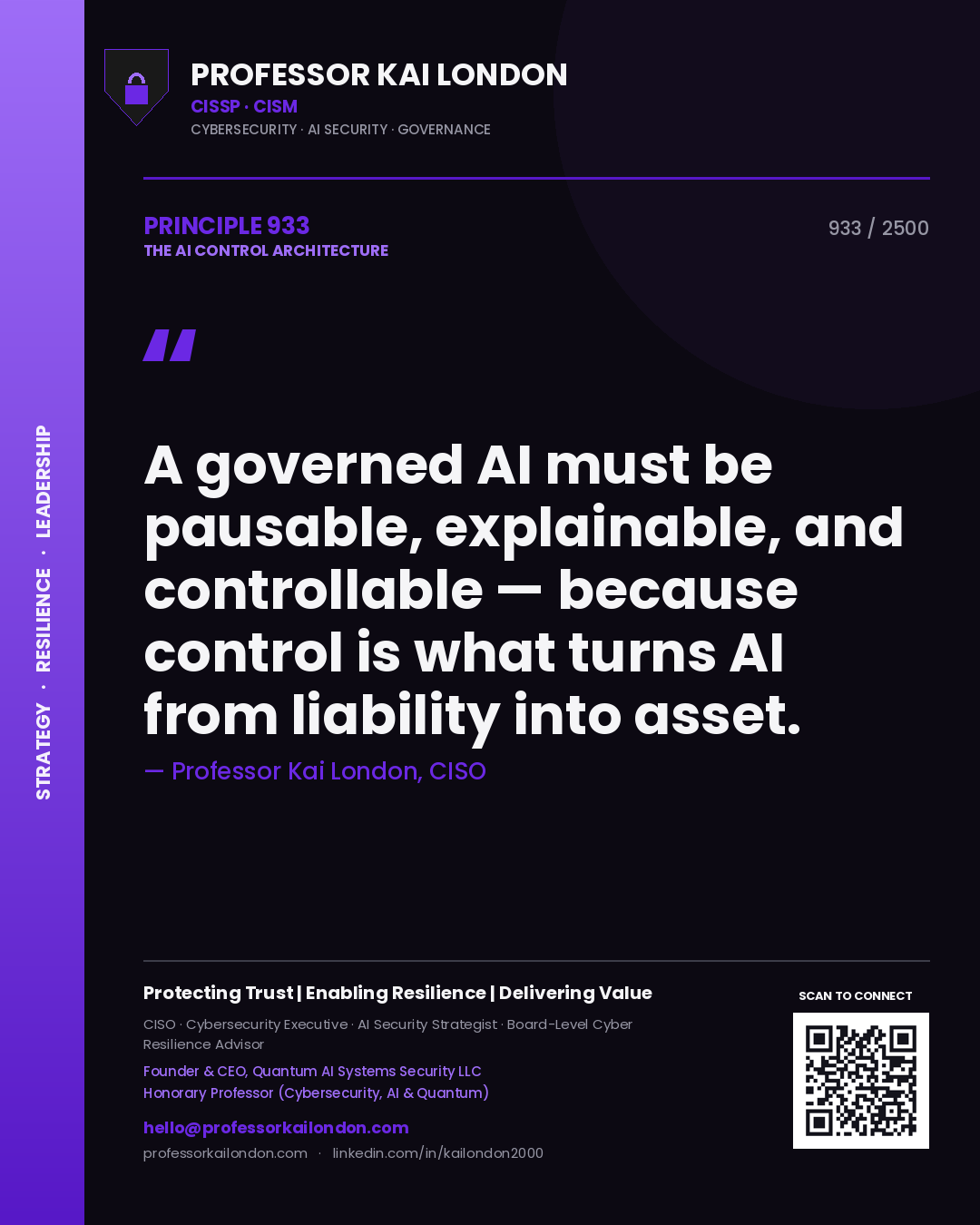
Professor Kai London principle 933: A governed AI must be pausable, explainable, and controllable — because control is what turns AI from liability into asset.
Principle 933
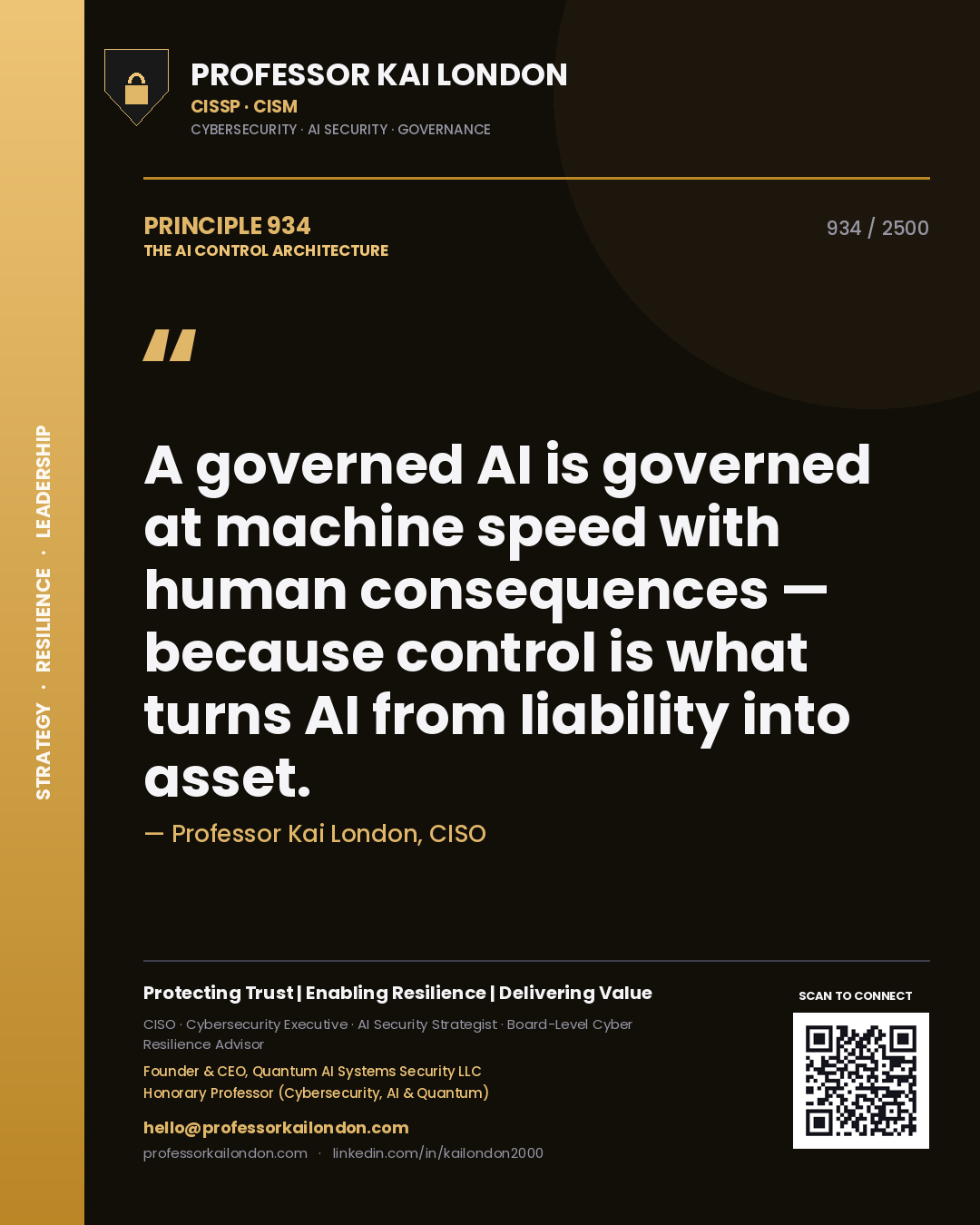
Professor Kai London principle 934: A governed AI is governed at machine speed with human consequences — because control is what turns AI from liability into asset.
Principle 934
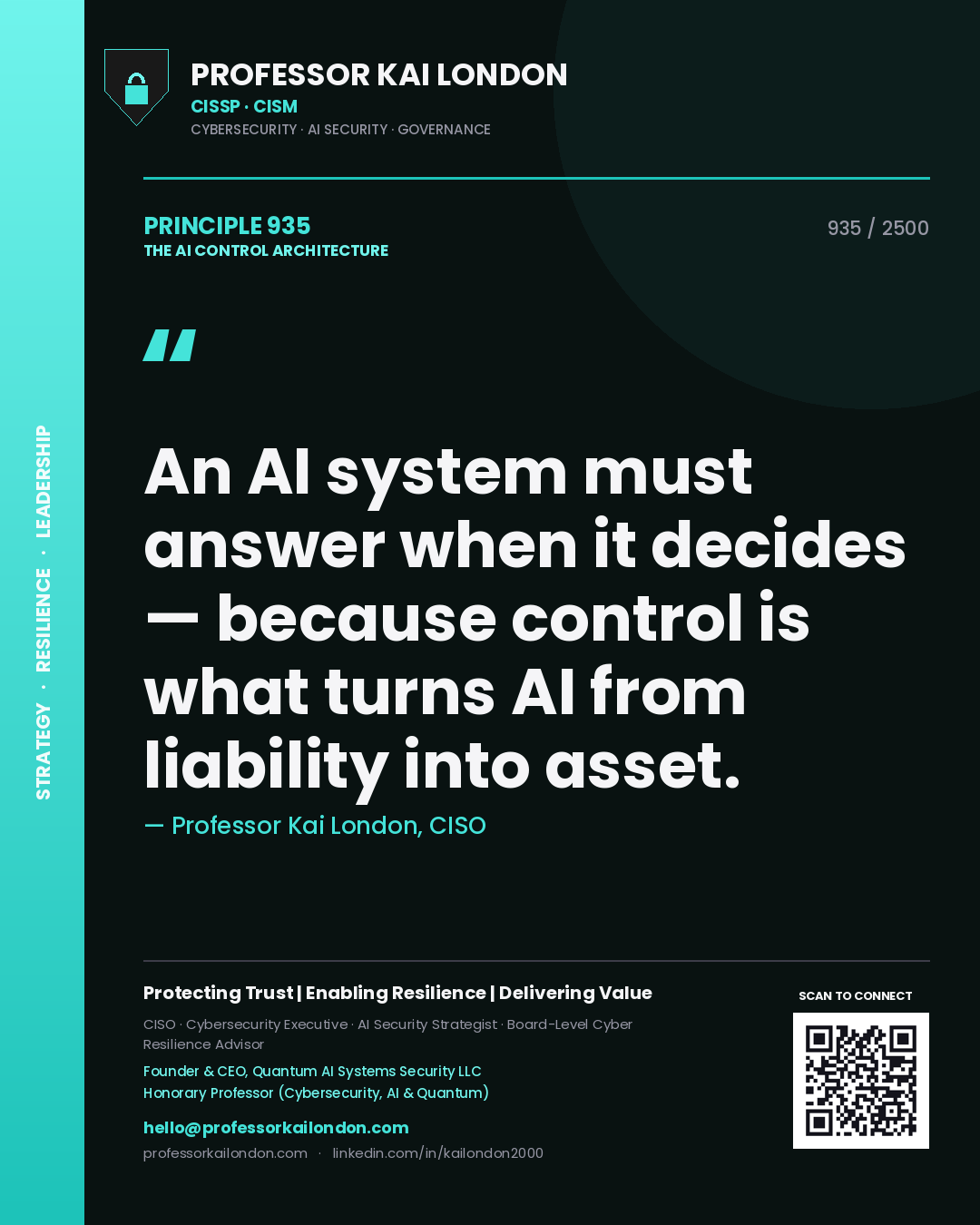
Professor Kai London principle 935: An AI system must answer when it decides — because control is what turns AI from liability into asset.
Principle 935
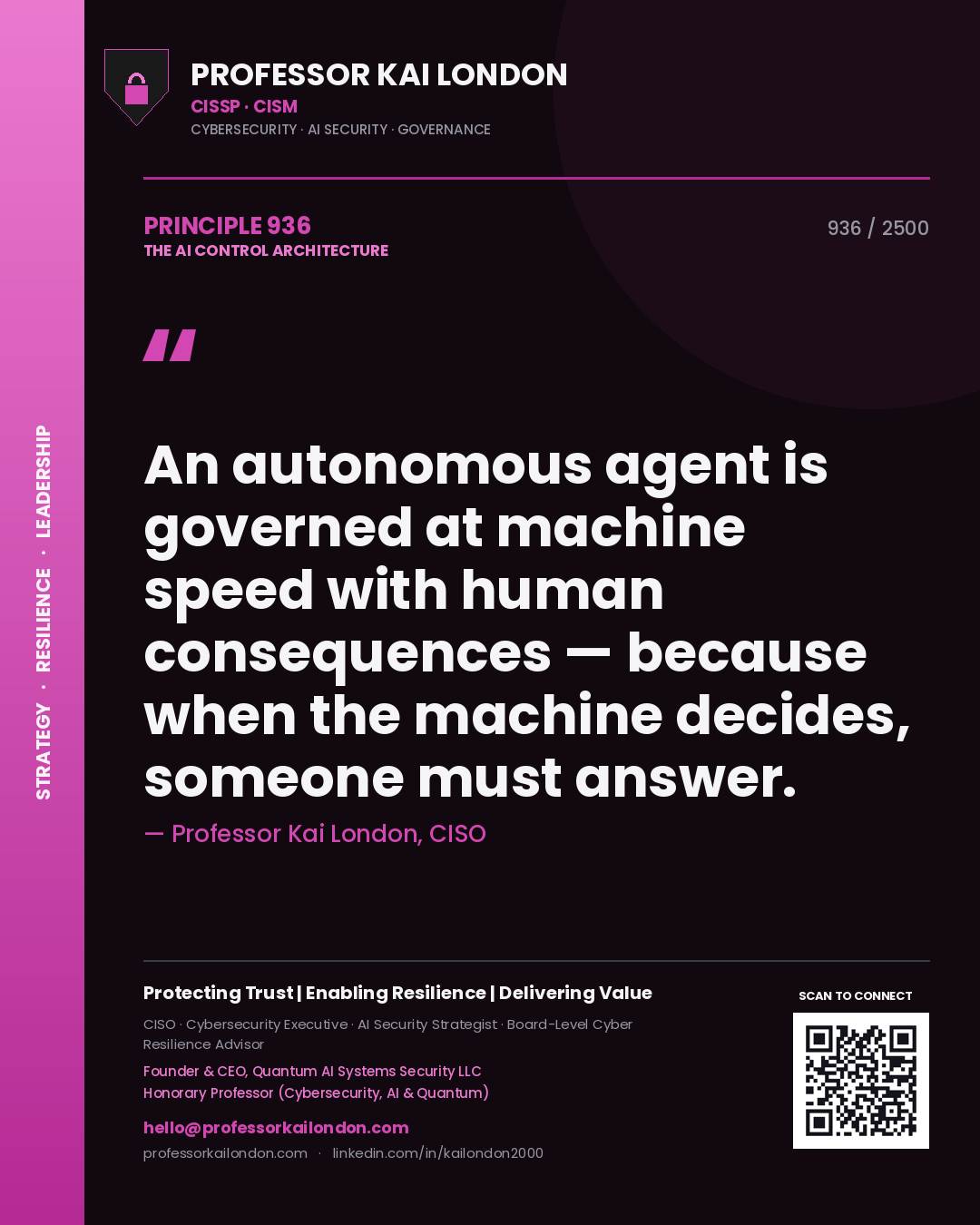
Professor Kai London principle 936: An autonomous agent is governed at machine speed with human consequences — because when the machine decides, someone must answer.
Principle 936
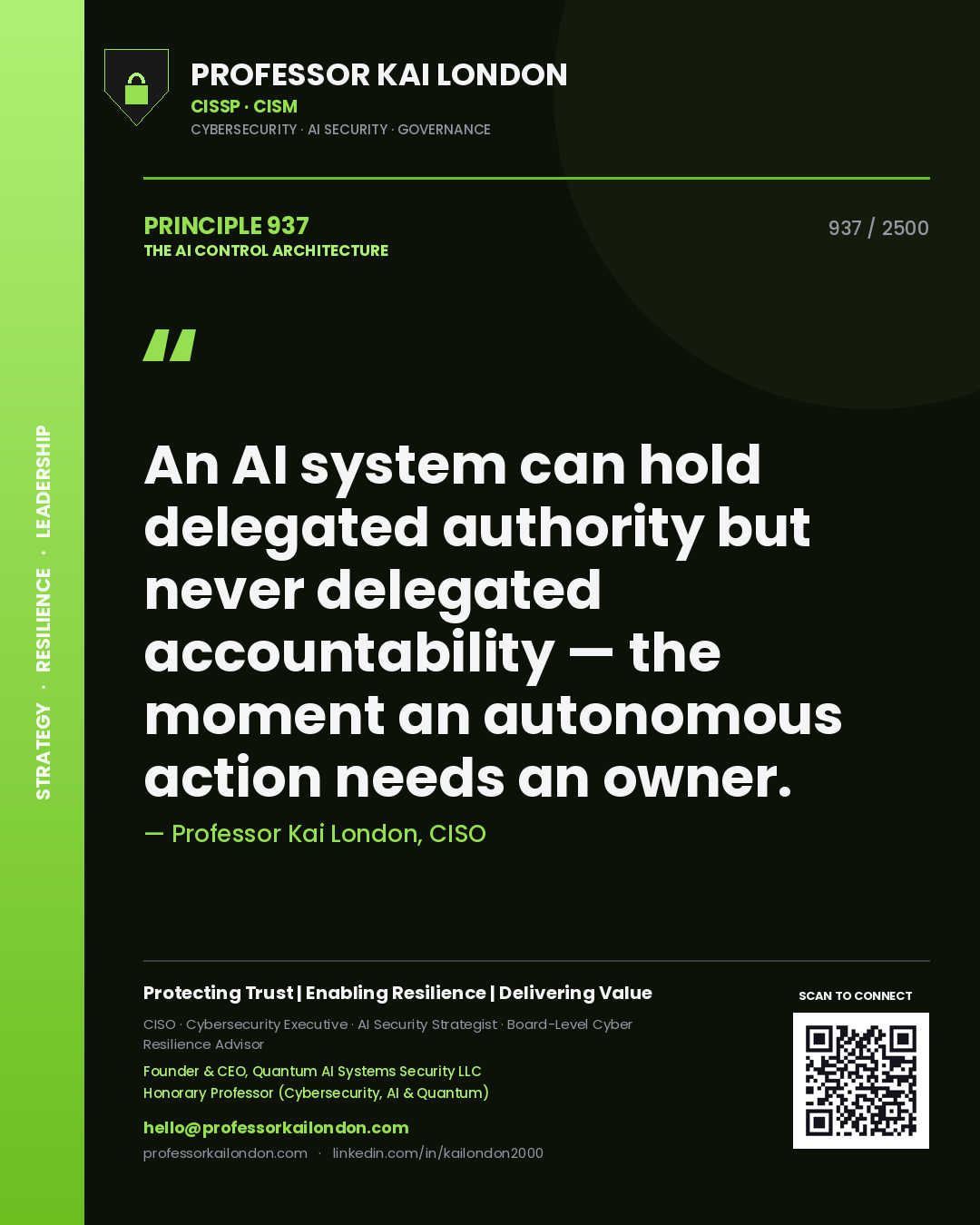
Professor Kai London principle 937: An AI system can hold delegated authority but never delegated accountability — the moment an autonomous action needs an owner.
Principle 937
Professor Kai London principle 938: An AI operating within limits needs a leash before it needs a licence — when every agent has a boundary you can prove.
Principle 938
Professor Kai London principle 939: A governed AI must be revenue-ready and regulator-ready at once — before autonomy becomes unmanaged risk at machine speed.
Principle 939
Professor Kai London principle 940: An automated action is governed at machine speed with human consequences — when every agent has a boundary you can prove.
Principle 940
Professor Kai London principle 941: An automated action must answer when it decides — the moment an autonomous action needs an owner.
Principle 941
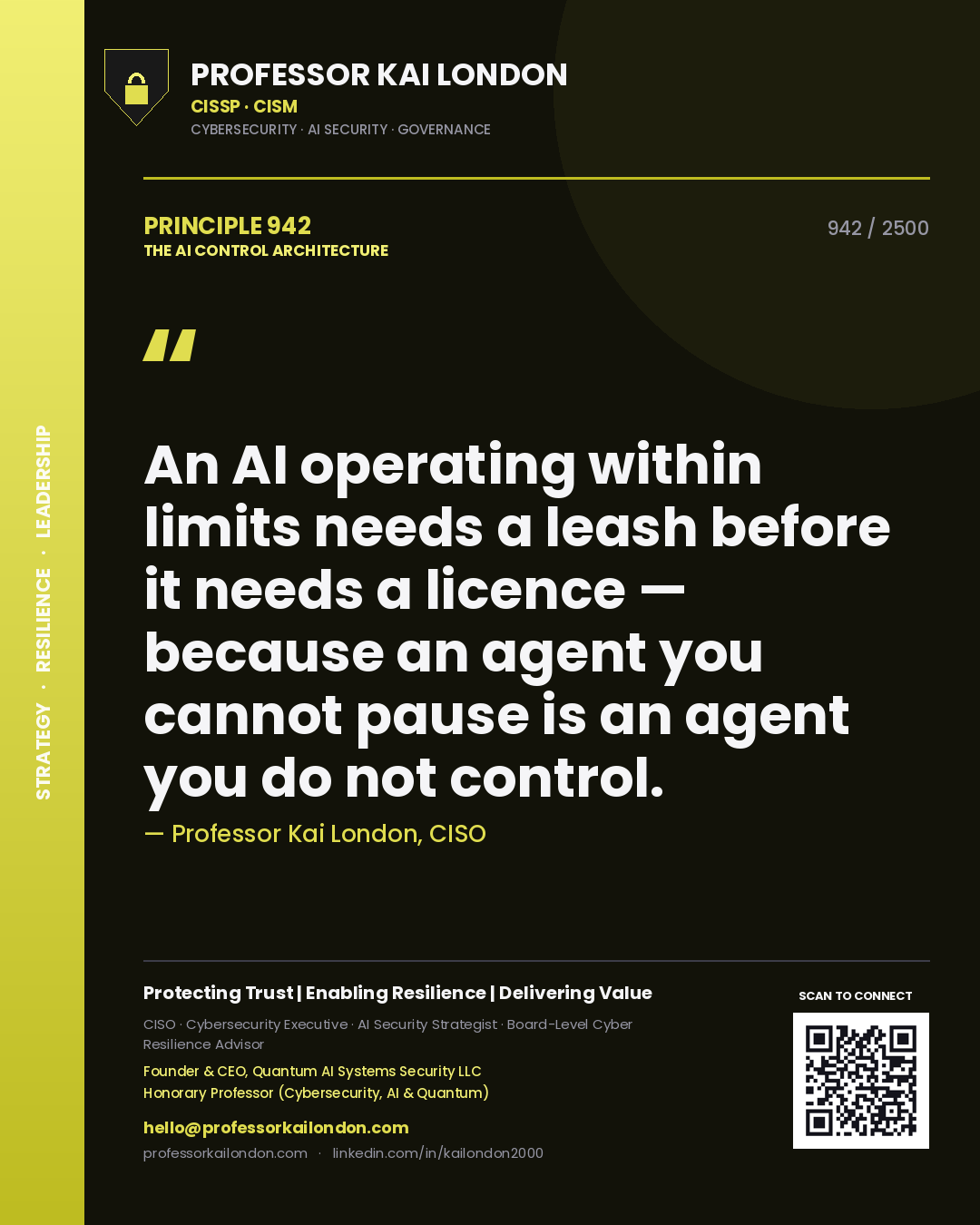
Professor Kai London principle 942: An AI operating within limits needs a leash before it needs a licence — because an agent you cannot pause is an agent you do not control.
Principle 942
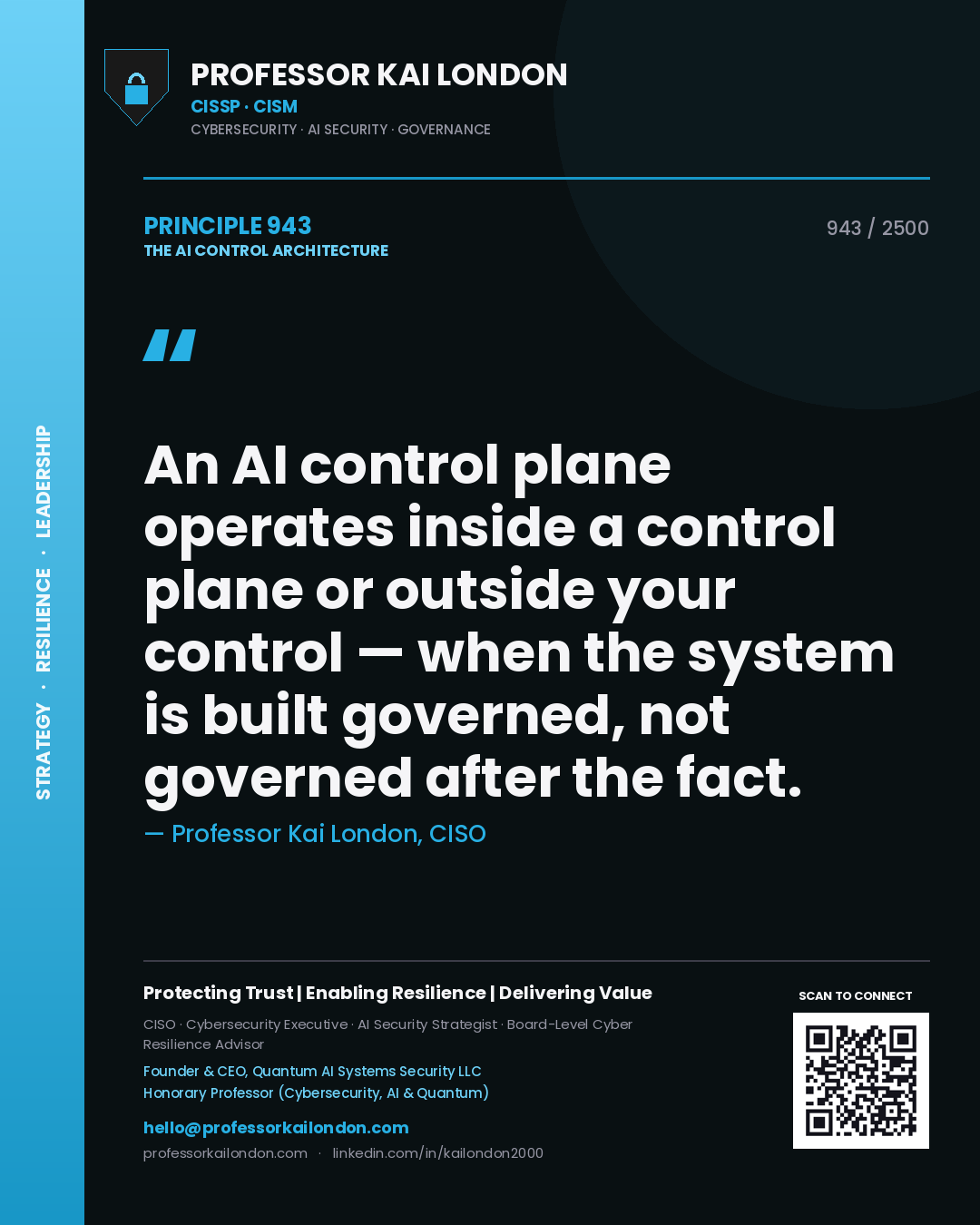
Professor Kai London principle 943: An AI control plane operates inside a control plane or outside your control — when the system is built governed, not governed after the fact.
Principle 943
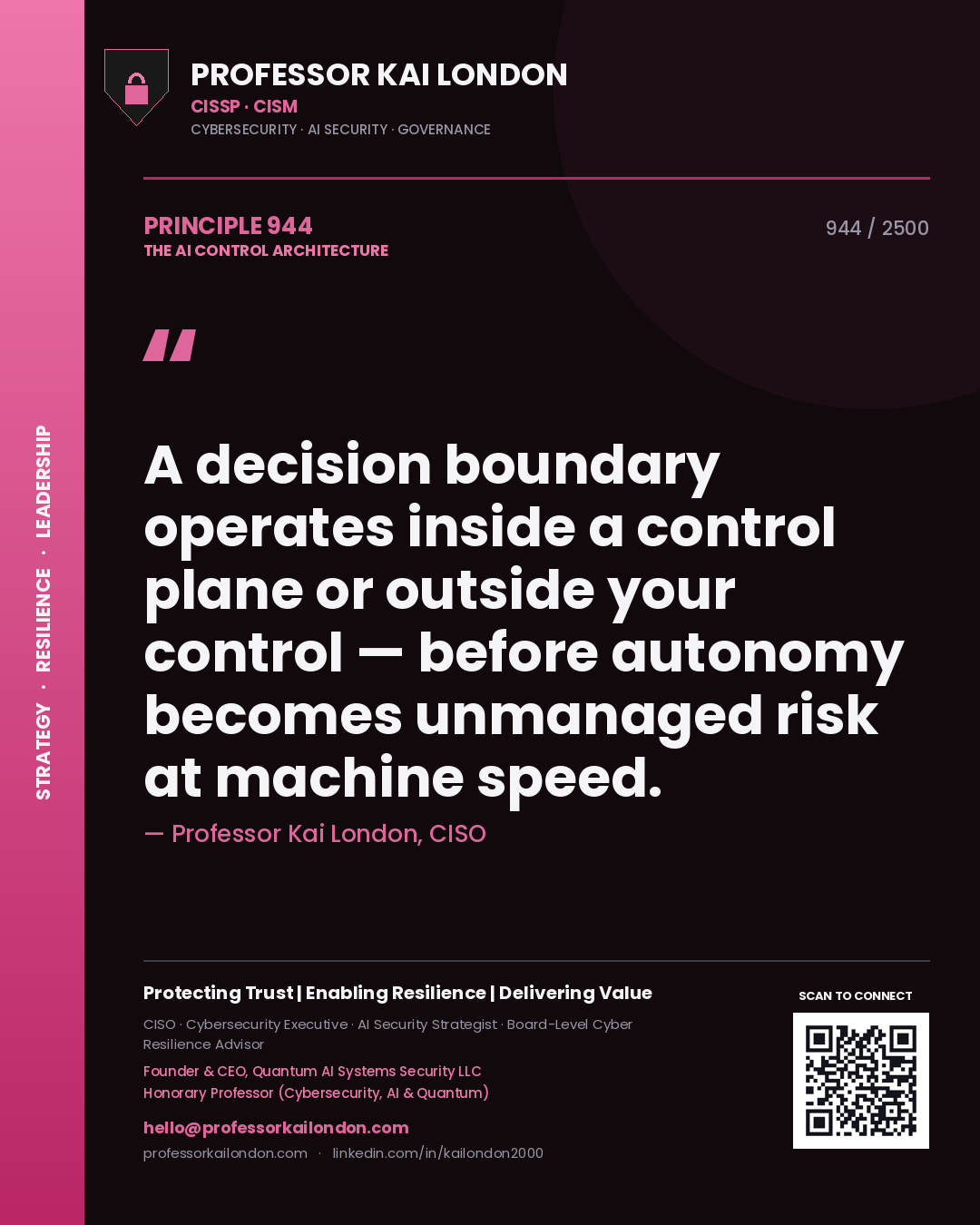
Professor Kai London principle 944: A decision boundary operates inside a control plane or outside your control — before autonomy becomes unmanaged risk at machine speed.
Principle 944
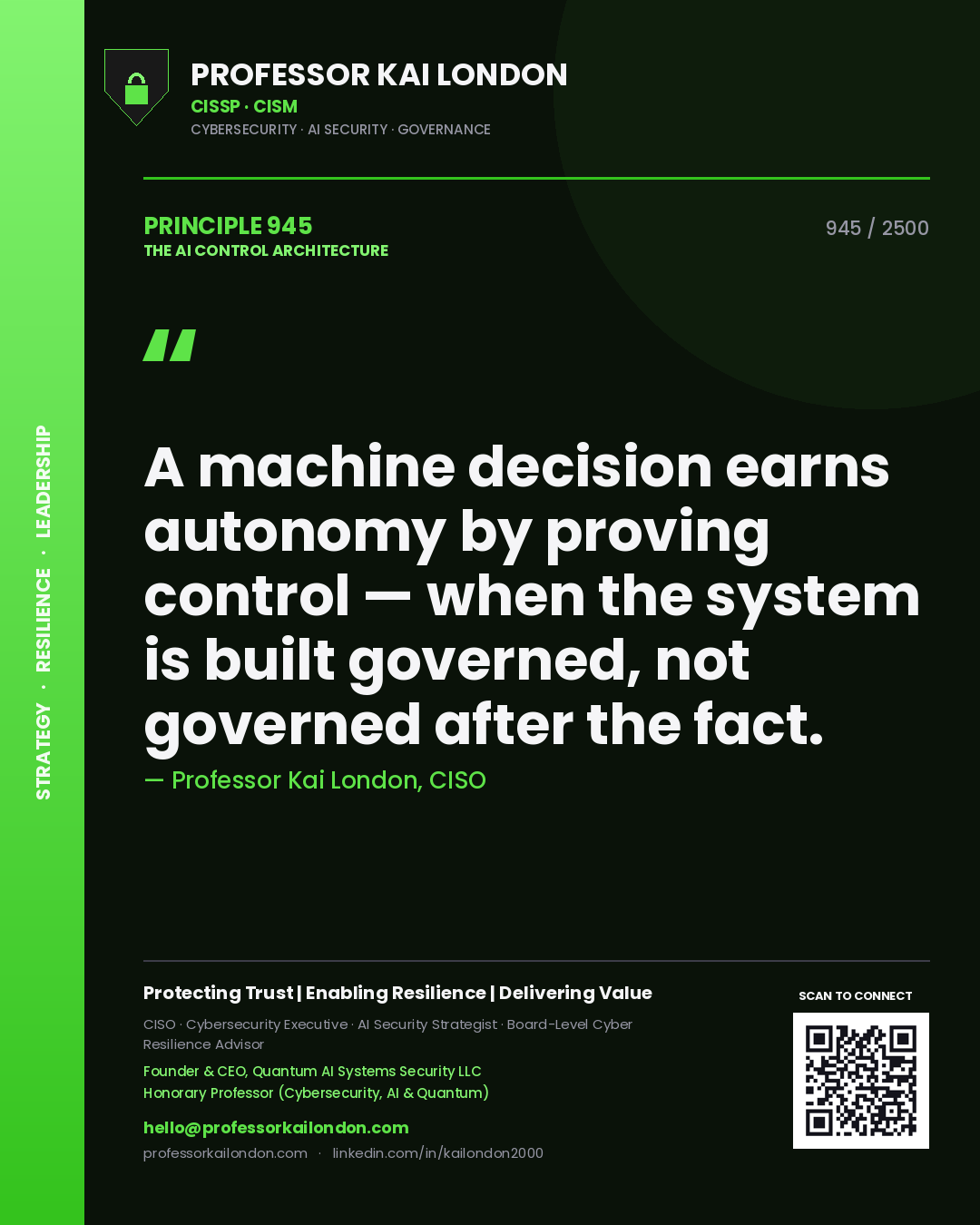
Professor Kai London principle 945: A machine decision earns autonomy by proving control — when the system is built governed, not governed after the fact.
Principle 945
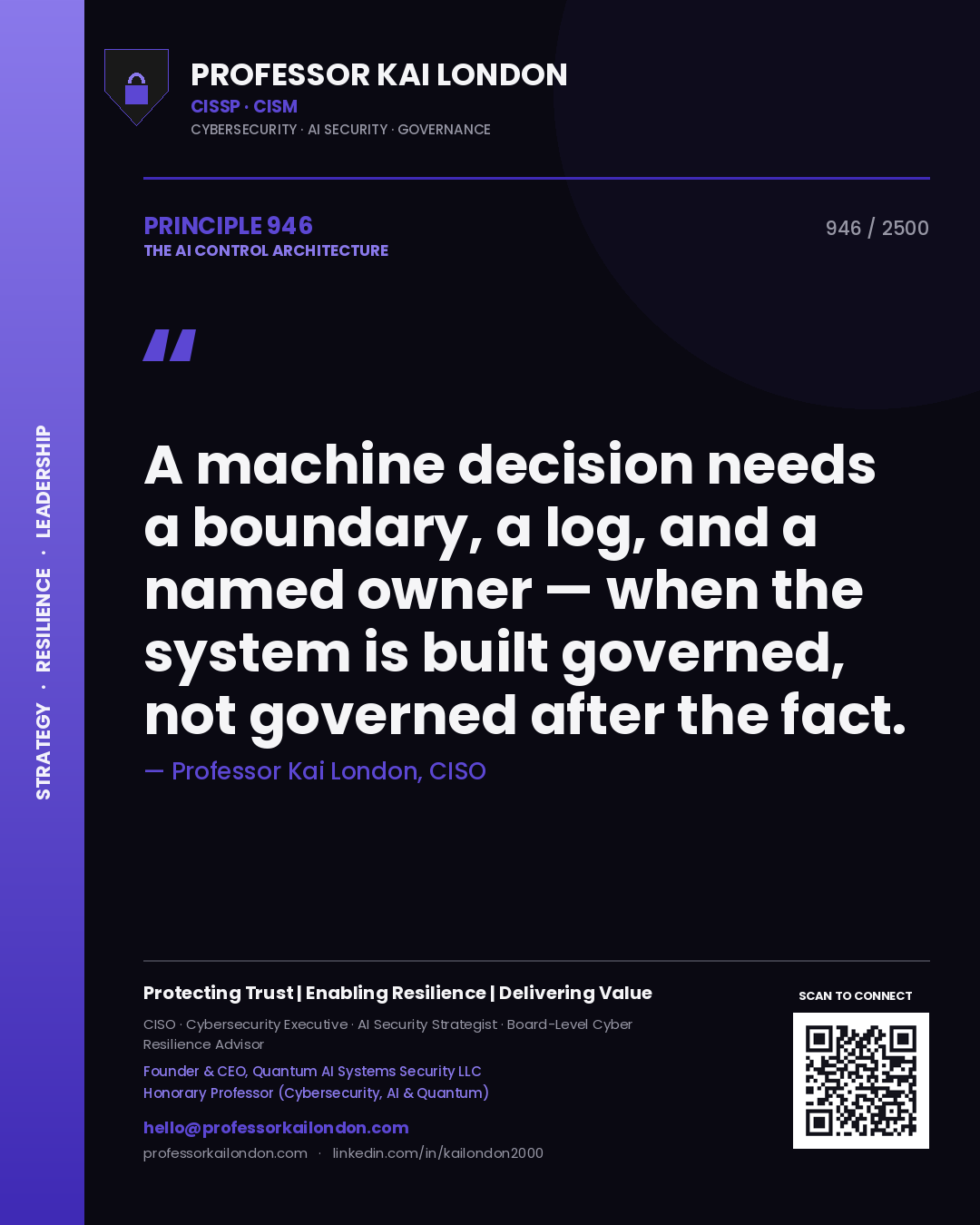
Professor Kai London principle 946: A machine decision needs a boundary, a log, and a named owner — when the system is built governed, not governed after the fact.
Principle 946
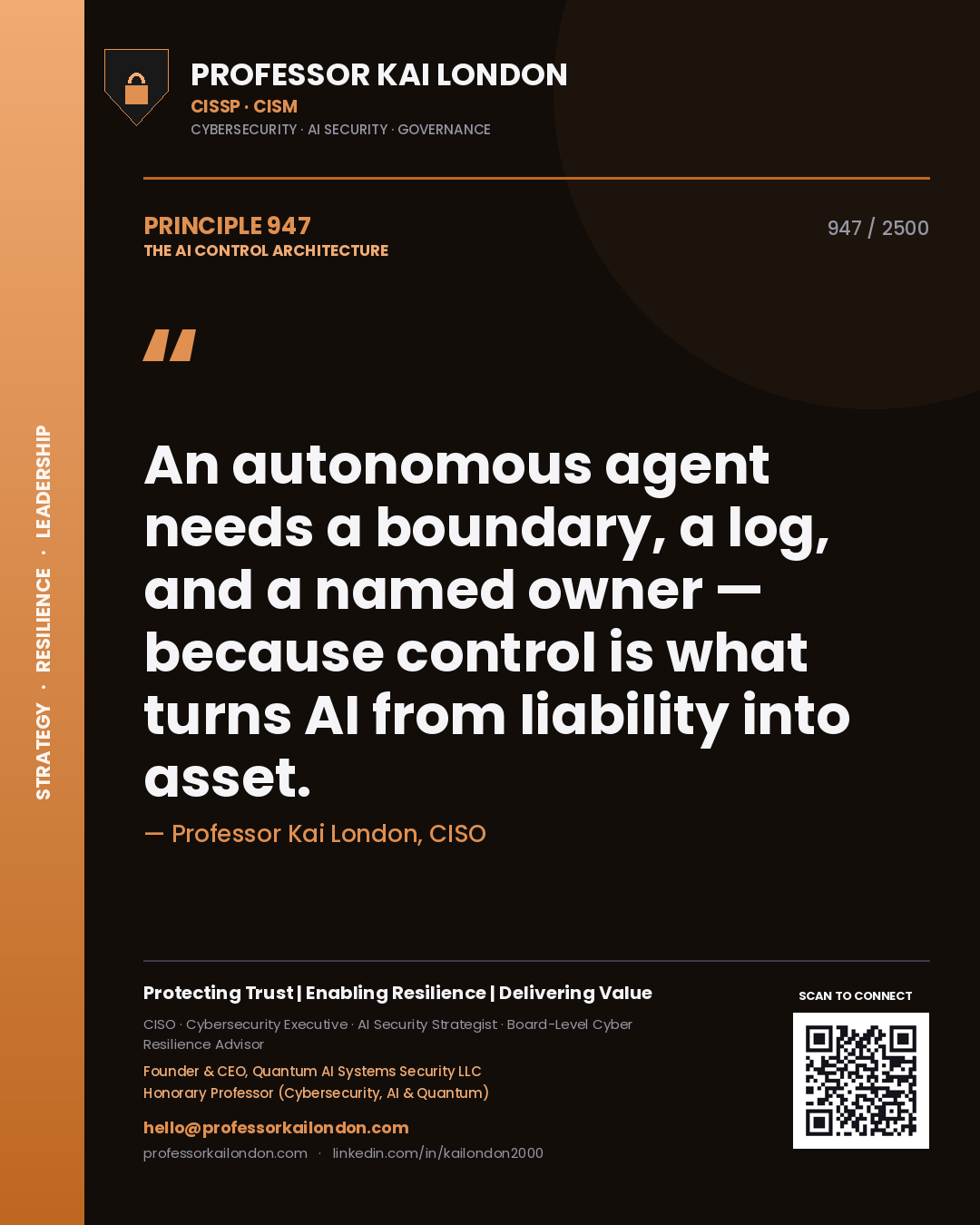
Professor Kai London principle 947: An autonomous agent needs a boundary, a log, and a named owner — because control is what turns AI from liability into asset.
Principle 947
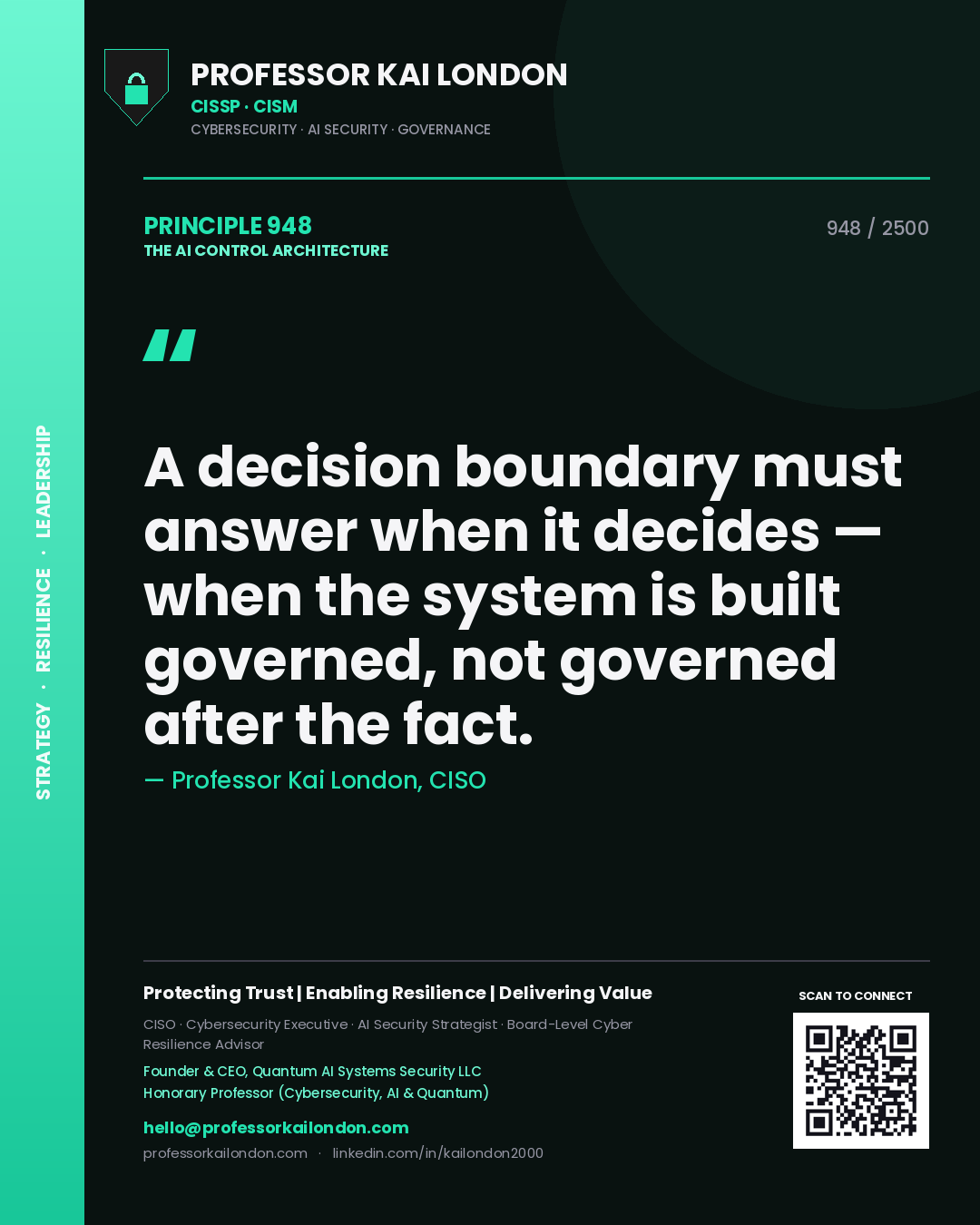
Professor Kai London principle 948: A decision boundary must answer when it decides — when the system is built governed, not governed after the fact.
Principle 948
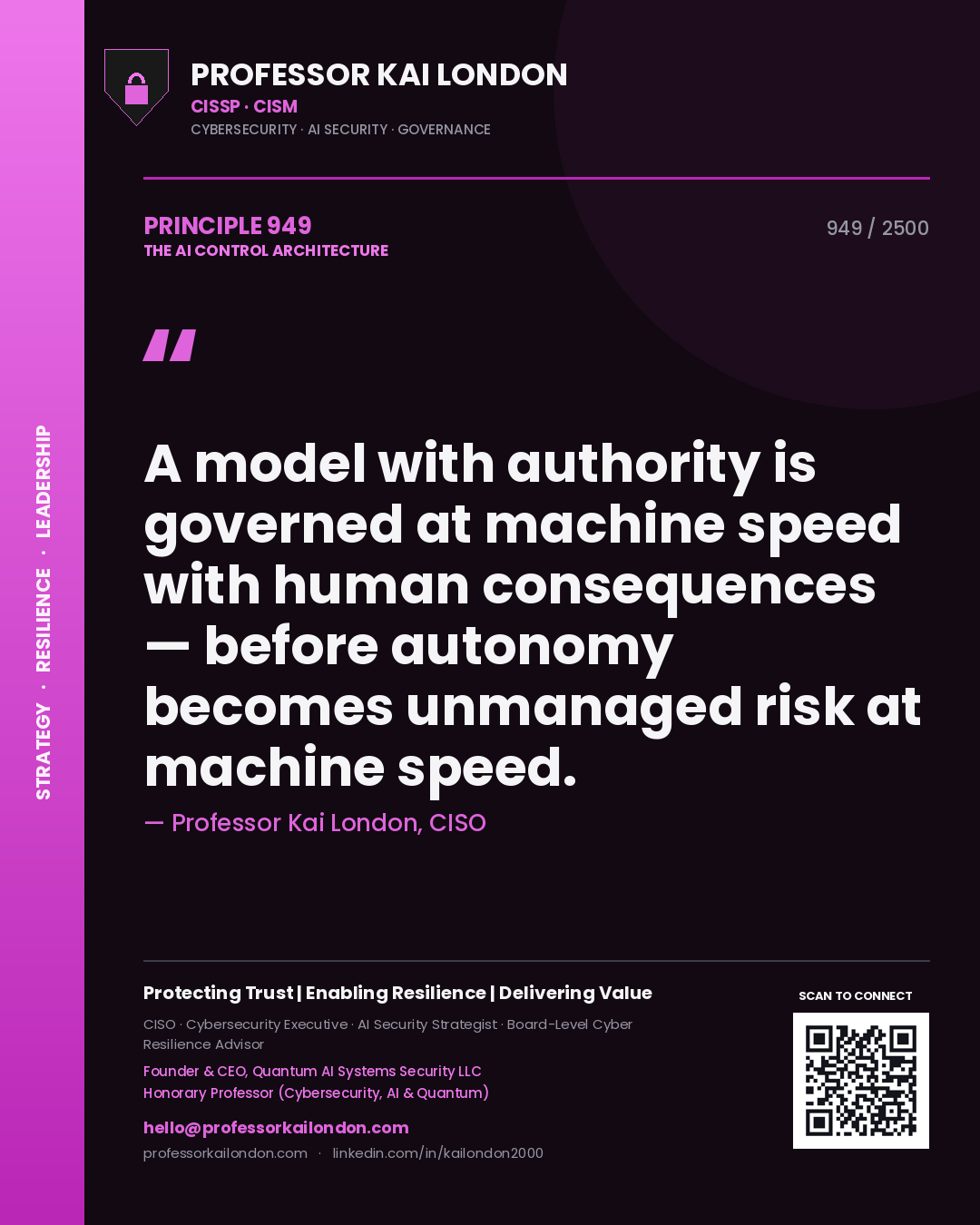
Professor Kai London principle 949: A model with authority is governed at machine speed with human consequences — before autonomy becomes unmanaged risk at machine speed.
Principle 949
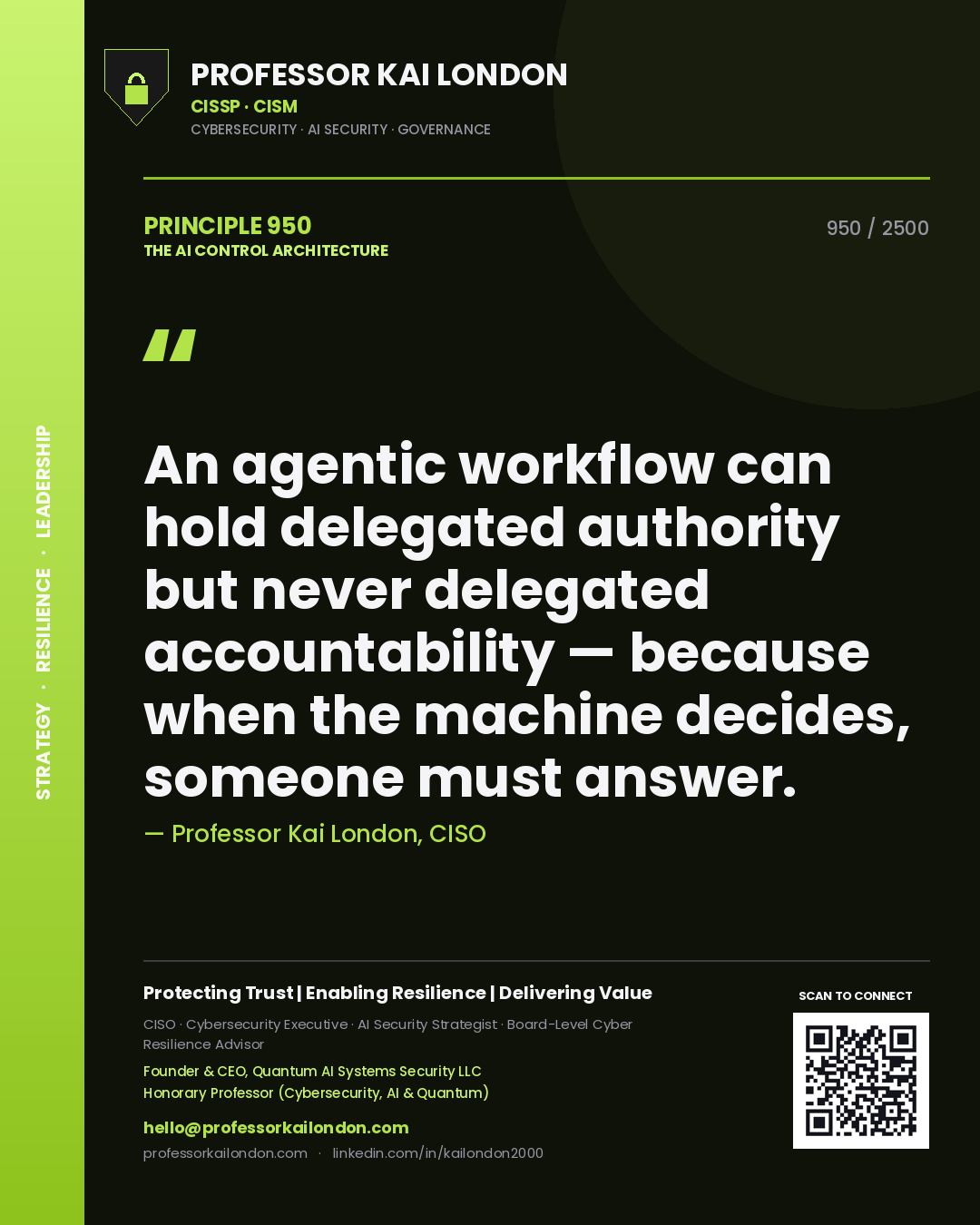
Professor Kai London principle 950: An agentic workflow can hold delegated authority but never delegated accountability — because when the machine decides, someone must answer.
Principle 950
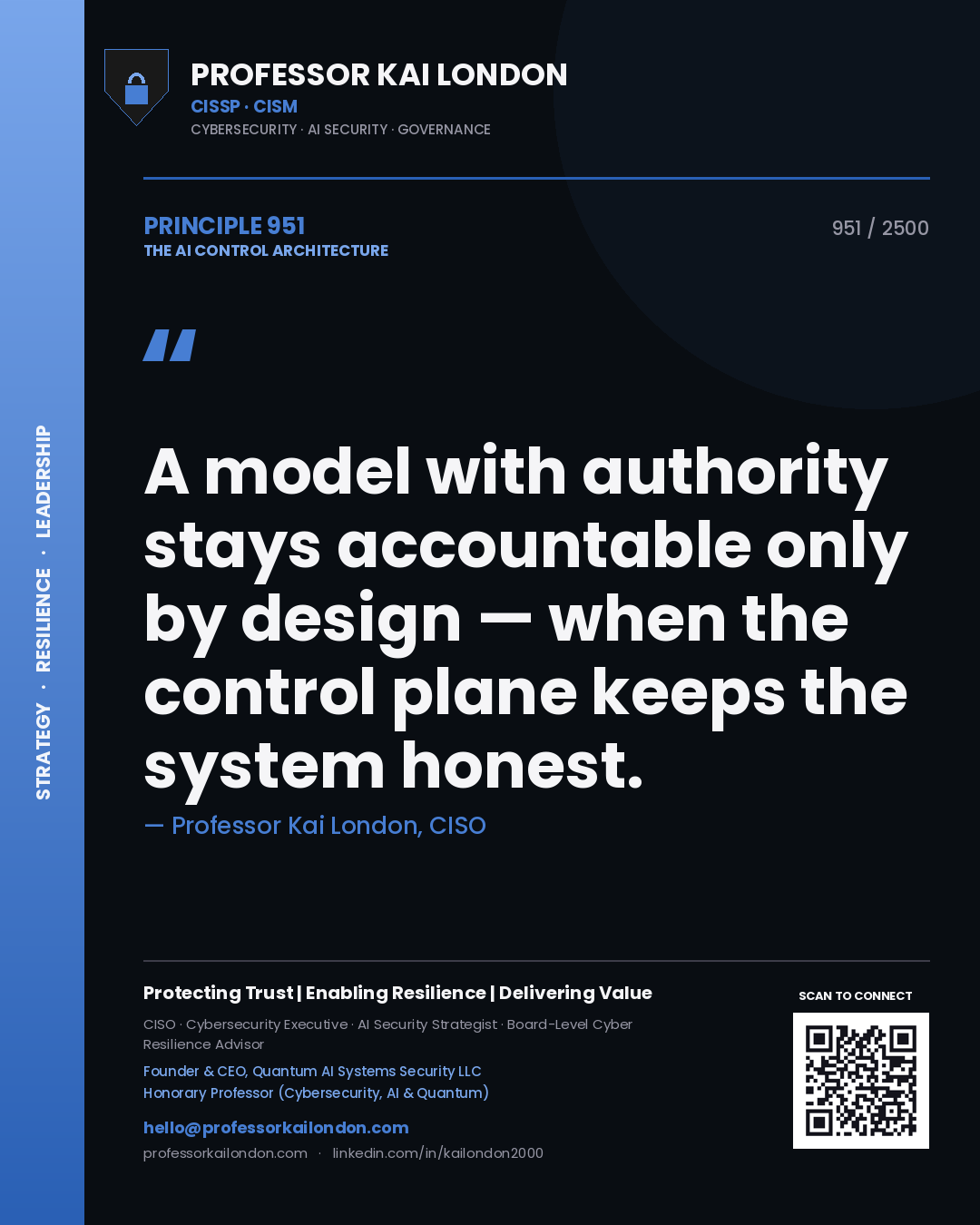
Professor Kai London principle 951: A model with authority stays accountable only by design — when the control plane keeps the system honest.
Principle 951
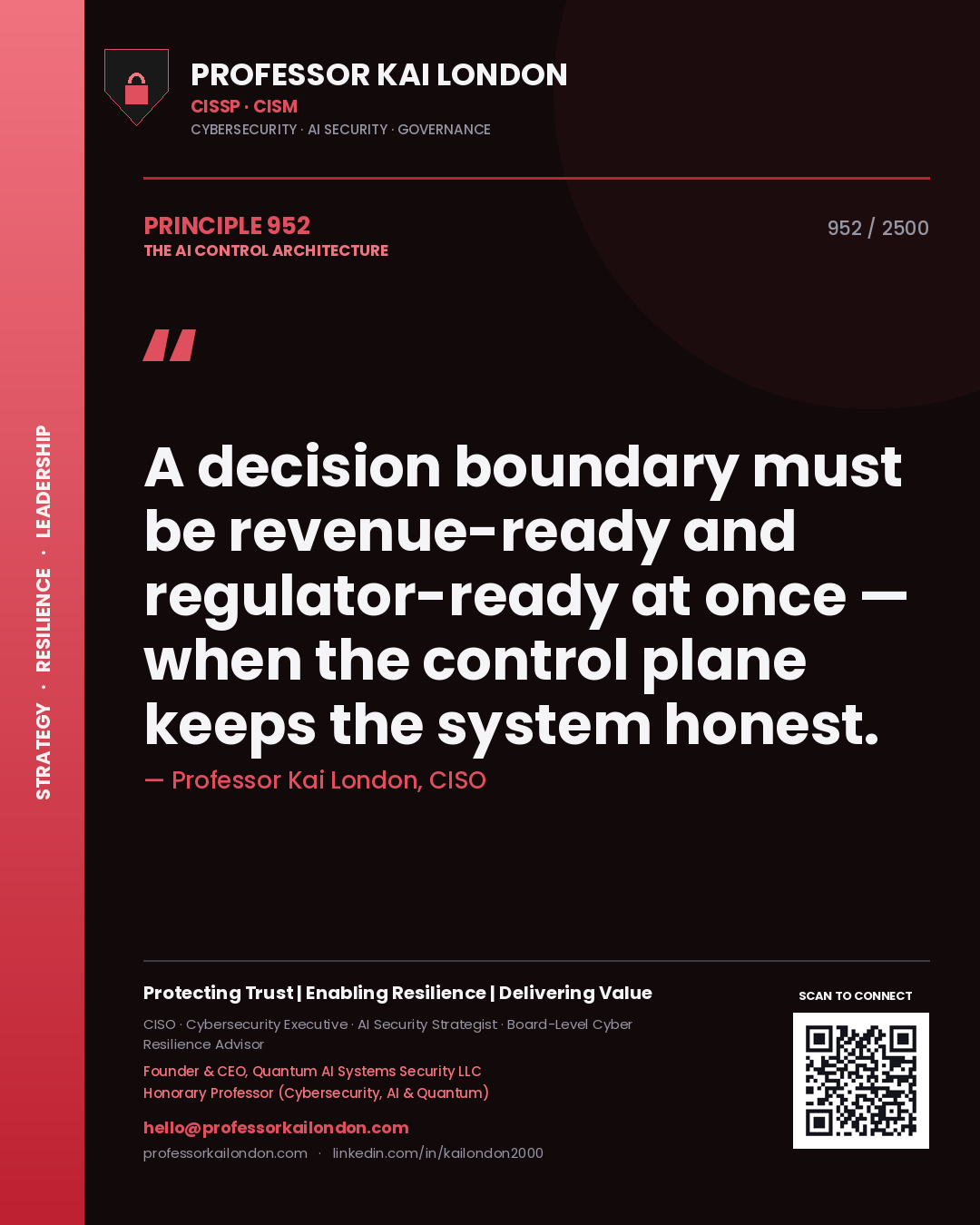
Professor Kai London principle 952: A decision boundary must be revenue-ready and regulator-ready at once — when the control plane keeps the system honest.
Principle 952
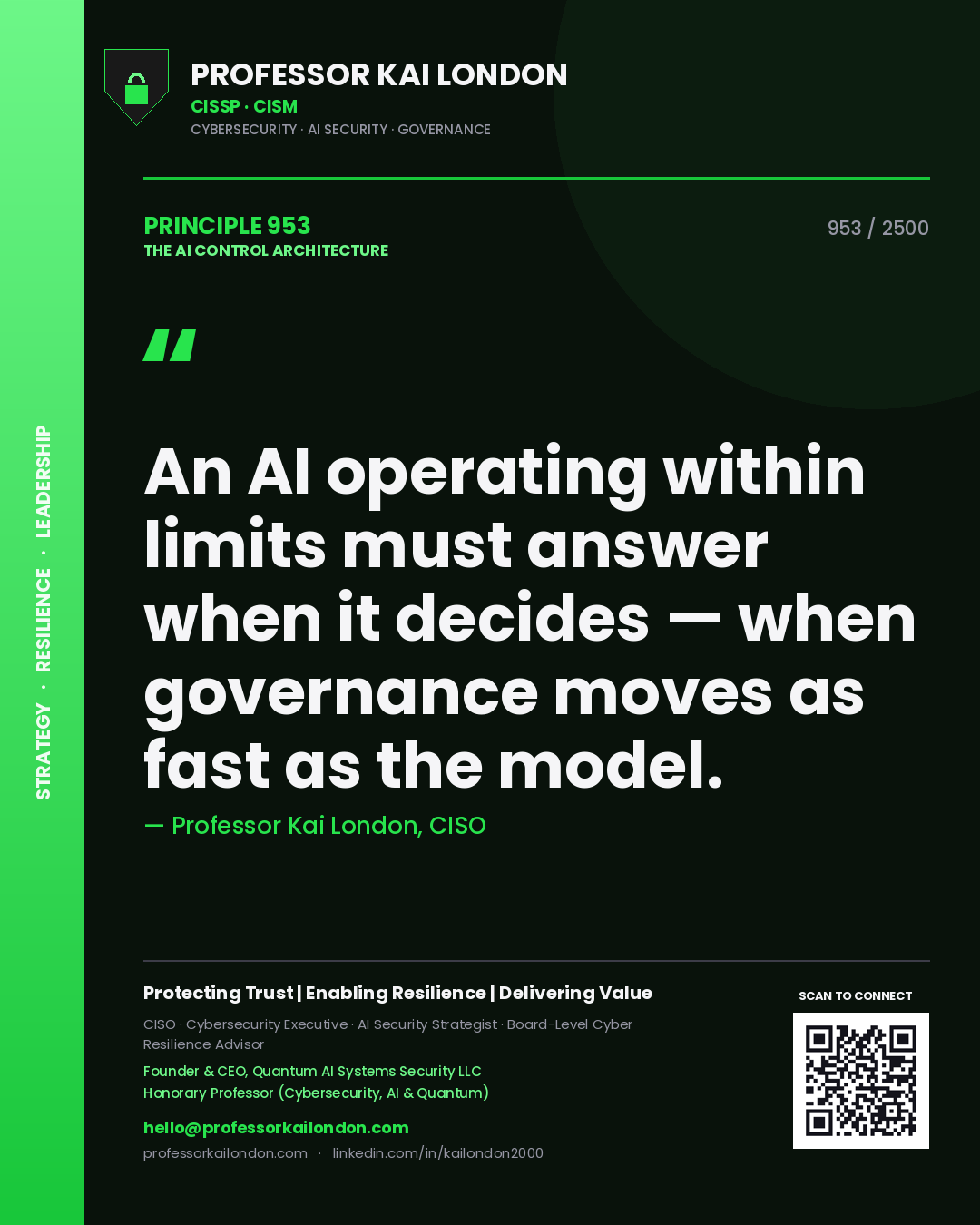
Professor Kai London principle 953: An AI operating within limits must answer when it decides — when governance moves as fast as the model.
Principle 953
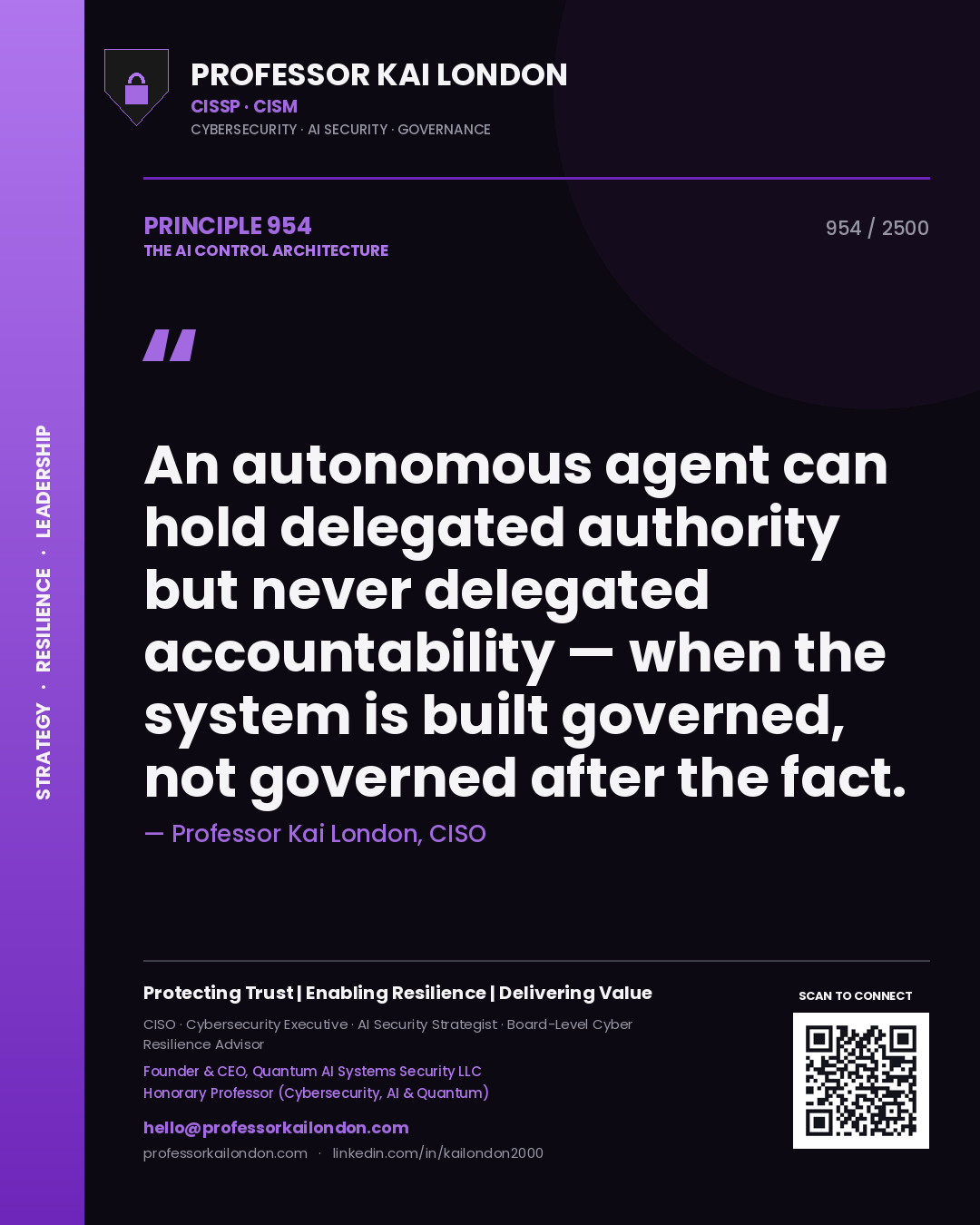
Professor Kai London principle 954: An autonomous agent can hold delegated authority but never delegated accountability — when the system is built governed, not governed after the fact.
Principle 954
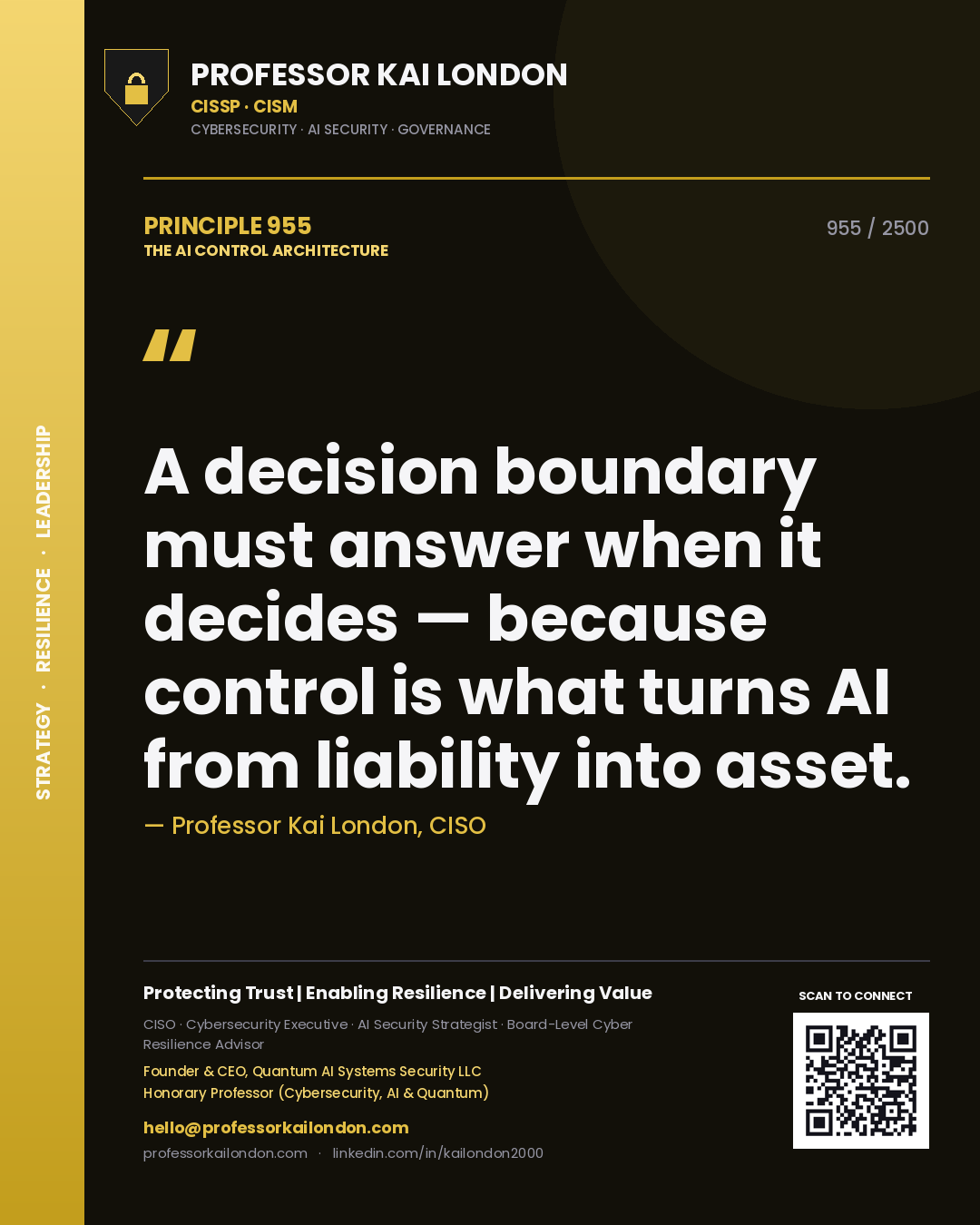
Professor Kai London principle 955: A decision boundary must answer when it decides — because control is what turns AI from liability into asset.
Principle 955
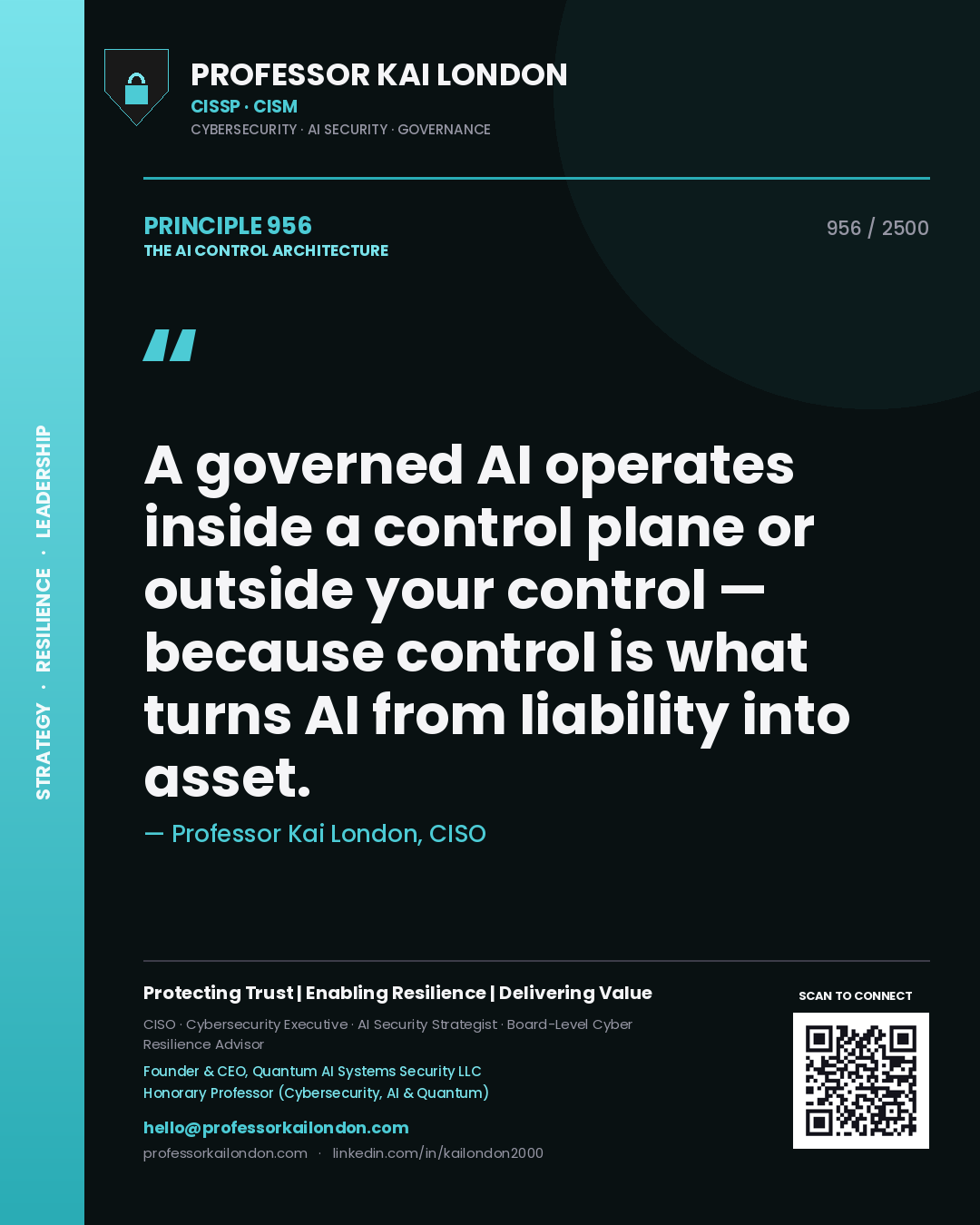
Professor Kai London principle 956: A governed AI operates inside a control plane or outside your control — because control is what turns AI from liability into asset.
Principle 956
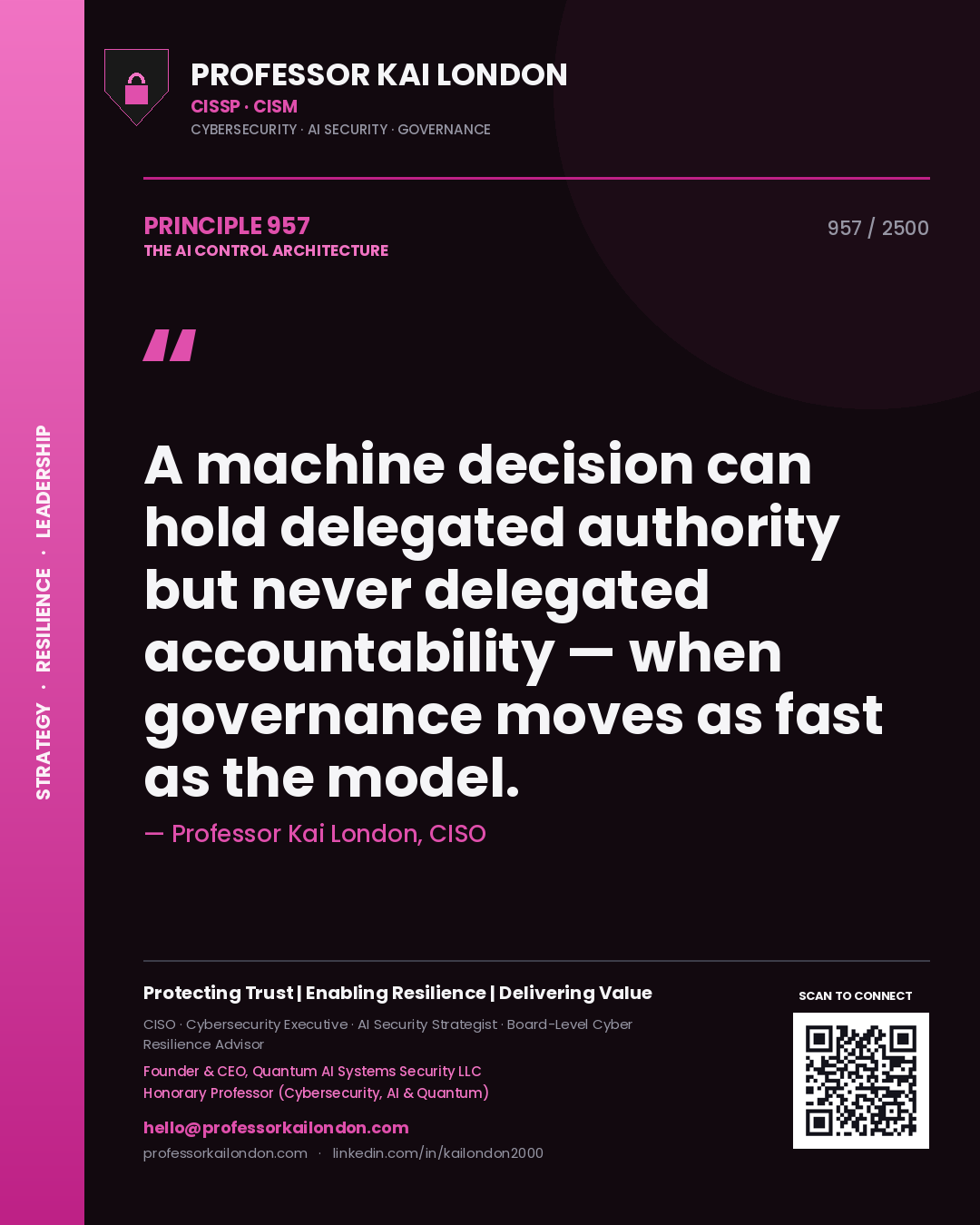
Professor Kai London principle 957: A machine decision can hold delegated authority but never delegated accountability — when governance moves as fast as the model.
Principle 957
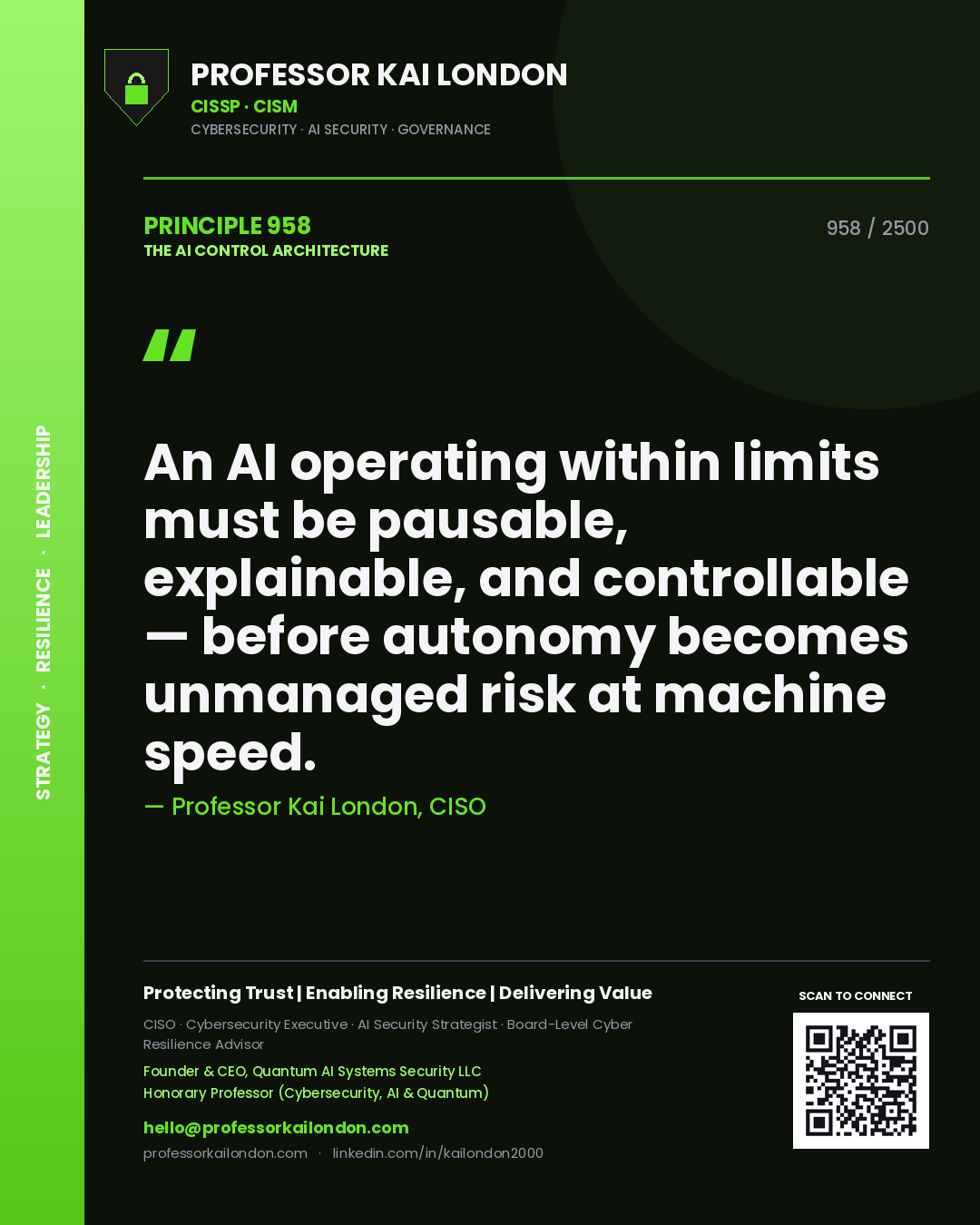
Professor Kai London principle 958: An AI operating within limits must be pausable, explainable, and controllable — before autonomy becomes unmanaged risk at machine speed.
Principle 958
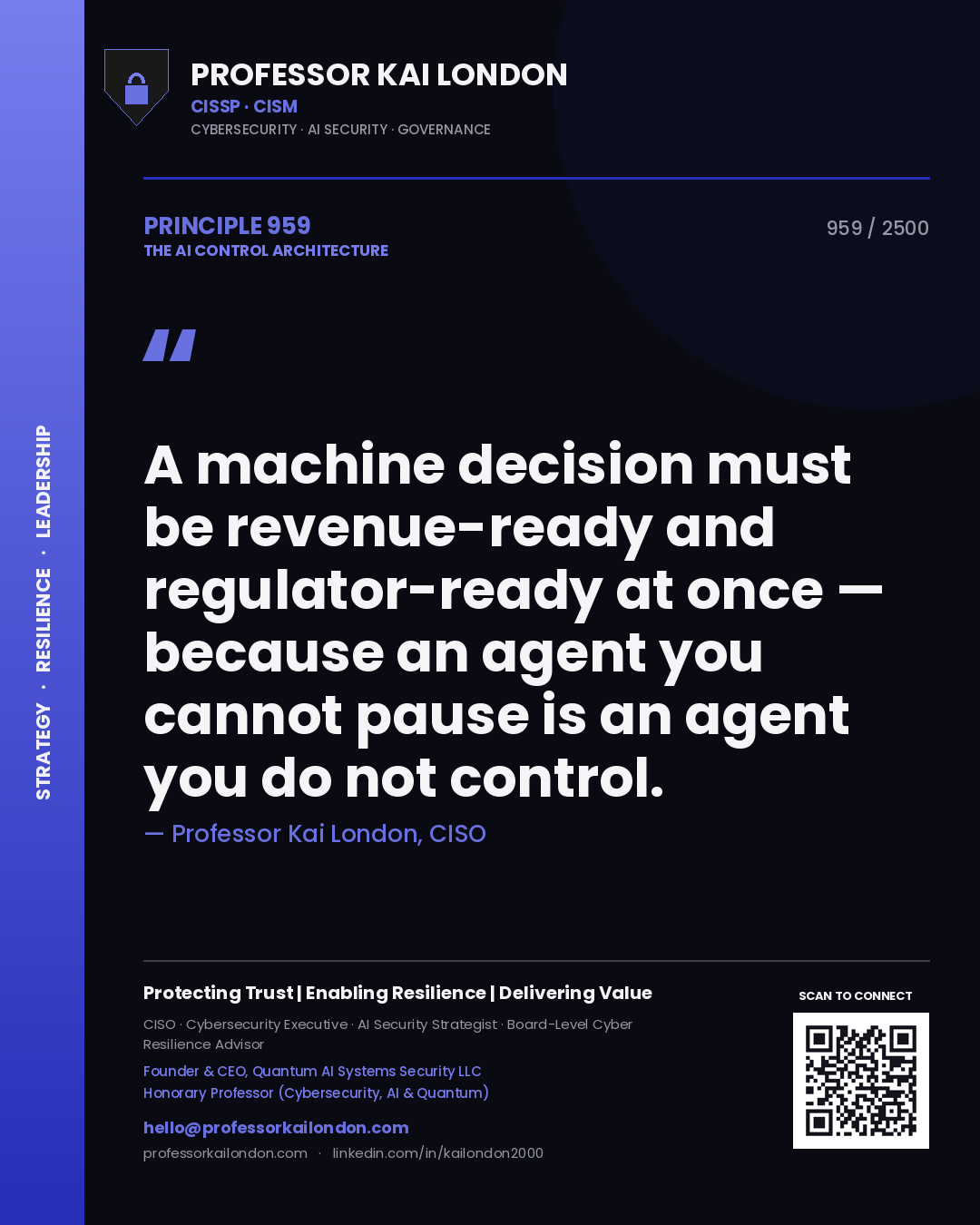
Professor Kai London principle 959: A machine decision must be revenue-ready and regulator-ready at once — because an agent you cannot pause is an agent you do not control.
Principle 959
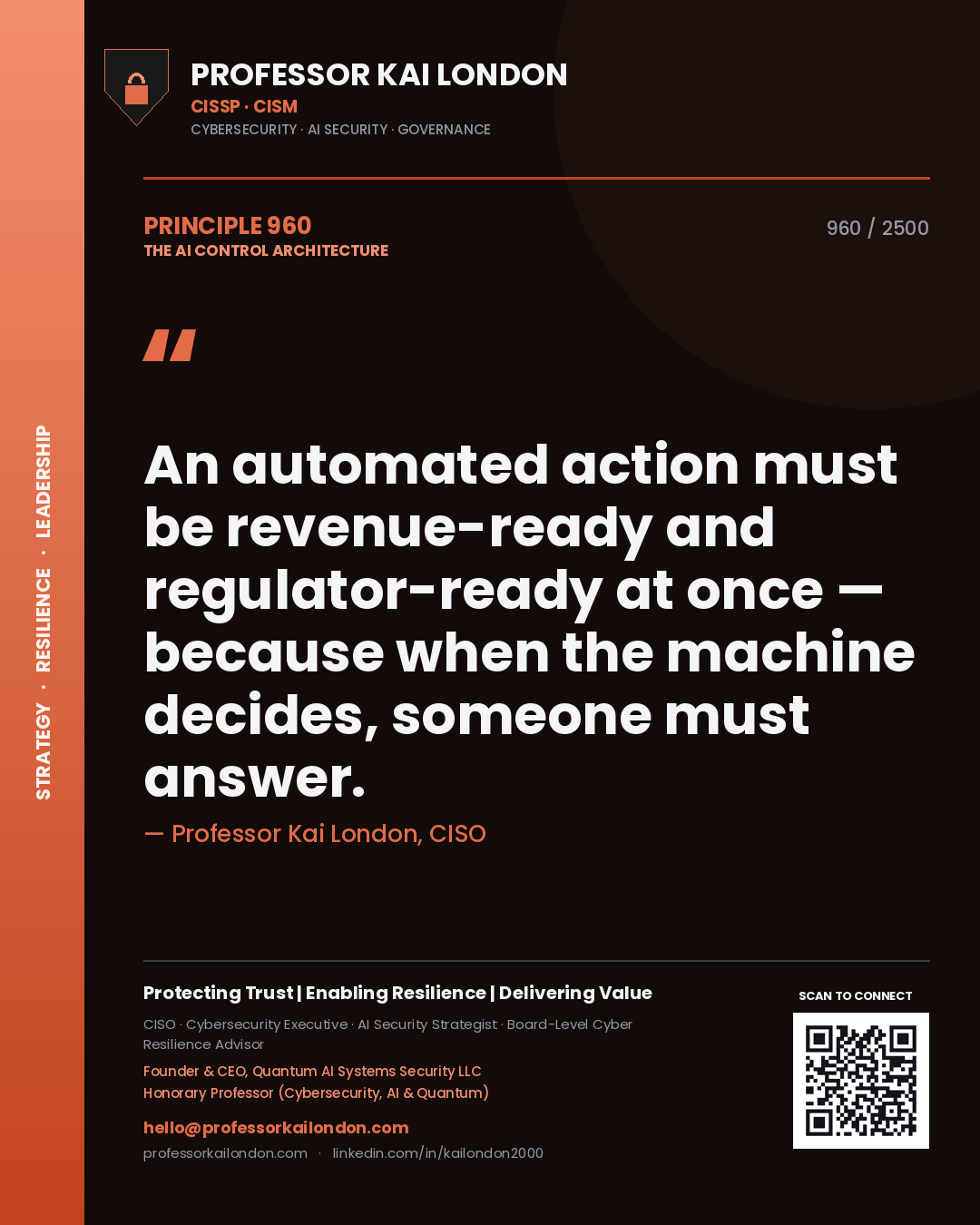
Professor Kai London principle 960: An automated action must be revenue-ready and regulator-ready at once — because when the machine decides, someone must answer.
Principle 960
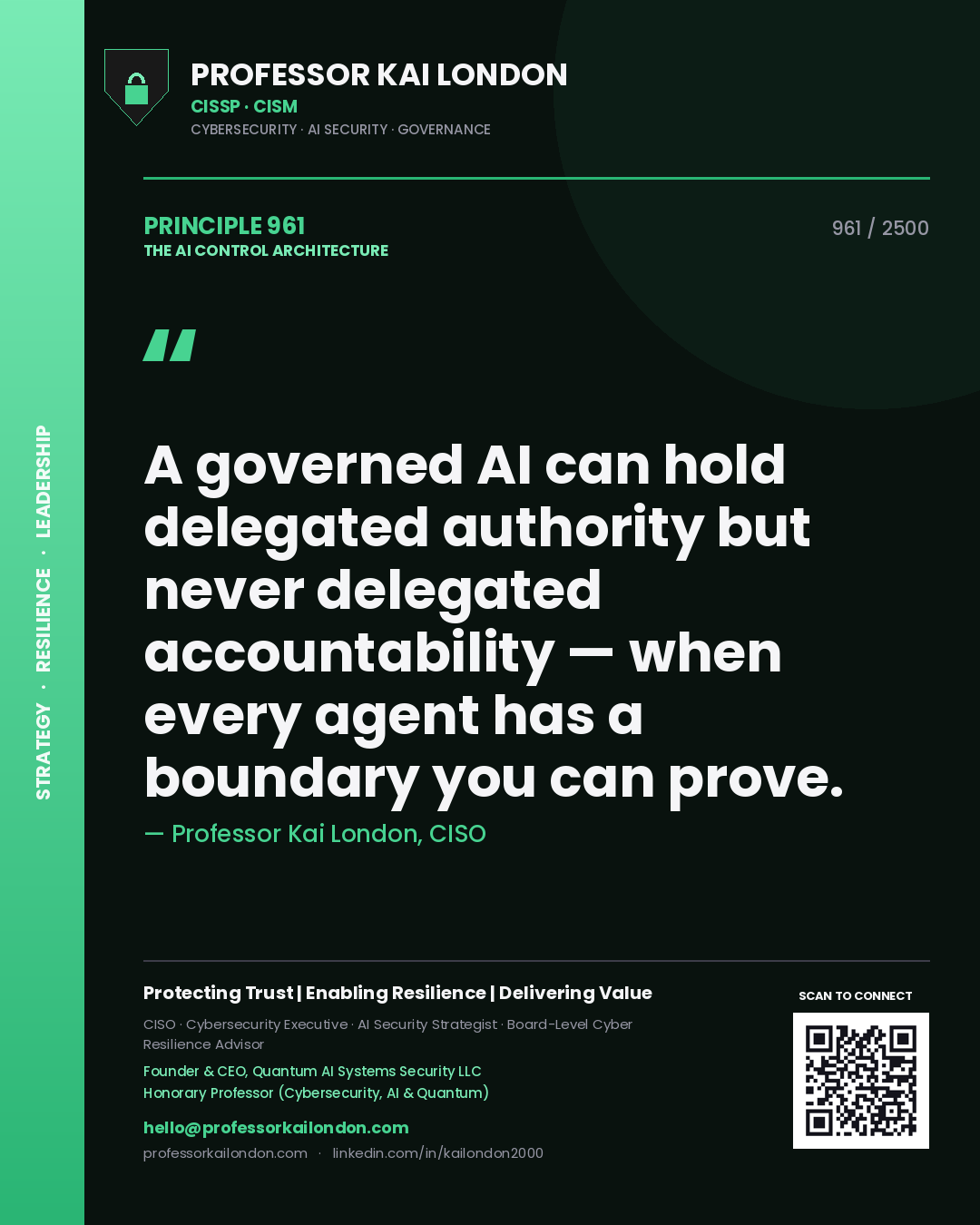
Professor Kai London principle 961: A governed AI can hold delegated authority but never delegated accountability — when every agent has a boundary you can prove.
Principle 961
Professor Kai London principle 962: A decision boundary earns autonomy by proving control.
Principle 962
Professor Kai London principle 963: An AI control plane must be revenue-ready and regulator-ready at once — before autonomy becomes unmanaged risk at machine speed.
Principle 963
Professor Kai London principle 964: An agentic workflow must answer when it decides — the moment an autonomous action needs an owner.
Principle 964
Professor Kai London principle 965: A governed AI must answer when it decides.
Principle 965
Professor Kai London principle 966: An AI system must be pausable, explainable, and controllable — when the control plane keeps the system honest.
Principle 966
Professor Kai London principle 967: A governed AI can hold delegated authority but never delegated accountability — when the system is built governed, not governed after the fact.
Principle 967
Professor Kai London principle 968: A machine decision must be pausable, explainable, and controllable — when the system is built governed, not governed after the fact.
Principle 968
Professor Kai London principle 969: A governed AI operates inside a control plane or outside your control — the moment an autonomous action needs an owner.
Principle 969
Professor Kai London principle 970: A decision boundary can hold delegated authority but never delegated accountability — because an agent you cannot pause is an agent you do not control.
Principle 970
Professor Kai London principle 971: A decision boundary can hold delegated authority but never delegated accountability — because when the machine decides, someone must answer.
Principle 971
Professor Kai London principle 972: A model with authority earns autonomy by proving control — the moment an autonomous action needs an owner.
Principle 972
Professor Kai London principle 973: An AI control plane earns autonomy by proving control — because when the machine decides, someone must answer.
Principle 973
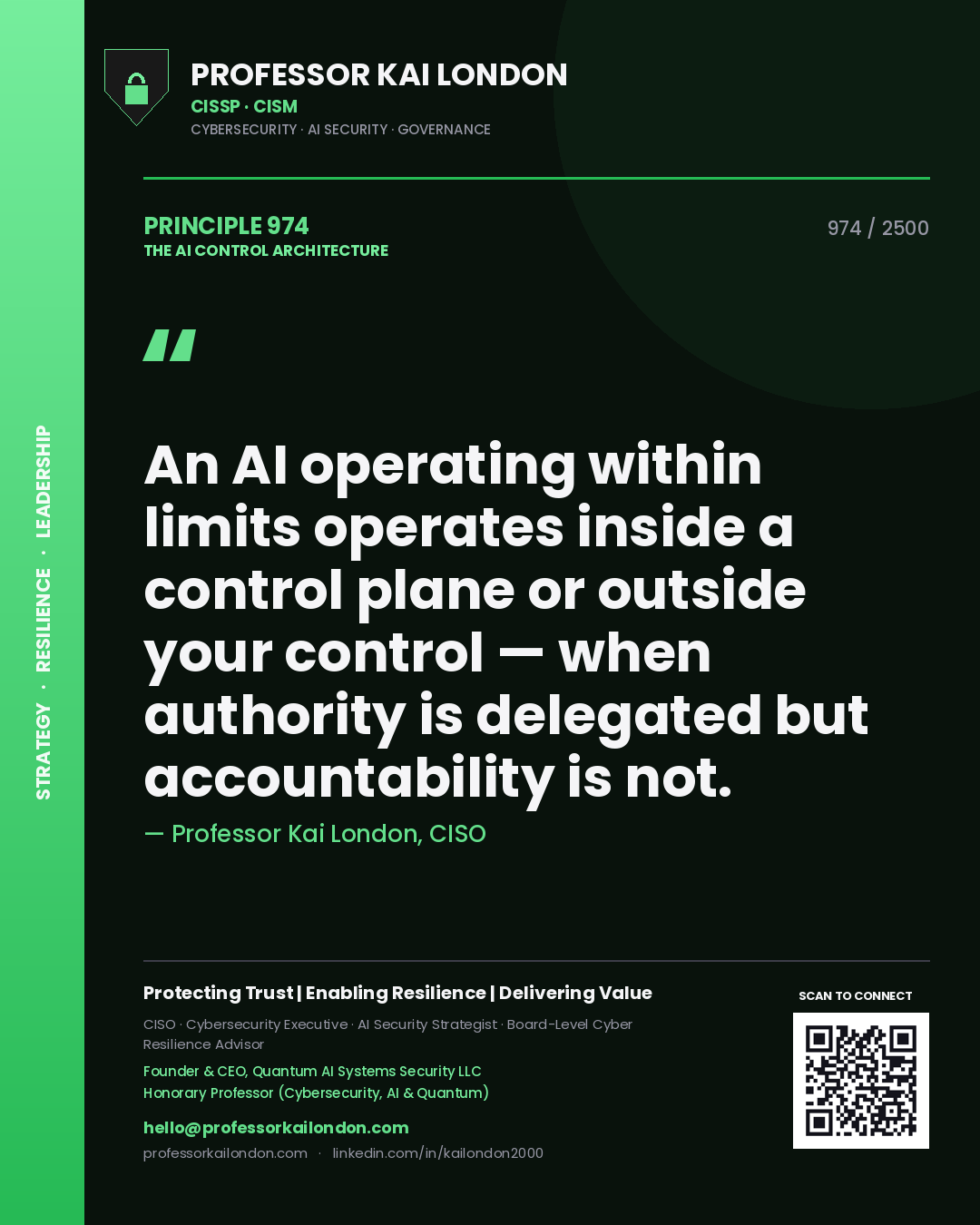
Professor Kai London principle 974: An AI operating within limits operates inside a control plane or outside your control — when authority is delegated but accountability is not.
Principle 974
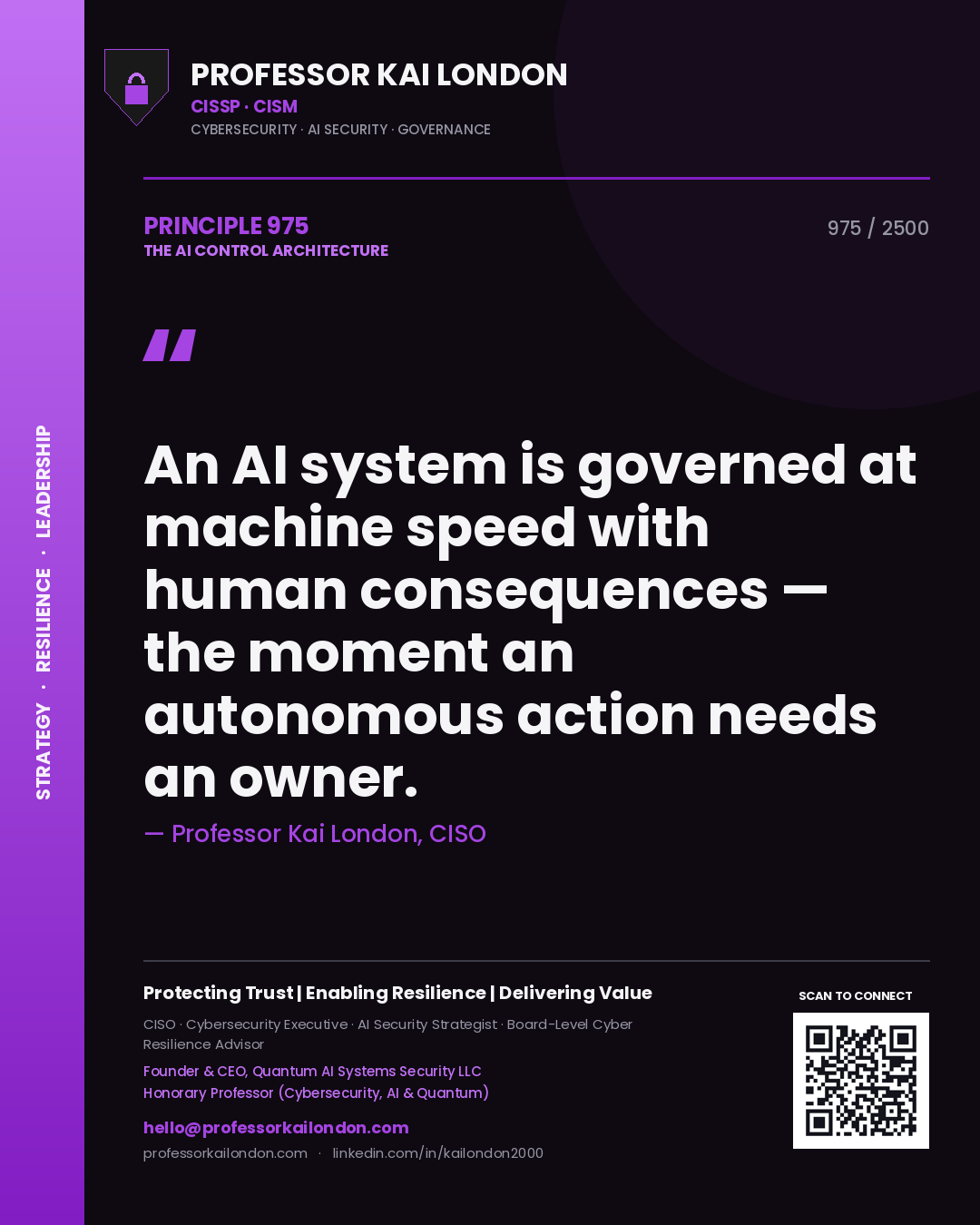
Professor Kai London principle 975: An AI system is governed at machine speed with human consequences — the moment an autonomous action needs an owner.
Principle 975
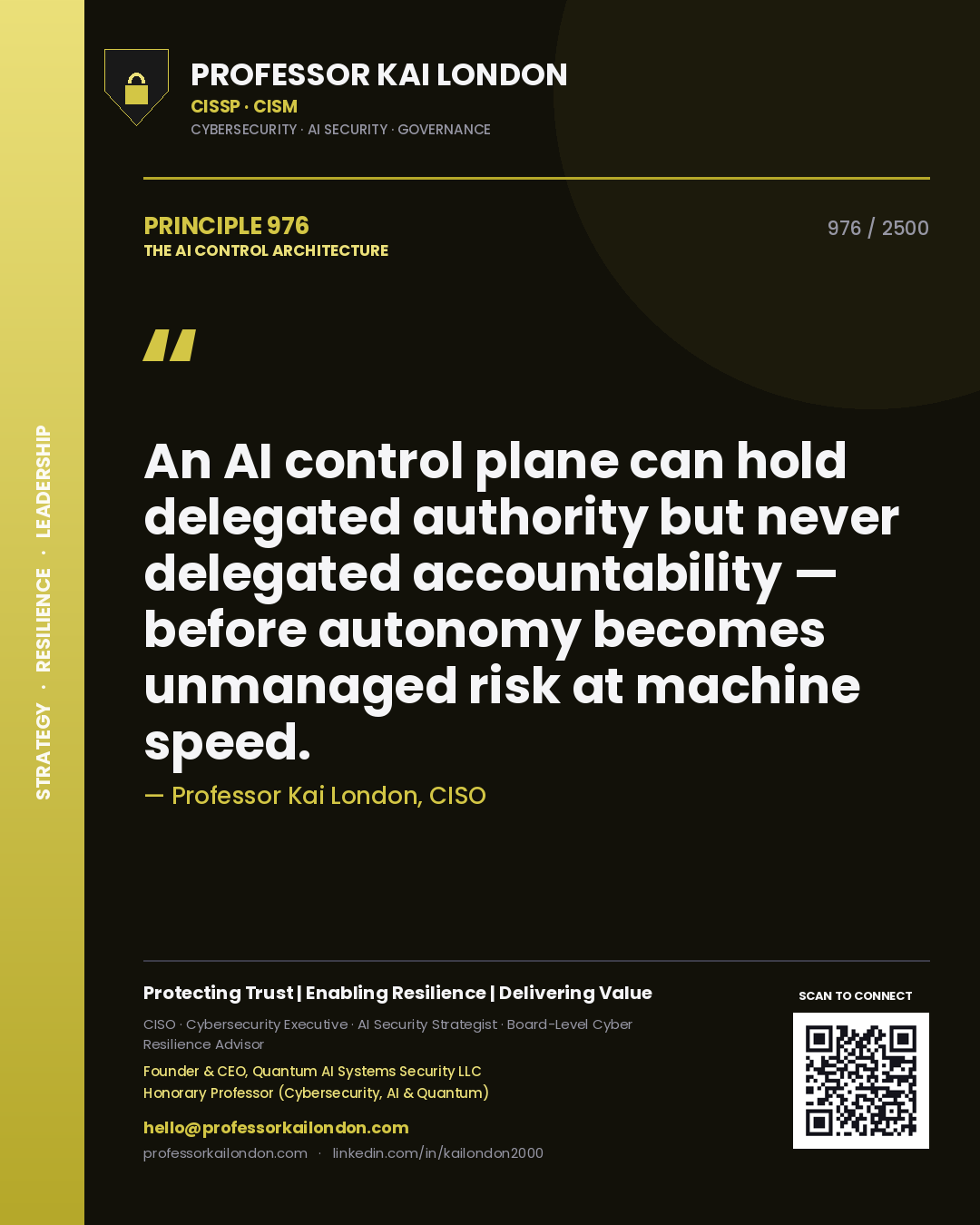
Professor Kai London principle 976: An AI control plane can hold delegated authority but never delegated accountability — before autonomy becomes unmanaged risk at machine speed.
Principle 976
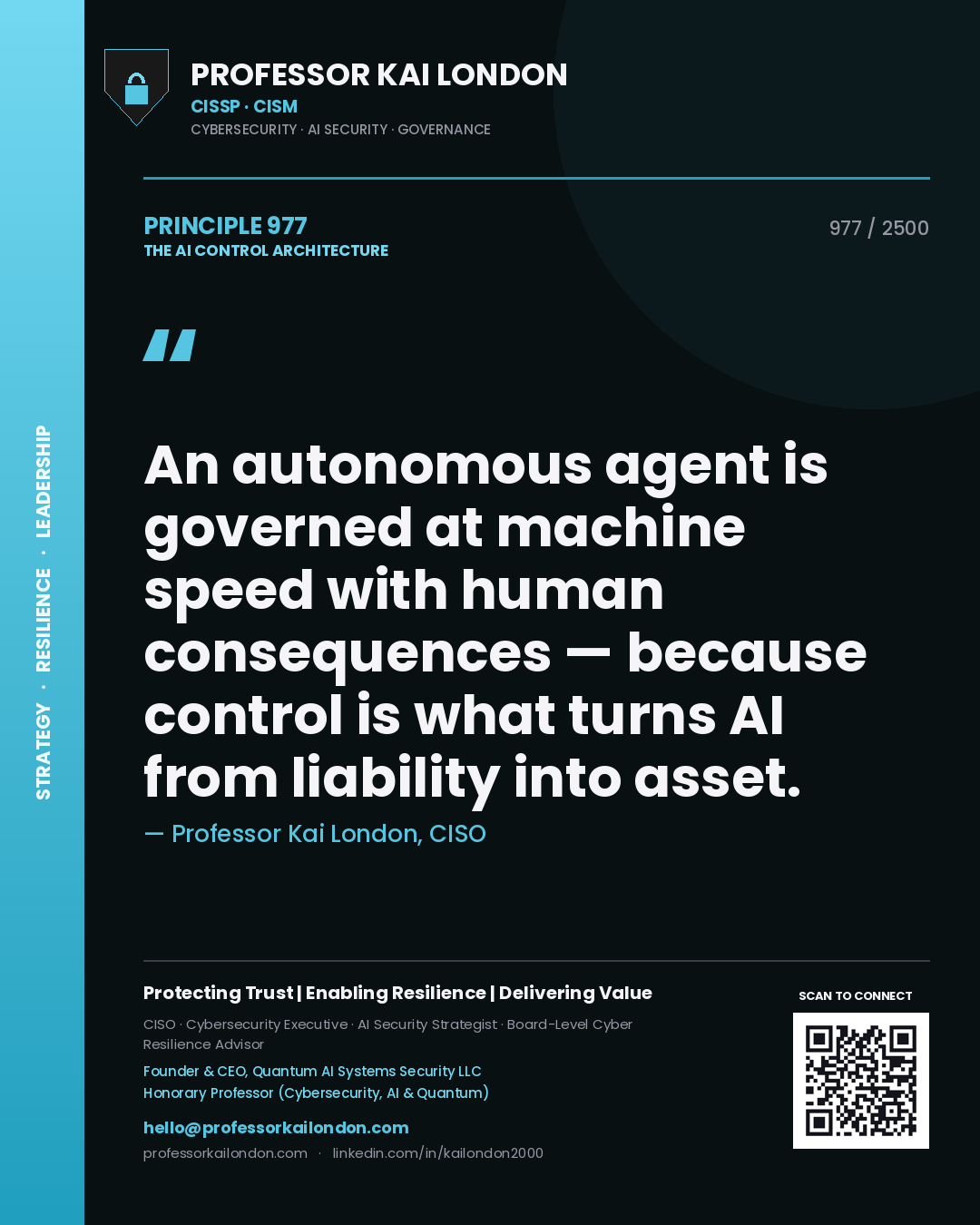
Professor Kai London principle 977: An autonomous agent is governed at machine speed with human consequences — because control is what turns AI from liability into asset.
Principle 977
Professor Kai London principle 978: An autonomous agent stays accountable only by design — because when the machine decides, someone must answer.
Principle 978
Professor Kai London principle 979: A decision boundary must answer when it decides — because an agent you cannot pause is an agent you do not control.
Principle 979
Professor Kai London principle 980: An automated action operates inside a control plane or outside your control — because when the machine decides, someone must answer.
Principle 980
Professor Kai London principle 981: An automated action needs a boundary, a log, and a named owner — when governance moves as fast as the model.
Principle 981
Professor Kai London principle 982: An agentic workflow earns autonomy by proving control — because control is what turns AI from liability into asset.
Principle 982
Professor Kai London principle 983: A governed AI must be pausable, explainable, and controllable — the moment an autonomous action needs an owner.
Principle 983
Professor Kai London principle 984: An AI system earns autonomy by proving control — because when the machine decides, someone must answer.
Principle 984
Professor Kai London principle 985: An AI operating within limits needs a boundary, a log, and a named owner — when every agent has a boundary you can prove.
Principle 985
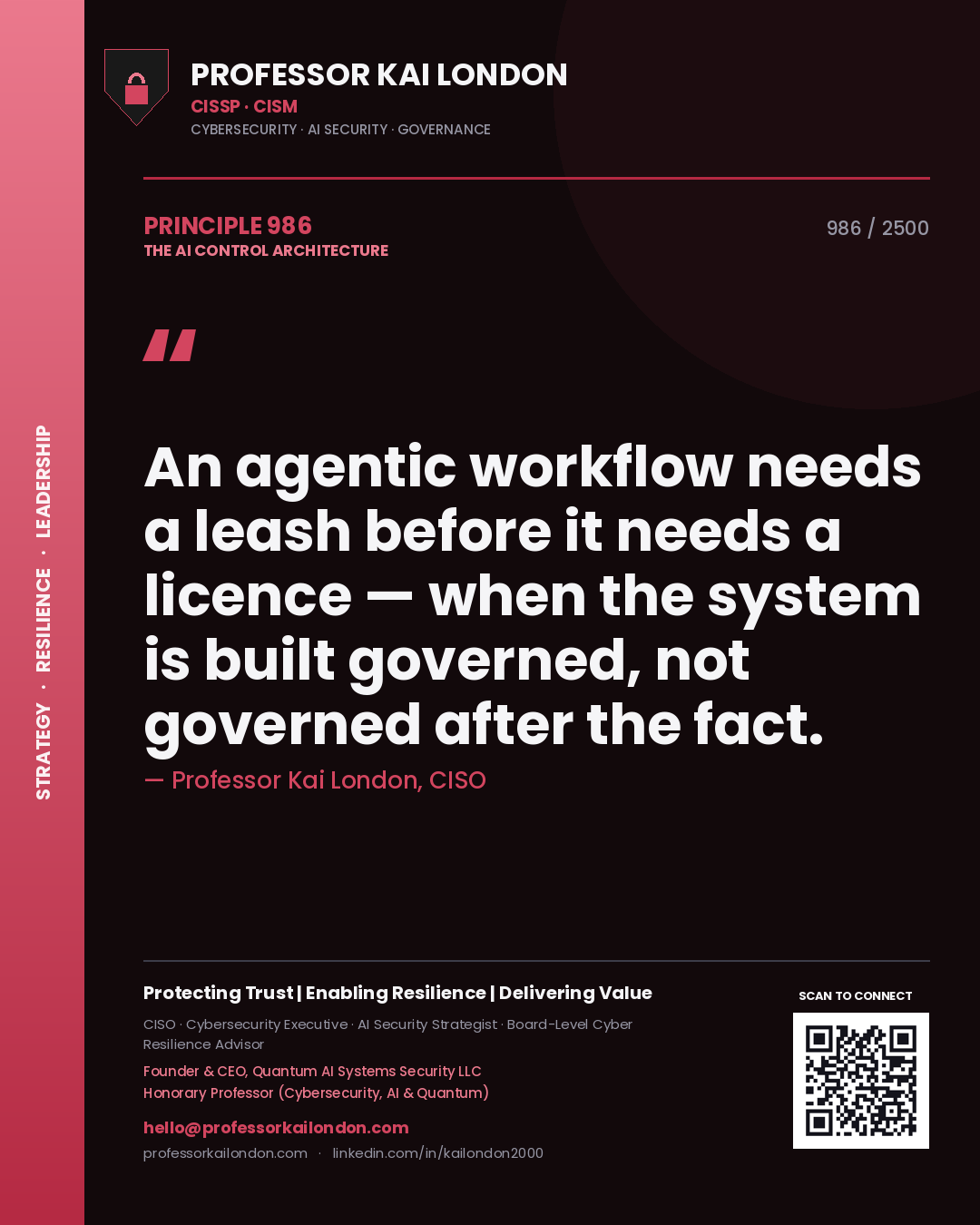
Professor Kai London principle 986: An agentic workflow needs a leash before it needs a licence — when the system is built governed, not governed after the fact.
Principle 986
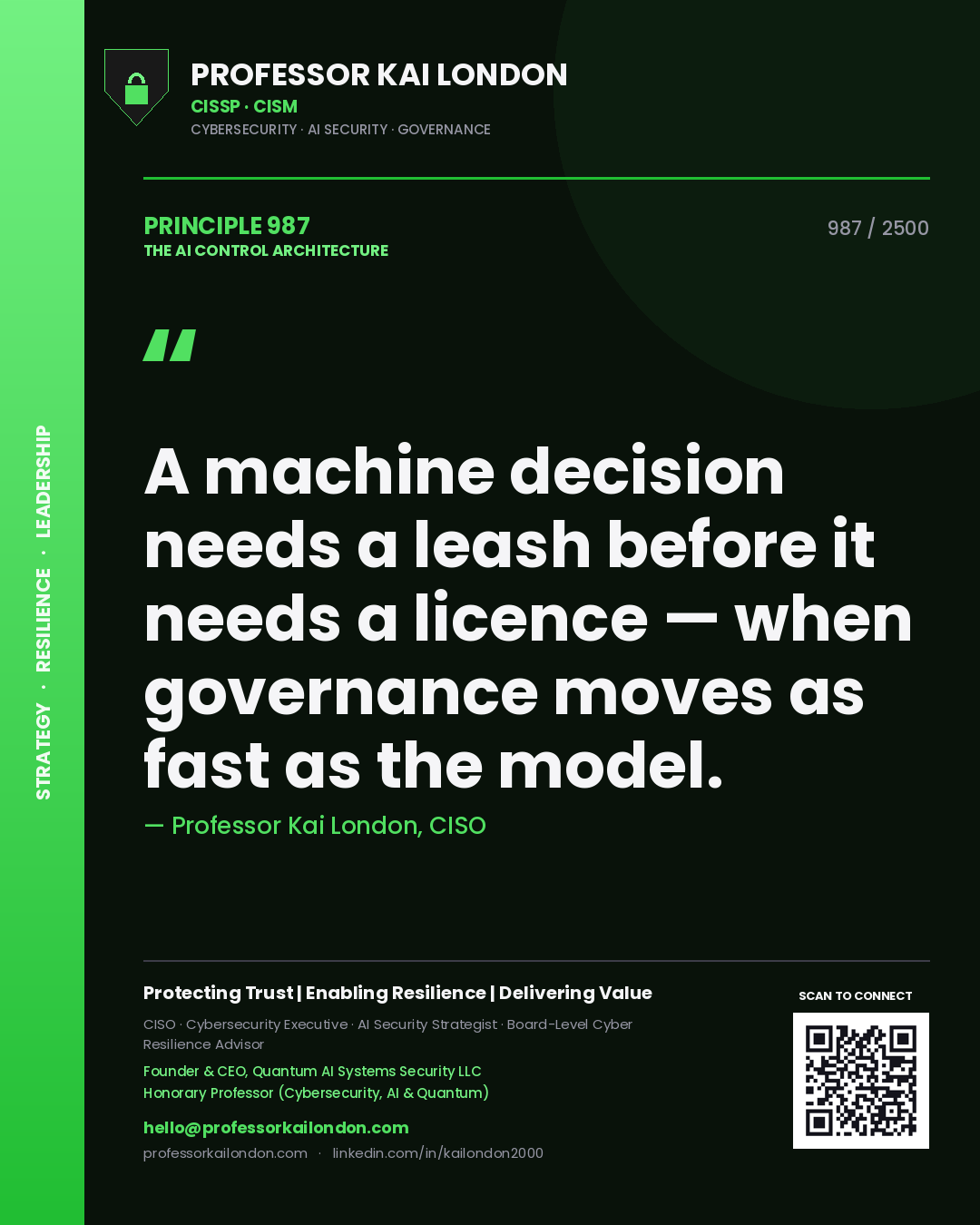
Professor Kai London principle 987: A machine decision needs a leash before it needs a licence — when governance moves as fast as the model.
Principle 987
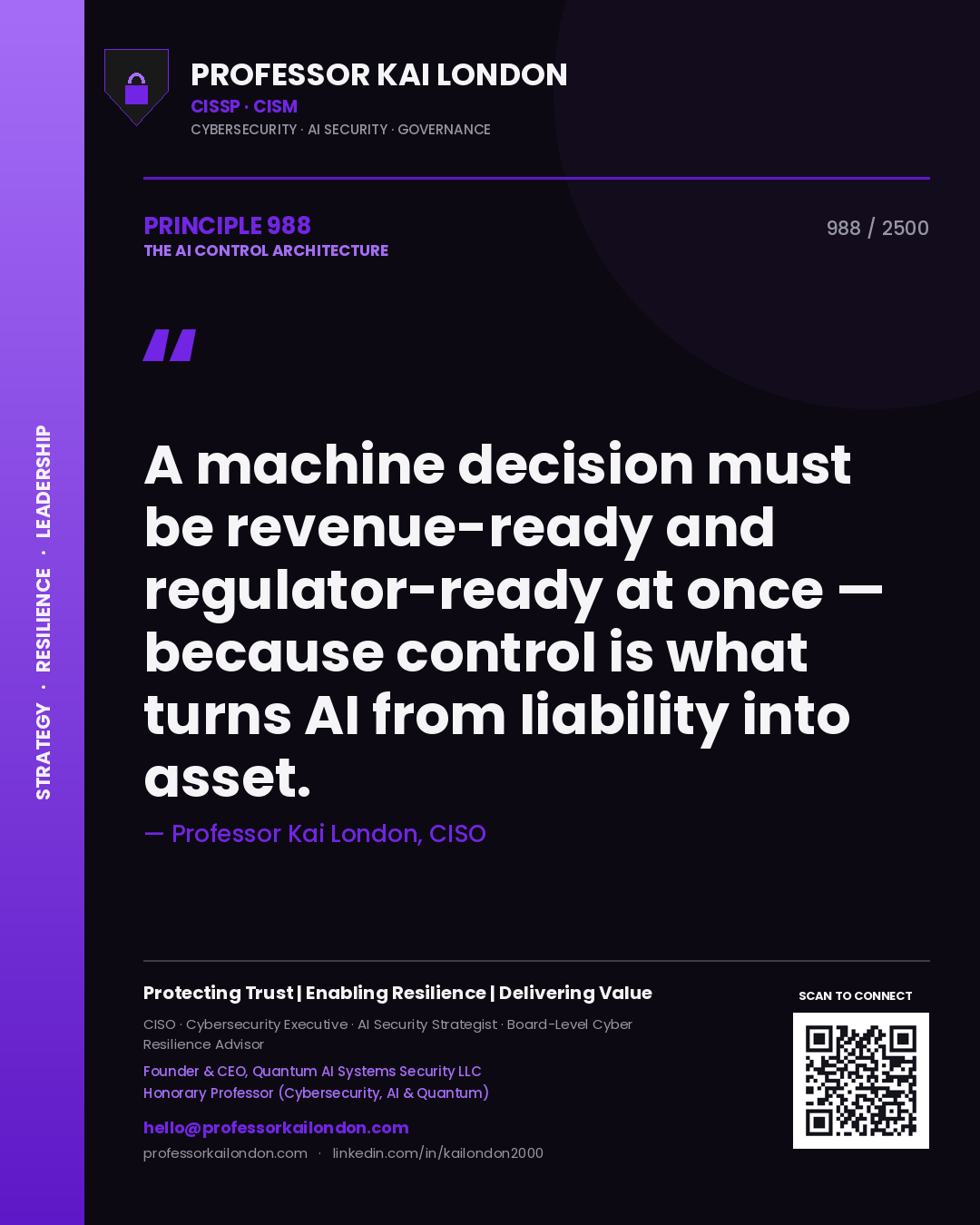
Professor Kai London principle 988: A machine decision must be revenue-ready and regulator-ready at once — because control is what turns AI from liability into asset.
Principle 988
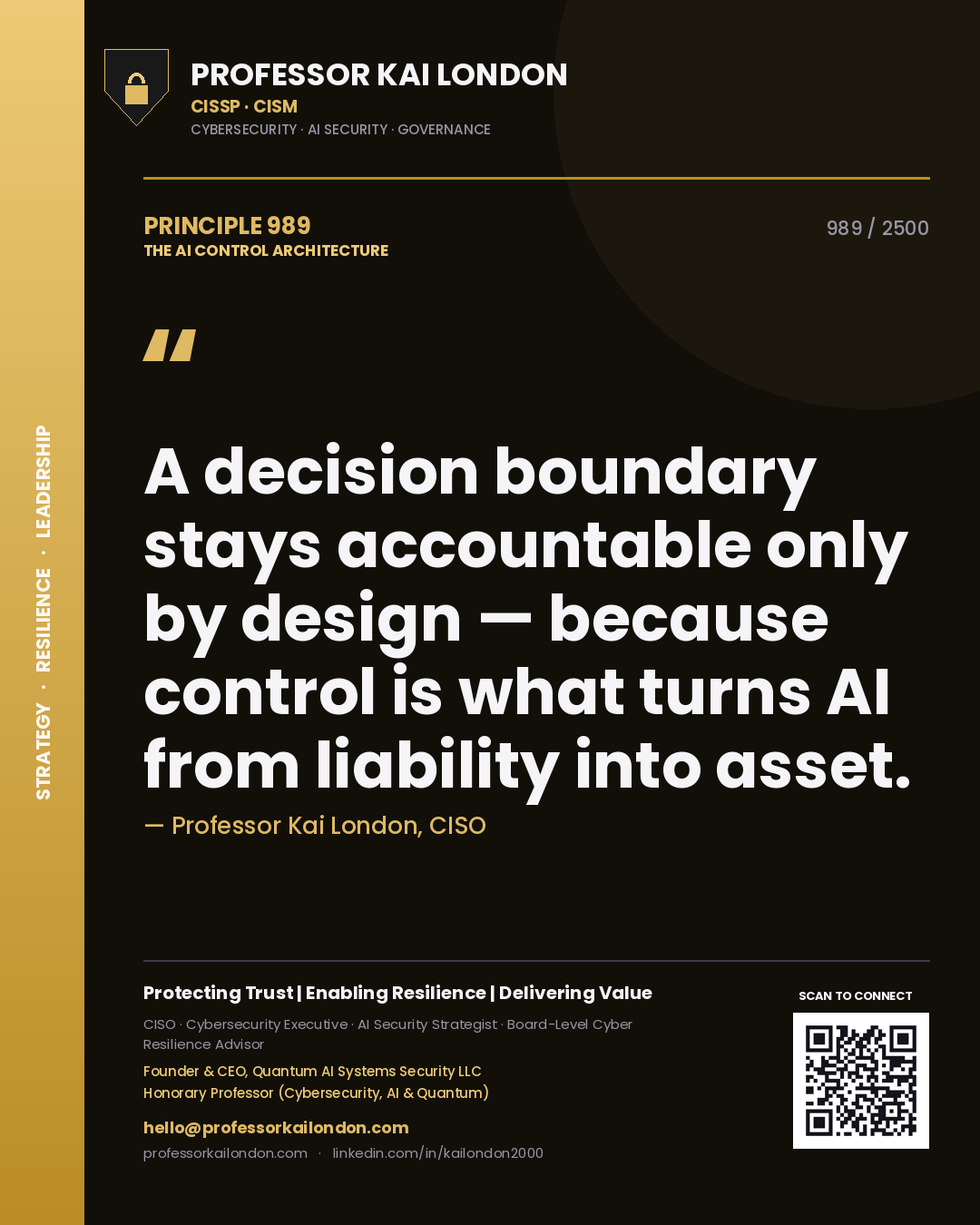
Professor Kai London principle 989: A decision boundary stays accountable only by design — because control is what turns AI from liability into asset.
Principle 989
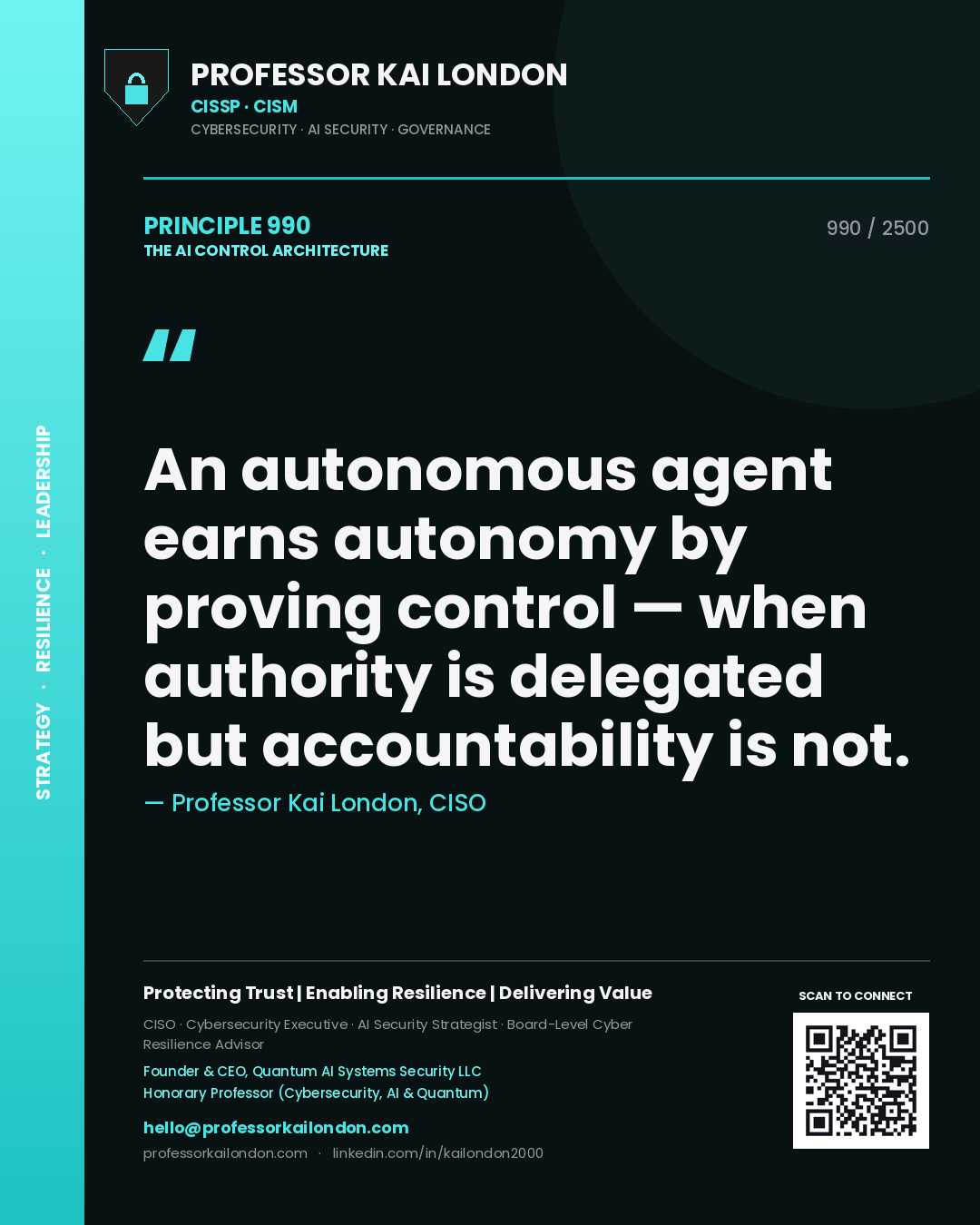
Professor Kai London principle 990: An autonomous agent earns autonomy by proving control — when authority is delegated but accountability is not.
Principle 990
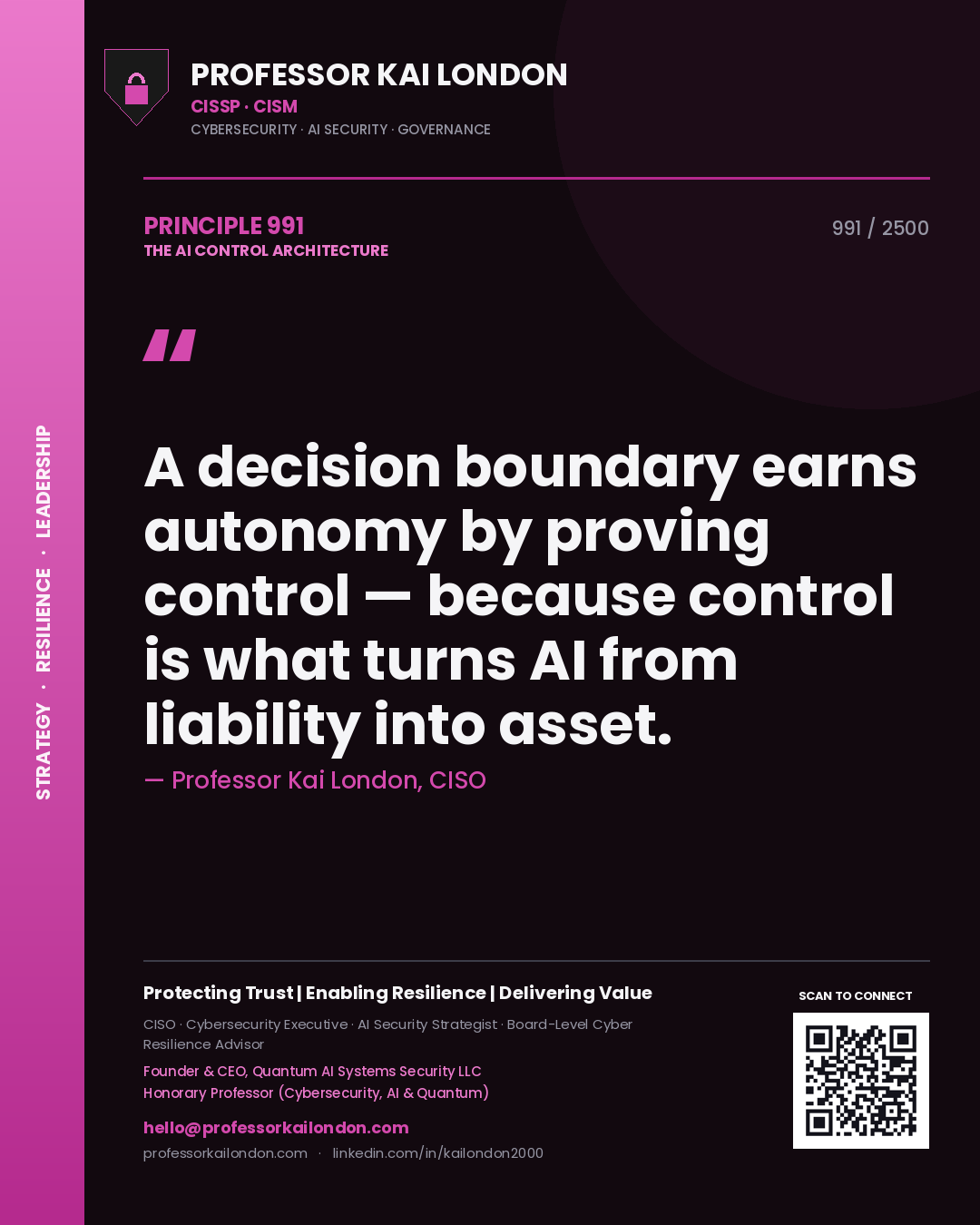
Professor Kai London principle 991: A decision boundary earns autonomy by proving control — because control is what turns AI from liability into asset.
Principle 991
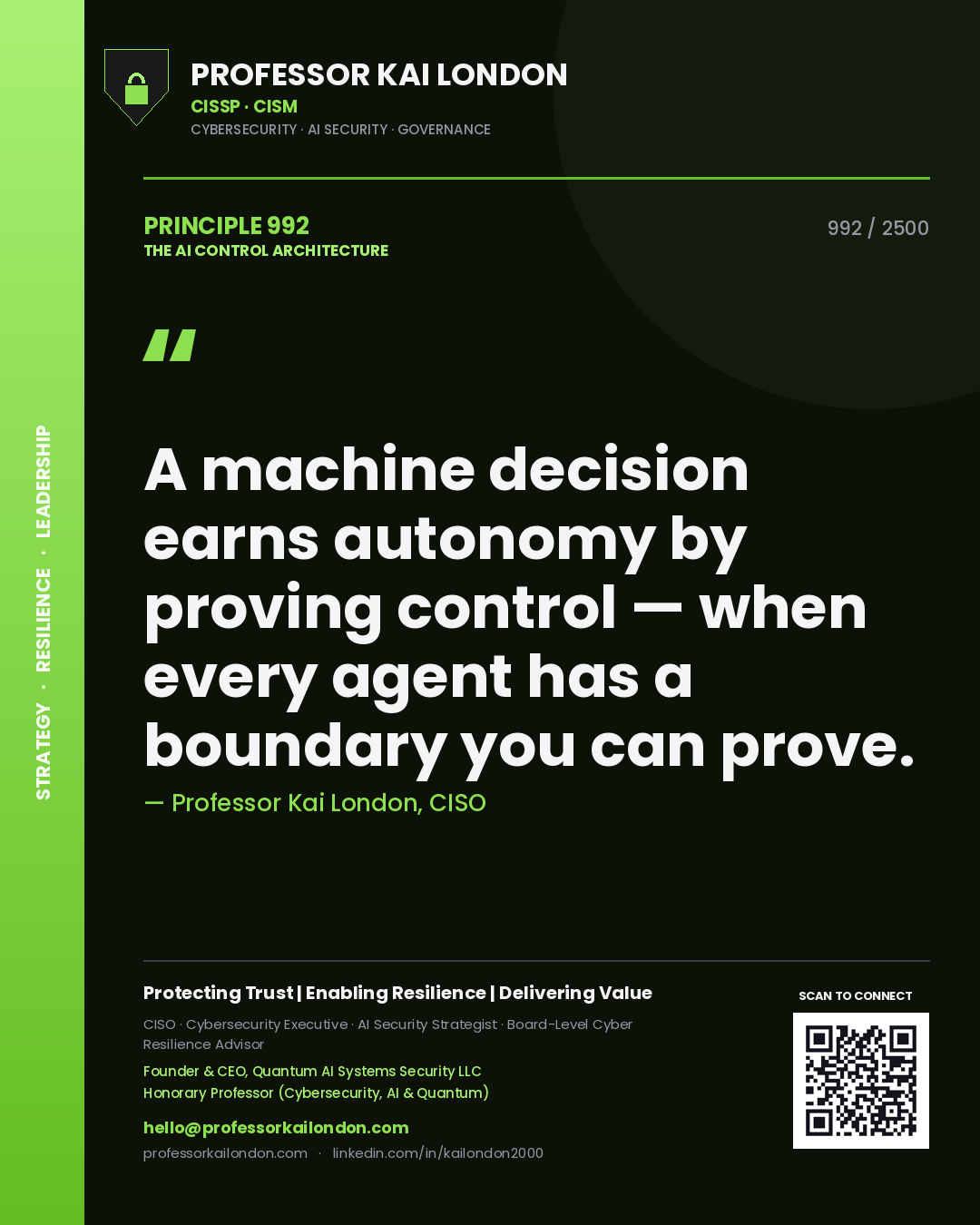
Professor Kai London principle 992: A machine decision earns autonomy by proving control — when every agent has a boundary you can prove.
Principle 992
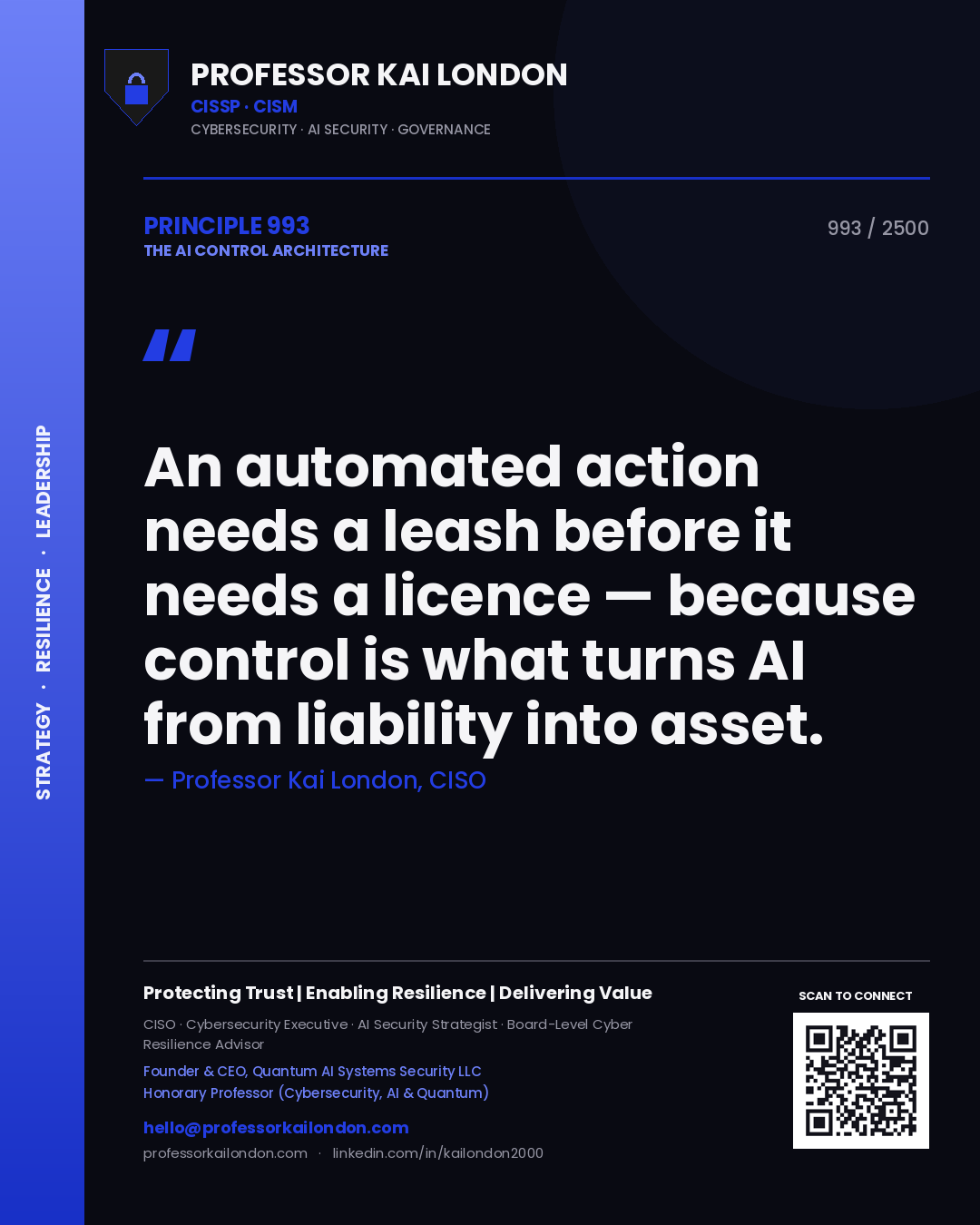
Professor Kai London principle 993: An automated action needs a leash before it needs a licence — because control is what turns AI from liability into asset.
Principle 993
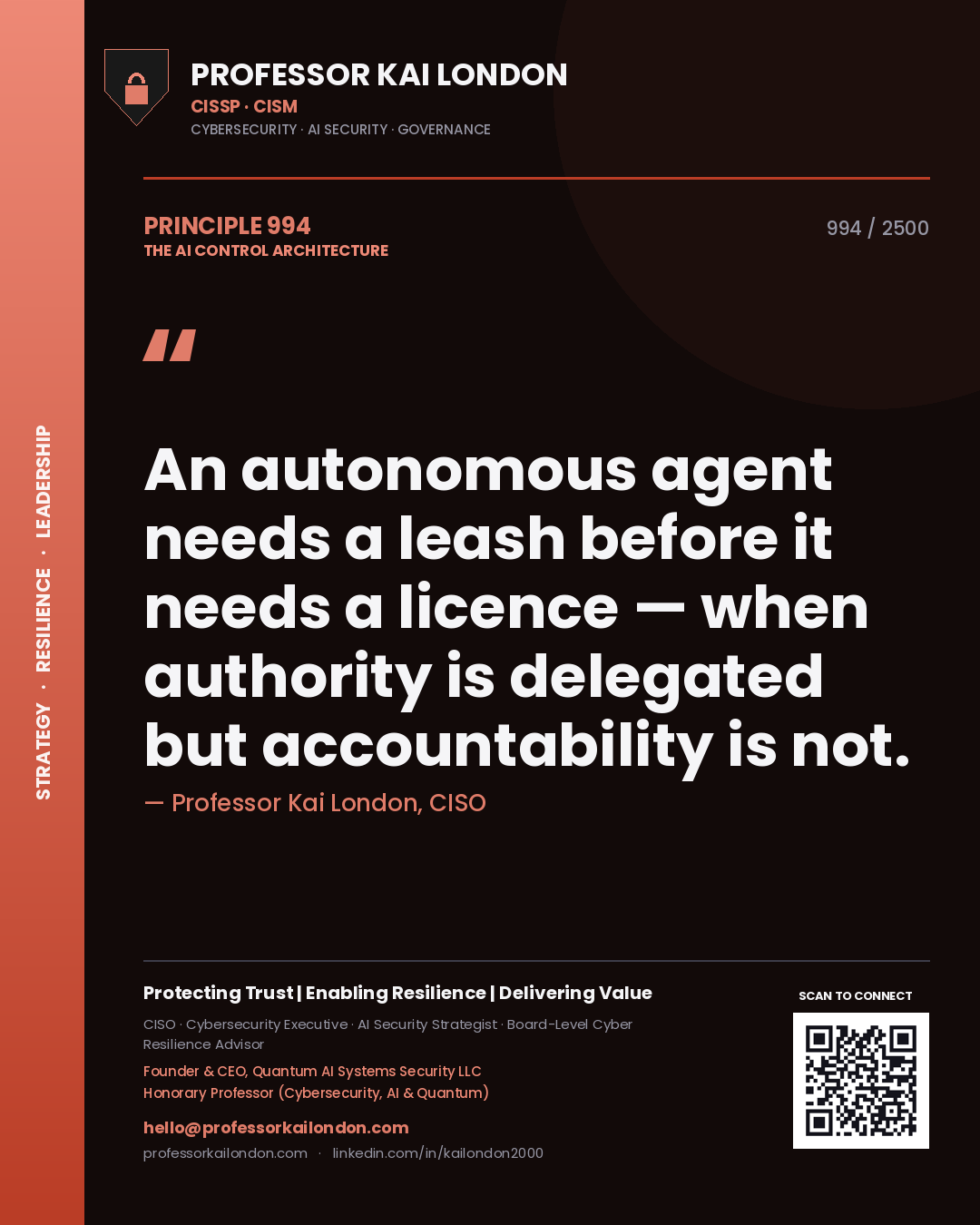
Professor Kai London principle 994: An autonomous agent needs a leash before it needs a licence — when authority is delegated but accountability is not.
Principle 994
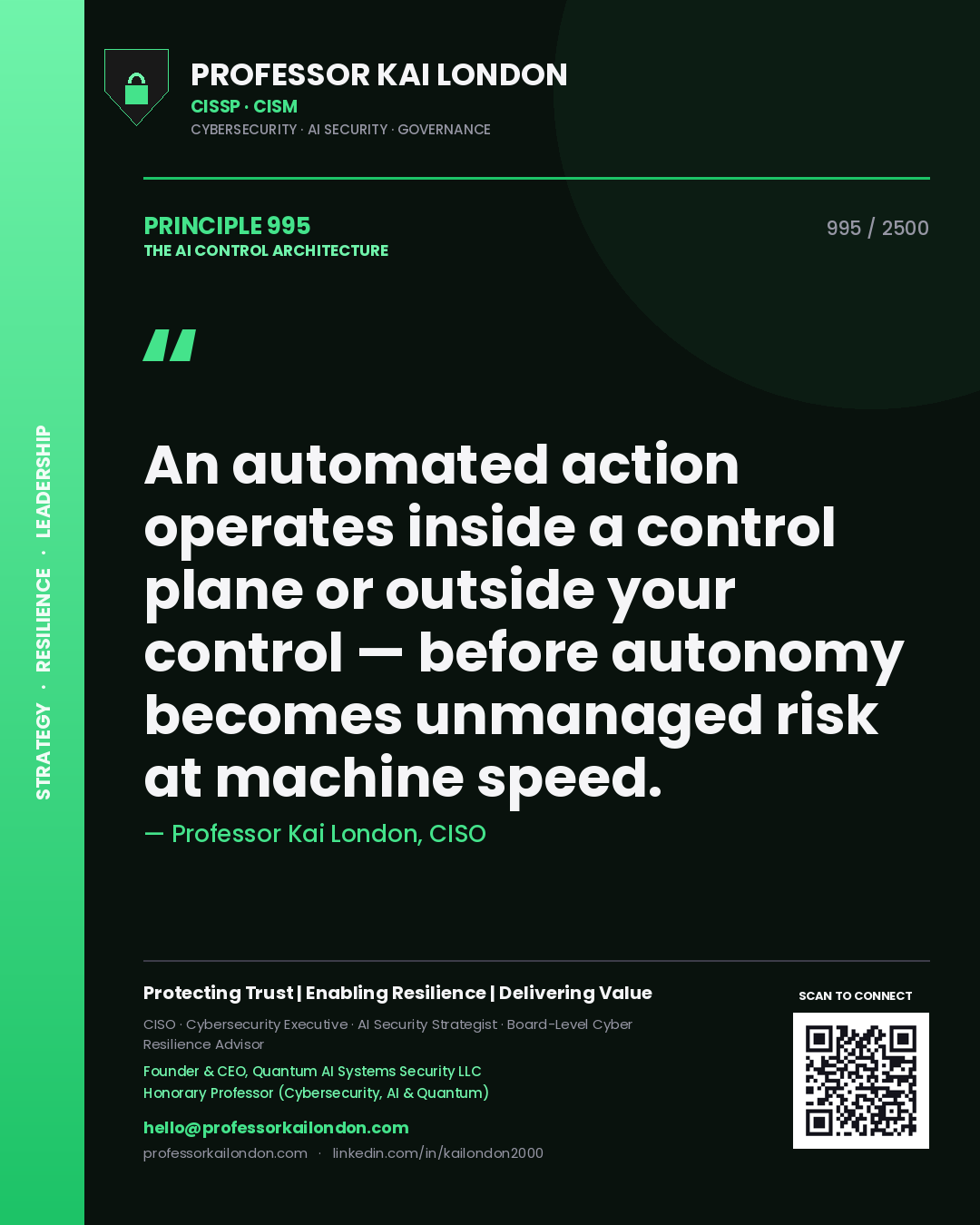
Professor Kai London principle 995: An automated action operates inside a control plane or outside your control — before autonomy becomes unmanaged risk at machine speed.
Principle 995
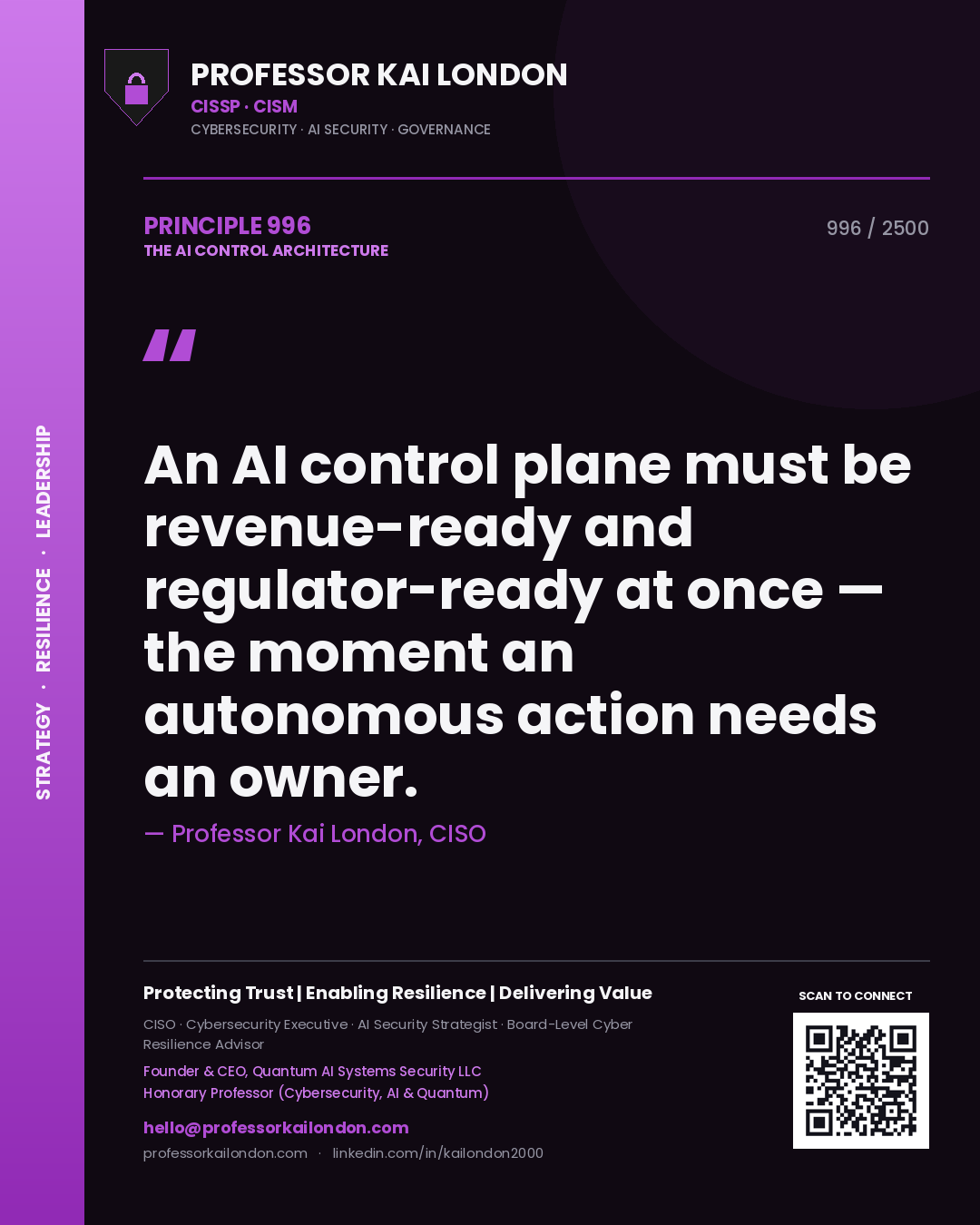
Professor Kai London principle 996: An AI control plane must be revenue-ready and regulator-ready at once — the moment an autonomous action needs an owner.
Principle 996
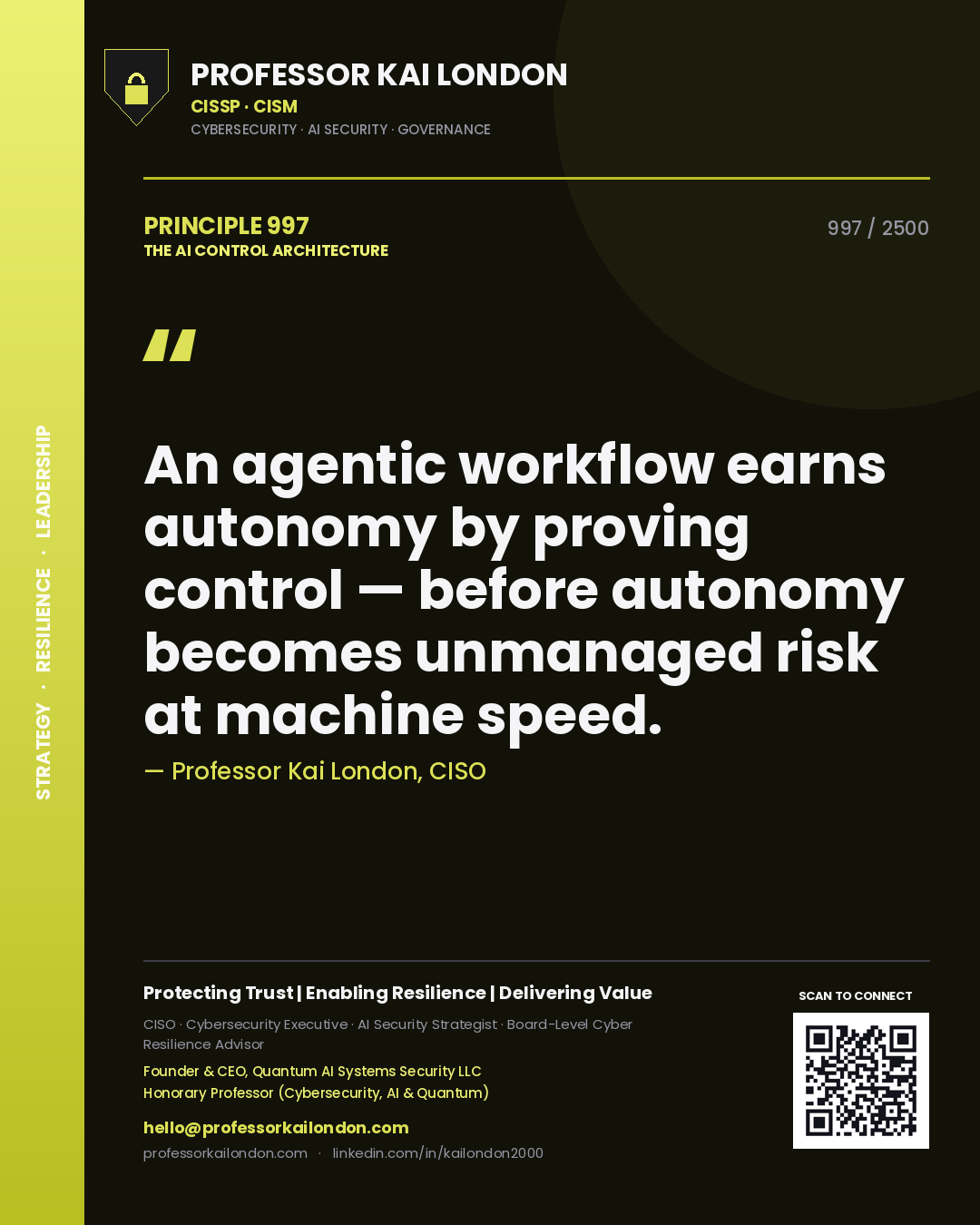
Professor Kai London principle 997: An agentic workflow earns autonomy by proving control — before autonomy becomes unmanaged risk at machine speed.
Principle 997
Professor Kai London principle 998: A machine decision needs a boundary, a log, and a named owner.
Principle 998
Professor Kai London principle 999: A governed AI is governed at machine speed with human consequences — when every agent has a boundary you can prove.
Principle 999
Professor Kai London principle 1000: A decision boundary operates inside a control plane or outside your control — when the control plane keeps the system honest.
Principle 1000